Day one: Biden reverses key Trump policies

0

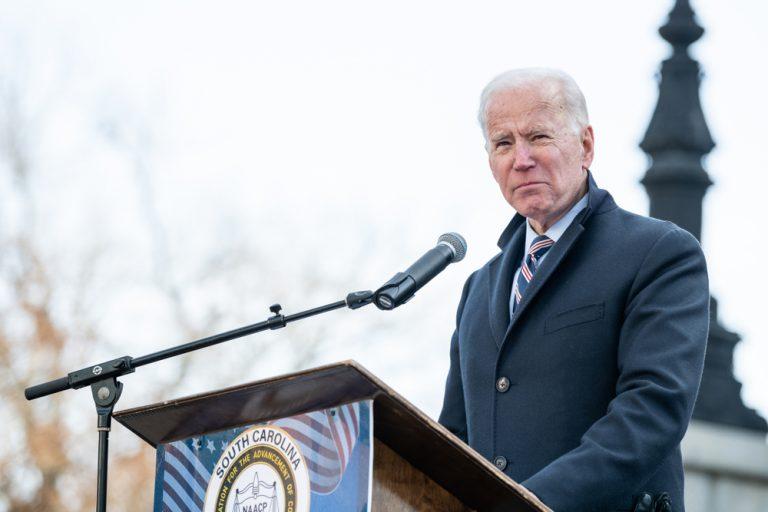
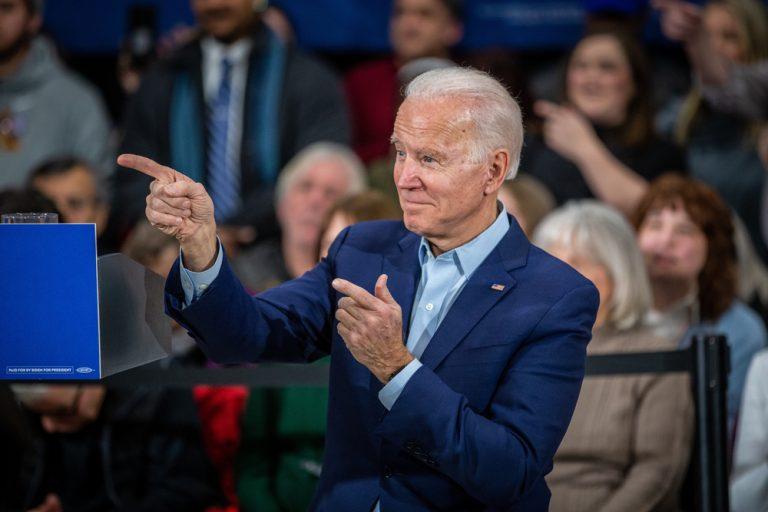
Just hours after being sworn in, Joe Biden is already hard at work reversing Donald Trump’s key policies.

President Biden signed executive orders on issues included halting the travel ban from Muslim-majority countries as well as issues regarding Covid-19, climate change and construction of the wall between the US and Mexico.

A statement from the White House said that Biden “will take action – not just to reverse the gravest damages of the Trump administration – but also to start moving our country forward.”

The President signed many orders around the virus, making it mandatory to social distance and wear masks in federal buildings.

Biden also revoked the permit for the Keystone XL pipeline and asked executives to review all policies that are “damaging to the environment, [or] unsupported by the best available science”.

Commenting on the orders that Biden immediately signed, Wade Henderson, the interim president and CEO of the Leadership Conference on Civil and Human Rights, said: “These executive actions will make an immediate impact in the lives of so many people in desperate need of help. Reversing Trump’s deeply discriminatory Muslim ban, addressing the Covid-19 crisis, preventing evictions and foreclosures, and advancing equity and support for communities of color and other underserved communities are significant early actions that represent an important first step in charting a new direction for our country.”

The inauguration was unlike any before it, with very few people present amid the pandemic. Barack Obama, Bill Clinton and George W Bush were all present at the event. Trump did not attend the event and was the first US President not to attend his successor’s inauguration since 1869.

In his farewell address, Trump said: “What we’ve done has been amazing by any standard.”

In his last few hours as President, Trump granted clemency to more than 140 people.

Saga will require vaccine from all passengers

0

Cruise operator Saga has said that all customers travelling this summer must be vaccinated.

The over-50s travel firm has seen a spike in bookings since the vaccine began being rolled out. The group will require passengers to have both shots of the vaccine at least 14 days before travel as well as provide a negative Covid test at departure.

“The health and safety of our customers has always been our number one priority at Saga, so we have taken the decision to require everyone travelling with us to be fully vaccinated against Covid-19,” said a Saga spokesperson. “Our customers want the reassurance of the vaccine and to know others travelling with them will be vaccinated too.”

Nick Stace, chief executive of Saga’s travel arm, commented: “Given that many of our customers are in the priority age range and we’ve done calculations based on what government has said, we think shortly after beginning of May almost all of customers will have received a second vaccination.”

The group has delayed tours until 4 May. Saga polled 2,000 customers and found 98% of them in favour of the move. The UK government has said that everyone over 70 in the UK would have had their first vaccination by mid-February.

The move comes as the global airline body Iata called on governments to allow those who had been vaccinated to freely travel. Alexandre de Juniac is the director general and said: “For travel and tourism, testing is the immediate solution to reopen borders. And eventually that will transition to vaccine requirements.”

Over the past six months, Saga has seen its share price fall by over 50%. In the six months to the end of July 2020, the group fell from a profit of £52.6m to a loss of £55m.

Markets buzz as Biden inauguration begins

0

Markets around the world are buzzing as Trump leaves the White House, paving the way for President-elect Joe Biden to take over in this evening’s long-awaited inauguration ceremony.

After days of subdued activity across global equities earlier in the week – partly hampered by the US’s national holiday in commemoration of Martin Luther King – it appears that all the pent-up excitement surrounding Biden’s big day has finally caught up.

The NASDAQ (INDEXNASDAQ:.IXIC) climbed to an all-time high – nudged by Netflix’s shares surging 13% – with the index currently up +1.76% to 13,429.33 points (GMT 15:49). The Dow Jones (INDEXDJX:.DJI) similarly enjoyed a +236.79 point surge to 31,167.31 (GMT 15:50), while the S&P 500 (INDEXSP:.INX) is basking in +1.12% increase to 3,841.46 points (GMT 15:51).

Catching the optimism from across the pond, European indices have also shrugged off their apprehension, with the DAX (INDEXDB:DAX) up +0.76% to 13,920.25 points (GMT 15:56) and the CAC (INDEXEURO:PX1) up +0.54% to 5,628.67 (GMT 15:57).

On the other hand, the FTSE (INDEXFTSE:UKX) evidently wasn’t feeling the same kind of jubilance. While contemplating a 3-year high from the pound following a better-than-forecast inflation reading, the blue chip index’s growth capped at just 0.31% (GMT 15:58).

Commenting on today’s near-synchronous market sentiment, Spreadex financial analyst Connor Campbell weighed in:

“Now that the Biden administration is a few hours way from being sworn in, investors seem more willing to look to the future. Most pressingly that includes a coherent effort to tackle coronavirus on both a fiscal and medical level – something wholly absent for a long time – alongside spending on green tech and, potentially, less fraught international relations between the States and the rest of the world”.

However, with Biden’s inauguration only just beginning and the sun rising on the new Democratic administration, the markets might need a bit longer to settle on a wholly coordinated response – perhaps, this time, with the FTSE in tow.

“The day isn’t over yet,” Campbell added, “And any trouble around the inauguration will come to weigh on the markets. However, it is the start of a new period in America, one that will hopefully help expedite the end of our current nightmare”.

Medical cannabis ETF celebrates anniversary on LSE

0

Europe’s first medical cannabis ETF, The Medical Cannabis and Wellness UCITS ETF (CBDX), has celebrated its first anniversary since being listed on Deutsche Boerse and the London Stock Exchange.

“Strong growth” over the past twelve months look set to tick over into 2021, boosted by a Democratic House, Senate and presidency which have previously flirted with legalising cannabis.

The CBDX Medical Cannabis ETF, which tracks the Medical Cannabis and Wellness Equity Index, has delivered a return of 39.47% over the past three months and 40.41% over the last twelve months. While past performance is no guarantee of future success, it has grown strongly “reflecting investor demand” to reach $28m of assets under management.

Investors are currently “pricing in an improved outlook” for the cannabis sector under the new Democratic House and presidency, with hopes that freshly-inaugurated Joe Biden might buckle under increasing pressure to reform federal cannabis policy. Two of his top picks to head the U.S. Department of Health and Human Services – Rachel Levine and Xavier Becerra – have well-established track records of defending and supporting state-legal marijuana programmes.

A spokesperson for the CBDX Medical Cannabis ETF says that US regulators are “increasingly focusing on the potential positive impact of cannabis legislation” on job creation, social inequality and tax revenues, and that any reforms will provide regulatory precedence for many other countries to follow in the US’s footsteps.

Many US lawmakers, at both the Federal and State levels, are pushing to relax laws around commercial cannabis usage, which is helping the market to grow exponentially. Supporters of the campaign to legalise cannabis have suggested this could be a sign that the new administration is looking to soften – or ideally scrap altogether – cannabis’s position on the federally-controlled substance list.

In addition, CBDX Medical Cannabis ETF says that a UK initiative called Project 2021 – which aims to develop “the biggest database in the world on the effectiveness and tolerability of medical cannabis on patients” – should be completed by the end of 2021, and it expects this to be a “huge boost” for the sector. Other pilot projects have also started in France, the Netherlands, and Ukraine.

Medical cannabis usage is already legalised in a number of countries including Australia, Germany and the United Kingdom. In Canada, cannabis is legal for both medical and recreational use following a landmark ruling in 2018 making it the first G7 country in the world to do so.

Alibaba shares spring on Jack Ma sighting

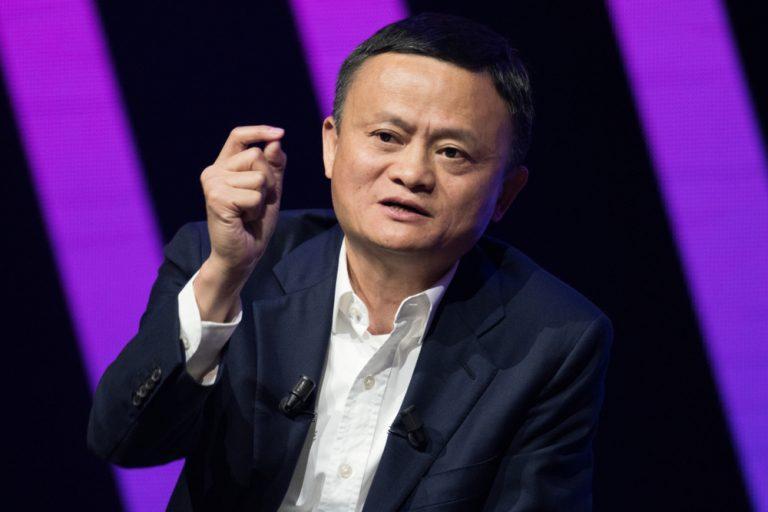
Shares at Chinese e-commerce giant Alibaba (HKG:9988) have jumped almost 10% after founder Jack Ma’s first sighting in three months quelled fears that the business tycoon might be dead.

He was seen on Wednesday speaking by video in an online ceremony for an annual rural teaching event. The brief 50 second-long video made no mention of his disappearance, after Ma vanished from the public eye following Chinese regulators’ decision to halt the Hong Kong listing of his new venture Ant Group in November.

The IPO would have been the biggest share offering in history.

Anti-monopoly regulators in China warned executives of Alibaba and five other tech giants in December not to “use their dominance” to block new competitors from entering their markets. The central bank and other regulators ordered Ant Group to overhaul its business before its IPO debut can go ahead.

Both Alibaba and Ant Group have confirmed they will adhere to regulators’ requests.

There had been speculation that Ma’s disappearance was due to him being detained by the authorities – although there was no evidence to conclude this – and shares at Alibaba plummeted in the lead-up to the New Year as investors’ fears mounted over Ma’s continued silence.

Ma’s last public appearance had been on 24 October, when he criticised Chinese regulators’ “pawnshop mentality” for hampering innovation in a speech in Shanghai. In November, authorities withdrew plans for what would have been a record-breaking £26bn stock market float for finance giant Ant Group with just two days to go.

Alibaba’s shares hiked 8.52% to 265.00 HKD as of GMT 14:52 as investors breathed a long-held sigh of relief, jump-starting what is likely to be a climb over the next few days and weeks to make up for the loss in confidence that had shed more than 36% off the stock’s annual peak in mid-October.

Ma boasts a title of one of Asia’s richest people, with a fortune estimated at around $58bn.

Hornby posts rise in Q3 sales

0

Hornby shares fell on Wednesday after the group revealed a trading statement for the Christmas period.

Group sales for the third quarter were up compared to the same period a year ago driven by a hugely popular product range and increased global demand as consumers spend more time at home.

Tighter Covid restrictions and the impact of courier companies pausing collections bound for Europe due to Brexit backlogs have led to a slower start to 202, however, shipping to Europe will soon start.

Direct sales are up 133% year on year and net cash at the end of December 2020 was £3.8m compared to net cash £3.9m at the end of September 2020.

Commenting on their new toy range for 2021, the group said: “We would normally be attending several Toy Fairs during January but these have been cancelled due to COVID restrictions. As such we have digitally previewed our latest range announcements which have been released to the trade and the public through various social media platforms. The feedback was encouraging, and we were buoyed by the levels of interest.”

Hornby expects to finish the year with sales 15-20% ahead of the prior year.

Chief Executive Officer, Lyndon Davies commented: “No one expected the last year to turn out as it did. It is hard, however, not to want to spread a little ‘good news’ amongst all the bad. The transformation at Hornby continues to accelerate, this is not time for braking, we must now accelerate upwards through the gears.”

Hornby shares are trading -4.24% at 63,20 (1413GMT).

House prices in London rose 4% in November

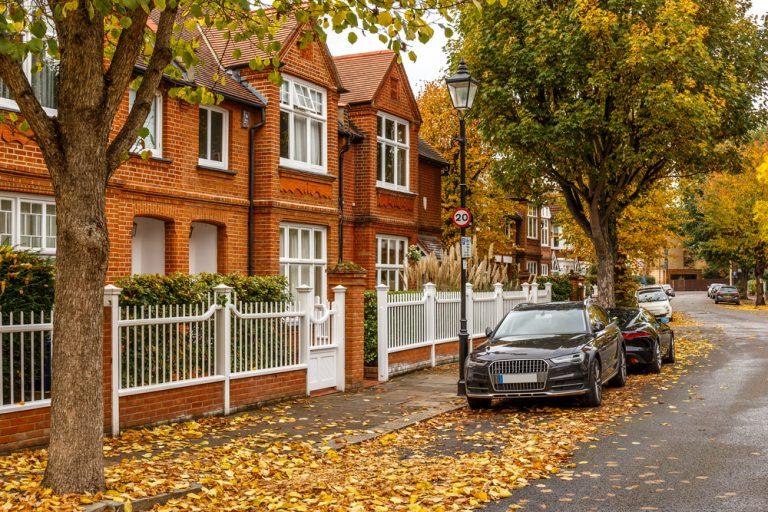
The UK House Price Index has released its figures from November 2020, detailing how prices rose 4% between October and November, with the annual price change in the capital over the year coming in at +9.7%.

In England as a whole, the November data shows on average, house prices have risen by 1.2% since October 2020. The annual price rise of 7.6% takes the average property value to £266,742.

London experienced the greatest monthly price rise, up by 4%, while the East of England saw the lowest monthly price growth, with a fall of -0.3%. London and Yorkshire and the Humber experienced the greatest annual price rise, up by 9.7%, with the East of England also saw the lowest annual price growth at +4.8%.

Price change by region for England

RegionAverage price November 2020Annual change % since November 2019Monthly change % since October 2020
East Midlands£208,6627.10.6
East of England£302,6244.8-0.3
London£513,9979.74.0
North East£140,2488.32.6
North West£180,2808.50.2
South East£342,2716.21.2
South West£278,3918.51.1
West Midlands£213,9746.91.0
Yorkshire and the Humber£180,8569.71.9
Data and chart courtesy of Gov.UK.

Estate agency Chestertons said there was “an obvious increase in market activity” in November 2020, with a lot more sellers trying to list their properties compared to the previous year.

Chestertons said that it had carried out 44% more valuations and brought 76% more new properties to the market compared to November 2019. The agency registered 24.6% more initial enquiries, saw 10% more people registering as buyers, and agreed 21% more viewing appointments.

Guy Gittins, managing director at Chestertons, commented on the Land Registry’s new figures:

“The second lockdown no doubt encouraged some people to put their property search on hold, but we didn’t notice a big difference and activity levels were still a lot higher than we anticipated for this time of year. Part of this was driven by the incentive of the stamp duty saving, but we believe the main driver was that people just wanted to move as quickly as possible while conditions were favourable”.

Chestertons also confirmed that the London housing market remained “strong” throughout December, and saw full-year figures reach an eight-year high for property enquiries, buyer registrations, property viewings, offers received and sales agreed.

All Set and Ready to Lead…India will be at the Head of the Pack for post COVID Growth

Sponsored and written by Red Ribbon Asset Management

Leading Analysts, including Nomura, are forecasting India will be leading the way out of the COVID downturn, and History is on their side.

We’ll be taking a look at the underlying issues in this article by Suchit Punnose, CEO and Founder at Red Ribbon Asset Management

In last month’s Asia 2021 Outlook, Nomura forecast a 9.9% growth in Indian GDP by the end of 2021: that’s more than China (9%), and waymore than the UK (5.5%) and the United States (4.7%), all of which are running off historically low recovery platforms as a result of the Pandemic. The UK’s forecast, for example, may be the highest since the 1980’s, but according to the Office of Budget Responsibility (“OBR”) the economy will not return to pre-Pandemic levels until the last quarter of 2022. Investors would do well to remember that even a dead cat bounces…On the other hand, India is expected to go on to deliver GDP growth of 11.9% by the first quarter of 2022, far higher than pre-Pandemic levels.

None of which should come as any surprise.

Before COVID gripped its chill hand on economies across the planet, GDP on the subcontinent was growing at a rate of 5.02% annually, barely half of the figure now being forecast by Nomura for the coming year. So unlike the UK there’s certainly something more than bouncing back at work here. Just look at the underlying data…in the second quarter alone, Nomura expects Indian GDP to grow by 32.4%, which means the so-called “base effect” of COVID will be completely eliminated on the subcontinent within six months (as opposed to two years in the UK).

Ten years ago the comparable (World Bank) figure for growth on the subcontinent was 8.5%, and in 2016 it was 8.26% (www.worldbank.org). So the latest Nomura forecast is well within the parameters of an already established, upwards growth trajectory. In fact, at 9.9%, it even foreshadows a sharp(ish) upwards tick over the near term.

And once again, that can be usefully contrasted with comparable trends for the UK economy over the same period. In 2010 GDP grew in the UK by 1.95%, but by 2016 it had fallen back to 1.92%. And before COVID struck, it had fallen back again to 1.41%. That’s why even on the basis of the latest OBR data, any UK recovery will still be two years behind India, heading for a downturnon what are already historically low figures. There’s no sign of an upward tick any time soon in the UK, sharp(ish) or otherwise.

So what’s the reason for those stark differences, and what does COVID have to do with it?

Well, there are three key indicators.

First of all, the UK has built up a staggering Budget Deficit of £394 Billion for the year to March 2021: struggling to balance massive recovery spending with dwindling tax receipts. As a whole, UK national debt currently exceeds £2 Trillion, which is more than 100% of GDP, and its expected to stay that way for at least the next five years. Putting it mildly, none of this is a healthy foundation for future economic growth. But even allowing for COVID recovery programmes on the subcontinent and an unprecedented level of public infrastructure spending, India’s deficit is only 17.9% of projected GDP (less than a fifth of the UK figure), so it has vastly more headroom for growth.

And then, secondly, there’s that tried and trusted bellwether of growth: Inflation. As Keynes once said, there’s no inflation in a junkyard: upward pressure on prices is usually a reliable indicator of healthy levels of consumer demand, and demand is a significant driver for growth. In 2020 the UK inflation rate slumped to 0.3%, which is the lowest level on record. And there’s a double whammy too: as the economic strictures of COVID are eased, inflation is likely to rise with a parallel increase in interest rates: so its not a good time to be holding £2 Trillion in debt (see above). On the other hand, inflation on the subcontinent is currently 4.95%, which is slightly higher (but not disturbingly so) than the midpoint 4% target maintained by the Reserve Bank of India since 2016, and in turn that reflects a robust level of consumer demand as a result of a burgeoning, increasingly wealthy and product hungry population.

And then, finally, there’s Housing: an Englishman’s home isn’t just his castle, over the years it’s been a pretty good investment too. Despite the shocks of COVID and the worst recession for three hundred years, house prices in the UK rose to a six-year high at the end of 2020, which speaks to a certain confidence in the future…or does it? Across the board, analysts in the UK are now predicting a sharp decline in house prices. Halifax (the country’s biggest mortgage lender) expects a fall of between 2% and 5% over the coming year, and the OBR is even more of a Cassandra: forecasting an 8% drop in prices during 2021. That’s certainly not a trend reflected on the subcontinent…house prices are going through the roof from Mumbai to Chennai.

So with strong fundamentals in Housing, Monetary and Macro Economic policy, India seems all set for further growth; and despite the fact that the traumatic impact of COVID must induce a necessary caution into any forward looking analysis, there’s little reason to doubt Nomura’s figures. After all, history has given us the compelling lesson of Spanish Flu: a hundred years ago we were also socially distancing, wearing masks and watching fearfully as old certainties crumbled away. But within two years global economies had bounced back with a vengeance… there’s no reason to doubt that they can (and will) do it again.

Expect India to be at the head of the pack when they do.

Red Ribbon Asset Management has more than a decade’s experience of successfully investing in the subcontinent’s markets: delivering above market rate returns for investors whilst at the same time staying loyal and committed to its core values of Planet, People and Profit.

Executive Overview

The World has come a long way since March 2020, and we’ve learned a lot of lessons along the way: but with effective vaccines now on the horizon, and signs of economic recovery emerging across the Planet, its time to look to the future. All of the data now suggests India will be playing a leading part.

Norilsk Nickel lists metal ETCs on the LSE

Global Palladium Fund (GPF), which was founded in 2016 by Norilsk Nickel (MCX:GMKN) – a nickel and palladium mining and smelting company based in Northern Russia – has announced the launch of a “competitively priced physically backed metal” ETC (exchange-traded commodity) range on the London Stock Exchange.

The ETCs are set to have the lowest charges in the European marketplace, with total expense ratios (TER) ranging from 0.145% to 0.20%. The range was launched earlier this week when issuer Ridgex listed them on Deutsche Börse on Monday. Further listings in Europe will be announced “in due course”.

GPF will track the spot prices of the four metals – gold, silver, platinum and palladium – and is expected to add additional copper and nickel ETCs to the range, which is targeted at “family offices, wealth managers, institutional and other professional investors”.

NTree International Ltd – a specialist in marketing, distribution and investor engagement – has been called in by GPF to lead the distribution and rollout of the products. The firm has set up a dedicated brand, Metal.Digital, as an “education resource” for professional investors seeking to focus their portfolios on metals.

According to GPF’s press release, the ETCs have “a strong focus on ESG”, backed by “LBMA-approved metal […] sourced from producers and suppliers who support the Sustainable Development Goals of the UN 2030 Agenda and other global initiatives in sustainable development and responsible mining”.

However, the Financial Times described GPF’s parent company Norilsk Nickel as “one of the mining industry’s most serious polluters”, with a track record as one of the worst sulphur dioxide emitters globally. The firm is currently disputing a record $2.1bn fine from the Russian government after an enormous fuel spill “turned two rivers in Siberia crimson”.

Anton Berlin, Vice President of Sales and Distribution at Norilsk Nickel, commented on the launch:

“Investor demand for metals will increase as economies step-up their energy transition and focus more on meeting the challenge of global climate change. Also, as a mining company, providing access to metals to a broader range of market participants helps improve market liquidity and price discovery”.

Timothy Harvey, Chief Executive Officer and Founder of NTree, added:

“Global Palladium Fund’s new ETCs provide exposure to the spot price of precious metals, with some of the lowest charges in Europe. We are excited to have helped design and manage such an innovative investor proposition and to continue working with GPF on the promotion of their ETC programme.

“We see growing investor appetite for commodities that will be driven by the cyclical recovery out of the pandemic and, perhaps more importantly, by the push towards a net zero carbon economy”.

Biden and the next chapter for global stock markets

Alan Green joins the UK Investor Magazine Podcast as Joe Biden is inaugurated as the President of the United States. Biden’s inauguration marks the next chapter for equity market, not only because of optimism surrounding stimulus promised by his administration, but because of the removal of the last great uncertainty of 2020.

With a Joe Biden Presidency, markets are now free of concerns over Trump’s unpredictability, which adds to the recent Brexit trade deal and the roll out of the COVID-19 vaccine in improving market sentiment.

However, with much of this positive news priced in, are markets now vulnerable to a correction with little fresh catalyst for upside on the horizon?

We also discuss Eddie Stobart (LON:ESL), Destiny Pharma (LON:DEST) and Mosman Oil & Gas (LON:MSMN).