John Lewis to repay £300m government loan

0

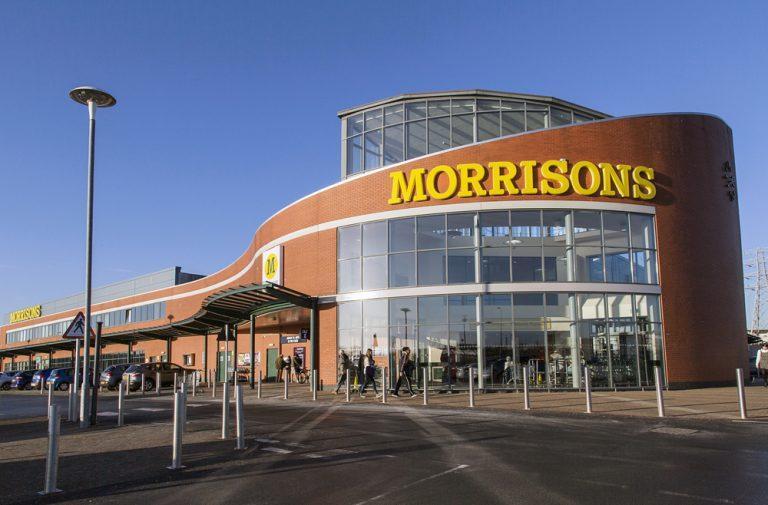
John Lewis has announced plans to repay £300m in government loans following strong Christmas trading.

The department store will be paying the loan two months earlier than it was due to be repaid thanks to stronger than expected sales over the Christmas period.

John Lewis said in a statement: “Despite the headwinds of the last year when John Lewis stores were closed for several months, and future trading volatility, the partnership believes it has sufficient liquidity [to repay the loan early],”

“Trading during the peak, which includes Black Friday and the Christmas period, held up better than anticipated. As a result, we expect our full-year profits to be ahead of profit guidance provided at our half-year results last September, where we said the most likely outcome would be for a small loss or a small profit for 2020-21.”

Whilst the department store has said it will be repaying the loan, it has still refused to repay the business rates relief received.

In November, the group revealed plans for a £300m cost-cutting drive, which involved cutting 1,500 head office jobs.

Sharon White, the chairman of the John Lewis Partnership, said: “Our partnership plan sets a course to create a thriving and sustainable business for the future. To achieve this we must be agile and able to adapt quickly to the changing needs of our customers.

“Losing partners is incredibly hard as an employee-owned business. Wherever possible, we will seek to find new roles in the partnership and we’ll provide the best support and retraining opportunities for partners who leave us.”

RTDs are the next big investment opportunity, with global sales expected to grow by a CAGR of 20% over the next 10 years

Sponsored by Ace + Freak

The “craft revolution” has changed the beverage industry permanently, leaving its mark on everything from beer, think Camden Town to Brewdog, or tonic water from Fentimans to Fever Tree. Through providing better quality and more accessible products, these new FMCG brands have been highly successful in disrupting their markets, taking a large share of profits with them as they continue to meet the changing needs of the consumer. 

Industry experts point to the Ready to Drink (RTD) market being the next high growth sector riding the craft revolution wave,with 60%+ of the current RTD cocktail market composed of Millennials and Gen Z’s, and the former about to reach their spending prime. These consumers are tech natives, growing up with ‘on demand’ and convenience as key needs but without wanting to compromise on their quality, values or the consumer experience. 

The $20bn RTD (ready to drink) cocktail market witnessed substantial growth this year at 43%, even more impressive given the collective decline of 8% in global alcohol sales, largely due to government restrictions placed on events and hospitality during the pandemic. Moreover, in the first 2 quarters of 2020, the UK market grew 86% alone, whilst the EU & US Markets are expected to be worth £7.1bn and £6bn respectively by 2026, with the global market for RTD cocktails predicted to hit £146bn by 2030.

Ace + Freak aim to be at the forefront of this next wave of disruption, creating internationally awarded, craft RTD cocktails in both alcoholic and non-alcoholic format, made of all natural, bespoke ingredients, for a generation of drinkers that give AF*.

With their unique branding and award winning flavours, partnered with an ethical and sustainable culture, Ace + Freak are positioned perfectly in the market. With funds allocated to move production to a high speed canning facility in 2021, reducing associated costs by >50%, as well as scaling their online offering, sales and marketing capabilities, they are looking to gain significant share in a rapidly growing and underserved market.

Ace + Freak are offering a rare opportunity to participate in their growth as they look to execute on 2021’s plan to scale across the UK, in select international markets, and develop new products. Through their latest funding round, they have recently launched a campaign to raise £250k investment – a target they have nearly reached.

To date, Ace + Freak have received rave reviews from customers and press alike with features in The Sunday Times, DAZED and Time Out, to name a few. They’ve received 6m+ Social media impressions and recently won “Best in class RTD cocktail” in the first canned challenge taking place in the USA, beating established competitors such as Cutwater spirits.

So what’s driving this rapid growth right now? 

Covid-19 has obviously had a massive effect on how we socialise and on drinking behaviours, with people looking to enhance their drinking experience outside of traditional environments such as restaurants, pubs and bars. According to a recent Mintel report, 55% of Millennials and Generation Z prefer to drink at home. Allied, with this, these target consumers are more discerning of taste, mindful about their purchasing and demanding of lower price points for quality flavours and ingredients, all creating a perfect storm of growth for RTDs and brads ready to meet these trends.

As better quality, naturally sourced, healthier, and more exciting ingredients, can be canned and enjoyed outside of the traditional environments, this market is expected to continue to outpace other alcohol categories in the near future, as well as gaining a share of discerning beer, wine and spirits drinkers.

All of this creates a compelling high growth narrative, and if you are looking for an exciting investment opportunity – don’t miss out, join a community of over 100 investors hoping to help shape the future of Ace + Freak and the RTD industry.

Potential returns at exit are high, with a strong track record of larger industry players acquiring emerging or successful disruptors to enhance their portfolios. Beverage businesses with <£10m revenues are exiting at 8-10x multiples revenue and craft breweries are exiting on average 31.9x EBITDA.

If you’re interested in learning more, request a copy of the investment deck or if you’re ready to dive right in  – join Seedrs campaign HERE

* Target market phrase for caring a lot!

Next pulls out of race to buy Topshop

0

Next has pulled out of plans to buy Arcadia’s Topshop.

In a statement, the retailer said it had “withdrawn from the process to acquire any or all of the Arcadia Group from the administrator”, adding “our consortium has been unable to meet the price expectations of the vendor”.

“Next wishes the administrator and future owners well in their endeavours to preserve an important part of the UK retail sector,” it added.

Other retailers that are in the race to purchase Topshop include Chinese online fashion retailer, Shein, and Authentic Brands. It is also thought that Asos and Boohoo are involved in the conversation.

Shein put an offer of £300m for Topshop and Topman, whilst it is running another process for some other of Arcadia’s brands.

Arcadia’s brands include Topshop, Topman, Dorothy Perkins, Wallis, Miss Selfridge and Burton. Evans has already been sold to City Chic Collective in a £23m deal.

Sir Philip Green bought Arcadia for £850m in 2002, Its collapse was one of the high streets biggest casualties, putting 13,000 jobs at risk.

Ian Grabiner, the chief executive of Arcadia, said in November when the group fell into administration: “This is an incredibly sad day for all of our colleagues as well as our suppliers and our many other stakeholders.

“The impact of the Covid-19 pandemic, including the forced closure of our stores for prolonged periods, has severely impacted on trading across all of our brands. Throughout this immensely challenging time, our priority has been to protect jobs and preserve the financial stability of the group in the hope that we could ride out the pandemic and come out fighting on the other side. Ultimately, however, in the face of the most difficult trading conditions we have ever experienced, the obstacles we encountered were far too severe.”

Retail sales fall 1.9% in 2020 – online sales boom

1

UK retail sales increased by 0.3% in December – much lower than the 1.2% rise expected by economists.

New figures from the Office for National Statistics also showed that despite an online boom, retail sales fell 0.4% in the fourth quarter.

Looking at 2020 as a whole, online sales boomed and hit record highs, however, retail sales in total fell 1.9% compared to 2019. This is the biggest yearly drop on record.

Over 2020, clothing sales were down 25.1%, petrol stations were down 22.2% and department stores fell 5.2%. Online sales and mail order sales saw a record increase of 32% over 2020.

Internet sales at food stores shot up 79.3%, department stores were up 65.9% and household goods stores up 73.4%.

“December’s retail sales increased slightly, driven by an improved month for clothing sales, as the easing of some lockdown measures for parts of the month meant more stores were able to open,” said Jonathan Athow, deputy national statistician for Economic Statistics. “Food store sales this month were subdued as retailers reported lockdowns and restrictions on the sale of non-essential items impacted on footfall. “

“Retail sales for 2020 saw their largest annual fall in history as the impact of the pandemic took its toll. Clothing retailers fared particularly badly, with a record annual fall of over 25%, while movement restrictions led to a record year-on-year decline for fuel sales.

“Some sectors were able to buck the trend in 2020. The increased popularity of click and collect and people buying more items from home led to a strong year for overall internet sales, with record highs for food and household goods sales online,” he added.

In separate news, government borrowing continues at a record pace. In December, the government borrowed £34.1bn.

Paul Craig, portfolio manager at Quilter Investors, commented: “With Brexit concluded, albeit rather weakly, and the vaccine rollout well underway, Rishi Sunak may be receiving the message from the backbenchers that the time is right to bring the borrowing under control.”

ECB sticks to key rates and pandemic policy

0

Following the first European Central Bank (ECB) meeting of 2021, the institution announced that it will be sticking to its current key rates and the scale of its Pandemic Emergency Purchase Programme (PEPP) for the foreseeable future, as the European economy continues to grapple with the impact of the Covid-19 pandemic.

In what The Telegraph described as a “pretty boring” press conference from Christine Lagarde, the ECB President confirmed that the bank will stick to its 0% interest rates until inflation at least “robustly converges” to the target of around 2%.

She warned, however, that upward pressure on inflation will take some time to emerge and is highly dependent on the progress of the Europe-wide vaccination programmes in tackling infection rates.

Lagarde emphasised that uncertainty remains very high, and the ECB will refrain from any significant changes while the economic landscape is still so murky.

She confirmed that the ECB’s near-term forecasts were supported by the newest data, stating: “Overall, the incoming data confirm our previous baseline assessment of pronounced near term impact on economy and protracted weakness in inflation”.

The ECB added in a statement: “The Governing Council continues to stand ready to adjust all of its instruments, as appropriate, to ensure that inflation moves toward its aim in a sustained manner, in line with its commitment to symmetry”.

Meanwhile, the ECB’s asset-purchasing PEPP project will remain at €1.85 trillion. The Governing Council commented: “If favourable financing conditions can be maintained with asset purchase flows that do not exhaust the envelope over the net purchase horizon of the PEPP, the envelope need not to be used in full”.

Crucially, it added: “Equally, the envelope can be recalibrated if required to maintain favourable financing conditions to help counter the negative pandemic shock to the path of inflation”.

Lagarde also said that the ECB’s Governing Council is continuing to monitor the euro exchange rates, echoing concerns raised in the bank’s last meeting in December. Policymakers appear to still be worried about the strength of the single currency. The GDP/EU rate is currently sitting at 1:1.13 as of GMT 14:57.

Reactions from market analysts are beginning to flow in, with global macro strategist Frederik Ducrozet stating simply:

Others, namely Danske Bank’s chief strategist, picked up on the ECB’s interesting choice of wording in their economic forecast:

Also commenting on the ECB’s announcement was Chris Beauchamp, Chief Market Analyst at IG, who weighed in:

“While the euro has weakened against the dollar from its highs earlier in the month, the overall direction of travel remains unchanged.

“The ECB had previously been keen to downplay any concerns about the strength of the euro, but if reduced stimulus expectations in the US take the heat out of the dollar bounce, then policymakers in Frankfurt might have to start worrying again about the euro’s rise”.

Electric batteries with 5 minute-charge produced

0

Electric car batteries capable of fully charging in just 5 minutes have been produced in a factory for the first time ever, marking a significant step forward for the electric car industry and tackling some long-held concerns about the lengthy charging times for electric vehicles making them ultimately unsuitable for consumer use.

The new lithium-ion powered batteries were developed by Israeli company StoreDot and manufactured by Eve Energy Co., Ltd (SHE:300014) in China. They are designed differently to standard lithium-ion batteries, replacing the graphite with semiconductor nanoparticles based on germanium, though StoreDot have stated that they hope to use silicon in the future instead.

Capable of fully charging in five minutes, the batteries are a huge improvement on the standard “fast charge” rates of between 30 minutes and 2 hours, although the new technology will require much higher-powered chargers than those stationed on city streets today.

Using already available charging infrastructure, StoreDot has said that it is aiming to deliver 100 miles of charge to a single car battery in five minutes in 2025.

StoreDot produced 1,000 sample batteries with its manufacturing partner Eve Energy to showcase the newly-developed technology to carmakers. A number of large companies are already invested in StoreDot, including Daimler, BP, Samsung and TDK, which have raised $130m to date. It was named a Bloomberg New Energy Finance Pioneer in 2020.

The samples – which are compliant with existent lithium-ion battery certifications – were manufactured on a standard construction line, meaning that no new infrastructure or machinery will be necessary as part of the production process. It could potentially save manufacturers millions on expensive renovations.

Electric vehicles are a crucial part of the effort to combat climate change, with the power to reduce toxic carbon emissions, although so-called “charge anxiety” is a major obstacle for the industry catching on with consumers.

Many worry that current charging technology only supports a short mileage range, and with charging stations still relatively sparse outside of city centres, owners are concerned that they might struggle to find somewhere to charge their vehicle in time. Or, even if they do, long charging times essentially leave drivers stranded while they wait for their vehicle to “refill”.

StoreDot’s new batteries, however, would take no longer to charge than a standard trip to a petrol station to replenish fuel, and so are less of a challenge for sceptics to get their head around than a 1hr+ wait at a charging station.

“A five-minute charging lithium-ion battery was considered to be impossible,” said StoreDot’s chief executive, Dr Doron Myersdorf.

“The number one barrier to the adoption of electric vehicles is no longer cost, it is range anxiety. You’re either afraid that you’re going to get stuck on the highway or you’re going to need to sit in a charging station for two hours. But if the experience of the driver is exactly like fuelling [a petrol car], this whole anxiety goes away”.

He added, “We are not releasing a lab prototype, we are releasing engineering samples from a mass production line. This demonstrates it is feasible and it’s commercially ready”.

StoreDot is not currently listed, although some are already touting its IPO credentials since its new battery technology was announced. Eve Energy, however, is listed in Shanghai, and has seen its shares climb significantly over the last few days. The stock is currently up +1.32% to 105.61 CNY on the market close at 4:29PM CST.

Furlough likely to continue into summer months

Rishi Sunak is set to extend the government’s furlough scheme past the end of April.

As the UK is likely to continue Covid restrictions into the summer months, Sunak is drawing up plans to continue the scheme. It was supposed to end October 2020. The chancellor is set to have a budget on 3 March where he may lay out the plans.

This comes just days after the CBI urged Sunak to extend the furlough scheme.

The furlough scheme sees the government pay up to 80% of wages up to £2,500 a month.

CBI director-general, Tony Danker, said: “Many tough decisions for business owners on jobs, or even whether to carry on, will be made in the next few weeks.

“If the government plans to continue its support then I urge them to take action before the budget which is still more than six weeks away.

“The government has done so much to support UK business through this crisis, we don’t want to let slip all the hard work from 2020 with hope on the horizon.

“The rule of thumb must be that business support remains in parallel to restrictions and that those measures do not come to a sudden stop, but tail off over time. Just as the lifting of restrictions will be gradual, so must changes to the government’s sterling support to businesses,” he said.

London Mayor, Sadiq Khan, has also called on the chancellor to extend the scheme past march, saying that “without the certainty that support will remain in place for as long as it is needed, many more businesses could decide to cut their losses and close permanently now.”

The CBI has estimated that extending the furlough scheme to the end of June could cost the government £6bn. It has so far cost a total of £82bn.

Daily Mail owner posts 15% plunge in revenue

0

Daily Mail & General Trust (DMGT) has posted a 15% fall in revenue in the three months to 31 December 2020.

The owner of the Daily Mail and the Metro said revenue fell to £304m. Advertising revenues decreased by 16% and the group saw print advertising fall by 38%.

Digital advertising increased by 8%.

Looking ahead, DMGT said: “The duration and severity of the Covid-19 pandemic remains unclear at this stage, despite the hope that vaccination programmes will enable lockdowns around the world to be eased over time. Consequently, the short-term outlook for the UK Property Information, Consumer Media and Events & Exhibitions businesses remains difficult to predict, albeit the dynamics outlined in DMGT’s FY 2020 results release on 23 November 2020 remain the same.

“The Board is confident that DMGT’s diversified portfolio is well-positioned to continue to withstand the present uncertainties and that its long-term approach will continue to create value for its shareholders.”

Shares were 0.9% lower at 813p during mid-morning trading on Thursday.

Pets at Home posts +18% Q3 revenue

0

Pets at Home has reported a 18% jump in revenue for the third quarter of 2020.

Revenue surged to £302m whilst like-for-like sales seeing a 17.6% over the the 12 week period from 9 October to 31 December 2020

Based on trading year to date, the group expects full-year underlying pre-tax profits of £77m.

Members of the VIP and Puppy and Kitten Clubs grew by 47%, with members spending around 25% more than non members.

Peter Pritchard, Pets at Home CEO, said: “Against a backdrop of continued uncertainty our pet care model remains robust, with our performance during the third quarter testament not only to the advantages of our scalable omnichannel pet care platform and unique joint venture veterinary model, but also the hard work and commitment of all our colleagues across the Group, to whom I express sincere thanks.

“We entered our final quarter facing renewed challenges in the form of higher COVID infection rates and restrictions on a national level, and our priority remains the health, safety and wellbeing of all of our colleagues, partners and customers.

I am very pleased with the progress we have made in this quarter, in particular how we have adapted to the changing environment in which we operate. We remain as determined as ever to create the best pet care platform in the world, and our strong liquidity gives us the capacity to make the right investments to support our ambition”.

Pets at Home shares are trading +1.58% at 409,58 (1002GMT).

Ross Hindle, retail sector analyst at Third Bridge, commented on the strong Q3 results: “Pets at Home is continuing to benefit from a rise in pet ownership during the pandemic and a growing trend of pet food premiumisation. Growth in high margin pet food has flowed through into pet accessories, as consumers look to humanize and spoil their new 4-legged friends.”

Stocks & commodities react to Biden inauguration

The pound has hit an 8-month high against the Euro, hitting €1.132 for the first time since last May. The pound also hit a 32-month high against the dollar – up almost a cent today at $1.374.

The markets are also trading at record highs today on anticipation of a major new US stimulus package. Stocks and commodities around the world rallied in the run-up to Biden’s inauguration.

Connor Campbell from SpreadEx said: “The 46th President of the United States was aggressive in first few hours after taking office, announcing 17 executive actions, with 15 of those executive orders. These include reversing Trump’s Muslim travel ban, halting the construction of the US-Mexico border wall, and putting things in motion for the States to re-join the Paris climate agreement. Biden has also mandated the wearing of masks and social distancing in federal buildings and lands.

“It appears that Biden isn’t messing around. And it is exactly this purposeful and robust approach the markets were hoping for – especially if it leads to his $1.9 trillion covid-19 stimulus package escaping the Senate unscathed. If lagging behind its peers in terms of where it is at overall, the FTSE still rode the morning’s momentum higher, climbing half a percent to a 6-day peak of 6,770.

“That the UK index rose to such an extent despite the pound rallying – sterling was up 0.4% and 0.3% against the dollar and euro respectively – reflects the underlying positive sentiment this Thursday,” he added.

The FTSE 100 gained 0.5% this morning to hit 6,770 points.The FTSE 250 also climbed, rising 0.3% to 20,941 points.

Susannah Streeter from Hargreaves Lansdown said: “Although fresh stimulus isn’t expected given that it announced a €500bn euro extension to its quantitative easing programme just last month, some idea about the direction of travel, if economies are forced to stay locked down for longer, would be welcome.”