Jobs on the line as Edinburgh Woollen Mill and Ponden Home collapse

0
More than 2,900 employees are now at risk of losing their jobs after it was announced on Friday that clothing retailer Edinburgh Woollen Mill and homeware suppliers Ponden Home have fallen into administration. Both brands are owned by EWM Group, which is still negotiating a potential rescue deal that could save its remaining brands – Peacocks and Jaeger – from going under. A spokesperson for the group announced the collapse with a solemn statement about the impact of the coronavirus pandemic, which had seen its stores close to customers for several months during lockdown. “Over the past month we explored all possible options to save Edinburgh Woollen Mill and Ponden Home from going into administration, but unfortunately the ongoing trading conditions caused by the pandemic and lockdowns proved too much.
“It is with a heavy heart we acknowledge there is no alternative but to place the businesses into administration”. Last month it was reported that Edinburgh Woollen Mill had already permanently closed several of its sites in Cumbria and the Scottish Highlands after the company failed to drum up sufficient sales to offset the losses during the pandemic. Business advisory group FRP Advisory has been drafted in for the ongoing search for buyers as EWM Group rushes to save its remaining brands.
Tony Wright, FRP joint administrator, said both Edinburgh Woollen Mill and Ponden Home had been trading well before the pandemic, but that since reopening stores in June they had both struggled to reanimate customer engagement levels.
“Regrettably, the impact of Covid-19 on the brands’ core customer base and tighter restrictions on trading mean that the current structure of the businesses is unsustainable and has resulted in redundancies.
“We are working with all affected members of staff to provide the appropriate support.”
The news comes as the latest blow to the UK high street after dozens of household names have had to close their doors to the public this year. Edinburgh Woollen Mill had been a familiar face for British consumers since it was launched back in 1947.  

Global equities plateau after an exhausting election week

Sleep? Sorry – don’t know them. As forecast, the US Presidential Election has been drawn-out, dramatic and all-consuming. But, rather than buckle under the strain, global equities spent the majority of the week absolutely soaring. Rallying at their fastest rate since April, US big tech stocks led the way, with Alphabet rising by 8%; Amazon, Microsoft and Apple posting gains in excess of 9%; and Tesla and Facebook booming over 10% during the week. Between Wednesday and Thursday, these gains saw the Nasdaq bounce over 6%, while the Dow Jones hiked up by around 3.5%. Somewhat running out of steam at the end of the week, however, global equities finished lazily. Having recovered all of the ground lost in the previous week, markets opted for a subdued end of the week – with a Biden victory already priced in, and no major COVID developments to speak of. With this, the Dow fell by 0.35% on Friday, the CAC fell by around half a percent, the DAX dropped by 0.70% and the FTSE 100 remained all but flat as trading came to a close. Speaking on the flat global equities performance on Friday, Spreadex Financial Analyst, Connor Campbell, commented:

“Exhausted after the giddiness displayed earlier in the week, the news that Joe Biden has likely won Pennsylvania – and therefore the Presidency – failed to move the Dow Jones.”

“Instead the index opened flat, lurking just below the 28,400 mark, in a performance that is in part going to be informed by the fact it has recovered all of last week’s losses.”

“No longer needing to escape the covid-19 depression it found itself in at the end of October, the Dow may now be more hesitant to move higher in the face of the potential recounts and legal challenges that are going to be part of the election aftermath. Already it has been confirmed that there will be a recount in Georgia, a state where Biden is leading by just 1,579 votes, while Trump is pushing for one in Wisconsin.”

Co-op narrows Q3 loss amid “challenging environment”

1
The Co-operative Bank has released a third-quarter trading update, revealing a “resilient performance in a challenging environment.” The lender posted a pre-tax loss of £23.5m, which was a sharp improvement from the £80.1m for the same period a year ago. Whilst losses improved, the Co-op bank is still deep in the red amid the pandemic. In the nine months to the end of September, the group posted losses of £68.1m, compared to the losses of £118.6m in the same period a year earlier. Nick Slape, Chief Executive Officer of the Co-op Bank, said, “I’m proud to become CEO of such a stand-out banking brand and to be leading the organisation at a time when we have an important role to play in supporting our customers and our communities. “This is a challenging time for all banks, given the uncertain economic outlook and continuing low base rate, but whilst we remain loss making as anticipated in our plan, the results also show our resilience as we continue to make significant progress in our turnaround. “These are difficult times for many people around the country and supporting our long-standing charity partners in the work they do is vital. We are very proud of the initiatives we’re involved in to tackle youth homelessness, to raise awareness of economic abuse and to support co-operative businesses across the UK. As the backdrop remains difficult in the months ahead, we are committed to playing our part and doing as much as we can to make a difference to the communities around us. “As we face into this new phase of the pandemic, I would like to thank our colleagues for their commitment in supporting our customers, and to reassure all our customers of our support at this uncertain time.” The bank saw an increase in mortgages for the third quarter, which was helped by Rishi Sunak’s stamp-duty holiday. The bank lent £530m in mortgages over the last quarter.  

Deloitte fined by FRC for audit failures

0
Deloitte has been fined £362,500 by the Financial Reporting Council (FRC) after the company failed to relate to the audit of a former client’s defined benefit pension scheme. Deloitte did not ensure that the work carried out by the Engagement Quality Control Review (EQCR) was properly documented. The FRC also said that the company did not obtain sufficient audit evidence to substantiate the cash holding of the client’s defined benefit pension scheme. The former client in this case has not been named by the FRC. “We acknowledge and regret that aspects of our audit work for this entity did not comply with the relevant standards. However as the FRC has recognised, these did not call into question the truth or fairness of the financial statements in question,” said a spokesperson from Deloitte. “Audit quality remains our priority and we continue to enhance our audit quality processes and to seek improvement across all of our work.” Claudia Mortimore, who is the Deputy executive counsel to the FRC commented: “The proportionate sanctions reflect the failures by the respondents to obtain sufficient appropriate audit evidence and to properly document work in significant areas of audit risk, but also recognise the limited nature of the breaches, which did not call into question the truth or fairness of the financial statements.”

NAO: Government has failed to prepare Brexit borders

The National Audit Office (NAO) has published an 85-page report, highlighting the government’s failure to prepare post-Brexit borders. Whitehall’s spending watchdog slammed the UK government for failing to prepare for Brexit and the impact this will have on for British businesses. “Some of this uncertainty could have been avoided, and better preparations made, had the government addressed sooner issues such as expanding the customs intermediary market, developing a solution for roll-on, roll-off traffic [and] upscaling customs systems,” said the NAO in a report released today. According to the watchdog, the “reasonable worst-case planning assumptions” means that between 40% and 70% of lorries that are travelling between Europe and the UK will not be prepared for the new border controls. There is still significant uncertainty over whether the correct infrastructure will be in place in time for July 2021, when there will be full import controls on goods coming from the EU.

Gareth Davies, the head of the NAO, said: “The 1 January deadline is unlike any previous EU exit deadline – significant changes at the border will take place and government must be ready.

“Disruption is likely and government will need to respond quickly to minimise the impact, a situation made all the more challenging by the Covid-19 pandemic.”

A UK government spokesperson said: “We are making significant preparations to prepare for the guaranteed changes at the end of the transition period – including investing £705m to ensure the right border infrastructure, staffing and technology is in place, providing £84m in grants to boost the customs intermediaries sector, and implementing border controls in stages so traders have sufficient time to prepare.

“With fewer than two months to go, it’s vital that businesses and citizens prepare too. That’s why we’re intensifying our engagement with businesses and running a major public information campaign.”

House prices hit record high – but for how long?

House prices in the UK have increased at their fasted rate since 2016. In October, house prices jumped 7.5% according to data from Halifax. The average property now costs £250,457. On a month-by-month basis, prices increased just 0.3% between September and October. Despite the growth this year, Russell Galley, Managing Director at Halifax, has warned that the housing market would start to see a slowdown. “The average UK house price now tops a quarter of a million pounds (£250,547) for the first time in history, as annual house price inflation rose to 7.5% in October, its highest rate since mid-2016. Underlying the pace of recent price growth in the market is the 5.3% gain over the past four months, the strongest since 2006. However, month-on-month price growth slowed considerably, down to just 0.3% compared to 1.5% in September,” said Galley. “Overall we saw a broad continuation of recent trends with the market still predominantly being driven by home-mover demand for larger houses. Since March flat prices are up by 2.0% compared to a 6.0% increase for a typical detached property. In cash terms that equates to a £2,883 increase for flats compared to a £27,371 rise for detached houses. “This level of price inflation is underpinned by unusually high levels of demand, with latest industry figures showing home-buyer mortgage approvals at their highest level since 2007, as transaction levels continue to be supercharged by pent-up demand as a result of the spring/summer lockdown, as well as the Chancellor’s waiver on stamp duty for properties up to £500,000. “While Government support measures have undoubtedly helped to delay the expected downturn in the housing market, they will not continue indefinitely and, as we move through autumn and into winter, the macroeconomic landscape in the UK remains highly uncertain. Though the renewed lockdown is set to be less restrictive than earlier this year, it bears out that the country’s struggle with COVID-19 is far from over. With a number of clear headwinds facing the housing market, we expect to see greater downward pressure on house prices as we move into 2021.”

EasyJet to cut flights amid travel restrictions

1
EasyJet (LON: EZJ) has said that it will only run 20% of planned fights for the remainder of 2020. The budget-airline made the announcement as the UK has entered a second lockdown and travel restrictions urge people not to holiday within the UK and abroad until 2 December. “EasyJet now expects to fly no more than 20% of planned capacity for the first quarter,” said the group. “We remain focused on cash generative flying over the winter season in order to minimise losses during the first half and retain the flexibility to ramp capacity back up quickly when we see demand return.” Last week, EasyJet said that it would sell nine more planes for £305.7m after the group has been feeling the significant strain on finances. In the year to September, the group said it expects a loss of £815m to £845m. Easyjet warned with its last financial statement that numbers will not return to normal for some time and has called on the government to support the aviation sector as it faces “the most severe threat in its history.” The group’s chief executive, Johan Lundgren, said: “Based on current travel restrictions we expect to fly c.25% of planned capacity for Q1 2021 but we retain the flexibility to ramp up capacity quickly when we see demand return and early booking levels for summer ‘21 are in line with previous years. “Aviation continues to face the most severe threat in its history and the UK Government urgently needs to step up with a bespoke package of measures to ensure airlines are able to support economic recovery when it comes. “easyJet came into this crisis in a very strong position thanks to its strong balance sheet and consistent profitability. This year will be the first time in its history that easyJet has ever made a full year loss,” he added. EasyJet shares (LON: EZJ) are trading -4.17% at 524,20 (0939GMT).

Hovis acquired by Endless for undisclosed sum

2
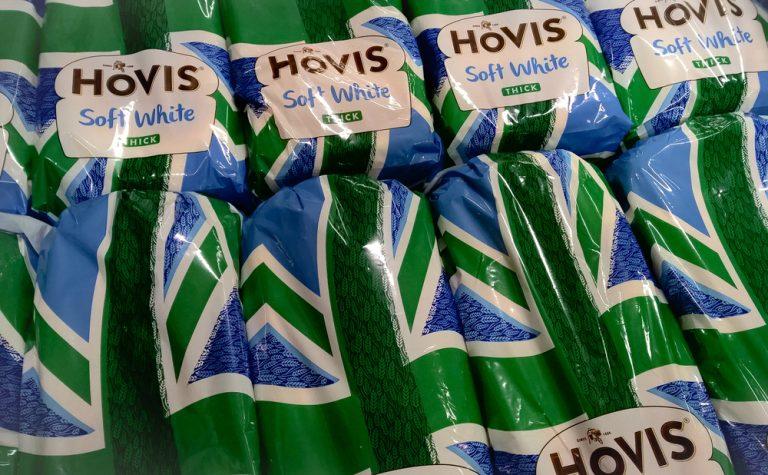
The bread brand Hovis has been sold to Endless for an undisclosed sum. Following talks, Endless acquired the brand after Newlat Food issued a statement saying that they had withdrawn themselves from the bidding war. Owned by Premier Foods (LON: PFD) and US investment firm, Gores Group, Hovis is a 134-year old firm that employs 2,800 people across the UK. Sales at the brand surged over lockdown as consumers stockpiled. The value of the deal has not been disclosed, however, Premier Foods has said they will receive £37m. Equity firm Endless has said they plan to significantly invest in the Hovis brand to achieve growth plans. Nish Kankiwala, chief executive of Hovis, said: “Based on our extensive engagement with Endless over the past several months, it became clear that both parties share a commitment to customers and colleagues and for building on Hovis’s heritage by investing in growing both the brand and product range. “This shared vision makes Endless the best shareholder to support our ambitious plans.” Mark Lynch, Partner at corporate finance house, Oghma Partners, commented on the deal: “Endless’ modus operandi is to take struggling businesses and drive significant improvement. The incremental performance at assets Karro and Bright Blue have been excellent examples of this – they are therefore logical owners of Hovis for the time being. “It is possible that they may look to merge the business with the cake business, Bright Blue which should deliver synergies across head office, back office, purchasing and possibly sales and customers. A bigger business could also possibly make the larger entity a candidate for an IPO. Medium term Hovis remains up against two well-funded and well invested competitors in Warburtons and Allied so the challenge will be to improve the competitive position whilst holding on to any cost savings that can be generated.” Premier Foods shares (LON: PFD) were up 1.75% on Friday morning (0916GMT).

Nasdaq continues surge as investors double down on Big Tech stocks

3
Despite being wrong about pricing in a decisive Democrat victory, markets were happy to settle with Biden as favourite to win the presidency, as they continued the boom started on Monday. Since Wednesday morning, investors have married optimism over a Biden win with lingering uncertainty, with the result being large buy-ups of monolithic tech equities – which has seen the Nasdaq Composite soar on consecutive days. Up by around 6% since polling closed, the tech-heavy Nasdaq has so far posted a 2.40% rise on Thursday, up to 11,864 points. This was led by continued upward trajectories in big tech prices. For instance, Apple bounced over 4% on Wednesday, and between 2.5% and 3% on Thursday. Amazon bounced over 5% yesterday and around the same rate as Apple today. Microsoft rose by over 4% on Wednesday and over 2.5% on Thursday. Alphabet also shot up by a similar rate and added modest gains on Thursday. Finally, Facebook hiked over 7% on Wednesday and increased by around 2.5% on Thursday. Elsewhere in tech stocks, Tesla posted a 10% bounce between Monday and Wednesday, and added a further 2% on Thursday. Netflix bounced 4% on Wednesday and around 2.5% today. And, while not on the Nasdaq, it’s worth noting Uber’s surge, up around 14% on Wednesday after a successful legal dispute settled in their favour, and then up by almost 2% on Thursday. This positivity, while not matched by other equities outside of big tech, was somewhat reflected more broadly across US markets. The Dow Jones and S&P 500 both rallied by between 1.5% and 2%, to 28,388 points and 3,504 points respectively. Speaking on big tech equities’ positivity and the Nasdaq bounce, Spreadex Financial Analyst, Connor Campbell, comments:

“Investors showed no fear of jinxing the election result on Thursday, continuing to full-force barrel into equities on the assumption that Joe Biden will be POTUS come January.”

“Little has changed since this morning. Arizona, Georgia, Pennsylvania and Nevada are all still on a knife-edge,”

“[…] Yet, as they did on Tuesday and Wednesday, the markets have used the likelihood of a Biden presidency, even if it isn’t accompanied by the anticipated ‘blue wave’, as an excuse to drag themselves out of the covid-shaped hole they found themselves in by the end of October.”

IG Chief Economist, Chris Beauchamp, added:

“Last week’s selloff looks more and more like pre-election jitters, a bout of nervousness that has been reversed even more swiftly than it appears.”

“It is true that the US election is yet to be officially decided, but Biden seems likely to cross the 270 vote threshold in coming days, potentially rendering Trump’s legal challenges irrelevant, and with this bump in the road removed, stock markets can rally once more.”

Bank of England £150bn QE: is it enough to face off the challenges ahead?

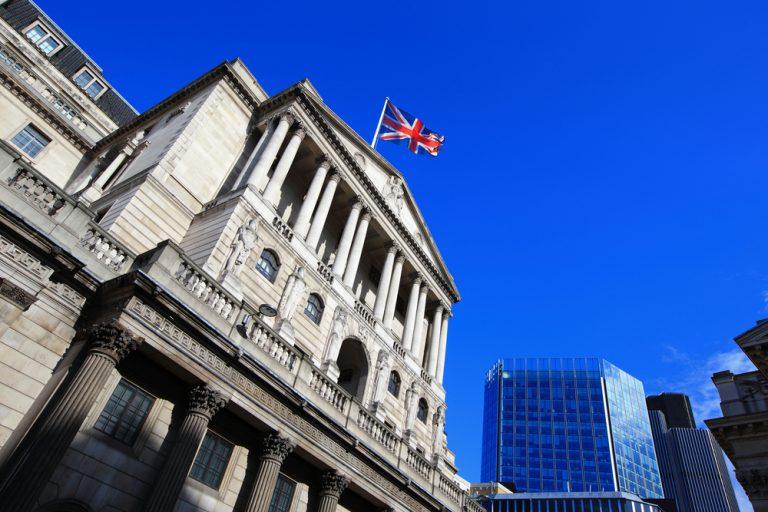
In its statement on Thursday, the Bank of England said “there are signs that consumer spending has softened across a range of high-frequency indicators, while investment intentions have remained weak”. This, and the need to help the government introduce renewed fiscal support during lockdown, saw the central bank announce an additional £150 billion in QE. Meanwhile, the bank downgrade its GDP forecast for 2020, from a 9% fall, to a drop of 11%. It also downgraded its growth forecast for the new year, down from plus 9.5%, to plus 7.5%, and added that it expects unemployment to peak at between 7.5% and 8% during Q2 2021. With these considerations in mind, financiers and researchers have weighed in on the latest round of Bank of England QE, and provided contrasting answers to the question: was it was good enough? On a positive note, housing-market-facing financiers were optimistic about the latest batch of support. Speaking on the bank’s announcement, Managing Partner at Knight Frank Finance, Simon Gammon, commented: “The Bank of England would clearly like to hold borrowing costs lower for longer in an attempt to spur economic growth, but the cost of mortgages is likely to keep rising while lenders are being swamped with new applications.” “There were more mortgages approved for house purchase last month than any time since October 2007 and the surge in property market activity is showing few signs of slowing. As a result we’re seeing a huge variety in borrowing costs from lenders, depending on their volume of work and appetite to lend.” David Ross, Managing Director of Hometrack, adds: “While there are some negative economic headwinds it’s encouraging to see the Bank of England maintain this historically low interest rate. This, combined with the Stamp Duty holiday, will ensure demand for mortgages remains high however, with fewer products now available, it’s increasingly clear many potential home-movers will miss out.” In contrast, Fran Boait, executive director of non-profit research group, Positive Money, thinks today’s support should have gone further: “Our central bank is willing to help finance government spending to help us get through this crisis, and that should be embraced. Sadly the Chancellor seems to be spreading irresponsible myths that there are hard constraints on public spending, even when interest rates on government debt are negative and inflation remains well below target.” “Monetary policy alone isn’t enough. The fact negative interest rates are even being considered should be a warning sign that the Chancellor needs to pull his weight and spend more. The Treasury must take advantage of the increased headroom afforded by the Bank of England’s bond purchases to boost spending to fund public services, protect incomes and kick-start a green recovery.” Indeed, with interest rates so low, this period should be seen as the Black Friday of public spending (and debt), as far as the government is concerned. Ms Baoit added that the Bank of England might even consider crediting the government’s ‘Ways and Means’ overdraft with spending money for the Treasury. These suggestions make some sense. Spend big when you need to, and when it’s cheapest to do so. On the other hand, we shouldn’t turn our noses up at the issue of inflation. As OMFIF Economist, Chris Papadopoullos said back in April, inflation is an issue of national money supply based on how much is borrowed and for how long. The Bank of England says the UK’s money supply is £2.2 trillion, and tended to grow around 4% a year during the 2010s. And, while a change in money supply ‘rarely causes a proportional change’ in prices, it may give us an idea of the ‘order of magnitude of changes’. For instance, Mr Papadopoullos stated that: “Borrowing £20bn for a month adds less than 1% to the money supply. Borrowing £200bn for a year or two would raise the money supply by 10%, which may add a few percentage points to inflation.” On the other hand, and as stated by SEB corporate bank Economist, Marcus Widen, the Bank of England widening its support would not be unreasonable. Indeed, inflationary pressures should be considered, but the central bank’s forecast of 7+% growth in 2021 may yet prove bullish, and thus supplementing the supply of money might not be as painful as some fear. Mr Widen comments:

“The decision to expand the Asset Purchasing Program (APP) more than expected (by some £50bn) must be seen in light of a fast deterioration of the economic situation due to the Covid-19 second wave hitting the UK economy disproportionately more than other nations. The UK government has also expanded fiscal supports, which will most likely continue and allow for the Bank of England (BoE) to continue its APP. Not surprisingly, the BoE reiterated that it is ready to do what is needed if the outlook weakens further.”

“[…] The UK is not only affected by new extensive lockdown measures but also the exit from the EU single market at the end of the year (2020), so the uncertainty about what trajectory the UK economy will take in the short term is immense.”

“All in all, while the UK economy is entering a phase of second wave Covid-19 restrictions and the exit from the EU single market, the BoE’s decision for a larger extension of the APP buys the bank some time, but we cannot rule out it will have to do more.”