Countrywide shares rally on new Connells offer

Countrywide shares (LON: CWD) soared 23% after Connells made a £112m cash offer.

After its previous offer was rejected, estate agency group Connells upped its offer to 325p per share – increasing the offer from the previous 250p price.

David Livesey, Group Chief Executive Officer of Connells, said:

“Countrywide desperately needs a deliverable solution to its current financial problems and lack of strategic direction. Putting Countrywide back on track requires sustained investment and gritty operational improvement over many years. Connells is offering a clear vision for the future, not yet another turnaround attempt based on wishful thinking and flaky financing. Connells’ cash offer of 325 pence per share is the only tangible deal on the table and gives shareholders a huge premium over the value of their Countrywide Shares before we announced our interest.

“Although we have approached the Countrywide Board to seek its recommendation of our Offer, we think it is in the interests of everyone for us to announce our offer today so that all of Countrywide’s shareholders are aware of the compelling nature of our proposal.”

In a statement, Connells said that the new offer “is significantly more attractive to shareholders than any potential alternative proposal under which the group remains a listed company with all the risks and uncertainties that this would involve.”

Countrywide shares (LON: CWD) are currently trading +21.65% at 310,21 (1041GMT).
House prices soar by 7.5%

In the year to November, UK house prices soared by 7.5%.

New figures from Halifax show that the average house price hit an average of £253,240 in November, which is the highest yearly increase since June 2016.

As people are rushing to beat the stamp duty holiday and want more space, the housing market has boomed this year since the end of the first lockdown. Whilst there are signs it is about to cool, it currently remains at very high levels.

Russell Galley, the managing director of Halifax, said average transaction prices were £15,000 higher than in June. He added: “The current market continues to be shaped by a desire for more space, the move from urban to rural locations and indications of a trend for more home working in the future.”

“With unemployment predicted to peak around the middle of next year, and the UK’s economy not expected to fully recover the ground lost over 2020 for a number of years, a slowdown in housing market activity is likely over the next 12 months.”

Samuel Tombs, chief UK economist at Pantheon Macroeconomics, has also said that house prices are likely to cool following the end of the stamp duty holiday. He said in a note: “The combination of a weakened labour market and higher mortgage rates, reflecting the greater risks of lending in the current environment, points to lower levels of activity next year and a partial reversal of this year’s surge in house prices.”

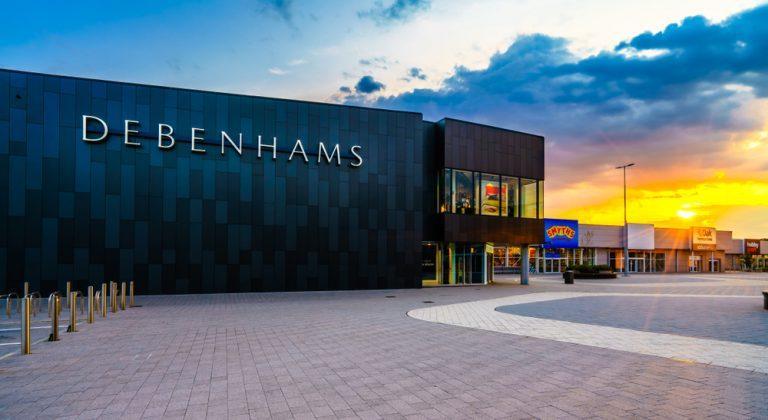
Debenhams in rescue talks with Fraser Group

0

Fraser Group has confirmed that it is in with Debenhams for a potential rescue deal.

After the department store fell into administration last week, Mike Ashley’s Fraser Group said that it is in negotiations to rescue the retailer that employs 12,000 people.

In a statement, the group said: “The Company confirms that it is in negotiations with the administrators of Debenhams’ UK business regarding a potential rescue transaction for Debenhams’ UK operations.

“Whilst Frasers Group hopes that a rescue package can be put in place and jobs saved, time is short and the position is further complicated by the recent administration of the Arcadia Group, Debenhams’ biggest concession holder. There is no certainty that any transaction will take place, particularly if discussions cannot be concluded swiftly.”

Mike Ashley previously built up a 29% stake in the department store, which was wiped when the group fell into administration last year. Ashley also owns House of Fraser, which he bought when the group collapsed.

Last week, JD Sports was in talks to rescue Debenhams. However, the group pulled out. JD Sports said in a statement: “JD Sports Fashion, the leading retailer of sports, fashion and outdoor brands, confirms that discussions with the administrators of Debenhams regarding a potential acquisition of the UK business have now been terminated.”

Debenhams collapsed soon after Arcadia fell into administration.

Mr Grabiner, the Arcadia chief executive, said: “This is an incredibly sad day for all of our colleagues as well as our suppliers and our many other stakeholders. The impact of the COVID-19 pandemic including the forced closure of our stores for prolonged periods has severely impacted on trading across all of our brands.

“Throughout this immensely challenging time, our priority has been to protect jobs and preserve the financial stability of the group in the hope that we could ride out the pandemic and come out fighting on the other side.

“Ultimately, however, in the face of the most difficult trading conditions we have ever experienced, the obstacles we encountered were far too severe,” he added.

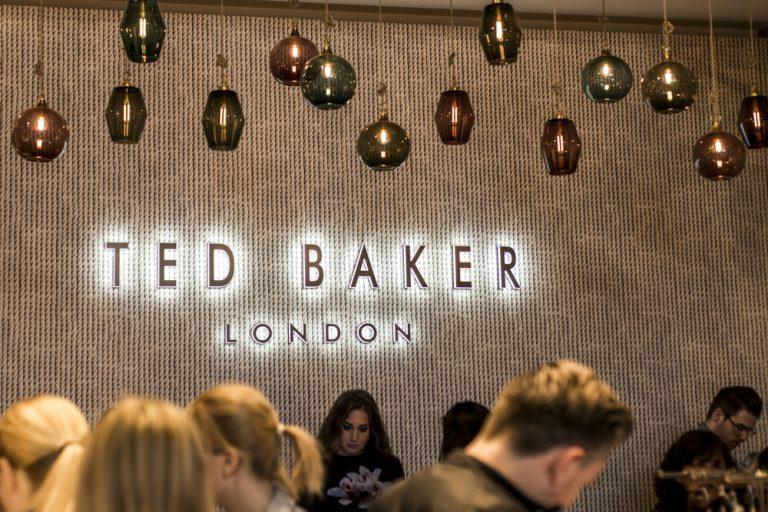
Ted Baker losses widen amid pandemic

0

Ted Baker (LON: TED) has reported deeper losses for the first half of the year.

Operating losses before tax fell from £23m a year ago to £86.4m in the six months ended 8 August.

Group revenue fell 45.9% to £169.5m whilst sales plunged 42.2% during the period to £124m amid the pandemic.

The retailer has blamed the pandemic for Covid-related costs and the lack of sales during the enforced store closures.

“Our financial statements for the first half of the year do not yet reflect the progress
we have made on execution against our strategic plan. Progress made to date,
despite the challenges caused by COVID, have allowed us to fix our foundations.
We cannot fix all our problems overnight and due to the nature of our lead times, we
still expect that it will take another 12-18 months for the hard work and effort of
hundreds of people internally to become visible to our customers and consequently
improved financial results. I am encouraged by how much the team has achieved
in the first six months of the year and we’re delivering against all our operational
KPIs for the current financial year and remain on track to deliver our medium-term
targets,” said the Ted Baker chief executive in a statement.


“We are behind where we want to be on revenue. A slow recovery in consumer
demand due to COVID, the latest round of government lock-down measures and
the well-publicised heavy discounting online across global markets by many of our
peers has led to many of our shops closing for a second time, severely impacted
footfall into city centres and a heightened level of promotional activity.

“This has also impacted our margins and we have taken additional inventory provisions at the half
to reflect the impact of COVID. We have worked hard to offset these shortfalls
through cost savings and here we are ahead of our plans. Higher cost savings and
the ongoing tight control of cash have resulted in a far stronger balance sheet than
we envisaged this early in the plan, with significant cash balances and liquidity to
see us through the COVID crisis and beyond. Despite reporting material operating
losses as expected this year, underlying free cash flow will be positive for the year.
I am extremely pleased to see this level of agility in our cash management.”

Ted Baker shares (LON: TED) are trading +4.55% at 140,00 (0817GMT).

Touchstone makes fourth discovery

The good news continues to come from Trinidad-focused oil and gas producer Touchstone Exploration Inc (LON: TXP) with a further gas discovery at Cascadura Deep-1. finnCap has upgraded its share price target by 58% to 188p.
Touchstone has made a discovery with every well that it has drilled on the Ortoire block so far. The latest well is the fourth and it is apparently the best. Deeper drilling is required to firm up the potential, though, which should happen in the first quarter of 2021. This find appears to be an extension of the geology found in the Cascadura 1ST-1 well.
Further drilling is ...

B&M waives rate relief

Discount retailer B&M European Value Retail (LON: BME) has grown its like-for-like sales by more than 30% during November. It is waiving business rate relief from the government.
There will be £80m waived and this will hit forecasts. However, that strong trading has enabled a £60m uplift in expectations. That means that the net effect is a £20m plus reduction in forecast pre-tax profit for this year. The forecast has fallen to £447m with earnings of 35.8p a share, falling by a lower percentage.
First half like-for-like growth in sales was 23% and this growth has accelerated. The fact that ...

Vaccines to be flown in by military aircraft to avoid Brexit delays

According to contingency plans being developed by the UK government, ‘tens of millions’ of vaccines produced in Belgium will be flown into Britain via military aircraft, to sidestep customs delays caused by the Brexit transition.

MoD and Department of Health and Social Care sources told the Observer that ‘large consignments’ of vaccines would be brought in by RAF freight from January 1, should road, rail and sea routes prove untenable. With the next round of Brexit talks set to resume on Sunday, the move illustrates an encouraging step in immediate contingency planning, which will allay some public health concerns as many companies gear up for potential delays at borders.

A MoD source said on vaccines: “If we need to use military planes to bring them in, we will. If the request is made, we will be ready.”

Commenting on the next round of Brexit talks, UK PM, Boris Johnson, and EC President, Ursula von der Leyen, released a joint statement, saying that divergences on the level playing field, governance, and fisheries remain. Despite the impasse, negotiators will reconvene on Sunday, with the leaders set to talk by phone once again on Monday

Speaking to the Observer, one government source said: “There is barely any time left and there is no doubt that this process may not end in agreement.

“This is the final throw of the dice. There is a fair deal to be done but it will only happen if the EU is willing to respect the fundamental principles of sovereignty and control.”

Talking on the supply of vaccines, government officials said that in addition to military aircraft, vaccines could be delivered by express freight service, which was established to deliver medicines and medical supplies to the UK ahead of the Brexit transition date. Some 800,000 doses of the Pfizer (NYSE:PFE) BioNTech vaccine have already been imported into the UK via the Channel Tunnel, with a total of five million doses expected to be delivered before year-end.

In the new year, some 35 million vaccine doses are expected to be imported into the UK. It will be interesting to see whether – in a No Deal scenario – there will be a hard customs cut-off, or an additional transition period, while final details are hammered out. Perhaps we will not see the ‘new normal’ of post Brexit trade until the middle of 2021 or after. At least for now, we know the UK government are prepared to bring vaccines into the country ‘come what may’.

FTSE rises as BP and Shell up >40% in 5 weeks

Hitting a nine-month high, the FTSE 100 finished the week at the front of the global equities pack, beating its Eurozone and US counterparts thanks to the continued recovery of Shell (LON:RDSA) and BP (LON:BP).

Oil majors saw the UK index enjoy a happy Friday, rising 0.92%, to 6,550.23 – its highest level since the start of March. Thus far, the FTSE recovery has been bolstered by the comeback of value stocks in finance, air travel and commodities, though vaccines, lockdown and political updates have seen even recovering equities fluctuate.

One class that looks to continue their recovery, though, are the oil chips such as Shell and BP. Having seen their prices hit respective two-decade lows a few months ago, an oil price burst and general (perhaps premature) uplift in investor sentiment has seen these equities rally at an unseemly rate for such large companies.

On Friday, BP took the FTSE winner’s crown, rallying 3.92% to 276.95p. This price isn’t an outlier, though, with the company hitting a long-term nadir of 193.44p at the end of October, and rallying by 43.17% since.

Likewise, Shell was hardly shabby with its 3.39% rally, up to 1,402.40p. Having fallen to just 900.00p by the end of October, the company has soared by 55.82% to reach today’s price.  

Speaking on UK oil stocks on Friday, IG Senior Market Analyst, Joshua Mahony, commented: “Energy stocks are helping to lead the FTSE 100 higher in early trade, with oil prices hitting a fresh nine-month high thanks to the eventual OPEC agreement struck yesterday.”

“With BP and Shell both cutting dividends earlier in the year, they lost favour amongst much of the trading community. However, with crude on the rise, and the reinstatement of dividends coming into play, the catch-up trade is on for the oil majors.”

“While OPEC may have not managed to pass an entire six-month extension to the current production quotas, the tapered approach that will only ever seen 500k change per month does highlight that production will only rise as demand improves.”

Pets at Home to repay business rates relief

0

Pets at Home has become the latest retailer to announce plans to repay the government business rates relief.

The retailer will be repaying the full £28.9m of rates relief after strong sales – despite the £35m of Covid related costs.

Pets at Home will be joining a string of supermarkets including Tesco, Asda, and Sainsbury’s who have announced this week plans to repay the government.

“We were very grateful for the rates relief provided back in March during a time of significant uncertainty, which helped us to take the decision to keep our stores, online operations and veterinary practices open. Recent positive news around the launch of vaccinations for Covid-19 has led us to reassess the level of uncertainty ahead,” said Peter Pritchard, Pets at Home chief executive.

“Our decision today demonstrates our clear commitment to acting responsibly and treating all of our stakeholders fairly.”

This week has seen a growing number of retailers repay the government. Pressure on Waitrose to return the business rates relief is growing.

The supermarket group said: “We are incredibly grateful for this vital support because we have lost significant sales while our John Lewis shops have been closed, and have invested heavily to keep our partners and customers safe.”

“We’re a business owned by our employees – our partners, not external shareholders – and we don’t intend to pay a bonus this year. Whenever we make any money, it is invested in our partners, our business and charitable giving.”

Pets at Home shares (LON: PETS) are trading -1.48% at 392,60 (1031GMT).

New car sales slump 27%

0

New car sales fell by 27% in November to 42,800.

The number of new car sales was down to levels not seen since the 2008 recession due to car room showrooms to close during the nationwide lockdown.

“Compared with the spring lockdown, manufacturers, dealers and consumers were all better prepared to adjust to constrained trading conditions,” said Mike Hawes, SMMT Chief Executive.

“But with £1.3 billion worth of new car revenue lost in November alone, the importance of showroom trading to the UK economy is evident and we must ensure they remain open in any future Covid restrictions.

“More positively, with a vaccine now approved, the business and consumer confidence on which this sector depends can only improve, giving the industry more optimism for the turn of the year,” he added.

Plug-in hybrid vehicle market share of sales increased to 6.8% and battery electric vehicle market share of new sales increased to 9.1%.

The SMMT explained for the continuing demand for battery and hybrid vehicles: “Market share for battery electric vehicles (BEVs) and plug-in hybrid vehicles (PHEVs) continued to grow significantly, up 122.4% and 76.9% respectively.

“BEVs recorded their third highest ever monthly share of registrations at 9.1%, while PHEV share increased to 6.8% – a combined total of more than 18,000 new zero-emission capable cars joining Britain’s roads.”

In November, Boris Johnson said that new cars and vans powered only by petrol and diesel will not be sold in the UK from 2030.