AstraZeneca share price slides despite positive trial results

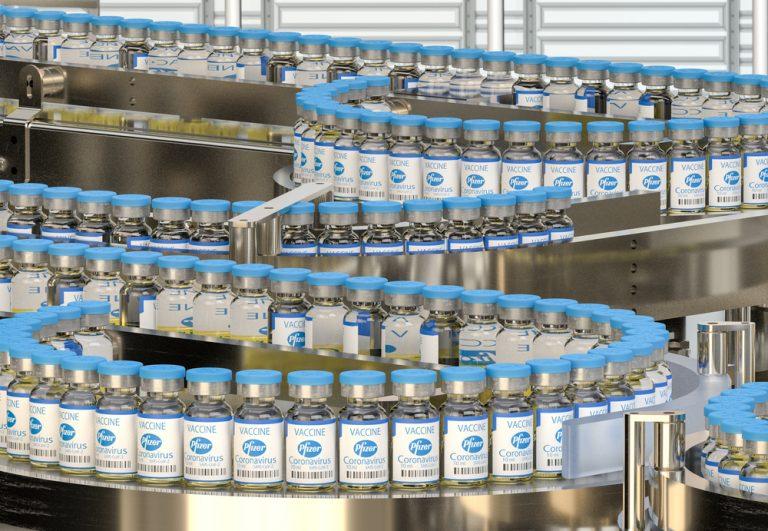
Shares at Cambridge-based pharmaceuticals firm AstraZeneca (LON:AZN) have slid over 1% on Monday morning despite the news that their coronavirus vaccine, in collaboration with Oxford University, has proven to be up to 90% effective in interim trial data. Initial results showed the first half dose is able to provide 70% protection against the virus, but a secondary full dose of the vaccine saw immunity rise to 90% – suggesting that the dosage of the first jab primed the immune system significantly from just half of the full dose. Additional data also indicated that the AstraZeneca-Oxford vaccine helps to prevent the spread of coronavirus in asymptomatic patients, after researchers reported a drop in transmission amongst those with no symptoms. Clinical trials so far show the vaccine to be safe, with only minor complaints of sore arms and fever among patients – not unusual after immunisation of any kind. A database of more than 24,000 volunteers across the UK, Brazil and South Africa found no major concerns. While the 70% effectiveness results may have left investors feeling disappointed, following last week’s news of the Pfizer and Moderna jabs providing up to 95% protection, the AstraZeneca-Oxford vaccine is far cheaper to produce and to store than its trans-Atlantic counterparts – needing only normal refrigerator temperatures. The UK government has already pre-ordered 100 million doses in preparation for a mass rollout as soon as the vaccine is widely available, while AstraZeneca has pledged to provide 3 billion doses for global use over the course of next year. “The announcement today takes us another step closer to the time when we can use vaccines to bring an end to the devastation caused by [the virus],” said Oxford’s Professor of Immunology, Sarah Gilbert. UK Prime Minister Boris Johnson has also welcomed the “incredibly exciting news”, and despite the additional safety checks before the vaccine can hit the market, he has hailed the “fantastic results” as an early victory against the pandemic. Nevertheless, shareholders appear to have taken news of the 70% efficacy at face value, with AstraZeneca shares slipping 1.76% to 8,171.00p at midday, following on from a week-long downward trajectory of 3.96% – likely a reaction to competitors’ vaccines speeding ahead. The company has a P/E ratio standing at 22.4, with a prospective dividend yield over the next 12 months of 2.6%.

Oil prices: Brent Crude hits highest level since September

The price of oil has hit its highest level since early September. As markets are optimistic around the vaccine news, the demand for oil should continue to increase if the vaccine is rolled out. Brent crude is up 1.67% at $45.71 per barrel, which is the highest price in nearly three months. “Positive sentiment continues to be driven by the recent good news about the efficacy of coronavirus vaccines in development and the expectation that the OPEC+ meeting at the end of this month could see the group extend current cuts by 3-6 months,” said Stephen Innes, Chief Global Markets Strategist at axi. European markets also cheered on Monday’s opening and reached the highest level since the end of February. The Europe-wide Stoxx 600 index climbed 0.7%. The FTSE 100 was up 0.5%, whilst the DAX and Spanish IBEX rose 0.85% and the CAC was 0.9% up. Travel shares boosted the blue-chip index on Monday. Fiona Cincotta of City Index shared why restrictions are hoping to ease amid the new vaccine. “AstraZeneca announced that its vaccine candidate developed with the University of Oxford is around 70% effective. Whilst normally this would be an excellent result, the fact that it comes after Moderna and Pfizer claiming 95% effectiveness has certainly taken the shine off the announcement. However, on the plus side, the AstraZeneca jab is far cheaper and easier to store than the other two,” she said. “Adding to the upbeat mood in the UK, the government confirmed that lockdown will end on 2nd December and the UK will move to a 4 Tier system. This should provide a massive boost to the high street retailers which have been a clear victim of the covid pandemic. Shops, along with bars, restaurants and gyms reopening in all areas of the UK in time for the key Christmas trading period means that the UK economy will once again be able to move forward on its recovery path.”

Demand for central London office space plummets

New office construction in central London has dropped by 50% in the past six months. The latest Deloitte Real Estate’s London Office Crane Survey showed a significant drop in demand in the Square Mile and was down by 60%. As the impact of the pandemic and people are staying at home, developers are keeping clear and the survey found that many construction projects are on hold until there is more clarity. Whilst more people are working from home and the pandemic has forced employers to consider more long-term flexible working options, Mike Cracknell, director at Deloitte Real Estate, believes the latest vaccine news could spark an increased demand in the office sector. He said: “Our data reveals that 3.3m sq ft of office construction was not completed as scheduled between April and September and remains under construction. “Had these projects completed on time, the total volume under construction would be almost a quarter lower.” “Of the developers we surveyed, a clear majority – 85% – pointed to weak tenant demand as the major obstacle to starting any new development. Until there is more clarity about occupiers’ office plans, developers will hesitate to embark on new projects, particularly speculative ones. “Nonetheless, the news about vaccines has already resulted in a re-rating of real estate stocks, and may see both a bigger shift back to the office in the short term, and a strengthening of investor demand in London offices over the medium term.” A survey carried out by Publicis Sapient showed that 47% of employees would feel more comfortable going back into the office if there was an effective vaccine.  

Daily Mail owner posts 50% profit plunge

0
Daily Mail and General Trust (LON: DMGT) has posted a 50% drop in pre-tax profits to £72m. The owner of Daily Mail saw revenue down by 14% from last year to £1.2bn. Financial performance is “expected to reflect varying levels of impact from the Covid-19 pandemic and its economic consequences”, with insurance risk, US property information and edtech businesses are felt to be “well positioned to deliver continued revenue growth.” “The outlook for UK property information and consumer media remains difficult to predict, whilst for events and exhibitions, conditions remain particularly challenging. “We will continue to invest in our portfolio, to deliver returns consistent with our disciplined approach, and this will impact margins as we build our businesses for the long-term,” said the group in a statement. Revenue in the events in exhibitions arm of the group plunged by 81% amid the pandemic. Daily Mail and General Trust has completed its acquisition of the i newspaper, which was a £50m deal. The group has revealed plans to lift its full-year dividend, which led to a rise in share price. Full-year dividend is up 1% to 24.1p. Daily Mail and General Trust shares (LON: DMGT) are +3.52% at 705,00 (0945GMT).

Cake Box shares rise on strong sales

Cake Box shares (LON: CBOX) have opened higher on Monday morning after the group posted a rise in revenue for the first half of the year. In the 20 weeks to 30 September revenue surged from £6.6m to £8.6m – a 30% rise. Gross margin has improved to 48.4% over the half-year. Despite all stores being shut for six weeks during the six-week lockdown, the group posted a rise in online sales by 51% for the first half of the year thanks to delivery services such as Deliveroo and Uber Eats. Chief executive Sukh Chamdal said: “We have shown considerable resilience during an unprecedented half year period and have emerged a stronger business for it. “This gives us confidence that the momentum in our national rollout will return to pre-Covid levels. This has all been the result of a monumental effort from our franchisees, who have continued to focus on giving customers the very best service, and a delicious product, in difficult times.” “With a strong balance sheet and unique proposition, we remain confident of making continued progress in the second half.” Back in September, Cake Box said they will give the government £156,000 of furlough cash. The interim dividend rose 15% to 1.85p. Cake Box shares (LON: CBOX) are currently +3.50% at 197,69 (0852GMT).  

The House of Green seeks cash for cannabis cultivation

The House of Green Ltd plans to raise between £1.5m and £2m via a private offer to help it become the largest commercial cannabis grower in Guernsey.
The fundraising by the Guernsey-based company is not eligible for EIS relief and there are no immediate plans for a flotation. Management currently owns two-fifths of the company.
The House of Green (www.thehouseofgreen.gg) has 15 acres of greenhouses under lease and the plan is to commence cultivation during the first quarter of next year. There should be production from partner growers in the coming weeks.
A 20,000 square foot extraction facili...

AB Dynamics on right road

Automotive testing services and equipment supplier AB Dynamics (LON: ABDP) was hit by Covid-19 restrictions and their knock-on effect in the second six months to August 2020.
The annual results will be published on Wednesday 25 November. These should indicate how well the different parts of the business are recovering. There will also be news of the return to dividend payments.
Track testing activities were suspended during the original lockdown and they have begun to recover and could get back to previous levels next year.
Lab testing and simulation activities were hit by deferred orders. The...

Global equities in mixed minds about vaccine, retail sales and US stimulus

Unsure of what to do with themselves after a mixed week, global equities posted relatively modest movements as they responded to a varied bag of news updates on vaccine updates, retail sales and US stimulus. Between Pfizer and Moderna one-upping each-other with positive news, markets have been spurred on since the booming US election week. As with last week, however, Monday vaccine hopes were balanced out by manageable price corrections later in the week. Now, awaiting trial results from a pivotal player – AstraZeneca – global equities find themselves in something of a consolidation phase. Not willing to factor in the difficulties of mass inoculation, and having priced in all the good news that they can, indexes finish the week somewhat indecisively – responding to news as and when it appears but not moving with any kind of all-encompassing trend. Awaiting further vaccine updates, European indexes moved tentatively upwards, with the DAX and CAC both climbing 0.39% apiece. Similarly, the FTSE gained 0.27%, finishing at 6,351 points. Though bolstered by encouraging gains posted by BAE Systems and AstraZeneca, the index was weighed by the performance of Sage and Johnson Matthey. Similarly, the UK will remain worried about the efficacy of the oncoming AstraZeneca vaccine. As stated by IG Senior Market Analyst, Joshua Mahony: “From a UK perspective, plenty rides on the outcome of the AstraZeneca vaccine trials given the oversized nature of the pre-order compared with the likes of Pfizer and Moderna.” Alongside largely positive vaccine sentiment, the UK was buoyed by encouraging retail sales, with Mr Mahony adding that: “UK retail sales provided a timely boost ahead of the impending Black Friday sales, with October sales up 5.8% on those seen a year earlier.” Unfortunately, the reality of the situation is rather more bleak. With the strongest activity being posted by non-store retailers – and with the sales weekend falling within the UK lockdown period – the figures might provide some short-term comfort while masking the reality of the situation. By not pricing in what the data is really telling us, global equities may have condemned themselves to a reality check towards the end of the year. However, the situation in the US market is already less peachy. Still hurt by their disappointing retail sales earlier in the week, US businesses will have to take into account the impacts of social distancing (and potentially political tensions) as they open for Black Friday shopping. The worst news over the pond, though, related to continued stimulus toing and froing, as Mr Mahony says:

“Stimulus remains a significant theme for markets, with the continued failings at Congress now accompanied by a move from the US Treasury to withdraw the CARES act despite Fed extension requests.”

“With the Fed seeking a 90-day extension to the four emergency lending programmes currently in place, Steven Mnuchin’s rejection highlights an end to the kind of support needed to stave off a deeper economic collapse.”

The medium-term impacts of these considerations have yet to reveal themselves, but for now they provide an element of uncertainty which won’t be well-received by global equities valuations. Though hopefully not spreading further afield, the weak sentiment this kind of back-and-forth creates was reflected in the Dow Jones on Friday, down by 0.52%, three hours into trading.

Treasury, Bank of England and FCA to facilitate investment in productive finance

The Treasury, Bank of England and FCA announced on Friday that they’d be convening to try and facilitate increased investment in ‘productive finance’. The organisations said that productive finance is that which expands productive capacity, sustainable growth and economic contributions. The FCA stated that areas requiring investment include: “plant and equipment (which can help businesses achieve scale), research and development (which improves the knowledge economy), technologies (for example, green technology), infrastructure and unlisted equities related to these sectors.” As part of the push for productive finance, the Treasury, Bank of England and FCA say that long-term investment commitments may be required, but that this is exactly what is needed to provide a reliable source and capital, and aid in economic recovery. The ‘working group’ aims to investigate barriers to investment in productive finance assets in the UK, such as the Treasury’s Patient Capital Review in 2016 and the Asset Management Taskforce’s UK Funds Regime Working Group’s Long-Term Asset Fund (LTAF) proposal in 2019. It added that the group’s mandate will be: “to agree the necessary foundations that could be implemented by firms and investment platforms, to facilitate investment in long-term assets by a wide range of investors”. As part of its work, the Treasury, Bank of England and FCA will propose solutions and a roadmap to overcome investment barriers, which will include potential fund structures, such as the LTAF, and an attempt to balance investment in long-term assets with the demands of a wide range of investors. Co-sponsored by the Economic Scretary to the Treasury, the Bank of England Chief, Andrew Bailey, and FCA Chief Executive, Nikhil Rathi, the working group has said its membership will be drawn from banks, asset management funds, insurance companies, corporates, infrastructure firms, wealth managers, investment platforms and trade associations representing relevant sectors and markets. Speaking for the need for assistance to be directed to non-financial sectors, and sustainable growth, Positive Money Director, Fran Boait, called on the government to honour its commitment to ‘levelling up’ within the new task force’s initiatives:

“For too long the UK economy has been held back by the majority of bank lending going towards property and financial markets rather than the productive investment in the real economy desperately needed to level up regions and boost incomes.”

“Now more than ever we need measures to guide lending towards productive investment to support a sustainable recovery and a fair green transition. Policymakers should look to introduce modern forms of so-called ‘credit guidance’, which were effective in steering lending towards more productive ends for much of the twentieth century.”

BAE Systems shares take off thanks to £16.5bn UK Defence budget

Aerospace and defence manufacturing firm, BAE Systems (LON:BA), watched its shares continue their upward climb on Friday, following the government’s announcement of a £16.5 billion injection into the Defence budget. While in real terms the boost will actually increase the Defence budget by £7 billion (according to the IFS’s Ben Zaranko), that amount is certainly significant. And, according, to prime minister Boris Johnson, the new money will protect “hundreds of thousands of jobs”, create 40,000 new jobs, and allow UK Defence capabilities to undergo a ‘once-in-a-generation modernisation’. While some have criticised the new funding on the grounds that green finance and COVID support schemes are deserving of more attention, Labour and the Treasury were more focused on the budget implications, with the former supporting the Defence budget boost but asking where the money was coming from. Speaking on the decision to expand Defence spending, PM Boris Johnson pledged to protect the shipping lanes that supply the UK, renew the country’s nuclear deterrent and restore Britain’s status as “the foremost naval power in Europe” with a “renaissance of British shipbuilding across the UK”. He added on the need to need to create a new ‘cyber force’, AI centre and an RAF space command: “From aerospace to autonomous vehicles, these technologies have a vast array of civilian applications opening up new vistas of economic progress, creating 10,000 jobs every year – 40,000 in total – levelling-up across our country and reinforcing our union”.

BAE Systems booming and energetic

Since the start of the month BAE Systems shares have soared over 20%, following solid orders over the last few months, a new deal for the supply of Eurofighter jets to the German government, and now the announcement of extra Defence funding from the UK government. Since the start of the week, the company’s shares have bounced from just over 470p a share, to over 525p apiece – up by 3.44% on Friday 20/11/20. Analysts currently have a consensus ‘Buy’ rating on the stock, alongside a target price in excess of 620p – more than 20% ahead of its current price. Its p/e ratio offers good value at 13.05, versus the industrial sector average of 35.04, though the Marketbeat community has a marginal 50.19% “underperform” rating on the stock. The question is though: will it keep soaring or has the upside been priced in? Well, with the UK representing aroudn 20% of Bae Systems orders and an extra £4 billion per year in Defence spending over the next four years, there is scope for new orders to give the company’s price a push. Similarly, as stated by Yahoo Finance and Motley Fool’s Edward Sheldon, Joe Biden is also looking to modernise the US’s defence capabilities. In a speech in September, the president-elect said: He wants to shift investment from “legacy systems that won’t be relevant” to “smart investments in technologies and innovations — including in cyber, space, unmanned systems and artificial intelligence.” “We have to focus more on unmanned capacity, cyber and IT, in a very modern world that is changing rapidly,” With the US making up 43% of BAE Systems orders, such a move, if substantiated, could be significant for its long-term for its long-term outlook. Similarly, its current price isn’t far ahead of where it has spent the majority of the year-to-date, and its 2021 earnings projection of 48.9p a share would – at this price – generate an attractive p/e ratio of around 10.5. For those who aren’t squeamish about the realities of the company’s Saudi Arabian contracts, its 5% dividend yield and ‘significantly undervalued’ note from Morgan Stanley, could make BAE Systems a value-for-money opportunity.