Bounce Back Loan contributes to Financial Ombudsman complaints rising 20%

Posting its figures for the Q2, between July and September, the Financial Ombudsman Service revealed that complaint volumes were up 20% on the same period last year, following the introduction of business loans such as the Bounce Back Loan Scheme and Coronavirus Business Interruption Loan.
The Financial Ombudsman said that it had seen a ‘significant’ increase in complaints about travel insurance, business protection insurance and complaints from SMEs relating to the government’s business interruption and bounce back loan schemes.
The latest figures show that the service had received more than 68,700 complaints during the three month period, which it said was up 19% on the previous quarter, and around 20% higher than Q2 2019.
The Financial Ombudsman added that consumer enquiries were up 10% on the previous quarter, at more than 119,200, while referrals were up 17%, to over 9,200. The service added that PPI claims lost their top spot as the most complained-about financial product, and was replaced by complaints about guarantor loans, which had a notably high uphold rate of 88%.
Similarly, credit card-related complaints increased by 26% quarter-on-quarter, and up by 66% year-on-year for the second quarter.
With the introduction of new schemes such as the bounce back loan, the Financial Ombudsman urged businesses to ‘preserve humanness and compassion’, and to ensure customers get the right care during these difficult times. It added that customer support staff, along with technology, should work together to provide a faster and more empathetic customer experience.
Speaking on the data, Mamta Rodrigues, finance expert and Divisional President at Teleperformance comments:
“Banks now have an opportunity to support their customers by creating solutions for the troubled economic times. Better known as workout specialists or remediation managers, these individuals can work with customers to find better payment solutions and alternatives which drive results for the bank whilst also appeasing the immediate strains from credit card, mortgage and loan bills.”
“New payment solutions are “worked out” as the customer comes first and providing an extended payment scheme results in higher repayment overall. This has the benefit of reducing collection costs and increasing much needed revenues while increasing customer loyalty.”
Who are the winners & losers on latest Pfizer vaccine news?

Pfizer and BioNTech have announced that their coronavirus vaccine was 90% effective in tests, which has caused global shares to surge.
The drug companies have said that the vaccine was “found to be more than 90% effective in preventing Covid-19 in participants without evidence of prior Sars-CoV-2 infection in the first interim efficacy analysis.”
The FTSE 100 surged 5.5% to 6,242 points – its highest levels since August, as investors are reassured that the economy will soon return to normal.
The blue-chip index already started off the week to a positive start after Joe Biden won the Presidential election. It continued to soar after the drug companies made the announcement at midday.
Craig Erlam, senior market analyst at OANDA Europe, commented on how the vaccine news has bumped up global markets:
“With Covid wreaking havoc across Europe and the US once again, the Pfizer announcement has provided the lift we’ve all craved. The company announced that the Pfizer, BioNTech experimental vaccine is over 90% effective in preventing Covid-19, sending US future sky rocketing.
“This is the news we’ve all been waiting for. The company plans to use emergency use authorization after the safety milestone is reached in late November, with no serious safety concerns having been identified in the interim analysis. Pfizer will then be able to produce 50 million doses in 2020.
“We’ve been waiting for this moment for a long time and hopefully others will soon join Pfizer and BioNTech and enable us to break this vicious cycle of lockdowns and cautious reopenings that’s killing businesses, causing rising unemployment and massively adding to the debt load around the world.
“This is the light at the end of the tunnel moment and just look at the reaction in the markets. One of incredible relief,” he added.
On the FTSE 100, International Airlines Group saw shares climb 39%, Rolls-Royce surged 33%, whilst events company Informa soared 44%.
Adam Vettese, analyst at multi-asset investment platform eToro, said:
“The vaccine news has injected optimism into travel stocks in particular. The sector has been among the hardest hit by COVID-19 restrictions and EasyJet and IAG moved strongly on the back of the announcement. Oil stocks jumped too as any sign of a recovery in the travel sector would stimulate demand.
“However, while this is obviously a positive step forward there is still a way to go. Pfizer will only be able to submit its vaccine for emergency use once two months of data has been collected. All eyes will be on the third week of November then as we wait to see if the numbers show the vaccine can be approved.”
Whilst there has been a surge in many travel and events companies, not all shares have seen a growth. Shares in zoom crashed 12% to $460 on Monday during pre-trading after seeing shares rise from $70 in February to over $560 over the last nine months during the pandemic.
Just Eat and Ocado, which have also been winners amid the pandemic, saw shares fall 11% and 7% respectively.
Shares on Wall Street also surged on opening. S&P 500 futures rose by 3.78%, and Dow contracts increased 4.69%
In Europe, Germany’s DAX index up 5.8% and France’s CAC gaining around 7%.
Andrea Cicione, Head of Strategy at TS Lombard, said: “This is very very important (news) because it validates the market view that the economy and earnings can receive that growth path that they had before the (COVID-19) crisis struck.”
The price of oil also surged by 8% and is now $42.64 per barrel.
One Media IP Group shares up thanks to “strong performance”

One Media IP Group shares (LON: OMIP) opened 15% higher on Monday morning.
The group said in a trading update that it will continue to trade in line with expectations.
One Media IP Group expects to report revenues for the year of around £4mn and earnings of £1.4mn, which is an increase of 14% and 30% respectively year-on-year.
“Based on the group’s strong performance to date and the continued growth in music streaming, the board is confident in the outlook for the business as we remain focused on exploring further acquisition opportunities,” said Michael Infante, the chief executive.
“We are also encouraged to observe that the sector continues to attract significant investment from outside of the industry, which we believe will help to build further interest in our business and strategy. We look forward to keeping the market updated as we continue to deliver on our growth strategy,” he added.
The company’s full-year results will be released in March 2021.
One Media IP Group has also said it that it has incorporated a new subsidiary, TCAT Limited.
“After four years of developing and growing TCAT’s capabilities in-house, the board has identified the need for TCAT to operate as an independent entity within the group in order to realise its full potential. With a number of major record labels already subscribing to TCAT’s services on a retained basis, we are confident that, with the provision of additional resource and technical expertise to expand the software’s capabilities and usages, there is significant opportunity to gain new traction within the industry”, said Infante.
“Our intention is for TCAT to become a mobile anti-piracy and audit tool for composers and artists as we build the portal to allow for future application access. Under the direction of a highly experienced and motivated management team, the Board has every confidence in TCAT’s growth trajectory as it enters the next phase of its development. We look forward to providing further updates in due course.”
One Media IP Group shares (LON: OMIP) are trading +18.67% at 6,70 (1115GMT).
Dignity plc reports increase in revenue amid pandemic

Dignity Plc (LON: DTY) has reported a 4% increase in revenue this year amid the Coronavirus pandemic.
In the 39 weeks to the end of September, the funeral provider saw revenue grow from £225.4m to £234.5m.
The increase in revenue reflects the higher number of deaths amid the pandemic.
In the first three-quarters of 2019, the London-listed company conducted 52,100 funerals – compared to the 61,700 funerals for the same period this year.
“2020 is proving to be a unique and challenging year, with the impact of COVID-19 on our daily lives likely to continue for many months to come,” said Dignity in a statement.
“Following the terrible impact of COVID-19 in the second quarter this year, the number of deaths in the third quarter was broadly flat on the prior year. The final quarter of 2019 witnessed 152,000 deaths and deaths in October were broadly flat on the prior year. The Group will not speculate on the most likely outcome for the remainder of the year, however it is possible that the tragic events of 2020 may mean 2021 and 2022 could experience a lower number of deaths than in 2019.”
Executive chairman Clive Whiley said: “We have played a crucial role in the country’s fight against Covid-19, whilst simultaneously challenging ourselves to do things better, collaborate constructively in the CMA’s market investigation, deal with continued fierce competition and finally start the work that will see our long held call for pre-need regulation become a reality.”
“Ultimately it will take a combination of the serious pricing and product trials, alongside competitor reactions and the CMA final outcome, to define a strategy that harnesses the full capacity and bandwidth of our business, where we remain determined to grow market share without further dilution for shareholders.”
Dignity shares (LON: DTY) have recovered following the fall across March – June this year as the pandemic hit. Shares in the group are trading 0.54% higher on Monday at 558,00 (0951GMT).
Countrywide shares rally amid takeover talks
Countrywide shares (LON: CWD) jumped 42% on Monday as the group enters talks with rival estate agency Connells for a takeover bid.
The company said on Monday that Connells had made an offer of 250p per share – an increase of last week’s closing price of 140p.
Countrywide has given Connells a deadline of 7 December to make or withdraw the offer.
The offer is well above last week’s closing share price, however, Countrywide has seen its share price plummet from this year’s highs of 399,29.
“There can be no certainty that an offer will be made, nor as to the terms of any such offer, should one be made,” said the company in a statement.
“In the light of recent discussions with shareholders, the Board has taken the decision to postpone the general meeting to approve the shareholder resolutions pursuant to the proposed transaction announced on 22 October 2020 until further notice.”
“Connells also believes that significant and sustained investment is required in Countrywide’s technology, network and people to put the business back on a solid footing in a challenging market.”
Countrywide shares (LON: CWD) surged 42% on Monday morning and are currently +46.63% at 212,62 (0932GMT).
Taylor Wimpey shares surge amid “resilient” demand

Taylor Wimpey (LON: TW) shares surged on Monday morning as the housing market continues to be resilient after reopening after the second quarter shutdown.
The FTSE 100 housebuilder has said that it expects this year’s financial results to be at the upper end of expectations and remains confident about next year.
Since the lockdown in March, the housing market has boomed amid the short term extension to the current phase of the Government’s Help to Buy scheme and the Stamp Duty Land Tax holiday.
Pete Redfern, chief executive of the group, commented: “The trading backdrop remains resilient and the quick recovery of the housing market is testament to the underlying strength of demand and supportive lending backdrop.
“We have made good progress in the second half of the year to date, maintaining a robust sales rate and building a strong forward order book. Looking ahead, we are on track to deliver full year 2020 results towards the upper end of market expectations and with strong operational momentum and positive forward indicators, our confidence in 2021 has increased. As a result, assuming the market remains broadly stable, we expect to deliver 2021 operating profit materially above the top end of the current consensus range.”
Taylor Wimpey has sold an average of 0.76 homes per site per week since July, which is compared to the 0.93 homes in the same period a year earlier.
The group’s order book stands at £3.0bn, compared to £2.7bn in July. This is an increase of 11%, with the private average selling price in the order book ahead of 2019 levels.
“Looking ahead, we expect the market to support robust sales rates and for prices of new build homes to remain supportive. We are pleased to note the Government’s ongoing support for the housing market, home ownership and, specifically, first time buyers,” said the housebuilder in a trading update.
Taylor Wimpey (LON: TW) shares opened 11.68% higher and are currently trading 11.28% up to 137,21(0901GMT). This year to date, shares in the group have fallen from highs of 237,70.
Global stocks surge on Biden’s win
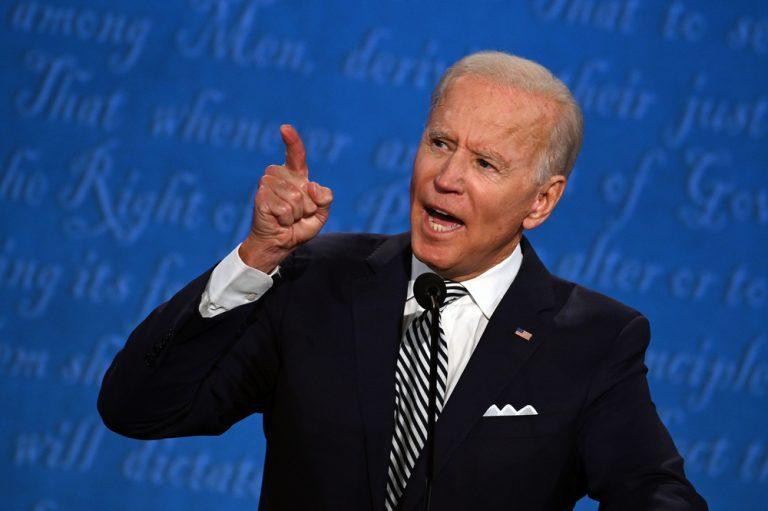
Monday morning saw the global stocks jump as investors welcomed the US Presidential election win.
The blue-chip index climbed 94 points, or 1.6%, to 6004 points on Joe Biden and Kamala Harris’ victory over the weekend.
It wasn’t just stocks in London that rose on the back of the news. Japan’s Nikkei stock surged 2% to a 29-year high.
“Financial markets around the world have received a marked boost in the wake of Joe Biden’s victory in the US presidential election, with Japanese shares hitting their highest level for nearly three decades and oil prices also climbing,” said Martin Farrer from The Guardian.
“Stock prices in Europe and New York were also expected to rise sharply on Monday after the president-elect pledged to try to bring unity to the US after four tumultuous years under the Trump administration.
“The Nikkei index in Tokyo led the way with a rise of 2.3% as traders in Asia Pacific got the first chance to give their verdict on the Biden victory declared over the weekend.
“In China, the Shanghai Composite was also up more than 2%, Hong Kong shares rose 1.5% and the ASX200 in Sydney jumped 1.74%,” added Farrer.
In the US, the DAX and CAC surged 1.9% and 1.8% respectively, crossing 12,700 and 5040.
Susannah Streeter, senior analyst at Hargreaves Lansdown, warned that the gains on the FTSE 100 aren’t expected to last amid Brexit trade deals.
“An incoming Biden administration is certainly not going to offer an easy path to a trade deal between the UK and the US and could even determine the shape of relations between Britain and the EU,” she said.
“Joe Biden has already expressed disapproval of proposals for the UK to potentially break international law on certain aspects of the withdrawal agreement, which is likely to concentrate minds at Number 10.”
Pre-Christmas slump on the horizon for UK economy

New surveys of business activity have raised concerns of a pre-Christmas slump due to the latest Covid-19 restrictions. With lockdown 2.0 now in full swing, widespread store closures and thousands back on furlough, business activity has already taken a sharp dive into the negative, according to two separate studies by accountancy firm BDO, and the Chartered Institute of Personnel and Development (CIPD) in collaboration with recruitment firm Adecco.
BDO’s figures showed the first decline in business confidence and output since April, when the economy was still gripped by the first wave of the government’s restrictions, while the latter’s survey revealed that almost a third of employers expect to be making redundancies before the end of the year.
All of this comes despite the government’s attempts to bolster the economy through the winter, with Chancellor Rishi Sunak announcing that the Coronavirus Job Retention Scheme will continue until March and the Bank of England’s £150bn support package designed to cushion the financial blow of the second lockdown.
Gerwyn Davies, senior labour market adviser for the CIPD, commented on the survey’s findings:
“The best that can be said is that the situation is getting worse more slowly. Employment looks set to keep falling and the relatively weak demand for labour means that it is going to be a long and hard winter, affecting young jobseekers in particular”.
Despite this, the slightly more lax nature of the second lockdown should see more companies able to remain open to the public, and with most companies already having shed staff earlier in the year, the number of firms preparing to make redundancies has actually fallen to 30%, compared to 33% over the summer.
That figure is still significantly higher than the 22% of firms who were planning job cuts before the coronavirus struck the UK, and no doubt the 3% difference is of little comfort to the millions who could face unemployment even after managing to hold onto their jobs during the first wave.
BDO said its index of business output – compiled from surveys of more than 4,000 firms – showed that the economy had come on leaps and bounds since a record low of 44.9 was recorded during April. However, with the October figures sitting at 77.09 (well below the 95 threshold for economic growth) and having already slipped from 77.95 in September, it is evident that the UK economy is facing a downhill slope towards the end of the year.
Further figures on the state of the economy are expected to be released this week, but the Bank of England has already warned that the second Covid wave could spark a double-dip recession, with GDP expected to fall 2% in the final quarter. To ice the cake, the Bank still expects an 11% decline in GDP for the year as a whole.
Ant Group’s suspension could wipe $140bn off its value

Last week, business magnate Jack Ma looked set to become China’s richest man with the launch of his new tech venture, Ant Group. Already an icon in the industry as the man behind the world’s largest e-commerce platform, Alibaba (HKG:9988), Ma was set to sell shares in his new company worth about $34.4bn (£26.5bn) on Thursday, in what would have been the largest stock market debut on record. That was, until, Chinese authorities intervened citing “major issues” with the project, and suspended the listing with immediate effect.
The decision to halt the launch sent shockwaves through the rest of Ma’s portfolio, sending Alibaba’s share price down 8.1% in New York on Tuesday after the news broke, and a further 9.6% in Hong Kong on Wednesday. Both drops wiped a colossal $76bn off the value of the company, and Ant Group’s proposed shares would have boosted Ma’s own net worth to over $80bn.
“This deal was not only cleared for take-off, the wheels were literally off the ground,” Drew Bernstein, co-managing partner at Marcum Bernstein & Pinchuk, told BBC News last week.
On Monday morning, Bloomberg reported that China’s decision to suspend the launch could “reduce the fintech giant’s value by as much as $140 billion”, citing analysis by Morningstar Inc. (NASDAQ:MORN). New, tighter regulations imposed by Chinese authorities could “force Ant to raise more capital to back lending and seek national licenses to operate across the country may reduce the firm’s valuation by about half”.
Even though Bloomberg cautions that the estimation is merely that – an estimate – if Ant’s value does halve from its pre-IPO $280bn, it would drive the company down to even less than it was worth two years ago.
Iris Tan, an analyst at Morningstar, told Bloomberg that Ant could face a 25%-50% slip in valuation, if its pre-IPO price-to-book ratio drops to “around the level of top global banks”. In reality, that would mean that Ant could see its valuation slashed by some $140 billion.
Currently, Ant’s stock price is valued at “4.4 times of its book value”, versus just 2 times at comparable global banks, Tan added.
Sanjay Jain, Singapore-based head of financials at advisory firm Aletheia Capital, estimated that Ant’s price-to-earnings ratio could drop to “about 10 times its lending profits, half of the previous target it had assigned to the company”.
That new price would see Ant sink from its initial lofty estimates to be more in line with some of the world’s largest banks, with Citigroup Inc. (NYSE: C) reportedly trading at “about eight times forward 12-month earnings, while DBS Group Holdings Ltd. (SGX: D05) of Singapore is trading at about 12.6 times”.
One of the most apt comparisons could be China Merchants Bank Co. (SHA: 600036), which currently trades at about 10 times its annual earnings.
Mr Bernstein was keen to emphasize that Ma will mostly likely recalibrate his business and attempt a second market debut in the coming months, even after speculation that the temporary suspension cost his own wallet billions.
“The company’s going to have to restructure somewhat. Maybe commit some more capital to the loan division, apply for more licences. Then they’ll be able to come back to market”.