ECB tells banks to extend dividend freeze, Bank of England considers following suit

2
The European Central Bank has called on Eurozone banks to continue scrapping dividends and to be “extremely moderate” with its bonus payments to staff, until at least the beginning of next year. Today’s call by the ECB is expected to be mirrored, at least in part, by the Bank of England. The move by Europe’s two most significant central banks, is designed to preserve capital, to help companies and families seeking assistance due to pandemic-related hardships. Facing what is likely to be a deep, global recession, protecting banks’ capital will allow them to absorb losses and have more lending firepower.

The ECB initiative

Making a statement on behalf of the European Central Bank, chair of the the ECB supervisory board, Andrea Enria, stated: “The build-up of strong capital and liquidity buffers since the last financial crisis has enabled banks during this crisis to continue lending to households and businesses, and thereby to help stabilise the real economy.” “Therefore, it is all the more important to encourage banks to use their capital and liquidity buffers now to continue focusing on this overarching task: lending, whilst of course maintaining sound underwriting standards.” Today’s call for freezes to capital pay-outs would merely be an extension of the earlier call, in March, for European banks to freeze dividends until October. The call came as the second half of the ECB’s quid quo pro, with the central bank loosening regulations and offering financial support to the 117 big banks it oversees.

Bank of England looks to follow suit

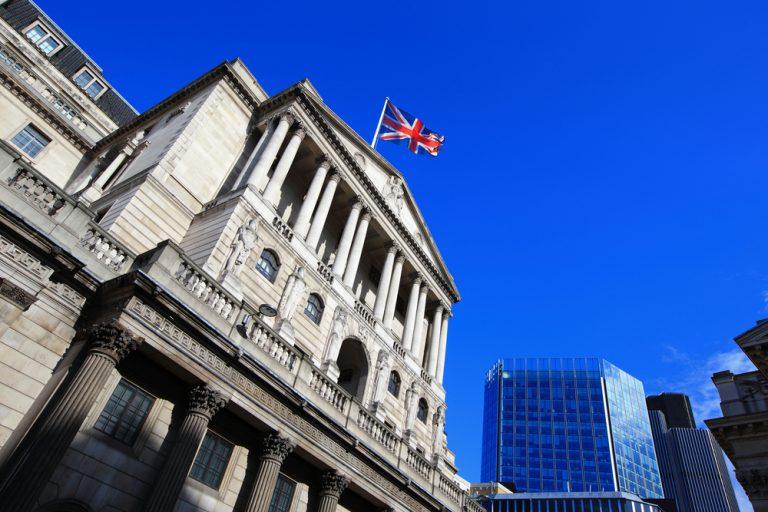
The Bank of England’s Prudential Regulation Authority approved of the ECB decision, and said on Tuesday that it would carry out a review during the fourth quarter, to determine whether it should ask its banks to freeze dividend payments during the start of 2021. “The assessment will be based on the current and projected capital positions of the banks and will take into account the level of uncertainty about the future path of the economy, market conditions and capital trajectories prevailing at that time,” the Bank of England statement read. The Bank of England, much like the ECB, previously called for a freeze on pay-outs, which included dividend payments, share buy-backs and cancellations of bonuses for bank senior staff. The organisation noted that such pay-outs were an innate part of a healthy banking system, but judges that suspending them was a, “sensible precautionary step given the unique role of banks in supporting the wider economy through the period of economic disruption”. Certainly, the sentiment is there for the Bank of England to call for an extension to the pay-out freeze, but whether or not it will follow the ECB’s lead will remain unclear until the fourth quarter review.

How Amazon plans to take on supermarkets

0
The Amazon Fresh service will now start delivering groceries for free for Amazon Prime customers. In a move that will see it expand into the market, the tech giant will offer same or next-day grocery deliveries for customers in London and in the southeast. During the lockdown, supermarkets struggled to keep up with the surge in demand for online grocery shopping. Online food sales were seen to have almost doubled during the pandemic – and Amazon is keen for a slice. Russell Jones, country manager of Amazon Fresh UK, said: “Grocery delivery is one of the fastest-growing businesses at Amazon and we think this will be one of the most-loved Prime benefits in the UK.” “We’ve been planning this for a long time. It’s a big step up in volume. In the early days of lockdown, all our capacity was being used. We’re confident that we can launch this service now at this point in time,” he added.

Why is this significant?

The online retailer has seen demand reach new highs as it became a key retailer over lockdown for many stuck at home. Consumers spent over $11,000 a second on Amazon products and the share price grew by a third in one month during the height of the pandemic. Retail analyst, Richard Hyman, said: “[Amazon] can be compelling, disruptive and it’s a business with gigantic ambitions.” “I think they will be a big player in food retailing online. They wouldn’t be doing it otherwise. Most of the markets they go into, they want to be the biggest player. “The frightening thing for everybody else is that they all really need to make money, whereas Amazon doesn’t and that places them at an enormous advantage.” Shares in Amazon (NASDAQ: AMZN) are trading up 1.54% at 3,055.21 (0830GMT).

How investing £3k in Tesla and Bitcoin could have made you £150k in a year

Trendy investment opportunities such as Tesla (NASDAQ:TSLA) shares and Bitcoin may be overlooked by bears and sceptics alike because of their volatility, but when handled with good judgement – and luck – they can also be wildly lucrative. This article is testament to that fact, as it shows how in only eight steps and a little over a year, you could have grown a £3k investment by more than 5000%.

March 2019 to July 2020 and the 8-step formula:

Step One: It’s the 15th of March 2019, you take £3k out of your savings or current account and approach a broker to buy one Bitcoin, currently priced at £2,995 after the alternative currency’s bubble burst in 2018. You then take an early summer holiday you’ll pay for later on, and watch the Bitcoin price recover. Step Two: Hitting its one-and-a-half-year high on the 9th of August, you sell your Bitcoin for £9,371. Step Three: You see Tesla’s Q3 profits are set to be announced on the 25th of October, so before then you look for the best time to convert your Bitcoin pounds into dollars. On the 21st, when cable stands at 1.30 – the best rate for the pound-holders since May – you convert your pounds into $12,182. Step Four: Also on the 21st of October, on what’s ended up being a very busy day, you see some positive predictions for Tesla’s Q3 emerging. You buy as many Tesla shares as you can – 48 – at a price of $12,168 without fees. Go and enjoy a prolonged Christmas break, you’ll earn it later. Step Five: Looking to offset the cost of Valentine’s Day, you sell all of your 48 Tesla shares on the 19th of February 2020. The shares sell for $917 apiece, yielding $44,016 excluding fees. Step Six: ‘Black Monday’, ‘Coronavirus Crunch’ and lockdown. March has been costly for all those who didn’t sell off during the Valentine’s sweet period, and the month ended up being a fire sale for fast-handed and shrewd investors. You look back at Tesla, now sitting at $361.22 a share on the 18th of March. Spending everything you can, you bag 121 shares for $43,707, plus change. Step Seven: Having bought at the stock’s year-to-date nadir, the trajectory of your shares’ value is consistently upward, making several headlines and achieving new milestones each week. Then, prior to what is expected to be a fairly upbeat quarterly results publication, you sell all 121 of your shares on the 20th of July, at the all-time-high price of $1,643 per unit. You make a total of $198,803 excluding costs. Step Eight: Between the 20th and today (the 27th), you choose the best day to convert your cash back to pounds. Settling for the 24th, at a rate of 1.28, you change your dollars to pounds, leaving you with £156,537. This number could be higher if we’d waited for more favourable interest rates – say, after US-China tensions had de-escalated, and after US equities had had some time to recover from this week’s busy economic calendar.

What does the Bitcoin – Tesla investment formula teach us?

First, that when played right, even volatile and seemingly faddish trading trends can yield huge returns. Second, that while most people were in a state of panic over coronavirus, the pandemic offered some very attractive opportunities for investment, which I’m sure many took advantage of. However, there are also lessons we should heed. First, to yield the kind of returns we’ve discussed, you’d have to invest on the right days, supported by the right information. These kind of investment decisions are normally part-luck and part-judgement, and in the case of the latter, are normally done best by those with the contacts and experience necessary to access and identify crucial pieces of information which dictate price movements. This research was done for fun, with the (indulgent) gift of hindsight. Second, and concurrent with the idea that market shocks offer opportunity, the initial ‘U-shaped’ recovery in June has in some ways inverted during July, and may continue in such a fashion for the near future. Prior to some longer term economic recovery, the next few months could be the opportune time to identify ways of making the best of a bad situation.

Bitcoin poised to soar alongside gold, surges past $10,000

Bitcoin – the world’s largest cryptocurrency – rose above $10,000 on Monday for the first time in more than 6 weeks, alongside risk asset gold hitting an all-time high of $1,940. According to Bloomberg, Bitcoin opened at $10,169 at 6am in New York, wavered a little in the early trading hours before rallying to $10,335. Over the last 7 days, the typically capricious cryptocurrency has risen in value by nearly 11%. With heightened tensions between the US and China, and a concerning rise in coronavirus cases across Europe, investors are increasingly turning to safe-haven assets such as gold to weather the volatility of global markets in recent days. Bitcoin has been touted as being a potential safe-haven investment – even nicknamed ‘digital gold’ by crypto fans – but it generally tends to trade in tandem with equity markets and is infamous for being extremely volatile. Forbes noted ‘swings of 10% or greater are sometimes occurring every few hours,’ which highlights the volatile nature of the price. However, as Bitcoin and gold are not tied to any specific country, and with gold historically performing better during periods of market turbulence, they are both highly sought-after assets by investors looking to minimise their losses when markets begin to quake. According to a report from JPMorgan Chase & Co. strategist John Normand, Bitcoin has sustained above-average flows over the course of this year, despite massive market turbulence as a result of the coronavirus pandemic. Nigel Green, chief executive at financial advisory giant deVere Group, commented on Bitcoin’s performance on Monday: “Bitcoin is currently realising its reputation as a form of digital gold. Up to now, gold has been known as the ultimate safe-haven asset, but Bitcoin – which shares its key characteristics of being a store of value and scarcity – could potentially knock gold from its long-held position in the future as the world becomes ever-more tech-driven. “Geopolitical issues, such as the U.S.-China spat, will prompt many savvy investors to increase exposure to decentralized, non-sovereign, secure digital currencies, including Bitcoin, to shield them from the turbulence taking place in traditional markets. “Cryptocurrencies are widely regarded as the future of money – yet what is less reported upon is that Bitcoin and its peers are increasingly regarded a safe haven in the present”.

Gold price hits all-time high with bleak economic horizon

Back in February, I predicted the two-year gold price rally was not yet at its peak, and that it would hit $1,800 before it consolidated. Now – perhaps alongside a hat inscribed with ‘captain obvious’ – we can say that even my optimistic predictions were reserved, as gold rallied 2% on Monday, to its all-time-high of $1,940. This has, predictably, been led by the COVID pandemic, which gave gold’s long-running rally a reason to crescendo. As stated by Florian Grummes of Midas Touch Consulting, in our previous gold price commentary: “There are no contrarian signals from sentiment analysis for a sustainable turnaround and trend change in the gold market. Rather, the “grand final” of the party that has been going on since August 2019 is likely yet to come” “The mood among gold investors is currently optimistic, but the Gold Optix still has a lot of room for more optimism and greed.” Now, these comments were made prior to global quarantining and economic slowdowns, and in hindsight, they seem almost oracular in their insights. The ‘grand final’ of the gold price rally party certainly has been an occasion to remember, but is it over yet?

The economic outlook gives the gold price some headroom

With Britain’s reimposition of quarantine measures on travellers returning from Spain – and the subsequent price drops on Easyjet, TUI and IAG shares on Monday – we should assume that the first-order economic effects of the virus are far from over. It is reasonable to factor in the possibility of additional travel restrictions and more regional reimpositions of lockdown measures, as coronavirus threatens to flare up for a second time amid efforts to return to normality. In addition to these immediate impacts, we have the widely discussed second-order issues of unemployment, adjustments to the range and provision of companies’ services, and changes in consumer behaviour – all of which will likely contribute to relatively slow economic activity for the rest of the year. Further, and beyond pandemic considerations, we must take into account the impacts of political tensions. British sentiment will continue to be bogged down by Brexit, and a mixture of Brussels loggerheads and the likelihood of extortionate trade deal terms with the US. In addition, the US itself is contributing to poor market sentiment, with a mixture of renewed tensions with China, and a busy economic calendar this week. Speaking on US politics, and the impact this is likely to have on gold prices, Spreadex Financial Analyst, Connor Campbell, stated: “Investors don’t buy the precious metal for fun. It provides an ostensible financial safe haven away from the world’s uncertainties and stresses, of which at the moment there are numerous. This doesn’t just include the COVID-19 pandemic, but the latest geopolitical flare-up between the United States and China.” “[…] The US is facing an incredibly busy week, aside from COVID-19 and US-China tensions, with the latest Federal Reserve meeting on Wednesday, the first Q2 GDP reading – which is going to be UGLY – on Thursday, and a stacked earnings calendar including appearances from the golden trio of Apple, Alphabet and Amazon.” The takeaway from this analysis should be that the economic outlook is not peachy. With a combination of a potential COVID second wave and UK-US protectionist politics, any forecast of a near-term economic recovery need be taken with a pinch of salt. What this means for gold is that the ‘grand final’ crescendo of its price rally may not yet be over, and today’s all-time high may not even be the highest we see gold prices hit this year. At the very least, and even with some price correction, the bleak economic situation should see gold keep its place above the $1,500 mark it started the year on.

Easyjet and TUI shares drop 11% on Spain holidaymaker quarantine

Shares in aviation firms such as TUI (LON:TUI) and Easyjet (LON:EZJ) dipped sharply on Monday, following the UK government’s decision to require all holidaymakers in Spain to quarantine themselves for a fortnight, upon their return to the UK. The move is a back-step in the ‘return to normal’ programme, and is unlikely to be the last of its kind, as travel and business begins to pick up across the European mainland. As it stands, though, the weekend’s news saw TUI, Easyjet and IAG shares down by 14%, 13% and 10% respectively after the bell on Monday morning, with the government warning that other countries may soon be added to the quarantine list. Speaking on the announcement, IG Senior Market Analyst, Joshua Mahony, stated:

“The airlines have led the loses in early trade today, with the likes of TUI, IAG, Dart Group, easyJet, and Ryanair all suffering after the swift UK decision to reimpose a 14-day quarantine on any flights from Spain.”

“Whilst some will criticise the speed at which these measures have been imposed, it does show a willingness to act early in a bid to reduce imported cases in the UK.”

“With Ryanair losing €185m over the April-June period, airlines desperately need a smooth summer as they bid to stabilise their balance sheet after months of losses.”

“Unfortunately, this Spanish quarantine announcement is unlikely to be the last of its kind, with outbreaks throughout Europe likely to provide a stop-start summer for airlines as different regions attempt to extinguish any surges in Covid-19.”

The news of airlines declining has also had a wider impact on the UK economy, with the FTSE dipping from 6,123 to 6,093 points at the start of trading, before regaining some composure and pushing back up to 6,109 points, still down 0.24%. Also, after recovering slightly, Easyjet shares are down 11.22% to 522.92p per share. This is up on its 475p nadir on 3 March, but well below its June recovery spike, where it reached 891.00p per share. Meanwhile TUI shares have fallen 11.55%, to 300.38p per share – above its 254p nadir in April, but far beneath its 530p lockdown peak on 27 May.

Online rescues Hotel Chocolat

Chocolate maker and retailer Hotel Chocolat (LON:HOTC) managed to replace a large part of the loss in high street sales by online revenues. However, profit has been hit by higher costs.
The 2019-20 pre-tax profit is expected to be just over £2m, which is well down on the previous year’s figure of £14.1m. profit growth had been forecast earlier in 2020.
Second half revenues fell by 14% with the poor performance in the fourth quarter. Easter trading was hampered by the lockdown. When the stores were closed and online was the only source of business there was enough of a transfer of demand to ens...

Nichols reinstates dividend

Vimto maker Nichols (LON: NICL) remained profitable in the first half and it is confident enough to pay an interim dividend.
In the first half of 2020, revenues fell from £71.6m to £59.2m, while underlying pre-tax profit slumped from £13.3m to £6.76m. There was a write-down of £3.82m relating to the Feel Good brand, which is expected to be relaunched later this year.
Sales of Vimto’s dilute product improved, but the loss of business from bars and restaurants meant that UK revenues fell by one-fifth.
Middle East profit was expected to decline due to the new sweetened drinks tax and the fall was...

Are new face mask laws pointless?

After the government issued guidance on Thursday, new laws regarding the more widespread use of face masks were brought into effect on Friday. The laws, which emulate those brought into effect some time ago by the Scottish government, require people to wear face coverings in supermarkets, takeaways, shops, shopping centres and transport services, with exemptions for outlets such as restaurants and pubs when customers are seated and using table service. Any who fail to comply with the rules, could be dealt a £100 fine by police. These new rules come into place to compliment existing measures such as social distancing and private safety provisions such as mobile ordering and temperature checks. It is expected, despite some opposition from campaigners, that compulsory face mask laws could be in place for as long as six months. The main issue, as many have already highlighted, is that these laws may be by-and-large symbolic, with only limited capacity for them to be enforced.

Over-stretched police receiving little sympathy

The relatively small number of police on the streets – while greatly expanding in number during lockdown – now have the impossible task of keeping tabs on almost every individual who steps outside of their front door. Alongside being underfunded and thinly spread across their typical duties, they are now being tasked with enforcing these new laws across vast numbers of retail and food outlets across the country, and police representatives have already admitted that this is a futile venture. Speaking to The Independent the national chair of the Police Federation of England and Wales, John Apter, stated that police simply do not have the capacity to ensure every person entering a food or retail outlet is wearing a face mask, and asked operators to enforce the new laws on their own premises. “It is our members who are expected to police what is a new way of living and I would urge retail outlets to play their part in making the rules crystal clear; if you are not wearing a face covering then you are not coming in.” Apter commented. He added:
“Officers will be there to help stores if needed — but only as a last resort, as we simply do not have the resources.”
Unfortunately, large supermarkets such as Tesco, Aldi, Sainsbury’s, Asda and Iceland have all said they will not be enforcing the new face covering laws. Some said they will not prohibit non-adherents from entering stores, as they believe asking their staff to take on the task of enforcement would put them at risk. All of the supermarkets state that their messaging and broadcasts will clearly encourage customers to adhere to the new laws, while some said they will have face masks for sale near the entrances of their outlets. Taking a more proactive approach, Waitrose and John Lewis stated that they will have staff at the doors of their shops to remind consumers to wear face coverings, while Greggs has stated that all its customers will be “required” to wear face masks when entering its premises.

Flip-flop and fuzziness from the government

Unfortunately, the task of enforcing face coverings has been made even more difficult by the government’s indecisive and at times confusing messaging. Responding to the issue of policing the new laws in shops and takeaways, the government’s meek response was that the responsibility for wearing a mask primarily “sits with individuals” but that stores should “take reasonable steps to encourage customers to follow the law”. Further, and in addition to children being exempt from face mask laws, the government has issued a recommendation that people suffering from severe asthma and lung conditions, should not adhere to the new regulations. Alongside this caveat, and likely foreseeing the obvious issue, the government then stated that it would roll out medical exemption cards. The cards are designed to stop people abusing the medical exemption clause as a reason for non-adherence, and also to prevent legitimate non-adherents from receiving abuse from pro-face-mask members of the general public. On the one hand, this clause is useful as it allows people who suffer from illnesses, such as COPD, to shop and use public amenities without struggling for breath. However, while merit-worthy in spirit, these cards will likely be a source of not only more work and confusion but also less clarity in enforcing new rules, and likely muddles an already difficult task.

Are new face mask laws pointless?

Not at all. To be clear, the new laws are – if the government accepts the most recent scientific advice – entirely necessary and in the public good. If wearing face masks make others around us even partially safer, we should accept what is by-and-large a source of minor discomfort, for a short period of time. What we should take issue with, though, is the poor handling of mask policing. While, as stated, the medical exemption cards may come from a place of good intentions, they are likely to cause confusion and provide scope for people to shirk the rules more easily (either by people using illness as an excuse, or in general just encouraging more lax attitudes). Further, while face coverings are primarily designed to protect others from the user, a person may also receive some benefit from wearing a face mask. It would follow, then, that exempting medically vulnerable people from wearing masks may actually put them at greater risk. In addition, without the efforts of commercial bodies to aid in policing, new laws have little hope of being kept, and I don’t think the staff safety excuse should cut much ice. While on an LNER train back from seeing my mother earlier this week, I saw a guard pass seven times during the journey, effectively making sure everybody kept their masks on – without any resistance from passengers. We should have some sympathy for outlets who might have to rely on police support to subdue difficult customers, but outlets who can and often do employ security guards – for instance supermarkets – have little excuse for not playing their part in enforcing the new laws and keeping their customers safe.      

Two reasons Travelodge backers can expect sleepless nights

Goldentree Asset, Avenue Capital and Goldman Sachs (LON:GS) owned hotel chain Travelodge, has, like many, been near the eye of the storm during the Coronavirus lockdown, with regular trading all but flat-lining. What sets it apart from its hotel counterparts, though, is that its future may be equally problematic.

The staycation renaissance may not be enough

With outlets dotted all across the UK, you’d think Travelodge would be in a prime position to capture a lot of the demand for impromptu weekend getaways, and in some ways that’s true. With sites dotted along key tourist destinations such as the South Coast, the Lake District and Loch Lomond and the Trossachs, Travelodge are well-placed to meet the needs of a lot of Brits looking to claw back some semblance of a summer holiday, as restrictions continue to be lifted at a gradual pace. What isn’t so good is the density of Travelodge sites in inner city areas. As stated by Premier Inn owners Whitbread (LON:WTB) in their announcement earlier in July: “It is still very early days and therefore too early to draw any conclusions from our booking trajectory, especially as there has been volatility in hotel performance in other countries that relaxed controls before the UK. However, in traditional regional tourist destinations, we are seeing good demand for the summer months, whilst the rest of the regions and metropolitan areas, including London, remain subdued.” The issue here is that alongside their hotels across a wide range of popular tourist destinations, Travelodge has large clusters of hotels in cities such as London, Manchester, Leicester and Liverpool. These sites, while they may see activity gradually increase in the next couple of months, will under-perform because their core customer base has not gotten back to normal. These hotels, we might assume, rely primarily on a mixture of tourists and business people. The former group will be diminished, as domestic tourists are still conscious of going to crowded metropolitan areas, and international tourists are only starting to benefit from loosening restrictions. The latter group – business people – are acting in a diminished capacity, with many companies not yet bringing their employees back to the office, with fewer still asking their employees to travel long-distance.

Goodnight Travelodge

The second, and far bigger reason for concern, though, is the news reported by the Telegraph that the company are to lose ‘dozens’ of its landlords, who intend to launch a rival hotel chain named ‘Goodnight’. The Goodnight chain is expected to be formally announced later on Friday, with its official launch being the 1 January 2021. The news follows rows between hotel landlords and Travelodge’s hedge fund owners over steep rent cuts, the likes of which also occurred in 2012 under a company restructuring. Friday’s announcement will see 80 hotels sign new leases with the Goodnight brand, with one deal insider saying on the news: “This has the potential to completely decimate their [Travelodge’s] business,” The row began with the hotel chain owners withholding a quarterly rent bill that was due in March, and landlords have since responded, saying they feel as if the fund owners used the pandemic to secure more favourable terms.

Less sleep tight and more sleepless nights

Landlords have until mid-November to reject the rent proposals termed in the CVA. For now, it looks as if the Travelodge V-shaped recovery may be somewhat modest in its trajectory. With its inner city offerings yet to pick up to pre-pandemic pace, and another rival – using a similar business model – entering the picture early next year, any long-term outlook should contain at-best tentative positivity.