Uber pledges to go green – but is it enough?

4
Uber has pledged for all every car on its platform will be electric by 2040. The car-hailing app revealed plans to invest $800bn to help drivers switch to electric cars. According to Uber, it is the group’s “responsibility” to tackle climate change. Every vehicle across the UK, US, Canada, and Europe will be electric by 2030. “Uber is committing to become a full zero-emission platform by 2040,” said Dara Khosrowshahi, the group’s chief executive. “We’re also setting an earlier goal to have 100% of rides take place in electric vehicles in US, Canadian and European cities by 2030.” Coronavirus lockdowns have offered “a glimpse of what life could be like with less traffic and cleaner air” but added that carbon emissions would soon return to “normal”. “Instead of going back to business as usual, Uber is taking this moment as an opportunity to reduce our environmental impact,” he added. Uber has said that drivers will be able to earn more per ride if they are using electric or hybrid cars. Grant Shapps, the UK’s transport secretary, has welcomed the move. William Todts, executive director of the campaign group Transport & Environment, said: “Uber’s commitment to rapidly electrify its fleet in major European cities is good news.” “Now it’s time for Europe’s city mayors to show leadership. We need all big cities in Europe to introduce zero-emission zones, new pop-up bike lanes and cycle-only corridors, while also providing easy access to charging at home, at work and wherever people park.” Uber has previously said that it hopes all vehicles in London to be electric by 2025. A spokesman for Sadiq Khan said: “Just four months ago, Uber was forced to overhaul the way it operates after years of poor conduct and the mayor welcomes this change in approach.” “However, electric cars are not a complete solution. We also need to address the damaging impact that the rising number of private hire vehicles has on congestion and air pollution.”  

Thomas Cook: Will the group make a successful comeback?
0
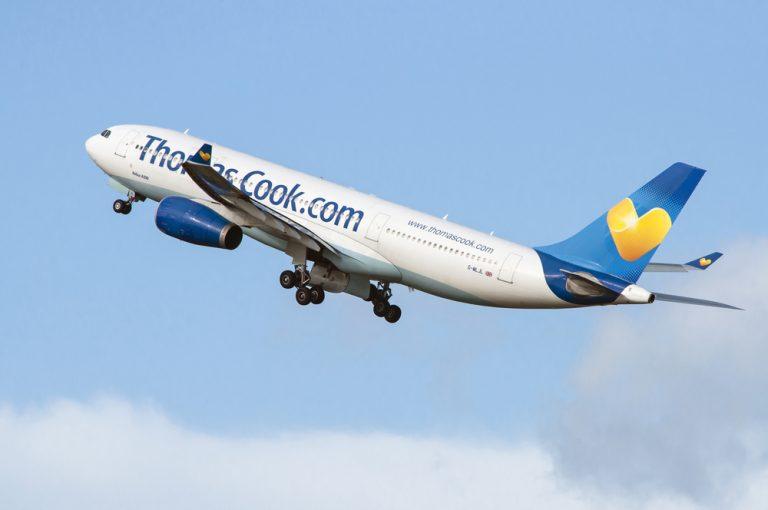
After collapsing earlier this year, Thomas Cook is set to come back as an online travel agent. The group is attempting to secure approval from the UK’s Civil Aviation Authority. The group collapsed after a huge debt mountain, which led to the repatriation of 150,000 UK holiday makers. A source has said that the group is “very keen to be up and running by Christmas. It’s when people’s thoughts turn to summer holidays, and there is likely to be a lot of pent up demand because of this year’s coronavirus cancellations.” Fosun is a Chinese brand that owns Thomas Cook and wants to revive the travel group. It has declined to comment. Shares in the group were trading at just below 150p last summer, however, a series of profit warnings meant that before collapse the price was trading at much lower. Analysts at Citigroup bank described the travel firm’s shares as “worthless” last year before the group went down. Fosun has now yet finalised plans of a relaunch amid the UK government plans to introduce further travel quarantines. At the time of Fosun’s purchase of the group, Fosun chairman Qian Jiannong said: “The group has always believed in the brand value of Thomas Cook.” “The acquisition of the Thomas Cook brand will enable the group to expand its tourism business building on the extensive brand awareness of Thomas Cook and the robust growth momentum of Chinese outbound tourism,” he added.

Iceland to hire 3,000 as business booms
0
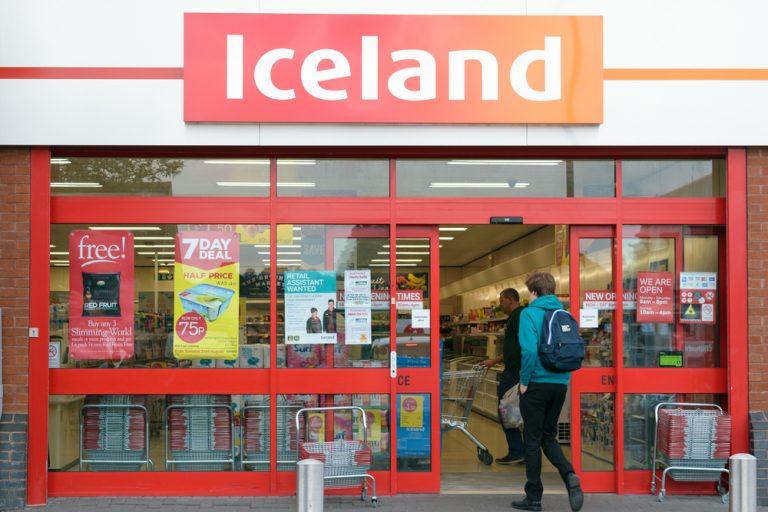
Iceland has revealed plans to create 3,000 new roles as online orders have soared at the budget supermarket. Since the lockdown was announced, the supermarket saw online shopping orders have multiplied by four. Iceland has said that most of the jobs created will be delivery drivers and in-store staff to pack orders. “We’ve been blown away by the demand for deliveries over the past six months with a four-fold increase in online orders since the beginning of lockdown,” said David Devany, who is the chief customer and digital officer at the company. “We see no sign of a slowdown in the demand for deliveries in the run up to Christmas, so a recruitment drive for more permanent staff was essential. Our store and delivery colleagues have gone above and beyond during lockdown introducing incredible measures to help their local communities, and I’m proud that our business has been able to adapt to the changing needs of our customer.”
The company also plans to trial a partnering with Uber Eats, to deliver food from Iceland in Hackney.
Other supermarkets have also benefitted from business since the lockdown. Morrisons is expected to reveal plans to hire thousands of extra employees in the next week.
Tesco earlier this year that it plans to create 16,000 new permanent jobs thanks to the “exceptional growth” in business.

i-Nexus Global shares jump 67% on contract success and reduced costs

Provider of cloud-based strategy execution software i-Nexus Global (AIM:INX) saw its shares rally by more than 67% during morning trading, as management lauded the company’s success in fulfilling what were described as three major strategic goals. First, the company had a focus on lowering costs. It said that it had successfully done this by reducing its monthly operating cost base, from over £850,000 to £360,000,which means that it now runs at a monthly break-even. Similarly, it added that it had trade debtors of £800,000 and a cash balance of around £190,000 at the end of July. Second, it boasted new product launches and contract wins. The former was fulfilled by its Summer 2020 product release going live last week, following what i-Nexus described in its statement as “intensive design and development and a collaborative programme of customer trials and workshops”. The latter was fulfilled by the company securing a new customer on a multi-year contract, in addition to a ‘substantial’ services order in advance of an existing customer’s global roll out plan.

Third and finally, the company boasted that it had successfully re-energised its sales pipeline. It said that it had successfully rebuilt its sales opportunities to pre-pandemic levels, and its pipeline now includes live opportunities with an annual recurring revenue value of £1.8 million.

i-Nexus Global cash outlook

Speaking on the company’s strategy and its financial position in the coming months, the Group’s statement read: “At the time of the Interim results update, the Company announced that the Board had resolved to review strategic options to introduce fresh capital to the business, in light of the difficult and uncertain trading environment caused by COVID-19. The Company has agreed with HMRC a deferral and repayment plan in respect of PAYE and National Insurance payments amounting to approximately £430K but has otherwise thus far been unable to secure access to additional funding.” “Based on the Company’s latest cash flow projections, the Directors anticipate that the Company is likely to experience a modest cash shortfall by the end of the calendar year, but should return to a positive cash balance from February 2021 onwards, in line with i-Nexus’ regular seasonal cashflow profile. As a result, the Board is, as a key priority, scaling up its efforts to source new financing facilities with immediate effect.”

Investor notes

Following the update, the i-Nexus Global share price rally somewhat calmed down, still up 44.78% or 1.50p, to 4.85p per share 08/09/20 13:00 GMT. While this level is ahead of its year-to-date nadir of 3.25p seen in May, it is far behind where it started the year, with the price of 16.50p per share through January. The company’s p/e ratio is currently -0.26.

Fevertree shares dip as sunken profits leave a bitter taste

Producer of premium drink mixers Fevertree Drinks PLC (AIM:FEVR) saw its shares dip marginally during Tuesday trading, with the impression left by its first-half performance being more sour than sweet. Overall, the company booked an 11% year-on-year decline in first half revenues, down to £104.2 million. Proportionally, its largest fall was suffered in Europe, with revenues down 29%, to £20.5 million. However, the headline drop was seen in its UK operations, with a 20% decline taking its first half revenues from £60.7 million to £48.3 million. One notable positive was its ability to expand its US offering, with a 39% year-on-year bounce, up to £27.4 million. The overall fall in revenues, however, led to a corresponding decline in the company’s gross profits, down 20% to £48.7 million, and its gross margin, down 510 basis points to 46.8%. Similarly, Fevertree saw its adjusted EBITDA dive 35% from £36.7 million, to £23.8 million, which saw its EBITDA margin shed 850 basis points, down to 22.8%. The situation was mixed – but also largely glum – for the company’s shareholders. On a positive note, the Group increased its dividend per share by 4% year-on-year, up to 5.41p per share. Unfortunately, this upside was offset by diluted earnings per share dropping by 38%, to 14.99p. The company does find itself in a strong cash position to take itself forwards, though, with its balance increasing by 32% year-on-year for the first half, to £136.9 million.

Fevertree response

Commenting on what he described as the company’s ‘resilient’ first half performance, CEO Tim Warrillow stated:

“Our performance in the Off-Trade over the first half of the year has been very encouraging with sales across our regions exceeding our expectations. People’s interest and excitement about mixing drinks at home has really taken hold over the lockdown period, attracting more households to the Fever-Tree brand than ever before. Consequently, we have increased our penetration in the UK, consolidated our number one position, and driven value share gains in the US, Europe, and as far afield as Canada and Australia. Despite the On-Trade closure for a large proportion of the first half of the year, we have continued to support our On-Trade partners across our regions and are well-placed to benefit from the return of this important channel.”

“We have had an encouraging start to the second half of the year and, while we certainly aren’t immune to the ongoing challenges of COVID-19, our performance and our investments so far this year, coupled with the growing interest in long mixed drinks, gives me confidence that we will exit the crisis in an even stronger position than we entered it.”

Investor notes

Having dropped by more than 5% after the first bell, Fevertree Drinks shares are now down 1.46% or 31.00p, to 2,089.00p a share 08/09/20 12:30 GMT. This price is short of its year-to-date high of 2,418.00p seen in July, but well ahead of its year-to-date nadir of 892.00p seen in mid-March. The Group’s p/e ratio is 40.75, its dividend yield currently stands at 0.73%.

Almonty Industries Virtual Investor Presentation

Download Presentation Slides

Almonty Industries is a Tungsten-focused miner specialising in unlocking value in global Tungsten operations and is currently developing the world’s largest Tungsten mine outside of China. With applications ranging from semi conductors to space rockets, Tungsten is classed as a critical raw material by the EU due to potential supply risks and the high economic importance of the metal.
Key presentation topics include:
  • Classic pattern of mining stocks
  • Almonty’s portfolio of Tungsten operations
  • Almonty’s high potential in the global Tungsten market
  • Exploration of other critical raw materials

Experian shares continue rally with improved second quarter expectations

Consumer credit reporting company Experian plc (LON:EXPN) saw its shares bounce by around 4% after the bell on Tuesday, as the company upwardly revised its second quarter trading expectations, for the three months ended September 30th 2020. In July, the company had predicted that its organic revenue for Q2 FY21 would either remain flat or fall by as much as 5%, with organic costs remaining steady.

Instead, what transpired was stronger than anticipated trading during July and August, which has prompted the company to offer more optimistic predictions of its Q2 results.

Experian now expects its organic revenue to grow between 3% and 5% during the quarter. It believes that its interests in the US mortgage sector will contribute as much as three percentage points to revenue growth, while it stated that the ‘strength in the services’ it provides to consumers and the ‘naturally resilient qualities’ of parts of its portfolio will also be aiding factors.

It added that due to continued investments in innovation and expanding its profit range, it now anticipates a rise in organic costs between 2% and 3% during the first half of FY21.

Experian finished its update by stating that its final set of results for the period will be published on Tuesday the 17th of November 2020.

Following the update, the company’s shares now sit 2.00% or 56.00p up on where they started, up to 2,855.00p per share 08/09/20 12:00 GMT. Though its rally somewhat tapered off during Tuesday morning trading, its share price trajectory has been largely in the green since March, and largely avoided the big slump most company’s shares saw in July.

Its current price level is ahead of its 12-month consensus target price, which stands at 2,820.03p a share, but it is also shy of its year-to-date high, where it hit 2,914.00p in June. Its current level represents an 8.51% growth on its price on the same date last year.

The company’s p/e ratio stands at 35.76, its dividend yield is 1.30%.

Ashtead shares prove resilient despite 38% decline in first quarter profits

Industrial equipment rental company Ashtead Group plc (LON:AHT) saw its shares rally during Tuesday morning trading, in spite of what might have been viewed as a bad but ‘not as bad as it might have been’ first quarter. The company boasted that its 7% year-on-year decline in overall revenue, and 8% year-on-year fall in quarterly rental revenue – from £1.17 billion to £1.08 billion – illustrated its impressive resilience during the pandemic. However, with underlying profit before tax falling by 35%, and profit before tax falling by 38% during the same period year-on-year – from £305 million to £192 million – there is only so much positivity that can be drawn from Ashtead’s first quarter results. Further, the company’s EBITDA fell by 14% during the same period comparison, from £627 million to £548 million, while its quarterly operating profits fell from £358 million to £249 million. The situation was equally bleak for the company’s shareholders, with underlying earnings per share falling 33% year-on-year frm 51.4p to 34.7p, and EPS on a statutory basis falling 35%. Although, there were some glimmers of hope looking ahead. First, the company announced that it had resumed its greenfield opening programme with three openings during the first quarter. Second, the company booked ‘record’ cash flow despite the pandemic, with free cash flow during the first quarter increasing from £161 million to £447 million year-on-year.

Ashtead response

Commenting on what he viewed as a period of impressive resilience in trading, company Chief Executive Brendan Horgan stated:

“In these challenging markets, the Group delivered a strong quarter with rental revenue down only 8% at constant exchange rates. This resilient performance illustrates the successful execution of our long-term strategy, which we embarked upon after the last recession, to broaden and diversify our end markets and strengthen our balance sheet. This positioned us to capitalise on our ever increasing scale, while remaining agile, particularly during these unprecedented times. The actions we took to optimise cash flow, reducing capital expenditure and operating costs, resulted in record free cash flow for the first quarter of £447m (2019: £161m) contributing to reduced leverage of 1.8 times compared to 1.9 times at year end.”

“Looking forward, the strength of our business model and balance sheet positions the Group well in these more uncertain markets. Assuming there is no significant COVID-19 second wave leading to major market shutdowns, like we experienced earlier this year, we expect full-year Group rental revenue to be down mid to high single digits when compared with last year on a constant currency basis. The benefit we derive from the diversity of our products, services and end markets, coupled with ongoing structural change, enables the Board to look forward to a year with free cash flow in excess of £1bn, continued strengthening of our market position and the medium term with confidence.”

Investor notes

Following the update, Ashtead shares rallied 1.89% or 51.00p, to 2,744.00p a share 08/09/20 11:00 GMT, with markets likely factoring in the possibility of more bleak-sounding quarterly fundamentals. This is shy of the company’s year-to-date high of 2.802.00p per share, but ahead of analysts’ consensus 12-month target of 2,650.00p a share. The current price also represents a 20.19% growth from its price one year ago on this date. The Group’s p/e ratio stands at 15.31, its dividend yield is 1.48%.

JD Sports shares rise despite profit plunge
JD Sports (LON: JD) has reported a fall in profits for the first six months of the year. The group has also warned of a continued hit to sales as a decline in footfall is hitting the fashion retailer. Pre-tax profit slumped £96.7m from £158.6m, whilst revenue was down 6.5% over the same period. Since stores has reopened post-lockdown, sales have increased by 20% compared to the same period last year, however, the group has said the costs of health and safety measures have hit profits. JD expects full-year profits of £265m – up from the previous expectations of £96m-206m. JD shares rose over 8% in early trading. They have fallen 14% this year, however, have recently rallied back to stronger figures. On the fall of sales from the post-lockdown boost, the group said: “That boost was generally short lived with footfall into physical retail continuing to be significantly weaker than historic levels in all of our geographies but particularly across Europe.” “Some of the weakness in footfall has been offset through better conversion and higher average transaction values as those consumers who visited physical retail did so with greater intent.” “Nonetheless, we remain absolutely confident in our strengths in consumer engagement, key brand relationships and globally consistent multichannel retail standards. These, combined with an agile operational infrastructure, provide us with a robust platform for further positive development.” Analysts from CMC Markets said: “While JD Sports’ share price might be down on the year, it’s having a remarkable run of form right now. In the 31 days to 4 September, JD Sports’ share price soared 7.5% and, with a [Relative Strength Index] of 72, it seems that there could be more upwards momentum left in the stock.” JD Sports shares (LON: JD) are currently trading +6.99% at 775.26 (0859GMT).  

DWF shares up on strong trading

DWF shares (LON: DWF) rose 7% after the law firm revealed strong trading in the first quarter on the year. The listed law firm released its first-quarter trading update, which showed a 20.3% growth in revenue to £84.3m. The strong results for the first-quarter had helped offset the impact of the COVID-19 pandemic. Pre-tax profit at DWF jumped over 200% to reach £7.4m. The group has proposed a final dividend per share of 0.75p. “The strength and resilience of the Group and our differentiated model has been evident in the first three months of the 2021 financial year,” said Sir Nigel Knowles, the group’s chief executive. “We have seen strong activity levels generating positive momentum across the business resulting in revenue and Ebitda being materially ahead of the prior year. “Trading through the majority of FY20 was strong and the Group made significant investments to support its growth objectives. The sudden and far-reaching impact of Covid-19 had a material effect on the final quarter with a resulting impact on profitability,” he added. DWF shares (LON: DWF) are currently trading +4.90% at 62.41 (0844GMT).