
MIT professor says Uber has acted as a safety net for US unemployed

COVID has led to soaring unemployment with many either leaning on unemployment benefits, unemployment insurance or accumulating personal debt. As unemployment hit 15% in April, MIT Professor, Jordan Nickerson, said that companies in the gig economy – such as Uber (NYSE:UBER) – can have a ‘profound impact’ on labour markets, by decreasing unemployment claimants and indebtedness.
“The gig economy allows people to quickly find work with a flexible schedule and earn higher wages than they would generally receive through Unemployment Insurance (UI). This study looks at whether the introduction of the gig economy into a region can lessen the demand for UI and mitigate the need to accumulate personal debt,” says Nickerson.
Looking into the introduction of Uber across the US, the MIT study found that unemployed car-owners were less likely to rely on UI. In particular, workers who had access to the ride-hailing service were 4.8% less likely to receive UI benefits.
“Our analysis suggests that the decrease in UI usage if Uber were present in all areas translates to a yearly reduction of between $492 million and $750 million in UI benefits distributed by government agencies,” Nickerson adds.
The research illustrated similar trends in credit usage, with laid-off workers seeing a relative decrease in total outstanding balances of $544 or 1.3% of the average individual’s debt burden. Similarly, in credit performance, workers experienced a relative decrease in delinquencies of 2.9%.
Noting that the effects were most pronounced in areas with the greatest increases in unemployment, Nickerson continued: “We found that driving for Uber is viewed as a temporary safety net rather than a long-term job replacement. It is a way to quickly earn money in exchange for work, but it provides the flexibility to continue looking for another job. This was even the case when looking at individuals from high-income areas,”
While the MIT analysis focused on Uber, Nickerson also noted that similar benefits could be identified across gig labour, in firms that offer unemployed people instant access to jobs, such as TaskRabbit and Thumbtack.
He adds that the findings are consistent with his own belief: that, if given the choice, most people would rather work and be self-sufficient, than rely on government support. He believes that the gig economy makes this a more viable option.
He concludes: “Until now, policymakers have largely highlighted the negative aspects of the gig economy, which is indeed less than perfect. However, this study shows that there are other sides of the argument and that the gig economy can have a profound impact on labour markets. With potentially large UI cost savings to the government on the line and significantly less consumer debt, it is well worth it for policymakers to consider the benefits of the gig economy.”
Arguably, we might also say that companies have a greater obligation to offer job security to hard-working staff, even in times of hardship. With our jobs becoming a large part of who we are and how we understand ourselves as people, and the social networks we form, there is something to be said for the ‘job for life and progression in one company’ model. Indeed, constant change and fluid hours will never allow a worker to settle, and many being either informal or recently unemployed, they are largely at the mercy of prospective gig employers. For this reason, we should see companies, such as Uber, as plasters, not panaceas.
TalkTalk shares surge on £1.1bn takeover offer
TalkTalk shares (LON: TALK) surged 16% on the news that it would consider a £1.1bn takeover bid from investment manager Toscafund.
The offer is worth 97p a share and will require the support of chairman Charles Dunstone, who has a 30% stake in the firm.
The TalkTalk board has said that it will consider the offer, saying in a statement: “The Board has considered the terms of the Proposal and has agreed to progress the Proposal further with TAM along with taking advice from the Company’s advisers.”
Toscafund reportedly made a takeover offer last year, at the higher price of 135p a share.
AJ Bell investment director, Russ Mould, said on the offer: “Talk Talk was always positioned as the cheaper alternative to the likes of BT, Sky and Virgin Media for broadband and other services but ultimately it struggled to gain traction in a highly competitive marketplace and growth has really stalled in recent years.”
Toscafund has until 5 November to make a firm offer.
TalkTalk shares (LON: TALK) are trading 19.09% higher at 99,20 (1404GMT).
Investors worth £10tr make impact investment plea to UK government

A coalition of 30 major asset managers, banks and investors – boasting Schroders, BlackRock, Barclays, and NatWest among others – have urged the UK government to issue a green bond to support investments in projects designed to decarbonise the UK economy and tackle social inequality.
Reuters reported that the proposal involves a sovereign bond developed by the Green Finance Institute (GFI), Impact Investing Institute (III) and LSE’s Grantham Research Institute on Climate Change and the Environment, and has been dubbed ‘Green+ Gilt’ by supporters.
Unlike other conventional green bonds, Green+ Gilt has the added benefit of also addressing social inequality issues, by targeting the widespread job losses caused by the Covid-19 pandemic.
Its developers have argued that it would help to reboot the UK economy, while also helping to achieve the government’s goals of tackling regional inequalities and reaching net zero carbon emissions by 2050.
The project’s developers said in a joint statement that it would “catalyse the development of a sterling green bond market and deliver a strong signal to capital markets and international policymakers of the UK’s commitment to sustainable finance ahead of its presidency of the COP26 UN climate summit in Glasgow next year”.
Professor Lord Nicholas Stern – IG Patel Professor of Economics and Government, and Chair of the Grantham Research Institute, London School of Economics and Political Science – added:
“The UK needs a strong and sustainable recovery from COVID-19. A Green+ Gilt is a key instrument that the Government should deploy to help channel savings into programmes and projects that enable us to build back greener in the places that need it most.
It can signal the direction of future opportunities and reduce perceived risk. Now is the time to be ambitious. Green investment can have rapid impact and drive strong and sustainable growth”.
The issuance of green bonds have increased rapidly around the world in recent years. Some $200 billion have been issued already in 2020, with a cumulative total of $1 trillion since 2007.
Just last month, Germany’s government raised €6.5 billion in its first-ever green bond, and the European Union is reportedly considering issuing more green bonds as part of its economic recovery programme in the wake of the coronavirus pandemic.
A total of 16 countries have so far made commitments to green bonds. In Germany and Sweden, both issues were oversubscribed, but the UK government remains to join the movement despite claims of being a world leader in green finance.
Miles Celic, Chief Executive at CityUK, urged the government to catch up with its continental rivals:
“Acting on this proposal would show real UK leadership in green finance by bringing to market a green sovereign bond that has clear social impact characteristics.
There is huge appetite for more sustainable finance investment opportunities. The UK must continue to develop its competitive edge in delivering financial solutions to some of the most pressing social and environmental challenges facing the world today”.
Roche shares unfazed by supply chain failures
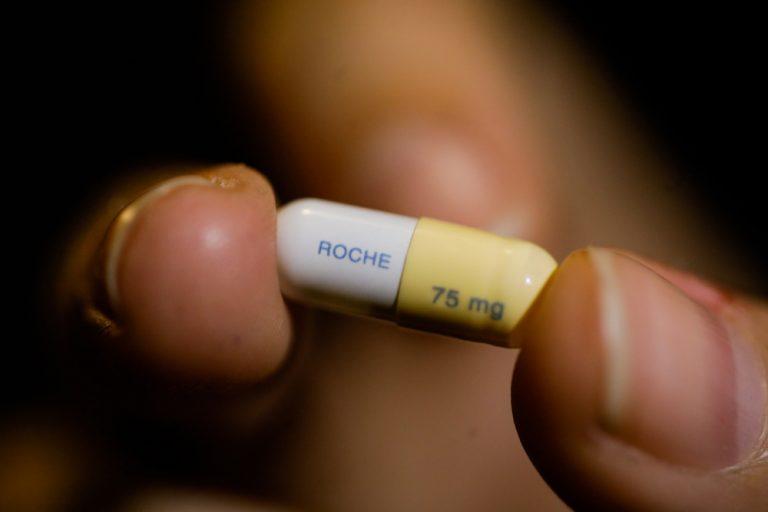
Shares at Swiss pharmaceutical giant Roche (SWX:RO) have remained unfazed by reports of a major supply chain problem, which has affected the distribution of crucial NHS supplies as well as causing a drop in its processing capacity for Covid-19 samples.
The healthcare firm has seen its share price rise more than 0.50% on Thursday morning, despite warnings of a shortage in vital reagents, screening kits, and swabs used for analysing Covid-19 samples as part of the government’s coalition with the NHS Test and Trace programme.
Just last week, the system was struck by a technical glitch which delayed the reporting of some 15,000 cases and caused a leap of nearly 23,000 in Sunday’s infection tally due to the backlog.
Roche is one of the main suppliers of the NHS’s diagnostics equipment. The problem is said to have been caused by a move into a new warehouse at its only UK site based in Sussex.
While a spokesperson assured the public that the firm was prioritising the processing of Covid-19 test samples, the BBC reported that the backlog could threaten the diagnostics and reporting of cancer and heart disease.
An NHS trust in the South West of England has already urged GPs to halt all non-urgent blood tests while Roche attempts to smooth out the disruption to its processing capacity.
In a statement, Roche attempted to soothe fears that the supply chain breakdown could have further impact on Covid-19 testing, as well as the distribution of products related to cancer and other serious diseases.
“As a global leader in healthcare we take our role in providing vital diagnostics solutions to patients around the world extremely seriously.
“There has been a technical issue with the equipment in our new Distribution Centre in Sussex, England, that supplies the UK and Ireland with diagnostics products. This has resulted in a temporary disruption and some delays in distribution of products to UK and Ireland customers.
“We are confident that the plans we have put in place will deliver significant improvements by the weekend to the supply of the tests affected by these logistical issues. We will be well on the way to resolution by the end of next week”.
Meanwhile, International Trade Secretary Liz Truss encouraged people with Covid-19 symptoms to “continue going through the testing process” regardless of the disruption, although iNews reported that Roche had advised GP surgeries to “activate their local contingency plans” and recommended that doctors “prioritise essential services only”.
Munira Wilson, MP for Twickenham and the health spokesperson for the Liberal Democrats, commented that Roche’s supply issue was merely adding to the pressure of an NHS already under considerable strain.
“This does not only have serious consequences for our ability to test for Covid-19, but others with potentially incredibly serious illnesses will also be unable to get the blood tests or screening they need”.
Shares at Roche have remained in the green despite the concerning update, up 0.57% to CHF 316.40 at BST 11:26 08/10/20.
The pharmaceutical giant has seen its share price fall considerably since its annual peak of CHF 354.05 during May. Despite a decent recovery last month, shares have fallen in recent weeks amid criticism of the UK’s Covid-19 testing capacity.
Roche’s dividend yield stands at 2.87%, while the company boasts a market capitalisation of CHF 270.43 billion.
Hargreaves Lansdown reveals “good start to our financial year” – shares fall

Hargreaves Lansdown shares (LON: HL) fell on Thursday’s opening, despite a good start to the financial year.
In the three months to 30 September 2020, the group saw revenue grow by 12% to £143.7m and net new business of £0.8bn.
The growth in new business was weaker than usual, however, is pleasing given the impact of the pandemic and rising Brexit uncertainty.
Chief executive, Chris Hill, said: “Today we report a good start to our financial year, with growth in clients, assets and revenue. These results are against the ongoing backdrop of market uncertainty and highlight the resilience of our business model and client proposition.
“We are confident that the strategy we have invested in, with our focus on the needs of UK investors and savers and delivering the highest level of client service, means that we continue to be well positioned to deliver continued attractive long-term growth,” Hill added.
Earlier this year, the group said they had experienced recorded dealing figures through the coronavirus crisis.
Hargreaves Lansdown shares (LON: HL) are trading -4.91% at 1.510,00 (0941GMT).
Imperial Brands reveals “resilient” trading update, shares rise

Imperial Brands shares (LON: IMB) opened 2.16% higher on Thursday’s opening as the group revealed a “resilient” trading update.
The tobacco company said that it expects group net revenue to be flat over the financial year, however, the group has seen increased overall demand.
The growing demand has offset the weaker demand in the duty-free channel and summer tourist destinations, where the market has been hit by lack of travel.
Stefan Bomhard, the chief executive of Imperial Brands, said in a statement: “Imperial has continued to show resilience in adapting to the challenges posed by the COVID-19 pandemic and our priority remains the health, safety and well-being of our people across our operations.
“In my first three months as CEO I have focused on reviewing our strategy, engaging with employees, and visiting as many of our key markets as possible. I have been struck by the energy and passion of my colleagues, which increases my confidence in our ability to deliver a stronger performance in the years ahead.
“I expect to be able to share some initial observations about the business when we publish our preliminary results on 17 November, at which time we will also announce the date of a capital markets event to provide a strategic update in the first quarter of calendar 2021,” he added.
Imperial Brands shares (LON: IMB) are trading 2.49% higher at 1.397,50 (0901GMT).
easyJet shares remain steady despite full-year loss

easyJet shares (LON: EZJ) took a small dip on Thursday as the group released a trading statement for the last 12 months.
The budget airline said it is in line for a full-year loss for the first-ever time as passenger numbers have halved amid the pandemic.
For the 12 months to 30 September, the group expects to make a loss of between £815m to £845m.
Passenger numbers over the past 12 months plunged to 48 million due to travel restrictions and quarantine rules.
easyJet has warned that numbers will not return to normal for some time and has called on the government to support the aviation sector as it faces “the most severe threat in its history.”
The group’s chief executive, Johan Lundgren, said: “Based on current travel restrictions we expect to fly c.25% of planned capacity for Q1 2021 but we retain the flexibility to ramp up capacity quickly when we see demand return and early booking levels for summer ‘21 are in line with previous years.
“Aviation continues to face the most severe threat in its history and the UK Government urgently needs to step up with a bespoke package of measures to ensure airlines are able to support economic recovery when it comes.
“easyJet came into this crisis in a very strong position thanks to its strong balance sheet and consistent profitability. This year will be the first time in its history that easyJet has ever made a full year loss,” he added.
easyJet’s revenue plunged almost 75%, falling from £2.3bn last year to £620m.
In the first quarter of the next financial year, easyJet said that it expects to fly just 25% of capacity. The airline will focus on ash generative flying over the winter season in order to minimise losses during the first half.
easyjet shares (LON: EZJ) are steady following the trading update and are +0.12% at 524,04 (0845GMT).
Dow Jones recoups yesterday’s losses with future stimulus almost certain
The Dow Jones posted considerable gains on Wednesday, after an utterly cringeworthy ‘will he, won’t he’ from Donald Trump, which resulted in a pledge to back renewed Fed stimulus, should he retain office in November.
The update follows a back-and-forth of dangling and removing the option of stimulus during Tuesday trading, which saw the Dow Jones rise initially, before slumping by almost 500 points.
With Donald Trump pledging to support post-election stimulus, this pretty much guarantees that the US economy will receive a boost before year-end, with Democrat candidate, Joe Biden, also likely to back to stimulus should he enter office.
The position of the former Vice President was also fortified by recent polling data from Rasmussen, which showed that he was now up by 12 points on Trump
https://platform.twitter.com/widgets.js The significance of this data should not be understated, seeing as Rasmussen is normally Trump’s go-to for polls – though now appearing to forecast a perhaps intractable Biden lead.White House Watch: #Biden Takes 12-Point Lead… https://t.co/ZjDCIg3U5W #BreakingPoll #Election2020 pic.twitter.com/mErOMfxNVn
— Rasmussen Reports (@Rasmussen_Poll) October 7, 2020
https://platform.twitter.com/widgets.js Following these developments, the Dow is up by 1.51%, at 28,193, and just shy of the 28.2k mark it briefly touched on Tuesday. Speaking on the political developments and how they’ve affected the Dow Jones, Spreadex Financial Analyst, Connor Campbell, the gains: “[…] seem to be predicated on the fact that Trump wasn’t necessarily anti-stimulus, but rather anti-Democrat. The proximity of the election was always going to make it tough to get a deal done […] and effectively the President opted for politics over policy.”Rasmussen polls (Trump’s fav) Biden 52 Trump 40 Up from a 8 point lead last week. Trump is imploding. Get out our vote! 27 days!
— Amy Siskind (@Amy_Siskind) October 7, 2020
“However, he did claim he would push out a package the moment he was elected, with advisor Larry Kudlow stating on Wednesday evening that Trump is keen to support airlines and small businesses via the Airline Payroll Support and Paycheck Protection Program schemes.”
“At the moment it’s a lot of hot air, and may be setting up the markets for disappointment down the line. Nevertheless, US investors seem to be buying Trump’s pronouncements.”
Why 55% of investors think whisky might help them beat the COVID wobble

Almost 90% of investors have said they are modifying their portfolio approach, with many turning to alternative investments to spread risk, as COVID disruption sees the UK economy contract by a fifth. According to the 2020 Cask Whisky Buyer Report, we should be looking to a burgeoning asset class, which, in the right hands, could offer investors literal liquid gold.
New research by cask whisky investment specialists, Whiskey & Wealth Club, revealed that many investors favour established alternative assets, with 31% in favour of art, 28% in favour of antiques and 24% opting for wine. However, the key finding of their report is that, in the current climate, some 55% of investors are now interested in cask whisky investment.
Around 57% of those surveyed said they would consider investing in the amber spirit in an effort to diversify their portfolios, while more than two-thirds stated that the potential returns on cask whisky would be their leading motivation to invest.
Commenting on the report findings, Whiskey & Wealth Club founder, Jay Bradley, said: “The more ‘traditional’ alternatives, such as art and, antiques and watches are the most sought-after. Yet cask whiskey, is becoming popular as an ever-appealing prospect for investors looking to negotiate this period of financial uncertainty and meet their changing needs.”
The report also highlighted another interesting trend. While wine proved particularly strong towards the latter stages of the 20th century, and then again with Asian demand in the twenty-teens, whisky, like gin, appears to be having something of a renaissance with young drinkers. Indeed, of those surveyed, over 50% of those aged 25-34 were more likely to invest in the spirit over their older counterparts.
Whisky going from Glens to Global
This popularity is being reflected in whisky and fine spirit sales, with Whiskey & Wealth Club saying that demand has ‘soared’ in recent years, and is set to continue rising. Some of the key performance data they point to include the Scotch whisky secondary wholesale market being valued at $40 million according to IWSR; global whisky exports in 2019 hitting a record of £4.9 billion; and Irish whisky growing by 300% in a decade, with the US market alone worth $1 billion. This trend is also being reflected across ‘status spirits’ as a whole, with the IWSR quoting that the market is now worth $8.3 billion (excluding baijiu), and growing at an annual rate of 7%. Speaking on the potential of using spirits to hedge our way through hardship, IWSR CEO, Mark Meek, says: “Though we conducted our study prior to the current COVID-19 situation, when we look at similar past events, such as SARS and the 2008 financial crisis, luxury goods and status spirits in particular have always recovered to previous levels.” With the fine whisky market having previously been accessible to a select few, the sector is still developing and remains largely unexplored. Now that any investor is able to use brokers to purchase casks of premium spirits straight from distillers, the number of investors enjoying the sweet notes of whisky value appreciation is growing, and boutique distilleries are receiving much-needed injections of capital.Mr Bradley concludes: “As the cask whiskey buying market matures, the key differentiator is the cachet of premium spirit. Investing in a whiskey from a premium distillery or brand — with a limited run— offers the potential for significant return on investment. When it comes to whiskey, quality and rarity will always count.”
And with that, I await the arrival of my bottle of Lagavulin 2001 Distiller’s Edition. Which, though it may count as a status spirit, I have no intention of saving it. Of course, this remind me of a fun adage for any fine drink hedging gone awry: if all goes to pot, you can drink your investment, to momentarily forget your troubles.Greene King to axe 800 jobs as curfew “decimates” industry
Greene King has revealed to axe 800 jobs and close pubs, as the 10 pm curfew continues to wreak havoc on the industry.
The pub operator has begun consultation with 800 employees about a redundancy process, learnt Sky News.
Around 80 pubs are expected to close with one-third of the closures to be permanent.
Greene King is the UK’s largest pub retailer and brewer and employs 38,000 people across Britain.
Nick Mackenzie, Greene King’s chief executive, said recently that the government was not going far enough to help the pub industry amid the social distancing measures and curfew.
He said: “(The industry is) still dealing with the crippling aftereffects of the nationwide lockdown and the cumulative effect of the new restrictions.”
“With Public Health England figures showing only 5% of all outbreaks are linked to hospitality, it feels like pubs are being unfairly targeted when there is little evidence that they enable the spread of Covid-19,” he added.
One in four business owners in the hospitality sector believes that they could go under by the end of the year. The sector has urged the government to rethink the curfew in an open letter disregarding it as ineffective.
The letter was signed by British Beer & Pub Association, UK Hospitality and the British Institute of Innkeeping, as well as pub groups including Heineken and Greene King.
A Greene King spokesman has declined to comment.