One major flaw with Boris Johnson’s 5% mortgage deposit initiative

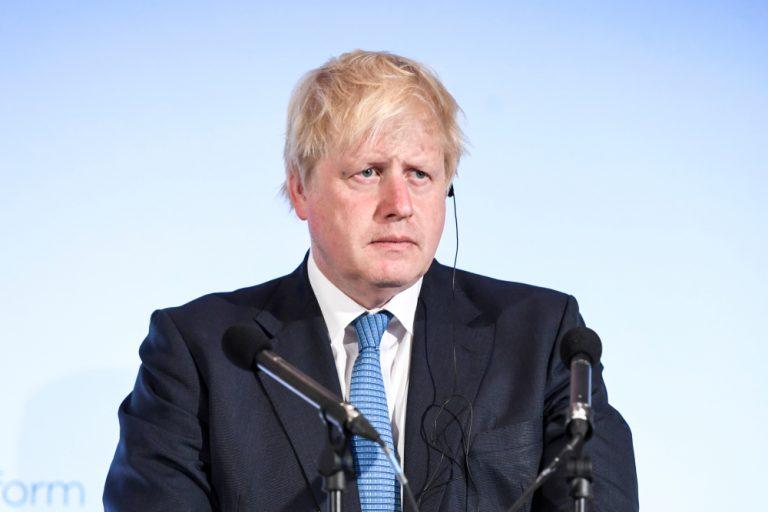
In something of a politically savvy move, PM Boris Johnson used the Conservative Party Conference to shift focus from the inevitably downbeat discussion of coronavirus, and back onto his galvanising and favourite adage – ‘levelling up’. The centrepiece of this new discussion, among transport links and £3.7 billion to renovate hospitals, was a pledge to drop mortgage deposit rates to just 5%. This move is the core of the prime minister’s new ‘Generation Buy‘ initiative, which should, and likely will get a lot of support just because of its premise. That being, in the prime minister’s own words:
“A huge number of people feel totally excluded from capitalism, from the idea of homeownership, which is so vital for our society,” “And we’re going to fix that – Generation Buy is what we’re going for.
He adds: “We need mortgages that will help people get on the housing ladder even if they have only a small amount to pay by way of deposit. It could be absolutely revolutionary, particularly for young people.” Indeed, as stated by eminent sociologists such as Robert Putnam, and Oxford economist Paul Collier, home ownership is the cornerstone of citizens feeling enfranchised and a sense of belonging within the society they live in. Once a person owns a property, they put a large part of their toil, time and money into an asset, and in return – in an ideal scenario – it offers them physical and financial security for themselves and their families – in short, it becomes a home. This attachment to property, with all things being well, increases the likelihood of attachment to the surrounding place and people. This sense of mutual belonging, and shared enjoyment of owning property, can contribute to the fabric of a community, by ultimately creating a shared understanding between peoples who each benefit from owning a tangible chunk of the society they call home. This privilege, being part earned and part afforded (by rights, laws, property prices) to people, makes them more likely to look favourably upon society, and in turn upon its peoples and its institutions (traditions, laws, culture etc).

If encouraging first-time buyers is a good thing, what’s wrong with Boris Johnson’s mortgage deposit idea?

According to the charity, Shelter, the main problem with the PM’s new scheme is that it sells ‘pipe dreams’ to ordinary people, with the average house price now more than eight times the average (and formally recorded) UK salary. In the words of the charity’s chief executive, Polly Neate:
“You have to question whether the prime minister is in touch with reality. He is talking about giant mortgages at a time when more than 320,000 private renters have fallen behind on their rent as a result of Covid-19.”
“The prime minister needs to stop selling pipe dreams and start facing reality. The only way we will make a dent in the housing emergency is by increasing the number of secure and genuinely affordable homes, and that means building decent social housing.” Indeed, a consistent supply of new and affordable housing stock is needed, alongside restrictions on overseas buyers. This issue has some potential of being resolved, both with the PM’s housebuilding pledges, but also the infant ‘starter home’ scheme, which, if expanded, could hopefully act as a better-regulated revival of right-to-buy. The problem that seems to have been missed by many, however, is that it is the banks that are issuing the mortgages (or not, in this case), and we therefore have to ask on what grounds are mortgages being rejected at such high rates. Sure, deposit size is the issue being tackled here, but something not being discussed – and now a frequently asked question by mortgage providers – is the provenance of mortgage deposits. As I was told by a solicitor, banks don’t just want to know if you have the money, but where it has come from – because that gives a lot of indication of whether there is more to come. If your mortgage deposit is courtesy of the bank of mum and dad, you’re far more likely to be rejected. What banks want is a deposit generated organically by working groups or individuals, with steady and reliable incomes, not one-off sums followed by promises. Aside from the difficulties this poses to Boris Johnson’s triumphant-sounding but as-yet unrefined scheme, this kind of mortgage provenance pickiness could be a disaster for the next generation of homeowners. With most previously existing social housing now privately owned, and home ownership half of what it was at its peak in 1980, the main way to pass on assets to the next generation is via inheritance. This will either be through cash or cash equivalents, or hard assets such as property being divided between siblings. And, if banks are reluctant to accept one-off lumps of cash not earned by a prospective mortgagee, this will disrupt the inter-generational passage of assets. This, I believe, is an important consideration that must be taken onboard if ‘Generation Buy’ is to stand any chance of success.

   

Caledonia Mining asks Voltalia to build solar plant to power its Blanket Mine project

Having announced last month that it was trying to raise funds to invest in constructing a solar plant, on Wednesday Caledonia Mining Corporation (AIM, CMCL) announced it had appointed Voltalia (EPA:VLTSA) as the contractor for the project. The aim of the project is for Caledonia Mining to have a solar power plant to supply electricity to its Blanket Mine project in Zimbabwe. Having agreed an initial design phase for the project, Caledonia said that once an Engineering, Procurement and Construction (EPC) contract has been drawn up, Voltalia will commence procurement and construction. At present, the indicated commissioning for the 12MW solar plant is expected to be in the final quarter of 2021. Upon completion, the plant is expected to provide some 27% of the mine’s electricity demand, which Caledonia says will reduce the risk of any further deterioration in the quality of grid power.

The contractor, Voltalia, is a Paris-listed renewable energy provider, with ‘considerable’ experience in developing, constructing, operating and maintaining solar plants. The company already have operations in Burundi, Malawi and South Africa.

Speaking on the solar power fundraiser and shareholder considerations, the Caledonia Mining statement read:

“As previously announced, Caledonia raised the funds required to construct the plant by way of an at the market sales process on NYSE American conducted by Cantor Fitzgerald & Co on its behalf. Pursuant to the process, the Company issued 597,963 shares, representing considerably fewer issued shares than the expected 800,000 that it had initially applied to list.”

“The project is primarily intended to protect the Blanket Mine from any further deterioration in the electricity supply situation. Whilst the project is therefore being done for largely defensive reasons, it is expected to yield a modest return to shareholders after taking account of the dilutive effect of the equity issued to fund it.”

Following the seemingly positive news, Caledonia Mining shares dipped by 2.88% or 40.00p, to 1,350.00p a share 07/10/20 11:06 BST. This is p since the start of the year, but below its year-to-date high of 1,890p a share. The company currently has a dividend yield of 1.60%, and a p/e ratio of 4.69, below the basic materials sector average of 34.14.

Sosander shares rise as revenue surges 52%

0
Sosander shares (LON: SOS) rose almost 6% on Wednesday’s opening as the group released a positive half-year trading update. In the six-months ending 30 September 2020, the fashion retailer posted a 52% increase in revenue and sales momentum also gained strength. “The revenue growth in the half represents a strong performance in a challenging trading environment, highlighting the Company’s in-depth knowledge of its customer base and its agility in quickly adapting to changes in the market,” said the company in a statement. During the lockdown period, Sosander limited marketing spend and focused on cash cash preservation and trading its database of repeat orders and prospects. Repeat orders grew by 88% compared to the same period a year earlier. The company also saw a 26% increase in new customers, despite reducing marketing spending. The group has also begun trading on the Next and John Lewis websites. Initial sales have been positive and ranges have expanded since August. Ali Hall and Julie Lavington, Co-CEOs commented: “We are delighted to have continued to demonstrate the strength of the Sosandar brand and agility of our model, growing our sales, product range and customer base during such a challenging trading environment. “Our customer database, and their loyalty, is the backbone of our performance. The feedback from our customers throughout lockdown has been fantastic and it is clear that they love wearing Sosandar clothes, whatever the circumstances. Following the successful re-introduction of TV advertising and brochure activity in September, we will continue cautiously investing in marketing to underpin customer database growth throughout October and November. “Notwithstanding the continued uncertainty, we continue to believe that we can take significant market share within our demographic, particularly as the lockdown period escalated growth in online retail. We remain confident in what the future holds for Sosandar,” they added. Sosander shares (LON: SOS) are currently trading 4.33% higher at 15,65 (1142GMT).

House prices continue to surge post-lockdown – but will the growth continue?

0
UK house prices are continuing to grow as mortgage applications hit a 12-year high. The average house price in September was £249,870 – a 1.6% rise from August. According to Halifax, the market is surging as people are looking for more space following the lockdown. However, growth is not expected to continue. Due to the rising unemployment and impact of the recession, demand is expected to dampen. The recent rise in house prices means that the average price of a home is now 7.3% more than a year earlier. “Few would dispute that the performance of the housing market has been extremely strong since lockdown restrictions began to ease in May,” said Russell Galley, the managing director of the lender Halifax. “Across the last three months, we have received more mortgage applications from both first-time buyers and home movers than anytime since 2008. “There has been a fundamental shift in demand from buyers brought about by the structural effects of increased homeworking and a desire for more space, while the stamp duty holiday is incentivising vendors and buyers to close deals at pace before the break ends next March,” he added. The housing market ground to a halt over the lockdown and has since bounced back. Thanks to the temporary cut to stamp duty and built-up demand, the market has continued to grow since social distancing measures eased. However, the demand is not expected to continue for long and house prices may decline over coming months. Galley said: “It is highly unlikely that the housing market will continue to remain immune to the economic impact of the pandemic. And as employment support measures are gradually scaled back beyond the end of October, the spectre of increased unemployment over the winter will come into sharper relief. “Therefore, while it may come later than initially anticipated, we continue to believe that significant downward pressure on house prices should be expected at some point in the months ahead as the realities of an economic recession are felt ever more keenly.”

Kromek shares plunge 17% as Covid widens loss

0
Kromek shares (LON: KMK) have plunged over 17% on Wednesday morning as the detection technology group released results for the year ending 30 April 2020. Revenue at the group focusing on the medical, security screening, and nuclear markets fell from £14.5m to £13m. Loss before tax, including exceptional items, also widened from £1.3m to £18.2m. Kromek said they started the year on a positive note and reported a record H1 2019/2020 revenue. This was dented by the impact of the pandemic, which caused disruption and led to projects being postponed. The company has a positive outlook for the next financial year, with successful orders completed and new contracts won. The group’s chief executive, Arnab Basu, commented on the results: “We entered 2019/20 in a stronger position than ever before, increasing revenues by 43% in the first half. However, the pandemic caused markets to shut down and materially impacted both our global customer base and supply chain resulting in overall revenues for full-year 2019 to be lower than the previous year. However, the mitigation measures and operational progress we have made during the year means we are well-positioned to rebound strongly. “We have significantly expanded our production capacity and increased sales of our popular D3S platform that is being deployed in 22 countries, including new contracts with the US Government and European Commission. “As a result, the Board is cautiously optimistic for the year ahead and will provide updates to the market as the outlook becomes clearer moving forward,” he added. Kromek shares (LON: KMK) are trading -17.74% at 8,53 (0933GMT).  

FTSE 100 remains unfazed as Trump ends US stimulus talks

1
The FTSE 100 rose 0.2% on Wednesday’s opening to 5,963 points despite Donald Trump abruptly ending US stimulus talks. Whilst the Dow Jones industrial average fell by 1.3% towards close following Trump’s actions, London’s blue-chip index saw a rise. Trump tweeted yesterday: “I have instructed my representatives to stop negotiating until after the election when, immediately after I win, we will pass a major Stimulus Bill that focuses on hardworking Americans and Small Business.” The US President went on to tweet plans to show economic support. “If I am sent a Stand Alone Bill for Stimulus Checks ($1,200), they will go out to our great people IMMEDIATELY. I am ready to sign right now. Are you listening Nancy?” He was referring to Nancy Pelosi, Democrat speaker of the House,” he wrote. He continued: “The House & Senate should IMMEDIATELY Approve 25 Billion Dollars for Airline Payroll Support, & 135 Billion Dollars for Paycheck Protection Program for Small Business. Both of these will be fully paid for with unused funds from the Cares Act. Have this money. I will sign now!” His tweets also affected the price of US oil, which fell by 1.5% to just over $40. Connor Campbell, a financial analyst from Spreadex, commented on the latest moves by Trump and the rise in the FTSE 100: “In a surprising turn of events, the European markets didn’t follow the lead of the Dow Jones on Wednesday morning, instead bobbing about in the green.

“The Dow Jones immediately panicked, sinking 375 points to fall back below 27,800, having crossed 28,270 earlier in the session.

“Yet the European markets have openly fairly calmly this Wednesday. In fact, they’ve barely moved at all. The FTSE added 0.1% as it stuck its nose across 5950, with the DAX flat just above 12900 and the CAC lurking around 4900 effectively unchanged,” he added.

Tesco profit surges 28%, shares rise

0
Tesco (LON: TSCO) has reported a 28.7% surge in profits, causing shares to rise 2.92% on Wednesday’s opening. In the 26 weeks to 29 August, pre-tax profit grew to £551m thanks to a surge in online sales during the pandemic. Total sales at the UK’s largest supermarket rose 6.6% to £26.7bn, whilst like-for-like sales rose 7.2%. The beginning of lockdown saw average basket size increase by over 50% due to panic buying and the shift of people working from home. Over the course of the pandemic, Tesco significantly increased the number of home deliveries to reach vulnerable people in lockdown. The group more than doubled its weekly delivery slots to 1.5 million. Operating profit, however, fell by 15.6% to £1.037bn. The Tesco Bank made a £155m loss whilst Corona-related costs reached £533m. This is the first result of the supermarket since the group’s new chief executive, Ken Murphy, started just last week and replaced Dave Lewis. The group will pay out a dividend of 3.2p per share. Chief executive Murphy said on the latest results: “The first half of this year has tested our business in ways we had never imagined, and our colleagues have risen brilliantly to every challenge, acting in the best interests of our customers and local communities throughout. I would like to thank all our colleagues for their amazing contribution and I am delighted and proud to be part of such an incredible team. “Tesco is a great business with many strategic advantages. I’m excited by the range of opportunities we have to use those advantages to create further value for our customers and, in doing so, create value for all of our other stakeholders,” he added. Tesco also announced a new chief financial officer, Imran Nawaz, who previously worked at Tate & Lyle. Tesco shares (LON: TSCO) are currently trading +2.48% at 219,30 (0839GMT).    

Global equities flat despite hopes of Federal Reserve stimulus

Global equities appeared by-and-large unmoved on Tuesday, though hopes of a renewed Federal Reserve stimulus package gave European markets enough momentum to finish in the green. As stated by Spreadex Financial Analyst, Connor Campbell: “Now that Trump, irresponsibly or otherwise, is out of hospital and back at the White House, hopes appear to have been stirred that the Democrats and Republicans can finally get a new covid-19 stimulus package over the line. That is unless the number of covid-19 cases on Capitol Hill continues to grow.”

“House Speaker Nancy Pelosi and Treasury Secretary Steven Mnuchin are set to engage in talks once again this Tuesday, so investors will be keeping an eye on any updates emanating from Washington.”

With some stirs of excitement, the Dow Jones initially rallied by around half a percent, before falling to a 0.34% dip, down to 28,053 points. Responding to the Fed rumours and the Dow’s early rally, Eurozone indices bounced during the afternoon, with the CAC up by around a percent during mid afternoon, before relaxing down to a 0.48% rally, and finishing at 4,895 points. Leading the charge was the DAX, also up by almost a percent, before dipping and remaining steady at a 0.61% rally, where it finished up 12,906 points. Meanwhile, the FTSE failed to follow suit. Having bounced by half a percent after lunch, the British market then slid down to a modest 0.12% rally, up to 5,949 points. Elsewhere in global equities, the Hang Seng rallied by 0.90%, the TOPIX bounced by half a percent, and the SSE Composite fell slightly, by 0.20%.

UK state pension age rises to 66

1
The age that people will be able to access UK state pensions has officially risen to 66 – and is set to rise. The state pension, which is worth £175.20 a week, and is paid to anyone who has made 10 years’ worth of national insurance contributions over their lifetime. Although life expectancy is increasing, the former pensions minister, Ros Altmann, said that the changes were failing to take into account differences in life expectancy across regions, social groups, and occupations. “The most disadvantaged members of society tend to have the poorest health,” said Altmann.

“Many had hard manual working lives, which has taken its toll on their health. Therefore, using average life expectancy particularly disadvantages such workers, even if they have worked for 50 years or more.

“There has long been a strong case for considering a more flexible age range for starting state pension payments, and the pandemic has made this case even stronger. It could help many women and many who are seriously ill or need to care for loved ones, and I do hope the government will give this urgent consideration,” she added.

A spokesperson from Work and Pensions has said that the government will review the changes in six years’ time. “Allowing early access to the state pension on a reduced basis could risk leaving people with an inadequate pension, while a universal state pension age provides simplicity and clarity, which helps people plan for their retirement.”

Premier Oil announces Chrysaor deal, shares rise

0
Premier Oil (LON: PMO) has agreed to merge with Chrysaor, causing shares to leap 10% on Tuesday’s opening. The deal will see a new firm, which will be the largest independent London-listed oil company. The deal remains subject to the approval of shareholders. Roy Franklin, the chairman at Premier Oil, said: “The board intends to recommend unanimously this transaction to shareholders as being in the best interests of shareholders and the company. This will mark a new and exciting chapter in Premier’s history.” Chrysaor chief executive, Phil Kirk, commented: “With our combined organisation and operatorship of a large part of our now international portfolio, we will have the ability to deliver value safely, and play our part in the energy transition.” The combined group will produce over 250,000 barrels of oil per day. Russ Mould, investment director at AJ Bell, said on the deal: “The company’s problems date all back to 2014 and the oil price crash which occurred that year. It simply had taken on too much debt when oil prices were above $100 per barrel and has been running to stand still ever since.” “Against this backdrop the tie-up with private equity-backed operator Chrysaor is more of a rescue mission than a merger of equals,” he added. Premier Oil shares (LON: PMO) are trading +7.31% at 16,30 (1358GMT).