Fintech firm Mode Global Holdings (LON: MODE) has joined the standard list and this will help to finance the launch of a payments service powered by Open Banking that would replace the need for cards.
Mode raised £7.5m in a placing at 50p a share. Trading commenced on 5 October. The share price has fallen back to 48.5p.
The company owns the Mode app, which is a digital banking app that enables users to manage assets in one place, and the JGOO payment processing company. Subsidiary Greyfoxx plans to gain FCA authorisation as an electronic money institution providing services to the other operat...
Nasdaq at five-week high with Fed stimulus likely to extend beyond airlines
American indices led global equities optimism at the end of the week, with the Nasdaq, Dow Jones and S&P 500 all hitting five-week highs, as Speaker Nancy Pelosi tried to pressure Donald Trump into committing to a more comprehensive stimulus package.
Pelosi’s spokesperson, Drew Hammill, stated that Mnuchin had “made clear the President’s interest in reaching” an agreement on a comprehensive stimulus for the US economy, following Pelosi’s declaration on Thursday afternoon, that she would not support a standalone proposal offering aid only to airlines.
https://platform.twitter.com/widgets.js There is still no guarantee that a comprehensive stimulus package will be delivered, with Trump and White House spokespeople seeming offering contradictory suggestions in favour and opposing comprehensive support. However, for today, the mere insinuation of generous stimulus on the horizon was enough to keep the ball rolling on Friday. Speaking on the likelihood of generous support, LPL Financial Equity Strategist, Jeffrey Buchbinder, told Yahoo Finance: “A compromise on a big stimulus package in Washington could potentially deliver another October surprise, but the odds are against it as Election Day approaches,” “The optics of getting nothing done aren’t great on either side, and there are a lot of close Senate races right now, suggesting there still may be a glimmer of hope for a deal by November 3.” And this glimmer was enough to see US indexes put the other segments of global equities to shame on Friday. The Dow Jones and S&P 500 were up to their highest points since the start of September, up 0.83% and 0.96%, to 28,662 and 3,480 points respectively. Leading the charge, though, was the Nasdaq composite, up 1.24% to 11,562 points. With the Nasdaq being a big tech-laden index, a 1.92% rally from Microsoft, 1.10% gain from Apple, and a 2.72% rally by Amazon, all served its cause well. Speaking on next week’s outlook, Spreadex Financial Analyst, Connor Campbell, said: “Looking ahead to next week, and investors will likely remain preoccupied with the state of play regarding US stimulus and, somewhat related, any election headlines. Complicating matters is the October 15 Brexit ‘deadline’, a potential source of anxiety for the pound and FTSE.”The Speaker pointed out that, unfortunately, the White House Communications Director contradicted that assertion during their call. The Speaker trusts that the Secretary speaks for the President. (2/2)
— Drew Hammill (@Drew_Hammill) October 8, 2020
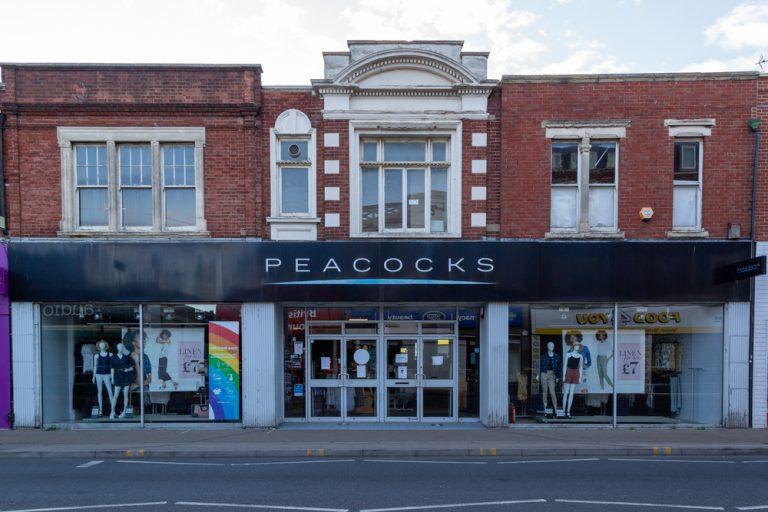
Peacocks owner on brink of collapse, risking 24,000 jobs
Peacocks owner, Edinburgh Woollen Mill, is on the brink of collapse.
The group has appointed administrators in an attempt to rescue the struggling business, which has been hit by the “brutal” trading conditions.
Over 24,000 jobs are at risk if the owner of the Peacocks brand goes under.
Edinburgh Woollen Mill (EWM) has 1,100 stores for brands including Peacocks, Bonmarché and Austin Reed.
“Like every retailer, we have found the past seven months extremely difficult,” said chief executive, Steve Simpson.
“This situation has grown worse in recent weeks as we have had to deal with a series of false rumours about our payments and trading which have impacted our credit insurance.
“Traditionally, the group has always traded with strong cash reserves and a conservative balance sheet but these stories, the reduction in credit insurance – against the backdrop of the lockdown – and now this second wave of Covid-19 and all the local lockdowns, have made normal trading impossible.
“As directors, we have a duty to the business, our staff, our customers and our creditors to find the very best solution in this brutal environment.”
“So we have applied to court today for a short breathing space to assess our options before moving to appoint administrators,” Simpson added.
Edinburgh Woollen Mill is owned by billionaire businessman Philip Day, who has a £1.14bn fortune.
The group has hired FRP to review the business. A spokesperson from FRP said: “Our team is working with the directors of a number of the Edinburgh Woollen Mill Group subsidiaries to explore all options for the future of its retail brands, including Edinburgh Woollen Mill, Jaeger, Ponden Mill and Peacocks.”
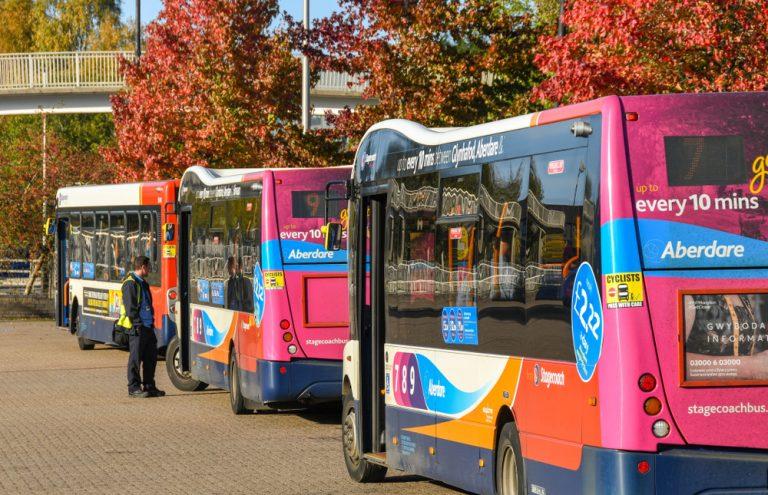
Stagecoach shares fall as pandemic hits demand
Stagecoach shares (LON: SGC) fell almost 4% on Friday morning.
The bus and rail company said in a trading update that the pandemic had impacted demand.
Stagecoach said that passenger demand had been steadily recovering since April, however, the continuing uncertainty around the pandemic means it is difficult to predict financial performance.
The group said in a statement: “The recent government announcements to impose further restrictions may discourage public transport use in the short-term. We are grateful for the measures put in place by the respective governments in England, Scotland and Wales, and by our local authority partners, to protect the continuity of local bus services throughout this period.
“In August, the Department for Transport confirmed that payments for the provision of these essential services by regional bus operators in England would continue until no longer required. These COVID-19 Bus Services Support Grant Restart payments are continuing, with an eight week notice period. While this and similar arrangements are in place, we expect to continue to generate positive EBITDA and avoid significant operating losses.”
Since full-year results in July, Stagecoach has seen further positive cash flow and is in a financially strong position.
Chief Executive, Martin Griffiths, said:
“The safety and well-being of customers and our people remains our absolute priority as we continue to navigate the uncertainty from COVID-19. While the situation remains fluid, we have made progress in the restoration of our networks to close to pre-COVID levels and in growing passenger volumes safely within the current restricted environment.
“We have a strong business, with good liquidity, devolved operating companies closely focused on our customers and local communities, good financial discipline and a supportive relationship with government and our local authority partners. As well as continuing to provide vital connections to jobs and public services during the current pandemic, our sustainable public transport services are central to long-term plans for a greener, smarter, safer, healthier and fairer country.”
Stagecoach’s next update will be interim results for the half-year ended 31 October 2020 on 9 December 2020.
Stagecoach shares (LON: SGC) are trading -2.43% at 40,92 (1036GMT).
Gfinity shares surge 20% on progress review
Gfinity shares (LON: GFIN) soared on Friday’s opening bell as the group embarked on a strategic review that may include a sale of the business.
The company released a progress update where Gfinity said it was well-positioned considerable corporate and strategic development.
“The board of Gfinity remains highly confident in the prospects and position of the company, especially as market dynamics are rapidly, and permanently, changing in favour of the group’s offering,” said the media group in a statement.
“Given this, while the board believes that the company can continue on its current pathway towards profitability it believes, at this point in time, that it is important to all its stakeholders to ensure that it has explored all strategic options to capitalise on the potential market opportunity and to deliver shareholder value, including options for making acquisitions, forming partnerships, separating the activities of the Group or a potential sale of the company,” added Gfinity.
Gfinity shares (LON: GFIN) are currently trading 20.90% higher at 4,05 (1014GMT).
FTSE rises despite economy’s slowed growth
The FTSE 100 rose 0.5% on Friday’s opening, despite the new figures showing GDP to rise at a slower rate than expected.
Instead, investors focused on the idea of more stimulus in the US after Donald Trump initially cancelled talks on Tuesday.
The blue-chip index rose to 6,009 points, whilst the FTSE 250 increased by 0.3%.
The economy grew by 2.1% over August, lower than the 4% predicted by analysts. Jonathan Athow, the ONS deputy national statistician for economic statistics, said: “The economy continued to recover in August but by less than in recent months.
“There was strong growth in restaurants and accommodation due to the easing of lockdown rules, the Eat Out to Help Out scheme and people choosing summer ‘staycations’. However, many other parts of the service sector recorded muted growth.”
Following the new GDP figures, Rishi Sunak is expected to announce a new phase of the job support programme.
Britain’s GDP through August was 9.2% lower than it was during pre-pandemic levels in March.
Commenting on this morning’s market, Connor Campbell from Spreadex, said:
“Taking their lead from the Dow Jones last night, the European indices rose at the start of Thursday – but with the FTSE looking in from the outside.
“By the end of Wednesday night, the Dow had reclaimed all of Tuesday’s losses and then some, surging 530 points to cross 28,300 for the first time in a month. This as investors banked on Trump signing off on some kind of stimulus if he wins in November, with Joe Biden likely to do the same if he comes out of the election victorious.”
Marston’s shares surge as CMA clears Carlsberg merger
Marston’s shares (LON: MARS) surged 5.92% on Friday as the group the UK Competition and Markets Authority (CMA) gave the go-ahead for a £780m merger with Carlsberg.
The transaction will be completed by the end of October 2020.
“While the establishment of the joint venture means that the 2 businesses are likely to distribute each other’s products more frequently, potentially leaving less room to take on other brands, the CMA found that brewers will continue to have sufficient alternative wholesalers to choose from after the merger,” it was said in a statement.
The combined groups will value Martson’s at £580m and Carlsberg at £200m.
Analysts at Peel Hunt commented: “The deal should now complete at the end of this month, resulting in an immediate cash windfall of £239mln (close to the company’s market capitalisation) without any detrimental impact on the company’s cash flow.”
Marston’s shares (LON: MARS) are trading +3.80% at 43,10 (0846GMT).
Economy’s growth slows to just 2.1%
The UK economy’s growth slowed down over August to just 2.1%.
City forecasts were expecting a 4.4% growth despite the government’s efforts through the Eat Out to Help Out scheme.
According to the Office for National Statistics, the new figure means that Britain’s Gross Domestic Product through August was 9.2% lower than it was during pre-pandemic levels in March.
Jonathan Athow, the ONS deputy national statistician for economic statistics, said: “The economy continued to recover in August but by less than in recent months.
“There was strong growth in restaurants and accommodation due to the easing of lockdown rules, the Eat Out to Help Out scheme and people choosing summer ‘staycations’. However, many other parts of the service sector recorded muted growth.”
UK chancellor Rishi Sunak commented on the latest data, saying: “Today’s figures show our economy has grown for 4 consecutive months, but I know that many people are worried about the coming winter months.
“Throughout this crisis, my single-focus has been jobs – protecting as many jobs as possible, and providing support for people to find other opportunities where this isn’t possible. This goal remains unchanged.
“That’s why we’re investing billions to help people back to work and provide fresh opportunities to those that have sadly lost their jobs so that nobody is left without hope,” he added.
Other key economic sectors also grew at slower rates. Services grew by 2.4%, production grew by just 0.3%, and manufacturing and construction grew by 0.7% and 3%.
The slowing of the economy’s growth comes as coronavirus cases are increasing.