Nichols’ Middle East challenge

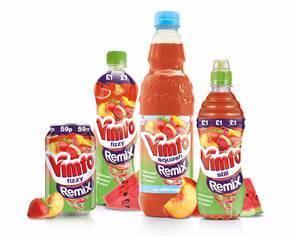
Vimto maker Nichols (LON: NICL) managed to negotiate the tough trading conditions last year and improve its profit. The sugar tax in the Middle East will provide even more challenges this year.
Adapting to the UK sugar tax and the summer, which was not as hot as in the previous year, Nichols still managed to increase its UK revenues. Higher international revenues meant that 2019 group revenues were 3.5% ahead at £147m. The gross margin also improved from 45.7% to 47.6% because of the greater international contribution.
Pre-tax profit improved from £31.8m to £32.4m and the cash balance also imp...

Trackwise bucks trend

There were not many companies that bucked the trend on AIM last week, but one was Trackwise Designs (LON: TWD) following the announcement of a new contract for its technology.
A share price rise of 3.3% would seem modest in any other week but compared with a crashing market and the fact that Trackwise was one of only 33 risers last week this is impressive. Other good news from companies was ignored as fears about the effect of Coronavirus took hold. Some of the early gain was lost and the share price is slightly higher than at the start of the year.
First order
Trackwise gained its first signi...

Gender and ethnic diversity among the FTSE 100 company boards

0
Many companies in this day and age vow to encourage diversity throughout their business. But how many of these firms have boards which reflect this very mindset? We’ve taken a look at some of the most and least diverse FTSE 100 boards in terms of gender and ethnic equality.

Barclays (LON:BARC)

Let’s start with one of the world’s leading multinational investment banks and financial services companies. The board is currently made up of thirteen individuals. Of these, four are women and two are of a BAME background. That’s not a bad divide for the British bank with almost a 50/50 diversity split.

HSBC (LON:HSBA)

Next we have a competitor of Barclays – HSBC. The bank’s board of directors is also made up of thirteen people. Among these directors, six are women and three are of BAME backgrounds (of which two are also women). Therefore, the firm’s board is rather diverse with the majority of positions filled by social minorities.

JD Sports Fashion (LON:JD)

Let’s move on from the banks and take a look at a couple of retail companies. JD Sports is a sports-fashion retail company based in the UK, but with stores across the globe. Its board of directors consists of seven leaders, and two of these are women. The FTSE 100 lister does not have any directors of BAME backgrounds sitting on its board. Granted there are only seven members, but this is not a representative board at all for ethnic minorities.

Burberry Group (LON:BRBY)

Next we have a retailer which falls under the luxury end of the fashion market. Burberry is a British luxury fashion house based in the UK; it’s products are iconic and are recognised by most for their unique print. The company has eleven people sitting on its board of directors. Five of these are women, and one of these women is from a BAME background. Burberry’s board is rather diverse in terms of gender, but it could certainly be more varied in terms of ethnicity.

EasyJet (LON: EZJ)

Most of us have travelled with easyJet to reach destinations within Europe. The British airline is known for its low-cost flights and most flyers have used easyJet at least once in their travels. But how diverse is the company’s board of directors? Well, there is not a single person from a BAME background sitting on its board. Instead, there are four women and seven men. This is a rather poor show from the airline; just over a third of its management are women, but there is no ethnic diversity.

Whitbread (LON:WTB)

The British multinational hotel and restaurant company, Whitbread, is the last firm on our list. Similarly to easyJet, its senior management does not include a single individual from a BAME background. Whitbread’s board of directors consists of eleven people; four women and seven men. There may be some variation in gender, but the company’s board is certainly lacking in ethnic diversity. What the majority of these companies are missing at a senior level is ethnic diversity. Gender equality seems to be growing, but there is still an absence of BAME representation on many of these boards. Back in 2017, companies were given four years to appoint at least one ethnic minority board member. The deadline is approaching, so where is the representation?

3 reasons it’s the best time to buy Shell shares since 2015

Blue-chip oil extraction and refinement company Royal Dutch Shell (LON:RDSB) has long been known as a reliable sit and hold stock, but recently the company has been at the forefront of the Coronavirus-led commodities crash, with its share price falling at a rate not seen since the start of 2015.

Value for money

The company’s shares finished Thursday trading at 1,732.40p per share, down 3.00% or 53.60p 27/02/20 16:35 GMT, and a far cry from the 2,804.00p peak seen on the 18th of May last year. The company’s shares have spent most of the last decade trading at over 2,000.00p per share, with only one other notable dip, down to 1,351.50p per share on 15 January 2015. What this suggests is that the company’s share decline could have a little way to go before consolidating and/or recovering. In the grand scheme of things, though, the iron is certainly hot. The company’s shares have dipped consistently from 2,581.00p a share on the 28th of June 2019, with the current price representing a five-year nadir. What should be apparent though, is that over the last two decades, the company’s price trend clearly illustrates an ability to recover from troughs, with an largely upward direction of travel.

Income not to be scoffed at

On the 30 January, the company announced a fourth quarter (FY19) dividend of US $0.47 a share, level with its dividend paid for the previous quarter. As stated earlier, Shell should be seen as a sit-tight stock. Despite having a fairly reliable upwards trajectory, its main attraction is its widely-documented income potential. At present, its dividend yield stands at 8.48%. This is extremely generous. If we’re looking for a place to tuck our money away and see a healthy income roll in, Shell is among the best equities to do this with. It’s large cap, well-known and regardless of its share price, we know that appealing dividend is being paid into the account every quarter.

Even Shell have had enough of shelling out

At the end of January, Shell posted its most recent set of quarterly results, in which its CEO Ben van Beurden acknowledged a challenging trading environment, and restated the company’s commitment to buying back shares.

“The strength of Shell’s strategy and portfolio has enabled delivery of competitive cash flow performance in 2019 despite challenging macroeconomic conditions in refining and chemicals, as well as lower oil and gas prices. We generated $47 billion in cash flow from operating activities excluding working capital movements and distributed over $25 billion in dividends and share buybacks to our shareholders.”

“We remain committed to prudent capital discipline supported by world-class project delivery and are looking to further strengthen our balance sheet while we continue with share buybacks. Our intention to complete the $25 billion share buyback programme is unchanged, but the pace remains subject to macro conditions and further debt reduction.”

Now, we can infer a few things from its commitment to buyback its shares (which has been backed up by two buybacks of its Class B shares and four buybacks of its Class A shares within the last week), four of which are worth noting. First, it could perhaps tell us that the company recognises the generosity of its own dividend payments and wants to minimise the ensuing costs. Dividends are a cost of equity, and buying back its own shares could give us an idea that it thinks the short-term cost is preferable to the long-term burden of pay-outs to its shareholders. Secondly, it also tells us that its the time the company are happy to buy their own shares. Buybacks occur at or around market rate, and thus to initiate a buy-back programme, even blue-chips will tend to opt for time periods where they perceive they’re getting value for money. Ergo, Shell may be telling us they think their own shares are undervalued, and this is the right time to buy. Third: fewer mouths, more pie. This one is nice and straightforward – fewer shareholders at the table, more earnings for those remaining. A company’s dividend cover – in particular its EPS – will be stretched between fewer shareholders, and thus those who hang tight will see their already generous earnings increase. Finally, share buybacks usually drive prices up. If the company continues its commitment to buying back its own shares, this could well contribute to the long-term rise in its share price. While this point is perhaps a little less strong than the others put forwards, Shell buying back its own shares could give us confidence in its ambition to maintain long-term share price growth, and at best could even express a desire to turn around the current share price dip. To wrap up: Shell may or may not have seen the end of its share price dip, but it represents good value in comparison to the prices it has spent the majority of its time frequenting over the last decade. For this reason – and its attractive income – I’d say either now or in the near future, would be a good time to buy into the company. Analysts from Berenberg reiterated their ‘Buy’ stance on the Group’s stock on Monday.



Coronavirus & commodities carnage knocks FTSE down to 12 month lows

With the seemingly unshakeable Coronavirus working its way across Europe, the FTSE was the worst-hit casualty of a hauntingly bad session for global equities. After spending most of the last month behind its peers, the FTSE spent a few days leading the pack (in recovery mode), before blazing a trail in the opposite direction during the Thursday session. The index suffered alongside its Eurozone peers, with early losses turbocharged by the Dow Jones’s 90 point plummet. It did, however, manage the impressive feat of leading the fall of global equities during the day, with the commodity-heavy British market being weighed down by a rough day for oil. After one of the worst weeks in recent memory, we can only hope markets don’t fancy too much more correction on Friday, before we wobble our way back to the corner for some respite and head out into trading again next week.

Speaking on Coronavirus and the calamitous Thursday session, Spreadex Financial Analyst Connor Campbell commented:

“Investors were in danger of throwing the baby out with the bathwater on Thursday afternoon, as was the rush to ditch equities.”

“Just as Wednesday’s US open helped drag Europe higher, today’s 900-point plunge from the Dow Jones sparked an acceleration in the session’s coronavirus carnage. The Dow is now trading at 26050 – astonishingly, around 3400 points off of where it was exactly one week ago. And that’s not a fat finger typo – three thousand four hundred points!”

“Percentage wise, however, the Dow’s 3.3% decline paled in comparison to the numbers posted by its European peers. The DAX lost 4.2%, sinking to a fresh 4-month-plus low of 12250. The CAC, meanwhile, was down 4.5% and at 5425 for the first time since the end of August 2019.”

“In terms of lows, the FTSE had all its US and Eurozone cousins beat. Unlike the Dow and DAX, the UK index didn’t inexplicably spend much of February touching all-time highs. Already, then, lagging behind, Thursday’s 4.3% plunge has sent the Footsie to 6750, a price last seen 13 months ago.”

“It makes sense – the UK bourse is pregnant with commodity stocks, all of which received an absolute hammering as the session went on. With Brent Crude down 4.3% to its own 13 month nadir, BP (LON:BP) and Shell (LON:RDSB) sank 4.8% and 4% respectively, while, in the case of Rio Tinto (LON:RIO), the FTSE’s miners shed as much as 6.6%. Elsewhere, travel restrictions and a slowdown in business caused WPP (LON:WPP) to haemorrhage 17%, with airlines easyJet (LON:EZJ) and IAG (LON:IAG) both shedding more than 12% for obvious reasons.”

“This is one of the worst weeks in recent memory – and terrifyingly, it’s not over yet. Friday is a tricky proposition. Will the vultures swoop in, picking over the market’s carcass in search of relative bargains? Or will the sheer momentum of Thursday’s losses turn tomorrow into another bloodbath? One way or the other, it’s hard to see any tangible good news appearing to generate a sustainable rebound.”

JLEN celebrates its ‘significantly oversubscribed’ £57.2m placing

Diversified renewables asset management company JLEN (LON:JLEN) announced that it had successfully raised £57.2 million in accordance with its placing announced on the 11th of February this year. The company said that following the placing, it would issue a total of 49,701,820 new ordinary shares at the placing price of 115.00p per unit. Announcing the outcome of its placing, the company’s statement read,

“The Placing was significantly oversubscribed and, as a result, applications have been scaled back in line with the terms and conditions of the Placing set out in the Placing Announcement. Any Placing applications at a price below the Issue Price have not been accepted.”

JLEN said that it planned to use the proceeds raised to repay amounts drawn under its revolving credit facility, in order to finance upcoming projects in the bioenergy and flexible generation sectors. It then reiterated its commitment to securing opportunities which would deliver long-term and predictable cash flows, with long-term contracts and stable regulatory frameworks.

Customary placing procedure

Outlining the regulatory procedure of the completion of its placing, JLEN said it had made applications to the FCA for the admission of the new shares to the premium section of the Official List and the London Stock Exchange (LON:LSE), for trading on its main market for listed securities. It is expected the admission will become effective on the 3rd of March, and when issued, the new ordinary shares will be recognised on a par with existing shares in the capital of the company. The only difference, in practice, is that shares issued during the placing will be exempt from the dividend payment the 13th of March, which covers the quarter to the 31st of December. Continuing to set out the details of the placing, JLEN said:

“Immediately following Admission, the Company’s issued share capital will consist of 546,720,025 Ordinary Shares with voting rights. This figure may be used by shareholders in determining the denominator for the calculation by which they will establish if they are required to notify their interest in, or a change to their interest in, the Company under the FCA’s Disclosure Guidance and Transparency Rules.”

“The Placing is conditional, among other things, on Admission being effective and the Placing Agreement not being terminated in accordance with its terms.”

JLEN investor notes

Despite the positive reception of its placing, the announcement of its fund raising was met with a 1.06% or 1.25p share price decline, down to 116.26p per share 27/02/20 15:29 GMT – which indicates its placing offered value for money. The headline for any potential JLEN shareholder, though, has always been its dividend yield, which remains attractive at 5.61%.

Talking to the company yesterday, ahead of the conclusion of their placing, they said they were particularly excited about the opportunities offered by anaerobic digestion and bioenergy going forwards.

Brexit talks could stop in June if no further progress is made

1
Brexit negotiations have taken another turn on Thursday. It seems that the Brexit saga is never ending, and today Michael Gove has had his say. The UK Government said to the EU that it will walk away from trade talks in June, unless a broad outline of a deal is produced. The UK Government have been in lockdown with Brussels over a potential Brexit Withdrawal Deal – and both parties are seemingly unwilling to give any sovereignty to their counterpart. The UK Government also said tat they would not accept any alignment with EU laws, as the EU is demanding. The UK document says: * The UK “will not negotiate any arrangements in which the UK does not have control of its own laws and political life” * The UK’s aim is for a trading relationship with the EU similar to the ones the 27-nation bloc has with Canada, Japan and South Korea * There will be no jurisdiction for EU law or the European Court of Justice in the UK * The UK will rely on World Trade Organisation rules under an arrangement with the EU similar to Australia’s if progress on a comprehensive deal cannot be made * A separate agreement on fisheries is needed, to reflect the fact that “the UK will be an independent coastal state at the end of 2020”. The terms from the EU side stated that the UK could be expected to be under EU rules and regulations following the Brexit Withdrawal process. There was a mention of state subsidies for industry, environmental standards and workers rights. PM Johnson has promised the British people that a Brexit deal will only be agreed where the EU can give some concession, and the final deal favors the British people. Post Brexit talks are heating up, as the French Foreign Minister warned Boris Johnson that the deal could turn into a ‘battle’ last week. Michel Barnier have already said that the EU is prepared to give the UK “super-preferential access” to the EU market of 450 million people – but it seems that a hard Brexit is on the mind of the government. The UK Government will have to realize that not everything can be done on their terms, and that some ground will have to be given if a Brexit Withdrawal deal is to be struck. Michael Gove, added: “Geography is no reason to undermine democracy. We will not be seeking to dynamically align with EU rules on EU terms governed by EU laws and EU institutions.”

Playtech warns shareholders on coronavirus impact following steady annual results

0
Playtech PLC (LON:PTEC) shares are in red, as the firm issued a warning over its 2020 results. The online gambling firm said that the coronavirus could bruise results for 2020, as profits also fell in 2019. Playtech also released their final results for 2019. Revenues across the yearly period totaled €1.51 billion, seeing a 22% increase year on year against a constant currency basis. Playtech noted that their profit levels were affected by the impairment of intangible assets of the Markets and Alpha cash generating units, amounting to €90.1 million. Looking at current trading, the firm said that B2B gambling revenue was up 5% on a year ago from the first few weeks of 2020. However, its business in Italy initially started strong, but the firm warned that this could be affected by the coronavirus outbreak. The firm said “However, in the last two weeks it has started to see a material impact from changes in normal customer patterns due to COVID-19 which is significantly affecting two of its largest markets. Accordingly, results for 2020 are likely to be below existing market expectations”. Alan Jackson, Chairman of Playtech, commented: “2019 was another important year in the development of Playtech. Management has continued to focus on delivering a transformation of the business which started in 2017, designed to secure long term growth and unlock shareholder value. Our Core B2B Gambling business reported strong growth in 2019. In addition we made further strategic progress by entering newly regulated markets, signing new customers, expanding existing relationships and continuing to innovate with new product launches. Together these are laying the foundations for our future growth. In our B2C Gambling business, Snaitech had a fantastic 2019 and continues to gain market share and reached the number one market share position for online betting and gaming in Italy in H2 2019. The strength of our diversified business model, focus on cash flows and strong balance sheet has allowed Playtech to announce today further shareholder returns with a new €40 million share buyback programme alongside our final dividend. Playtech has taken steps to improve its Corporate Governance with two new non-executive directors appointed in 2019 and I will in due course be announcing my successor as Chairman who will lead the Board during the next phase of Playtech’s exciting future.” Shares in Playtech trade at 284p (-7.33%). 27/2/20 13:15BST.

Bakkavor shares dive 6% as profits drop 44% in 2019

0
Bakkavor Group Plc (LON:BAKK) have seen their shares dive, as the firm issued a warning over its profit levels. The FTSE 250 listed company told the market that profits had dropped 44% in 2019, and ongoing issues with the coronavirus are continuing to take a toll on business. The firm said regarding the coronavirus situation – “In China, whilst 2020 started well, the recent Coronavirus outbreak is now having a significant effect on our business. Volumes are significantly down in February and currently there is no clear visibility as to when more normal trading conditions might resume. It is therefore very difficult to assess the financial impact; however, our current view is that Adjusted EBITDA1 before exceptionals and start-up losses for our international business in 2020 could be £6 million to £10 million lower than 2019. Despite this short-term impact, market fundamentals are strong and we remain excited about our prospects in China.” The food firm said that pretax profit in 2019 had fallen from £77.9 million to £43.8 million – a worrying statistic for shareholders to note. Additionally, operating profit also fell 19% to £69.4 million from £85.6 million from one year ago. The firm alluded this fall to higher exceptional costs and start up losses for new sites. Revenues did rise by 1.5% however, from £1.86 billion to £1.89 billion. This was boosted by growth in international business tied in with solid performances in the UK. Bakkavor added that the coronavirus is having a significant impact in China, which could affect future results. Agust Gudmundsson, CEO, said: “This was another solid year for Bakkavor, in which we delivered further growth, increased market share, and strengthened our operations both in the UK and internationally, whilst reporting performance in line with expectations. “In the UK, against difficult market conditions, and with further labour inflation and low consumer confidence, we successfully protected EBITDA margins and held our underlying profitability. We have significantly strengthened our market-leading position in the desserts category and launched a major new meals range for one of our strategic customers which give us confidence going into 2020. “In our International businesses, we continue to develop our operations to take advantage of the long-term potential in both the US and China. Volumes are accelerating across our new sites, the demand for our products is growing and interest in our fresh prepared meal offer is gaining traction particularly with US regional retailers. “More recently, the Coronavirus outbreak is having a significant impact on our business in China and our key priority is to safeguard the health and wellbeing of our colleagues through this challenging period. We continue to monitor the situation closely as it develops. “Looking further ahead, we have strong foundations and the skills and expertise in place to deliver on our long-term strategy. We are confident that the strength of our business model, customer strategy and category excellence will enable us to capitalise on further growth opportunities.”

Bakkavor’s mixed few months

In September, the firm gave an update saying that they had made good progress despite regression in its earnings fundamentals. Group revenue growing 1.4% and like-for-like revenue rising 2.0% in a year-on-year comparison of H1, up to £923 million and £977.9 million respectively. Despite this, Adjusted EBITDA pre IFRS 16 contracted 6.5% to £73.5 million and adjusted operating profit narrowed by 11.5%, from £57.3 million, to £50.7 million. Even more notable, Bakkavor operating profits dived 45.8% on-year, from £54.1 million to £29.3 million. Further, the Company’s interim dividend per share remained flat at 2.0p, while their basic EPS contracted by 4.0p and their adjusted EPS narrowed by 1.5p, to 3.0p and 5.9p. Shares in Bakkavor trade at 116p (-6.11%). 27/2/20 13:00BST.

Evraz shares crash 7% following 2019 revenue and profit slumps

6
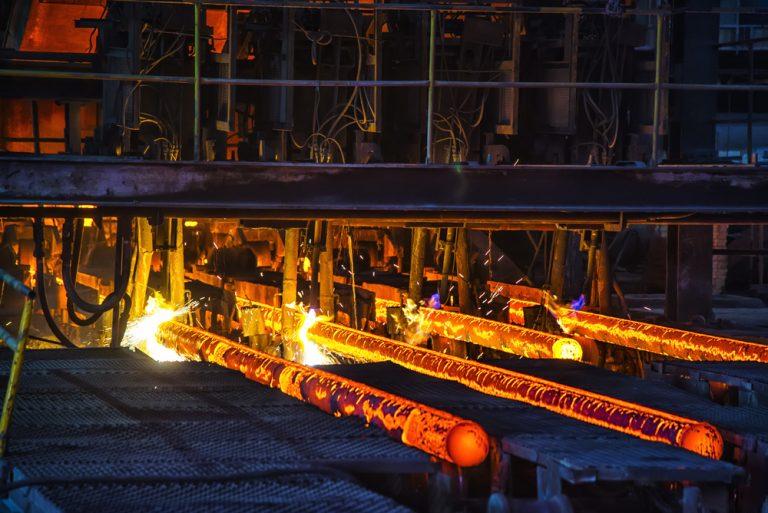
Evraz plc (LON:EVR) have seen their shares crash on Thursday, following the announcement of its final results. The steel maker said that full year profits had dropped, as trading was hurt by less “favorable” global steel and commodity markets. 2019 revenues slumped 7.3% to $11.91 billion from $12.84 billion, whilst pretax profit also crashed 72% from $3.2 billion to $902 million. Earnings before interest, taxes, depreciation, and amortisation fell also, to $2.6 million from $3.78 billion. Evraz blamed this slump on “lower vanadium and coal product prices as well combined higher expenses”. Looking at their steel division, the firm also saw revenues drop 8.3% year on year, to $8.14 billion. The steel producer added that they will pay a $0.40 interim dividend, which is flat from a year ago. The firm added that this “reflects the Board’s confidence in the Group’s financial position and outlook.” Evraz Chief Executive Officer, Alexander Frolov, commented: “In 2019, global steel and commodity markets were not as favourable as they were in 2018. Steel prices have fallen as a result of excess supply in an environment of limited end-use demand. Global coal and vanadium markets returned to supply-demand equilibrium. Despite the market headwinds, EVRAZ was able to deliver resilient results with EBITDA reaching US$2,601 million and EBITDA margin reached 22% in 2019. Retention of our low-cost and market leadership positions remain very important for EVRAZ. During the reporting period, the efficiency improvement programme delivered an EBITDA effect of US$407 million from customer focus and cost-cutting initiatives. In 2020, EVRAZ will continue to make significant efforts to improve safety and other vitally important areas of sustainable development. The Group has also set ambitious production targets for the year that should help it to reach solid results despite potential market headwinds.” Evraz shareholders will hope that the firm can bounce back from a mixed year for the firm, however with more political certainty and a favorable macroeconomic environment, the firm should remain optimistic. Shares in Evraz trade at 347p (-7.75%). 27/2/20 12:43BST.