
Frasers Group reports 20% fall in profits
Frasers Group (LON: FRAS), formerly Mike Ashley’s Sports Direct, has announced preliminary results today – revealing a 20% slide in profits.
Delayed by a week, the lockdown store closures has led to a hit in sales for the group where pre-tax profits fell down from £179.2m to £143.5m.
Despite the fall in profits, revenue grew from £3.7bn in 2019 to £3.96bn – a rise of 6.9%. The rise in revenue was due to opening of new stores and Frasers Group’s purchase of Sofa.com and Jack Wills.
“We continued to follow the further demise of Debenhams during the year with much frustration and disappointment as it entered administration for a second time,” said the company in a statement.
“We raised our concerns and gave numerous warnings about what we were seeing there, much of which has materialised. Our offers of help were repeatedly disregarded and it is scandalous that this business has now been in administration twice.”
Shares in Frasers Groups (LON: FRAS) are trading +2.42% at 313,20 (0821GMT).
Apple reaches $2 trillion valuation
Apple (NASDAQ: AAPL) has become Wall Street’s first $2 trillion company.
During mid-morning trading on Wednesday, the tech giant surpassed $467.77 per share.
Apple hit the $1 trillion mark in 2018. This year, shares in the group have surged 59.24%
In it’s latest results, the group boasted a $59.7 billion growth in revenue. It also saw a 161.63% growth in its services sector between Q3 2015 and Q3 2020. This was despite the company warning in February that its year-end profits may take a significant hit from the impact of the coronavirus.
“We do not have a zero-sum approach to prosperity,” said chief executive, Tim Cook, with the latest results.
“We are focused on growing the pie, making sure our success isn’t just our success and that everything we make, build or do is geared toward creating opportunities for others,” he added.
Shares in the group are trading +1.07% at 467,11 (1622GMT).
Over half of investors have lost faith in Boris Johnson’s government

New research conducted by FJP Investment indicated that some 54% of their clients had lost faith in Boris Johnson‘s government, based on its handling of the COVID-19 pandemic so far. This number jumped up to 62% when based solely on the company’s investors based in London.
The company’s survey also revealed that 57% believe additional financial relief is still needed to support businesses affected by the pandemic, with the UK entering its second ‘once-in-a-generation’ recession for the second time in little over a decade.
The research findings added that 42% of respondents want more to be done to help home-buyers and property investors, beyond the stamp duty holiday. Some 54% also think that the mortgage payment holiday relief scheme ought to be extended beyond October 31 2020.
Commenting on the findings, FJP Investment CEO, Jamie Johnson, said that investors were clearly worried about the long-term consequences of the pandemic and how it has been handled – with these fears only being compounded by the recent news that the UK had entered a recession. He continued:
“One of the key findings is that faith in Boris Johnson’s government is waning. While there is support for the financial support schemes and economic stimuli that have been introduced so far, investors feel that much more must be done if the UK’s post-pandemic recovery is to be successful.”
“The pressure is very much on the Prime Minister and Chancellor Rishi Sunak to allay these concerns. Boosting investors’ confidence will be vital in order to inject life back into different financial markets and bolster GDP.”
Despite these apparent criticisms, the company’s research also found that 24% of those surveyed were planning to take advantage of the stamp duty holiday, with this figure rising to 43% for those aged 18-34.
Of course the FJP Investment survey is not a perfect picture of the sentiment of all investors, and being property-focused, the company’s clients are naturally inclined to favour more accommodative property investment policy.
Wishbone Gold shares soar 96% on Queensland exploration commencement

Gibraltar-based gold mining company Wishbone Gold (AIM:WSBN) saw its shares spike on Wednesday, as the company announced the commencement of drilling and exploration at its Wishbone II project in Queensland Australia.
The project is situated between two other gold producing areas, Charters Towers Gold Project to the West and Ravenswood to the East, with the latter having recently been sold for AUS$300 million. Together, they have 10 million ounces of estimated gold reserves.
Assays from Wishbone II itself have also yielded promising signs of considerable mineralisation, with surface rock-chip samples indicating presences up to 25.2 grams per tonne of gold at the Hanging Valley prospect, while the Oaky Mill prospect recorded samples at 7.32 grams per tonne.
Between the Wishbone II, III and IV, the company’s projects cover 14,700 hectares of 100%-owned Exploration Licences around 80km South of the port city of Townsville. The area’s geology is made up of a large shear zone structure which contains historical encounters of gold mineralisation.
Wishbone Gold response
Commenting on the Wishbone II announcement, company Chairman, Richard Poulden, said:
“We are now commencing a new and exciting phase of the Company’s development. Now that the complicated process of cleaning up the Wishbone corporate and capital structure has been completed, we are now focusing at getting value from our gold assets in Australia. The Queensland State Government has acted swiftly with respect to COVID-19 lockdowns and controls and the State is relatively free from the virus.”
“Mining is also regarded by the Government as a key essential industry, so conducting exploration on the Company’s assets can be accomplished in these globally difficult times. We have therefore instructed our geological consultants to prepare an initial drilling programme on our key gold prospects. We intend to hit exploration hard and take advantage of the elevated gold price and our excellent gold assets.”
Investor insights
Following the update, Wishbone Gold shares rallied over 100%, then fluctuated to a rally of 96.43% or 1.35p, to 2.75p a share 19/08/20 11:20 BST. This price represents an all-time high, and a steep trajectory from the 1.50p level it sat on the August 4 2020.UK inflation surges on oil and clothing prices

Despite predictions of a fall, UK inflation as picked up to 1%.
According to the Office for National Statistics (ONS) said on Wednesday that inflation surged from 0.6% in June due to rising petrol and clothing prices.
Jonathan Athow, the ONS deputy national statistician, said: “Inflation has risen, in part, due to the largest monthly pump price increase in nearly a decade, as international oil prices rose from their lows earlier this year.”
In addition to oil, inflation also rose due to a rise in clothing prices, which “fell on the month but by less than a year ago, partly due to different sales patterns throughout the year so far”.
“In addition, prices for private dental treatment, physiotherapy and haircuts have increased with the need for personal protective equipment contributing to costs for these businesses,” he added.
According to the new figures from the ONS, the prices of petrol have soared prices at the fastest rate in almost a decade.
“Between June and July 2020, petrol prices rose by 4.9 pence per litre, to stand at 111.4 pence per litre, and diesel prices rose by 4.0 pence per litre, to stand at 116.7 pence per litre.”
“In comparison, between June and July 2019, petrol and diesel prices fell by 0.9 and 2.3 pence per litre, to stand at 127.3 and 132.0 pence per litre, respectively. This month’s rise in petrol prices was the largest monthly increase since between December 2010 and January 2011, when prices rose by 5.4 pence per litre (to stand at 127.4 pence per litre).”
As for clothing, the ONS commented: “Garments prices overall fell this year by less than a year ago, with the main upward contributions coming from garments for women, in particular formal trousers, casual jackets, jumpers, nightdresses/pyjamas, cardigans and dresses; garments for infants and children, in particular jumpers/sweatshirts/cardigans, T-shirts, trousers and pyjamas; and men’s casual jackets/coats.”
The new inflation figures have come as the UK economy continues to open post-lockdown and growth restarts.
Persimmon shares up on 49% sales increase

Shares in Persimmon (LON: PSN) were up almost 5% this morning after the group revealed a strong start to 2020.
In the half-year results, the housebuilding giant announced an average weekly increase in private sales by 49% thanks to an easing in lockdown restrictions.
In a statement, Persimmon recommended a 40p interim dividend.
Dave Jenkinson, Persimmon’s chief executive, said: “Despite the significant disruption, the Group’s preparedness, agility and strength ensured a robust first half performance with 4,900 new home completions and further good progress made on our customer care improvement plan.”
“The Group has had an excellent start to the second half with a c. 49% year on year increase in average weekly private sales rates per site since the start of July and a current forward order book of c. £2.5bn, a 21% increase on last year.”
“Our strong opening work in progress position and excellent build rate through the summer give us confidence in a positive second half outturn. We expect that by the end of September, we will have delivered c. 45% of our anticipated second half new home legal completions.”
“As a result of the continuing strong performance of the business through this challenging period, together with our cautious optimism on the Group’s prospects for the second half, we are pleased to announce that the Board is proposing a modest interim dividend of 40p per share. Further dividend payments this year will remain under close review,” he added.
As for the second-half of the year, the group said after the strong results it is positive for a second-half outturn.
Shares in Persimmon (LON: PSN) are trading +4.40% at 2.728,00 (1047GMT).
Slingsby shares surge 72% on sales growth

Shares in industrial supplies company, Slingsby (LON: SLNG), surged 72% following the half-year results released on Tuesday.
Sales in June 2020 were 50% higher than a year earlier, leading to an operating profit of £0.5m for the six months to 30 June 2020 – £0.4m higher than the same period a year earlier.
Pre-tax profit was £0.4m compared to a prior year loss before tax of £52,000.
in a statement, Dominic Slingsby the group’s chairman, said: “In my trading update of 19 June 2020, I reported that Group sales in the five months to 31 May 2020 were 3% lower than prior year but that an improved level of gross margin and lower overheads meant that operating profit was higher than the comparable period in 2019. We were cautious regarding the outlook due to the significant uncertainty caused by the Coronavirus and that orders were concentrated on a limited product range.”
“Orders remain focussed on a limited number of products. The Group has managed to largely fulfil demand for these products to enable customers to continue or re-start their operations in accordance with Government Coronavirus guidance.”
“However, we remain cautious that this increase in demand is short term and economic conditions may deteriorate should our customers suffer from lower levels of activity than they experienced prior to the pandemic when Government stimulus measures are withdrawn.”
“We would like to thank our employees for their hard work and adaptability which has enabled the Group to maintain its operations and continue to help its customers through this difficult time,” he added.
Shares in Slingsby (LON: SLNG) are trading 36.8% higher at 171.00 (1123GMT).
Marks & Spencer to axe 7,000 jobs amid “uncertain outlook”
Marks & Spencer (LON: MKS) will cut 7,000 jobs in response to the pandemic.
After a steep drop in sales, the retailer said it plans a “multi-level consultation programme” due to the ‘uncertain outlook’.
In-stores sales at Marks & Spencer fell 47.9% on the same period a year ago whilst online sales were up 39% and food sales grew by 10%.
In a statement, chief executive Steve Rowe, said:
“In May we outlined our plans to learn from the crisis, accelerate our transformation and deliver a stronger, more agile business in a world in which some customer habits were changed forever. Three months on and our Never the Same Again programme is progressing; albeit the outlook is uncertain and we remain cautious. As part of our Never The Same Again programme to embed the positive changes in ways of working through the crisis, we are today announcing proposals to further streamline store operations and management structures.”
“These proposals are an important step in becoming a leaner, faster business set up to serve changing customer needs and we are committed to supporting colleagues through this time.”
The job cuts will be across UK stores central support centre and in regional management.
With a total fall of revenue over the last 8 weeks being 10%, the group said in a statement that the fall in smart clothing sales was dramatic due to the lack of weddings and smart events attended.
“The performance of store sales has varied widely across the estate with some of the newer out of town stores trading close to last year’s level of sales overall in recent weeks but legacy town centre stores and some shopping centres still heavily impacted by social distancing and reduced footfall.”
“Furthermore, with the closure of many workplaces and lack of social gatherings, the clothing sales mix has seen a substantial shift from office dressing and formal wear into casual clothing and leisurewear.”
Marks & Spencer has said they plan to create new jobs in online delivery warehouses.
This is the latest blow to the high street. Richard Lim, CEO of Retail Economics fears the job losses will continue once the government’s furlough period ends in October.
“Retailers were already battling with the pace of structural change facing the sector but the impact of the pandemic has been a step-change for the industry. Retailers remain in survival mode, preserving cash and hanging on for more sustainable levels of demand to return. But the way we shop has changed on a permanent basis for many parts of the sector almost overnight,” he said.
“The reality is that many more retailers will fail and the number of job losses will ramp up as government support is withdrawn. This is the calm before the storm.”
Shares in the retailer (LON: MKS) are trading at 114.94 (0926GMT).
Ryanair to cut flights following weak bookings
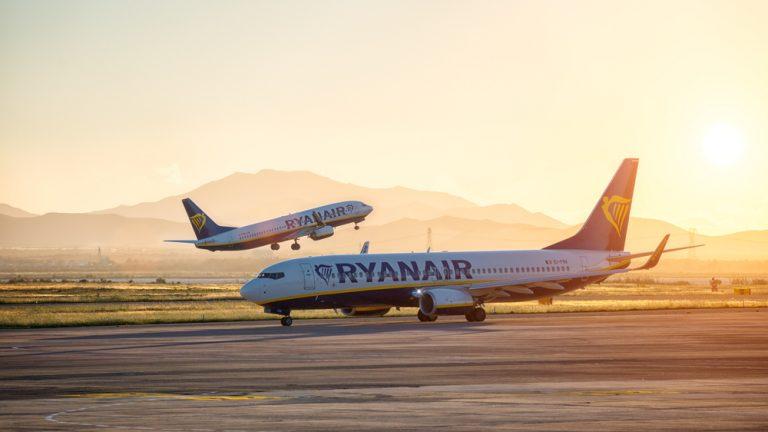
Ryanair has announced plans to cut flights throughout September and October after a drop in bookings over the past 10 days.
As new quarantine restrictions have come into play, bookings over the past weekend have dropped due to uncertainty around traveling.
The airline will cut the number of flights flying to France, Sweden, and Spain in particular.
“Over the past two weeks as a number of EU countries have raised travel restrictions, forward bookings, especially for business travel into September and October, have been negatively affected, and it makes sense to reduce frequencies so that we tailor our capacity to demand over the next two months,” said a spokesperson.
Airline and travel company stocks plunged on Monday after the government removed France, the Netherlands, and various other countries were removed from the UK government’s travel corridor list.
Shares in Easyjet (LON: EZJ), Ryanair (LON: RYA) and IAG (LON: IAG) were down following the news. Easyjet shares fell over 7% on the news, following the news that the budget airline had finished the sale and leaseback of 23 aircrafts to raise a total of £608m amid the pandemic.
Back to work: how Londoners feel about the new normal

With lockdown slowly but surely coming to an end, and the UK government’s furlough scheme set to wrap up in October, the vast majority of employees across the country now face the awkward reality of going back to work in the post-pandemic world. But after months of disruption, returning to normality is not going to be as simple as just showing up at the office again for the tried-and-tested 9-5.
The coronavirus pandemic has changed how we work for good. Millions of staff up and down the UK were placed on furlough as businesses either shut completely or operated under restrictive social distancing guidelines between March and June, and even those that were held on were encouraged to work remotely wherever possible to limit contact between employees. So was born an unprecedented work from home scheme, which has proven that UK businesses can – and often do – operate successfully without employees in the office.
Of course, the work from home luxury does not extend to all industries. Millions of staff across supermarkets, building and the manufacturing sector were never able to conduct their business through Zoom calls and emails in the comfort of their own home. But for those comparatively fortunate desk workers who were, the prospect of returning to the city in the coming weeks comes with a great deal of anxiety about how businesses can guarantee their staff will be safe – and if they can do that at all.
The new normal
British asset management firm Schroders (LON:SDR) made headlines last week by announcing that they were to become the first company to embrace working from home for good. The FTSE 100 listed institution told its 5,000 staff worldwide that they would not need to be in the office five days a week, declaring a “new approach to flexible working” which allows employees to decide when they want to be on site as long as they work the total days or hours required by their contract. Commenting on the move, Schroders’ chief executive Peter Harrison said that the coronavirus pandemic had “changed society irrevocably”: “The contract between society and business has changed forever. The office will become a convening place where you get teams together, but the work will be done in people’s homes”. Schroders’ is not the only firm recalibrating its post-pandemic office obligations; Aviva’s chief executive Amanda Blanc told journalists earlier this month that she expects a mere 10% of staff to return to the office in September, as the company explores how it can prioritise the “safety and wellbeing” of employees while ramping up productivity to pre-coronavirus levels. PwC also announced that it expects the majority of its 22,000-strong UK workforce to work from home for the foreseeable future, as chairman Kevin Ellis stated: “There’s no question that lockdown has done away with presenteeism. It’s shown many business leaders that their people can be productive, engaged and happy working from home”.How do Londoners feel about getting back to work?
The safety and comfort of working from home is not expected to last for everyone, and with thousands of businesses preparing to return to relative normality, anxiety is beginning to heighten about whether “normal” is actually achievable in the post-coronavirus world. Cramped office spaces will no doubt make social distancing difficult, and with the majority of London staff using public transport to travel to work, the risk of infection rises exponentially with each tap of their Oyster card. A new survey published by Theta Financial Reporting has condensed Londoners’ anxieties about returning to work in the “first nationally representative survey across over 2,000 UK adults looking into how the UK workforce and business leaders feel about returning to work post-lockdown, and what it is that they are returning to”. Among the survey’s findings was the claim that “57% of people in the Capital do not want to go back to a normal way of working in an office environment with normal office hours” and “35% of people in London say going back to work in a traditional office environment will have a negative impact on their mental health, which in turn will negatively affect their productivity”. The mood is clear: Londoners are anxious about returning to normality, and if there is even something “normal” to go back to any more. Even outside of the office, the use of public transport raises a number of concerns, with a whopping 70% of Londoners saying that they “do not feel comfortable commuting to work via public transport anymore and think it will be one of the most stressful parts of their day”. While Schroders’ and Aviva lead the pack of big names adjusting the way they do business to accommodate employee concerns, the vast majority have not yet been able to make any sweeping changes, and nearly “three in 10 Londoners – 28% – say their employer hasn’t explored any flexible working options to help them or their colleagues return to work”.How can companies keep staff safe?
It may yet be too early to tell how businesses handle the back to work transition process. The furlough scheme is set to wind up in October, at which point Chancellor Rishi Sunak has already warned of “tragic projections” for unemployment, but for the staff able to hold onto their positions, the post-pandemic office landscape may look very different. The BBC published a list of guidelines which employers are obliged to uphold to maintain the health and safety of staff in the workplace, including (but not limited to):- Observing the “1m plus” rule of social distancing
- Introducing one-way systems to minimise contact
- Frequent cleaning of objects and communal areas
An unprecedented opportunity
Nevertheless, when the summer holidays end and staff increasingly return to their desks in the autumn, employers are faced with a rare opportunity to reassess how they should conduct business in a world still battling coronavirus – with no universal vaccine on the table just yet.Chris Biggs, Managing Director and Founder of Theta Financial Reporting, commented on the survey’s findings:
“It is refreshing to see large firms take note of their employees’ concerns in regards to travelling into central London offices. From the commute to boosted productivity when working from home, there are numerous benefits to flexible working that this period has uncovered for millions of employers and employees alike. Business leaders would do well to realise this and adapt now to pivot their business, remove unnecessary overheads and plan for a post-COVID future.”