Rockhopper sign landmark deal in Falkland Islands as shares surge over 30%

0

Rockhopper Exploration PLC (LON:RKH) have seen their shares spike over 30% as it updated shareholders on a new deal in the Falklands.

Rockhopper saw their shares surge 30% across Tuesday morning, and shares trade at 20p (+34.56%). 7/1/20 11:16BST.

Rockhopper have said that terms have been agreed with Navitas Petroleum (TLV:NVPT.L) who are agreeing to take a 30% stake in the project.

Rockhopper will take hold 30% after the deal, and operator Premier Oil (LON:PMO) will be the biggest holder at 40%.

Rockhopper’s initial costs will be met by a combination of cash and carry loans from the other two firms, and will get $48 million from the two partners in the future depending on development clauses.

The firm hopes for sale and purchase agreement to be signed across the first quarter of 2020.

“This is a very important milestone both for the Sea Lion project as a whole and Rockhopper itself. We will be delighted to welcome Navitas to the Sea Lion project and regard their joining as an important catalyst as well as industry endorsement of Sea Lion’s scale,” said Rockhopper Chief Executive Samuel Moody.

“Discussions are continuing to progress with senior lenders regarding project financing and should be positively supported by the transaction. We will update the market on the progress of those discussions in due course.”

Rockhopper expand following United Oil deal

At the end of December, Rockhopper announced that they will be potentially involved in a deal with United Oil (LON:UOG).

United Oil had said a week prior that they had conditionally raised $6.3 million to part fund their purchase.

United Oil and Gas undertook a conditional equity offer, raising $6.3 million gross through the issue of 159.0 million new shares at 3 pence per share.

Additionally, 150.6 million were conditionally places by brokers Optiva Securities and Cenkos Securities PLC (LON:CNKS).

United have also pledged to issue 114.5 million new shares worth $4.5 million to Rockhopper, these shares will represent 18.5% of United Oil & Gas’s enlarged share capital.

Brian Larkin, chief executive at United Oil & Gas, said: “The Rockhopper Egypt acquisition is a transformational development step for our company. Upon completion of this deal, United will have material production which will generate significant cash flow for reinvestment into the business.”

Premier Oil purchase two North Sea assets from BP as shares spike

4

Premier Oil PLC (LON:PMO) have announced that they will be purchasing two North Sea assets from BP PLC (LON:BP).

Premier have said that they will be buying the Andrew Area and Shearwater assets from oil major BP for $625 million.

Andrew Area includes five fields which produce 18,000 barrels of oil equivalent per day. Shearwater in comparison accounts for 25 million barrels of oil equivalent of reserves.

Premier have said that they will be taking 50% to 100% stake in five Andrew Area fields, and a 28% stake in the Shearwater assets.

Premier added that they intend to raise the funds through a $500 million equity raise, and if needed a $300 million bridge operation.

The equity raise will encompass a share placing and rights issuance, and further details will be announced over the next few weeks.

Premier further updated shareholders by saying that it had taken a further 25% more of Tolmount off Dana Petroleum PLC (LON:DNX) for $191 million, and a potential $55 million more.

Tolmount, a gas field, is expected to come active at the end of 2020.

The firm said that by 2024, they can expect production to be around 100,000 barrels of oil equivalent per day which will beat the 2019 figure of 78,400 per day.

Comments

“These acquisitions are materially value accretive for Premier and are in line with our stated strategy of acquiring cash generative assets in the UK North Sea,” commented Premier Chief Executive Tony Durrant.

“We look forward to realising the significant long-term potential of the Andrew and Shearwater assets through production optimisation, incremental developments and field life extension projects. We are also pleased to have consolidated our interest in the high return Tolmount development where we see material upside. The cash flow generated from the acquired assets will also accelerate the deleveraging of Premier’s balance sheet,” Durrant continued.

“Premier’s strong operational performance in 2019 has generated significant free cash flow for the group enabling us to materially reduce our debt levels and to invest selectively in our portfolio for future growth,” said CEO Durrant.

“The Tolmount development is making good progress and will provide a step up in group production once on-stream at the end of this year. We also look forward to drilling our first well in Alaska, a potentially transformational well for Premier.”

Premier period of trading

The firm saw its shares climb at the start of November as it lifted its production forecast, and with the new purchases shareholders will be further pleased.

Average production was 79,400 barrels of oil equivalent per day for the 10 months to October end, up from 77,700 barrels in the comparative year ago period, underpinned by continued high operating efficiency of 94%.

Chief executive Tony Durrant commented on the results, “We continue to deliver on our strategic priorities. We are generating significant free cash flow, which is materially deleveraging our balance sheet.

“At the same time, we are actively managing our portfolio and selectively progressing growth projects at the right exposure. We also continue to create value through the drill bit and to build material new positions in emerging exploration plays at low cost.”

Certainly, significant progress has been made since the November announcement, and 2020 has started in good step for the firm.

As a result, the firm has seen its share spike on the announcement.

Shares of Premier jumped 14.54% to 116p. 7/1/20 10:55BST.

Morrison’s see slowing sales in tough market conditions

3

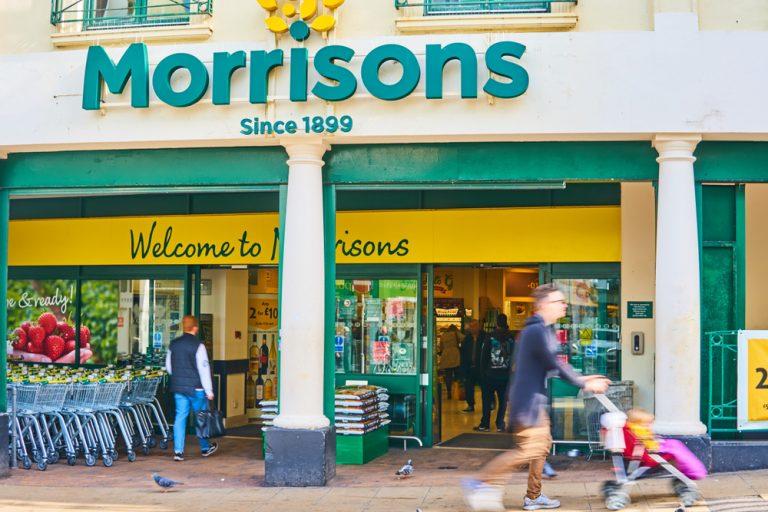
Morrisons (LON:MRW) have reported that their sales have fallen in their update dating to January 5.

The firm said that challenging trading conditions coupled with consumer uncertainty were the largest contributors to the slump in sales.

Morrison’s said that said like-for-like sales, excluding fuel, were down 1.7% year-on-year.

Additionally the decline was further accelerated by a fall in retail sales, as a like for like performance in the wholesale unit remained flat.

Notably, fuel sales declined 2.8% year on year across the 22 weeks period, and total sales dipped 2.9% but the figure totaled 1.8% without fuel sale considerations.

Shareholders should be not so concerned, as the firm said reiterate its full year guidance.

Morrisons said that pretax profit before exceptional costs should remain within the forecasts made by both analysts and market forecasts.

The firm ends its financial year on February 2, and shareholders will be keen to see annual reports in what seems to have been a tough year of trading for British retail.

The company said: “We managed costs well throughout the period, offsetting some of the impact on like-for-like sales of the challenging trading conditions and continued uncertainty amongst customers.”

Morrisons added “Throughout the period, trading conditions remained challenging and the customer uncertainty of the last year was sustained,”

During the 22 weeks, Morrisons said that they closed four underperforming stores, but this was offset by the opening of four new ones.

Morrisons explained: “The new stores include Canning Town, which is our first store with a Market Kitchen food-to-go offer, and Bolsover, our first smaller, community store format.”

Additionally, the company also recently sold a store in London to Berkeley Group Holdings (LON:BKG) in a reported £120 million deal.

On this deal, the firm said “Berkeley will pay £85 million in stages over the years of the project, and will build a new Morrisons supermarket and convenience store on the site at a cost to Berkeley of around £35 million.”

Chief Executive David Potts comments

“It was encouraging that during an unusually challenging period for sales, our execution was strong and our profitability robust, demonstrating the broad-based progress we have made during the turnaround.

“This was again down to the hard work of Morrisons exceptional team of food makers and shopkeepers. As always, we will take some learnings into the new year, and look forward to 2020 with a strong plan and solid foundations on which to continue to grow.”

Political uncertainty hits British supermarkets

Morrisons joined Walmart (NYSE:WMT) owned Asda in citing political and economic uncertainty as a contributor to slowing sales.

Asda said its gross profit rate fell, reflecting price markdowns in clothing following a slow summer season versus last year.

The fall in gross profit rate, plus increased operating expenses, meant operating income was also lower.

“This quarter has afforded consumers little respite from political or economic uncertainty and this has shown in their spending,” said Chief Executive Roger Burnley.

Morrisons follow in same step as rivals

Morrisons have followed in the same step as rivals in seeing their profits decline in what seems to be a very volatile period of trading.

At the start of November, rival Sainsbury’s (LON:SBRY) revealed a decline in profits in its half year results.

The firm said that, for the 28 weeks to 21 September, underlying profit before tax declined by 15% to £238 million, compared to the £279 million figure recorded for the same period the year prior.

Retail sales (excluding fuel) were down 0.6% and like-for-like sales (excluding fuel) were down 1%.

Shareholders of Sainsbury would have been compensated when the firm later that week revealed it had struck a wholesale deal with Coles (ASX:COL).

Sainsbury’s said: “The agreement with Coles marks a key milestone in Sainsbury’s strategy to build its wholesale business, with a number of partnerships already in place in Asia, Europe and the UK.

Greg Davis, Coles chief executive of commercial and express, said: “We want to accelerate the introduction of innovative products to Coles own brand, and this partnership allows us to do that with a range of food and groceries that are already proven in the international market but not yet available in Australia.”

Additionally, Marks and Spencer (LON:MKS) saw their profits plunge in November, which saw shares in red.

Chief Executive Steve Rowe alluded to several factors which had caused the slump including blamed the 5.5% decline in like-for-like clothing sales in the first six months of its financial year on supply chain problems and buying errors that meant popular sizes quickly sold out in store and online.

M&S reported a 17% decline in pre-tax profits of £176.5 million on sales of £4.9 billion.

M&S said the store closures would reduce clothing sales by 2% rather than the 3% previously thought but warned that its profit margins would come under pressure in the second half.

It seems that shareholders have not been too concerned about the performance of Morrisons as shares have remained in green, however there will be a hope that fortunes can be turned around.

Shares in Morrisons spiked 2.55% to 197p on Tuesday morning. 7/1/20 10:37BST.

Aldi reports record breaking UK sales from strong festive trading period

0

Aldi is continuing to make ground in the British supermarket industry as the firm saw record sales across a busy Christmas period.

The German firm said that it had sold over 55 million mince pies, which was just one of many standout figures from the update.

UK sales in the four weeks to December 24 topped £1 billion for the first time in the company’s history, and marked a 7.9% rise on the same period in 2018, Aldi revealed.

As well as mince pies, Britons also bought 22 million pigs in blankets, and more than two million Christmas puddings.

Aldi UK Chief Executive Giles Hurley said: “More customers than ever before shopped with us this Christmas because they knew Aldi offered unbeatable value on premium products and the lowest prices on festive essentials.”

“Although we saw strong growth across all key categories, sales of our premium Specially Selected range surpassed expectations, as customers snapped up these products for a fraction of the price they would have paid elsewhere,” Hurley said.

The firm saw sales from alcohol boost the supermarkets top lines, with a 9.2% rise in beer sales compared to Christmas 2018 and sales of Aldi’s Champagne and Prosecco rose by 14%.

“Although we saw strong growth across all key categories, sales of our premium Specially Selected range surpassed expectations, as customers snapped up these products for a fraction of the price they would have paid elsewhere,” Hurley added.

The firm saw strong growth in its meat sales, where this sector rose almost 8% as turkeys and roasting beef were “particularly popular”, according to the supermarket.

The supermarket continues to make a name for itself in the British industry, and the big four have come under threat from both Aldi and fellow European rival Lidl.

Kantar reported that Aldi’s share of the grocery market has rise by 1.2 percentage points to 8% since March 2017, making it the biggest supermarket outside the big four of Tesco (LON:TSCO), Sainsbury’s (LON:SBRY), Asda (who are owned by Walmart (NYSE: WMT) and Morrisons (LON: MRW).

Additionally, the Co-op holds a smaller market share of 6.3% where Lidl and Waitrose have taken 6.1% and 4.8% according to Kantar data.

Analyst comments

Neil Wilson, chief market analyst for Markets.com, said that Aldi had delivered a “disappointing trading update”, noting that its sales growth fell short of the 10 per cent in the same period last year and the 11 per cent growth across 2018.

“Like-for-like sales were said to be positive but no figure was provided – for sure almost all the growth is coming from new stores,” he said.

Thomas Brereton, retail Analyst at Globaldata, described Aldi’s number as “enviable”, but said that its five-to-six per cent growth in store numbers during the year meant that like-for-like growth would probably be around three per cent.

“Aldi must now face the fact that it can no longer hope to achieve the same domineering double-digit growth it has done over the past decade,” he said.

The Big four supermarkets will continue to be wary as Aldi are planning to add 300 more stores by the middle of 2020, which would make its UK store presence total at 1174, something which could frighten the British supermarkets.

Sirius Real Estate confirm purchase of two German business parks

0

Sirius Real Estate (LON:SRE) have updated the market on the purchase of two new business parks in Monday.

The firm said that they had acquired two retail parks in Germany in a deal valued at €33.4 million.

Neuss II

The Neuss II asset, located roughly 9.5 kilometres from the Dusseldorf city centre, offers 34,000 square metres of space and is 82% let.

The property is located on Fuggerstrasse in Neuss, 9.5 km south of Düsseldorf city centre. Sirius already owns an 18,000 per square meter office building in Neuss and two other business parks in Düsseldorf.

The firm added that this park produces an annual rental income of €1.3 million, reflecting an average rate of €3.84 per sqm, and has a remaining WALT of 4.4 years.

The property was acquired from a regional family real estate office for €19.1 million.

Neuruppin

Secondly, the firm announced the purchased of Neuruppin Business Park, which provides 22,400 sqm of net lettable space (12,600 sqm of production space, 7,200 sqm of warehouse space and 2,600 sqm of offices), together with 169 parking spaces on a total plot size of 108,200 sqm

The Company has now completed €98 million of the €170 million in acquisition capability that was set out in its Interim Results announced on 25 November 2019.

Chief Executive Officer Andrew Coombs comments

“The last month has been particularly successful on the acquisitions front providing us with some great assets which have good value add potential that can be realised next year and beyond.

“Neuss ll fits well with our strategy of buying assets at low capital values, with low average rents compared to the local market and located around key German cities. It offers us a good opportunity to add significant value by playing to the strengths of our integrated business model and track record of maximising occupation and growing rental levels.

“The Neuruppin property, which is 100% let to a tenant with a strong covenant with a WALE of 5.5 years and an EPRA net initial yield of 8.6%, is a very good acquisition, particularly when you take into account the tenant’s potential plans to expand in the area as well as the further opportunity to develop vacant parcels of land within the site.”

Sirius continue to perform in competitive market

At the end of November, the firm saw its shares rise on an increased payout. For the six months ended September, net asset value per share rose 7.3% to 76.18 euro cents from 71.01 cents six months earlier.

Operating income rose 9.4% to €39.5 million from €36.1 million the year before.

Pretax profit widened 1.9% to €79.7 million from €78.2 million the year prior, helped by investment properties revaluation gains rising 3.6% to €58.2 million from €56.2 million the year before.

The results are certainly impressive, and in a market where competitors such as Intu (LON: INTU) seem to be struggling, after they sold off a retail park to rival NewRiver Reit (LON: NRR).

Intu sold off Lisburn Retail Park for £40 million to NewRiver Reit at the end of November, and holds tenants such as Sainsbury’s (LON: SBRY) and B&Q, owned by Kingfisher PLC (LON: KGF).

Sirius Real Estate shareholders can remain optimistic on 2020 trading, the company clearly has a vision and strategy for expansion which will excite shareholders.

Shares in Sirius trade at 91p, rising 1.33% across Monday trading. 6/12/19 14:32BST.

Mattioli Woods reports revenue gains following positive update

1

Mattioli Woods plc (LON:MTW) have given the market a positive update on Monday morning, alluding to revenue growth and strong performance.

The firm is a leading provider of wealth management and employee benefit services with multiple offices throughout the UK, and holds its headquarters in Leicester.

Mattioli Woods said that it had returned to revenue growth in the first half of its financial year, with a rise in fees and investment related revenue.

The firm has conducted a company restructure which contributed to the impressive performance.

At November 30, its cash was valued at £20.0 million and its gross discretionary assets under management came to £2.7 billion.

Ian Mattioli, Chief Executive of Mattioli Woods, comments:

“I am pleased to report a return to revenue growth in the first half of this financial year, with increases in direct SSAS and SIPP fees and investment-related revenues. We have achieved this despite continued market and political uncertainty, albeit this uncertainty resulted in lower net inflows into the Group’s bespoke investment services than in the equivalent period last year.

“We are dedicated to maintaining our culture of putting clients first, developing our service offering and building a business that is sustainable over the long term. Supporting this, we have driven some further margin improvement, with additional efficiencies and cost savings realised following a planned restructure of our client facing operations and the migration of acquired pension portfolios onto our bespoke MWeb administration platform. These changes have been designed to enhance client service and experience, receiving positive feedback both internally and from clients.

“We have continued to progress our strategic initiatives, including the further development of our own IT solutions where possible. In December 2019, we were pleased to announce the acquisition of The Turris Partnership Limited, which is based in Glasgow, provides chartered financial planning and wealth management advice to clients, and has over £65 million of assets under advice. This followed the acquisitions of SSAS Solutions (UK) Limited and Broughtons Financial Planning Limited in the prior financial year, which are integrating well and contributed positively to our trading results since acquisition.

“Consolidation within both wealth management and SIPP administration is expected to continue, and we will seek to build on our track record of successful acquisitions by continuing to assess opportunities that meet our strict criteria.

“We continue to deliver solid investment performance across both portfolios and funds, with the team at the Group’s associate company, Amati Global Investors, gaining further recognition through the Amati AIM VCT (LON:AMAT) being named Best VCT at Investment Week’s Investment Company of the Year Awards in November 2019.

“We plan to build on the progress achieved in the first half over the remainder of this financial year. Events such as the suspension of the Woodford Equity Income Fund and the M&G Property Portfolio are likely to drive an increased demand for the holistic planning and expert advice we provide, and I anticipate greater client activity and increasing inflows into our bespoke investment services following the definitive general election result last month.

“We continue to invest in our people, technology and infrastructure as we look to build upon our success to date. Clients need long-term advice and strategies more than ever before and we will continue to provide quality solutions, maintaining our focus on client service and continuing to adapt our business model to the changing wealth management marketplace, integrating asset management and financial planning.

“Our profit outlook for the year is in line with management’s expectations and I believe we remain well-positioned to grow, both organically and by acquisition, to deliver sustainable shareholder returns.”

The firm is expecting to announce its interim results for the six months ended 30 November 2019 on Tuesday, 4 February 2020.

Shares of the firm trade at 804p (-1.29%). 6/1/20 14:07BST.

Wizz Air report positive December passenger figures

1

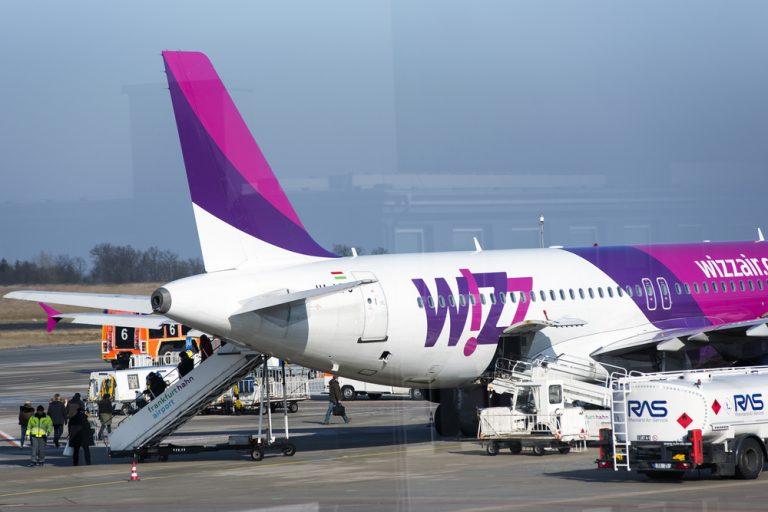
Wizz Air Holdings PLC (LON:WIZZ) have reported a strong performance in December for passenger traffic and capacity figures.

The firm saw double digit rise across December, which will please shareholders in a period of volatility in the airline industry.

The firm reported a capacity increase of 24% to 3.7 million from 3.0 million a year before, while passengers increased by 25% to 3.3 million from 2.7 million.

On a rolling annual factor, Wizz Air saw their capacity ruse by 16% to 42.5 million, passengers 18% to 39.8 million and load factor from 93.6% to 92.4%.

For December, Wizz Air reported that its carbon dioxide emission rose by 23% to 324,437 tonnes year-on-year, and by 16% to 3.7 million tonnes on a rolling annual basis.

Additionally, the available seat kilometres grew by 18% to 69.4 million, and revenue passenger kilometres by 20% to 65.2 million.

Wizz Air have also added a number of different routes including operations in Romania, Austria, Hungary, Lithuania and Poland.

December success for Wizz Air

December was a busy month for Wizz Air, as the firm also announced that it would be appointing Jouirk Hooghe as chief financial officer, which will be effective from February 1st.

Hooghe will be joining from Adecco Group AG (SWX:ADEN) – where he has been senior vice president for strategy, finance and accounting since 2018.

Additionally, in December Wizz Air announced that they would be expanding routes into Armenia.The firm said it will be operating flights from Vilnius and Vienna to Zvartnots International Airport in Yerevan.

“We have put a great effort in decreasing costs for airlines operating in Armenia,” Tatevik Revazian, chair of the Civil Aviation Committee of Armenia, told Reuters.

Wizz Air build on strong November passenger numbers

Both Wizz Air and Ryanair Holdings plc (LON:RYA) released impressive figures across November trading, and it seems the former has continued their positive trading period.

Wizz Air reported a November capacity increase of 27% to 3.2 million from 2.6 million, while load factor rose 92.8% to 91.2%.

Available seat kilometres was up by 21% to 5.2 million from 4.3 million and revenue passenger kilometres grew by 4.9 million from 3.9 million in November 2018.

On a rolling annual basis, capacity is up 15% to 41.8 million, total passengers up by 17% to 39.1 million with load factor up 1.3 percentage points to 93.6%.

Certainly, shareholders will be impressed with trading across 2019 for Wizz Air, where the industry has been shocked by headlines such as the collapse of Thomas Cook (LON:TCG) in September.

Shareholders should remain optimistic and will hope that the form found in 2019 can continue throughout the new year.

Shares of Wizz Air trade at 3,767p (-3.31%). 6/1/20 13:44BST.

Avesoro controlling shareholder acquires 100% stake

0

The main shareholder of Avesoro Resources Inc (LON:ASO) has acquired the remaining shares of the company in an update on Monday.

The controlling shareholder, in the form of Avesoro Jersey Ltd has acquired all remaining shares it does not own in the west Africa-focused gold producer.

In December, Avesoro Jersey owned 79.9 million shares in the firm, equating to a 98% stake.

In an update on Monday, the shareholder has picked up the rest of the 1,7 million shares in issue at a price of 100p per share.

In October, the Avesoro board unanimously recommended the 100 pence per share bid from Avesoro Jersey, which is owned by Turkish businessman Murathan Gunal, however it seems that fortunes have changed.

As a result of this decision, Avesoro will have their shares delisted from both the London and Toronto market and should be taking place on Tuesday.

The firm also announced that Chief Financial Officer Geoff Eyre would be set to take up the same role at mining firm Adriatic Metals PLC (LON: ADT1).

“The addition of both Geoff and Phil to the senior management team at Adriatic clearly shows our intent to develop our existing assets into production, and expand our known resource base in this prolific district. I would personally like to thank Bob and Sean for their service to Adriatic, both joining the company early in its life and making a valuable contribution to its success,” said Chief Executive Officer Paul Cronin.

Tough times for Avesoro

The decision comes after a tricky few months for the firm. In October, the firm saw its guidance under review as operational difficulties weigh on gold production volumes.

Third quarter production at it New Liberty venture dived 57% compared to Q2, down to 8,059 ounces – though its also attributed this dip to ‘heavy rainfall flooding the main pit’.

Similarly, its Youga prospect’s output dropped by 6%, to 14,619 ounces. It said a degree of this drop owed to a security issue which ‘hampered mining fleet availability’.

Company CEO Serhan Umurhan added “Following the transition to contractor mining at New Liberty and Youga earlier this year, both mines have experienced operational issues that adversely affected our mining rates and gold production performance in the Quarter.”

“However, I am confident that operational performance will improve at both mines during Q4, with the end of the wet season allowing New Liberty to materially enhance productivity in the near term despite the recent pit-wall failure. Meanwhile, an additional 15 trucks, 6 excavators, a rock drill and further auxiliary equipment will be available at Youga later this week at the mining contractors cost, and we expect that this will result in an uplift in production during Q4.”

“Given a number of operational uncertainties our full year production guidance remains under review. The Company intends to provide updated guidance once operational performance has stabilised for a sustained period of time.”

Lekoil announces two new appointments as shares spike

2

Lekoil Ltd (LON:LEK) have updated shareholders on Monday on two new appointments.

LEKOIL is an Africa focused oil and gas exploration and production company with interests in Nigeria and Namibia.

The Company was founded in 2010 by a group of leading professionals with extensive experience in the international upstream oil and gas industry as well as in global fund management and investment banking.

The firm said that it has hired hired Mark Simmonds and Tony Hawkins as non-executive directors with immediate effect.

Additionally, interim Chief Financial Officer Greg Eckersley and Non-Executive Director John van der Welle step down from their respective roles.

Simmonds has a wealth of experience as he served as the as the UK’s Foreign & Commonwealth Office Minister. He was also a member of the UK Parliament as well as a senior adviser to former prime minister David Cameron.

Hawkins is currently chief executive at oil & gas exploration company Columbus Energy Resources PLC (LON:CERP) having previously been Legal and M&A Director there.

He also previously worked as General Counsel & Head of Commercial for oil & gas firm Sterling Energy PLC (LON:SEY).

Eckersly was appointed as interim financial officer in May 2019, will be stepping down from his role as non-executive director upon completion of his term in the finance role. Lekoil said the process to appoint a new chief financial officer is ongoing.

Lekoil Chair Samuel Adegboyega commented: “I would also like to welcome Mark and Tony to the Board and thank both Greg and John for their significant contribution. I know I speak on behalf of the full board when I say that we will miss their contribution to the board function, and we wish them all the best in their future endeavors.”

Lekoil receive approal for loan to fund Ogo Field Drilling

Last week, Lekoil said that it had obtained funding from Qatar’s sovereign wealth fund for appraisal drilling and initial development of the Ogo field offshore Nigeria.

The loan was secured against the shares and assets of Lekoil subsidiary Lekoil 310 Ltd, as well as Mayfair Assets & Trust Ltd.

The loan will carry a 3.7% interest rate and has an upfront fee of 2.8%, and the firm will have to ensure that it meets numerous criteria to remain in good standing.

Chief Executive Lekan Akinyanmi pledged his entire 39.1 million holding of Lekoil shares as part of the facility’s security package.

He will receive a fee of $1.8 million offset against a $1.7 million loan that was made to him in December 2014.

“Following the recent achievements of the OPL 310 license extension and the securing of funding for the appraisal drilling and development programme, we are delighted to have made strong progress, as promised, towards the start of the appraisal drilling programme on Ogo. We will continue to work closely with our partner and the Operator of the OPL 310 License, Optimum Petroleum, as we pursue value for our shareholders,” said CEO Akinyanmi.

Shares of Lekoil trade at 10p, spiking 15.03% on the announcement. 6/1/20 12:42BST.

Meat eaters save money by cutting down on meat consumption

0
New data revealed that meat eaters saved £6.7 billion last year by cutting down on their meat consumption. It is estimated that over 12 million meat eaters decided to eat less pork, beef, lamb and chicken in 2019. By doing so, they saved themselves roughly £550 each. The research of 2,000 adults commissioned by the vegetarian brand Linda McCartney’s revealed that 44% consider a meat-free lifestyle to be more affordable today than it was previously. As for 2020, over a fifth intend to continue to reduce their meat intake even further or for the first time, if not stop eating meat completely. The research found that 28% of meat eaters consider saving money as one of the biggest motivations for reducing their meat intake. January is the month of Veganuary – a campaign to encourage people to switch to a vegan diet for a month. Companies such as Greggs, Subway and KFC are catering for the switch to plant-based food by releasing vegan alternatives to their signature products. “There can be a real misconception around the cost of eating meat-free,” Miguel Barclay, author of “One Pound Meals”, who has teamed up with Linda McCartney’s to share his advice for going meat-free at a reasonable price, provided a comment. “However, this research proves that there is actually a lot of money that could be saved by making a veggie or vegan commitment,” Miguel Barclay continued. “I believe in showing people how to make delicious, affordable food, and meat-free options are just the same; it doesn’t need to be expensive or fancy, to be satisfying and tasty.” Miguel Barclay said: “The New Year is the perfect time to shake up your routine and try new things, so I’ll be sharing some of my favourite meat-free recipes.” “All of these come in under £1, to encourage more people to get behind the meat-free movement this January, whatever your budget.” Will you give it a go this year?