Tickr & Impact Investing – making money while making a difference

Between achieving double his crowd-funding goal, and discussing Impact Investing on BBC News, Tickr CEO Tom McGillycuddy spoke to The UK Investor Magazine about his vision for making the ethical, profitable.

Why do we care about Impact Investment?

With calls for more conscientious business practices gaining prevalence, many will have already encountered ideas like ‘Impact Investing’. Large companies are committing considerable resources to programmes of ethical behaviour and investing – such as Citi’s (NYSE:C) Impact Investment fund – but what is Impact, and why do we care about it? It is perhaps the best contemporary realisation of an age-old goal. Markets weren’t designed purely for zero-sum profitability; they were created as a space for the common maximization of goods – both financial and otherwise. Market economies are a central mechanism by which we organise our societies, and the idea that they should also be used as a force for good and fulfilment is hardly new. Speaking in 1968, Bobby Kennedy delivered a timeless polemic: “Even if we act to erase material poverty, there is another greater task, it is to confront the poverty of satisfaction – purpose and dignity – that afflicts us all.” “Too much and for too long, we seemed to have surrendered personal excellence and community values in the mere accumulation of material things.” […] “[GDP] measures neither our wit nor our courage, neither our wisdom nor our learning, neither our compassion nor our devotion to our country, it measures everything in short, except that which makes life worthwhile.” Today, market norms are at odds with the way we think of ourselves – not purely as rational and industrious – but also as creatures capable of feeling and with some sense of ‘the bigger picture’. This is why Impact Investing is so important. By its definition, it is the creation of positive social and environmental impacts, with at least market-rate returns.

So, who are Tickr?

Tickr is an Impact Investment app based on the shared vision of its founders: a desire to change the culture of capital markets – to make them more accessible, conscious and sustainable.
“Our goal is to become the most convenient way to make a positive impact. A way to make a profit and feel good about it.” said Tom McGillycuddy.
Its mission statement is clear and effective. Beyond that, though, its narrative is relatable, and this is entirely because its origins are so personal. While having something of a crisis of purpose, Tom happened upon a chance encounter in a lift, with the now-Head of Impact Investing at Black Rock (NYSE: BLK). He and his acquaintance discussed the idea of creating an app that would allow users to save sustainably, and soon enough Tom Co-Founded Tickr alongside his colleague, Matt Latham. “The more we spoke about it, the more we realised that this could be a way of bringing people to the table that had never invested before. They can relate to it. It’s not couched in any jargon; it’s investing in something that does good.” Tom said. “The narrative of our company and the stories of those impacted by the companies we support, are things that people connect with, and you don’t have to have invested before to make that connection.”

How does it work?

The app itself is very straightforward. A user chooses which Tickr ‘Theme’ they’d like to put their money into – Climate Change, Disruptive Technology, Equality, or a Combination of all three – you choose a level of risk, and the rest is done for you. The fintech-savvy among you may already be noticing some similarities between Tickr and one of its counterparts, Moneybox; and the recent introduction of round-ups on Tickr, and World ESG Index on Moneybox, invite further comparisons. However, Tickr’s dedication to positive impact within its business model gives it an edge. Both apps are easy to use and help novice investors navigate the new space with FAQs, advice and one-to-one messaging with staff, but only Tickr hammers home the reminder that you’re doing a good thing with your money. It does this via regular updates of stories from the companies it has invested your money into. The user doesn’t have to do anything but make the connection between watching their investment grow, and seeing in real terms the positive effect their capital is having on real people – it’s post-purchase rationalisation at its finest. From the employee perspective, it doesn’t sound bad either. Tickr’s Founders seem to have applied their principles to their company’s convictions, with each employee having joint ownership of the business. This doesn’t just make Tickr’s staff feel like a valued part of the company, but also provides an incentive for meaningful contributions and a strong collective output – if the company does well, so do its employees.

Is it just a fantasy?

It isn’t a stretch to imagine that most people find the idea behind Tickr to be a good one, or at the very least, one with admirable intentions. I myself mused on the idea of an impact investing mobile app, before being pointed toward the Tickr website. The question that many will inevitably ask, though, is: as a business, is it feasible? Before I’d even finished the question, Tom had begun chuckling. He said that sceptics are just part of doing something that strays from the norm, but that he’d converted people into believers before, and he expected to do so again in future. “There’s an assumption that if we do something good, profits will suffer. So, the best we can do is to accept when we do something bad and offset it with charity.” “The solution is time and proof. There is enough data on company returns to pacify these people now. What we need to do is make everything equal or better than other types of investing platforms and then the only difference will be, whether you want to make a positive impact or not.” “The time feels right for the business. We started in 2015 and since then social attitudes and awareness have escalated”. If we accept that Tickr works, for now at least, is it merely a good idea having its day? What are the main risks it will have to face, and does it have longevity? “I don’t think there are any major risks unique to us. We need to grow and we need to expand. We’re working heavily on the unit economics of the business so we become profitable quicker than our peers – that’s something we’re laser-focused on. It would be great to never have to raise money again for cashflow, only for growth. It’ll probably take us a couple more years to get there, and that’ll put us in a sustainable position, business-wise.” “2020 and 2021 are set to be big years of growth for us. We have a lot of product development in the pipeline alongside a bold marketing strategy” “We launched in January [2019], and now tens of thousands of people are using our app in the UK, and 80% of those people had never invested before. They’re providing for their own future, both by making returns on their investments and supporting something they want to be a part of building their future.” “That’s 50,000 people investing in these themes with roughly 50 million quid, and look what that’s done so far. But imagine when we’re a million, or two million, and what we can achieve then.” With Founders that have real-world experience of what it takes to achieve financial sustainability within a business model, it’s hard to question either the company’s structure or its provenance. One area I’m keen to see it develop is the user experience of the app itself. During my two months of using the app, there was a brief moment where an incorrect balance was displayed, though the situation was quickly explained and rectified. I’d also like to see, in real terms, the increase (or, heavens-forbid, decrease) in my portfolio displayed using a tangible, combined statistic, rather than just a break-down of the growth of its individual sub-categories. On the whole, though, we can expect some teething issues and cosmetic touch-ups in the early days of any business, and Tickr certainly has some big plans for the near future.

What can we look forward to?

I’d like to make clear that by-and-large, the first generation of the app looks fresh, works well and has an intuitive lay-out, but it’s always good to make sure the small kinks are ironed out before moving onto more grand ambitions – and they certainly are grand. The company is in the process of expanding its team, and speaking on his vision for the second generation of the Tickr app, Tom said: “The app is slick; you’ve seen it works well. The in-app experience is ok in my opinion. But in the future, there’ll be a lot more about the impact your money has had and we aim to create a more collective feel, regarding the impact of our users’ pooled investments”. “In future we want to have success stories. On our home screen we want to create feeds with, ‘This company did THIS good thing with YOUR money’, and initially it may be a report with images but five years down the line we’d look to maybe make videos which show the impact your money makes. For instance, social housing that has been built and the families that have benefitted from this.” “We want to bring the two points of capital together.” To think the vision ends there would be a mistake. What really excites me about Tickr is that beyond its already impressive primary objectives, it has a grand strategy. It wants to lead the way in changing the culture of capital markets. “There are a few big scale projects we’ve been working on, for instance we’ve been given regulatory approval to launch our own ETFs. So, we’re aiming to launch our own tickr branded ETFs into the market, and the goal would be that we would set the standard for sustainable capitalism eventually.” “Because we would own the fund, we’d want our app users to determine which companies are good and bad from an impact point of view.” “Our users can vote companies in or out of our ETFs and ultimately give consumers a voice they’ve never had in capital markets before. What could that do to markets and company behaviour? One day could a Tickr score of a company have a say in capital markets? If it ends up in the hands of a lot of consumers, eventually at least consumer companies will have to take notice.” “We want to nudge capital markets in a more sustainable direction, put them in the hands of consumers, and do it in the most engaging way possible” He finished his twinkle-eyed monologue: “But that’s for next year.”

At the end of it all, can we really have our cake and eat it?

You might’ve heard it in other contexts, but to me Tickr is a bit of a unicorn. It’s a fairytale mix of healthy profits and potential, enthusiastic support from its backers, performing a good cause, with a team that are passionate about what they do. After six months of using Moneybox, my investment is up 1.59%. After two months with Tickr, my investment has grown by 3.91%. This figure takes into account – and negates – the credit you earn for referring friends to the app (if you fancy £5 free on Tickr and a tree to be planted on your behalf, my code is jamieg912). It also doesn’t do justice to the consistency of growth seen in the main components of my portfolio, Clean Energy and Global Water, which have grown 38.89% and 29.88% respectively, over the last year. At the very least, what I hope Tickr signifies is the beginning of an attitudinal shift. We have a responsibility to help tackle the issues we have a part in causing, and as time progresses, we will have better means to do so. If financial services are to have even greater prevalence in future society, the best we can do is discourage those performing zero-sum behaviours, and support those trying to innovate and carry out win-win scenarios. The reason I’d encourage you to get involved with Tickr in particular, is simple. At its very essence, it is a feel-good app. Beyond rejecting a shrouded and severe approach to investing, I think it’s trying to show us a happier and more human way to do business. It may very well be the future; I’d urge you to be part of it.


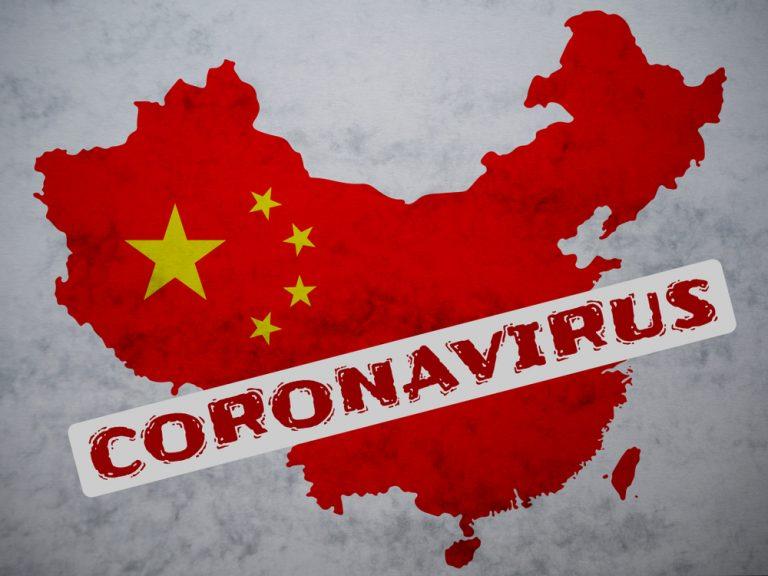
Coronavirus keeps Chinese stock exchanges closed – 100,000 may be infected

With Chinese stock exchanges shut for an additional two days and the most recent death toll standing at 81 (likely to be well over 100 when the next reported figure is announced), equity markets have been left shaken by the potency and reach of the Coronavirus. It was confirmed on Monday that Canada had identified its second Coronavirus sufferer entering the country, while Cambodia reported its first case. There have also been calls for the British government to evacuate some 300 Brits held with the Wuhan quarantine, with nationals from other nations calling for the same. The anger over efforts to contain the disease has also seen protests starting in Wuhan and Hong Kong, with the latter seeing a designated quarantine ward being torched by the city’s residents. WHO representatives have arrived in China, after falling short of declaring a global emergency; China’s second most powerful official, Premier Li Keqiang, became the country’s most influential figure to have visited Wuhan since the outbreak began. While the trickle of information from China has been limited at best, travel restrictions and emergency construction of a second new hospital should tell us something of their outlook on the severity of the illness. Experts state that while only 2,700 cases have been confirmed officially, their ‘best guess’ estimates predict some 100,000 people could be infected, and have either gone unreported or are yet to display symptoms. The NHS states that it is fully prepared to deal with any cases cited in the UK. Speaking on market movements on Monday morning, and the effect of the virus, Spreadex Financial Analyst Connor Campbell stated,

“Last Friday, the European markets were rebounding on the hopes that the Coronavirus was being contained, that China was putting more cities on lockdown, and that the WHO had stopped short of announcing a global emergency.”

“Now those fears have come back with a vengeance. A weekend full of increasingly alarming headlines about jumping death tolls and known cases rising into the thousands – one expert has claimed there could be as many as 100,000 affected by the virus, a figure that dwarfs the official number – has sent the global markets reeling.”

“With its major miners and banks in the red – Rio Tinto (ASX:RIO) fell 4.1%, Anglo American (LON:AAL) 3.9% and HSBC (LON:HSBA) 2.7% – the FTSE suffered a sharp 1.5% dive, forcing the UK index below 7500 for the first time since mid-December.”

“The situation in the Eurozone wasn’t any better. The DAX, oh so briefly at all-time highs last week, found itself at a 2-and-a-half week low of 13400 as it shed 180 points, while the CAC tumbled to 5930 after a 1.4% drop.”

“As for the Dow Jones, by the end of Friday it had reversed the gains seen during the European section of the session, falling under 29000. It is set to continue that decline this afternoon, the futures eyeing a 275 point plunge, the index not only suffering from the Coronavirus fears, but news of rockets hitting the US embassy in Baghdad.”

“It was, last week, unclear whether the outbreak was becoming the next major market story, or if it would rumble on in the background. Now, despite the next few days bringing a Fed statement, Mark Carney’s final meeting as Bank of England governor, and the UK’s withdrawal from the EU, it seems like it is going to be hard to pull investors’ attentions away from the progress of the virus.”

Coronavirus continues to dampen global markets as death toll hits 81

The Coronavirus has been hitting news headlines, and the global population continue to worry over fears about the lethal virus spreading.

Investors and businesses have also had a say on the matter, and whether this will have long term implications for business within China as markets seem to have been spooked on Monday.

The death toll of the Coronavirus has hit 81 as of Monday morning, and the UK Health Departments have issued warnings to the British people about the possibility that it could already be inside the UK.

Almost 3,000 people have been diagnosed with the Coronavirus, and the number is only set to rise as the worry of infection spreads across the globe.

Notably, 44 cases of the virus have been detected outside of China with Japan and France being two of the names mentioned.

On Monday, the composite European Stoxx 600 fell 1.7% at the open, London’s FTSE 100 dropped 1.6%, while Germany’s Dax was 1.7% lower.

The slump followed a similarly dramatic decline in Asia overnight. The Shanghai Composite fell 2.7%, the Hong Kong Hang Seng lost 1.1%, and Japan’s Nikkei dropped 2%.

Nigel Green, deVere Group chief executive speaks out as global stock markets have been rattled by the threat of the Coronavirus.

“The Coronavirus is the number one threat to financial markets currently as global investors are becoming jittery on the uncertainty.

“But whilst this health crisis will inevitably hit some sectors, such as travel and retail, most investors who have a properly diversified portfolio should avoid knee-jerk reactions. History teaches us that most issues of this kind have a short-term impact on stock markets.”

He continues: “Most investors should monitor the situation with their financial adviser and sit tight at present. But if it is still escalating next week, with much higher casualty rates, a more defensive approach might be necessary.

“However, the cost and effort of making such a switch means you do not do it lightly, and more evidence is needed that the virus does pose a medium to long term risk to China and the global economy.”

Mr Green goes on to say: “But that said, this should serve as a wake-up call to all investors to ensure their portfolio is well-diversified across asset classes, regions, sectors, even currencies.

“This is the best way to mitigate risks and the best way to be well-placed to take advantage of the opportunities when they occur.”

The deVere CEO concludes: “Stock markets tend to bottom with the peak in new cases during a public health issue of this kind, before rebounding.

“This is a worrying and serious situation and investors must be vigilant. They should remain properly diversified and remain in the market.”

Certainly, the spread of the Coronavirus is a global issue and governments all across the globe will have to make an ensured effort to tackle this. A plan will be needed to limit the spread, and also allow markets to recover on a gloomy Monday.

Nektan see revenue growth from strong B2B sales, but loss widens

0
Nektan PLC (LON:NKTN) have reported a rise in their annual revenues, however told shareholders that annual loss has widened. In the year to June 30, 2019, the mobile gaming and casino technology platform recorded a pretax loss of £6.4 million compared to £5.0 million the year before. Nektan alluded to factors such as restructuring costs and a £2.8 million loss on the removal of its subsidiary firm Respin LLC. However, shareholders will be pleased as the firm saw its revenue climb 14% to £22.6 million from £19.9 one year ago. Looking at the revenue growth, the firm praised the sharp rise in business-to-business sales as the main factor for the results posted today. Following this success, Nektan said that there is a plan to focus on business-to-business sales as part of its strategic review. At the beginning of January, Nektan sold its loss-making UK business-to-consumer unit, allowing it to focus on its B2B business. Gary Shaw, Interim Chief Executive Officer of Nektan, said: “The restructuring represents an important milestone for Nektan. We can now focus on executing our strategy of becoming a dedicated casino technology and gaming content provider globally. These initial results support the Directors’ decision to focus solely on B2B opportunities. Trading for the six months to 31 December 2019 saw the Group achieving more than double the revenues for the same period last year. The last few months have seen an intense period of activity culminating in now having 34 sites live. With the majority of these going live at the back end of the calendar year, combined with a 3-4 month ramp up period, we expect to report further significant revenue growth during the current quarter (Q3 2020) – early signs in January underpin this. As a result, the Group continues to anticipate reaching monthly EBITDA break-even by the end of this financial year.”

Nektan continues to build

In July, the firm saw full year revenues growth in its B2C and B2B segments, and a record number of partners live in the fourth quarter. Despite the impact of UK taxation and player verification, which affected the Company in Q3 and Q4 , the Group’s full-year revenue still grew 14.8% on a year-on-year basis. The Company attributed this to strong growth in the sales pipeline of its B2C and B2B sectors. B2C announced the launch of 13 new white label casino sites during the fourth quarter, along with its first mobile bingo offering. B2B noted 12 live partners, up from 10 for Q3. The segment also announced the release of Volt Casino and MoPlay, as well as entry into the African continent with betting companies Betika and BetLion. Shares in Nektan trade at 2p (+4.04%). 27/1/20 13:41BST.

Fastjet meet expectations however still ponder over Zimbabwe options

0
Fastjet (LON:FJET) are a firm that have been under pressure over the last few months, and today they have updated the market following a tough few months. Fastjet updated shareholders today by telling them that trading had been in line with management expectations and stated the need for further funding by the end of February in order to sustain good trading. The budget airline said that funding will be required so that it can continue to carry out its restructuring plan. Notably, the firm said that discussions to dispose of its Zimbabwe operations were still ongoing, following much turbulence. Part of the restructure plan was for Fastjet to sell off its Zimbabwe portfolio for a reported $8 million to Solenta Aviation, which holds a 60% stake in Fastjet. In October the company had announced it suspended flight operations in Mozambique amid “ongoing supply and demand challenges”. During the first six months of 2019, revenue from Mozambique had fallen to $2 million from $4 million a year prior. Notably, the firm said that its revenue including Zimbabwe is forecasted to be $42 million, compared to the $39 million figure one year ago. Loss after tax is expected to be $7 million to $8 million compared to a loss of $65 million the year before.

Fastjet express their needs

In the trading update on Monday, Fastjet said the following: “As previously announced the Board expects further funding will be required by the end of February 2020 to enable the Group to continue operating in its current form. The Directors believe, based on current financial projections and funds available and expected to be made available, that the Group will have sufficient resources to meet its operational needs until the end of March subject to forecast revenues not being impacted by any unforeseen circumstances. To address this funding requirement the Group remains in active discussions with an investor consortium led and underwritten by Solenta Aviation Holdings Limited and other local investors in Zimbabwe (the “Investor Consortium”), in relation to the disposal of the Group’s holding in fastjet Zimbabwe (the “Disposal”). The Investor Consortium is finalizing its due diligence on Fastjet Zimbabwe and securing the required regulatory approvals. The Group is also seeking to establish the extent of any outstanding contingent or other liabilities and related transactional costs which may or may not be material to the Group. The final negotiations with the Investor Consortium including the final consideration payable will be concluded once this exercise is completed. Whilst discussions with the Investor Consortium are ongoing there can be no guarantee of a successful outcome. If the Group is unable to carry out the restructuring proposal by the end of March 2020 it would be unable to continue trading as a going concern.”

Zimbabwe problems

In November, the firm saw its shares plummet after considerations were made to sell its operations in Zimbabwe. “Fastjet Zimbabwe has increased its year on year revenue despite the difficult trading conditions following the introduction of a new currency which effectively devalued the existing currency by up to 15 times its previous value at official rates and has pushed inflation rates to above 200%,” Fastjet added. The Zimbabwe sale would also relieve Fastjet off $5.4 million in debt and $3.2 million in future aircraft orders. The proceeds from the sale would be used to fulfill debt obligations and fund future capital projects into 2021. Shares in Fastjet trade at 0.17p (+1.18%). 27/1/20 13:04BST.

Discovering investment art in LA

Sponsored by Red Eight Gallery One of our hottest new discoveries for 2020 is the young rising star Cayla Birk who recently celebrated her first solo show in Los Angeles. Born in Florida to a single mother, Birk credits her love of travel and her eclectic childhood to her success as an artist and her diverse body of work. Birk’s practice draws on a wide range of influences including writers, thinkers, and musicians such as Jack Kerouac, Ella Fitzgerald, and Chuck Palahniuk. Her signature style mixes traditional media like acrylic paints with more unusual materials to create a striking juxtaposition of bold gestures and provocative lettering. Birk’s quick mind and versatility shine through in her work with connections made from one project to another through recurring themes and concerns rather than aesthetic continuity. “My artwork re-conceptualizes social and cultural subject matters”, explains Birk in her artist’s statement. “In my work, I allude to popular iconography, musical lyricism, and current verbal slang that pervade societal culture. Having engaged subjects as diverse as enlightened secret orders, hip-hop music and contemporary design, my work reproduces familiar visual signs, arranging them into new conceptually layered pieces.” Birk’s “Periodic Table of Relevance” project is a prime example of how she revels in taking common, everyday symbols and breathing new meaning into their familiar forms. This series of canvases portrays the elements of the periodic table with a provocative twist; each letter abbreviation is given a false name and an alphanumeric cypher hidden in the atomic weight at the bottom of the canvas. For example, “Br” becomes “brunch” and “V” is named “versace”. The viewer is also invited to interact with each piece via a conical flask which reveals the secret meaning of each atomic weight. Another related project is “Birktone” which plays on the familiar Pantone colour swatches. Each colour is linked to pop icon, famous figure, or concept such as “The Grass On The Other Side” for a bright shade of green. As with “Periodic Table of Relevance” the project allows the viewer to see something familiar in a new light and challenge their own preconceptions of the world around them. Following her first solo show in Los Angeles last year, Cayla Birk’s artworks have received a significant uptick in interest from collectors around the globe. This is the ideal moment to invest in a rising star of the international gallery circuit while prices remain accessible.

AstraZeneca give double update on Monday including Brilinta outcome

1
AstraZeneca plc (LON:AZN) have told the market they have sold a range of hypertension drugs, and have updated shareholders about the outcome of two drug trials. The FTSE 100 listed pharmaceutical giant today updated shareholders by saying it has sold the commercial rights to its Inderal, Tenormin, Tenoretic, Zestril, and Zestoretic to Basildon-based Atnahs Pharma for $350 million upfront. Astra added that they may also get a further $40 million depending on sales between 2020 and 2022. Notably, the sale excludes provisions in the USA and India, which had been sold prior to the announcement this morning. “These are important established medicines, and the divestment to Atnahs ensures they will continue to be available to patients. This transaction supports our strategy to realise value from our portfolio of non-core mature brands, enabling further investment in new medicines,” said Ruud Dobber, the executive vice-president of BioPharmaceuticals at Astra.

Astra’s Drug trial outcomes

AstraZeneca also updated the market about the outcomes of drug trials for two new medications. The pharmaceutical giant said that the Brilinta medication met its primary endpoint in a third phase trial, which showed positive conclusions including the reduction in the risk of death in strokes compared to conventional painkillers. Enhertu, a gastric cancer treatment, also met its primary endpoint, in a phase II trial. Astra said the drug achieved a “statistically significant and clinically meaningful improvement” in the response and survival rate of patients with unresectable or metastatic gastric of gastroesophageal cancer. “Results of the phase three THALES trial showed Brilinta, in combination with aspirin, improved outcomes in patients who had experienced a minor acute ischaemic stroke or high-risk transient ischaemic attack. We look forward to sharing the detailed results with health authorities,” said Mene Pangelos, the executive president for BioPharmaceuticals R&D at Astra. “Gastric cancer is usually diagnosed in the advanced stage and patients face markedly high mortality rates, making the need for new therapies especially urgent,” said Jose Baselga, executive vice-president of Oncology R&D. “Given the previous results seen in our HER2-positive development programme and now in HER2-positive metastatic gastric cancer, we believe this antibody drug conjugate has the potential to redefine the treatment of patients with HER2-expressing cancers.”

Astra end trial for Epanova

A fortnight ago, Astra said that they would be ending the trial for their Epanova drug. The firm added that this could lead to a $100 million impairment, something which will worry shareholders. Astra said that this decision was based on a recommendation by an independent monitoring g committee, which said that Epanova is “unlikely to demonstrate a benefit to patients” with mixed dyslipidaemia who are at increased risk of cardiovascular disease. Mene Pangalos, Astra’s executive vice president of BioPharmaceuticals R&D, said: “It was important to assess the potential benefit of Epanova in mixed dyslipidaemia. We are disappointed by these results, but we remain committed to addressing the needs of patients in the cardiovascular space where we have an extensive pipeline.” Shares in AstraZeneca trade at 7,505p (-2.01%). 27/1/20 10:35BST.

Potential buyers don’t see attractions of accesso Technology

Digital ticketing technology provider accesso Technology (LON: ACSO) has ended its formal sale process and says that its 2019 figures will be at the lower end of guidance.
The formal sale process lasted six months and it cannot have helped the progress of the business. The parties interested in buying accesso, whose clients are attractions and theme parks, such as Legoland Windsor, were not prepared to pay enough for it.
Considering the share price has fallen by around three-quarters over the past year that is not a good sign. The share price has fallen by two-thirds since the formal sale proc...

ASOS bounces back but still much to prove

Online fashion retailer ASOS (LON:ASC) had a tough 2018-19 and it was overtaken in value and growth terms by rival boohoo (LON: BOO) but the latest trading statement was more optimistic, although the comparisons were week.
Overall retail sales were 20% ahead in the four months to December 2019 with coming from all regions. This was much better than even the optimistic analysts expected.
The UK had the slowest growth, but it was still 18%. Total group revenues improved from £917.9m to £1.11bn.
The good news was that the distribution centres appeared to cope with the Christmas demand. This helpe...

Sosandar doubles customer base

There seems to be a large difference between online fashion retailers that are doing well, such as boohoo (LON: BOO), and those that are showing signs of a recovery, such as ASOS (LON:ASC), or seem to go from bad to worse, such as Quiz (LON: QUIZ). One online fashion retailer that is benefiting from its focused approach is Sosandar (LON: SOS).
Sosandar has grown consistently. The latest trading statement from the retailer focused on woman who have grown out of fast fashion brands and have more disposable income has led to upgrades.
Christmas
Third quarter revenues were 136% ahead year-on-year...