Italy Challenges Bordeaux On The Fine Wine Investment Scene

Sponsored by OenoFuture Despite being the home of Sassicaia, Tignanello and a host of sensational Barolo producers, Italy has long been in France’s shadow when it comes to fine wine investment. Yet as the traditional collector’s favourite Bordeaux continues to lose market share, Italy has been a key beneficiary. The latest figures from Liv-Ex show Bordeaux’s share of the fine wine market hitting an all-time low of 49.5% in October 2019, while in the same month Italian fine wines claimed a 11.4% market share by value. Taking a longer term view, the figures are even more compelling; according to Liv-Ex since 2015 Italian fine wines on the secondary market have risen in value from £2 million to £5m with volumes rising by 1500% over the past decade. “No one has a crystal ball”, comments Daniele Napoletano, Head of Italian Investment at the London-based fine wine investment company OenoFuture. “We live in times when a single tweet by Donald Trump can wipe billions off the markets and we’re currently in the longest stock market rally since the Great Depression. The beauty of the wine market is that the price movements are much more straightforward. Fine wine is produced in tiny quantities yet demand is growing across the world, especially from emerging economies.
firenze 07.10.09: bibi graetz, produttore di vino
foto matteo baldini/guido mannucci

I always recommend that my clients also diversify their wine investment portfolio by looking beyond Bordeaux and the traditional investment regions. The remarkable growth shown by Italy over the past couple of years proves that these wines have a very exciting future ahead of them. At OenoFuture we are privileged to have an incredibly knowledgeable team including Italian wine expert Daniel Carnio and Master of Wine Justin Knock. They have exhaustively tasted the world’s great wines and are equipped find upcoming superstars like Bibi Graetz in Tuscany before they reach blue chip prices. This kind of insider knowledge allows us to achieve exceptional results for our investment clients.” As well as these high potential emerging producers, investors should take inspiration from the remarkable track record of wines like Sassicaia. First released in 1968, this stunning Super Tuscan has gone from strength to strength in recent years, with the 2016 vintage awarded 100 points by Monica Larner from Robert Parker’s Wine Advocate. From a release price of £1,270 per case of 12 this magnificent wine is now trading at around £2,200. With results like these, it’s easy to see why Italy is fast-becoming the darling of the fine wine market in the face of Bordeaux’s continued decline. For the moment, the market is largely dominated by Super Tuscans from producers which are able to generate volumes comparable to Bordeaux’s top estates. Piedmont, on the other hand, is more comparable to Burgundy with a plethora of smaller producers, making it more the preserve of connoisseurs and those with access to fine wine investment advisors. For Daniel Carnio, co-founder of OenoFuture, Barolo is particularly exciting for those looking to take a longer term view; “the development of the Barolo cru system with 181 ‘crus’ or growths has been a real game-changer. Moving forward I expect to see increasing interest in Barolo across the world, and especially in markets like China where Italian wine is almost not present. Typically for emerging markets French fine wines are the first to enter, followed by Spanish, Italian, and wines from the rest of the world. For the savvy investor wanting to be ahead of the game, now is the moment to invest in Italian fine wine.”

Coca Cola announce solid third quarter update

3
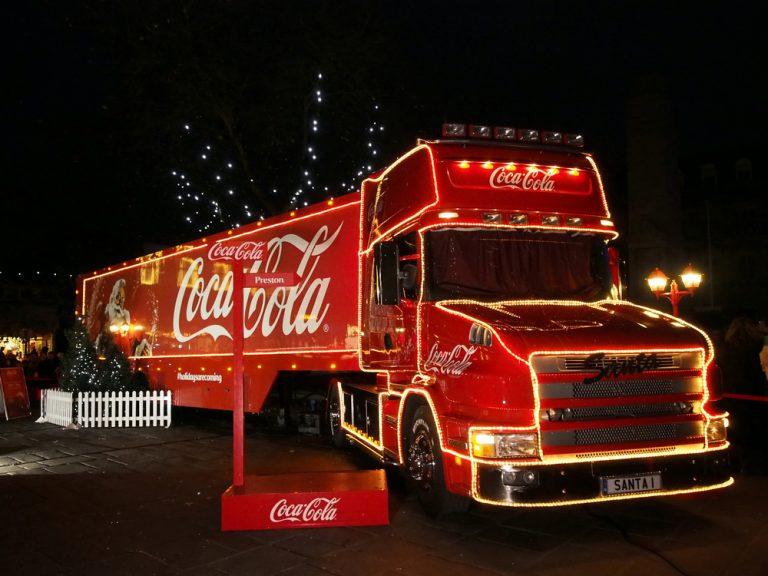
Coca-Cola HBC AG (LON: CCH) have given shareholders a solid third quarter update, highlighted in a trading statement released on Wednesday morning. Additionally, Coca Cola have announced that the Christmas truck will return for the ninth consecutive year. Kris Robbens, marketing director at Coca-Cola Great Britain and Ireland, said: “Whilst Christmas is a moment of celebration, it’s also incredibly important to remember those that need support throughout the season. So we’re really pleased to partner with Crisis and whilst guests at the tour enjoy a refreshing Coca-Cola zero sugar, when they recycle their can they’ll be helping to support an amazing charity.” After the announcement was made, shares of Coca Cola rallied 5.93% to 2,499p 13/11/19 10:36BST. The soft drinks giant, who have established themselves as a FTSE100 (INDEXFTSE: UKX) made a bold move when they purchased Costa Coffee from Whitbread (LON: WTB) in a reported £3.9 billion deal in 2018. The company reported “a solid performance in a quarter where poor weather impacted industry volumes in our geographies”, which led to shares rising during Wednesday trading Coca Cola reported that FX-neutral revenue growth of 3.4%, or 2.3% excluding the impact of the Bambi acquisition. Additionally, volumes increased by 1.1% in the quarter, -0.1% excluding Bambi whilst established markets volumes increased by 1.2%, an acceleration on the first half and prior-year period. Emerging markets volumes increased by 3.0%, or by 0.8% excluding Bambi, whilst ongoing volume growth in Romania, Ukraine and Nigeria was reported. Group net sales revenue grew 5% from 2018 to 1,961.4 million, and bullish performance in emerging markets led to net sales climbing 9.8% to 869.4 million. Additionally, developing markets volumes declined by 4.0%, with very strong volume growth of 11.3% in the prior-year period, which may act as compensation for stagnating growth in some EMEA Markets. In EMEA markets, there was solid performance however trading did stagnate in Greece and Switzerland, as the soft drink giant alluded to poor weather conditions hampering trading. Zoran Bogdanovic, Chief Executive Officer of Coca-Cola HBC AG, commented: “In a quarter in which unseasonably cold and wet weather significantly depressed industry volume growth in a number of our countries, we are pleased to have gained or maintained share in the majority of our markets and to have made progress with our commercial strategy which delivered a step-up in price/mix and ongoing growth in key areas of strategic focus such as Trademark Coke, Adults, Zeros and innovation. We are also proud to have been named by the Dow Jones Sustainability Index (INDEXDJX: W1SGI) as Europe’s most sustainable beverage company for the 6th time in 7 years. Bogandovic added “As we look to the full year, we are pleased to have seen an acceleration in Q4, giving us confidence that 2019 will be a year of solid top-line growth and good margin expansion.” Coca Cola also updated other investors on activity including the recent acquisition of acquisition of Acque Minerali S.r.l, a privately-held natural mineral water and adult sparkling beverages business in Italy. This will come as a relief to shareholders of Coca Cola, who have seen a relatively successful financial 2019 with positive results being posted throughout the year. Coca Cola expect to deliver full year FX-neutral revenue growth of 4.0-4.5%.

Avon Rubber set for ballistic protection boost

Avon Rubber (LON:AVON) businesses traded strongly in the second half and there is more to come this year from the acquisition of 3M’s ballistic protection business. How much it contributes will depend on the timing of US approvals of the acquisition.
Full year figures will be published on Thursday. Protection generates more than two-thirds of group revenues and dairy equipment the rest. In the year to September 2019, pre-tax profit is expected to improve from £27.2m to £30.4m.
The best performer was the military business as deliveries of new aircrew masks and powered air systems to the US Depa...

Speedy services growth

Speedy Hire (LON: SDY) is reporting interims on Thursday and growth continues to come from the smaller company customer base.
A pre-close trading statement has reassured investors that trading is in line with expectations. The equipment hire and services provider is expected to generate growth in first half revenues of 6%, with most of the growth coming from services rather than hire. Services revenues are expected to rise by 13%.
Smaller company accounts grew revenues by 27.5% in the first quarter and 25% growth is forecast for the first six months.
These are continuations of trends that mana...

Land Securities Group swings to loss during the first half

The UK’s largest property investment and development company Land Securities Group plc (LON: LAND) posted underwhelming fundamentals for the half year ended 30 September. More uplifting updates from the property sector came with Shaftesbury plc (LON: SHB) booking robust leasing activity, Berkeley Group Holdings Ltd (LON: BKG) restating its confidence in the South-East market and Redrow plc (LON: RDW) posting strong results and completions. While the Land Securities’s revenues bounced 0.4% year-on-year to £225 million, the Group swung from a £42 million profit to a £147 million loss on-year. Further, Land Securities’s valuation deficit widened from £188 million to £368 million. Further, although the Company’s dividend per share rose 2.7% to 23.2p on-year, their basic EPS swung from 5.9p earnings to a 19.6p loss. Also, during the six months between March and September, the Group’s net assets per share fell 3.2% from 1,341p to 1,298p.

Land Securities comments

Responding to the update, Chief Executive Robert Noel, said,

“Landsec had a good first half, delivering resilient results in unsettled market conditions.”

“We have made excellent progress on our £3.0bn pipeline of development opportunities, with 1.0 million sq ft now on site. Our new products, Myo and Fitted, have landed well with customers. We have been proactive in the tough retail market, maintaining high occupancy and protecting income. We have extended our leadership in sustainability by setting further stretching targets. And we’ve upped our pace in innovation, introducing better ways to design, construct and manage space.”

“With a general election next month and the UK’s proposed exit from the EU further delayed, we remain alert to market risks. However, Landsec enters the next six months with confidence; we’re in a strong financial position, have an exciting development pipeline and are agile enough to seize value-creating opportunities as we see them.”

Investor notes

The Company’s share price rallied 0.38% or 3.40p to 895.40p per share 12/11/19 16:35 GMT. Peel Hunt analysts reiterated their ‘Hold’ stance on Land Securities stock. The Group’s p/e ratio is 14.94, their dividend yield is inviting at 5.09%.

AdEPT Technology shares dip despite revenue bounce

Managed IT services provider AdEPT Technology Group PLC (LON: ADT) saw its share price drop during trading on Tuesday, despite a sharp hike in the Company’s financial performance fundamentals during the half year to September 30th. The Company’s revenues bounced 26% to £30.8 million year-on-year. The majority of revenue came from managed services, which jumped 39% to £25.1 million and now make up 82% of total Company revenues.

Additionally, AdEPT’s EBITDA increased by 18% to £6.1 million while adjusted profit after tax rose 4% to £3.9 million.

Similar financial progress in the tech sector was enjoyed by Infineon Technologies AG (ETR: IFX) and Microsaic Systems PLC (LON: MSYS), who both enjoyed revenue hikes, Echoh PLC (LON: ECK), who boasted strong first half results and dotDigital Group plc (LON: DOTD), who saw their profits surge.

AdEPT shareholders also enjoyed similar progress, with the Company’s adjusted fully diluted EPS and interim dividend both up 4% to 15.3p and 5.10p per share respectively.

AdEPT comments

Ian Fishwick, Chairman, commented:

“The Group has continued with its transformation into a managed service provider for unified communications and IT whilst bringing the Group closer together under the ‘One AdEPT’ initiative christened ‘Project Fusion’. I am delighted to see the organic revenue growth that has been achieved alongside successfully continuing with our acquisitive growth strategy. The results for the period demonstrate the strength of our capex-light highly cash generative business model which is focused on high levels of recurring revenue.”

“I am pleased to see the positive results of our efforts, as trading continues to be in line with management’s expectations. We have a fully supportive investor base and funding partners, and in this converging and fragmented marketplace we will continue to pursue our strategy to identify earnings-enhancing acquisitions whilst retaining the ability to continue with our progressive dividend.”


Investor notes

Despite what appeared to be a positive update, the Company’s shares fell 9.19% or 34.00p during trading on Tuesday, down to 336.00p per share 12/11/19 15:49 GMT. The Group’s p/e ratio is 12.42, their dividend yield stands at 2.86% and their market cap is £81.30 million.

Infineon Technologies rallies on revenue rise

Infineon Technologies AG (ETR: IFX) booked progress in its revenues during the final quarter of the full year. Meanwhile, its other fundamentals looked appealing in a year-on-year comparison, while its income dipped in comparison with the previous quarter. The Company saw revenue growth of 2% during the quarter, up to EUR 2.06 billion. This capped off a year of good progress, with the Group’s full-year revenues up 6% on-year, to EUR 8.03 billion. Similar financial progress in the tech sector was enjoyed by Echoh PLC (LON: ECK), who boasted strong first half results, dotDigital Group plc (LON: DOTD), who saw their profits surge and Microsaic Systems PLC (LON: MSYS), who saw their revenues bounce. However, Infineon Technologies did also book a notable retraction in net income between the third and fourth quarters, narrowing by 28% from EUR 224 million to EUR 161 million. Further, both its generic and adjusted gross margins dropped by approximately a percent apiece, while adjusted EPS saw a sharp dip of 17% between Q3 and Q4, down to EUR 0.19.

Infineon Technologies comments

Dr. Reinhard Ploss, CEO of Infineon, said, “We have achieved our targets for the fourth quarter, bringing a challenging fiscal year to an end on a good note. Demand was particularly strong for our power semiconductors for renewable energy applications and our sensors for consumer devices,” “We are feeling the effects of weak global auto demand and do not expect any improvement for the time being. The general economic environment remains fraught with macroeconomic and political uncertainty. We do not expect markets to recover before the second half of the fiscal year.”

Investor notes

The Company’s share price has bounced 6.17% or 1.14p to 19.65p 12/11/19 14:39 CET. Their dividend yield stands at 1.46%, their market cap is €23.15 billion.

Microsoft boosts productivity by shortening working weeks

1
Microsoft Japan (NASDAQ: MSFT) conducted a productivity experiment by testing out a four day work week system.

Work-Life Choice Challenge

Microsoft Japan started implementing a project called Work-Life Choice Challenge in order to boost productivity and efficiency. As a part of the project, Microsoft Japan gave all of its employees all Fridays off during the month of August. Although Microsoft shortened the working week of its employees, it did not decrease their pay. The goal of the project was to boost maximize profit. The experiment encouraged employees to achieve the same outcome with at least 20% less working time. The experiment was successful in maximizing efficiency while increasing leisure time.

Results

Microsoft Japan announced the results of its experiment last week. According to Microsoft Japan, four day working weeks boosted productivity by 40%. The results of the experiment have been overwhelmingly positive for the company. According to the results of the experiment, four day working weeks led to an increase in happiness. Furthermore, working fewer days increased the productivity of employees. Employees requested less time off during the month of August. Moreover, Microsoft Japan reported that four day weeks led to more productive meetings. Furthermore, shortening work weeks decreased Microsoft Japan’s sunk costs by bringing electricity use down by 23%. Employees lowered the cost of Microsoft Japan by printing less paper as well as using less water at work. The experiment also included a plan to subsidize vacations for Microsoft Japan employees in order to make family vacations more affordable and accessible.

Happiness & Productivity

An increasing number of studies suggest that there is a positive linear relationship between happiness levels and productivity levels at work. Happier employees work more efficiently. They produce a larger quantity and better quality of work during their time at work. The experiment conducted by Microsoft Japan concluded that shortening work weeks increased happiness levels at work. 92% of Microsoft Japan employees reported that they were happier when working for four days a week as opposed to five days a week. As companies look for ways to boost productivity and profit, increasing efficiency by shortening work weeks can be a viable option for many. Four day working weeks have been becoming more popular among companies. Some of the other companies who experimented adopting four day weeks are Shake Shack (NYSE: SHAK) and Tree House (NSE: TREEHOUSE). Company leaders have been increasingly in favour of shortening work weeks to boost productivity at work. Following the success of Microsoft’s experiment, it is likely that companies such as Apple (NASDAQ: AAPL) and Google (NASDAQ: GOOGL) will consider conducting similar productivity experiments.  

Jingye Group rescues British Steel

1
China’s Jingye Group (SHA: 600768) announced that it plans on investing £1.2bn in British Steel in order to prevent the collapse of British Steel.

British Steel

British Steel is the second biggest steel producer in the United Kingdom. The company collapsed into liquidation earlier this year in May after the government’s refusal to provide a financial bailout. Since the collapse of British Steel, the company has been searching for ways to save jobs. British Steel employs more than 24,000 employees in the United Kingdom. Jingye Group contacted the United Kingdom government to request approval for taking over British Steel. Jingye Group, an industrial giant based in China, believes British Steel has a sustainable future and growth potential.

Government Approval

Jingye Group expects to finalise the sale after receiving regulatory approval. Furthermore, both Jingye Group and British Steel hope to complete the deal as soon as possible in order to start the transition period. British Steel will continue its normal operations during the transition period. Jingye Group’s decision to take over British Steel will save thousands of jobs as well as maintain previous production levels of steel in the United Kingdom. Nevertheless, government approval is likely to take time. Due to the strategic importance of steel production, the United Kingdom government is likely to take time scrutinising the deal before announcing its final decision.

General Election

The upcoming general election is critical to the future of the deal. Jingye Group needs government approval as well as regulatory approval in order to complete the take over. The timeframe and success of the takeover will depend on the actions of the administration elected following the general election. The deal is fundamental to United Kingdom’s economy. If British Steel is not saved, efficiency levels are likely to decrease due to distortions in multiple sectors related to steel production and supply. The loss of British Steel would lead to negative distortions in the manufacturing, construction and infrastructure sectors.  

Vodafone posts half year loss

4
Vodafone (LON:VOD) revealed a half year loss on Tuesday, blaming a court ruling in India. Shares in the British multinational telecommunications company were trading almost 3% higher on Tuesday. Vodafone said that loss for the six months ended 30 September amounted to €1.9 billion. The company added, however, that this “primarily reflects losses in relation to Vodafone Idea post an adverse judgement against the industry by the Supreme Court in India”. Vodafone also upgraded its full year guidance and it now expects adjusted EBITDA to lie in the €14.8-€15.0 billion range. This was previously forecasted to lie between €13.8-14.2 billion. Earlier this month, Vodafone announced structural changes for its senior board and global operations. One of the changes included the removal of its Rest of the World regional organisation. “I am pleased by the speed at which we are executing on the strategic priorities that we announced this time last year,” Nick Read, Group Chief Executive, said in a company statement. “This is reflected in our return to top-line growth in the second quarter, which we expect to build upon in the second half of the year in both Europe and Africa,” the Group Chief Executive said. “The consistency of our commercial performance has improved in both regions, and we have made a fast start on integrating the acquired Liberty Global businesses, where we see significant long-term opportunity. Our digital transformation is already creating a better experience for our customers, improving our differentiation, supporting growth and at the same time reducing our structural costs,” the Group Chief Executive continued. Nick Read added: “We have now secured network sharing agreements across most of our major European markets, and we recently announced a major long-term wholesale partnership with Virgin Media in the UK, in order to improve the utilisation of our network assets. And we expect our European TowerCo to be operational by May next year, enabling us to continue to unlock the significant value embedded in our tower infrastructure.” Shares in Vodafone Group plc (LON:VOD) were up on Tuesday, trading at +2.97% as of 12:32 GMT.