Pendragon stocks soar: Update

Pendragon PLC (LON: PDG) published third quarter results this morning. Profits rose leading to stock price increases during Tuesday trading. However, falling revenues were reported as sales from used cars dropped.
The operator of Evans Halshaw and Stratstone saw underlying pre-tax profit rise to £3m from £1.1m, due to a combination of ‘better momentum during September, improved processes and good cost control’.
Despite rising profits, Pendragon saw a decline in total revenues by 8%, as like for like revenue dropped 3.6% and used car revenues dropped 19.6%.
Total revenue from new car sales was strong however, and this climbed 4.5%. Additionally, new car like for like sales increased by 11%.
Pendragon said overall sales volumes were lower as it focussed on rebuilding both the quantity and quality of the age-profile of the stock during the period.
Pendragon held £458m worth of used car stock at the end of 2018, compared to £372m a year ago.
Pendragon commented “Whilst the improved performance during the period is encouraging, we continue to expect economic and market conditions to be challenging, with the ongoing uncertainty around Brexit impacting consumer confidence. The full-year underlying loss before tax remains in line with the board’s expectations,”
Berenberg added by saying that the used car sales were the ‘bane’ of the year for Pendragon, given the sizable margin compression in this sector as a result of de-stocking older and preregistered stock.
Berenberg concluded “”Most of this has now happened and the business has achieved a marked improvement in margins month by month over the quarter. Specifically, gross margins have risen from 5.9% in July to 7.3% in August to 8.4% in September. With margins now back to normal used levels, we envisage that profitability can return here. With the problem car stores now shut, the company will benefit from the cost savings associated in upcoming periods.”
Pendragon announced plans to cut 22 car stores last month as shares have been volatile. Most of these have been formally completed, showing a strategy to cut costs. However, this restructure caused 1,300 job losses.
In today’s trading statement, Pendragon said: “The Group returned to underlying profit before tax during the quarter, with performance levels improving steadily through the period. Good progress has been made with each of the planned operational improvements previously disclosed.”
They also added “The growth in sales was partially offset by lower margins from a combination of challenging economic conditions and our planned efforts to more naturally achieve manufacturer targets to minimise pre-registered vehicles.”
Shares of Pendragon PLC are trading at 12.24p per share, after the positive results shares climbed 5.52%. 22/10/19 11:34BST.
Georgia Capital shares fall after drop in net asset value

Georgia Capital Plc (LON: CGEO) reported a slip in the net asset value over the third quarter, however outlook remains strong after growth in its private portfolio.
Georgia Capital’s net asset value dropped 9.8% over the three month period. Before the Q3 results total value was GEL1.94 billion, falling to GEL1.75 billion.
Georgia Capital have looked to expand business and recently acquired Redberry.
Redberry is a leading digital marketing agency, and outlined in an investor presentation this acquisition allows them ‘to have a platform for investment in the digital business’.
In 2019, Georgia Capital bought back 90.3 million shares, including 31.5 million in the third quarter.
Irakli Gilauri, Georgia Capital Chairman and CEO, commented: “I am pleased to report that we had an excellent quarter in terms of operating cash flow generation and step up in capital allocations. Firstly, operating cash flow generation across the private portfolio companies increased by 44.7% y-o-y in 3Q19 and by 67% y-o-y in 9M19”
He added “Secondly, our investments – while remaining disciplined – were our highest in a single quarter as we successfully converted active pipeline deals into acquisitions. We made a bolt-on acquisition in the wine business, while also successfully closing the acquisitions of majority stakes in three leading Georgian private schools. We continue to have a robust pipeline and our outlook for 4Q19 and beyond remains strong as our private portfolio continues to grow”
The private portfolio value was driven by growth in water utility as well as triple sales in the energy sector.
Along with this, there was strong value creation from its private portfolio, and disciplined share buybacks.
Georgia Capital’s total portfolio value ended the quarter at GEL2.18 billion, down 2.4% from GEL2.24 billion at the end of June but up 16% from GEL1.88 billion at the end of December.
Currently, shares of Georgia Capital PLC are trading at 975p, with a 1.02% fall. 22/10/19 11:12BST.
Devro cuts 90 jobs following Bellshill factory closure

Devro Plc (LON: DVO) are set to close one of its two Lanarkshire factories causing the loss of 90 jobs. The collagen maker has faced slower sales and stagnated European growth.
This morning, the collagen and sausage skin producer announced plans to cut its Bellshill factory.
The announcement follows plans to increase manufacturing at its other Lanarkshire site in Moodiesburn, which received a £2 million investment boost.
The closure of this plant may lead to financial costs of £15 million helping contribute cost savings of £5m.
Chief executive Rutger Helbing said: “Scotland will remain strategically important to Devro’s global operations. However, the collagen market is evolving and we must look at how we manage our business and stay competitive.Decisions like this are never easy. I know this will be an uncertain time for many colleagues, their families and the wider community.Our priority now is to ensure we have the right support in place for those who may be affected by these plans.”
Additionally, Devro released a trading update & manufacturing footprint review this morning.
Sales momentum increased during the third quarter and grew by 1% in collagen casings.
Devro identified that growth was seen in North American and Chinese trading, where growth was driven by sales in snacking categories.
However, this growth was offset by tough market conditions in Europe following Brexit and weaker sales in Japan.
The trading update speculated for future sales saying “We continue to expect a modest acceleration of volume growth in Q4 2019 with full year volume growth expected at c.1%. Our cost saving initiatives are progressing well and we are confident of achieving our guidance of £7 million in FY 2019. We continue to expect the covenant net debt / underlying EBITDA ratio to be around 2x at 31 December 2019″
Devro are one of many firms who are struggling to stimulate business in Europe, and the fact that expectations have been lowered shows the lack of consumer confidence in Europe. This has also affected firms such as Collagen Solutions (LON: COS).
Currently, shares of Devro are trading at 1,682p per share observing a 0.36% slip 22/10/19 10:45BST.
Whitbread reports first half drop in pretax profits

Whitbread Plc (LON: WTB) have announced a first half drop in pre-tax profit and UK accommodation sales amid a challenging UK leisure and hotel market.
The owners of the Premier Inn franchise speculated about tough political and economic uncertainties driving the drop in profits and sales. Firms such as Marriott (NASDAQ: MAR) and Elegant Hotels (LON: EHG) have merged to stimulate business.
Alison Britain, Chief Executive at the Premier Inn group described the first half performance as ‘resilient’ amid testing times for not just the leisure industry but UK business in general.
She said: “Market conditions in the UK continue to be challenging with business confidence remaining weak and leisure confidence in decline, coinciding with heightened political and economic uncertainty.Whilst the near-term market conditions in the UK remain uncertain, we have confidence in the long-term structural opportunities available in the domestic budget travel markets in the UK and Germany.”
Britain added “Shorter-term trading conditions in the UK regional market have been difficult, particularly in the business segment where we have a higher proportion of our revenue, whilst trading in London remained strong.”
Adjusted profit before tax slipped by 4.1% to £236 million in the first six months of this year compared to the £246 million figure previously mentioned.
Whitbread sold Costa Coffee to Coca Cola (NYSE: KO) last year in a for £3.9 billion, while completing a £2 billion share buyback in July 2019.
Total UK accommodation sales dropped by 0.6% while like for like sales fell 3.6% following tough domestic market conditions.
The group concluded by saying that there is no way to speculate how business and investment will unfold in 2020, such is the uncertainty of both economic and political relations currently.
Russell Pointon, Consumer and Media Director at Edison Group said: “Market conditions in the UK continue to be challenging with business confidence remaining weak and leisure confidence in decline, coinciding with heightened political and economic uncertainty, which has continued into the third quarter of FY20. This has impacted hotel domestic demand, particularly in the regional market, where 80% of Premier Inn hotels are located. There has also been a greater decline in short-lead discretionary bookings, which tend to be at higher price points.”
He added “Guidance given in April 2019 for costs, efficiency savings, investment in Germany and revenue sensitivity remain unchanged but it is difficult to predict how business confidence and business investment will evolve in the second half of FY20 and into FY21 and impact demand for short-stay, domestic travel. Whitbread’s business model has a relatively high degree of operating leverage – with every 1% movement in RevPAR, PBT is impacted by £12-15m.”
Currently, shares of Whitbread Plc are trading at 4,185p per share, seeing a 0.43% fall. 22/10/19 10:23BST.
Reckitt Benckiser reduces full year outlook
Reckitt Benckiser reduced its full year outlook on Tuesday in a third quarter trading update.
The news comes just a day after the British multinational consumer goods company announced the appointment of Jeff Carr as Chief Financial Officer.
Shares in Reckitt Benckiser (LON:RB) were down during Tuesday morning trading, trading almost 5% lower.
The consumer goods company reduced its full year 2019 like-for-like sales growth target to 0-2% from the previous reduction issued in July.
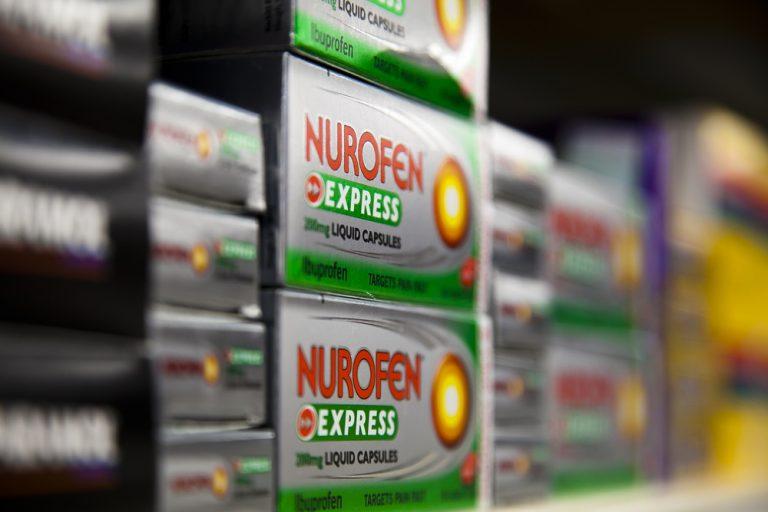
The owner of Nurofen and Dettol added that it expects full year 2019 adjusted operating margins to experience a “modest” decline.
Laxman Narasimhan, who was named Reckitt Benckiser’s new Chief Executive Officer earlier in June, said the company’s performance in the third quarter was “disappointing”.
“We delivered another quarter of consistent growth in Hygiene Home. Our Health business, despite good market growth and stable consumer offtake, delivered a weak net revenue performance. This was primarily due to issues in the US and China. In the US, we saw more cautious retailer seasonal purchasing patterns. In China, IFCN continues to face challenging market conditions,” the Chief Executive Officer said.
“This performance is a reflection of an extended period of significant change and disruption in the company. I am prioritising execution and operational performance as a matter of urgency. I have made it clear within the organisation that any activities that detract focus and attention from improving our operational performance, be paused,” Laxman Narasimhan continued.
“I have lowered our revenue outlook for the full year 2019 to reflect the combination of a weak Health performance in Q3 and inherent seasonal uncertainty in Q4. We expect a modest margin decline in 2019 as we will continue our investment in the brands and the business to build RB for the long term,” the Chief Executive Officer said.
Shares in Reckitt Benckiser Group plc (LON:RB) were down, trading at -4.50% as of 09:50 BST Tuesday.
Pendragon third quarter revenue down

Pendragon (LON:PDG) posted a drop in third quarter group revenue on Tuesday.
Shares in the motor retailer were up during Tuesday morning trading.
Pendragon said that for the three months ended 30 September, revenue declined 8%.
Underlying profit before tax amounted to £3 million, Pendragon said, an increase of £1.9 million compared to the third quarter of 2018.
“The group returned to underlying profit before tax during the quarter, with performance levels improving steadily through the period,” Pendragon said in a statement.
“A combination of better momentum during September, improved processes and good control of costs, resulted in group underlying profit before tax of £3.0m, an increase of £1.9m against the same period in 2018,” the motor retailer added.
Pendragon announced previously that it will close 22 car store locations out of a total 34. The motor retailer said on Tuesday that good progress has been made with the closure programme.
It added, however, that it continues to expect “challenging” economic and market conditions as the ongoing uncertainty surrounding the nation’s departure from the European Union impacts consumer confidence.
With the Brexit deadline approaching quickly at the end of the month, Boris Johnson failed to get his Brexit deal past MPs on Saturday.
The Prime Minister is set to make a final attempt on Tuesday to get Brexit done by the Halloween deadline.
Pendragon confirmed that “full-year underlying loss before tax remains in line with the Board’s expectations”.
In September, Pendragon also warned that Brexit uncertainty was weighing on customer confidence in its half year results, sending shares down.
The motor retailer is not alone in feeling the weight of Brexit. Elsewhere, the Brexit disruptions have impacted the housing market, with Rightmove revealing on Monday that asking prices for homes in the UK increased by just 0.6% in October.
Shares in Pendragon plc (LON:PDG) were trading at +2.93% as of 09:04 BST Tuesday.
Reckitt Benckiser announces new Chief Financial Officer

Reckitt Benckiser (LON:RB) announced on Monday the appointment of Jeff Carr as Chief Financial Officer.
Shares in the British multinational consumer goods company were down during trading on Monday.
Reckitt Benckiser’s current Chief Financial Officer, Adrian Hennah, will retire next year.
The consumer goods company added that, as Chief Financial Officer of the business, Jeff Carr will receive a salary of £680,000.
The owner of Nurofen and Dettol made another change to its management earlier this year in June, when it announced the appointment of PepsiCo Executive Laxman Narasimhan as its new Chief Executive Officer.
“We are pleased to have appointed Jeff as Chief Financial Officer. Jeff brings extensive experience across consumer and retail companies and is also an alumnus of RB,” Laxman Narasimhan, Chief Executive Officer, commented on the announcement.
“Jeff has a record of transformational strategic and operational leadership, consistent performance delivery, strong capital allocation discipline and with building strong teams; all of which lead to long term shareholder value creation,” the Chief Executive Officer continued.
Jeff Carr commented on the appointment: “I spent part of my early career at RB and I am delighted to be re-joining RB as its CFO. I have always valued the business’s entrepreneurial energy and creativity and, like Laxman see great potential to drive positive change. I look forward to starting in the role next year.”
Indeed, Jeff Carr, who will join the business from his current position at at Ahold Delhaize, worked in senior finance roles in Reckitt Benckiser between 1994 and 2004.
Current Chief Financial Officer, Adrian Hennah, said: “It has been a privilege to serve as CFO of this great business for seven years, alongside so many impressive colleagues. I look forward to supporting Laxman while he gets his arms fully around the business, to re-introducing Jeff to the business, and beyond that to new challenges.”
Shares in Reckitt Benckiser Group plc (LON:RB) were trading at -2.01% as of 14:55 BST Monday.
Asking prices up only 0.6%, Rightmove

Asking prices for homes in the UK increased by just 0.6% in October, well below the average rise for the month, new data revealed on Monday.
Rightmove said that an Autumn bounce usually occurs during this time of the year, with an average rise of 1.6% in October.
However, asking prices rose by a “sluggish” 0.6% for October 2019, the lowest figure for this time of the year since October 2008.
Meanwhile, the number of properties coming to market was down by 13.5% compared to the same period a year prior.
Rightmove said that there are “strong indications” that many potential sellers are being discouraged by political uncertainty.
With the Brexit deadline fast approaching, Boris Johnson failed to get his Brexit deal past MPs on Saturday.
“In a strange Brexit-induced paradox, thousands of potential sellers are holding back compared to this time a year ago, though the number of buyers agreeing purchases is virtually the same,” Miles Shipside, Rightmove director and housing market analyst, commented on the data.
“Ironically, this means that those who are coming to market have a better chance of selling, so while some would-be sellers are being put off, it’s actually a good time to sell. Those who are ignoring the Brexit disruption have less competition from stay-away sellers, and their prospective buyers have less negotiating power, with a reduced choice of suitable alternatives,” Miles Shipside continued.
Marc von Grundherr, director of lettings and estate agent, Benham and Reeves, also commented: “No fireworks and no explosions across the current property landscape, and while the market is more subdued than usual, this is of course going to be the case ahead of our supposed EU exit at the end of the month. This uncertainty has evidently caused many sellers to hesitate and sit tight however, a healthy level of sales are still transacting, and this is proof that the UK property market is yet to disappear down the Brexit abyss.”
Nick Leeming, Chairman of Jackson-Stops, was optimistic that an Autumn bounce may occur.
“Although the UK is yet to experience an Autumn bounce it doesn’t mean one isn’t on its way. Today’s data shows that sales aren’t falling through as regularly as they have been, which suggests that the market is currently being driven by must-movers,” Nick Leeming said.
“Despite Rightmove’s figures showing that stock is currently lower across the nation, once the UK does leave the EU, whether that be on the 31st October or otherwise, I expect to see an increase in listings and greater activity levels, with the prospect of a modest uplift in property prices in the new year,” Nick Leeming added.
Just last week UK Investor Magazine took a look at various property market reactions to the news of the potential Brexit deal.
Just Eat Q3 revenue up 25%

Just Eat (LON:JE) said on Monday that its revenue for the third quarter grew by 25%.
Shares in the online food order and delivery service were down during Monday morning trading.
Just Eat posted a revenue growth of 25% for the three months to 30 September, amounting to £248 million.
Group orders were up 16% to 62 million, the food order and delivery service added.
UK orders were up by 8% to 33 million, Just Eat said, driven by rapid growth in its delivery proposition.
Moreover, the business has confirmed its guidance for full year 2019 revenue in the range of £1.0 billion to £1.1 billion and is also on track to deliver its uEBITDA guidance in the range of £185 million to £205 million. Just Eat said that both exclude Brazil and Mexico.
“We are seeing strong growth in many of our markets, including Canada, Europe and pleasingly Australia, where we are starting to reap the benefits of our turnaround plan,” Peter Duffy, Interim CEO of Just Eat, commented on the third quarter results.
“Our UK marketplace business is a strong and clear leader; however, we are seeing a structural shift, with increasing demand on our platform from customers for broader cuisine choice and more meal occasions, led by quick service restaurant chains. The strong growth in our UK delivery business shows that we can successfully meet these needs,” Peter Duffy continued.
Peter Duffy said that “the winning platform for food delivery will offer customers the broadest range, underlining the importance of our move to the hybrid business model and continuing investments in key markets”.
At the end of July, rivals Just Eat and Takeaway.com agreed in principle on the key terms of an £8.2 billion all-share deal.
It posted a sharp fall in pre-tax profits in its half year results, down 98% from the year prior.
Shares in Just Eat plc (LON:JE) were trading at -5.76% as of 09:33 BST Monday.