Aviva announce George Culmer as Senior Independent Director

2

Aviva plc (LON:AV) have announced today that they have appointed their Non-Executive Director to senior independent director effective from the start of next year.

George Culmer is set to take the role on, and should be something that shareholders take with optimism as 2019 closes.

Shares of Aviva Trade at 420p (-0.25%). 20/12/19 9:38BST.

The FTSE 100 listen firm said that Culmer will take on the reigns from Glyn Barker whose retirement from the board at the end of this year was announced earlier this month.

Culmer joined Aviva’s board as a non-executive director back in September.

He is also a non-executive director at jet engine maker Rolls Royce, and held previous roles including being chief financial officer at Lloyds and at RSA Insurance Group.

Aviva Chair Adrian Montague said: “George brings significant board level experience, having spent 15 years as a FTSE 100 chief financial officer, and has a deep understanding of insurance and wider financial services.”

Management changes for Aviva?

Aviva at the start of December announced that they would be appointing Amanda Blanc as independent non executive director.

Blanc will take the position, following her appointment as the first women chair of the Association of British Insurers in 2018.

The move will take place from January 2nd, and shows a constructive move by Aviva to stimulate business.

Blanc has vast experience in the industry, having been the former boss of AXA in their UK and Irish division, additionally she has worked at Zurich Insurance Group, and held senior management positions at Towergate Insurance Brokers, Groupama Insurance Company and Commercial Union.

The move to make these appointments in quick succession comes at a time where global trading has been tough, and Aviva are looking to combat this.

Asian Difficulties

Aviva have seen a tougher trading period, particularly in Asia where the firm has made an active effort to promote their operations.

On November 18, the firm made an announcement saying that it was determined to turn its Singapore operations around.

The big insurance firm reported that it had looked at selling off the business, after the board confirmed that offers had been received.

“Aviva’s Singapore and China business units delivered double digit operating profit growth in 2018 and are earning attractive returns. Both countries are expected to pay dividends to group centre in 2019,” the company said in its statement on November 18.

A couple days after this, thee firm saw its shares dip as it gave shareholders an update on its business in Hong Kong.

Shares dipped almost four per cent, saying that it was planning to review its Hong Kong operations.

The insurance firm said it will simply its business structure into five operating divisions and sell its stake in the Hong Kong business to co-investor Hillhouse Capital.

With Hong Kong currently being in both political and economic turmoil, there is no surprise that these results worried shareholders.

Aviva set targets for the next three years. The highlights being a 12% return on equity, a £300 million net cost saving and an aim to generate a cash flow between £8.5 billion and £9.5 billion.

Certainly, shareholders should be pleased with the internal appointment, as Aviva seem to be making an ensured effort to carry optimism going into 2020.


AB Traction takes Driver stake

Sweden-based AB Traction has taken a 14.2% stake in Driver Group (LON:DRV) and the last two property and consulting services companies that it built up stakes in were subsequently taken over.
NASDAQ OMX Nordic Stockholm Mid Cap-listed AB Traction acquired the stake all at once. Manchester-based Castlefield Fund Partners sold a 15.99% stake on the same day.
The share dealing happened on week after Driver reported its full year results. These showed a much stronger second half.
In the year to September 2019, revenues decreased by 7% to £58.5m, while underlying pre-tax profit fell by 22% to £3m. ...

Purplebricks stems cash outflow but still losing money

Peel Hunt has published its latest analyst research on estate agency Purplebricks (LON: PURP) following the publication of its interim results on 12 December. Cash is still flowing out of the business due to the closure of most of the overseas operations, but there is still a substantial cash pile of £41.6m.
Peel Hunt believes that Purplebricks could make a small profit in 2021-22 and it expects the company to still have a significant cash pile.
However, the UK operation will make a much smaller profit contribution this year and the remaining overseas operation in Canada is likely to make a sl...

Comcast shares flat as Cats receives a less than purrfect reception

Well, Thursday has proven a fairly uneventful day for capital markets. With little going on in the world of finance, the highly anticipated anti-climax that was the screen adaptation of Cats, was perhaps the only news giving us paws for thought. After a year of build up, the cat was out of the bag, and no amount of nostalgic attachment could save this classic tail about our favourite mangy moggies. All cat puns aside, Thursday proved an entirely underwhelming day for the kitty of Cats’s largest production company, Comcast (NASDAQ: CMCSA) (courtesy of NBCUniversal Film and Enternatinment, via Universal Pictures, via Working Title Films). The Group’s shares should have soared on what was pegged to be one of the great film events of the year. Alas, they were left licking their modest wounds, down 0.046% or 0.020p to 43.17p per share 19/12/19 10:18 GMT-5. On the small matter of the film itself, Will Gompertz offered his typically on-the-nose insights on a film littered with errors and some notable individual performances: “The sum is a great deal less than the parts, however famous and gifted the people playing them happen to be. The story takes forever to get going, and when it does – eventually – it lacks any real conviction or emotion.” “The harsh truth is the film feels plastic, it has no heart or soul. That might well be a problem with the source material and its suitability for a transfer from stage to screen. Notwithstanding notable successes, the fact is not everything that is a hit in one medium works in another.” “It’s not terrible, it’s certainly got more going for it than the trailer, but it is some way short of Lord Lloyd-Webber’s original.” So, not a complete shambles, but not a Les Mis replica, either. Elsewhere in film and media, Star Wars Origins bolsters British businesses, Cineworld Group (LON: CINE) announced a Canadian acquisition and Netflix (NASDAQ: NFLX) loses subscribers. Comcast currently has a market cap of $197.39 billion and a dividend yield of 1.94%. It has been claimed that Cats ‘lacks soul’, but I should imagine its box office performance in the run-up to Christmas won’t lack teeth. I plan to see the film for myself this weekend, but for now it appears the only real losers are Cats fans.

Analysts react to Tullow Oil turmoil

Multinational oil and gas producer Tullow Oil plc (LON: TLW) today saw analysts reaffirm their conservative stances on the Company’s stock, ten days on from the tumultuous departure of its Chief Executive. Speaking on the departure, interim Executive Chair Dorothy Thompson, stated, “Despite today’s announcement, the board strongly believes that Tullow has good assets and excellent people capable of delivering value for shareholders.”

“We are taking decisive action to restore performance, reduce our cost base and deliver sustainable free cash flow.”

“The board has, however, been disappointed by the performance of Tullow’s business and now needs time to complete its thorough review of operations,”

Today, the Company announced that it had exercised its back-in right for a 10% stake in Gabon’s Dussafu production-sharing contract (PSC), though the amount payable remains under dispute. Having signed a deed of novation and amendment, and conditional upon the deal being completed, other parties’ stakes will drop to 73.5% for BW Energy, 9% for Gabon Oil Co and 7.5% for Panoro Energy. Responding to the eventful couple of weeks from Tullow Oil, “UBS (SWX: UBSG) today reaffirms its neutral investment rating on Tullow Oil PLC and cut its price target to 60p (from 220p).” Further, “Jefferies International Group (NYSE: JEF) today reaffirms its hold investment rating on Tullow Oil PLC and cut its price target to 65p (from 168p).” If we try hard to search for a chink of light, it was offered courtesy of Jonathan Smith of Motley Fool, who was somewhat upbeat while comparing Tullow to another floudnering commidity company – Sirius Minerals (LON: SXX). Smith said, that Tullow Oil “still holds a market capitalization, which it can use to leverage (be it through bank funding, stock buybacks, etc).” “Further, Tullow could be a smarter play for an investor looking to buy on the cheap as it is a more diversified company than Sirius. Tullow has 67 producing oilfields, and so while output production forecasts have come lower, it will likely look to see how it can make up some shortfall from some of the oilfields that are performing well.” Following today’s events, the Company saw its shares dip 2.66% or 1.74p to 63.64p per share 19/12/19 14:03 GMT. Within the last few days, Peel Hunt analysts downgraded their stance on Tullow Oil stock, from ‘Add’ to ‘Hold’. The Group’s market cap is £900.64 million, their p/e ratio is 14.02 and an inviting dividend yield of 5.81%.  

Rolls Royce unveil one-seater electric plane

1

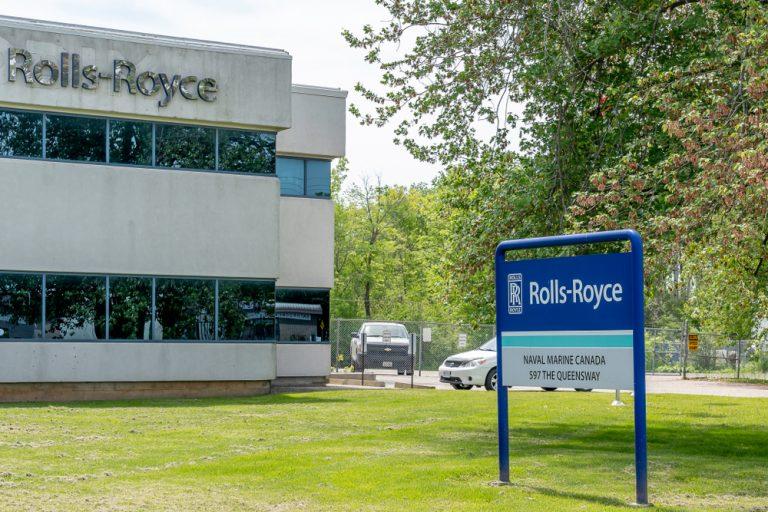
Rolls-Royce Holding PLC (LON: RR) have unveiled their one seater electric plane on Thursday to the global market.

Rolls Royce said that the aircraft will fly in late Spring, and become one of the worlds fastest all-electric aircrafts.

Over a week ago, the firm saw its shares in red as it announced a shareholder departure.

The firm said that announced that an executive from its largest shareholder, activist investor Value Act Capital, has resigned from from the engineer’s board.

Today, the firm said that it was looking to appeal to a market of aircraft where climate change and environmental concerns were met.

The additionally recent spread of ‘flight-shaming” movement on social media, and a promise by many big firms in the aviation industry to cut emissions has grown the need for electric aircraft.

Aviation accounts for over 2% of global greenhouse gas emissions and passenger numbers are growing but zero-carbon, long-distance planes carrying hundreds of people are still decades away, aviation experts say.

Rolls-Royce unveiled the electric plan, which it has been building and developing with YASA and Electroflight, should target a speed of over 300 miles per hour.

Rolls-Royce have named the electric plane “ACCEL” and the £6.5 million project will have the most dense battery pack every used for an aircraft.

The firm added that this battery pack provided enough fuel to fly 200 miles which is the distance between London and Paris, on one charge.

Over the coming months, engineers will begin to integrate the electrical propulsion system into the airframe before a first flight by an experienced pilot in late Spring 2020 at a location yet to be decided, but possibly in the Welsh countryside.

Industry rivals such as Boeing and Airbus have both made concerned efforts to build electric planes, however it seems that Rolls-Royce have beaten the competition.

Rolls-Royce recently bought Siemens eAircraft, and it seems that the acquisition has allowed the development to be made.

With Boeing announcing the halt in production to 737 MAX aircraft, the need for electric aircraft has never been so poignant.

The market and industry experts will be keen to see how the initial model performs.

John Lewis of Hungerford see shares dip over 4% despite recording revenue gains

0

John Lewis of Hungerford plc (LON: JLH) have seen their shares dip despite reporting increased revenues.

The kitchen and bedroom firm said that they had reported an annual narrowed loss, as it alluded to wider retail challenges as a dampener on trading.

For the year ended June 30, the company’s pretax loss narrowed to £228,640 from £373,838 but revenue increased 24% to £8.3 million. The figures compared to the 10 months to the end of June 2018.

The firm said that financial 2018 revenue was lower due to a year-end change to June 30 from August 31.

For its new financial year, the company added that despatched sales and forward orders for the initial 24 weeks totaled £3.8 million, which fell 17% from a year ago.

Comments

John Lewis of Hungerford said the results reflect “mixed fortunes within the business”, with the many of the stores outperforming, though it acknowledged several showrooms were underperforming.

“The last twelve months have seen the company operating within an unprecedented retail landscape. Although the economy is not technically in recession, the current uncertainty within the economy, mainly resulting from Brexit and structural issues facing retail in the high street, has made it more difficult for retail than the recessions in 1990 and 2008,” Chair Gary O’Brien said.

“We have seen significant store closures: 2,868 stores have closed in the first half of 2019, and numerous financial restructurings during this period – with some of the High Street’s best-known brands being affected. We have seen this within our own sector of kitchen retail with several companies reporting challenging conditions,” O’Brien added.

Notable departures from the UK high street came as Thomas Cook collapsed in September. Earlier this year, the travel operator said that it was set to close 21 stores, placing 300 jobs at risk. It had been under pressure recently with falling profits – in May the travel group reported a £1.5 billion loss for the first-half of the year, and this led to its ultimate demise.

John Lewis of Hungerford said economic conditions are continuing to be difficult and the December UK general election has “further deteriorated the retailing environment”.

John Lewis of Hungerford said design quotation activity within the business is 10% up on the previous year. This, it said, “points to an underlying latent demand”, and noted decisions are being delayed by customers as a result of the current UK political climate. It expects to see order conversions to improve once there is more clarity around Brexit.

“Whilst the impact on consumer demand continues, we are reacting, by reducing costs in the business and increasing flexibility to respond to changing demand. The board continue to monitor the situation closely and work to improve efficiency and agility in the business to ensure the company is well set to benefit from any improvement in consumer confidence,” said Chief Executive Officer Kiran Noonan.

Shares of John Lewis of Hungerford trade at 0.5p dipping 4.57%. 19/12/19 13:58BST.

Volkswagen set to improve performance and post operating profits

2

Volkswagen AG (ETR: VOW3) have said that their core brand is set to post operating profits this year, after a tough year of trading.

At the end of October, the German firm saw both their sales revenue and profits grow in an update which would have pleased shareholders.

The carmaker said that, between January and September, sales revenue rose by 6.9% year-on-year, amounting to €186.6 billion. Operating profit before special items also increased, jumping 11.2% to €14.8 billion.

However, this optimism was short live as the firm in November saw its shares crash following its confirmed 2019 outlook.

Volkswagen highlighted that in 2020 operating profit will remain between 6.5 and 7.5%.

Frank Witter said: “The Volkswagen Group remains very robust in the face of increasingly difficult economic conditions. However, we will have to apply systematic cost discipline to reach our long-term goals.” Witter concluded “We also confirm our outlook for 2019,”.

Volkswagen joined Nissan in a list of firms who have been pessimistic on their guidance for 2019 amid tough market conditions.

The firm alluded to its cost saving strategies and increased sales of SUV’s, as mentioned by a firms senior manager.

VW’s core brand in 2019 has gained market share and has increased its operating profit substantially, Chief Operating Officer Ralf Brandstaetter said on Wednesday in comments embargoed for Thursday.

He added that the division had increased its shares of SUV’s sold to 42% in the US and 37% in Europe.

Of envisaged cost savings of 3 billion euros (£2.58 billion) by 2020, 2.6 billion euros have been realised at the end of 2019, Brandstaetter said.

“On this basis, we can secure profitability so that we can systematically invest in the electrification and digitisation of our products,” the executive said, referring to both cost cuts and the increased share of SUVs.

Volkswagen have seemed to make a swift recovery after the firm saw their shares dip in November.

At a time where competitors are struggling, including Suzuki who reported a slump in quarterly profit, it seems that VW are doing okay considering market conditions.

Many automotive firms will have to look to shift their business into the electric car scene as well, as Tesla (NASDAQ: TSLA) continues to report strong demand for its environmentally friendly cars and vehicles.

However, for now VW shareholders should be sufficed and hope that the firm can continue this renewed optimism through to 2020.

Shares of VW trade at €177, (-1.22%). 19/12/19 13:35BST.

Stock Spirits’ shareholder Western Gate pursues special dividend

0

One of the biggest shareholders of Stock Spirits (LON: STCK) has called for the firm to pay a special dividend.

At the start of the month, Stock Spirits saw their shares rally following strong revenue gains.

Stock Spirits said said for the financial year ended September 30 its revenue rose 9.2% to €312.4 million from €282.4 million in a comparative period a year ago.

Another impressive figure which caught shareholder interest was that pretax profit had risen 24% from €282.4 million to €312.4 million.

The update that was given was impressive as the firm had won business in a time where competitors such as such as Fever-Tree (LON:FEVR) saw its shares crash following a modest update in November.

Western Gate Private Investments, has repeatedly pledged Stock Spirits to change their strategy and management across the last three years.

Francisco Santos, director of Western Gate, said: “We have previously requisitioned the company for change, and this has resulted in an improved recent performance. “The company has plenty of headroom to increase leverage to 1.25x EBITDA, well inside the management target of 0.5x – 1.5x EBITDA and as such we believe should be rewarding shareholders with a special dividend. “We demand a review of the capital allocation policy and the payment of a special dividend to align shareholder returns to the sector peers.”

The investor said on Thursday that while Stock Spirits’ management was improving operating performance, the board was “unwilling” to return cash to investors and had overseen a “poor performance” since its stock market listing in 2013.

Western Gate also added that Stock Spirits offers one of the lowest cash returns to shareholders among its peers, with a current dividend payout of 60.5% versus an average across the sector of 71.29%, which does raise an answer to why Western Gate have been pursuing the dividend lift.

Stock Spirits are set to undergo what looks to be a very positive time of trading, as the British pub and restaurant industry appears to be picking up.

Henceforth the question as to whether Stock Spirits could pay a special dividend may be dependent on the companies performance across the festive period.

Stock Spirits, in an e-mailed response to Reuters, said it continued to assess a range of “more meaningful and value-creating M&A opportunities” in existing and new categories and markets.

“However, as we have consistently said, if such opportunities are not realised, we will of course consider making additional shareholder distributions,” the company said.

Western Gate holds a 10% sake in Stock Spirits, called a dividend of £0.1047 per share and also asked the firm to consider a restricting program of how it allocates capital.

“Since 2017, the company has spent 47.5 million euros on three acquisitions. Despite this investment, shareholders will not see any returns on this invested capital until 2023,” Western Gate said.

Panmure analyst Matthew Webb said that institutional shareholders were likely to support the management’s current strategy.

“This proposal (by Western Gate) is much less aggressive than previous episodes,” he said.

Shares in Stock Spirits trade at 201p (+0.75%). 19/12/19 13:22BST.

ONS posts deflated retail figures but exclude Black Friday sales

0
Retail sales fell suddenly by 0.6% in a monthly comparison according to ONS, representing a fourth consecutive month of decline. “All main sectors saw their sales fall with the exception of food stores,” ONS statistician Rhian Murphy said. The data group did note, though, that its stats didn’t include Black Friday sales, as it said November 29th fell outside of its reporting period for the month, which concluded on the 23rd. It did state however, that it had adjusted for where in the calendar Black Friday fell when drawing up its on-year comparison. Regarding the discount period, ONS reported growth of 1%. This was far below the 2.1% growth predicted by economists, and the lowest annual growth since April 2018. Commenting on the results, Thomas Pugh, UK economist at consultancy Capital Economics, said, “At face value, November’s further drop in retail sales is pretty concerning”. Looking at the broader picture, some have espoused a more positive outlook in light of Boris Johnson’s election win. Duncan Brewer, a partner at consultancy firm Oliver Wyman, said “the general euphoria of a Conservative majority and a better exchange rate for the pound may lead to more spending over Christmas and in the New Year.” However, Brewer then doubled back and concluded that consumer spending “will likely only be short-lived”. “Despite more temporary political stability and low unemployment, we expect that at least two major well-loved British retailers will go bust over the course of next year, and that 100,000 jobs will be cut across the sector due to a combination of overall stagnated spending, cost-cutting and increased automation,” he said. Chief UK economist at Pantheon Macroeconomics, Samuel Tombs, added that inflation “is set to hover about 1.5% over the next nine months, while a revival in corporate confidence following the election should lead to stronger growth in employment.” “Disposable incomes also will be boosted by the recent sharp fall in mortgage rates and a big increase in the threshold for National Insurance contributions in April”. In more positive news outside of retail, the Star Wars Origins film boosts British companies, Bidstack Group PLC (LON: BIDS) shares surged on new contract win, and Focusrite PLC (LON: TUNE) acquired Martin Audio.