
NetScientific investments lead to annual loss

Commercial healthcare technology group NetScientific PLC (LON:NSCI) have posted a full-year loss, which the company said reflected ongoing investment activity in its portfolio companies, which was part of its business strategy.
Babcock meets guidance but headwind worries persist
UK-based asset and infrastructure management firm Babcock International Group PLC (LON:BAB) stated that they had met their full-year guidance despite adverse conditions, and the firm was candid about the ongoing and future potential of headwinds weighing on revenues.
Performance and expectations
The company, which does business with notable partners such as the UK Ministry of Defence and Network Rail, met its guidance in despite a fall in pre-tax profit, which was attributed to the sell-off of assets and lower activity in the short cycle parts of its business – both of which weighed on performance. Posting its recent round of results, the firm stated that pre-tax profit fell 39.9% to £235.2 million, and revenue dipped 4% on-year to £4.66 billion. However, underlying revenue was in line with its February guidance at £5.2 billion, with underlying operating profit making a modest increase of 0.7% and finishing at £588 million. The company’s combined order book and pipeline was stable at £31 billion. Regarding its dour outlook, Babcock noted that for the year ending March 31st 2020, performance would be adversely affected by a ‘number of step downs’, which would decrease operating profit by £63 million and revnue by £410 million. It also stated that it anticipated underlying revenue of approximately £4.9 billion, underlying operating profit of between £515 to £535 million and free cash flow in excess of £250 million. Further, it said that it expected to maintain its underlying margin at a range of 10.7% to 11%.Babcock’s comments
“We have delivered a robust performance this year, operating profit is in line with our expectations, we have sustained our strong margins and we have improved our cash generation,” said Chief Executive Archie Bethel. “More importantly for the delivery of our strategic goals and our future performance, we have sharpened our focus on our three key markets of defence, aerial emergency services and civil nuclear. We have strengthened our position in these areas with some important contract wins that partially offset the upcoming completion of the QEC contract and the loss of the Magnox contract and we have delivered further growth in our international businesses. In addition, we have exited low margin businesses outside of the three focus markets, which do not have synergy with the rest of the Group, and we have reshaped our oil and gas business.” “As we begin the new financial year we do not expect the wider market environment to be any less challenging than we have experienced this past year.”Portfolio considerations
The firm’s full-year dividend was 30p per share, an increase of 1.7% on-year. Following the update, the company’s share price dipped in morning trading, down 34.7p or 6.84% to 472.5 per share. There was some consensus on forecasts of Babcock stock, with Peel Hunt and JP Cazenove both downgrading their ratings from ‘Add’ to ‘Hold’ and ‘Overweight’ to ‘Neutral’ respectively. Further, Liberum Capital and Shore Capital both retained their ‘Buy’ stance.Bovis Homes’ ‘strong performance’ continues

House building firm Bovis Homes Group plc (LON:BVS) have posted their latest round of updates, and the general tone appears similar to previous updates this year and throughout last year. The Kent-based company commented on continued ‘strong performance’ which it attributed to ‘good’ levels of demand for new homes during the course of the year so far.
Performance and prospects breakdown
Bovis are enjoying a starkly different year to some British property-oriented businesses such as online estate agency Purplebricks (LON:PURP). Though the company did not comment on revenues and profits, they did comment that for the year to date, the average private sales rate per site per week was up 17% on-year from 0.52 to 0.61. The firm added that efforts to control costs were ongoing with an attempt to continue offsetting the impact of limited sales price inflation and a rise in build costs at a rate of 3 to 4%. It continued, saying that it had, “excellent visibility on land with 98% of our land for our 2020 completions secured and 68% secured for 2021 (excluding strategic land contributions).” For the year to-date, it has opened seven new developments, and is operating from 87 active sites. It expects to open 16 new sites over the course of the year and is working towards equalling the same number of active sites as last year.Bovis’ comments
“The current market fundamentals remain strong and we continue to see good levels of demand for new homes across all of our operating regions. We have a strong forward sales position and are confident of delivering completions in line with our expectations for the year,” Bovis Homes said in its statement. “The Group set out its medium term targets to be achieved by 2020 to return Bovis Homes to being a leading UK housebuilder and significantly improving returns to our shareholders.” “We continue to make good progress against these targets with several already achieved. We expect to make further progress on the Group’s operational and financial performance in the current year.”Portfolio considerations
The company confirmed that the full-year dividend for 2018 was raised to 57p a share, up form 47.5p per share in the year before. However, when the special dividend of 45p a share was paid last November, this brought the total payout for the 12 month period to 102p per share. Despite the positive update, the company’s share price dipped in morning trading, down 12p or 1.15% to 1,033p a share 22/05/19 12:05 GMT. Analysts’ forecasts have varied, with the only consensus being witnessed between Liberum Capital and Peel Hunt, both of whom reiterated their ‘Hold’ rating. Numis (LON:NUM) reiterated their ‘Buy’ stance on Bovis stock while Shore Capital downgraded their rating from ‘Buy’ to ‘Sell’.Superdry appoints interim finance chief, shares rally
Superdry announced the appointment of its interim chief financial officer on Wednesday, sending shares soaring as much as 12% on the back of the announcement.
The clothing retailer have appointed Nick Gresham, who is currently chief financial officer at Wiggle, the online sports retailer.
Gresham is set to take up the role as of June 3rd later this year. Superdry is set to report its preliminary results on July 4th.
Peter Williams, Chairman of the Board of Superdry, commented on the news:
“I am delighted to have secured an interim CFO of the calibre of Nick, who has extensive experience in senior finance roles across the retail sector. This is an important step for Superdry as we continue to focus on rebuilding the board and putting the right leadership and corporate governance structure in place.”
Earlier this month the firm issued a fresh profit warning for they year amid weaker online and wholesale performance over the quarter.
Superdry recently narrowly re-appointed its founder Julian Dunkerton back to the board, despite some opposition from shareholders.
The brand was founded by Dunkerton in Cheltenham back in 1985. He left the company in 2014, before making his return five years later.
Superdry is hoping to revive its profits, amid an increasingly difficult trading environment for the UK’s retailers.
Just this week Jamie Oliver’s restaurant empire collapsed into administration after failing to find a buyer, placing 1,000 jobs at risk.
Shares in Superdry (LON:SDRY) are currently trading +12.45% as of 11:44AM (GMT).
Royal Mail rebases dividend with profits at lower end of guidance
UK postal and courier service Royal Mail Plc (LON:RMG) has announced that it will downwardly re-base its dividend following its latest trading update, with postal revenue struggling and being offset by additional costs.
Basic rundown
The recent performance of this well-known UK household name, having been privatised in 2013, has been attributed to a decline in the volume of letters, with the strains of this decline being compounded by additional costs coming into play during the financial year. Adhering to the company’s preferred measurement of performance, adjusted operating profit before transformation costs fell 27% to £509 million. This figure is somewhat foreboding given that it falls within the lower end of the firm’s £500 to £530 million guidance, which was already a downwardly revised performance prediction. That being said, there are some positive takeaways. Despite decreasing volumes, revenue increased 2% to £10.58 billion, and pre-tax profit followed this trend, up from £212 million to £241 million during the full year through March. However, this rise was linked to a lower pension charge.Royal Mail’s comments
“Our ambition is to build a parcels-led, more balanced and more diversified international business, delivering adjusted group operating profit mar gin of over 4% in 2021-22, increasing to over 5% in 2023-24,” said Royal Mail Chief Executive, Rico Back. “At the heart of our refreshed strategy is a UK ‘turnaround and grow’ programme.” “In 2018-19, after a challenging year, we delivered productivity improvements and cost avoidance in line with our revised expectations.” “Over the next five years, through a focus on new ways of working and extending our network, we will ensure a contemporary UK Universal Service.” “The investment in the UK, and expected lower cash flow in the early years, means we are rebasing the dividend and changing our dividend policy.” “This is not a decision we have taken lightly as we know how important the dividend is to our shareholders.” “We have sought to find an appropriate balance between sustainable shareholder returns, and investing in the future.” “GLS is a key part of our strategic plan and will make a major contribution to our product and geographical diversification.” “By combining the best of Royal Mail and GLS, we will enhance our cross-border proposition in this large, growing and global market.”Portfolio considerations
The company increased its full-year dividend from 24p to 25p a share on-year. It also said that it would have a full-year dividend underpin of 15p per share, which could be supplemented by payouts during years with substantial excess cash flow. Despite the mixed update, the company’s shares rallied 13.4p or 6.34% in morning trading, up to 224.8p a share at 22/05/19 11:22 GMT. Analysts were unable to reach a consensus in their forecasts, with Liberum Capital reiterating their ‘Sell’ rating, Barclays Capital (LON:BARC) reiterating their ‘Sell’ rating and JP Cazenove reiterating their ‘Overweight’ stance on Royal Mail stock.Pets At Home shares rise despite 38% fall in profits

Pets At Home (LON:PET) reported its preliminary full-year results for the year to 28 March 2019.
The pet supplies retailer revealed that profit before tax dipped 37.7 per cent year-on-year to £49.6 million.
Nevertheless, underlying profit before tax rose 6.1% to £89.7 million, compared to 84.5 million the year before.
Ultimately, despite the fall in profits, Pets At Home said that performance proved ‘ahead of expectations’.
Moreover, the company said that cashflow improved 14% to £63.6 million.
Peter Pritchard, Group Chief Executive, commented on the results:
“We are trading strongly and taking share across the pet market. Customers are loving our lower prices, the convenience of subscription packages, high quality veterinary care and pet healthplans.
We launched our pet care strategy last year and we’re already making good progress, bringing our Retail and Vet businesses closer together. Our commitment is to make sure pets and their owners get the very best advice, care and products, and we’re able to join this up for customers in a way that competitors just can’t.
I’m pleased with our progress and the results we have delivered, but there remains plenty to do. I’m confident we will successfully reposition our Vet Group so that, with the strong performance in Retail, we will be well placed to deliver our strategy.”
The firm’s full-year dividend remained unchanged from the year before at 7.5.
Shares in Pets At Home are currently up +12.84% as of 11:10AM (GMT).
Marks and Spencer announces further closures as profits slide
Marks and Spencer (LON:MKS) reported its full-year results for the year ending 30 March 2019.
The retailer said that group revenue fell 3% to £10,377.3 million, compared to £10,698.2 million the year before.
Pre-tax profits fell 9.9% to £523.2 million, down from £580.9 million a year before. Meanwhile, like-for-like sales were also down 2.9%.
The company said that profits were impacted by £438.6 million in exceptional costs, including £222.1 million relating to its transformation plan.
UK Food revenue, one of the retailer’s biggest revenue drivers, fell 0.6%, with like-for-like revenue down 2.3%
Home and Clothing revenue, which has been struggling for several quarters, was down a further 2.9% largely as a result of store closures.
Marks and Spencer also announced that it is set to close a further 110 stores by 2023, as it looks to revive its fortunes.
Steve Rowe, Marks & Spencer Chief executive commented on the figures:
“We are deep into the first phase of our transformation programme and continue to make good progress restoring the basics and fixing many of the legacy issues we face. As I have said, at this stage we are judging ourselves as much by the pace of change as by the trading outcomes and change will accelerate in the year ahead.
“Whilst there are green shoots, we have not been consistent in our delivery in a number of areas of the business. M&S is changing faster than at any time in my career – substantial changes across the business to our processes, ranges and operations and this has constrained this year’s performance, particularly in Clothing & Home.
However, we remain on track with our transformation and are now well on the road to making M&S special again.”
Shares in Marks and Spencer are currently down -4.02% as of 10:45AM (GMT).
SVS Securities morning call and market round-up 22nd May

- Prime Minister Theresa May yesterday announced that MPs will be given the opportunity to vote on whether to hold a second referendum on Britain’s membership of the EU.
- The US major averages rose on Tuesday, led by gains in the technology sector, after President Trump’s administration granted temporary exemptions to suppliers of blacklisted Huawei Technologies.
- Asia markets look set to close cautiously mix this morning.
- Today’s UK financial updates include finals from: Babcock International, Great Portland Estates, Intermediate Capital, Marks & Spencer, Pets at Home, Royal Mail, SSE and U & I, interims from Britvic, easyHotel, Paragon Banking and Stride Gaming, trading statements from IG Group with General Meetings due for Antofagasta, Bovis Homes, Cairn Homes, Gamma Communications, Georgia Healthcare, Judges Scientific, K3 Business Technology, Medica Group, SafeCharge International and Sound Energy.

Theresa May to unveil Brexit “new deal”
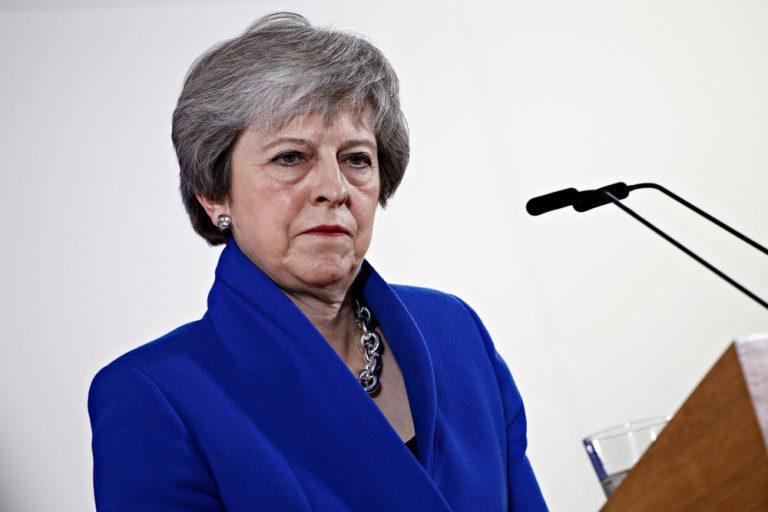
Theresa May is set to reveal the details of her new Brexit deal later today, following a three-hour meeting with her cabinet.
The Prime Minister is expected to give a speech at 4PM to outline the “bold” new plan.
The revised deal is expected to cover workers’ rights, environmental protections, as well additional provisions relating to the Northern Ireland backstop.
The so-called backstop has proved one of the most controversial aspects of Theresa May’s Brexit deal.
Thus far, Theresa May has failed to get her deal passed through parliament on three separate occasions.
Her failure to deliver Brexit has led to mounting calls for May to revise, from those within her party and the opposition alike.
However, the Prime Minister has yet to publicly confirm a departure date, despite her eroding authority in parliament and the conservative party itself.
Last week the government was dealt a blow after the Labour leader Jeremy Corbyn pulled out of cross-party Brexit negotiation talks.
https://platform.twitter.com/widgets.js Corbyn cited concerns regarding workers’ protections, the manufacturing industry and the importation of chlorinated chicken from the U.S. This comes amid news that the one of the UK’s largest steel makers, British Steel, is heading towards administration. The company is seeking £75 million from the government and is awaiting its decision. Nevertheless, speculation has circulated that the company could be ready to appoint administrators as soon as Wednesday should the government decide not to intervene.I have written to Theresa May to say that talks on finding a compromise agreement for leaving the European Union have gone as far as they can. The government’s growing weakness and instability means there cannot be confidence in its ability to deliver. pic.twitter.com/H27qxDleaB
— Jeremy Corbyn (@jeremycorbyn) May 17, 2019