
Record Highs For Fine Wine Auction Sales In 2018
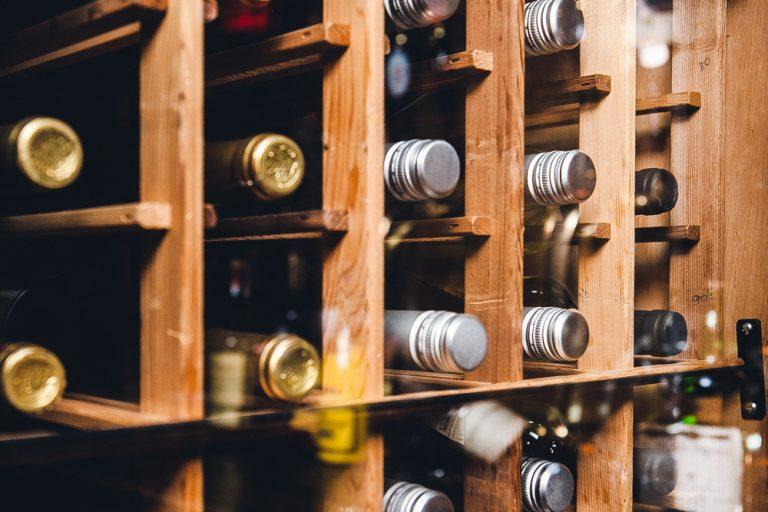
Fine wine auction sales for the past year are tempting even hardened traditional investors to get involved in the market.
Figures from Sotheby’s 2018 Wine Market Report show that during 2018 global wine auction sales shot up by more than 50%, rocketing from $67 million in 2017 to $98 million across 2018.
For the first time ever combined wine and spirits sales at auction were worth over US$100 million, demonstrating the strength of the wine market against a backdrop of economic uncertainty and slowdown.
Average prices per lot grew by 67%, although Sotheby’s reported slightly fewer lots overall than the previous year.
According to Sotheby’s, the fine wine auction market has blossomed over the past couple of decades with the auction house bringing in a remarkable $1.1 billion in sales since 1995.
One of the most exciting auction results during this period came last autumn when a single bottle of 1945 Romanée-Conti Burgundy sold for $558,000 at a Sotheby’s auction.
The winning bid came from a private Asian buyer who set a new record both for the highest-ever price for a 750ml bottle of Burgundy and the highest-ever for any single bottle at auction.
There are several key drivers behind this impressive growth. The first is renewed demand from Asian buyers who were behind 63% of sales. Of particular interest for these buyers are fine Burgundies which represented an impressive 43% of total auction sales.
Even more tellingly, the greatest Burgundy producer of all, Domaine de la Romanée-Conti, accounted for 21% of sales or $24 million, demonstrating collectors’ continued appetite for some
of the world’s most expensive and sought-after wines.
Another critical factor behind the strength of auction sales in 2018 was the high number of single-owner collections going under the hammer.
These collections are extremely popular and valuable to collectors since they have usually been stored in optimum conditions and are less likely to contain forgeries and fakes. During 2018 Sotheby’s managed to almost double single-owner collection auctions to 13.
Of these the most anticipated was 100 lots from the personal cellar of legendary Burgundy winemaker Robert Drouhin which saw the record-breaking 1945 Romanée-Conti Burgundy sale mentioned earlier.
Along with a strong collection of Château Lafite and Mouton Rothschild and entrepreneur Jerry Perenchio’s cellar which was full of rare Burgundy, these three key single-owner collection sales alone generated $56 million in sales.
The figures also reveal another vital trend in the fine wine market; the continued turn away from Bordeaux to Burgundy and other less traditional wine regions like Spain, Italy and California.
Prices for fine Bordeaux did increase by 63% in 2018, but this growth remains restricted to the elite chateau and for mature wines that are being purchased for immediate consumption.
Overall, the future couldn’t look any brighter for the fine wine auction market, both for Sotheby’s and other big houses like Christie’s and Bonhams who both reported excellent sales in 2018.
Auction sales are booming across the globe and more and more investors are preparing to take the plunge into this exciting world of opportunity.
Debenhams’ fifth-largest investor calls it quits
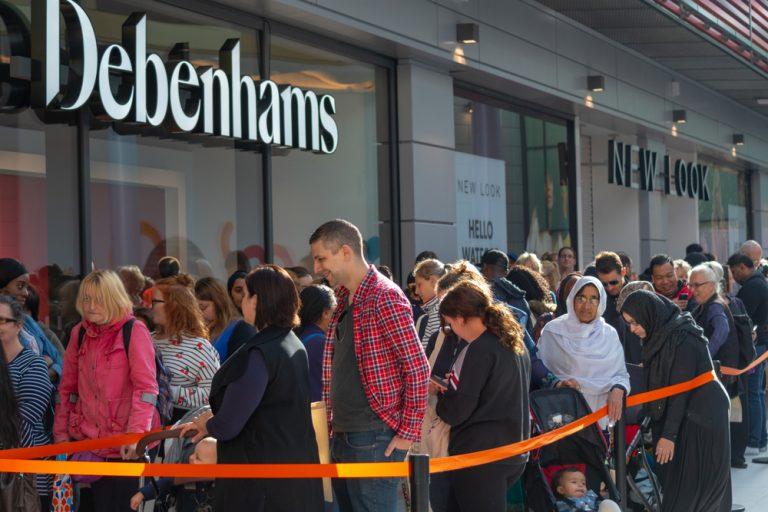
Debenhams’ fifth-largest investor has called in quits as Mike Ashley battles for control over the struggling department store (LON:DEB). In an email to Financial News, Invesco Asset Management confirmed that it had sold its almost 5% stake in the company.
Invesco Asset Management has declined to give a reason as to why it sold its stake.
“I am no longer a shareholder in Debenhams,” said Martin Walker in an email Financial News. Martin Walker is the UK equities fund manager at Invesco.
At the beginning of March, the Sports Direct (LON:SPD) boss Mike Ashley moved forward with attempts to control the struggling department store.
Debenhams, however, responded with efforts to snatch back control from the Sports Direct boss. It announced that it was in “advanced” talks with banks to borrow £150 million. The fund aims to ensure that credit insurers restore cover for the department store’s suppliers, as well as enabling the business to restructure its store portfolio.
This move was followed a few days later by an offer from Sports Direct to fund the entire £150 million loan. In addition to upping its share of the department store to 35%, Sports Direct has requested that Mike Ashley would also become a director and CEO of Debenhams. Equally, in the event of a whitewash agreement, the loan will be interest free.
Debenhams responded that it has acknowledged Sports Direct’s proposal.
Are investors in the department store chain tired of this game of chess? Invesco Asset Management has not commented why it has sold its entire stake, but Nick Burchett, UK equities manager at Cavendish told Financial News:
“Debenhams risks being diluted and pushed into the ground. They shouldn’t spend all their time sitting in a boxing room with Mike Ashley. They should focus on improving the business.”
At 08:46 GMT Tuesday, shares in Debenhams plc (LON:DEB) were trading -1.84%. Sports Direct International plc (LON:SPD) shares were up 1.35% as of 08:50 GMT.
Bonmarche issues third profit warning in six months, shares slide
Womenswear retailer Bonmarche (LON:BON) issued yet another profit warning on Tuesday following significantly weak trading over the past few weeks. This is the third profit warning it has issued in the past six months.
Shares in the company slid almost 19% during early trading on Tuesday.
The retailer had been predicting an underlying annual loss of up to £4 million. This loss has been revised to lie between £5-£6 million as a result of “significantly weaker” trading since the beginning of March.
“We now believe there is a likelihood of sales levels for the remainder of the month continuing to follow this trend, which would make the underlying PBT loss for the year greater than £4.0 million,” a company statement reads.
In December, Bonmarche altered its profit guidance after an indication that sales during the Christmas shopping period could be weaker than anticipated. Shares in the group plummeted on the back of the announcement at the end of last year.
As Black Friday sales were also “extremely poor” for the retailer, Bonmarche revised its underlying profit before take to be in the range of breakeven to a loss of £4.0 million.
“The current trading conditions are unprecedented in our experience and are significantly worse even than during the recession of 2008/9,” said Helen Connolly back in December, Chief Executive of Bonmarche.
Today this guidance has been revised down even further to a loss of £5-£6 million.
The company said that although sales of its spring season lines were driven by the warmer weather at the end of February, these sales are not large enough to boost overall sales of its transitional stock. It has blamed a low demand in general of its transitional range between winter and spring, which was not adequately revived by the warmer weather in February.
Bonmarche is not the only retailer to be hit by gloomy high street trading conditions. It was announced just yesterday the sportswear retailer JD Sports (LON:JD) was set to purchase Footasylum (LON:FOOT) in a £90 million deal in order to save the struggling chain as it battles with tough trading conditions.
These problems are not exclusive to stores on the high street, online retailer ASOS (LON:ASC) also announced it was struggling over the Christmas period.
At 08:11 GMT Tuesday, shares in Bonmarche Holdings plc (LON:BON) were trading at -18.92%.
Deutsche Bank and Commerzbank announce potential merger, doubts prevail
Deutsche Bank and Commerzbank confirmed over the weekend that they were discussing a potential merger, but doubts prevail.
If the two banks are to merge, they would hold one fifth of the German retail banking market. Their joint employee numbers reach 140,000 workers across the globe. 91,700 of these are with Deutsche Bank and 49,000 with Commerzbank.
The talks are expected to last a while and Commerzbank has said that the outcome is open, therefore many factors could impede the merger.
Germany’s two largest banks both released statements regarding the discussions after separate meetings of their management boards.
“In light or arising opportunities, the management board of Deutsche Bank has decided to review strategic options,” Deutsche Bank’s statement read. “In this context we confirm that we are engaging in discussions with Commerzbank.”
According to Reuters, Deutsche Bank’s Chief Executive, Christian Sewing, told employees that the brank still aimed “to remain a global bank with a strong capital markets business… with a global network.”
Last year, Germany’s leading banking supervisor warned in an interview with Handelsblatt newspaper that the two large banks should not merge.
The executive director at Bafin, Raimund Roeseler, said that a merger would not improve on the banks’ weaker earnings.
“If I take two big problems and turn them into one really big problem, then I’m not making the situation any better,” Raimund Roeseler said.
“After the financial crisis there was an intense debate about the issue of ‘too big to fail’, and whether banks should be allowed to grow so big that they can’t be allowed to go bust,” he continued.
The executive director of the financial regulator warned last year that if the two banks were to merge, the same issue would arise again.
Should the two largest banks merge? The merger would create a combined business with roughly €1.81 trillion worth of assets. This would make it Europe’s fourth largest. Combined revenue would come in at €34 billion.
A finance activist and ex-member of the German parliament, Gerhard Schick, commented: “We do not see a national champion here, but a shaky zombie bank that could lead to another billion-euro grave for the German state. Why should we take this risk?”
A representative of German union Verdi also expressed doubts and has said that the merger between the two rivalling banks could cost as many as 30,000 jobs in the long term. Over a shorter time frame, 10,000 jobs are at risk.
As a result of this issue, Chancellor Angela Merkel’s chief of staff announced that the German government would assess the job losses.
According to Bild newspaper, Chancellery Chief Helge Braun said “the government is never passive when it comes to deals of such magnitude.”
Footasylum shares soar on JD Sports deal
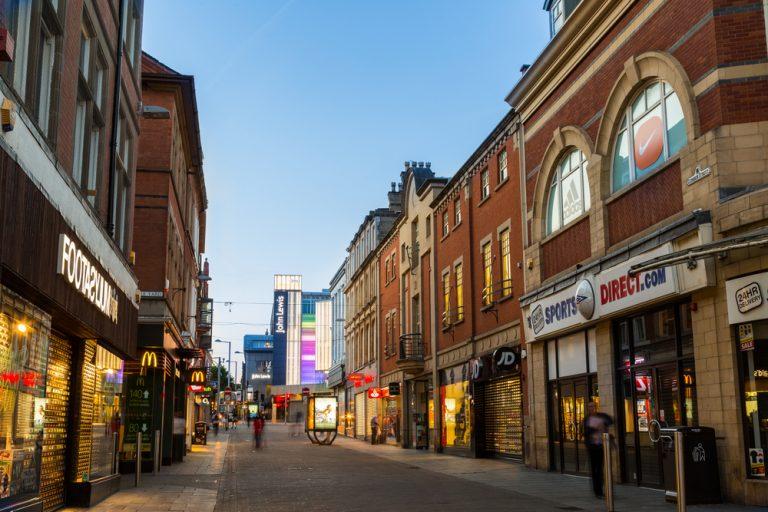
Active wear retailer JD Sports (LON:JD) has agreed to purchase Footasylum (LON:FOOT) in a £90 million deal as its smaller rival struggles for survival amid tough trading conditions.
Shares in Footasylum soared 75% following the announcement.
Founded in 1981, JD Sports is the UK’s second largest sports retailer. It already owns 18.7% of its rival which it purchased in February. The smaller 69-store chain was established in 2005 and sells branded trainers and tops and rivals JD Sports.
Under the deal, JD Sports will pay 82.5p in cash per share in smaller chain.
In a statement, JD Sports said it “believes that Footasylum is a well-established business with a strong reputation for lifestyle fashion and, with its offering targeted at a slightly older consumer to JD’s existing offering, it is complementary to JD. JD also believes that there will be significant operational and strategic benefits from a combination of the two businesses.”
Footasylum is one of many retailers struggling for survival amid tough trading conditions. It released a profit warning in September after its weak summer trading figures. Since it floatation, Footasylum has issued numerous profit warnings.
With 65 high street stores across the UK, the recent difficulties of the retail sector have hit Footasylum. It started the year with another warning, this time on its Christmas earnings, underscoring that it expected its adjusted earnings to lean towards the “lower end of the current range of analyst forecasts.”
Tough trading conditions have not only hit the UK high street, but online retailers have also struggled over the recent months.
“We are pleased to make this Offer for Footasylum, which is very complementary to our existing businesses in the UK. We believe that there will be significant operational and strategic benefits through the combination of the very experienced and knowledgeable management team at Footasylum and our own expertise,” Executive Chairman of JD, Peter Cowgill, commented on the offer.
“The Footasylum Board has concluded that the Offer represents the best strategic option for Footasylum and its employees,” Footasylum’s Executive Chairman Barry Brown also added.
Though Footasylum’s management has agreed to the deal, it does still require approval from its shareholders.
At 10:02 GMT Monday, shares in Footasylum plc (LON:FOOT) were trading at +75.65%.
Shares in JD Sports Fashion plc (LON:JD) were up 0.54% (09:49 GMT).

JD Wetherspoon’s profits fall 19% as costs weigh
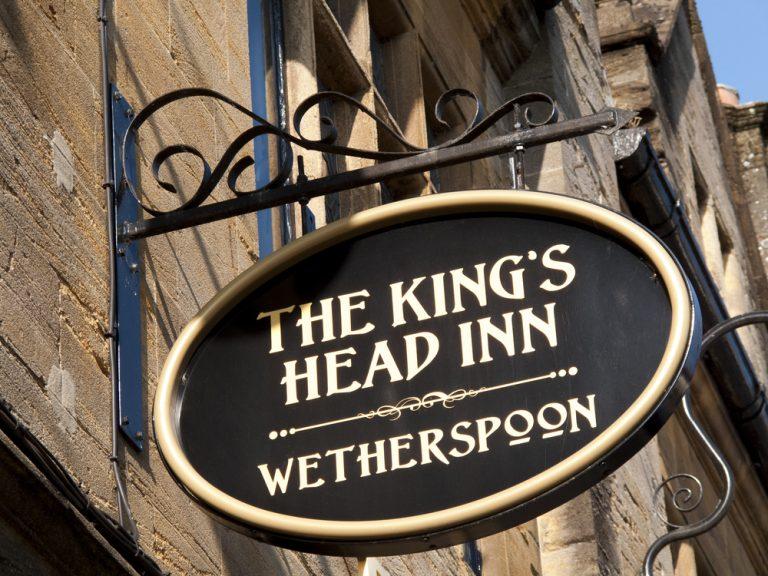
JD Wetherspoon’s (LON:JDW) reported its interim results for the 26 weeks to 27 January 2019, with profits falling over the period.
JD Wetherspoon said that revenue totalled £889.6 million, up 7.1% from £830.4 million in 2018. Like-for-like sales rose 6.3%.
However, the pub group said that profit before tax fell by 18.9% to £50.3 million, compared to £62 million a year ago.
This was attributed to higher labour costs, which rose by £33 million compared to the year before.
In addition to wage pressures, interest payments, utility bills and repairs were also blamed for the fall.
JD Wetherspoon’s chairman Tim Martin, a vocal Brexit supporter, also addressed Brexit in his future outlook, noting that the “establishment” and “doomsters” ignore the “most powerful nexus in economics, between democracy and prosperity”.
Thus far, the firm has opted to stop selling Italian Prosecco and French Champagne and replace them with British or Australian sparkling wines.
Martin also added that sales in the six weeks to March 10 had proved strong up 9.6%, bolstered by the weather.
As a result, the company said that despite higher costs, its trading forecast remains unchanged.
JD Wetherspoon’s is a pub company that operates in the United Kingdom.
It owns around 900 locations, with its first having opened in Muswell Hill in North London.
It is listed on the London Stock Exchange and is a constituent of the FTSE 250 Index.
Shares in the London-listed firm are currently +0.92% on the back of the results.
H&M local currency sales third consecutive quarter increase
Swedish fashion retailer H&M (STO:HM-B) announced on Friday its local-currency sales for its first financial quarter. Sales match predictions set by analysts and net sales came in above expectations.
Over the three-month period from 1 December 2018 – 28 February 2019, the retailer’s local currency sales (including VAT) increased by 4% when compared to the same period the year prior. According to Reuters, this result aligns with predictions made by its analysts.
The world’s second largest fashion retailer said that net sales (excluding VAT) increased by 10% over the period to 51.0 billion crowns (£4.15 billion). Forecasts expected the increase to be 8%, so results are above expectations.
The statement said that H&M will publish its full three-month report later in the month.
The company has now seen its local-currency sales increase for three consecutive quarters.
The global fashion retailer operates in 62 countries with over 4,500 stories. As of 2015 it employed roughly 132,000 workers.
It is no secret that the UK high street has faced tough trading condition over the past few months. In fact, a new report from PwC identified that the UK high street is facing the toughest trading condition in five years.
In the first six months of 2018, 4,400 shops, pubs and restaurants closed, and fashion and electrical stores are some of the hardest hit as shoppers opt for online shopping.
As H&M enjoys strong sales performance, its competitor Zara issued a trading update at the end of last year revealing a knock to its profits following the summer heatwave. In a trading update issued by the Spanish group, Inditex (BME:ITX) revealed sales and profits figures that came in lower-than-expected, and its shares took a hit.
At 09:40 CET Friday, shares in H&M Hennes & Mauritz AB (STO:HM-B) were trading at -4.14%.
Shares in Inditex SA (BME:ITX) were up 0.6% as of 09:25 CET.