
Distil shares dip despite full-year profit

Premium beverages brand owning firm Distil PLC (LON: DIS) has seen its share price dip sharply despite its latest round of results reporting an incremental growth in profit.
Ocado invests £17m in vertical farming venture
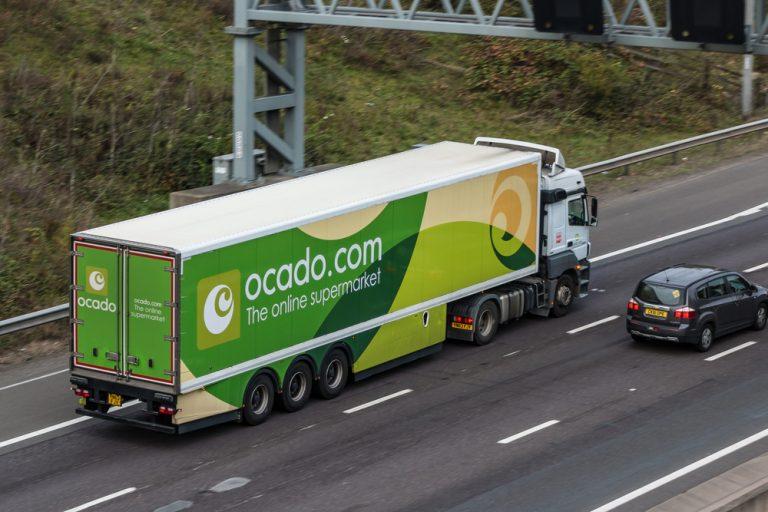
Ocado has invested £17 million in a vertical farming venture, as it looks to diversify its online grocery service.
The funds will go towards acquiring a 58% stake in Jones Food Company, a Scunthorpe-based vertical farming company, which is the largest in Europe.
Vertical farming is the process of producing food in vertically stacked layers. It allows for many factors such as light, humidity and temperature to be controlled.
The practice is considered to be an sustainable alternative to other methods of agriculture, and it also means pesticides and herbicides do not need to be used.
Ocado will be looking to appeal to consumers who are increasingly favouring organic produce and amid growing public awareness about the problematic effects of farming on the environment.
Chief Executive, Tim Steiner commented on the news:
“We believe that our investments today in vertical farming will allow us to address fundamental consumer concerns on freshness and sustainability and build on new technologies that will revolutionise the way customers access fresh produce,” said chief executive Tim Steiner.
Ocado will be hoping to turn around its fortunes, after a series of profit losses in the last few years. In February, the company reported a £44.9 million loss.
Earlier this year the delivery service also announced that it has agreed on a joint food venture with Marks and Spencer’s (LON:MKS).
The deal will see Ocado terminating its current online delivery deal with Waitrose.
Shares in the London-listed firm (LON:OCDO) are currently trading +3.08% as of 13:10PM (GMT).
Codemasters swings to a profit with digital sales growth

Video game development company Codemasters Group Holdings Limited (LON: CDM) has swung to a profit, driven by a spike in digital sales.
Positive maiden results for Codemasters
The Company announced that for the year ending March 31st, revenue grew 11.9% to £71.2 million. Additionally, the company turned around their loss from the previous financial year; booking a pre-tax profit of £2.9 million from a loss of £1.48 million on-year. The company attributed the growth to strong growth in digital sales and said it anticipated that this would continue alongside a strong lineup of new games yet to be released. Gross profit increased 16% on-year to £62.4 million, and with digital sales now representing 59.2% of Company sales, margins were pushed up 3% to 87.6%.Codemasters comment
“I am pleased to report on a milestone year in Codemasters’ rich history, including admission to AIM in June 2018 and considerable strategic developments made across the Group,” said Frank Sagnier, CEO of Codemasters. “Significant progress was made against each of our key strategic objectives, as well as delivering profitability ahead of the expectations set at the time of the IPO.” “We expect the continuing shift into digital distribution, together with the evolution of the Games as a Service model, the launch of streaming platforms and Next Gen consoles, our partnerships in China on both PC and mobile and the emergence of esports to provide further opportunities for Codemasters going forward.”Trading update
The Company’s shares are currently trading down 2.5p or 0.98% at 255p a share 10/06/19 12:20 GMT. Liberum Capital and Shore Capital analysts reached a consensus on their respective ‘Buy’ stance on Codemasters stock, while Berenberg upgraded their stacne from ‘Hold’ to ‘Buy’.UK and South Korea agree free trade deal
The UK and South Korea have agreed a free trade deal, maintaining existing trade relations in the event of Brexit.
The deal is the first post-Brexit trade deal that the UK has secured in Asia. It will allow Britain to continue to trade with South Korea, even in the event of a no-deal.
In a statement, Dr Fox said: “The value of trade between the UK and Korea has more than doubled since the EU-Korea agreement was applied in 2011. Providing continuity in our trading relationship will allow businesses in the UK and Korea to keep trading without any additional barriers, which will help us further increase trade in the years ahead.
“As we face growing global economic headwinds, our strong trading relationship will be crucial in driving economic growth and supporting jobs throughout the UK and Korea.”
https://platform.twitter.com/widgets.js News of the UK and South Korea agreement will be a welcome development for Theresa May’s government, which is in its last few weeks. May formally stepped down as leader of the Conservative party last Friday, paving the way for her successor. Today, all Tory candidates are set to formally launch their leadership campaign. As it stands, former Foreign Secretary and Mayor of London, Boris Johnson is the frontrunner in the race. Michael Gove and Jeremy Hunt are also considered to be key contenders.Today 🇬🇧 & 🇰🇷 signed a statement for trade continuity.
Once signed, we’ll have agreements with countries that account for 63% of trade under EU agreements we’re seeking continuity for. Work continues intensively on remaining agreements. Press release 👉 https://t.co/xOZJPT9RGw pic.twitter.com/xmL5cQ50w1 — Department for International Trade (@tradegovuk) June 10, 2019
Thomas Cook confirms Fosun takeover approach
Thomas Cook confirmed it has received a takeover approach from Fosun, a Chinese tour business.
In a statement released on Monday, the travel company confirmed the approach from Fosun:
“Thomas Cook confirms that it is in discussions with Fosun following receipt of a preliminary approach.
There can be no certainty that this approach will result in a formal offer. However, the Board will consider any potential offer alongside the other strategic options that it has, with the aim of maximising value for all its stakeholders.”
Thomas Cook has been under pressure in recent years, amid falling profits. Back in May the travel company reported a £1.5 billion loss for the first-half of the year. Earlier this year, the group announced it was closing 21 stores, as it looks to shift its focus towards developing its online offerings. As it stands, Fosun is its largest shareholder. Alongside its interest in Thomas Cook, the Chinese firm owns Club Med and the Wolverhampton Wanderers. Shares in the firm (LON:TCG) are currently up 14.40% as of 10:57AM (GMT).Sativa Investments announces agreement with Swiss cannabis oil supplier

Sativa Investments (LON:SATI) announced it had entered a commercial offtake agreement with a Swiss supplier of cannabis oil on Friday.
Alponics SA will provide Sativa with CBD distillate and isolate until the end of 2022.
Geremy Thomas, founder and Chief Executive Officer of Sativa Investments, said: “This commercial agreement with Alponics further advances our smart-sourcing strategy. We look forward to a long and mutually beneficial relationship with Alan Chaytor and his impressive team.”
Alan Chaytor, founder of PACRIM, said: “We are delighted to be supplying Sativa and look forward to working with the Company in the coming years. Our expert team, along with our past experience in delivering to some of the world’s best-known household brands, allows us to provide Sativa with the best products and outstanding customer service.”
Late last month shares rose on news that Sativa had secured a similar offtake agreement with MeridianTulip, a Portugese supplier.
Sativa Investments has been listed on the NEX Exchange as of March 2018. It was the first London-listed cannabis investment firm.
Elsewhere in the cannabis sector, Highlands Natural Resources (LON:HNR) revealed it has raised £520,000 as it looks to expand its cannabinoid business, Zoetic.
Lloyds rallies and takes new FCA ban in its stride
Lloyds continues to reign at the top spot for UK banks in 2019, and proves that it deserves its position as one of the most popularly held stocks, despite its slow start to the year to-date. Lloyds Banking Group PLC (LON: LLOY) rallied modestly during trading on Friday, even amid uncertain conditions.
The Company’s shares are currently trading up 0.8% or 0.46p at 57.69p a share, while its counterparts Banco Santander SA (BME: SAN) are currently trading down 0.19% at 3.96p a share, and Nationwide Building Society (LON: NBS) are down 9.12% at 149.05p a share 07/06/19 14:31 GMT.
This news came despite a dip in all bank share prices today, with the NFP (Non Farm Payroll) this afternoon and the FCA issuing a ban against all high overdraft fees.
On the ban, the FCA’s chief executive, Andrew Bailey commented, “The overdraft market is dysfunctional, causing significant consumer harm. Vulnerable consumers are disproportionately hit by excessive charges for unarranged overdrafts, which are often 10 times as high as fees for payday loans.”
Further, the company released an update yesterday which would perhaps have reminded shareholders of the potential uncertainty going forwards – a reminder of the retirement of the current director and the arrival of his successor in August. Unsurprisingly though, one of the market’s steadiest stocks didn’t seem to react to the news with any volatility, as the Company commented yesterday in its statement,
“Lloyds Banking Group announced on 25 October 2018 that George Culmer would retire from the Group in Q3 2019. Further to that announcement, on 15 February 2019, the Group announced George would be succeeded, as Executive Director and Chief Financial Officer, by William Chalmers, subject to regulatory approval. Lloyds Banking Group confirms now that George will retire from, and William will be appointed to, the Group Board on 1 August 2019.”
Perhaps the only dubious update for Lloyds, in fact, is that Morgan Stanley (NYSE: MS) lowered the target price of Lloyds’ shares from 78p to 70p. However this is in line with the bank’s earnings expectations, with the Company reducing its forecast for 2020 and 2021 by 2% compared to current earnings. Further, Morgan Stanley retained their ‘Overweight’ stance on Lloyds stock and maintained that the Company was still its top pick UK bank, saying that its new valuation was ‘compelling’.
Mayan Energy production hampered by adverse weather

Oil and gas exploration and production company Mayan Energy Ltd (LON: MYN) announced that its production volumes had been weighed down by a period of adverse of weather conditions.
The Company said that its Texas assets had been limited during May, with gross mean average production of oil down to 131 barrels per day, and net mean average production down to 93.8 bpd during the month.
During what Mayan Energy described as ‘an exceptional period of weather’, its Austin field sold 1,300 barrels of oil at an average price of $65.53, during May.
Mayan Energy comments
In its update, the Company said,“In conjunction with the six well rework project, the Company continues to optimise production whilst focussing on economic operations in the field. Once fully optimised, the Company is confident of achieving at least the gross stabilised production target level of 72 Bopd (as announced on 15 April 2019).”
“Operations have been hindered by an exceptional period of weather; however, the Company further proves its in-field capabilities in maintaining stable continuous production despite the challenges.”
“Further appraisal of the Neubauer-Stanush #1 well found down-hole debris material and the pump ceased in the wellbore. The Company has decided the potential financial cost in fishing the downhole equipment is an undesirable unknown at this time. The Company will further assess options in the coming months.”
“The field operating team has successfully completed the comprehensive ‘service, repair and replace’ programme, consolidated in-field employee numbers and continues to benefit from input by its experienced management team in both Borger, TX and Mineral Wells, TX.”
The update continued by stating that the Company’s Zink Ranch and Fort Worth prospects produced 54 barrels and 67 barrels of oil and 236 and 8,481 MCF of gas respectively. On the update, Mayan Energy CEO Charlie Wood, commented,“This Operational Update demonstrates the rationale to acquire Attis’ operational resources and capabilities. Through a challenging and busy period, the Company has demonstrated both its ability to react and manage planned & unplanned operational situations.”
“Further, the Company has engaged a Tulsa, OK based geologist company with extensive experience of our operational regions. The work scope will deliver an appraisal of the existing acreage for development opportunities including well re-entry, new drill and farm-out data.”
“The Company sees June 2019 as a transformational opportunity to deliver continuing production enhancement and development planning.”
Trading update
After dipping and rallying modestly, Mayan Energy shares have returned to exactly the same price they were trading at when markets opened on Friday, at 0.12p a share 07/06/19 13:42 GMT.Theresa May steps down as Tory leader
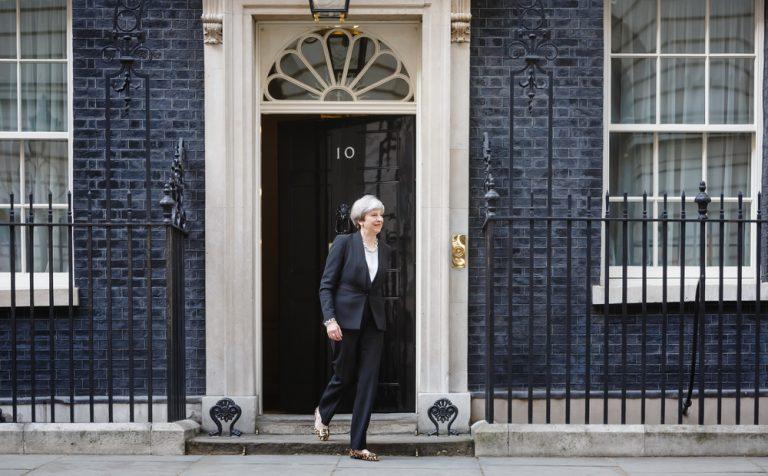
Theresa May stepped down as leader of the Conservative party on Friday, clearing the way for her successor.
Theresa May will continue on as Prime Minister until a new leader has been chosen by the party in July.
She announced her resignation two weeks ago after eventually bowing to intense pressure from party faithfuls and Tory MPs.
Dissent within the party and amongst the public had been bubbling for months, particularly as May was seen as failing on her promise to deliver Brexit.
This was despite famously having touted the line ‘Brexit means Brexit’ throughout the course of her premiership.
Ultimately, May failed to secure enough support for her withdrawal bill in the commons, a deal MPs voted down three times, one of which proved a historic defeat for any British government.
She was also often condemned for her campaigning and leadership style, which many labelled ‘robotic’.
The Conservative’s failed to secure a majority in the 2017 election, with many attributing the poor electoral performance to the lacklustre campaigning skills of the Prime Minister.
Lacking a majority in parliament only further weakened the authority of the PM, as she became increasingly garner enough support to pass crucial Brexit legislation in parliament.
Given that Brexit has come to define her premiership, this has proved a significant failure and has meant that dampened May’s hopes in securing a political legacy.
As it stands, the frontrunner in the Conservative leadership race is former foreign secretary, Boris Johnson, who also was the Mayor of London.
Jeremy Hunt and Michael Gove are also key contenders to succeed the Prime Minister.
Find out about some of the tory leadership hopefuls here.
Stada to acquire Savlon and five other brands

Pharmaceutical company Stada (OTCMKTS:STDAF) announced its acquisition of six brands on Friday, one of which is the well-known UK brand Savlon Antiseptic Cream.
Based in Bad Vilbel, Germany, the acquisition will allow Stada to continue to expand its consumer health business in Europe and selected markets in Asia and Latin America.
As of 2018, the company employed roughly 10,416 workers across the globe.
The portfolio includes five skin care bands as well as a paediatric cough remedy from GlaxoSmithKline (GSK), a British multinational pharmaceutical company headquartered in Brentford, London. These brands include Oilatum, Eurax, Savlon Antiseptic Cream, Ceridal, Tixylix and Polytar (which is known under the brand name Tarmed in Portugal and Spain).
Among the six brands lies Savlon Antiseptic Cream, a particularly well known brand in the UK. The cream assists in soothing and preventing infections, aiding the natural healing of minor skin disorders.
The five skin care brands will be transferred to Thornton & Ross, Stada’s British subsidiary.
The deal is expected to be completed in August and is reported to lie in the high double digit million-pound range, according to Sky News.
“We look forward to giving these great brands a new home and a great future,” Roger Scarlett-Smith, Head and Executive Vice President of Stada‘s UK business, commented.
All of the brands acquired by Stada each have a strong brand heritage and offer the opportunity for accelerated revitalization and growth.
“This will strengthen STADA’s position as a go-to partner in the European Healthcare market, and will seize the opportunity to be a leading company in Consumer Health as well as Generics,” CEO Peter Goldschmidt commented on the acquisition.
Stada sells its products in roughly 130 countries across the globe. In its 2018 financial year, the company posted adjusted group sales of €2,330.8 million and an EBITDA of €503.5 million.
As of 13:37 BST Friday, shares in GlaxoSmithKline plc (LON:GSK) were up 1.28%.