
Real Living Wage to rise to £9
The “Real Living Wage” is set to increase by 2.8% this week to £9 an hour.
For the 180,000 staff whose employers have signed up to the voluntary wage, the minimum wage will increase by 25p.
The Real Living Wage is not the same as the National Living Wage, which is currently £7.83 for those over 25.
The organisation’s director, Tess Lanning said: “The Living Wage campaign is about tackling the rising problem of people paid less than they need to live.”
“Responsible businesses know that the government minimum is not enough to live on, and today’s new Living Wage rates will provide a boost for hundreds of thousands of workers throughout the UK,” she added.
Approximately 4,700 employers in the UK have signed up to the agreement, including Google (NASDAQ: GOOG), Aviva (LON: AV) and Ikea.
“Employers that pay the real Living Wage enable their workers to live a life of dignity, supporting them to pay off debts and meet the pressures of rising bills,” said Lanning.
“We want to see local councils, universities, football clubs, bus companies and the other major public and private sector employers in every city commit to become real Living Wage employers.”
Philip Hammond’s Autumn budget speech announced plans to increase the minimum wage almost 5% next year, taking it to £8.21.
“We will want to be ambitious with the ultimate objective of ending low pay in the UK,” said Hammond.
“But we will also want to be careful – protecting employment for lower paid workers. So we will engage responsibly with employers, the TUC and the LPC itself over the coming months, gathering evidence and views to ensure we get this right.”
SMMT: Car sales continue to fall in October

The Society of Motor Manufacturers & Traders (SMMT) has revealed new car sales to fall in October.
Though sales slightly recovered from the month previously, sales are continuing to fall about 3% year on year.
Figures improved from last month, where September faced a 20.5% decline.
Mike Hawes, SMMT chief executive, said:
“[Vehicle tax] upheaval, regulatory changes and confusion over diesel have all made their mark on the market this year so it’s good to see plug-in registrations buck the trend. Demand is still far from the levels needed to offset losses elsewhere, however, and is making government’s decision to remove purchase incentives even more baffling.”
“We’ve always said that world-class ambitions require world-class incentives and, even before the cuts to the grant, those ambitions were challenging. We need policies that encourage rather than confuse.”
“Government’s forthcoming review of the Worldwide Harmonised Light Vehicle Test Procedure’s (WLTP’s) impact on taxation must ensure that buyers of the latest, cleanest cars are not unfairly penalised else we will see older, more polluting cars remain on the road for longer,” he added.
Manufacturers have expressed concern over Brexit uncertainty, with Jaguar Land Rover blaming weakening global demand for the decision to pause production in the Solihull plant.
Last week the car manufacturer said that car sales had fallen sharply, taking it into a loss for the three months to October.
The group made a pre-tax loss of £90 million for the most recent quarter. This is compared to a profit for the same period last year.
Hybrid and plug-in registrations increased by 30.7%, however, government cuts to electric car grants make it difficult to predict future growth.
James Fairclough, who is the chief executive of AA Cars (LON: AA), said: “If the government really does want to see the wider take-up of alternative fuelled vehicles, it needs to make sure it doesn’t pull the plug out from under this burgeoning sector by removing incentives before they have a chance to properly bed-in.”
“What’s really needed to encourage growth in the electric vehicle sector is a rapid increase in the number of public chargers as the AA’s own research suggests this is one of the greatest barriers to EV ownership.”
Over 350 Crawshaw jobs axed as group falls into administration

The Crawshaw Group has fallen into administration, leading to the loss of 350 jobs.
The Yorkshire-based chain of butchers is the latest to be hit by the difficult high street conditions and has shut two-thirds of its stores.
On Friday, the group appointed Ernst & Young as administrators.
The store will keep 19 stores open, employing 261 people.
Crawshaw has been hit by rising rents, higher business rates and falling consumer confidence amid Brexit uncertainty.
The group released a statement after announcing its collapse saying that the board had “taken the decision to place the company into administration and intends to appoint administrators shortly with the purpose of seeking buyers for the group’s business and assets on a going concern basis.”
The firm reported pre-tax losses of £1.7 million for the first half through to July and despite extensive discussions with existing and prospective investors, the company said that they had “not been successful in raising sufficient capital”.
Other retailers including Evans Cycles, House of Fraser, Toys R Us and Maplin have been hit by the current retail environment.
Philip Hammond recently announced a £1.5 billion high street regeneration plan.
“We propose a new permitted development right to extend certain existing buildings upwards to provide additional, well designed, new homes to meet local housing need,” said the planning reform consultation document.
“National planning policy is clear … we should make effective use of previously developed land and buildings, including the airspace above existing buildings, to create new homes.”
The business was founded in 1954. Shares have been suspended from trading.
UK lawyers urge May to back second EU referendum
Over 1,500 lawyers in the UK have signed a letter, urging Theresa May to back a second Brexit referendum.
In a letter to the prime minister, the lawyers said that “democratic government is not frozen in time” and parliament should not be bound by the 2016 EU referendum.
Comparing the latest referendum to the one held in 1975, the letter said: “There was a key difference between 1975 and 2016. The earlier referendum was held after negotiations were complete, so voters knew what they were voting for.”
“In 2016, the nature of the negotiation process and its outcome were unknown. Voters faced a choice between a known reality and an unknown alternative. In the campaign, untestable claims took the place of facts and reality.”
“The current state of the Brexit negotiations is worrying people throughout the UK and the legal profession is no exception to that,” said Jonathan Cooper, a barrister at Doughty Street Chambers.
“We represent people from across industry and society and we see every day the way the prospect of a catastrophic Brexit deal is already causing real harm.”
“This letter to the prime minister has been signed by over a thousand of my colleagues who are convinced that not only is a people’s vote the right thing to do, it is the most democratic thing to do as well,” he added.
The letter signed by over 1,500 lawyers comes after the prime minister received a similar letter that was signed by over 70 business leaders, which also called for a second referendum.
“The business community was promised that, if the country voted to leave, there would continue to be frictionless trade with the EU and the certainty about future relations that we need to invest for the long term,” the letter read.
“Despite the Prime Minister’s best efforts, the proposals being discussed by the government and the European Commission fall far short of this.”
“The uncertainty over the past two years has already led to a slump in investment.”
The chief executive of Waterstones and former Sainsbury’s (LON: SBRY) boss were among those who signed the letter addressed to May.
Uber to launch monthly subscription in US
Uber has announced plans to launch a subscription for customers in Los Angeles, Austin, Denver, Miami, and Orlando.
The fixed price plan will allow passengers to avoid price surges during peak times and always ride at a fixed price.
The plan will cost $24.99 (£19) a month in Los Angeles and $14.99 in Austin, Denver, Miami, and Orlando.
Product manager Dan Bilen said: “One thing we hear a lot from riders is that changes in price – however small – can make it tough to plan their day with Uber.”
“The daily commute is a classic example, and it goes something like this: you pay one low price for the ride to work, only to find the ride back home is a different story.”
“We want to make Uber a reliable alternative to driving yourself – an affordable option people can use for their everyday transportation needs.”
The Ride Pass will apply to UberX, Uber Pool and Uber Express Pool and will eventually also apply to e-bike and scooter access.
Chief Executive Dara Khosrowshahi has said that the firm is set to go public in 2019 and be valued at about $120 billion.
“We are in a good position in terms of the company’s profile in terms of profitability,” he said earlier this year. “Margins continue to get better. We have a very strong balance sheet, and I do think that we are on track.”
Ride-hailing app Lyft also plans to go public next year. The banks proposed a valuation range of $18 billion to $30 billion.
Asian shares surge on promising US/China trade talks
Following months of trade disputes between China and the US, Donald Trump has hinted that he wants to reach an agreement with the Chinese President, Xi Jinping.
The US President took to Twitter to say that he had spoken to Xi on Thursday and that trade talks were “moving along nicely” before they meet at the G20 summit this month.
According to Bloomberg, the talks between the US and Chinese presidents was optimistic and concluded with Trump telling officials to begin drafting potential terms.
News on the trade talks has send Asian shares soaring.
The Hang Seng (INDEXHANGSENG: HSI) increased by 3.7% in Hong Kong. Nikkei (INDEXNIKKEI: NI225) in Tokyo climbed by 2.5%. The Kospi index jumped by 3.5%, its highest increase in seven years.
Tai Hui at JPMorgan Asset Management has said that progress in trade talks will lead to the revival in the Asian market.
“While we are still cautious over a full resolution of recent tensions in the medium term, resumption of dialogue between Washington and Beijing would be good enough to investors for now,” he told Bloomberg.
In September, the US imposed further tariffs on $200 billion of Chinese goods. China responded with tariffs on $60 billion of US goods.
Paddy Power reports rise in revenues, boosted by World Cup
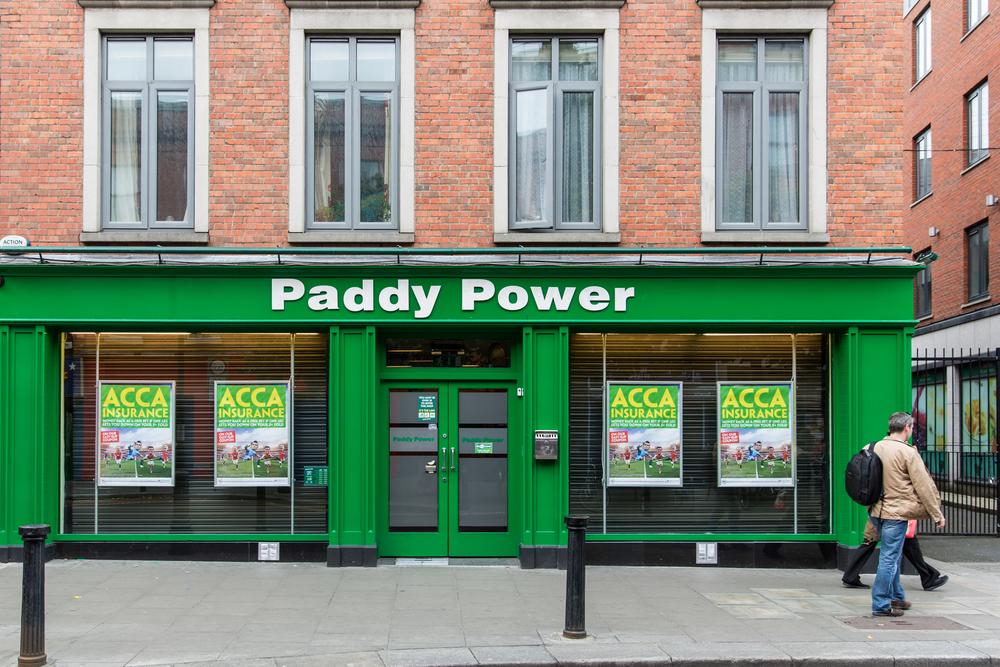
Paddy Power Betfair has reported a jump in third-quarter revenues.
The group reported a 12% increase year-on-year, with revenues of £483 million for the three months to 30 September.
The chief executive, Peter Jackson, said: “Q3 was a good quarter for the group,” said chief executive Peter Jackson.”
“In Europe, the encouraging momentum that we saw in Q2 accelerated further, with online revenue up 15%.”
“This momentum, which was evident in both Paddy Power and Betfair, is driven by enhancements in product and good execution in promotions and marketing,” he added.
The bookmaker said that the “good conclusion” from the Football World Cup helped benefit revenues over the summer.
Paddy Power lifted its full-year guidance forecast of underlying earnings from £460-480 million to between £465-480 million.
The group expects slight headwinds over the next year, including Irish betting taxes that are set to be hiked from January 1.
The company also noted Chancellor Philip Hammond plans to increase taxes for offshore betting companies operating in the UK.
“Had [these changes] applied throughout 2018, we estimate that the gross impact on EBITDA from the combination of regulatory, tax & product fee changes in the UK, Australia and Ireland would have been approximately £115 million,” said the group.
AJ Bell investment director Russ Mould was still confident for the group.
“The US market arguably remains the most exciting part of the business given the scale of the opportunity with legalised sports betting,” he said.
“Paddy Power’s acquisition of FanDuel earlier this year is proving to be a clever move as it provides a ready-made audience of people betting on sports, albeit from a fantasy level.
“It is pinning its hopes on cross-selling legal sports betting to this customer base as and when more US states allow it.”
Shares in Paddy Power (LON: PPB) are currently trading +2.32% at 7.070,00 (1438GMT).
FTSE 100 extends gains after US wages grow at fastest pace since 2009

The FTSE 100 rose on Friday building on a two day rally which has seen the index rise through 7100.
The gains increased after the monthly US jobs report revealed the US economy added 250,000 jobs in October, smashing estimates of 190,000.
In a sign of increasing quality of jobs wages grew at the fastest pace since 2009. Wage growth increased to 3.1% in October up from 2.8% in September.
In an immediate market reaction, the dollar surged causing GBP/USD to drop beneath 1.3000 which in turn provided support for the FTSE 100.
The FTSE 100 jumped sharply touching 7197 before traders faded the initial rally.
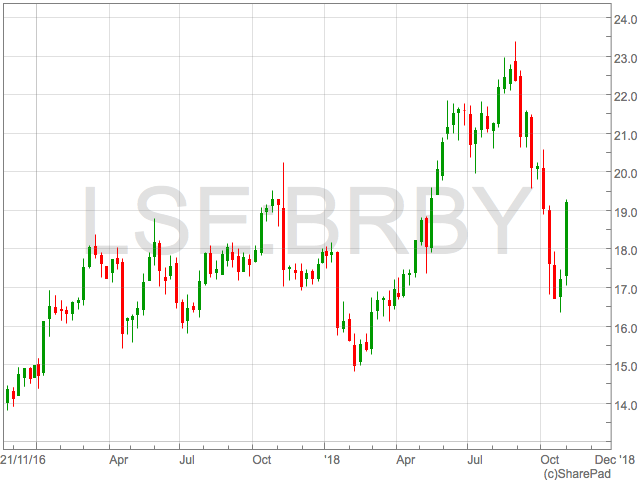
 The top riser on the FTSE 100 was Burberry who were 5% to the good as the luxury brand benefited form an easing in tensions between the US and China. Burberry have relied on China for growth in over the past five years and investors have punished the share price throughout the ongoing trade war between China and Donald Trump’s administration.
Standard Chartered were among the top risers as the bank also benefited from the easing in tensions and built on strong gains in previous sessions following the release of a 25% increase in pre-tax profits.
Bond proxy shares such as Imperial Brands, Severn Trent, SSE, and GlaxoSmithKline were the biggest fallers after the jobs report. US 10-year yields rose after the report making the prospect of holding equity for an income less attractive when compared to the safety of US bonds.
The top riser on the FTSE 100 was Burberry who were 5% to the good as the luxury brand benefited form an easing in tensions between the US and China. Burberry have relied on China for growth in over the past five years and investors have punished the share price throughout the ongoing trade war between China and Donald Trump’s administration.
Standard Chartered were among the top risers as the bank also benefited from the easing in tensions and built on strong gains in previous sessions following the release of a 25% increase in pre-tax profits.
Bond proxy shares such as Imperial Brands, Severn Trent, SSE, and GlaxoSmithKline were the biggest fallers after the jobs report. US 10-year yields rose after the report making the prospect of holding equity for an income less attractive when compared to the safety of US bonds.
 The top riser on the FTSE 100 was Burberry who were 5% to the good as the luxury brand benefited form an easing in tensions between the US and China. Burberry have relied on China for growth in over the past five years and investors have punished the share price throughout the ongoing trade war between China and Donald Trump’s administration.
Standard Chartered were among the top risers as the bank also benefited from the easing in tensions and built on strong gains in previous sessions following the release of a 25% increase in pre-tax profits.
Bond proxy shares such as Imperial Brands, Severn Trent, SSE, and GlaxoSmithKline were the biggest fallers after the jobs report. US 10-year yields rose after the report making the prospect of holding equity for an income less attractive when compared to the safety of US bonds.
The top riser on the FTSE 100 was Burberry who were 5% to the good as the luxury brand benefited form an easing in tensions between the US and China. Burberry have relied on China for growth in over the past five years and investors have punished the share price throughout the ongoing trade war between China and Donald Trump’s administration.
Standard Chartered were among the top risers as the bank also benefited from the easing in tensions and built on strong gains in previous sessions following the release of a 25% increase in pre-tax profits.
Bond proxy shares such as Imperial Brands, Severn Trent, SSE, and GlaxoSmithKline were the biggest fallers after the jobs report. US 10-year yields rose after the report making the prospect of holding equity for an income less attractive when compared to the safety of US bonds. Patisserie Valerie shareholders left angry after emergency meeting
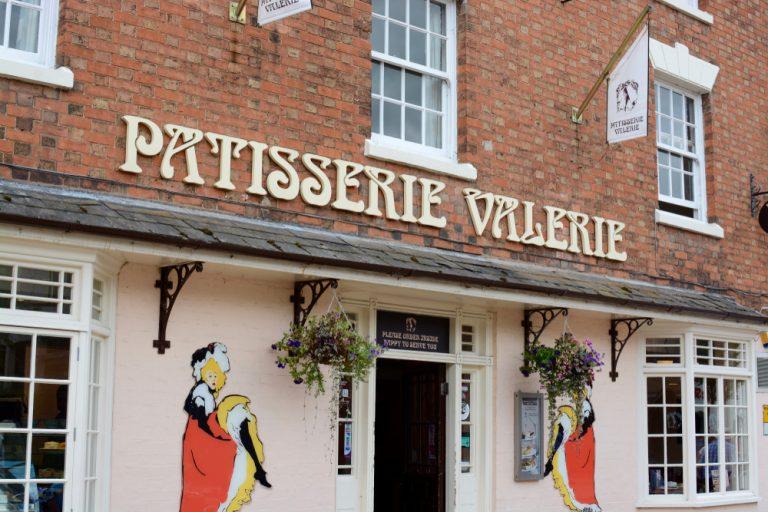
The management of Patisserie Valerie has been criticised by angry shareholders following an ill tempered meeting that demanded approval for emergency fundraising.
During the emergency meeting of shareholders, chairman Luke Johnson claimed that the firm was only “three hours” away from bankruptcy. The chairman put £20 million of his own money to keep the group going. This is following an initial investigation that found it was almost £10 million in debt after having reported it had £28 million.
The company sought approval from shareholders for two share placings that aim to raise £15.7 million. £10 million of this fund will be used to pay back 50% of the chairman’s emergency loans.
Luke Johnson said that a share placing was “the only course of action open to the company”. The placing will involve 31.54 million shares sold to institutional investors at 50p each. This rate is heavily discounted in comparison to the 429.5p when shares were suspended last month.
The chairman of Patisserie Valerie thanked shareholders who have shown support.
He continued to reassure them that:
“Management is doing everything we can to address the situation, get to the bottom of what happened and safeguard the company and its future”.
However, shareholders have vented their anger of the meeting with Patisserie Valerie’s management.
One shareholder has said that the management of the patisserie chain were “putting a gun to our heads”. Another has said that the decision to offer significantly discounted shares only to institutional investors was “not right and in fact immoral”. Shareholder Heather Goddard told the BBC: “I felt closed off in the meeting and I didn’t feel any questions were answered.” “I felt when he came in and started the meeting saying 99% of the votes in by proxy were in support of them, what he was basically saying to me was, ‘You don’t count.’” “When I asked him why there was there a gun to our head for this deadline… he didn’t provide me with an answer I understood.” Patisserie Holdings has over 200 cafes and almost 3,000 staff.British factories experience worst month since Britain voted leave
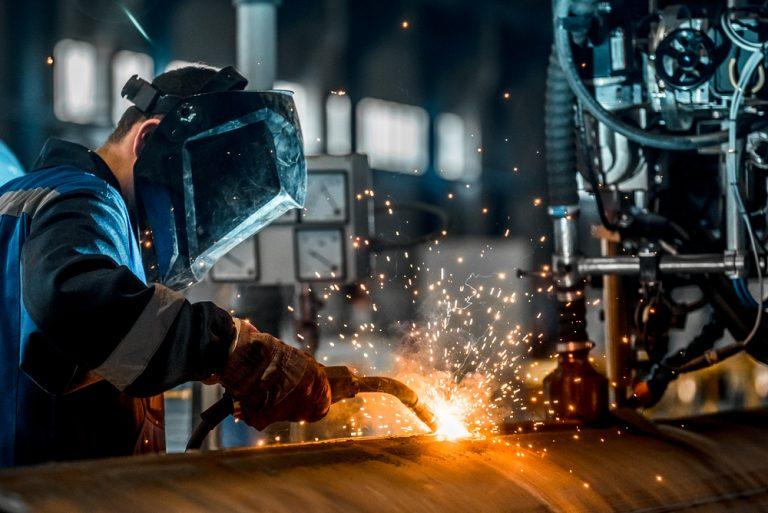
British factories have experienced one of the toughest months since Britain decided to leave the EU in 2016. Indeed, a survey has revealed the British manufactures have experienced a decrease in foreign demand amid Brexit uncertainty.
According to the survey, the IHS Markit/CIPS UK Manufacturing Purchasing Managers’ Index (PMI) dropped to 51.1 last month. This is the lowest figure since July 2016. In September the figure was a revised 53.6.
This is the second time in the last three months that foreign demand has dropped. On one hand, companies have said that the slowing demand for new EU orders is a result of Brexit fears. On the other hand, others have said it was caused by rising global trade tensions and a weaker demand in general for the global auto sector.