Chemring shares were over 10% up on Tuesday after the group posted strong results for the year ended 31 October.
The aerospace and defence company posted a 20% increase in revenues to £402.5m and a 31% growth in underlying profit before tax to £51.7m.
Chemring lifted its dividend and cut net debt thanks to good progress made on securing new business in the UK.
Michael Ord, Group Chief Executive, commented: “Our focus in recent years has been on putting in place the foundations on which to build a stronger, higher quality business. The resilience of the Group in response to the coronavirus pandemic is a consequence of the dedication and commitment of all our people and clearly demonstrates the significant progress that we have made. We set ourselves demanding goals and our teams across the Group have risen to those challenges, delivering a financial performance that was ahead of the Board’s expectations.
“Trading since the start of the current financial year has been in line with expectations. With 78% of 2021 expected revenue covered by the order book, the Board’s expectations for 2021 performance remain unchanged. Chemring is well placed, with a robust strategy, market-leading positions across different geographies and sectors, and with products and services that are critical to our government and blue-chip customers. Chemring’s long-term prospects remain strong,” he added.
Broker Peel Hunt said: “Management has made a lot of headway tidying the business up over the last couple of years – for example, we note this is the second year running with no exceptional charges and operating cash conversion (of EBITDA) above 100%.”
“We think that with the good growth potential from both Roke and Sensors & Information sitting over the solid long-term outlook for Countermeasures, the shares are looking increasing attractive on less than 20x FY22E.”
Greatland Gold has appointed Shaun Day as its new chief executive, sending shares up 2.3% to 33.2p.
Shaun Day will succeed current chief executive, Gervaise Heddle, who is leaving the group to “pursue other interests”. Shaun Day will take up the position of chief executive and join the Board on 8 February 2021.
Heddle will remain a part of the executive team until March 12, 2021 to ensure a smooth transition.
Day said: “I am delighted to take on the role of Chief Executive Officer of Greatland. Under the leadership of Gervaise, the remarkable progress at the Havieron Joint Venture over the past two years has created a strong platform for future growth. I look forward to working closely with the Board, the Greatland team and our key partners as we continue to drive forward a multi-pronged growth strategy and realise further value for shareholders.”
Day is currently chief financial officer of AIM-listed miner Salt Lake Potash. When he starts his new role, he will be granted 5,000,000 performance options on commencement of employment.
Alex Borrelli, Chairman of Greatland Gold plc, said: “On behalf of the Board, I would like to thank Gervaise for his tireless commitment and outstanding contribution to the development and success of Greatland. Gervaise joined the business in May 2016 and was instrumental in the acquisition of the Havieron project and securing the subsequent Farm-in and Joint Venture Agreements with Newcrest. Under his leadership, the team at Greatland has delivered exceptional value creation for shareholders.
“It is a measure of our growing reputation as a business that we are able to attract high-quality people to Greatland, and I am delighted to welcome Shaun to our Board as our Chief Executive Officer. Shaun brings extensive industry and regional experience as well as capital markets expertise and is a great addition to our strong management team. During his five years at Northern Star, one of Australia’s largest gold miners, Shaun helped take the company from a similar size as Greatland to an approximate A$8bn market capitalisation, demonstrating his all-round expertise and suitability for the role. We look forward to working with him and benefitting from his extensive experience.”
Purplebricks shares opened 16.53% higher after the group said in a trading update that it expected to beat full-year profit forecasts.
The AIM-listed firm revealed Half Year Results for the six months ended 31 October 2020, where total fee income rose 6% to £49.1m, while instructions increased 8% to 35,387, and instructions had surged 20%.
Operating profits jumped from £200,000 losses a year ago to £6.9m, whilst revenues fell 6% to £44.2m.
Vic Darvey, Chief Executive Officer of Purplebricks, commented :
“Purplebricks has delivered a strong performance in the period with instructions up 8% and total fee income growth of 6%, despite the UK housing market being disrupted through the height of COVID-19. This continued momentum demonstrates the strength of our technology-led business model and our ability to adapt quickly to a changing market.
“We are now emerging from the pandemic in a very strong competitive position. As a result of continued financial discipline and operational excellence across the business we have experienced strong growth in adjusted EBITDA, up 110%, and a significant improvement in cash generation compared to last year.
“Purplebricks focus for 2021 will be to re-accelerate the growth of our core business by continuing to enhance our digital innovation, our virtual capabilities and increasing agent productivity through automation and efficiency. This period has shown that our technology-led business model is now more relevant than ever, as customers continue to shift to being more comfortable buying and selling their homes digitally.”
Purplebricks has adjusted EBITDA for the full year to exceed the upper end of the current range of consensus.
“The business has performed strongly in the period since the market shutdown ended, with buoyant trading supported by strong market recover,” said the group in a trading update.
LoveHolidays will have to refund £18m to more than 40,000 customers amid Coronavirus disruptions.
The group is one of the UK’s biggest online travel agents and was ordered by the Competition and Markets Authority to issue refunds after the holiday operator received hundreds of complaints from customers.
Andrea Coscelli, chief executive of the CMA, said: “Travel agents have a legal responsibility to make prompt refunds to customers whose holidays have been cancelled due to coronavirus.
“Our action today means that LoveHolidays’ customers now have certainty over when they will receive their money back and they will receive this without undue delay.
“We are continuing to investigate package travel firms and where we find evidence that businesses are breaching consumer law, we will not hesitate to take enforcement action to protect consumers.”
LoveHolidays has said that it will repay customers in full by March 2021. So far it has refunded £7m to 20,000 customers.
So far it has refunded over £205m owed to more than 180,000 customers, which, is the equivalent of 10 years’ worth of refunds in just eight months.
The Package Travel Regulations states that online travel agents are legally bound to refund customers for package holidays cancelled due to the pandemic. This is regardless of whether the holiday operator has received refunds from suppliers, such as airlines.
The group, owns parts of Chinatown, Soho and Covent Garden, saw a dramatic reduction in footfall due to the lack of tourists and office workers coming into the centre.
In the second half of the year, Shaftesbury only collected 53% of the rent due, which led to an annual loss after tax of £699.5m. This is compared to the £26m profit in the previous year.
“Rarely in history has the world seen such widespread disruption to normal patterns of life. Only now are we seeing the first positive signs that conditions will begin to improve in the year ahead,” said Brian Bickell, the Shaftesbury chief executive.
“In the year ahead, the widespread distribution of effective vaccines will bring a gradual return of confidence and activity across the West End and, a recovery in domestic footfall and spending to our villages.
“At the present time, it is not possible to predict at what point conditions will improve but it is likely social distancing and other restrictions, with the risk of further lockdowns, will continue into the spring and possibly early summer, putting further financial strain on many of our occupiers.”
Net assets at Shaftesbury were down by 18% and as of September, wholly-owned EPRA vacancy was 10.2%. Shaftesbury has not declared any dividends for the year.
AJ Bell investment director, Russ Mould, commented: “Unlike some other parts of the real estate market it’s hard to see a swift recovery in valuations and rental income for Shaftesbury because of the reliance of that part of London on tourism.
“Even in the most optimistic ‘reopening’ scenario, international travel at scale could be one of the last things to make a comeback. Global roll-out of a vaccine could be patchy and different countries could face very different experiences with the pandemic next year.”
JD Sports has bought sportswear brand Shoe Palace in a deal worth $325m (£243.7m).
On the news, shares in JD Sports (LON: JD) surged 5% as the group shares its plans to extend presence in California and other US states including Texas, Florida and Nevada.
The deal is all in cash and the owner of the retailer, Genesis, will then have 100% of both Shoe Palace shares.
JD Sports chairman Peter Cowgill commented: ‘’We are delighted to have completed the acquisition of Shoe Palace. The Shoe Palace team are ambitious, have great energy and pride themselves on their consumer connection and we welcome them to the group.”
“We are confident that our combined fascias will provide us with the flexibility and expertise to fulfil our mutual ambition of becoming a prime customer destination for sneakers and lifestyle apparel in the US.”
Shoe Palace was founded in 1993 by four brothers from the Mersho family. Pretax profits were $52m last year. The retailer has 167 stores across southern states and strong online sales.
Peel Hunt analysts commented on the deal: “It’s a great fit for JD: Finish Line has a weakness on the West coast and doesn’t really connect with the shoppers SP is close to.”
The retailer pulled out of talks earlier this month to buy Debenhams triggering the collapse of other High Street retailers including Arcadia. In a statement to the City, JD Sports said: “JD Sports Fashion, the leading retailer of sports, fashion and outdoor brands, confirms that discussions with the administrators of Debenhams regarding a potential acquisition of the UK business have now been terminated.” If a buyer is not found, the department store could go into liquidation.
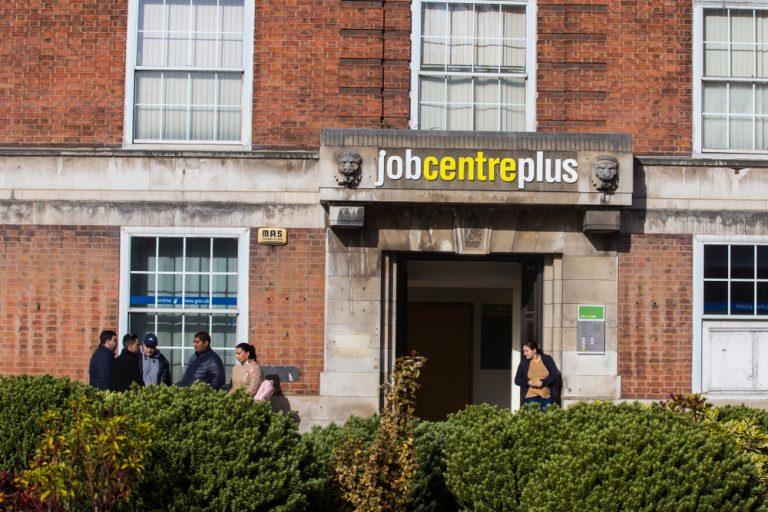
The FTSE was in the red on Tuesday morning after new data showed record redundancies for the three months to October.
The blue-chip index was down 0.3% as the Office for National Statistics revealed the UK’s unemployment rate was up to 4.9%.
In the last quarter, unemployment hit 370,000. This is an increase of 241,000on the previous quarter and 411,000 more than the same period a year ago.
“The latest data confirms that coronavirus continues to weigh heavily on the UK labour market. The re-introduction of tighter restrictions and the expected cliff edge caused by the original furlough scheme end date in October helped drive record redundancies,” said Suren Thiru, the BCChead of economics.
“While the furlough scheme will help safeguard many jobs over the winter months, with businesses facing the prospect of further restrictions and a messy end to the Brexit transition period, major job losses remain probable in the near term.”
Employment Minister, Mims Davies, has said there is hope yet as the vaccine rolls out.
“It’s been a truly challenging year for many families but with a vaccine beginning to roll out with more perhaps to follow and the number of job vacancies increasing there is hope on the horizon for 2021.
“Our Plan for Jobs is already helping people of all ages into work right across the UK, with increased Jobcentre support, new retraining schemes, new job placements like Kickstart for our young people and more to come as we are determined to build back better,” she said.
On the FTSE this morning, Rolls Royce was down 2.9% on opening after the group said it would take five years to recover from the pandemic. Rightmove was down 1.8% whilst JD Sports gained 3.7% after the retailer announced plans to buy US sportswear brand Shoe Palace in a $325m deal.
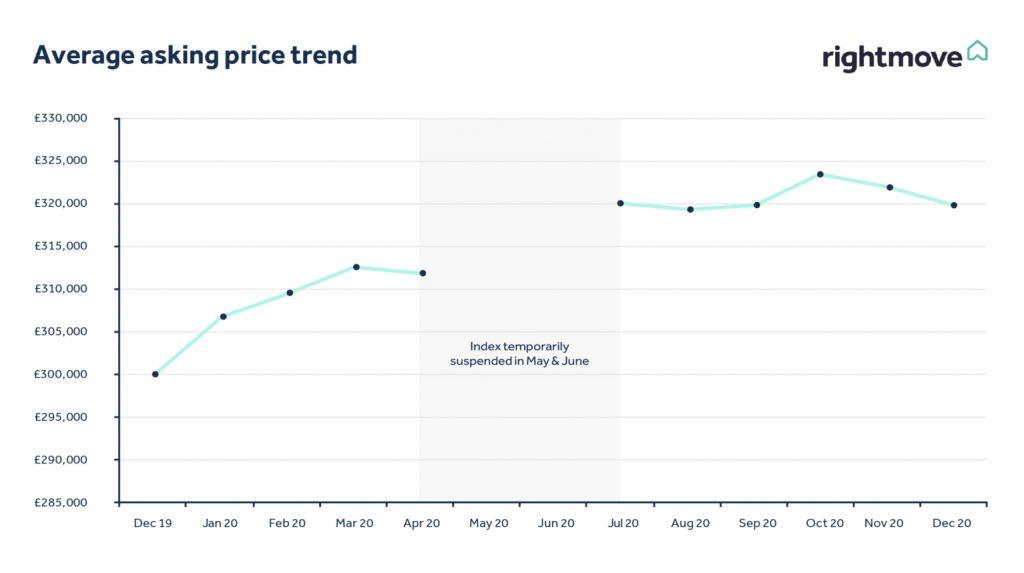
Real estate firm Rightmove has projected a further climb in UK house prices in 2021 despite Brexit, the ongoing coronavirus pandemic and whether or not the government chooses to extend the current stamp duty holiday.
Rightmove cited the pandemic as forcing Brits to reconsider their accommodation needs, after months of lockdown during the spring and again in the autumn drove up demand for larger properties with outdoor space.
It confirmed that while the stamp duty holiday introduced in July had added some extra momentum to the property market, demand was already strong before that – and remains ‘resilient’ even as the chances to capitalise on the holiday deadline in March quickly dwindle.
The New Year is expected to be a busy period for sales, however, as some 650,000 properties are still currently changing hands. Rightmove’s 2021 House Price Index report explained:
“It will be a busy start to 2021. The New Year is typically a time for resolutions for the year ahead, and many will see it as an opportunity to draw a line under 2020, which may well include a fresh start in a new home for those who have not already acted. Many have already done so since the English market re-opened in May, and many more are continuing to do so despite the seasonally quieter run-up to the Christmas period and the declining chance of completing a purchase before the stamp duty deadline”.
Rightmove CEO weighs in
Even with house sales expected to slow in the second quarter, Rightmove CEO Tim Bannister remains adamant that the property market has proved resilient through years of uncertainty, and states that the evidence suggests appetite to buy is still strong despite Covid-19 restrictions:
“Pandemic-related uncertainties have been around for nearly a year, and Brexit uncertainties for far longer, and record activity month after month has proved that movers are willing and able to act on their new or existing housing priorities. Demand has therefore exceeded supply in 2020 with the number of properties coming to market for the year to date down by 0.6% on the same period in 2019, and the number of sales agreed up by 8.3%. As a consequence the number of available properties for sale is at a record low, indicating scope for some further modest price increases overall in 2021 despite those uncertainties”.
“Despite these headwinds,” Bannister added, “Ongoing demand still remains very high, indicating that there’s plenty of fuel left in the tank for the housing market. Interest rates remain at near-record lows, and we expect greater availability of low-deposit mortgages at competitive rates next year. These two factors will help to oil the wheels for home purchases by the ‘accidental savers’ who have collectively saved £100 billion that they couldn’t spend during the pandemic restrictions.
“With the expectation of a return to more normality in the second half of 2021 and a likely ‘fresh start’ mentality for some, there are sound reasons for continued positive market sentiment that will outweigh the economic, political, and health challenges ahead. Rural, countryside, and coastal demand will remain high for those re-appraising their lifestyle, but more normality will also help the recovery of those aspects of city-living that have seen a dip in their appeal”.
Agents’ views
Nick Leeming, Chairman of Jackson-Stops, commented:
“The start of the new year is traditionally a busy time in the housing market, with buyers and vendors alike taking the festive period to plan for the year ahead. However, we are expecting the first months of 2021 to be particularly active as buyers try to squeeze in their deals before March 31st. Those looking to make savings on the stamp duty holiday must act now, we are advising any serious house hunters to have their offers in by January latest.
“Buyers and vendors at the prime and super-prime end of the market will continue to move throughout 2021 due to a change in lifestyle aspirations which have been spurred on by the COVID-19 pandemic. Many of these clients will be entering the housing market for the first time in decades as they haven’t had a pressing need to move or buy a second home so have held off doing so until now. Whilst the introduction of a viable vaccine will act as a shot to the arm for the housing market, restoring confidence at every level, the return of SDLT will slow transactions down at the lower end of the market although the top end will remain resilient”.
Marc von Grundherr, Director of Benham and Reeves, also weighed in:
“We’re certainly seeing a sprint finish this year where the UK property market is concerned. This has been primarily driven by government stimulation in the form of the stamp duty holiday, protecting the market against the traditional air of lethargy that comes as we approach the Christmas period, and keeping it fighting fit both where transaction levels and price growth are concerned.
“We expect to see this tidal wave of market momentum spill over into next year and keep the market buoyant, as homebuyers race to cross the line before Rishi Sunak’s chequered flag falls on the chance of a stamp duty saving. While the end of this initiative will lead to an understandable drop in demand over the months that follow, it will be more a return to pre-pandemic normality rather than a dramatic market crash. This will be largely due to the firm foundations laid this year which should enable strong and consistent growth throughout 2021.”
Through an ongoing global pandemic and a seemingly never-ending Brexit negotiation process, small and medium-sized businesses (SMEs) across the UK have been forced to operate in a climate of uncertainty. Rules and regulations are changing by the day, and as a new strain of Covid-19 emerges and the UK prepares to dive out of the EU on New Year’s Day, it is no wonder some business owners are finding it hard to stay positive.
But could 2021 be a boom year for UK small businesses? Analysts from private equity house IW Capital and tax advisory firm Cornerstone Tax certainly think so.
With a no-deal scenario now looking “likely” – following UK Prime Minister Boris Johnson’s failure to reach a deal with EU representatives over the weekend – the UK will have to pay tariffs on imported goods, increasing prices and potentially forcing UK-based suppliers to become more competitive. IW Capital and Cornerstone expect UK small business to handle the changes well, having managed to adapt to the uncertainties of the past few years with commendable proficiency, and assures that there will be opportunities to invest in small businesses poised to capitalise on the situation.
IW Capital and Cornerstone believe that private investment is a “vital catalyst” for wider growth in the aftermath of the UK economy’s largest decline on record – with the UK’s high net worth community providing “essential early indicators for the direction of wealth at a time where the distribution of capital is key”. Despite widespread concern over when the economy will make a full recovery, there was reportedly a 12% increase in new businesses starting up in 2020 compared to 2019, suggesting that the the new year ahead could bring some “exciting investment opportunities” for investors that may help to boost the wider British economy.
Throughout the year, amidst immense pressure, UK SMEs have “shown resilience and have adapted quickly” to the pandemic and the changes it has forced on how Brits do business. A no-deal Brexit, IW Capital and Cornerstone say, represents yet another opportunity to “adapt and grow”. Both firms also emphasise that the number of online job advertisements has reached 1.4 million for the first time in 2020, highlighting business growth across the country and the potential for productivity to catch up to pre-pandemic levels.
CEO of IW Capital, Luke Davis, commented on the road ahead for SMEs as 2021 hurtles closer:
“Each period of disruption offers opportunity for companies to adapt quickly to the changing times and although there has been a lot of worry and negativity surrounding a no-deal Brexit, it would be unwise to believe that there will not be any benefits to come out of it, especially for businesses and industries here in the UK.
“Working with both entrepreneurs and investors, there is a clear desire from the small business community for growth investment and to take a big step growth-wise in 2021. Small businesses grow by hiring and this sector will be key not only to growing the economy but also combating unemployment. Each problem or crisis will have winners and losers but those that are adaptable and in position to take advantage of the situation could see a big increase for business in 2021.
“Making growth investment more easily available to small businesses that are looking to grow should be a priority. The last time that the Government-backed EIS was extended, it resulted in a significant jump in private investment into small businesses. Replicating this effect with new, or increased, incentives would provide a much needed boost to a section of the economy that is most in need, and so we hope this will be addressed in the near future”.
Founder and Principal Consultant of Cornerstone Tax, David Hannah, added:
“The UK is a nation of shopkeepers who have shown their resilience throughout a year that has brought financial hardship and have still been able to make it out the other end. There has been a huge amount of discussion around potential recessions but this period is totally different to any previous recession and business owners and consumers alike know this. I would be surprised to see any economic downturn last beyond March.
“This year these SMEs have shown their resourcefulness with many having a big uptick in revenues. From working with a plethora of small businesses across the country, I have been able to talk to the owners and have found that even they feel that they will see an increase in business and expect to see growth going into the new year. There of course will be a transition period, but overall 2021 looks like a year when business owners will look to capitalise on their adaptations without as much disruption.
“We have seen SME growth over a year plagued with a pandemic and financial unrest, so I believe that small businesses will adjust to whatever the trading reality is. The UK just needs to support its small businesses through this period and then we will be sure to see them grow and flourish in the next quarter”.
A new study commissioned by trading broker HYCM has revealed how anxieties surrounding the coronavirus pandemic and Brexit has affected UK investors’ plans for 2021, with the majority believing the true impact on the UK economy will not be seen until next year.
The survey was conducted across 885 UK-based investors, all of whom have investments “in excess of £10,000”, excluding their property and workplace pensions.
The research found that 65% of UK investors believe the effects of COVID-19 on the UK economy will be worse in 2021 than they have been this year, despite long-held hopes of a sustained FTSE recovery. With the Covid-19 vaccination programme beginning last week, the UK index ticked up amid a fleeting breath of optimism, only to tumble towards the weekend as ongoing Brexit negotiations failed to produce a concrete deal.
Even with the relatively smooth progress of the Pfizer vaccine rollout so far, it is expected to be some time before the bulk of the population are able to be inoculated, as older and vulnerable groups are currently front of the queue. 62% of UK investors said that they will wait until a vaccine is widely available before making any “major financial decisions”, after which 43% said they plan to invest into the sectors “worst-affected” by the pandemic, such as travel and hospitality.
Potentially putting hopes of normality at risk, however, is the news that the UK has identified a new strain of Covid-19. While authorities have cautioned that there is not yet any evidence to suggest this strain is any more severe or will have any impact on the efficacy of current vaccines, the nerves are present.
Meanwhile, 58% of investors want to see the Brexit deadline pushed back from 31st December to allow for more negotiating time, even though the UK is set to leave the EU – regardless of whether a deal is reached or not – at midnight on New Year’s Eve. UK Prime Minister Boris Johnson and European Commission President Ursula von der Leyen agreed to continue talks over the weekend despite an initial deadline on Sunday, but time is swiftly running out, and a UK source reported that there has still “not been significant progress in recent days”.
Three in five (60%) investors plan to adopt a “conservative investment strategy” by focusing on security rather than returns in the coming 12 months, while a third (34%) said that they will be looking to invest in renewable energy stocks and shares in 2021. This figure rises to 46% among those aged between 18-34.
Giles Coghlan, Chief Currency Analyst at HYCM, commented on the report’s findings:
“With 2021 fast approaching, it is clear investors are preparing for another year of market volatility as a result of COVID-19. What’s more, investors are quite reasonably fearing that the worst is yet to come with regards to the pandemic’s economic damage.
“The arrival of one or more vaccines will be an interesting development. Once this happens, I’d anticipate a flurry of activity on the financial markets as investors hope to take advantage of sectors posed for recovery.”
The growing interest in green investment is set to be a focal point in investment portfolios across the next year. Stavros Lambouris, CEO at HYCM International, explained:
“The research is an important reminder of the pandemic’s impact on investors. Aware of the uncertainty that lies on the horizon, the majority of investors are evidently taking a cautious approach to managing their investment strategies.
“That said, a significant proportion are looking to invest in green energy stocks and shares, which has no doubt been influenced by both Prime Minister Boris Johnson and US President-elect Joe Biden both tabling ambitious green strategies recently. This will be a key trend to watch in 2021″.