Kromek shares plunge 17% as Covid widens loss

0
Kromek shares (LON: KMK) have plunged over 17% on Wednesday morning as the detection technology group released results for the year ending 30 April 2020. Revenue at the group focusing on the medical, security screening, and nuclear markets fell from £14.5m to £13m. Loss before tax, including exceptional items, also widened from £1.3m to £18.2m. Kromek said they started the year on a positive note and reported a record H1 2019/2020 revenue. This was dented by the impact of the pandemic, which caused disruption and led to projects being postponed. The company has a positive outlook for the next financial year, with successful orders completed and new contracts won. The group’s chief executive, Arnab Basu, commented on the results: “We entered 2019/20 in a stronger position than ever before, increasing revenues by 43% in the first half. However, the pandemic caused markets to shut down and materially impacted both our global customer base and supply chain resulting in overall revenues for full-year 2019 to be lower than the previous year. However, the mitigation measures and operational progress we have made during the year means we are well-positioned to rebound strongly. “We have significantly expanded our production capacity and increased sales of our popular D3S platform that is being deployed in 22 countries, including new contracts with the US Government and European Commission. “As a result, the Board is cautiously optimistic for the year ahead and will provide updates to the market as the outlook becomes clearer moving forward,” he added. Kromek shares (LON: KMK) are trading -17.74% at 8,53 (0933GMT).  

FTSE 100 remains unfazed as Trump ends US stimulus talks

1
The FTSE 100 rose 0.2% on Wednesday’s opening to 5,963 points despite Donald Trump abruptly ending US stimulus talks. Whilst the Dow Jones industrial average fell by 1.3% towards close following Trump’s actions, London’s blue-chip index saw a rise. Trump tweeted yesterday: “I have instructed my representatives to stop negotiating until after the election when, immediately after I win, we will pass a major Stimulus Bill that focuses on hardworking Americans and Small Business.” The US President went on to tweet plans to show economic support. “If I am sent a Stand Alone Bill for Stimulus Checks ($1,200), they will go out to our great people IMMEDIATELY. I am ready to sign right now. Are you listening Nancy?” He was referring to Nancy Pelosi, Democrat speaker of the House,” he wrote. He continued: “The House & Senate should IMMEDIATELY Approve 25 Billion Dollars for Airline Payroll Support, & 135 Billion Dollars for Paycheck Protection Program for Small Business. Both of these will be fully paid for with unused funds from the Cares Act. Have this money. I will sign now!” His tweets also affected the price of US oil, which fell by 1.5% to just over $40. Connor Campbell, a financial analyst from Spreadex, commented on the latest moves by Trump and the rise in the FTSE 100: “In a surprising turn of events, the European markets didn’t follow the lead of the Dow Jones on Wednesday morning, instead bobbing about in the green.

“The Dow Jones immediately panicked, sinking 375 points to fall back below 27,800, having crossed 28,270 earlier in the session.

“Yet the European markets have openly fairly calmly this Wednesday. In fact, they’ve barely moved at all. The FTSE added 0.1% as it stuck its nose across 5950, with the DAX flat just above 12900 and the CAC lurking around 4900 effectively unchanged,” he added.

Tesco profit surges 28%, shares rise

0
Tesco (LON: TSCO) has reported a 28.7% surge in profits, causing shares to rise 2.92% on Wednesday’s opening. In the 26 weeks to 29 August, pre-tax profit grew to £551m thanks to a surge in online sales during the pandemic. Total sales at the UK’s largest supermarket rose 6.6% to £26.7bn, whilst like-for-like sales rose 7.2%. The beginning of lockdown saw average basket size increase by over 50% due to panic buying and the shift of people working from home. Over the course of the pandemic, Tesco significantly increased the number of home deliveries to reach vulnerable people in lockdown. The group more than doubled its weekly delivery slots to 1.5 million. Operating profit, however, fell by 15.6% to £1.037bn. The Tesco Bank made a £155m loss whilst Corona-related costs reached £533m. This is the first result of the supermarket since the group’s new chief executive, Ken Murphy, started just last week and replaced Dave Lewis. The group will pay out a dividend of 3.2p per share. Chief executive Murphy said on the latest results: “The first half of this year has tested our business in ways we had never imagined, and our colleagues have risen brilliantly to every challenge, acting in the best interests of our customers and local communities throughout. I would like to thank all our colleagues for their amazing contribution and I am delighted and proud to be part of such an incredible team. “Tesco is a great business with many strategic advantages. I’m excited by the range of opportunities we have to use those advantages to create further value for our customers and, in doing so, create value for all of our other stakeholders,” he added. Tesco also announced a new chief financial officer, Imran Nawaz, who previously worked at Tate & Lyle. Tesco shares (LON: TSCO) are currently trading +2.48% at 219,30 (0839GMT).    

Global equities flat despite hopes of Federal Reserve stimulus

Global equities appeared by-and-large unmoved on Tuesday, though hopes of a renewed Federal Reserve stimulus package gave European markets enough momentum to finish in the green. As stated by Spreadex Financial Analyst, Connor Campbell: “Now that Trump, irresponsibly or otherwise, is out of hospital and back at the White House, hopes appear to have been stirred that the Democrats and Republicans can finally get a new covid-19 stimulus package over the line. That is unless the number of covid-19 cases on Capitol Hill continues to grow.”

“House Speaker Nancy Pelosi and Treasury Secretary Steven Mnuchin are set to engage in talks once again this Tuesday, so investors will be keeping an eye on any updates emanating from Washington.”

With some stirs of excitement, the Dow Jones initially rallied by around half a percent, before falling to a 0.34% dip, down to 28,053 points. Responding to the Fed rumours and the Dow’s early rally, Eurozone indices bounced during the afternoon, with the CAC up by around a percent during mid afternoon, before relaxing down to a 0.48% rally, and finishing at 4,895 points. Leading the charge was the DAX, also up by almost a percent, before dipping and remaining steady at a 0.61% rally, where it finished up 12,906 points. Meanwhile, the FTSE failed to follow suit. Having bounced by half a percent after lunch, the British market then slid down to a modest 0.12% rally, up to 5,949 points. Elsewhere in global equities, the Hang Seng rallied by 0.90%, the TOPIX bounced by half a percent, and the SSE Composite fell slightly, by 0.20%.

UK state pension age rises to 66

1
The age that people will be able to access UK state pensions has officially risen to 66 – and is set to rise. The state pension, which is worth £175.20 a week, and is paid to anyone who has made 10 years’ worth of national insurance contributions over their lifetime. Although life expectancy is increasing, the former pensions minister, Ros Altmann, said that the changes were failing to take into account differences in life expectancy across regions, social groups, and occupations. “The most disadvantaged members of society tend to have the poorest health,” said Altmann.

“Many had hard manual working lives, which has taken its toll on their health. Therefore, using average life expectancy particularly disadvantages such workers, even if they have worked for 50 years or more.

“There has long been a strong case for considering a more flexible age range for starting state pension payments, and the pandemic has made this case even stronger. It could help many women and many who are seriously ill or need to care for loved ones, and I do hope the government will give this urgent consideration,” she added.

A spokesperson from Work and Pensions has said that the government will review the changes in six years’ time. “Allowing early access to the state pension on a reduced basis could risk leaving people with an inadequate pension, while a universal state pension age provides simplicity and clarity, which helps people plan for their retirement.”

Premier Oil announces Chrysaor deal, shares rise

0
Premier Oil (LON: PMO) has agreed to merge with Chrysaor, causing shares to leap 10% on Tuesday’s opening. The deal will see a new firm, which will be the largest independent London-listed oil company. The deal remains subject to the approval of shareholders. Roy Franklin, the chairman at Premier Oil, said: “The board intends to recommend unanimously this transaction to shareholders as being in the best interests of shareholders and the company. This will mark a new and exciting chapter in Premier’s history.” Chrysaor chief executive, Phil Kirk, commented: “With our combined organisation and operatorship of a large part of our now international portfolio, we will have the ability to deliver value safely, and play our part in the energy transition.” The combined group will produce over 250,000 barrels of oil per day. Russ Mould, investment director at AJ Bell, said on the deal: “The company’s problems date all back to 2014 and the oil price crash which occurred that year. It simply had taken on too much debt when oil prices were above $100 per barrel and has been running to stand still ever since.” “Against this backdrop the tie-up with private equity-backed operator Chrysaor is more of a rescue mission than a merger of equals,” he added. Premier Oil shares (LON: PMO) are trading +7.31% at 16,30 (1358GMT).

Airline shares: Rolls-Royce, easyJet & IAG see rise

3
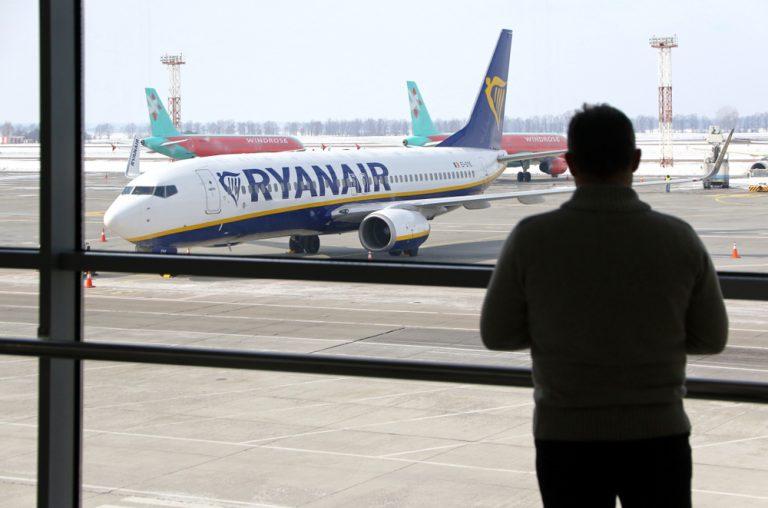
Whilst the FTSE 100 slid by 0.5% in Tuesday’s early trading, airline shares had a small rise. Airline shares in IAG (LON: IAG), Rolls-Royce (LON: RR), easyjet (LON: EZJ) all increased this morning thanks to rumors the government may be considering the introduction of Corona testing on arrivals – and cut the quarantine period. Rolls-Royce shares jumped 10% to 136.3p. The group launched a finance package last week worth £5bn. British Airways owner, IAG, also saw shares climb 5%. In the FTSE 250, easyJet saw shares surge almost 6%. The transport secretary, Grant Shapps, hinted towards testing-on-arrival. However, no details were given and he stressed the difficulty of the process. He said: “The next stage is to enable testing, which people sometimes wrongly think is a very straightforward thing – ‘Why don’t you just test people at the airport? If you know they’re clear, let people in, job done.

“The answer is that in someone who is asymptomatic, not displaying any symptoms, that won’t find a very large proportion of cases. In fact the studies show that if you check somebody on the first day that they arrive, you will probably just find 7% of people who actually do have the virus.

“So we have got to be a bit smarter than that. The way to do that is to still have a period of quarantine but also test and be able to release people. I will be saying more about that shortly,” he added at the Conservative party conference on Monday.

The airline industry, which has been hit hard in the pandemic, has been calling on the government to introduce another measure to avoid the 14-quarantine. John Holland-Kaye, Heathrow’s chief executive, said: “We don’t know whether testing at the airport will end up being part of the solution.” “We know that the government isn’t comfortable with just a single test on arrival to give them confidence that people aren’t carrying Covid when they come into the country. And that’s because if you’ve only just contracted the disease you may not show up on a PCR test and that’s why they prefer to have a period of quarantine … But it may well be the case that those testing facilities at the airport are needed, in which case we’re ready to go quickly once the government says yes.” Airline shares are currently trading as follows: IAG shares (LON: IAG) are trading +6%, easyJet shares (LON: EZJ) are +6%, and Rolls-Royce shares (LON: RR) are trading +10.86% (1320GMT).

Times are good for Watches of Switzerland as shares rally 22%

FTSE 250 retailer, Watches of Switzerland (LON:WOSG), saw its shares rally by more than a fifth, after it upped its full-year outlook following a period of surprisingly strong demand. Britain’s main retailer of Rolex, Cartier, Omega, TAG Heuer and Breitling watches, stated that constant currency revenues bounced by around 20% during the first ten weeks of the (still ongoing) second quarter. The unexpected scale of demand growth led the company to alter its full-year guidance, up from between £840 million and £860 million, to between £880 million and £910 million. This, in turn, triggered an early rise in the company’s shares, by as much as 24%. With revenue from tourists now making up little over a third of the company’s sales – down by a third year-on-year – Watches of Switzerland stated that the third quarter will prove challenging, both with travel restrictions and retail disruption. During the second quarter, however, the company have been boosted by a 50% rise in online sales; alongside 12.6% sales growth in its UK division, to £145.1 million; and “exceptionally strong” sales in its US division, up 43.4%, to £57.7 million.

Watches of Switzerland response

Commenting on the optimistic update, company Chief Executive, Brian Duffy, said: “Trading momentum has further improved in the second quarter.” “Stronger-than-anticipated UK domestic sales are offsetting lower tourist and airport traffic, whilst regional stores are continuing to outperform London stores.” “Furthermore, the strong momentum we have established in the US has further accelerated.” “Our guidance for the balance of the fiscal year assumes that the positive trend experienced in the second quarter will be moderated by the impact of pandemic-related retail disruption in the UK and the US and uncertainty in the US economy, impacting mainly in the third quarter.”

Investor notes

After some time to relax, Watches of Switzerland rallied 22.04% or 73.50p, to 407.00p a share 06/10/20 12:20 GMT. The company currently has a target price of 360p, a consensus ‘Buy’ rating, and a 55.56% ‘Outperform’ stance from the Marketbeat community. Its p/e ratio is 20.46, below the consumer cyclical sector average of 26.32. According to Shore Capital analyst, Greg Lawless, the Watches of Switzerland update shows that, “demand for luxury watches continues to outstrip supply”. “In our view, this is a management team executing its strategy well and adapting to the unprecedented market conditions.”

FP WHEB Sustainable Impact Fund: impact investors gear up for the post-Brexit world

Impact investor WHEB Asset Management LLP (WHEB) is set to launch a Dublin-based UCIT (Undertakings for the Collective Investment in Transferable Securities) fund designed to make sure investors can continue to contribute to their sustainable impact funds whatever the outcome of the ongoing Brexit talks with the European Union. WHEB was launched in 2009 with a focus on “the opportunities created by the transition to a low carbon and sustainable global economy” and to “generate superior returns from global equities by investing in companies providing solutions to some of the most serious environmental and social challenges facing humanity over the coming decades”. The new fund, named FP WHEB Sustainable Impact Fund, is expected to launch at the tail end of 2020 with UK-based FundRock Management Company S.A. appointed as its management body. Both companies have collaborated before on previous projects; FundRock is already the authorised corporate director for WHEB’s UK-based fund via its UK branch, FundRock Partners Ltd. FundRock, hailed by WHEB as “a leading pan-European independent third party management company”, will oversee the fund’s delegated functions, provide risk and compliance monitoring, as well as manage distribution support services for the new structure and its sub-fund. It is designed to mirror the firm’s “existing impact investment fund that is domiciled in the UK, called the FP WHEB Sustainability Fund”. WHEB currently boasts £673 million in assets, and its existing UK-based sustainability fund returned an impressive 27.2% in US dollar terms – the average comparable fund returned just 19.4% over the same timeframe. Its minimum regular savings value sits at £25.00. Commenting on the launch of the new Sustainable Impact Fund, George Latham – managing partner of WHEB Asset Management – said: “We’re delighted to have partnered with FundRock to continue to build our business in the European markets and make our investment strategy available to new investors. We firmly believe that businesses which have a positive impact can and must be those that will be successful in the longer term. “By demonstrating that sustainability and positive impact can be the basis of an outperforming investment strategy, we believe WHEB can have a powerful role in mobilising more capital towards a positive purpose”. Xavier Parain, CEO of FundRock, added: “We are pleased to be WHEB’s partner of choice in another fund launch. Sustainable and impact investing is very much entering the mainstream for investors and pioneers like WHEB are well positioned to benefit from the rapid growth in this space. “Our best in class solutions will enable the firm to focus on its core business activity of delivering returns to its clients while having a positive impact on society”.

BHP to acquire 28% stake in Shenzi oil field for $505mn

FTSE 100 listed oil and gas extraction company, BHP (LON:BHP), announced on Tuesday that it had agreed to acquire an additional 28% stake in the Shenzi oil field, in the Gulf of Mexico. The company stated that it had signed a Membership Interest Purchase and Sale Agreement with Hess Corporation (NYSE:HESS), to acquire the firm’s six-lease, deep-water development. Prior to the deal being struck, Shenzi stood as a joint-owned site, with Hess holding 28%, Respol holding 28%, and BHP acting as operator, with 44%. The deal, which has an agreed price of $505 million, will see BHP’s stake will go up to 72%, and will immediately add around 11,000 barrels of oil equivalent per day to the company’s production. The company added that the transaction is, “consistent with our strategy of targeting counter-cyclical acquisitions in high-quality producing or near producing assets”. It added that it is well-positioned for the potential medium-term upside in the commodity cycle, and that it believes oil and gas will remain attractive ‘for the next decade and likely beyond’.

The Shenzi transaction took place at the start of July and is expected to be closed by December.

BHP response

Commenting on the acquisition news, the company’s President of Petroleum Operations, Geraldine Slattery, stated:

“This transaction aligns with our plans to enhance our petroleum portfolio by targeted acquisitions in high quality producing deepwater assets and the continued de-risking of our growth options.”

“We are purchasing the stake in Shenzi at an attractive price, it’s a tier one asset with optionality, and key to BHP’s Gulf of Mexico heartland. As the operator, we have more opportunity to grow Shenzi high-margin barrels and value with an increased working interest.”

Investor notes

Following the update, BHP shares remained flat during morning trading, down 0.073% or 1.20p, to 1,651.40p a share 06/10/20 11:38 BST.

Analysts currently have a majority ‘Buy’ rating on BHP shares, alongside a target price of 1,825p. Marketbeat’s community has a 53.22% ‘Underperform’ stance on the stock. Its p/e ratio is 11.98, below the basic materials sector average of 36.46.