
Nintendo profits triple amid pandemic

Nintendo has seen profits soar in the six months to the end of September.
The Japanese tech giant saw a surge in demand over lockdown and saw sales triple from 94bn yen to 291.4bn yen (£2.1bn).
Nintendo said previously that it expects 19 million consoles to be sold in the year to March 2021, however, it is increased this figure to 24 million.
The group has also doubled its operating profit forecast by 50%.
According to industry body UK Interactive Entertainment, gaming firms have seen strong trading over the course of the pandemic. According to a report, 45% of games businesses have seen some increase in game revenues since the pandemic started.
“Taken as a whole, the sector has remained resilient and, with a small amount of public support, would be in a prime position to lead the creative industrys’ economic recovery in a post-COVID world,” said UK Interactive Entertainment.
Sunak extends furlough scheme until end of March

The furlough scheme will be extended until the end of March.
Rishi Sunak said in the House of Commons on Thursday that the government will continue to pay 80% of wages as the UK enters a second lockdown.
“We can announce today that the furlough scheme will not be extended for one month, it will be extended until the end of March,” said Sunak today.
“The government will continue to help pay people’s wages up to 80% of the normal amount. All employers will have to pay for hours not worked is the cost of employer NICs and pension contributions.
“We will review the policy in January to decide whether economic circumstances are improving enough to ask employers to contribute more.”
Sunak also confirmed that the support for those self-employed will be more generous. The government will pay 80% of the average profits up to £7,500.
“I also want to reassure the people of Scotland, Wales and Northern Ireland. The furlough scheme was designed and delivered by the government of the United Kingdom on behalf of all the people of the United Kingdom, wherever they live,” he said today.
“That has been the case since March, it is the case now and will remain the case until next March.
“It is a demonstration of the strength of the union and an undeniable truth of this crisis we have only been able to provide this level of economic support because we are a United Kingdom.
“And I can announce today that the upfront guaranteed funding for devolved administrations is increasing from £14bn to £16bn. This Treasury is, has been and will always be the Treasury for the whole of the United Kingdom.”
Frances O’Grady, the TUC general secretary, responded to the chancellors statement and said: “Agreeing to extend the job retention scheme at 80% until the spring, as unions have called for, is a positive step.
“But there are still gaps in the government’s support package. It’s not right to ask millions of low-paid workers on furlough to survive on less than the minimum wage. The Chancellor must fix the scheme so their pay is topped up to 100%.
“And he must offer to help to those self-employed workers who are falling between the cracks. We also need an urgent boost to both sick pay and universal credit. No-one should be plunged into financial hardship if they have to self-isolate or if they lose their job.”
AstraZeneca reports rise in sales & revenue

AstraZeneca (LON: AZN) has revealed a rise in sales and revenue for the year to date.
The pharma giant said in its latest trading update that sales had grown 9% to $18,879m whilst overall revenue had increased 8% compared to the year previously.
Pascal Soriot, the chief executive, commented: “We made encouraging headway in the quarter, despite the ongoing disruption from the COVID-19 pandemic. Highlights of the sales performance included further success in Oncology and an acceleration in the progress of Farxiga.
“Our pipeline also excelled, with Farxiga expanding its potential beyond diabetes and heart failure with ground-breaking new data in chronic kidney disease, while regulatory submission acceptance was achieved for anifrolumab in lupus. In the fight against COVID-19, we advanced our vaccine collaboration with the University of Oxford and are launching Phase III trials for our long-acting antibody combination for the prophylaxis and treatment against COVID-19 for people who need an immediate defence or whose weaker immune systems mean they are less likely to benefit from a vaccine.
“We continue to progress in line with our expectations and maintain our full-year guidance, which is underpinned by the strategy of sustainable growth through innovation,” Soriot added.
AstraZeneca is working with the University of Oxford on a coronavirus vaccine. It said yesterday that it had missed targets of delivering 30 million doses of the vaccine to UK officials by the end of September. Instead, the company will deliver four million doses.
“The predictions that were made in good faith at the time were assuming that absolutely everything would work and that there were no hiccups at all”, said UK vaccine taskforce chair, Kate Bingham.
AstraZeneca shares (LON: AZN) are trading at 8.550,00 (1205GMT).
The Works shares surge on strong H1 trading
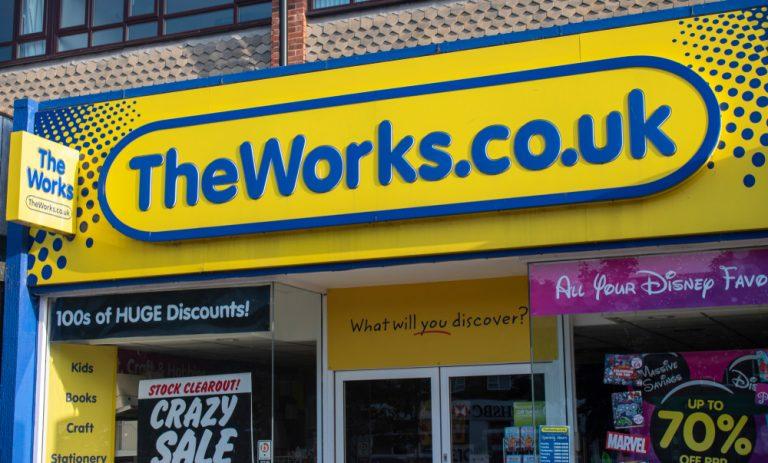
The Works shares (LON: WRKS) have soared on Thursday morning after the group hailed strong post-lockdown trading.
For the 19 weeks ended 25 October 2020, excluding the lockdown, like-for-like sales increased by 10.6%. Including the lockdown when all stores were closed, sales fell by 7%.
“We have been encouraged by the performance during the period, which was better than the ‘base case” scenario we modelled when the Covid-19 pandemic was in its earlier stage,” said The Works in a statement.
“Performance in recent weeks has strengthened further and, we believe that to some extent, sales have been brought forward as customers have acted in anticipation of further restrictions.”
The retailer will not be issuing profit guidance for the full year FY21 currently due to the current uncertainty.
Gavin Peck, Chief Executive Officer of The Works, commented: “I have been pleased with the positive response of our customers to our proposition which resulted in strong trading since the reopening of our stores; the further improvement in performance in recent weeks only serves to underline this. I would like to take this opportunity to acknowledge the hard work and commitment of all colleagues throughout the business, who have helped to deliver this performance and ensured that we have continued to provide excellent service whilst maintaining safe shopping environments.
“Naturally, it is disappointing that we have had to close most of our stores again, so close to Christmas, but the strong performance since the last lockdown and our sound financial position mean we are well placed, and we are focussed on ensuring that we reopen safely, and are geared up to make up as much lost ground as possible in December.”
The Works shares (LON: WRKS) soared +28% on opening and are currently up 27.38% at 21,40 (0946GMT). Shares have fallen from a year high of 77.25.
BoE injects £150bn into economy and predicts sharp unemployment rise
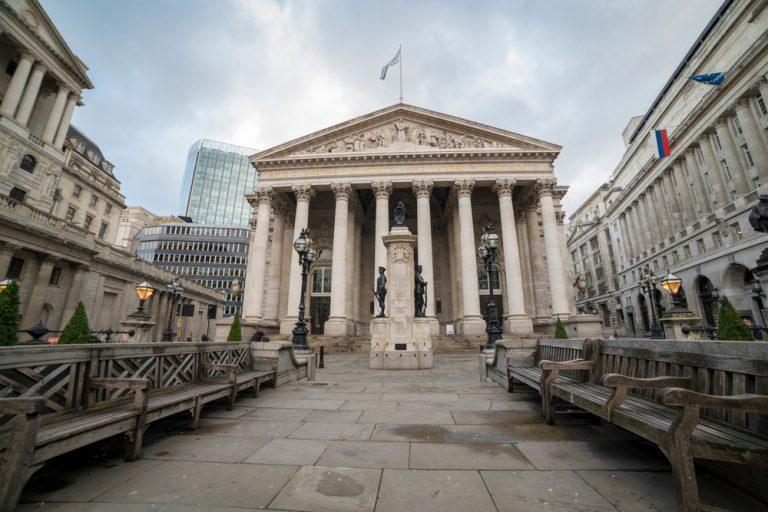
The Bank of England (BoE) has said that it will be injecting £150bn into the economy as an attempt to ease the UK into the second lockdown.
In the last three months of the year, the BoE has said it expects the economy to shrink down to 2%, however, will then bounce back in the new year assuming restrictions loosen.
The BoE said: “There are signs that consumer spending has softened across a range of high-frequency indicators, while investment intentions have remained weak…
“Developments related to Covid will weigh on near-term spending to a greater extent than projected in the August Report, leading to a decline in GDP in 2020 Q4.”
The Bank of England has also commented on employment. It said that it expects unemployment to grow from the current 4.5% to peak at 7.75% in the second quarter of 2021.
The BoE said in today’s report: “In the MPC’s central projection, GDP does not exceed its level in 2019 Q4 until 2022 Q1. As a result, unemployment is elevated.
“The unemployment rate is projected to peak at around 7¾% in 2021 Q2, before declining gradually over the forecast period as GDP picks up.”
The BoE has said it expects the UK economy will shrink by 11% this year, commenting: “Those restrictions include heightened England-wide measures for the period 5 November to 2 December, following an intensification of regional and subregional tiered restrictions; the five-level system of restrictions announced by the Scottish Government that came in on 2 November; the firebreak lockdown in Wales scheduled to end on 9 November, after just over two weeks; and a four-week period of additional restrictions in Northern Ireland ending on 13 November.
“Subsequently, restrictions are assumed to loosen somewhat. For the UK as a whole, the average level of restrictions that was prevailing in mid-October is assumed to take effect, and remain in place until the end of 2021 Q1.”
Sainsbury’s to cut 3,500 jobs as group swings to loss
Sainsbury’s (LON: SBRY) has announced plans to cut 3,500 jobs.
The supermarket will closes meat, fish and deli counters as well as 420 standalone Argos stores.
The news came as Sainsbury’s posted a pretax loss of £137m for the six months ended 19 September. This loss is down from a £9m profit a year earlier.
Simon Roberts, Sainsbury’s chief executive, said: “We are talking to colleagues today about where the changes we are announcing in Argos standalone stores and food counters impact their roles.”
“We will work really hard to find alternative roles for as many of these colleagues as possible and expect to be able to offer alternative roles for the majority of impacted colleagues.”
The changes come as online sales have increased from 19% a year ago to 40%.
Despite the new job cuts, the group has said that it expects to create 6,000 net new jobs by the end of the year.
The supermarket will pay out £232m in dividends.
Commenting on the latest results from Sainsburys’ Julie Palmer, partner at Begbies Traynor:
“Despite rising sales the big news from Sainsbury’s is that as we dive head first into lockdown and the run up to Christmas, it is closing Argos stores and potentially cutting jobs to restructure its model for the coronaconomy. As more businesses evolve to fit the current climate this will not be abnormal and we will see more restructuring and redeploying resource in the final quarter of 2020 and the first of 2021.”
“In the case of Sainsbury’s, its business model was already in transition as planned Argos closures were taking place, but in order to keep its market share in the next few months it has to seek ways to keep the new customers it has won this year.”
In October, Sainsbury’s announced plans to partner with Deliveroo so shoppers will be able to purchase up to order from more than 1,000 products through the Deliveroo app and have them delivered within 20 minutes. Clodagh Moriarty, Sainsbury’s Group Chief Digital Officer said, “With more and more shoppers looking for convenient and affordable meals delivered to their doors, our trial with Deliveroo brings our great value hot food direct to customers’ homes. We’re committed to making it as quick and easy as possible for our customers to shop with us and we’ll be listening to their feedback throughout the trial to understand how we can best serve their hot food delivery needs. We’re excited to see what our customers think before deciding if, how and where we go next with the offer.” Sainsbury’s shares (LON: SBRY) are -2.73% at 203,20 (0843GMT).Wizz Air swings to loss after 70% passenger plunge

Wizz Air (LON: WIZZ) has reported a €243.1m (£219m) for the six months ended 30 September 2020.
The budget airline carrier had a 70% plunge in passengers in the period, down from 22.1 million for the same six months the previous year.
Revenue at the group also fell by 71.8% from €1,670.8m to €471.2.
József Váradi, Wizz Air Chief Executive commented on the results: “Wizz Air distinctly outperformed the industry in the second quarter of the current financial year: we carried 5.8 million passengers at 66% load factor and 72% of our 2019 capacity against an ever-shifting backdrop of travel restrictions across all of our markets.
“Our ancillary revenues continue to increase on a per passenger basis, driven by a resilient performance of our core products. At the same time, our disciplined cost management allowed us to sustain our investment graded balance sheet with a total cash balance of €1.6bn.”
Wizz Air has warned that the upcoming quarter is likely to be a “challenging” one, amid the travel restrictions on top of the seasonal drop in travel.
“Notwithstanding the challenges that lie ahead of us during the remainder of this fiscal year, we have laid the foundation for a swift recovery: in addition to expanding into new markets, we intend to retain all our current staff base and thereby generate a head start for when demand returns,” said Váradi.
“We are confident we will emerge as a structural winner, enabling Wizz Air to grow profitably in the years to come.”
Over the past six months, the airline achieved significant expansion and added 13 new bases as well as 29 aircrafts.
Wizz Air shares (LON: WIZZ) have fallen 10% from a year high in February of 4,526.00p. They have since largely recovered and are currently trading at 3,498.00p (0815GMT).
Uber shares motor ahead 14% with drivers to be classed as contractors in California

Shares of ride hailing apps Uber (NYSE:UBER) and Lyft (NASDAQ:LYFT) shot up well over 10% on Wednesday, as the companies won bids to continue classifying their drivers as independent contractors in the state of California.
The development marks the overturn of what the BBC described as a ‘landmark labour law’, which was passed in 2019 and ruled that gig economy workers should have employee status and the requisite protections and rights that accompany that status.
Opposing that statement, a coalition of gig workers opposing the motion said that: “Billionaire [corporations] just hijacked the ballot measure system in CA by spending millions to mislead voters,”
“Uber, Lyft, & the other gig [companies] took a ballot measure system meant to give voice to ordinary Californians and made it benefit the richest [corporations] on the planet.”
Today’s measure – named Proposition 22 – was backed by ride-hailing apps, and cost companies some $205 million, the most expensive in state history. And, while some drivers backed the motion, labour groups stood in opposition, saying that employee status would guarantee rights such as minimum wage; overtime; expenses; paid sick days and leave; healthcare; and unemployment insurance.
Owing to its stance, the California Labour Federation accused Proposition 22 supporters of “attempting to buy their own law through the ballot measure process”. Having raised around $20 million to oppose the motion, labour groups were crushed by Uber, Lyft, DoorDash and Instacart, who purchased TV adverts and featured in-app ads in their services.
The ride hailing apps had also threatened to withdraw their services from California, had they been forced to start treating their drivers as fully-fledged employees.
In support of the move, the Yes on 22 campaign stated that: “California has spoken and millions of voters joined their voices with the hundreds of thousands of drivers who want independence plus benefits,”
“Prop 22 will protect drivers’ preference to be independent contractors with the flexibility to work when, where, and how long they want.”
Similarly, Terri Gerstein of the Harvard Labor and Worklife Program and Economic Policy Institute said in an email to CNN Business that the result will: “leave thousands of California workers in a precarious and perilous position, without basic rights like workers’ compensation, unemployment insurance, or the right to a safe workplace.”
Regardless, following the news, Lyft shares bounced over 11% to almost $29.2, while Uber shares soared between 14% and 15%, to almost $40.99.
US Big Tech stocks surge with election balance in Biden’s favour

On Wednesday, investors responded to election result uncertainty by heavily backing proven winners and market leaders, and this saw an enormous uptick in US big tech stocks.
After making upwards movements of around 3% in futures, the tech-laden Nasdaq Composite then saw additional growth, up around 4% – at 11,605 points.
This tech stock storm was led by gains posted by the big FANMAG members; with Apple (NASDAQ:AAPL) bouncing over 4%; Amazon (NASDAQ:AMZN) surging over 5%; Netflix (NASDAQ:NFLX) up 4%; Alphabet (NASDAQ:GOOGL) storming over 6%; Microsoft (NASDAQ:MSFT) up more than 4%; and Facebook (NASDAQ:FB) hiking more than 7%.
Also worth noting is that despite running out of steam – having rallied around 10% since Monday morning – Tesla mustered the energy to make modest gains. Meanwhile, having won a California bid to classify drivers as contractors, Uber added a notable 14% rally on Wednesday.
These big tech gains weren’t quite matched by other sectors, but their positive trajectory did incentivise US equities to climb more broadly. Indeed, the S&P 500 rose by over 2.7%, to 3,462 points.
Similarly, the Dow Jones rallied by around 2%, or more than 500 points. Significantly, this saw the index break the 28k benchmark for the first time in almost two weeks – reflecting some positive sentiment being injected back into equities, as investors come to terms with the election uncertainty. Perhaps, as seen with today’s big tech boom – the indecisive election hasn’t been quite as bad as many had feared.
For now, and coming towards the latter stages of trading in Europe, it appears that Biden has edged slightly ahead, with leads being eked out in Wisconsin and Michigan. As stated by Spreadex Financial Analyst, Connor Campbell, investors may also be buying back into the idea of a Biden win:
“It appears that once again investors are buying into a Joe Biden presidency, despite the race – which could still have days left in it yet – being on a knife-edge.”
“[…] Investors seem to be taking a kind of win-win attitude to the election. Yesterday’s growth was based on the hopes of a blue wave-led stimulus package. Now that the race is much tighter, and the Democrats have little chance of taking the Senate, the markets are celebrating the likelihood of preserved tax cuts and no healthcare reform.”
Morgan Sindall upgrades profit expectations, shares rise

Morgan Sindall shares (LON: MGNS) surged on Wednesday as the firm told investors it was expected to beat profit ranges for this year.
In the latest trading update, the group said that revenue and margin are both “well ahead” of last year.
Morgan Sindall is in the process of repaying the government for the furlough scheme. It has repaid £7.7m of the £9.5m that it borrowed during the scheme.
The group has declared an interim dividend of 21.0p per share, which is in line with 2019’s interim dividend.
John Morgan, Chief Executive, said: “Following the disruption earlier in the year, all of the Group’s activities are now fully operational again and delivering high levels of productivity. We welcome the Prime Minister’s clear statement that construction activity should continue through the new lockdown restrictions in England for November and we anticipate operating safely throughout with minimal impact.
“Our high-quality secured workload gives us good visibility for the rest of the year and as such, we now expect to deliver a full year performance slightly above the top end of our previous expectations.
“Our strong cash generation, position and balance sheet remain key differentiators. These, together with the improved outlook for the year, have enabled us to repay furlough monies and resume dividend payments as declared today.
“Despite the uncertainty that the pandemic brings, we have a sound platform for future growth with the Group geared towards future demand for affordable housing, urban regeneration and infrastructure and construction investment.”
Morgan Sindall’s cash position expects the average daily net cash for the full year to be in excess of £150m, again ahead of previous expectations.
Morgan Sindall shares (LON: MGNS) are +6.19% at 1.236,00 (1518GMT).