
Arcadia denies administration but is “taking all appropriate steps”

Arcadia could be taking out a £30m loan to deal with the impact of the second lockdown.
According to Sky News, the retail empire which owns brands including Topshop and Dorothy Perkins, has been hit hard by the pandemic and could be on the brink of administration.
A spokesperson told the Sunday Times it was not going into administration but simply “taking all appropriate steps”.
“It is not true that administrators are about to be appointed. Clearly, the second UK lockdown presents a further challenge for all retailers and we are taking all appropriate steps to protect our employees and other stakeholders from its consequences,” said the spokesperson.
During the first lockdown when non-essential retailers in England were closed, Arcadia furloughed the vast majority of its 15,000 workforce.
The group avoided collapse earlier this year thanks to securing a company voluntary arrangement (CVA).
The retailer was hit by the closure of 50 Debenhams stores due to the Arcadia concessions. Arcadia has an estimated 350 concessions in Debenhams stores, which together create an estimated £100m in combined annual sales.
Arcadia cut approximately 500 head office job cuts earlier this year.
Earlier this year, Philip Green sold BHS to Dominic Chappell who was recently jailed for tax evasion. As a result, the Arcadia owner was forced to inject over £360m to fund the pension deficit.
Chappell was sentenced to six years for evading tax on his BHS income of over £2m.
“You are not of positive good character. Your offending occurs against a backdrop of successive bankruptcies,” said judge Justice Bryan at the time.
Tenzo joins forces with Innovate UK to launch food waste initiative

AI sales forecasting and restaurant analytics startup Tenzo has joined forces with the UK’s innovation agency Innovate UK to launch a £500k initiative to “continue its fight against food waste in restaurants and help restaurants survive and thrive as the world comes out of the pandemic”.
In the midst of what Young’s Pubs has called one of its “toughest years” in its 189 years of trading, the UK restaurant industry has suffered immensely in the face of the coronavirus pandemic. Widespread lockdown measures forced the majority of restaurants to close their doors to the public during the spring, and despite the initial success of the government’s ‘Eat Out to Help Out’ scheme, footfall appears to have taken a fatal blow amid ongoing virus fears.
Tenzo – launched in 2016 with “a mission to revolutionise the way restaurants and retailers use their data” – has said that it intends to use the funds to “develop the most cutting-edge sales forecasting platform for restaurants using the power of artificial intelligence and machine learning”.
The new tool will use AI to “improve the accuracy of daily restaurant sales forecasts by up to 50%” and will give operators item-level and hourly forecasts so that they know “exactly what needs to be ordered and prepared as well as when”.
Christian Mouysset, Tenzo CEO and co-founder, welcomed the news of the new project:
“The UK hospitality industry generates over 1 million tonnes of food waste each year, amounting to over 4.5 million tonnes in CO2 emissions and costing the industry over £3.2 billion in lost revenue.
“On top of that, restaurants operate on a 3-5% average profit margin, making it one of the least profitable sectors in the country. The ongoing pandemic and subsequent lockdowns have also had a significant financial impact on the sector; restaurants need to save on costs now more than ever.
“By 2025, Tenzo will reduce annual UK hospitality food waste by over 180,000 tonnes – over 800,000 tonnes of CO2 and save the industry close to £100 million in costs”.
Tenzo’s business model is notably ambitious, but reflects the growing trend towards sustainability initiatives across a wide variety of sectors, from manufacturing to restaurant dining:
“We want to be in the pocket of every decision-maker in every restaurant and store on the globe, giving actionable insights to the right person, at the right time, and on the right device. Through our insights and forecasts, we aim to help every brick-and-mortar business become less wasteful, reducing the impact that humanity is having on the planet, and creating more efficient businesses that grow faster”.
Tenzo is already being used in over 10 different countries, including by famous brands such as Nando’s and TGI Friday’s.
Oil prices fall again with demand not expected to recover until ‘mid-2021’

After a harsh year for oil traders, in which some blue chip equities hit twenty-year lows, the short-lived enthusiasm for a COVID vaccine has seen oil prices slump once again at the end of the week.
Speaking on Thursday, the IEA reiterated the sentiment of other sceptics, saying that, “It is far too early to know how and when vaccines will allow normal life to resume”. With this in mind, it said that the outlook remains poor for production and transportation, and in turn oil demand and prices.
Concisely summing up the prognosis for oil prices over the coming months, Reuters market analyst, John Kemp, said: “Coronavirus vaccines are expected to boost international passenger transportation and oil consumption, but the first significant impact will not be felt until well into the second half of 2021, based on futures price movements on Monday,”
Echoing the concerns of the IEA, OPEC‘s recent MOMR downwardly revised its projections for oil demand and prices. It stated that the demand would be ‘severely hampered’ by the ‘sluggishness’ of transportation and industrial fuel demand in OECD economies, until at least mid-2021.
It added that while a vaccine may offer some relief for these pressures, challenges including Brexit, geopolitical challenges, global debt levels, and social unrest due to COVID and rising inequality, all represent notable downside risks.
Speaking on the PEC MOMR, Oilprice.com Editor, Julianne Geiger, said: “OPEC forecast that oil demand will fall this year 300,000 bpd more than it thought last month. OPEC also said that this weak demand would continue into next year. Cutting next year’s demand outlook as well, OPEC now sees 2021 oil demand 300,000 bpd lower than it thought last month. This means it sees 2021 oil demand at just 6.2 million bpd over 2020 levels, and still under 2019 levels.”
On the Pfizer vaccine announcement, and the subsequent celebration by airlines, finance and oil, Brent Crude hit $43.80, its highest level since September. As markets close on Friday afternoon, it sits at $42.98, down by 1.26% from the previous day – while WTI Crude fell by 1.80%.
FCA reprimands “reckless” Carillion for misleading investors

Former construction giant Carillion “acted recklessly” and made “misleading positive statements” about its finances prior to its infamous collapse in 2018, according to the Financial Conduct Authority (FCA).
Prior to sinking into liquidation two years ago, Carillion was one of the UK’s governments largest contractors. Its construction services spanned a wide range of projects, from roads and rail infrastructure to school buildings.
The Guardian stated that its collapse was “the biggest corporate failure in the UK in a decade” and prompted a nationwide recalibration of the responsibilities of executives, auditors, and the handling of public sector contracts by private companies.
On Friday, the FCA announced it had issued a formal warning notice to the defunct company and some of its former executive directors in September in relation to allegations of “breaches of securities rules” in the period between 2016 and 2017.
The firm has been accused of deliberately misleading investors about its financial stability even as it battled spiralling debt problems.
While the FCA did not publicly name names, it stated:
“They made misleadingly positive statements about Carillion’s financial performance generally and in relation to its UK construction business in particular. [The statements] did not reflect significant deteriorations in the expected financial performance of that business and the increasing financial risks associated with it”.
The city watchdog said that it would not pursue a financial penalty, but that Carillion should expect “public censure” as a result of its actions, and added that the FCA would seek further measures against former executive directors.
“At material times, the relevant executive directors were each aware of the deteriorating expected financial performance within the UK construction business and the increasing financial risks associated with it,” the FCA explained.
“They failed to ensure that those Carillion announcements for which they were responsible accurately and fully reflected these matters. The FCA considers that Carillion and the relevant executive directors acted recklessly”.
Some, however, have expressed disappointment in the FCA’s decision not to impose penalties on the collapsed firm, stating that public condemnation simply does not go far enough to hold the company to account.
Prem Sikka, emeritus professor of accounting at Essex Business School, condemned the FCA for failing to impose a financial penalty to serve as a warning to other companies, telling The Guardian it was “evidence of UK regulatory failure”.
The assistant general secretary of the Unite trade union, Gail Cartmail, also called for tougher legislation:
“This case demonstrates everything that is wrong with corporate law in the UK, a failure to act before a company collapses, very slow investigations following a collapse, and then if action is taken it is only a slap on the wrist”.
The FCA’s announcement comes on the same day Prime Minister Boris Johnson confirmed a £3.7bn ($4.9bn) funding package for new hospitals, including two major projects which had been stalled by Carillion’s collapse.
Caffè Nero launches CVA after pandemic “decimates” trading
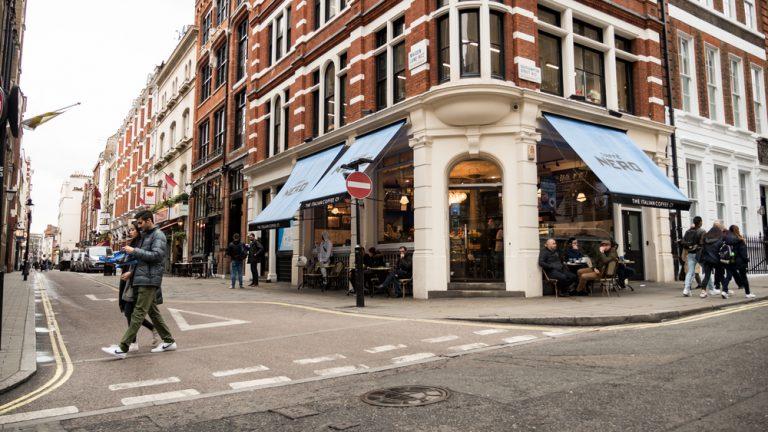
High street coffee shop chain Caffé Nero has launched a Company Voluntary Agreement (CVA) amid a major restructuring drive as the firm battles to avoid job losses and store closures. The impact of the Covid-19 pandemic has reportedly “decimated trading”, and that despite surviving the first lockdown, the current firebreak has forced the chain to resort to “further action” to stay afloat.
The firm – founded in 1997 and currently boasting over 1000 sites across eleven countries – is seeking a CVA, which will allow it to renegotiate terms with its landlords and creditors while still publicly trading. Accountancy firm KPMG has been appointed to oversee the process, with the hope that structural changes can be made “to better manage its fixed costs moving forward”.
Sales at Caffé Nero suffered immensely during the pandemic, as the majority of its 800 sites in the UK were forced to operate a take-away only service in the spring. Despite loosened restrictions over the summer when stores reopened, high street footfall remained well below average levels amid concerns about infection, and the chain has struggled to drum up enough sales to offset its losses in recent months.
While Caffé Nero was able to navigate the first lockdown – albeit with some difficulty – the firm said that the ongoing firebreak has driven it to new lows.
Gerry Ford, the chain’s founder and chief executive, stated:
“With many people continuing to work from home, ongoing limits to social interaction and a sustained reduction to footfall in city centres, it is unclear how long this will impact Caffè Nero”.
“Like so many businesses in the hospitality sector, the pandemic has decimated trading, and although we had made significant progress in navigating the financial challenges of the first lockdown, the second lockdown has made it imperative that we take further action”.
It is understood that the CVA will see the chain moving most of its stores to a turnover-based rent system, and has reassured that it will strive to keep store closures to a minimum.
Caffè Nero currently employs about 5,000 UK staff, and usually serves as many as 135 million customers every year.
“Like many others across the sector, the impact of measures introduced in response to the Covid-19 pandemic has been devastating,” said Will Wright, head of regional restructuring at KPMG.
“In putting forward this CVA proposal, the directors have worked hard to strike a fair compromise with stakeholders to provide the flexibility the business urgently needs to get it through the pandemic”.
ESMA warns fund managers to prepare for future adverse shocks

The European Securities and Markets Authority (ESMA) – the European Union’s securities markets regulator – has published a report on the preparedness of investment funds with significant exposures to corporate debt and real estate assets, warning managers to buckle up for potential future adverse liquidity and valuation shocks.
What did the report find?
The report identifies five “priority” areas for action which would enhance the preparedness of these fund categories:- Ongoing supervision of the alignment of the funds’ investment strategy
- Liquidity profile and redemption policy
- Ongoing supervision of liquidity risk assessment
- Fund liquidity profile reporting
- Increase of the availability and use of Liquidity Management Tools (LMTs)
- Supervision of valuation processes in a context of valuation uncertainty
Next steps for the ESMA
The ESMA said that it has “reinforced its coordination role regarding investment fund supervision” during the Covid-19 crisis, increasing its “frequent exchanges with NCAs [National Competent Authorities] on market developments and supervisory risks” – particularly on liquidity issues. In addition, the ESMA has also organised “regular data collection” on the use of LMTs by EEA [European Economic Area] UCITS and AIFs to ensure a more thorough overview of market performance. In response to a recommendation from the European Systemic Risk Board, the ESMA stated its intentions to “follow-up” with NCAs in relation to the “priority” areas 1, 2, and 5 in order to “foster supervisory convergence amongst NCAs in the area of liquidity risk management and valuation in stressed market conditions”. From a financial stability perspective, the ESMA said that its aforementioned priority areas should also “reduce the risk and the impact of collective selling by funds on the financial system, by addressing the liquidity and valuation risks at the level of the investment fund”. ESMA has confirmed it will continue to “monitor” this risk with regular assessments of the “resilience of the fund sector and participation to the development and operationalisation of the macroprudential framework for non-banks”.More than half of Brits in the dark about their credit score

A new report by SWNS Digital found that more than half of Brits have no idea what their current credit score is, raising concerns of a “huge impact” on their financial health.
The survey, conducted via OnePoll and commissioned by Experian (LON:EXPN) to mark the launch of its new credit score improvement service Experian Boost, included more than 2,000 British adults.
The results revealed a significant proportion were unaware of their score and even more could not identify the factors which contributed to it.
Three in 10 “never” look at their credit score, while a further quarter are “unaware of what factors contribute to it”.
Citing the one fifth of Brits planning to apply for credit in the New Year, SWNS warned of a brewing problem, as lenders use credit scores when reviewing applications.
The top reasons for Brits not spending more time monitoring their financial health included: lack of time (15%), not enough knowledge (21%), and being “scared” of what they will find (12%).
Despite this worrying statistics, the survey found that a third of adults have “become more aware” of their finances since the start of the pandemic, with more than a fifth now saying they believe they gave gained better control of their monetary situation since March.
This is mostly down to 56% of Brits having more time to sort out their finances, as lockdown measures forced the majority to work from home and gave some an opportunity to save on everyday expenditure such as travel and take-away coffee.
50% of those surveyed said that they wanted to be better prepared for the future, while 54% say that a benefit of taking control of their financial health has been having “peace of mind”. 26% of Brits are now “better at saving” as a result of the pandemic.
James Jones, head of consumer affairs at Experian, stated:
“The current circumstances mean many have had no choice but to take more notice of their spending.
“We also know that consumers are more likely to take an active interest in their overall financial health if they feel like they can directly control it – whether that’s by making a concerted effort to build savings or by improving their credit score”.
Gold prices inch higher as vaccine euphoria wears off

Gold gained towards the end of the week after the initial buzz from the news that the BioNTech-Pfizer vaccine proved more than 90% effective in Phase III tests begun to wear off, with doubts over the efficacy and distribution. Markets soared back on Monday in response to the US election result, but coupled with the fading optimism about a cure-all vaccine, the precious metal has inched higher as investors turn back towards their trusted safe haven assets.
After a 1.65% fall over the past month, pot gold rose 0.8% to $1890.90 per ounce on Friday afternoon (14:36 GMT) and US gold futures were up 1% to $1892.20.
A joint survey by Central Banking and Invesco released this week has revealed that 23% of world central banks see gold as a “more attractive asset” following the Covid-19 pandemic, while the remaining 77% responded their view on gold “had not changed”.
Even though opinions have not markedly changed, central bankers “generally expect their gold holdings to increase over the next year”, and general public investor demand for gold has been “robust” throughout the pandemic as the investing public still sees the metal as a safe-haven asset during market turbulence.
Commenting on gold’s gains on Friday, Kitco Metals senior analyst Jim Wyckoff told Reuters:
“We have got Covid-19 raging in the U.S. and the uncertainty surrounding that the potential for some more economic damage in the coming months; all that is working in favour of gold market bulls”.
He added: “Everybody was excited about the vaccine, but then the grim realisation sets in that it will probably not be available for general public consumption until late winter or spring and until then… we’ve got to get through some very rough waters”.
Eli Tesfaye, senior market strategist at RJO Futures, also weighed in:
“There is fear of a second wave with lockdowns and restrictions and the market has to work through (some) stimulus whether we’re in a lame duck situation or with a new President elect. So, the market at some point has to anticipate that cash and price in the potential inflation”.
Gold also received a boost from a weaker US dollar index on Friday, as well as dwindling crude oil prices trading at $40.50 a barrel.
Christopher Lewis, writing a price forecast for FXEmpire today, argued that gold looks set for an upward trajectory in the near future:
“You can make an argument for gold going higher regardless of what happens next, just due to the central banks, but when you start talking about currency destruction and economic slowdowns, gold is a bit of a ‘safety trade’.
“If the coronavirus situation continues to cause major issues, then we are looking at a scenario where people may be looking to pick up gold in order to protect wealth in a slowing economic situation as well”.
Gold as currency fintech Glint Pay secures additional £2.5m in funding

Gold as currency fintech firm, Glint Pay, has continued its expansion since its Crowdcube campaign in 2018. Today, it announced that it had secured an additional £2.5 million in funding to support its growth, to 138,000 active users in the next twelve months.
The funding news follows the launch of Glint Pay’s peer-to-peer transfer facility – called ‘Glint It!’ – which allows users to send and receive money, including spendable gold and other forms of currency. The company identifies itself as one of the first to use gold as ‘an everyday global currency’, with its app allowing customers to ‘buy, sell, spend and share’ their physical gold.
Speaking on the recent fundraiser, the company said that £1.25 million was made up of private investment, with the remaining £1.25 million being contributed by the UK government’s Future Fund. Glint said that the fund matches the capital raised through private investment, and that it ”was launched to support innovative companies during the Covid-19 pandemic”.
Since its launch in 2016, this latest round of investment sees the company’s funding amount to a total of £24 million. The company said that the recent funds will be leveraged to support the growth of its fintech app, and will contribute to key personnel hires, marketing investment and expanding the Glint userbase.
Commenting on the news and the company’s ambitions, Founder and CEO, Jason Cozens, said: “This latest funding is another significant step towards fulfilling our growth plans. We set out to transform the industry and the amount of funding we’ve secured since launch proves that there’s real appetite amongst investors and consumers for an innovative alternative to spend, save and store their finances.”
“After last year’s expansion into the US and the launch of our P2P offering, Glint It!, we’re eager to tackle the next stage of our growth and meet our ambitious targets over the next 12 months. Additional funding will help to facilitate this, but it is our diverse and exceptional leadership team that provides us with a clear, competitive edge.”
Mr Cozens added that the Future Fund has been “hugely effective” for many businesses in the current climate, and will help the government’s ambition to support the UK’s most innovative companies. He finished by saying that: “This fundraising will accelerate our international expansion as well as attract additional future investment sources, from both within the UK and externally.”
With the demand for online banking and fintech solutions allegedly rising by 50% during the pandemic, it will be interesting to see whether Glint will continue to capitalise on what is essentially an unsteady market. Also worth considering is that gold has rallied once again on Friday, but should a COVID vaccine be rolled out successfully, will safe havens like the dollar and gold lose some of their appeal – and would this affect Glint’s success?
Synairgen shares bounce 30% as SNG001 shown to accelerate COVID-19 recovery

Respiratory drug developers, Synairgen (AIM:SNG), saw their shares rally by almost a third on Friday, as the company reports that its SG016 trial demonstrated the efficacy of its SNG001 treatment in treating patients with COVID-19.
The company posted its recent trial data in The Lancet Respiratory Medicine journal, which illustrated ‘positive topline results’ from a randomised study of 101 hospitalised COVID-19 patients to either SNG001, Synairgen’s inhaled formulation of interferon beta-1a, or placebo.
Positive data has been reported over time, in July, September, and now in November, in greater detail. The trial was double-blind, randomised, placebo-controlled, and sought to test the efficacy and safety of inhaled SNG001 as a therapy for patients hospitalised with COVID-19. Patients received the SNG001 or placebo by inhalation via a mouthpiece once daily for 14 days, with the primary endpoint being the change in clinical condition, using the WHO Ordinal Scale for Clinical Improvement.
Synairgen said that, based on the trial, “SNG001 was shown to be well tolerated and patients who received the drug had greater odds of improvement and recovered more rapidly”. Across the scale of clinical improvement, patients receiving the SNG001 were seen to have greater odds of improvement, and were also more likely to recover to “no limitation of activity” during treatment. Most notably: in the placebo control group, there were three deaths. In the SNG001 sample, there were none.
Speaking on the trial data, company Professor Tom Wilkinson, Professor of Respiratory Medicine at the University of Southampton and Lead Author, said:
“The results confirm our belief that interferon beta, a widely known drug approved for use in its injectable form for other indications, may have the potential as an inhaled drug to restore the lung’s immune response and accelerate recovery from COVID-19. This pH neutral, inhaled interferon beta-1a formulation (SNG001) provides high, local concentrations of the immune protein which boosts lung defences rather than targeting specific viral mechanisms. This might carry additional advantages of treating COVID-19 when it occurs alongside infection by another respiratory virus such as influenza or Respiratory Syncytial Virus that may well be encountered in the winter months.”
Following the announcement, Synairgen shares rallied by between 30% and 35%, up to more than 131p apiece at lunchtime on Friday 13/11/20. Until July, the company’s stock was trading for around half this price, but once the first SNG001 data was published, shares traded for as much as 246p.