2021 Outlook: Gold, ESG, Oil, Brexit and shares to watch in the new year

For what will be one of the last UK Investor Magazine Podcasts of 2020, Alan Green joins us for a rundown of the key themes of 2021 and a recap of how 2020 has played out in markets.

Gold and oil have been particularly prevalent this year and we look at the market forces driving investors and explore whether this will continue into 2021.

We also look at a number of equities including Greatland Gold (LON:GGP), ECR Minerals (LON:ECR), EQTEC (LON:EQT), Powerhouse Energy Group (LON:PHE), and the UK house builders and banks.

There is also consideration paid to ESG and how this will develop next year given the surge in interest during 2020. With smaller companies innovative not to the taste of all investors we look at diversified funds such as the JLEN trust (LON:JLEN) that provides 5% yield.

Immotion Group shares rally on trading update

0

Immotion Group shares were over 15% higher after the group posted an increase in revenues for the end of year trading update.

The Group launched Let’s Explore Oceans in mid-October, which led to revenues in November increase by 87% compared to pre-launch in September.

Since the launch in mid-October 2020, sales of the product have exceeded expectations with total units sold up to and including 22 December, of over 11,000 generating total retail sales. Immotion Group are planning to launch the LEO in the US in February 2021.

Martin Higginson, chief executive of the group said: “2020 has been an extremely testing year, one we will be glad to see the back of. Like many entertainment businesses our LBE sites have seen their revenues hit as closures and restrictions were imposed upon them as a result of the Covid-19 pandemic.”

“We have reduced costs significantly in this division, and where possible, we have taken advantage of the furlough grants. We have reduced costs to a sustainable level and are confident that once normality does return our LBE business should see a very significant bounce back and along with Let’s Explore drive the Group to profitability.”

“The creation and launch of the ‘Let’s Explore’ Home Based Entertainment product has been extremely well received, allowing the Company to create a new and profitable business division. To date, we have only been able to sell the product in the UK, where we have been extremely encouraged by early sales. Selling over 11,000 units and generating retail sales in excess of GBP800,000 in a couple of months is a credit to the team. Following the recent placing we have been able to strengthen our supply chains, reducing the cost of goods significantly, as well as opening up fulfilment and sales in the USA as of mid-February 2021,” he added.

Immotion Group shares are trading 18.18% higher at 3.90 (1114GMT).

Octopus Energy valued at $2bn on Japan deal

0

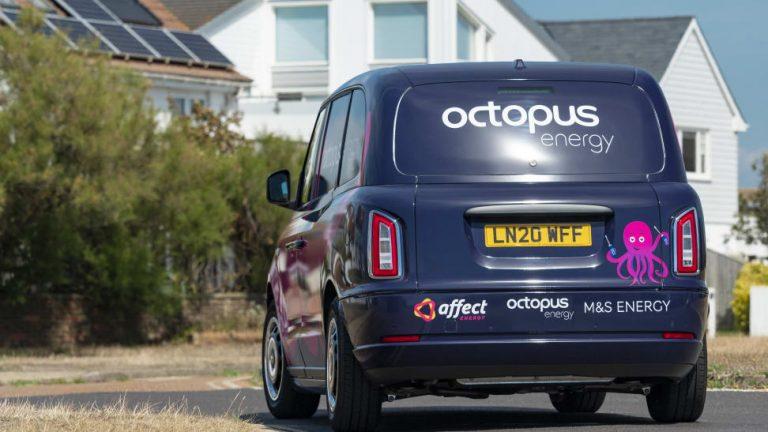
Octopus Energy has been valued at over $2bn after completing a deal with Japanese utility company Tokyo Gas.

The energy startup will be supplying electricity to homes in Japan. Under the deal, Tokyo Gas will buy a 9.7% stake in Octopus for $200m.

Greg Jackson, the founder and chief executive of the energy company, said: “When Origin invested less than eight months ago, we said it was fuel for stage 2 of our mission. Since then, Octopus Energy has accelerated that mission to make the global green revolution faster and cheaper by launching Octopus Energy Germany and New Zealand, acquiring Octopus Energy USA and acquiring Upside Energy to deepen our smart grid capabilities with their powerful technology.”

Takashi Uchida, the present of Tokyo Gas, said “Through this partnership, we will contribute to the achievement of a better lifestyle for customers by realising value creation and delivery tailored to every one of them.”

Octopus Energy is one of the UK’s fastest-growing energy suppliers. It has supplied energy to 1.8m homes in the UK.

Earlier this year, the group announced plans to create 1,000 new technology jobs.

Boris Johnson, said the new jobs will “provide exciting opportunities across the country for those who want to be at the cutting edge of the global green revolution”.

“It’s UK tech companies like Octopus who will ensure we continue to build back greener and remain a world leader in pioneering renewable energy, leading the path to net zero whilst creating thousands of skilled jobs.”

FTSE 100 & oil both dip amid stimulus concerns

0

The FTSE 100 was 0.15% in this morning’s trading.

Travel stocks and shares in hospitality, however, edged up amid the hopes that the new Covid strain is slowing down.

The top riser on the FTSE 100 was Airline group IAG, which was up 3%. Rolls Royce was 1.75% higher and hotel group Whitbread was up 2%.

Shares in Europe have opened higher with Germany’s DAX and France’s CAC both up 0.5%.

David Madden of CMC Markets said: “The French government started to soften its stance with respect to the two-day passenger and goods ban and that set the tone in European markets yesterday.

“The fears of the UK being cut off from the rest of Europe faded [yesterday] and traders bought back into equity markets as they took the view that goods would be freely moving across the English Channel again in the near-term.”

The price of oil also dipped on Wednesday on the latest Covid developments and concerns over Donald Trump’s threat not to sign the US stimulus bill.

Brent crude is down 1% at $49.55 and US crude fell to $46.50.

Stephen Innes, chief global market strategist at AXI was more hopeful on Trump and the stimulus bill, saying: “No one will walk away from a stimulus deal; it is all about what contours get changed. And frankly, I do not think Main Street will mind getting a $2000 surprise stocking stuffer, and neither will the markets.”

Raffi Boyadjian of XM commented on Trump, the FTSE, and currencies: “While it seems more likely than not that Trump will eventually sign the stimulus bill, it may be wrong to underestimate his determination to frustrate life for the incoming Biden administration as much as possible.

“But for now, optimism is the order of the day as investors were encouraged from some easing of the UK travel ban in Europe. France has decided to reopen its borders to UK lorry drivers coming through the Channel but will only allow those that test negative for the coronavirus.

“Currencies were similarly buoyed by the receding fears that the new virus strain would significantly hamper the global recovery, with progress on reopening the French-UK border underlining the positive tone.”

The FTSE 100 is currently trading -0.085% at 6,447.70 (1030GMT).

Will house prices continue to rise in 2021?

According to the property website, Zoopla, house prices in the UK are expected to finish 2020 on a high.

Despite the recession, lockdown and economic downturn, the housing market has seen a boom and this year will see £62bn more in agreed sales than last year.

Zoopla said that house prices rose by 3.9% in November and the cost of an average home in the UK reached £223,000.

House prices are expected to continue to rise into 2021, according to real estate firm Rightmove. Asking prices rose almost 7% this year and are expected to rise a further 4% over the next 12 months.

“It will be a busy start to 2021. The New Year is typically a time for resolutions for the year ahead, and many will see it as an opportunity to draw a line under 2020, which may well include a fresh start in a new home for those who have not already acted.  Many have already done so since the English market re-opened in May, and many more are continuing to do so despite the seasonally quieter run-up to the Christmas period and the declining chance of completing a purchase before the stamp duty deadline,” said Rightmove.

The stamp duty is set to end in March and house prices are expected to see a dip. The Office for Budget Responsibility has said the current boom will come to a close as the UK will see a spike in unemployment.

“House prices fell briefly as the pandemic struck, but recent indicators suggest they have subsequently recovered quite strongly,” the Office for Budget Responsibility said.

“This follows the easing of public health restrictions and the stamp duty holiday for residential property transactions that took effect on 8 July 2020. House prices are expected to fall back in 2021, driven by end of the stamp duty holiday and the hit to household incomes from the labour market adjustment that we assume will follow the end of the Coronavirus Job Retention Scheme.

“Despite a steady recovery from 2022 onwards, the level of house prices remains around 17 per cent lower at the forecast horizon compared to our March forecast.”

Job support must continue until pandemic ends, says BoE’s Haldane

0

Bank of England interest rate-setter Andy Haldane has said that the UK government support should continue until the Coronavirus pandemic ends.

In an interview with The Guardian, Haldane said that unemployment was “public enemy number one” and that the government should continue job support to prevent the unemployment rate creeping higher.

Since the pandemic, unemployment levels have risen from below 4% to over 6%.

“For me, many decades on, it remains public enemy number one, because of the devastating impact it has on people’s lives and their families’ lives,” he said.

“Policy has been tremendously important. A huge amount of insurance has been provided by the government and the Bank of England – supporting people’s jobs, supporting incomes, supporting businesses and supporting borrowing costs. Without that insurance the outcome for jobs, incomes and the economy would have been massively, massively worse.”

“Policy insurance has been crucial and will remain crucial during that bridging period as we hopefully squeeze the risk of the virus out of the system and reduce the risk of losing jobs and businesses. We need to provide that bridge, that insurance policy, for as long as the risk of either or both those things remains high.”

He added that the Bank of England would continue to provide support for as long as was needed.

Haldane said that there was still a long way to go beyond the Covid crisis and providing support is necessary for the UK population. He said: “We are still in a hole and the hole is still deep. We need to keep climbing out that hole through policy measures and the vaccine. But once we have climbed out – and we will – we mustn’t forget about long-term structural issues: what will give us good work at good pay.”

Rishi Sunak said in November that he would be extending the furlough scheme until the end of April.

The chancellor also announced that government-backed loans that are designed to support firms throughout the pandemic would continue to give “certainty well ahead of the 45 day redundancy notice period, with budget setting out the next phase of support more than 45 days before the new end date of the scheme”.

“Our package of support for businesses and workers continues to be one of the most generous and effective in the world – helping our economy to recover and protecting livelihoods across the country,” said Sunak.

“We know the premium businesses place on certainty, so it is right that we enable them to plan ahead regardless of the path the virus takes, which is why we’re providing certainty and clarity by extending this support.”


UK borrowing hits record high

Public sector net borrowing in November hit the third-highest since record began in 1993.

Borrowing last month hit £31.6bn. Between April and November this year, public borrowing has reached a total of £240.9bn, £188.6bn more than in the same period a year earlier.

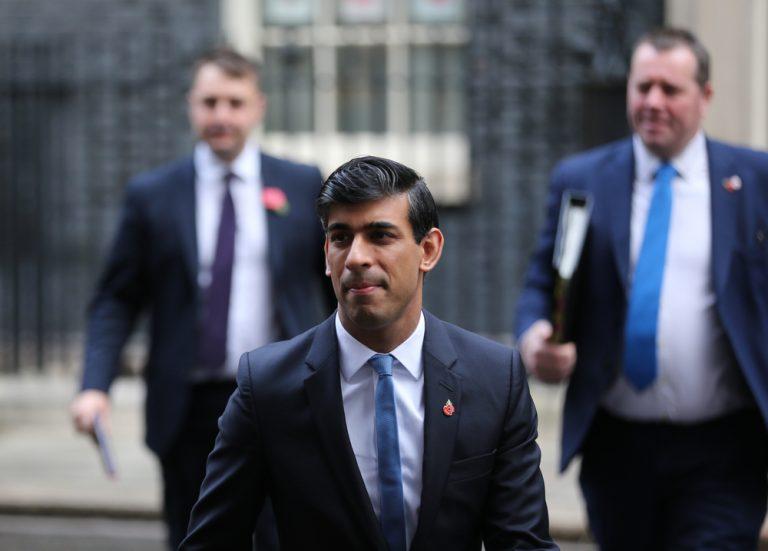
Last month, Rishi Sunak said that the current rate of borrowing was “obviously not sustainable”.

Sunak said: “In the midst of a crisis it’s absolutely right that we take the action that we have done to protect people’s jobs to protect their health, as we get through this. But what the numbers yesterday showed is that the projections for borrowing debt are ones which are obviously not sustainable. We can’t carry on at the level that we’re doing this year.”

It has also been announced that the UK economic recovery was slightly ahead of expectations in the three months ended September.

The Office for National Statistics said national income, or GDP, increased by a record 16% during this period, up from the 15.5% estimate.

Ruth Gregory, a UK economist at Capital Economics, said: “At least the drop in the saving rate left it far above its long-run average of 8.0%. That implies there is plenty of scope for household spending, and GDP, to rebound strongly once the restrictions are lifted.”

The UK’s national debt currently stands at £2.1trn.

Sunak, commented on the rate of borrowing: “As part of our plan for jobs we’ve invested £280bn to protect millions of jobs and businesses across the UK.

“This is the right thing to do to protect lives and livelihoods during this acute phase of the crisis. When our economy recovers, it’s right that we take the necessary steps to put the public finances on a more sustainable footing so we are able to respond to future crises in the way we have done this year.”

Toyota closes factories amid border chaos

0

Toyota has said that it will be stopping production at its British and French plants earlier than expected due to the Covid-19 border disruption.

As France banned all freight or cargo from Britain for 48 hours, the group faced shortages of parts. As a result, the engine plant in Deeside in north Wales, the factory in Burnaston in Derbyshire, and the French site will all close earlier than expected before Christmas.

Toyota said that the closures would “help ensure the safety and security of our employees and all our stakeholders, particularly our logistics partners and in consideration of society’s wider needs”.

Adding that the decision had been made “in light of the traffic bans that a growing number of countries have issued for travel from the UK and due to the uncertain nature of how long the borders will be closed for logistics activities”.

Boris Johnson spoke with French President  Emmanuel Macron on Monday evening to see if the travel ban could be lifted.

Johnson said at a Downing Street press conference: “I have just spoken to President Macron – we had a very good call – we both understand each other’s positions and want to resolve these problems as fast as possible.”

“I want to stress that we in the UK fully understand the anxieties of our friends about Covid, their anxieties about the new variant, but it is also true that we believe the risks of transmission by a solitary driver sitting alone in the cab are really very low.

“And so we hope to make progress as fast as we possibly can. I want to repeat that these delays only apply to a very small percentage of food entering the UK, and, as British supermarkets have said, their supply chains are strong and robust, so everyone can continue to shop normally.”

France is just one of over 40 countries that has suspended flights and trains from the UK.

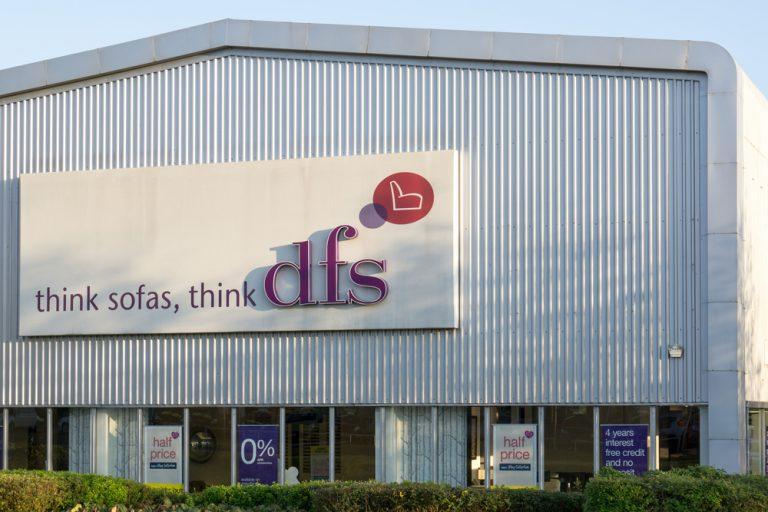
DFS shares rally on strong sales

DFS shares surged on Tuesday’s opening after the group revealed a 19% increase in gross sales in the 24 weeks ending 15 December 2019.

Despite the Covid-disruptions, the furniture retailer saw impressive growth in the online channel, where sales surged 76% compared to the same period a year ago.

The group said in a statement that as a retailer, they have benefitted from people spending more money at home over the course of the pandemic.

Tim Stacey, the DFS chief executive, said: “I want to thank every colleague in our Group for their resilience, spirit and determination to overcome the many and varied operational challenges that we have faced since reopening our business after the first lockdown.

“We are working all hours focusing on what we can control to look after our people and our customers. I want to thank our customers for their patience given the ongoing disruption to our deliveries due to port congestion and raw material shortages, as well as apologise to those that have experienced delays.

“While the current environment is clearly unpredictable, our business model is resilient and we are well set for medium-term growth,” he added.

Looking forward, the group expects full-year profit to within the upper half of the current market consensus range.

“Although our financial performance will never be immune to the short term market environment, we believe our cash generation across the cycle and our overall growth prospects will drive attractive long-term financial returns for our shareholders,” said the group in a statement.

Over 25% of the retailer’s showrooms are currently closed due to Coronavirus measures and the group has also been coping with issues surrounding suppliers and lack of raw materials.

DFS shares are trading +10.00% at 231.00 (0900GMT). In the year-to-date, shares in DFS have fallen from highs of 302.00.

Oil dives as new strain triggers travel restrictions

The price of crude oil plummeted on Monday as concerns mount over the rapid spread of a new strain of Covid-19, causing a mass travel ban between the UK and more than 30 other countries around the world as leaders fight to keep the variant from spreading.

Known as VUI-202012/01, the new strain was first identified in the South-East of England in September, and has been attributed to the steep rise in cases seen in London and the surrounding counties in recent weeks.

Despite the travel restrictions, it has already been confirmed in a number of countries including Denmark, Gibraltar, the Netherlands and Australia, while authorities have reported suspected cases in Italy, France and South Africa.

With widespread travel bans coming into force this week, demand for oil has already suffered a sharp decline, with Brent Crude down 3.90% just days after rising 1.5% to reach its highest since March last Friday, while WTI Crude similarly slid 3.97% after climbing 1.5% on Friday to its highest point since February.

“The new strain of the COVID-19 virus is worrying for the market, as it is believed to be more infectious, and could lead to a host of new travel restrictions, sapping oil demand,” Pan Jingyi, market analyst at IG, told S&P Global Platts today.

Warren Patterson, head of commodities strategy at ING, added: “Over the past few weeks we have seen quite a bit of speculative money moving into the market, and the fear of more lockdowns and travel restrictions that this new virus strain has raised is causing some of that speculative money to close their positions”.