GVC cancels its dividend with half-year profits falling 13%

Gaming and sports betting company GVC (LON:GVC) announced it would cancel its dividend after a challenging half-year of pandemic trading. The company saw first-half revenues fall year-on-year by 11% from £1.78 billion to £1.58 billion. This drop led to similar drops including a slide in earnings, with underlying EBITDA falling 5% from £367 million to £349 million. Similarly, the company reported a gross profit of £1.03 billion, contracting 13% year-on-year from £1.18 billion during the first half of FY19. GVC stated, however, that the difficult trading period had been somewhat cushioned by strong activity in its online gambling division, with the company’s online earning rising by 53% during the period. Despite this, the company said it recognised the difficulties it would face in what would continue to be an uncertain market, and as such, it had decided to conserve cash by cancelling its interim dividend, which had stood at 17.6p a share at the end of H1 FY19. Similarly, shareholders would see their dividend cover shrink further with basic EPS falling from a 0.6p loss per share, to 1.0p loss per share, while adjusted diluted EPS fell from 31.3p to 28.7p year-on-year.

GVC response

Commenting on the results and outlook, company CEO Shay Segev stated:

“Given the unprecedented trading environment, GVC has delivered an encouraging performance in the first half, underlining the strength of our diversified business model and the expertise, adaptability and dedication of our people.”

“These results show that we have a strong foundation. As a technologist, I have huge admiration for what Kenny and the rest of my colleagues have achieved but I am also determined to pursue a programme of continuous improvement as we focus on our four technology-enabled priorities.”

“These are leading the US market, organic growth, expanding into new markets, and being the most responsible operator in our industry. Our industry-leading technology will enable us to grow responsibly and sustainably, using our data-driven customer insights to ensure all of our customers have an enjoyable and safe experience while gaming with us. That is how we will deliver greater and more sustainable value for all our stakeholders.”

Investor insights

Following the announcement, GVC shares dipped slightly by 0.61% or 4.80p, to 780.60p per share 13/08/20 12:59 BST. This is comfortably below its 12-month target price of 1,080.00p, while also a 40% increase on its price on this day last year. The company’s p/e ratio stands at 12.06.


RA International shares rally 24% on ‘major’ contract win

Construction, facilities management and supply chain services provider, RA International Group PLC (AIM:RAI) saw its shares spike on Thursday, as the company announced it had been awarded a ‘significant’ contract.

The contract was signed with an undisclosed, ‘large’, ‘global’ construction firm with a focus on the oil and gas sector. It spans over a two year period and is expected to be worth a minimum of US$60 million dollars over that time frame.

RA International stated that under the agreed terms, it would be fulfilling its integrated facilities management capacity in Southern Africa. It added that the contract’s nature means that activity will escalate as time passes, with the provision of the company’s services expected to commence within a year of the contract being awarded.

The company also said that today’s contract award represents a ‘significant’ contribution to its order book, now standing at US$188 million.

Commenting on the news, company CEO Soraya Narfeldt, stated:

“This is an important contract win for RA International that underlines the strengths of our business and our growing reputation for managing and delivering large, complex projects for commercial clients in the energy sector.”

“It is testament to our capability to provide a full service offering to our clients’ personnel, to the value of our long-term, strategic approach to planning and to our focus on delivering resourceful solutions for clients notwithstanding COVID-19 and project specific challenges.”

Following the contract announcement, RA International shares rallied by a healthy 23.92%, or 11.05p, to 57.25p a share 13/08/20 12:00 BST. This rally saw the company take the top spot as Thursday’s biggest riser. It also sees the company beat its previous year-to-date high, which was set on Wednesday when the company hit 46.2p a share. The Group’s p/e ratio is currently 8.15, its dividend yield stands at 2.17%.

UK job vacancies on the rise, new figures show

0
New data from the Office of National Statistics has revealed UK job vacancies to be increasing. Between 31 July and 7 August 2020, the total volume of online job adverts increased from 53% to 62% of its 2019 average. This is the largest weekly increase in 2020. Whilst unemployment is on the rise and companies continue to announce large-scale redundancies, job adverts are on the rise. According to Jonathan Planner, an independent head hunter, the new figures should be taken with a “pinch of salt”. “Pretty much all of my clients have shut up shop until next year so the increase in the number of online job ads is an enigma,” he said. “I can only think that some employers are having to hire additional junior staff as people who have been working for them over the summer start heading off to university.” The largest rise in UK vacancies was in transport, logistics and warehousing, which boasts a 117% rise in the 2019 figures amid the pandemic. Meanwhile, job vacancies in media, arts, and culture have fallen by 41%. London mayor, Sadiq Khan, has called on Boris Johnson to do more to protect the sector. “Until we have an operational vaccine in place social distancing will have to continue to protect people’s health, and with employers planning to continue home-working well into next year, the numbers of people visiting the West End will be reduced for many months ahead,” he said. “As Mayor I’m doing all within my powers to help.”  

Watches of Switzerland shares soar on “strong performance”

0
Shares in Watches of Switzerland (LON: WOSG) have soared 25% on Thursday after the group posted a sales growth in June and July. Despite a fall in sales during the lockdown and 27.6% fall in revenue in the three months to 26 July, the luxury watch retailer said it was “delighted” with sales since the reopening of stores. Whilst stores were closed over the lockdown revenue fell, online sales jumped 79.3% in the quarter. In the year to April 26, revenue grew by 5.9% to £819.3m.

“I am delighted with our achievements during FY20, our first year as a public company. We delivered a strong performance during the first 46 weeks of the year before adapting with speed and agility to the challenges presented by the COVID-19 pandemic. Momentum accelerated in our US business adding to the positive performance in the UK and we remain confident in our strategy to drive profitable growth in both markets,” said Brian Duffy, the chief executive officer.

“Looking ahead, we will continue to invest in delivering on our strategic priorities to leverage our leading position in the UK and to become a leader in the US luxury watch market. We are confident that we are well-positioned to emerge even stronger from these uncertain and challenging times,” she added. The company is off to a promising start after floating in London last May. Watches of Switzerland (LON: WOSG) shares are currently trading +21.86 at 319.26 (1117GMT).

Tui reports 98% fall in revenue but remains positive for 2021

0
After posting a €1.1bn (£995m) loss for Q2, Tui remains positive as it reveals a 145% increase in 2021 bookings. This summer saw a 98% dive in revenue as bookings fell 81% and the group made plans to shut 166 High Street stores in the UK and Ireland. Tui has received €1.2 billion from the German government to stay afloat and it plans to cut costs by 30%. “We are targeting a permanent annual saving of more than €300 million with the first benefits expected to be delivered from FY21 and full benefits to be delivered by FY23,” said the group. “Negotiations have begun within respective business units and we expect FY20 restructuring costs to be in the region of €240 million in FY20, €40 million in FY21 and €10 million in FY22. “In two years’ time, TUI Group will emerge stronger, leaner, more digitalised and more agile, in what is likely to be a much more consolidated market. The company announced in May that it would cut around 8,000 jobs globally to save costs. Shares in Tui (LON: TUI) are trading down over 4% at 351.90 (1007GMT).

National Express shares take a hit as group posts £30m loss

0
As passenger numbers plummetted by 80%, National Express (LON: NEX) has posted a £30m loss for the first six months. The coach operator’s profits fell from £139.3m in the same period last year. Although the group recorded a record in January and February, the drop in travel amid the pandemic hit profits. National Express furloughed 40,000 members of staff and the government has said it will provide £700m in emergency funding to bus operators. With travel still impacted and high uncertainty surrounding the pandemic, National Express has not given profit guidance for the second half of the year. Dean Finch, National Express Group Chief Executive, said: “During the lockdowns we proactively communicated with customers to vary service and negotiate additional support and payments. We have also secured exceptional governmental funding across all of our major markets and made use of furlough schemes. We were swift to save operating costs as we have nimbly reduced service.” “As we have restarted services, we have again worked closely with customers and ensured safety is paramount. While there are some signs of demand returning, levels are both significantly reduced and subject to variability given local lockdowns, the impact of quarantines and uncertainty over the extent of US school re-openings. We do not know when pre-pandemic levels of demand will return but have developed plans to respond to future scenarios and maintain safe and efficient operations thereby ensuring the continued financial well-being of the Group.” “We remain fundamentally positive about the future. The diversification of the Group in recent years has provided resilience during the pandemic, as risk has been spread. In addition, we believe our leadership positions in many diverse and attractive markets are likely to strengthen, as other operators are unable to withstand the impact of the pandemic.” National Express shares (LON: NEX) have fallen over 12% and are trading at 154.84 (0857GMT).    

Gold sees largest one-day drop since 2013

The price of gold has slipped below the $1,900 per ounce benchmark, reaching a near three-week low of $1,872.19 on Wednesday, while gold futures also slid 2.4% to $1,900. It marks the largest one-day fall since 2013. Just last week, gold prices soared to a record high of $2,075 after sustaining one of its longest price rallies in history. The rally began back in 2018 and was expected to peak sometime in 2020, but the economic impact of the coronavirus pandemic sent investors clambering for gold, as it historically tends to perform well during periods of market turbulence. Despite the record fall, the price of gold is still up by nearly 30% this year. Its lowest level in 2020 was just $1,484 on 20 March, as the burgeoning fears surrounding coronavirus struck fear into equities worldwide. Hopes that the US government might approve another trillion dollar stimulus bill (after the $2.3tn package released in April) to boost the economy sustained investors’ interest in gold over the past few weeks, but with the dollar making a leaping comeback, attention has turned back towards typically more risky assets – such as stocks – and away from the coveted metal. Governments around the world have pumped unprecedented levels of state funds into their economies, as the pandemic paralysed the retail and travel industries, and sent global markets tumbling. The tsunami of additional cash flow helped to lift gold to its highest price in more than 7 years. But, IG Markets analyst Kyle Rodda told Business Insider, gold’s rally was unlikely to be sustainable: “It looks like some of the euphoria is coming out of the gold market. A lot hinges on US [Treasury bond] yields and the factors driving them at the moment. Also, the dollar’s strength will be something very important to watch over the next few days and weeks”. With this in mind, gold may well rally once again. The simmering geopolitical tensions between the US, UK and China look set to continue – especially as the US presidential election fast approaches, with Donald Trump and Joe Biden expected to go head-to-head over a proposed solution to both the situation in Hong Kong and Huawei’s controversial 5G project. And, the coronavirus pandemic has by no means just gone away. With cases beginning to rise once again across the UK, the US and several European countries, investors might be forced to run back to the relative safety of precious metals if markets take a turn for the worse. So, the record fall might not be something to despair about just yet. To this end, Naeem Aslam wrote for Forbes today: “Despite the current sell-off in the gold price, the future remains positive for the gold price. There is too much geopolitical uncertainty, and global economic growth is likely to remain fragile”.

ASOS shares surge to two-year high, raises profit forecast

British online fashion retailer ASOS plc (LON:ASC) is revelling in a two-year high in its share price, after the company announced that it expects full-year sales and profit to be “significantly ahead” of previous forecasts due to the surge in online shopping during the coronavirus lockdown. Shares at the company soared more than 13% on Wednesday afternoon, with investors set to gain from “strong operational performance and year-on-year improvements in profitability”.

Full year profit and sales are expected to be “significantly ahead of market expectations”, with revenue growth projected to fall between 17% – 19% and profit before tax in the region of £130 million – £150 million.

ASOS cited “stronger than anticipated underlying demand” and the continuation of the “beneficial” new returns policy – aimed at tackling the costly wear-it-once trend – as the key reasons for the company’s resilient performance during the pandemic.

The firm had been expecting to see returns rates “normalise” once lockdown measures eased and customers began to “feel more comfortable” arranging to return their purchases, but instead ASOS announced “a significant and sustained reduction in returns rates since April”.

Demand for popular “lockdown” categories – such as activewear and beauty products – grew more so than for clothing, and this no doubt played a role in reduced returns as these products have historically been harder to send back due to hygiene concerns, even before the pandemic. However, ASOS also cited a shift in consumer attitude toward online shopping as contributing to the fall in returns, with customers making “more deliberate” purchases since the company clamped down on exploitations of its lenient returns policy. CEO Nick Beighton welcomed the company’s strong results, commenting: “ASOS had a strong start to the year, making significant progress against the priorities we set out and delivering a better than anticipated first-half performance, driven by the operational improvements we are making to the business. “Along with other businesses, we have been significantly impacted by the COVID-19 outbreak. Our first priority was to quickly put in place the necessary measures to ensure the health and wellbeing of our people. I have been extremely impressed with the pace of change and the flexibility our teams have shown in adopting these new ways of working. “Since then, we have been focused on keeping our business delivering for customers whilst implementing a series of actions to mitigate the sales impact we have been experiencing. At the same time we have been working to strengthen our financial position, including reaching agreement with our lenders to provide us with additional short-term financial flexibility”. Despite its strong balance sheet, ASOS warned that it could not yet make solid predictions of its future performance, stating: “Looking forward, the consumer and economic outlook remains uncertain and it is unclear how long the current favourable shopping behaviour will persist”. Shares at the company nonetheless surged by 13.10% to 4773.00p at BST 15:14 12/08/20, continuing an impressive track record – up 50.55% over the past 6 months.

“Hard times are here” as UK plummets into recession

0
On Wednesday, data collected by the Office for National Statistics (ONS) showing two quarters of consecutive GDP decline confirmed what many have been expecting since the impact of the coronavirus pandemic first struck the economy at the start of the year: the UK is officially in recession. After a record contraction of 20.4% between April and June – the UK’s largest economic slump on record – the country nosedived into its first “technical recession” since the global financial crisis between 2008 and 2009, and the biggest quarterly decline since records began in 1955. The ONS’s record-breaking figures were reported by The Guardian to show that the UK economy shrank “more than any other nation” during the pandemic, as the government also faces mounting criticism after it was revealed that the UK suffered the highest coronavirus death rate in Europe. GDP only slid by 2.2% in the between January to March, but this was well before the full extent of the coronavirus pandemic had fully hit the UK, and when confirmed cases were still reportedly in the single digits. The outbreak began to wreak havoc on the economy during March, when the government imposed a nationwide lockdown and forced businesses up and down the country to close to the public. With a comparatively late response compared to other European nations, and with lockdown relaxing at similarly later dates, the UK suffered the deepest economic decline out of all of the G7 countries – more than double the 10.6% fall seen in the US. The ONS’s report stated that the pandemic had effectively erased 17 years of economic growth in just two quarters – forcing GDP to regress back to levels not seen since June 2003. Even as the economy began the recovery process once businesses reopened in June, GDP still only rose by 8.7% – 17.2% below the levels recorded in February 2020. Commenting on the expected – yet nonetheless depressing – figures, Chancellor Rishi Sunak sought to soothe fears with a message of optimism amidst criticism of the government’s handling of the crisis: “I’ve said before that hard times were ahead and today’s figures confirm that hard times are here. Hundreds of thousands of people have already lost their jobs and, sadly, in the coming months many more will. But while there are difficult choices to be made ahead, we will get through this and I can assure people that nobody will be left without hope or opportunity”. Financial analyst Connor Campbell stated that the ONS’s report is nonetheless evidence of the “bungling nature” of the government’s handling of the pandemic. Shadow chancellor Anneliese Dodds pointed the finger squarely at Prime Minister Boris Johnson, saying: “A downturn was inevitable after lockdown – but Johnson’s jobs crisis wasn’t. We’ve already got the worst excess death rate in Europe – now we’re on course for the worst recession too. That’s a tragedy for the British people and it’s happened on Boris Johnson’s watch”. It may not be entirely doom and gloom, however, as Luke Davis (CEO of IW Capital) assured that the numbers may appear worse than they seem:

“These figures are not wholly surprising given the catastrophic impact that lockdown had on many business. The word recession in the context of previous years is normally a by-word for low confidence, but in this case that is not necessarily true. Many firms are optimistic about their prospects and want to grow. Resilience is an important part of any business and firms that have survived this period will now be looking forward to growth and opportunity”.

That being said, Twitter was rampant with criticism for the government’s approach to the pandemic.  

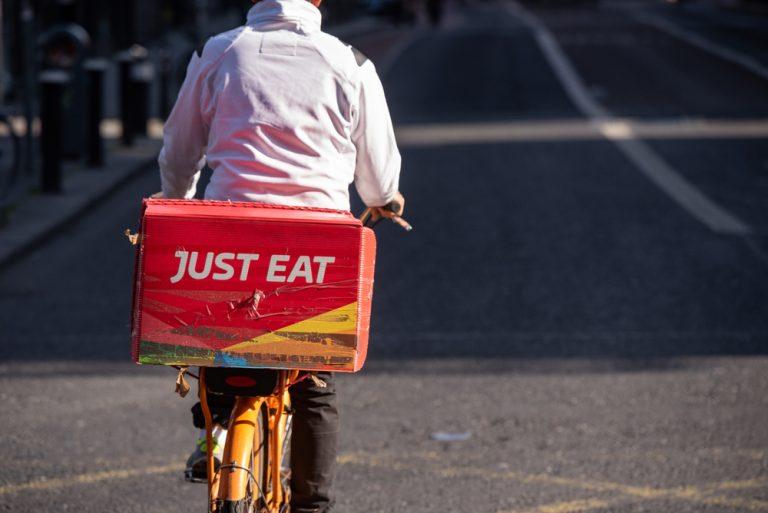
Just Eat shares up as H1 results reveal 44% increase in revenue

Dutch-owned food delivery tycoon Just Eat Takeaway N.V. (LON:JET) has published its half-year results, celebrating a 44% increase in revenue to €1 billion and a similarly impressive 34% growth in gross profit to €630 million. Shares at the company have risen more than 4% on the news. Just Eat reported that its adjusted earnings before interest, tax, depreciation and amortisation leapt 133% to €117 million, mainly driven by gross margin growth. Despite this, the company still sustained a loss of €158 million- compared to a loss of €27 million in the first half of 2019 – related to the acquisition of American food delivery firm Grubhub. In June, Just Eat announced its plans to buy the US-based delivery app for $7.3 billion. The move, which is reportedly “progressing well”, is set to make Just Eat the world’s largest food delivery firm outside of China. Company CEO Jitse Groen acknowledged Just Eat’s “fortunate position” during the coronavirus pandemic as food delivery demand surged. It was one of the few companies to benefit from the global lockdown during the first half of 2020, with restaurants and eateries shut in a number of Just Eat’s key markets between March and July. During the peak of the pandemic, Just Eat also launched a charity initiative with FoodCycle to help deliver free food parcels to the most vulnerable of the millions in isolation across the country. At the announcement of the project, UK Managing Director Andrew Kenny stated that Just Eat had “never been more important” and was committed to helping those “who need it the most”. Over the past twelve months, Just Eat has enjoyed a record number of new restaurants and active consumers, with the number of orders from returning customers also increasing – indicating its recent success may be here to stay. Despite their current strong growth, management at the firm believes the brand has seen underinvestment in recent years, and announced plans to “expand or recapture market-leading positions throughout our territories” through an “aggressive investment programme” targeted at the United Kingdom, Canada, Australia, Italy, Spain, France, and “several other ex-Just Eat markets”. Just Eat’s share price surged at midday by 4.49% to 9,068.00p BST 12:02 12/08/20, continuing its trend over the past 6 months which has seen shares increase by 8.95% – making it a rare success story to emerge from the coronavirus pandemic.