Nest to inject £5.5bn into climate-friendly projects, decarbonise portfolio

2
Nest (National Employment Savings Trust), the UK’s largest pension scheme boasting a total of 9 million members, has pledged to pump £5.5 billion – almost half of its entire portfolio – into ‘climate aware’ investments, and aims to reach net zero carbon emissions across all of its stakes by 2050 by divesting from polluting projects. The government-backed scheme – overseen by the Department for Work and Pensions – intends to ban all investments in companies involved in oil and coal mining as well as arctic drilling. The move has been hailed by climate activists as a significant step in the right direction, as pressure mounts on the industry to make more climate conscious investments. Nest’s pledge involves immediately divesting from companies involved in fossil fuel extraction and production, with the promise to complete the process entirely by 2025. Its £5.5 billion investment is predicted to reduce Nest’s carbon footprint at a rate equivalent to taking 200,000 cars off the road, or heating 50,000 homes using renewable energy sources. Alongside its commitment to greener investment strategies, Nest has announced that it will ‘actively pressure’ companies to align with the 2016 Paris Agreement’s goals – notably, keeping global temperatures no more than 1.5C above pre-industrial levels – and has promised to divest from those that fail to make adequate changes by 2030. The move appears at odds with comments made by UK Pensions Minister, Guy Opperman, who criticised divestment as ‘counter productive’ in an opinion piece penned for The Telegraph earlier this month. He advised that oil and gas companies should refrain from divesting in fossil fuel projects, stating that they could use their leverage to ‘nudge, cajole or vote firms towards lower-carbon business practices’. Following a fierce backlash from prominent divestment campaigners – including Green party MP Caroline Lucas and climate scientist Kevin Anderson from the Tyndall Centre for Climate Change Research – Opperman backtracked somewhat and clarified that divestment ‘should be part of a strategic approach to managing pension schemes’ exposure to risk, rather than something to be used by default’. However, the Pensions Minister maintained his initial stance that divestment would be counterproductive, stating that ‘forcing pension schemes to divest and sell their assets to others would be self-defeating’. Chief Investment Officer at Nest, Mark Fawcett, said that today’s announcement sent a ‘strong and clear message’ that the scheme is committed to taking climate concerns seriously, and that he has a duty to ensure that funds being pumped into retirement funds are used to protect the world that employees eventually retire into. “Just like coronavirus, climate change poses serious risks to both our savers and their investments. It has the potential to cause catastrophic damage and completely disrupt our way of life. No-one wants to save throughout their life to retire into a world devastated by climate change. “We believe our new policy sets out a clear vision of where we’re heading. We’ll now work on taking the necessary steps to become net-zero, using our close partnerships with fund managers to amplify our impact and coordinate activities towards meeting the Paris Agreement goals. “Not only is this the right thing to do, it’s also what our savers want and expect from us. How can we offer them the prospect of a better retirement if we ignore the world they’ll be retiring into?” Nest’s pledge follows a June report alleging that the UK government is considering ending financial support for fossil fuel projects overseas, as part of its wider aim to tackle climate change and align with the goals of the Paris Agreement. It emerged last month that £3.5 billion of public funds had so far been spent on polluting projects since the UK signed its commitment to the climate pact in 2016. Some responses to Nest’s announcement are listed below:

First financial education textbook to hit additional 700 schools across the UK

1
On Wednesday, youth money management charity, Young Money, announced the launch of the first ever financial education textbook to hit secondary schools in Scotland, Wales and Northern Ireland, following a previous launch in England, supported by Money Saving Expert, Martin Lewis. Some 45,000 textbooks will be sent out over the next 14 months, to state schools across the three countries, with Scotland receiving 21,500, Wales 12,500 and Northern Ireland 12,000. The aim is to have around 75 free textbooks in every secondary school of each country, with both the text and accompanying teacher’s guide also being made available digitally.

Today’s news follows the previous successful launch of the same textbook, called ‘Your Money Matters’, with 340,000 copies sent to state schools across England. This initial roll-out was funded in-part by a £325,000 personal donation from Martin Lewis, whose money aided in the development and distribution of the resource and teacher’s guide.

What is it and is it actually helpful?

The initial directive of the textbook was to educate 15 and 16 year-olds on financial literacy and money management, though it has been used in more broad subject areas and across a wider range of age groups. It contains facts, information and interactive activities for students to apply and test their comprehension. Young Money listed a broad outline of its contents as: 1. Savings – ways to save, interest, money and mental health 2. Making the most of your money – budgeting, keeping track of your budget, ways to pay, value for money, spending 3. Borrowing – debt, APR, borrowing products, unmanageable debt 4. After school, the world of work student finance, apprenticeships, earnings, tax, pensions, benefits 5. Risk and reward – investments, gambling, insurance 6. Security and fraud – identify theft, online fraud, money mules These themes will remain broadly consistent, though the organisation has said that feedback – from focus groups with teachers and government officials – is being taken into account, to amend the textbook to fit the respective curriculum of each country.

As far as initial reception is concerned, some 89% of teachers said that ‘Your Money Matters’ would improve the quality of financial education in schools, while 88% said the book would increase their confidence to deliver financial education.

One Subject Head at a Community School said:

“Excellent resource! Much needed for youngsters. We are very grateful to have received the textbooks and received excellent feedback from students. One student told me that our Financial Capability lessons changed the way her parents look at finances and motivated them to change the way they deal with money as a family.”

Why is financial education needed?

Fewer than three in ten 14-17 year-olds plan ahead for spending on the things they need and more than one in ten 16-17 year-olds have no bank account at all. Books such as these are much-needed to educate teenagers on the realities of financial planning and the importance of money management. Rather than learning as they go, making mistakes and missing financial opportunities, this book might help state school children make more prudent financial decisions from a younger age, and, importantly, have some understanding of the fairly inaccessible world of financial jargon. Commenting on the positive news, and why it’s so important, Martin Lewis said:

“The pandemic has shown the lack of personal financial resilience and preparedness of the UK as a whole. Not all of that can be fixed by improving financial education, but a chunk of it can. Of course, we need to educate people of all ages, yet young people are professionals at learning, so if you want to break the cycle of debt and bad decisions, they’re the best place to start.”

“I was one of those at the forefront of the campaign to get financial education on the national curriculum in 2014, and we celebrated then thinking the job was done. We were wrong. Schools have struggled with resources and there’s been little teacher training. Something else was needed to make it easy for schools and teachers. So even though I questioned whether it’s right that a private individual should fund a textbook, no one else would do it, so I put pragmatics over politics and did it in 2018.”

“I’m delighted that now we’ve proved the success of that book in England. The Money and Pensions Service has agreed to team up to provide this much-needed resource for the rest of the UK’s nations – adding a rightful sense of officialdom to the whole project.”


Taylor Wimpey shares fall with performance hit by pandemic wrecking ball

1
FTSE 100 housebuilder Taylor Wimpey (LON:TW) published a bleak set of first half fundamentals on Wednesday, illustrating what the company described as the ‘significant impact’ of the pandemic on its production activity. With home completions diving year-on-year from 6,541 to 2,771 during the half year period, the company simply lacked the firepower to replicate the previous year’s sales. Revenues dropped from £1.73 billion to £0.75 billion year-on-year, which, along with unforeseen costs, saw the company swing from a £312 million operating profit in H1 2019, to a £16.1 million operating loss during the same period in 2020. The company’s statement added that its PBT had swung from positive £299.8 million, to negative £29.8 million, and its operating margin flipped frm 18.0%, to negative 2.1%. Taylor Wimpey shareholders looked to be equally hampered by the financial rut, with adjusted basic EPS for the half-year turning from 7.4p to negative 0.7p for the half year 2020. The company said that the pandemic had forced it to shut most of its production sites during the second quarter, which greatly hampered its cashflow. Further, the losses listed above include £39.2 million in costs directly related to the impacts of COVID. For a glimmer of hope, the company announced there was strong sales momentum and customer interest towards the end of the period, with its order book volumes up 15% year-on-year at June 28. It added that its NHS care worker discount scheme had been well-received, with over 1,200 homes reserved. Also, Taylor Wimpey stated that all of its employees had returned from furlough, and that it has returned all furlough subsidies to the government.

Taylor Wimpey response

Company Chief Executive, Pete Redfern, commented on how pleased he was with the firm’s financial resilience during the challenging period, and stated:

“Our performance for the first half of 2020 has been impacted by the closing of our sites and sales centres but we have now reopened all sites successfully and safely and have returned to a sustainable level of sales and build. We are delighted that our NHS and care workers discount scheme has been taken up by over 1,200 households to date.”

“Looking ahead, balance sheet strength, a long order book and our high quality and growing landbank gives us confidence in our ability to navigate the challenges and emerge stronger from the pandemic. While uncertainties remain, we are confident in the underlying fundamentals of the housing market.”

Investor insights

Following the news, Taylor Wimpey shares dropped 7.78% or 10.35p, to 122.60p per share. This is far below brokers’ consensus target price of 164.00p a share, and represents an almost 30% drop from its price a year ago. The company’s p/e ratio is 6.55, its dividend yield stands at 3.13%.  

Barclays share price sinks as coronavirus provisions hit profit, despite revenue increase

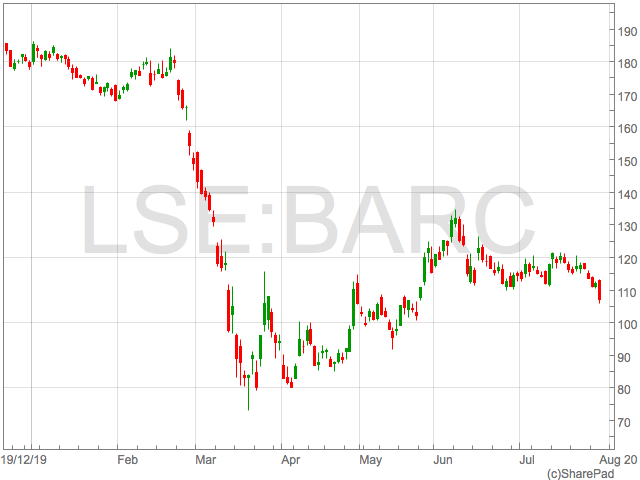
Shares in Barclays (LON:BARC) fell on Wednesday as the bank released their half year reported which highlighted continued pressure from coronavirus on the bank’s profitability. Barclays set aside a further £1.6bn in the most recent quarter meaning total impairment charges for the half year were £3.7bn. This hit profit for the quarter which came in at just £1.3bn, down from £3bn in the same period a year ago. The reduction in profit was recorded despite an 8% increase in revenue to £11.6bn. Barclays shares fell on the news, trading over 4% down at 107p in morning trade on Wednesday. However, the underlying performance of Barclay’s business appeared to show some strength as pre-provision profits of £5bn in the half year were ahead of the £4bn recorded in the same period a year ago. “Credit impairment charges increased to £3.7bn in the first half due to the forecast impact of COVID-19. However, our improved pre-impairment performance ensured that we still delivered £1.3bn profit before tax for the first half of 2020, post impairment.” “In the quarter Group total income decreased 4% year-on-year to £5.3bn, with total costs down 6% to £3.3bn. Following our £1.6bn quarterly credit impairment charge, profit before tax was £359m, and Group RoTE was 0.7%, with EPS of 0.5p,” Jes Staley, Barclays CEO, summarised in a statement. There was strength in the banks trading division which saw revenues increase nearly 50%. Higher market volatility in equities and fixed income in the midst the coronavirus crisis were central to the increase in revenue from investment activity. Barclays overal Corporate and Investment Banking (CIB) revenue was up 31% to £6.9bn in the half year. Barclays also revealed there involvement in the government’s support for British business through the Bounce Back Loan Scheme and CBILS. “Since late March, we have helped to deliver around £22bn of vitally important COVID-19 government support measures to UK businesses to help fund them, including 250k government backed Bounce Back Loans totalling c.£7.7bn, c.£2.5bn under the CBILS programmes and c.£11.7bn of commercial paper issuance,” said James Staley, Barclays CEO. “To help consumers with their short-term household finances more than 600k payment holidays1 have been provided along with other fee waivers and support measures. We have also already distributed £45m of our £100m Community Aid Package to COVID-19 related charities in the UK, US and India to help rebuild communities.” “Our CIB is taking a leading role helping clients to access capital markets to raise equity and debt, underwriting c.£620bn of new issuance in the quarter. In the equity capital markets, where we are a UK leader and broker to 40 of the FTSE 100 and FTSE 250 companies, we supported UK companies to raise £4.0bn as they navigate this crisis.” The Barclays CEO continued to highlight the diversified nature of the business that produced £5bn in profit, before the impact of coronavirus provisions. “The reason that we have been able to support the economy as extensively as we have and remain financially resilient is because of our diversified universal banking model. Our strength in diversification has delivered pre-provision profits of £5.0bn and, even after impairment, we remain profitable. Income increased 8% to £11.6bn for the half, with total costs down 4% to £6.6bn resulting in positive jaws of 12%, and an improved cost to income ratio of 57% versus prior year.” “In our CIB, income increased 31% to £6.9bn driven by strong performance in our Markets business, particularly in FICC (up 83%) and Equities (up 26%), and an 8% increase in Banking fees income through continued momentum in both debt and equity capital markets.” “Our consumer business income decreased by 11% in Barclays UK and 21% in CC&P as a result of the lower interest rate environment, fewer interest earning balances, reduced payments activity and action to provide support for customers.” “Our CET1 ratio stands at 14.2% which underscores the strength of our balance sheet. Although we will remain well capitalised and ahead of our minimum requirements, we may experience stronger capital headwinds in the second half of the year. The Board will decide on future dividends and capital returns at the year-end 2020.” “While the remainder of 2020 will be challenging, our diversified model means we can remain financially resilient and continue to support our customers and clients.”

Barclays share price

With today’s drop adding to a rather dismal 2020 for Barclays share price, investors are now looking at an overall fall of 39% for Barclays share year-to-date.

ECB tells banks to extend dividend freeze, Bank of England considers following suit

2
The European Central Bank has called on Eurozone banks to continue scrapping dividends and to be “extremely moderate” with its bonus payments to staff, until at least the beginning of next year. Today’s call by the ECB is expected to be mirrored, at least in part, by the Bank of England. The move by Europe’s two most significant central banks, is designed to preserve capital, to help companies and families seeking assistance due to pandemic-related hardships. Facing what is likely to be a deep, global recession, protecting banks’ capital will allow them to absorb losses and have more lending firepower.

The ECB initiative

Making a statement on behalf of the European Central Bank, chair of the the ECB supervisory board, Andrea Enria, stated: “The build-up of strong capital and liquidity buffers since the last financial crisis has enabled banks during this crisis to continue lending to households and businesses, and thereby to help stabilise the real economy.” “Therefore, it is all the more important to encourage banks to use their capital and liquidity buffers now to continue focusing on this overarching task: lending, whilst of course maintaining sound underwriting standards.” Today’s call for freezes to capital pay-outs would merely be an extension of the earlier call, in March, for European banks to freeze dividends until October. The call came as the second half of the ECB’s quid quo pro, with the central bank loosening regulations and offering financial support to the 117 big banks it oversees.

Bank of England looks to follow suit

The Bank of England’s Prudential Regulation Authority approved of the ECB decision, and said on Tuesday that it would carry out a review during the fourth quarter, to determine whether it should ask its banks to freeze dividend payments during the start of 2021. “The assessment will be based on the current and projected capital positions of the banks and will take into account the level of uncertainty about the future path of the economy, market conditions and capital trajectories prevailing at that time,” the Bank of England statement read. The Bank of England, much like the ECB, previously called for a freeze on pay-outs, which included dividend payments, share buy-backs and cancellations of bonuses for bank senior staff. The organisation noted that such pay-outs were an innate part of a healthy banking system, but judges that suspending them was a, “sensible precautionary step given the unique role of banks in supporting the wider economy through the period of economic disruption”. Certainly, the sentiment is there for the Bank of England to call for an extension to the pay-out freeze, but whether or not it will follow the ECB’s lead will remain unclear until the fourth quarter review.

How Amazon plans to take on supermarkets

0
The Amazon Fresh service will now start delivering groceries for free for Amazon Prime customers. In a move that will see it expand into the market, the tech giant will offer same or next-day grocery deliveries for customers in London and in the southeast. During the lockdown, supermarkets struggled to keep up with the surge in demand for online grocery shopping. Online food sales were seen to have almost doubled during the pandemic – and Amazon is keen for a slice. Russell Jones, country manager of Amazon Fresh UK, said: “Grocery delivery is one of the fastest-growing businesses at Amazon and we think this will be one of the most-loved Prime benefits in the UK.” “We’ve been planning this for a long time. It’s a big step up in volume. In the early days of lockdown, all our capacity was being used. We’re confident that we can launch this service now at this point in time,” he added.

Why is this significant?

The online retailer has seen demand reach new highs as it became a key retailer over lockdown for many stuck at home. Consumers spent over $11,000 a second on Amazon products and the share price grew by a third in one month during the height of the pandemic. Retail analyst, Richard Hyman, said: “[Amazon] can be compelling, disruptive and it’s a business with gigantic ambitions.” “I think they will be a big player in food retailing online. They wouldn’t be doing it otherwise. Most of the markets they go into, they want to be the biggest player. “The frightening thing for everybody else is that they all really need to make money, whereas Amazon doesn’t and that places them at an enormous advantage.” Shares in Amazon (NASDAQ: AMZN) are trading up 1.54% at 3,055.21 (0830GMT).

How investing £3k in Tesla and Bitcoin could have made you £150k in a year

Trendy investment opportunities such as Tesla (NASDAQ:TSLA) shares and Bitcoin may be overlooked by bears and sceptics alike because of their volatility, but when handled with good judgement – and luck – they can also be wildly lucrative. This article is testament to that fact, as it shows how in only eight steps and a little over a year, you could have grown a £3k investment by more than 5000%.

March 2019 to July 2020 and the 8-step formula:

Step One: It’s the 15th of March 2019, you take £3k out of your savings or current account and approach a broker to buy one Bitcoin, currently priced at £2,995 after the alternative currency’s bubble burst in 2018. You then take an early summer holiday you’ll pay for later on, and watch the Bitcoin price recover. Step Two: Hitting its one-and-a-half-year high on the 9th of August, you sell your Bitcoin for £9,371. Step Three: You see Tesla’s Q3 profits are set to be announced on the 25th of October, so before then you look for the best time to convert your Bitcoin pounds into dollars. On the 21st, when cable stands at 1.30 – the best rate for the pound-holders since May – you convert your pounds into $12,182. Step Four: Also on the 21st of October, on what’s ended up being a very busy day, you see some positive predictions for Tesla’s Q3 emerging. You buy as many Tesla shares as you can – 48 – at a price of $12,168 without fees. Go and enjoy a prolonged Christmas break, you’ll earn it later. Step Five: Looking to offset the cost of Valentine’s Day, you sell all of your 48 Tesla shares on the 19th of February 2020. The shares sell for $917 apiece, yielding $44,016 excluding fees. Step Six: ‘Black Monday’, ‘Coronavirus Crunch’ and lockdown. March has been costly for all those who didn’t sell off during the Valentine’s sweet period, and the month ended up being a fire sale for fast-handed and shrewd investors. You look back at Tesla, now sitting at $361.22 a share on the 18th of March. Spending everything you can, you bag 121 shares for $43,707, plus change. Step Seven: Having bought at the stock’s year-to-date nadir, the trajectory of your shares’ value is consistently upward, making several headlines and achieving new milestones each week. Then, prior to what is expected to be a fairly upbeat quarterly results publication, you sell all 121 of your shares on the 20th of July, at the all-time-high price of $1,643 per unit. You make a total of $198,803 excluding costs. Step Eight: Between the 20th and today (the 27th), you choose the best day to convert your cash back to pounds. Settling for the 24th, at a rate of 1.28, you change your dollars to pounds, leaving you with £156,537. This number could be higher if we’d waited for more favourable interest rates – say, after US-China tensions had de-escalated, and after US equities had had some time to recover from this week’s busy economic calendar.

What does the Bitcoin – Tesla investment formula teach us?

First, that when played right, even volatile and seemingly faddish trading trends can yield huge returns. Second, that while most people were in a state of panic over coronavirus, the pandemic offered some very attractive opportunities for investment, which I’m sure many took advantage of. However, there are also lessons we should heed. First, to yield the kind of returns we’ve discussed, you’d have to invest on the right days, supported by the right information. These kind of investment decisions are normally part-luck and part-judgement, and in the case of the latter, are normally done best by those with the contacts and experience necessary to access and identify crucial pieces of information which dictate price movements. This research was done for fun, with the (indulgent) gift of hindsight. Second, and concurrent with the idea that market shocks offer opportunity, the initial ‘U-shaped’ recovery in June has in some ways inverted during July, and may continue in such a fashion for the near future. Prior to some longer term economic recovery, the next few months could be the opportune time to identify ways of making the best of a bad situation.

Bitcoin poised to soar alongside gold, surges past $10,000

Bitcoin – the world’s largest cryptocurrency – rose above $10,000 on Monday for the first time in more than 6 weeks, alongside risk asset gold hitting an all-time high of $1,940. According to Bloomberg, Bitcoin opened at $10,169 at 6am in New York, wavered a little in the early trading hours before rallying to $10,335. Over the last 7 days, the typically capricious cryptocurrency has risen in value by nearly 11%. With heightened tensions between the US and China, and a concerning rise in coronavirus cases across Europe, investors are increasingly turning to safe-haven assets such as gold to weather the volatility of global markets in recent days. Bitcoin has been touted as being a potential safe-haven investment – even nicknamed ‘digital gold’ by crypto fans – but it generally tends to trade in tandem with equity markets and is infamous for being extremely volatile. Forbes noted ‘swings of 10% or greater are sometimes occurring every few hours,’ which highlights the volatile nature of the price. However, as Bitcoin and gold are not tied to any specific country, and with gold historically performing better during periods of market turbulence, they are both highly sought-after assets by investors looking to minimise their losses when markets begin to quake. According to a report from JPMorgan Chase & Co. strategist John Normand, Bitcoin has sustained above-average flows over the course of this year, despite massive market turbulence as a result of the coronavirus pandemic. Nigel Green, chief executive at financial advisory giant deVere Group, commented on Bitcoin’s performance on Monday: “Bitcoin is currently realising its reputation as a form of digital gold. Up to now, gold has been known as the ultimate safe-haven asset, but Bitcoin – which shares its key characteristics of being a store of value and scarcity – could potentially knock gold from its long-held position in the future as the world becomes ever-more tech-driven. “Geopolitical issues, such as the U.S.-China spat, will prompt many savvy investors to increase exposure to decentralized, non-sovereign, secure digital currencies, including Bitcoin, to shield them from the turbulence taking place in traditional markets. “Cryptocurrencies are widely regarded as the future of money – yet what is less reported upon is that Bitcoin and its peers are increasingly regarded a safe haven in the present”.

Gold price hits all-time high with bleak economic horizon

Back in February, I predicted the two-year gold price rally was not yet at its peak, and that it would hit $1,800 before it consolidated. Now – perhaps alongside a hat inscribed with ‘captain obvious’ – we can say that even my optimistic predictions were reserved, as gold rallied 2% on Monday, to its all-time-high of $1,940. This has, predictably, been led by the COVID pandemic, which gave gold’s long-running rally a reason to crescendo. As stated by Florian Grummes of Midas Touch Consulting, in our previous gold price commentary: “There are no contrarian signals from sentiment analysis for a sustainable turnaround and trend change in the gold market. Rather, the “grand final” of the party that has been going on since August 2019 is likely yet to come” “The mood among gold investors is currently optimistic, but the Gold Optix still has a lot of room for more optimism and greed.” Now, these comments were made prior to global quarantining and economic slowdowns, and in hindsight, they seem almost oracular in their insights. The ‘grand final’ of the gold price rally party certainly has been an occasion to remember, but is it over yet?

The economic outlook gives the gold price some headroom

With Britain’s reimposition of quarantine measures on travellers returning from Spain – and the subsequent price drops on Easyjet, TUI and IAG shares on Monday – we should assume that the first-order economic effects of the virus are far from over. It is reasonable to factor in the possibility of additional travel restrictions and more regional reimpositions of lockdown measures, as coronavirus threatens to flare up for a second time amid efforts to return to normality. In addition to these immediate impacts, we have the widely discussed second-order issues of unemployment, adjustments to the range and provision of companies’ services, and changes in consumer behaviour – all of which will likely contribute to relatively slow economic activity for the rest of the year. Further, and beyond pandemic considerations, we must take into account the impacts of political tensions. British sentiment will continue to be bogged down by Brexit, and a mixture of Brussels loggerheads and the likelihood of extortionate trade deal terms with the US. In addition, the US itself is contributing to poor market sentiment, with a mixture of renewed tensions with China, and a busy economic calendar this week. Speaking on US politics, and the impact this is likely to have on gold prices, Spreadex Financial Analyst, Connor Campbell, stated: “Investors don’t buy the precious metal for fun. It provides an ostensible financial safe haven away from the world’s uncertainties and stresses, of which at the moment there are numerous. This doesn’t just include the COVID-19 pandemic, but the latest geopolitical flare-up between the United States and China.” “[…] The US is facing an incredibly busy week, aside from COVID-19 and US-China tensions, with the latest Federal Reserve meeting on Wednesday, the first Q2 GDP reading – which is going to be UGLY – on Thursday, and a stacked earnings calendar including appearances from the golden trio of Apple, Alphabet and Amazon.” The takeaway from this analysis should be that the economic outlook is not peachy. With a combination of a potential COVID second wave and UK-US protectionist politics, any forecast of a near-term economic recovery need be taken with a pinch of salt. What this means for gold is that the ‘grand final’ crescendo of its price rally may not yet be over, and today’s all-time high may not even be the highest we see gold prices hit this year. At the very least, and even with some price correction, the bleak economic situation should see gold keep its place above the $1,500 mark it started the year on.

Easyjet and TUI shares drop 11% on Spain holidaymaker quarantine

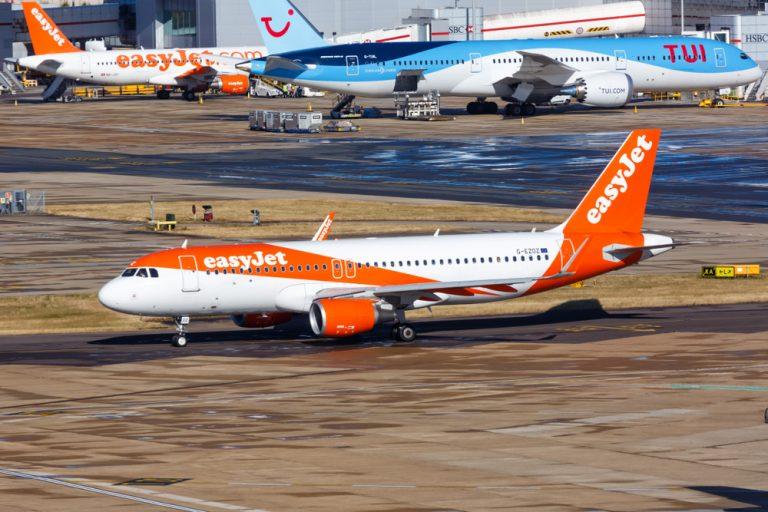
Shares in aviation firms such as TUI (LON:TUI) and Easyjet (LON:EZJ) dipped sharply on Monday, following the UK government’s decision to require all holidaymakers in Spain to quarantine themselves for a fortnight, upon their return to the UK. The move is a back-step in the ‘return to normal’ programme, and is unlikely to be the last of its kind, as travel and business begins to pick up across the European mainland. As it stands, though, the weekend’s news saw TUI, Easyjet and IAG shares down by 14%, 13% and 10% respectively after the bell on Monday morning, with the government warning that other countries may soon be added to the quarantine list. Speaking on the announcement, IG Senior Market Analyst, Joshua Mahony, stated:

“The airlines have led the loses in early trade today, with the likes of TUI, IAG, Dart Group, easyJet, and Ryanair all suffering after the swift UK decision to reimpose a 14-day quarantine on any flights from Spain.”

“Whilst some will criticise the speed at which these measures have been imposed, it does show a willingness to act early in a bid to reduce imported cases in the UK.”

“With Ryanair losing €185m over the April-June period, airlines desperately need a smooth summer as they bid to stabilise their balance sheet after months of losses.”

“Unfortunately, this Spanish quarantine announcement is unlikely to be the last of its kind, with outbreaks throughout Europe likely to provide a stop-start summer for airlines as different regions attempt to extinguish any surges in Covid-19.”

The news of airlines declining has also had a wider impact on the UK economy, with the FTSE dipping from 6,123 to 6,093 points at the start of trading, before regaining some composure and pushing back up to 6,109 points, still down 0.24%. Also, after recovering slightly, Easyjet shares are down 11.22% to 522.92p per share. This is up on its 475p nadir on 3 March, but well below its June recovery spike, where it reached 891.00p per share. Meanwhile TUI shares have fallen 11.55%, to 300.38p per share – above its 254p nadir in April, but far beneath its 530p lockdown peak on 27 May.