
NatWest beats forecasts and returns to profit
NatWest (LON: NWG) has beat analyst expectations in the third quarter after posting a pre-tax profit of £355m.
Boosted by the number of loans issued during the pandemic, the lender’s profit was well above the expected £75m loss.
Looking towards the end of the year, NatWest has said that provisions are likely to be at the lower end of a £3.5-4.5bn.
Commenting on the Q3 results, chief executive Alison Rose said: “These results demonstrate the resilience of our underlying business and the strength of our balance sheet in the face of significant continued uncertainty. Our sector-leading capital position, strong levels of liquidity and intelligent and consistent approach to risk mean we can continue to provide our customers and communities with the support they need.
“Although impairments were relatively low in the quarter and we have seen some positive trends across our customer base, the full impact of Covid-19 remains very unclear. Challenging times lie ahead, especially as the current government support schemes come to an end and as new Covid-19 related restrictions are introduced. We continue to deliver well against our strategy, building a bank that champions potential and has the capability to grow.
“By building deeper relationships with our customers at every stage of their lives, simplifying the bank further, investing in innovation and partnerships and allocating capital well, we will deliver sustainable returns to our shareholders,” Rose added.
Throughout the first half of the year, NatWest fell into a loss due to a £2.9bn provision against potential loan losses.
In September, the lender launched a new savings account, for customers with little-to-no savings. NatWest said the new savings account would help consumers create a buffer zone during economic uncertainty, and that it would aid in efforts to help an additional two million customers to save by 2023.
NatWest shares (LON: NWG) remained steady in pre-market trading. This year to date they have fallen 46% and are currently at 116.75p (0735GMT).
Vietnam: How Asia’s blossoming economy tackled the pandemic

Vietnam is one of the few countries which has emerged from the Covid-19 pandemic in relatively good shape. To date, the South-East Asian country has registered just over 1,100 cases and only 35 deaths, thanks to a prompt and proactive response in clamping down on the virus early on in the year, and subsequently its economy has avoided the battering which has bruised the majority of countries in the West.
How did Vietnam manage the crisis?
Every single person who tested positive for coronavirus, regardless of the severity of their illness, was taken to hospital for treatment and monitoring. Anyone who had come into contact with an infected person – down to the fourth degree of separation – was instructed to self-isolate at home, while the army was drafted in to sanitise entire neighbourhoods. The Guardian described Vietnam’s pandemic response as “acting as if this were biological warfare”. Ultimately, it appears as if Vietnam’s draconian measures have worked. Compared to the swathe of countries across Europe now battling a second wave – with German Chancellor Angela Merkel warning of a “long, hard winter” ahead – Vietnam has so far avoided another surge in infections. Craig Martin, Manager of Vietnam Holding (LON:VNH) – a “closed-end investment fund dedicated to sustainable investments in Vietnamese equities” – commented on the country’s success in tackling the pandemic: “Vietnam’s handling of COVID-19 has rightly won praise and admiration from many other nations. Books will be written on how Asia as a whole dealt with the pandemic versus ‘the West’ and ‘the rest’. “It is too early to attribute any one factor as the key success factor, but certainly the cohesiveness of society and the single-mindedness of the people in taking on a threat has been a key part of the resilient response”. He emphasised the fact that Vietnam has prior experience in dealing with pandemic scenarios; it was one of the first countries to be affected by the SARS epidemic in 2003, and has a long track record of outbreaks of both Avian and Swine flu viruses which, like the coronavirus, are highly-contagious and can be fatal. Martin added that Vietnam’s experience from similar outbreaks has led to the country being able to develop “better responses, protocols and communications to deal with emerging infections, and indeed pandemics”. Even while the country embarked on a strict lockdown during the peak, Vietnam has been praised for its economic policy, striving to keep trade running even as the rest of the world shut its borders. Dien Vu Huu, Portfolio Manager of Vietnam Enterprise Investments Limited (LON:VEIL), hailed Vietnam’s economically savvy approach: “From early March air, land and sea borders were all but sealed to human traffic though not to trade. Formal lockdowns have been few, brief and localized, which has limited the economic impact while monetary and fiscal easing have been aggressive, with local government bonds now bearing negative real yields. “Hospitality and tourism have been affected of course, but domestic consumption has rebounded and stabilised and exports continue to grow”. Some may recognise an echo of British Prime Minister Boris Johnson’s recent – and controversial – regional strategy in Vietnam’s localised lockdowns. But while the UK government faces accusations of being too lax about the second wave, Vietnam’s government has mostly been praised for its ergonomic approach. That being said, the UK continues to battle a steep rise in Covid cases, whereas Vietnam’s relatively few recent cases have not even been home-grown, but the result of tourists travelling with the virus. All the latest cases were quarantined on arrival, and it looks as if Vietnam’s coronavirus success story is not in danger after all.Future investment opportunities to look out for
As Vietnam emerges from the pandemic, it is ripe for investors to dip their toes into its blossoming economy. Khanh Vu, Co-Manager of VinaCapital Vietnam Opportunity Fund (LON:VOF), urged investors to consider adding Vietnamese projects to their portfolios: “The main attraction of investing in Vietnam is that the country is following in the footsteps of other ‘Asian Tiger’ economies that came before it such as Japan, Korea and Taiwan. “So the future trajectory of Vietnam’s per capita income, consumer spending, and of the general wealth of its citizens is fairly clear”. Emily Fletcher, Portfolio Manager of BlackRock Frontiers (LON:BRFI), added: “Vietnam has been a poster child for frontier markets, having experienced strong economic and social development over the past two decades”. Indeed, Vietnam has enjoyed more than $149 billion in foreign direct investment inflows over the past two decades, supported by “accelerating supply chain migration from China – a trend that was established well before trade tensions between China and the US emerged”. This has driven “huge increases” in manufacturing production, with exports growing at a compound annual growth rate of 15.8% in the last 20 years. “Domestically,” Fletcher says, “demographics are in favour of sustainable growth”. Craig Martin emphasised that Vietnam is still steadily on an upward economic trajectory, and investors should seriously consider its potential: “Vietnam’s GDP per capita is expected to reach $5,000 by 2025, and by 2035 there could be a further 35 million middle-income consumers in the country. “We think this provides exciting prospects for investors. Vietnam is a very open economy from a trade perspective, with more than 200% of its GDP in exports and imports”. Since the 1990s, Vietnam has transformed its economy from primarily exporting raw materials, to producing “finished and semi-finished goods, as well as exporting services – such as information technology”.Which kinds of investment to consider
BlackRock’s Fletcher was keen to highlight Vietnam’s potential for consumer products, with technology and foods posed to be particularly lucrative in the years ahead: “The young, relatively well educated, and increasingly connected population has helped steer change in how businesses interact with consumers. “With over 51 million smartphone users, representing 80% of the population aged 15 years and older, awareness of mobile internet and usage has increased, sparking further evolution of retail services. “Similarly, the global trend of improving health and wellness has not been lost on Vietnam, leading to shifts in nutritional preferences and the way people shop for food. Seen through this lens, consumer related industries remain preferred areas for investment”. VinaCapital’s Vu, however, added that the manufacturing sector looks set to enjoy a post-pandemic boom: “Currently, the manufacturing sector accounts for less than 20% of Vietnam’s economy, but manufacturing contributed over 30% of GDP in each Asian Tiger economy at the peak. “This is an indication of the extent to which Vietnam’s future economic growth will be driven by the further development of the manufacturing sector – and the COVID-prompted relocation of factories from China to Vietnam will accelerate this development”.The road ahead
While the rest of the world’s economies shake off a coronavirus-induced slumber and tackle the dreaded second wave of infections, Vietnam has emerged from the crisis better than most Western countries, and with a renewed appetite for foreign investment ventures. Gabriel Sachs, Manager on Aberdeen Standard Asia Focus (LON:AAS), stated: “The country has been one of the fastest-growing markets in the region and we don’t see that changing. The government has handled COVID-19 very well which means the economy is operating rather normally now and the consumer is in reasonably good shape”.ECB stimulus and US GDP see global equites take a breather ahead of election

Portfolios have had to use their back-up parachutes this week, having used their first ones on March’s market free-fall. After three days of consecutive losses, global equities pretty much held their ground on Thursday, thanks to ECB stimulus and GDP announcements. Speaking earlier in the day, IG Chief Market Analyst, Chris Beauchamp, said:
“A degree of calm has descended on markets again today, with some overnight reversal for equity markets, ahead of a vital day of central bank news, GDP figures and of course a barrage of earnings reports. Whether this will be enough to stem the avalanche of selling that has dominated the week so far remains to be seen.”
Indeed, ECB chief, Christine Lagarde, indicated that the central bank will continue stimulus by expanding its bond-buying programme in December, as Europe prepares itself for a ‘very negative’ November, following lockdown announcements in France and Germany. In the US, a better-than-forecast Q3 GDP rebound of 33.1% – versus a 31.4% contraction in Q2 – was enough to give investors a boost of confidence, and mask the pain felt by the average American, which will likely be reflected more accurately in Q4 figures. In terms of where these updates leave global equities ahead of the presidential election, the answer is: pretty flat. As Mr Beauchamp said:“Investors have witnessed a tremendous reset in equities over the past few days, which for some is a harbinger of another sell-off like February and March (the rise in virus cases and the return of lockdowns providing support for this idea) but for others, particularly in the US, is merely a wave of pre-election jitters that might help set up equities for a bounce after the election, assuming that event goes smoothly.”
“With a few days left until the election however, there are unlikely to be many bargain hunters out shopping this side of the weekend, which sets up the potential for another flush in stocks to provide just the right kind of market turmoil as a backdrop to this hotly-contested presidential election.”
At the end of trading, Eurozone equities were up marginally, with the DAX rising 0.26% to 11,590, and the CAC up 0.070% to 4,574 points. Similarly, inteh US, the Dow Jones has so far rallied by 0.40%, to 26,626 points – though well shy of its 28,800 point levels seen a couple of weeks back.
Unfortunately, despite some cheery company data, the FTSE fell just the wrong side of the fence.
“There has been a slew of good company updates on the FTSE 100 this morning, although perhaps ‘less bad’ is a better description for the Q3 figures from the likes of Lloyds, Shell and BT,” Beauchamp adds.
Unable to be saved by Lloyds (LON:LLOY) reporting a plus-£1 billion profit and a share price increase of over 2%, the FTSE 100 slid just below where it started. Having at one point risen by around 30 points, the FTSE finished down by 0.019%, at 5,581 points.Octopus Renewables acquires 24MW construction-ready wind farm for £50m

Octopus Renewables Infrastructure Trust plc (LON:ORIT) announced on Thursday that it had acquired 100% of the Cerisou wind farm, a construction-ready project in the Vienne department of France.
The project has been acquired from RES SAS, part of the RES Group, a global developer and operator of renewable energy assets. The deal was done for €56 million, or £50 million, including future construction payments.
Octopus Renewables said that construction will be carried out under a full-wrap contract by RES, and is set to be completed in the third quarter of 2022. Once in operation, the wind farm will have a 24MW capacity and will comprise 8 turbines.
It will also benefit from fixed, index-linked revenues for twenty years via the premium tariff under the demande de contrat de complément de remuneration 2017 Contract for Difference regime.
The acquisition will be ORIT’s fifth transaction following the buy-up of 14 windfarms and the Ljungbyholm Wind Farm, and will mean it has fully committed all of the proceeds from its IPO in December 2019.
Speaking on the company’s latest acqquisition, company Chairman, Phil Austin, stated:
“I am delighted to announce this fifth acquisition today, which signifies a milestone for ORIT with the full commitment of the IPO proceeds. Our manager has worked hard to identify compelling investment opportunities for the Trust and we have built a well-diversified portfolio for the Company.”
Chris Gaydon, Investment Director at Octopus Renewables, added:
“We are pleased to announce the acquisition of the Cerisou wind farm, which marks ORIT’s first wind farm in France, leverages Octopus Renewables’ experience in this market and meets our portfolio diversification goals. The French market is attractive to ORIT as long-term subsidies and political support continue to provide investment opportunities in new build renewable energy assets.”
Following the update, the company’s shares remained broadly flat, up by around a percent, at 110.50p 29/10/20. This is short of its six-month high of 116.00p, but above its recent nadir of 100.40p. Octopus Renewables also has a dividend yield of 0.96%.
Hornby shares surge as group returns to profit

Hornby shares (LON: HRN) were up 30% on Thursday after the group posted a 33% increase in revenue.
The model railway company returned to a profit of £200,000 for the first time in almost ten years of losses.
“Hornby has moved into profitability, the growing sales and margins built on the back of the introduction of some fantastic new products, new technology and the changing environment,” said Lyndon Davies, the group’s chief executive.
“We are heading into our key Christmas trading period and right now it is hard to tell what the outcome will be for the full year results. Our sales continue to be higher than where they were last year, and there is a real energy within the Company for the Christmas season.”
Hornby saw an increase of online sales at the half-year point and had exceeded the sales levels through this channel than it had achieved in the entire 2019-20 financial year thanks to families staying at home and using products.
The group is selling in over 50 markets worldwide, with over 37% of sales in the first six months of 2020 being outside of the UK.
“We are heading into our key Christmas trading period and right now it is hard to tell what the outcome will be for the full year results. Our sales continue to be higher than where they were last year, and there is a real energy within the Company for the Christmas season,” said the group in a statement.
Horby shares (LON: HRN) have surged 30.59% on Thursday to 44,40 (1601GMT).
Twitter reacts to Corbyn being suspended from the Labour Party
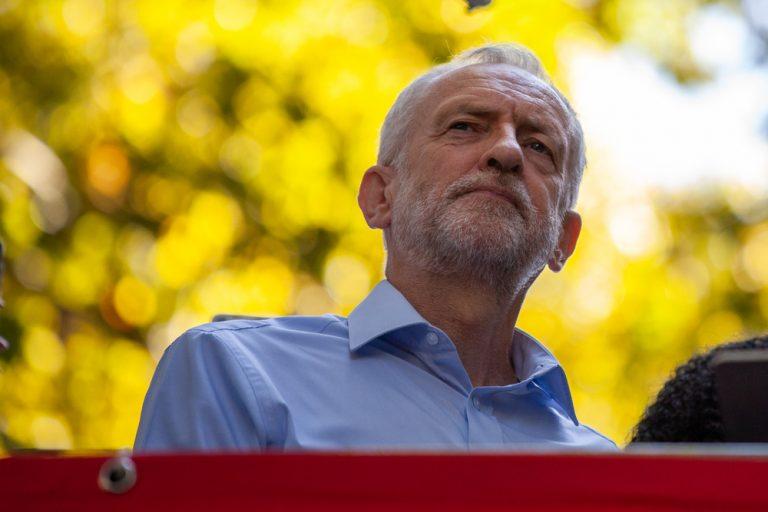
Ever since Kier Starmer won the leadership contest, the feeling was that Jeremy Corbyn’s days in the Labour Party were numbered. Not because he’d leave, but because he is the uncompromising left-wing voice that the Starmer cohort see as unelectable.
Without suggesting that today’s EHRC findings were in any way geared towards a coup against the left-wing of the party, that is certainly how its being perceived by many Labour supporters. For now, ex-party leader, Jeremy Corbyn, has been suspended from the Labour Party, based on the both the findings and his response to a report done on the ongoing antisemitism within the party’s ranks.
Antisemitism certainly wasn’t the hot topic on the public agenda when today’s news broke, but will certainly divert some attention from the tired Boris Johnson, who’ll be grateful that Labour have given commentators something else to talk about. Responding to the ruling by the EHRC, and Labour’s decision to suspend him, Corbyn has said he will contest the findings.BREAKING: Jeremy Corbyn suspended from Labour.
“In light of his comments made today and his failure to retract them subsequently, the Labour Party has suspended Jeremy Corbyn pending investigation. He has also had the whip removed from the Parliamentary Labour Party” – spox — Pippa Crerar (@PippaCrerar) October 29, 2020
Twitter users on both sides have also taken to voicing their opinions, with many commenting that Corbyn has spent several decades fighting racism both in and out of Parliament, with a few describing him as ‘the most decent person’ in British politics.I will strongly contest the political intervention to suspend me.
I’ve made absolutely clear those who deny there has been an antisemitism problem in the Labour Party are wrong. I will continue to support a zero tolerance policy towards all forms of racism. — Jeremy Corbyn (@jeremycorbyn) October 29, 2020
Others have called the move out as a direct attempt to subvert the leftists of the party, with one user noting that Corbyn was the first on the list of MPs highlighted to have been suspended. A former Labour MP added:Jeremy Corbyn is not an anti-Semite.
— Gravel Institute (@GravelInstitute) October 29, 2020
In contrast, many are pleased that Starmer’s Labour appears to be expelling the old guard who – guilty or otherwise – have been heavily associated with remarks and behaviours deemed by the EHRC report to be anti-Semitic.It’s appalling that Jeremy Corbyn has been suspended by the Labour Party, but it should surprise no one.
Socialists in the Party must stop deluding themselves: this was always about destroying Jeremy and criminalising criticism of Israel. It had nothing to do with anti-Semitism! — Chris Williamson (@DerbyChrisW) October 29, 2020
Of course, coup or not, Starmer’s team takes a real gamble with this latest move. Certainly, they’d made a vocal commitment to stamping out any reported sources of anti-Semitism within the party. However, many of the party’s left-leaning support core simply do not believe that Corbyn is a racist, and that remarks seen as anti-Semitic were instead critiques of Israeli political policy. Whichever of these reports is true, it is clear that Starmer has a lot of work to do to re-earn the mantle as leader of the ‘party of unity’. Many on the left will now be looking away from Labour – either offering their support to another party, or starting a party of their own. What is on Starmer’s side is time, and with four years until the next, calendared election, he has a lot of time to soothe wounds and flatten out rough edges. We mustn’t forget, though, that Corbyn isn’t gone. For now, he’s merely been distanced, and much to the chagrin of Mr Starmer, he may yet return:Hugely impressed by Starmer’s willingness to confront racism. Suspending Corbyn shows real political courage.
— Nick Cohen (@NickCohen4) October 29, 2020
It reminds me of a (somewhat butchered) Machiavelli proverb: if you are to harm your enemy, kill them. If you merely injure them, they shall remember, and seek vengeance upon you. If Corbyn finds his way back to Westminster, Starmer may have booked himself an uncomfortable time as leader.Worth remembering that it’s *suspends* not *expels*. There has to be due process: that, after all, is partly what the EHRC was so concerned about in its report. Labour may have to ‘welcome’ him back in due course. So, while it’s quite something, it’s not the end – not yet anyway https://t.co/sa4sEjtPSp
— Tim Bale (@ProfTimBale) October 29, 2020
AB InBev scraps dividend despite growth in revenue

AB InBev has reported a 4% increase in revenue, which is against analyst expectations of a 4% loss.
The world’s largest brewer said on Thursday that it had experienced a jump in sales over the third quarter, however, profits had dipped.
Costs of packaging, cans and bottles, as opposed to the cheaper costs of kegs delivered to pubs, has driven up costs for the brewer.
Beer and soft drink volumes grew by 1.9% in the third quarter, following a 17% drop in the previous quarter. Combined revenues of the group’s global brands, Budweiser, Stella Artois and Corona, increased by 6.8% globally and by 8.1% outside of their respective home markets.
“Our third-quarter results reflect our fundamental strengths as the world’s leading brewer and the resilience of the global beer category. We delivered a strong and balanced top-line performance by quickly adapting to meet the evolving needs of our customers and our consumers. In an ongoing volatile and uncertain environment, we remain focused on being part of the solution by prioritizing the health and well-being of our people, communities and customers,” said Carlos Brito, chief executive of the group.
AB InBev has scrapped its interim dividend due to the “uncertainty and volatility” amid the pandemic.
Foxtons revenue down 10%, shares fall
Foxtons shares (LON: FOXT) are down 5% on Thursday morning after the group reported a dip in revenue.
The London estate agent chain said in its latest trading update for the third quarter ended 30 September 2020 that group revenue was £28.5m, down 10% on the previous year.
A significant reduction in the number of overseas student tenants and corporate relocations led to an 8% decrease in lettings revenues.
Revenue generated from lettings totaled £19.5m, down from £21.3m a year previously.
Revenue from sales in the quarter also fell by 18% to £6.9m due to “depressed levels of exchanges, a hangover from the spring lockdown.”
Sales have since picked up, thanks to pent-up demand post lockdown and Stamp Duty relief. Revenue in September picked up by 9% on the previous year.
Mortgage revenue was £2.2m, up 4%, which reflects increased levels of re-mortgage activity.
The Bank of England said on Thursday that mortgage approvals in the UK have hit a 13-year high.
“The number of mortgage approvals for house purchase continued increasing sharply in September, to 91,500 from 85,500 in August. This was the highest number of approvals since September 2007, and is 24% higher than approvals in February 2020,” said the Bank of England.
Commenting on Foxton’s update, chief executive Nic Budden, said: “Foxtons has made good progress in the third quarter, during which we were able to capitalise on increased levels of market activity, driven by the decision to build back capacity soon after the lockdown ended. We have successfully re-built the sales commission pipeline to its highest level in 3 years, delivered a resilient lettings performance and progressed our lettings book acquisition strategy.
“Although the London residential market has gained momentum, we remain cautious as economic uncertainty causes more sales transactions to fall through and is putting downward pressure on rents. During these uncertain conditions, the energy and commitment of our people to go the extra mile enables us to deliver exceptional customer service whilst keeping our customers and employees safe.”
Foxtons shares (LON: FOXT) were down 5% this morning. Shares in the group have fallen over this past year from a high of 98.00p.
Housing boom continues as mortgage approvals hit 13-year high

Mortgage approvals have hit a 13-year high according to new figures from the Bank of England.
In September, banks approved 91,500 mortgages – the highest figure since September 2007.
Demand has been fuelled by the demand for more space since lockdown as well as the stamp duty holiday.
“The number of mortgage approvals for house purchase continued increasing sharply in September, to 91,500 from 85,500 in August. This was the highest number of approvals since September 2007, and is 24% higher than approvals in February 2020,” said the Bank of England.
“Approvals in September were around 10 times higher than the trough of 9,300 approvals in May.”
Net mortgage borrowing rose to £4.8bn in September, up from £3bn in August.
Lloyds Bank returned to profit for the third quarter thanks to the boom in the housing market. After posting a loss in the first half of the year, the lender has returned to profitability after a surge in demand for home loans.
Andrew Montlake, managing director of mortgage broker Coreco, commented on the figures and said that the boom is likely to lose steam.
“The post-lockdown bull run is already over. Lenders have been pulling down the shutters due to ongoing struggles with capacity and concerns over rising unemployment levels, specifically the impact on house price growth,” he said.
UK on-demand digital pharmacy Phlo surpasses £1.65m funding target on Crowdcube

Sponsored by Phlo
Phlo, the UK’s first real-time, on-demand Digital Pharmacy service hit its £1.65m crowdfunding target on Crowdcube in less than 24 hours and is now overfunding. The funding round has already attracted over 600 investors and has raised over £1.8m to date.
Phlo Digital Pharmacy, launched in November 2019, now plans to extend their crowdfunding campaign due to the high level of demand.
Phlo is the UK’s first same-day, on-demand digital pharmacy service, and is a is a fully authorised NHS pharmacy, underpinned by a state-of-the-art technology platform which combines their pharmacy operations, logistics and patient communications.
Founded by former banker Nadeem Sarwar, the firm has established a strong foothold in London, where it delivers medication to patients in under four hours.
This real-time, on-demand service is not currently offered by any other online pharmacy service in the UK and Phlo aims to expand their service to other major cities across England, including Birmingham and Manchester.
Phlo’s laser focus and commitment to patient care is reflected in their five star Trust Pilot reviews. They have also recently secured a contract with Babylon, the UK’s leading telemedicine provider.
 Scaling Up
Mr Sarwar, who had the idea for the business five years ago when he visited Babson College near Boston with Adam Hunter, now Phlo Chief Commercial Officer, said the plan is to scale up “city by city”.
He commented:
“There are 36 million patients on prescription in England. About 1% have gone online. My firm belief is the next five million patients will go online in the next two years – it is our job to go and grab a nice slice of that market share.”
From launch last year, demand and patient numbers have been growing consistently, but in the period since COVID-19 became a significant public health issue, growth has exceeded all expectations.
Since the start of the year, Phlo has seen an impressive average 73% growth in MOM revenue, 43% average growth in MOM patient numbers and a 93% uplift in staff numbers. Phlo has serviced over 5000 patients to date from Jersey to Orkney.
Phlo is headquartered in Glasgow and currently employs 32 members of staff across high-value pharmacy and technology roles. The Pharmacy operations team is situated in central London.
First Digital Pharmacy Crowdfund in UK
This is the first UK Digital pharmacy crowdfund and interest has been high. The initial target of £1.65m was hit in the first 24 hours and the campaign is set to continue until 11thNovember 2020.
Mr Sarwar commented: “I’ve been blown away by the level of support we have received both from our patients and the public. The funds raised from this crowdfunding round will help us to expand our operations in major cities in England and allow us to continue on our path to building the most technology advanced digital pharmacy platform in the UK”
Phlo has also received investment from the UK Government Future Fund in the form of a convertible loan note. Investments will pay 8% interest until they are converted to shares at the completion of a follow – up investment round. Longer term, the company is eyeing up venture capital funding.
To find out more about Phlo’s crowdfunding opportunity, please visit www.crowdcube.com/phlo.
Scaling Up
Mr Sarwar, who had the idea for the business five years ago when he visited Babson College near Boston with Adam Hunter, now Phlo Chief Commercial Officer, said the plan is to scale up “city by city”.
He commented:
“There are 36 million patients on prescription in England. About 1% have gone online. My firm belief is the next five million patients will go online in the next two years – it is our job to go and grab a nice slice of that market share.”
From launch last year, demand and patient numbers have been growing consistently, but in the period since COVID-19 became a significant public health issue, growth has exceeded all expectations.
Since the start of the year, Phlo has seen an impressive average 73% growth in MOM revenue, 43% average growth in MOM patient numbers and a 93% uplift in staff numbers. Phlo has serviced over 5000 patients to date from Jersey to Orkney.
Phlo is headquartered in Glasgow and currently employs 32 members of staff across high-value pharmacy and technology roles. The Pharmacy operations team is situated in central London.
First Digital Pharmacy Crowdfund in UK
This is the first UK Digital pharmacy crowdfund and interest has been high. The initial target of £1.65m was hit in the first 24 hours and the campaign is set to continue until 11thNovember 2020.
Mr Sarwar commented: “I’ve been blown away by the level of support we have received both from our patients and the public. The funds raised from this crowdfunding round will help us to expand our operations in major cities in England and allow us to continue on our path to building the most technology advanced digital pharmacy platform in the UK”
Phlo has also received investment from the UK Government Future Fund in the form of a convertible loan note. Investments will pay 8% interest until they are converted to shares at the completion of a follow – up investment round. Longer term, the company is eyeing up venture capital funding.
To find out more about Phlo’s crowdfunding opportunity, please visit www.crowdcube.com/phlo.
 Scaling Up
Mr Sarwar, who had the idea for the business five years ago when he visited Babson College near Boston with Adam Hunter, now Phlo Chief Commercial Officer, said the plan is to scale up “city by city”.
He commented:
“There are 36 million patients on prescription in England. About 1% have gone online. My firm belief is the next five million patients will go online in the next two years – it is our job to go and grab a nice slice of that market share.”
From launch last year, demand and patient numbers have been growing consistently, but in the period since COVID-19 became a significant public health issue, growth has exceeded all expectations.
Since the start of the year, Phlo has seen an impressive average 73% growth in MOM revenue, 43% average growth in MOM patient numbers and a 93% uplift in staff numbers. Phlo has serviced over 5000 patients to date from Jersey to Orkney.
Phlo is headquartered in Glasgow and currently employs 32 members of staff across high-value pharmacy and technology roles. The Pharmacy operations team is situated in central London.
First Digital Pharmacy Crowdfund in UK
This is the first UK Digital pharmacy crowdfund and interest has been high. The initial target of £1.65m was hit in the first 24 hours and the campaign is set to continue until 11thNovember 2020.
Mr Sarwar commented: “I’ve been blown away by the level of support we have received both from our patients and the public. The funds raised from this crowdfunding round will help us to expand our operations in major cities in England and allow us to continue on our path to building the most technology advanced digital pharmacy platform in the UK”
Phlo has also received investment from the UK Government Future Fund in the form of a convertible loan note. Investments will pay 8% interest until they are converted to shares at the completion of a follow – up investment round. Longer term, the company is eyeing up venture capital funding.
To find out more about Phlo’s crowdfunding opportunity, please visit www.crowdcube.com/phlo.
Scaling Up
Mr Sarwar, who had the idea for the business five years ago when he visited Babson College near Boston with Adam Hunter, now Phlo Chief Commercial Officer, said the plan is to scale up “city by city”.
He commented:
“There are 36 million patients on prescription in England. About 1% have gone online. My firm belief is the next five million patients will go online in the next two years – it is our job to go and grab a nice slice of that market share.”
From launch last year, demand and patient numbers have been growing consistently, but in the period since COVID-19 became a significant public health issue, growth has exceeded all expectations.
Since the start of the year, Phlo has seen an impressive average 73% growth in MOM revenue, 43% average growth in MOM patient numbers and a 93% uplift in staff numbers. Phlo has serviced over 5000 patients to date from Jersey to Orkney.
Phlo is headquartered in Glasgow and currently employs 32 members of staff across high-value pharmacy and technology roles. The Pharmacy operations team is situated in central London.
First Digital Pharmacy Crowdfund in UK
This is the first UK Digital pharmacy crowdfund and interest has been high. The initial target of £1.65m was hit in the first 24 hours and the campaign is set to continue until 11thNovember 2020.
Mr Sarwar commented: “I’ve been blown away by the level of support we have received both from our patients and the public. The funds raised from this crowdfunding round will help us to expand our operations in major cities in England and allow us to continue on our path to building the most technology advanced digital pharmacy platform in the UK”
Phlo has also received investment from the UK Government Future Fund in the form of a convertible loan note. Investments will pay 8% interest until they are converted to shares at the completion of a follow – up investment round. Longer term, the company is eyeing up venture capital funding.
To find out more about Phlo’s crowdfunding opportunity, please visit www.crowdcube.com/phlo.