Domino’s Pizza shares dip 4% as annual results remain steady

1
Domino’s Pizza Group PLC (LON:DOM) have seen a dip in their shares, as they updated the market with their final results on Thursday morning. The pizza firm said that its annual trading was good from its’ core operations. Domino’s reported revenue totaling £508.3 million across the annual period – which ended on December 29. Notably, this was 3% higher than the equivalent one year ago. Looking at their UK and Ireland performance, the firm saw sales rise 4.8% to £1.21 billion – excluding split stores the rate of growth was 3.7%, seeing a slight reduction from £4.6% in 2018. Ian Bull, Interim Chairman said: “The Board is encouraged by the performance in the UK and Ireland, in an uncertain environment. We have four key priorities: recruiting a new Chair, CEO and CFO, reinforcing our core business, rebuilding our franchisee relationship and finding the right owners for our International businesses. We are giving these priorities considerable time and focus and are confident in the long-term prospects for the Group.” Pretax profit from continuous operations dropped 14% to £75.1 million, as underlying pretax profit also fell 1.2% to £98.8 million. Domino’s noted that their profit figures were impacted by a £18.7 million corporate store impairment. The firm declared a final dividend of 5.56 pence per share, giving a total payout of 9.76p – seeing a 2.7% jump on the 2018 metric. Commenting on the results, David Wild, Chief Executive Officer said: “Our core UK & Ireland business continues to deliver a solid trading result, with UK like-for-like sales up 3.7%. Our digital capabilities continue to fuel this growth, with online sales up 8.8%. Collection also saw a good performance, up 5.3%, and this remains a significant opportunity for us going forward. I would like to thank my colleagues across all our markets, together with our franchisee partners, for their continued hard work and passion for the Domino’s brand. “In February we were pleased to announce a disposal of our Norwegian business which is subject to shareholder approval, and we expect this to complete by the end of May. We continue to prioritise transactions for our remaining International businesses, although expect that these may take some time as we ensure that we find the best owners for these businesses.”

Domino’s see strong fourth quarter trading

In January, Domino’s told the market that they had seen a strong fourth quarter performance. The firm reported fourth quarter revenue growth, which was driven by better performance in the UK and Irish market. In the 13 weeks to December 29, group sales were 3.7% higher year-on-year at £352.0 million from £339.6 million. On an organic metric, at constant currency and excluding acquisitions and disposals, sales climbed 4.1% from the year prior. In the UK and Ireland, sales jumped 4.4% from £312.9 million to £326.7 million, on organic measures this also showed a 4.5% rise. Like-for-like sales in the UK alone were 3.9% higher during the quarter, though in Ireland, they were down 1.0%. Looking at international business, sales were down 4.9% to £25.3 million from £26.6 million. Domino’s said its disposal program is “progressing” and added that it is focusing on offloading its Norway operations.

Domino’s exit from Norway

A few weeks ago, Domino’s announced their intentions to exit all operations from their Norwegian business. Dominos have agreed to sell their 71% stake in DP Norway AS to minority shareholders including Pizza Holding AS and EYJA Fjarfestingafelag III EHF. The firm have said that it will need to make a cash outlay of around £7 million as part of the sale. This will cover marketing campaign costs, future liabilities and cash retained within the disposed business. The deal is expected to be completed by the end of May, Dominos said. The full disposition is subject to shareholder and US brand owner Dominos Pizza International Inc clearance. Norway operations led to an underlying operating pretax £6.6 million for 2018, and the UK branch arm has agreed to cover further losses until the completion of the deal in May. The planned sale of their Norway operations should allow Domino’s to focus on the UK and Ireland – where recent performance has been bullish. Shares in Domino’s Pizza trade at 291p (-4.39%). 5/3/20 12:26BST.

FTSE 100 promotions and relegations – TUI, NMC and Kingfisher all demoted

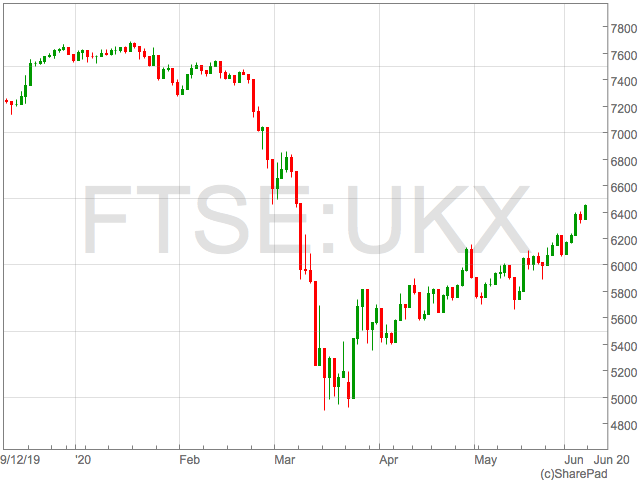
The FTSE 100 has received a bruising over the last few weeks, as the coronavirus has continued to take its’ toll on global markets. Data from the FTSE Russell confirmed that there had been some shifts within the FTSE 100. Three big names in Kingfisher plc (LON:KGF), TUI AG (LON:TUI) and NMC Health PLC (LON:NMC) were among the most recent departures inside the elite league. All these firms have seen market turbulence over the last few weeks, and the relegation from the FTSE may hurt these companies. Stepping inside the FTSE 100, and receiving promotion were Intermediate Capital Group plc (LON:ICP), Pennon Group (LON:PNN) and miner Fresnillo (LON:FRES). Since the outbreak of the coronavirus – global markets and indices have seen ebbs and flows. However, last week saw the FTSE 100 drop to a twelve month low. There is no doubt that the coronavirus is still continuing to haunt global stocks, as markets are just about recovering this week from the shocks. The FTSE 100 is still hovering around the 6,688p figure – a relatively low benchmark considering around ten days ago it was flirting with the idea of hitting 7,042p. There is still a lot of ground to be made up not just for the FTSE 100, but for global businesses. The airline industry has arguably been the most hurt, as many firms have resorted to cutting flights due to the coronavirus – notable cancellations came from British Airways who suspended flights to and from China. Travel restrictions are being imposed by National Governments, and legislators in Parliament are now preparing a legislation pack just in case the coronavirus spreads quicker than can be contained. Certainly – the FTSE in the short term still could face shocks, but market traders will have to be patient. Immediate recovery is rather speculative, and until the coronavirus situation is under control, global stocks and businesses could be infected.

GVC Holdings see steady 2019 however annual loss widens

0
GVC Holdings PLC (LON:GVC) have reported ‘good’ 2019 performance – as the firm has assessed its’ recent merger with Ladbrokes Coral. The bookmaker noted that revenue across 2019 was 22% higher than the comparative one year ago, as revenue totaled £3.66 billion. GVC reported however that it had delivered a pretax loss of £174.2 million, which was massively widened from the £18.9 million figure one year ago. The CEO commented: “Our first full year since the Ladbrokes Coral acquisition has been a good one, and the performance has continued to be underpinned by our unique and highly effective operating model. We have delivered very strong growth in our Online business, including market share gains in all major territories, and good momentum in our Europeasn Retail business. This revenue growth has more than offset the impact on the UK Retail business of the £2 restriction on B2 machines stakes. We are delighted with the progress that is being made on the Ladbrokes Coral integration, and in the US the launch of BetMGM on the GVC platform in New Jersey was an important milestone for our business there and enables us to remain on track to deliver on our ambitions in this exciting market”. The firm said that the widened loss was due to a £245 million impairment in the Online business due to new taxes in regions such as New Zealand and Tasmania as well as costs related to the Ladbrokes Coral and Bwin deals. On a better note, GVC said that they saw underlying pretax profit rise 23% to £535.8 million. UK Retail like-for-like net gaming revenue declined by 12%, whilst like-for-like sports net gaming revenue in retail jumped 7%. GVC said that they intend to pay a second interim dividend of 17.6 p per share, which gives an annual total of 35.2p. Kenneth Alexander, CEO, concluded: “During the year, we have also continued to clearly demonstrate our leadership in, and commitment to, Responsible Gambling with a number of decisive actions, not least being the first in our industry to commit to a ten-fold increase in contributions to Responsible Gambling causes and our call for a total ban on sports-betting television advertising in the UK. Having an effective regulatory environment is critically important in encouraging customers to play with responsible regulated operators. With that in mind, it is our firm view that over-regulation in the UK would result in customers moving to the black market where there is zero responsibility, zero protection and zero tax being paid to the Treasury. As a consequence, it would also lead to a reverse in the considerable decline in problem gambling that the industry has delivered over recent years. Looking ahead, we are confident that GVC’s broad international footprint, proven track record of acquisition and strong organic growth will continue to present significant opportunities for further expansion.” Shares in GVC Holdings trade at 793p (-1.71%). 5/3/20 11:54BST.

Tesco announce price matching policy to rival Aldi

0
Tesco PLC (LON:TSCO) have made a pledge to the British supermarket industry to try and win back customers from their German counterparts. Tesco, who are one of the ‘big four’ have seen a mixed time of trading over the last few weeks. British supermarket habits have shifted over recent years, as many consumers have switched to rivals such as Lidl and Aldi due to cheaper prices, and product offerings at similar quality. The FTSE 100 listed firm said that they are set to enact a new price match policy, which means that many of Tesco’s own brand products will match the prices that are offered by Aldi. Recent data from Kantar noted that both Aldi and Lidl had taken a higher percentage of the market, following strong Christmas trading periods. Notable performance also came from Ocado (LON:OCDO) – who stamped their influence on the British supermarket industry. Tesco said today that it will make sure that “customers are getting competitive prices on these products at Tesco and saving themselves a trip”. “Prices of the products included will be checked to give customers peace of mind, offering Tesco products at Aldi prices for simple, great value,” Tesco added. The firm noted that their Finest premium ranges will not be part of the policy, however entry level products will look to match their rivals. “Our customers tell us they want the most competitive prices on the things they buy regularly. This new campaign will help time-poor and budget savvy customers get Tesco products at Aldi prices on products that matter to them,” said chief customer officer Alessandra Bellini.

Tesco see group sales fall

In January, Tesco gave shareholders a very modest update on its’ recent trading. Tesco UK and Ireland saw its sales rise over the festive period, however total group sales fell following slumps in Central Europe. The British supermarket is currently undergoing a review and restructuring program in Central Europe, and this may be the likely cause for the slip. In the six week period which ended on January 4, the UK & Republic of Ireland sales increased by 0.2% and rose 0.4% on a like-for-like basis, excluding fuel. Total group sales fell by 1.7%, however, and by 0.8% on a like-for-like basis, however shareholders have not seem to phased. In the third quarter, the firm saw its grocery sales fall 0.9% compared to a year ago whilst total sales dropped 1.4%. Across the Christmas period, total sales over the 19 weeks period were down 1.5% year on year to £21.03 billion. Turning to Asia, the firm saw total sales be equal over the 19 weeks period at £1.93 billion, however sales fell 1.6% on a like for like basis. There will be a hope that this new policy can increase footfall and take business away from Aldi – who are rapidly expanding and seem to be dominating the British supermarket industry alongside fellow German brand Lidl.

Premier Oil report lower annual profits following $757.9 million total costs

0
Premier Oil (LON:PMO) have seen their shares in red, despite the firm giving a relatively steady update on Thursday. Premier Oil told the market that it had seen a year of progress, however its’ profit levels had been bruised due to higher charges. The CEO noted: “2019 was another year of strong operational and financial delivery by Premier with significant progress made against the Company’s strategic objectives. Commodity prices were slightly weaker during 2019 driven by global trade tensions and ongoing concerns about the balance of supply and demand. Despite this, the Group reported record free cash flows and increased net profits”. The oil exploration firm noted that revenue did jump 13% to $1.58 billion across 2019 – however pretax profit slumped 35% to $102.5 million. Premier alluded this to $757.9 million of depreciation, depletion and amortisation costs – which impacted the results today. Looking at production, the firm noted that 2019 average production was 78,400 barrels of oil equivalent per day, at the upper end of guidance. However, this figure sees a 2.6% dip on the 2018 equivalent, but going forward Premier have maintained their stance that they expect production to lie within the 70,000 barrels a day and 75,000 barrels ball park per day. The firm managed to reduce their net debt by 15% – which will be pleasing for shareholders. This metric now totals $1.99 billion, and Premier have made a pledge to get this lower as time goes on. Tony Durrant, Chief Executive Officer, commented: “Premier made significant progress against its strategic targets during 2019. Strong operational performance resulted in record free cash flows and reducing debt levels. We took material steps to commercialise our reserve and resource base and added to our exploration acreage position. The proposed acquisitions will add material cash-generative UK production. Premier is committed to being a responsible operator and today announces that all operated projects will be developed on a net zero emissions basis.” Premier also added that the ongoing coronavirus epidemic is playing a part in driving oil pries down – which could impact performance and trading. The CEO concluded: “In the first quarter of 2020, oil prices have fallen significantly due to fears over the spread of COVID-19 and the impact this may have on global demand for oil. The current volatile macro environment serves to highlight the importance of the business being sustainably free cash flow positive and ensuring that future growth can be funded through the commodity price cycle without compromising the balance sheet. The Group’s immediate priority remains to reduce its debt levels and covenant leverage ratio towards 1x, a process which will be accelerated by the acquisition of the UK assets announced post period-end. At the same time, Premier will continue to maintain its capital discipline investing selectively in new international projects and exploration to create material value for all of its stakeholders over the longer term”.

Premier Oil announce board changes

In a separate update day, Premier Oil also announced that Elisabeth Proust will join the Company’s Board as an independent Non-Executive Director and member of the Health, Safety, Environment and Security Committee and Nomination Committee with effect from 1 April 2020. The firm added that Proust has held a variety of roles with Total SA, and also has been the president of president of the oil and gas association in Indonesia (IPA), then in Nigeria (OPTS) and, whilst in the UK, as director at the Oil and Gas UK Association board, Oil and Gas Technology Centre, Step Change in Safety and the Technology Leadership boards. Upon the new appointment, Roy Franklin, Chairman said: “I am delighted to welcome Elisabeth to the Board. Elisabeth’s technical and operational experience and skills within the exploration and production industry will be of enormous value to the Board and the Company as a whole. “I would particularly like to thank Robin Allan for his significant contribution to Premier. Robin has been an executive Board member for over 16 years and his contribution to the Company is marked both by his achievements within the business and with industry bodies such as Oil and Gas UK and BRINDEX. I am delighted that Robin will continue to play a key role going forward in supporting our response to the climate change agenda and ESG initiatives.”

Premier Oil’s deal with BP

At the start of the decade, Premier announced that they had agreed a deal with oil major BP (LON:BP). Premier have said that they will be buying the Andrew Area and Shearwater assets from oil major BP for $625 million. Andrew Area includes five fields which produce 18,000 barrels of oil equivalent per day. Shearwater in comparison accounts for 25 million barrels of oil equivalent of reserves. Premier have said that they will be taking 50% to 100% stake in five Andrew Area fields, and a 28% stake in the Shearwater assets. Premier added that they intend to raise the funds through a $500 million equity raise, and if needed a $300 million bridge operation. The equity raise will encompass a share placing and rights issuance, and further details will be announced over the next few weeks. Shares in Premier Oil trade at 72p (-7.82%). 5/3/20 11:28BST.

ITV shares crash 9% as annual pretax profit dips 6.5%

0
Shareholders of ITV plc (LON:ITV) have seen their shares crash on Thursday morning, as the firm saw its profit fall across their financial year. Shares in ITV trade at 105p (-9.83%). 5/3/20 11:02BST. The TV broadcasting firm noted that 2019 pretax profit had dipped 6.5% to £530 million from £567 million in 2018. Notably, operating costs spiked 6.1% from £2.61 billion to £2.77 billion. On a better note, ITV added that their total group revenue had risen from £3.77 billion in 2018 to £3.89 billion – this seeing a 3.2% rise. The FTSE 100 listed firm also said that broadcasting total revenue was down 1.9% year on year to £2.06 billion, whilst total advertising revenue dropped by 1.7% to £1.77 billion but was guided to fall 2% – which gave shareholders a pre-warning. ITV Studios saw their revenues rise 9% to £1.82 billion, and the company’s total non-advertising revenue rose 7.6% to £2.12 billion. Going forward, the firm said that it expects advertising revenue to see a slight rise in the first quarter of 2020 – however early expectations suggest it could fall as much as 10% in April. “Despite the ongoing economic uncertainty around the outlook for the UK following its departure from the European Union, we currently remain on track to deliver our medium term targets. At this stage, it is too difficult to assess the further implications of the coronavirus but we continue to monitor the situation closely,” said Chief Executive Carolyn McCall. The firm proposed a final dividend of 5.4p per share, giving an annual total payout of 8p – consistent from a year ago. Carolyn McCall, ITV Chief Executive, said: “Thanks to the hard work of our teams across the business, our full year results have come in ahead of expectations helped by revenue growth in the second half of the year in ITV Studios, advertising and online. We are making good progress in each area of our strategy and our investments in data, technology, online and in streaming will enable ITV to be a sustainable, diversified and structurally sound digital media and entertainment business. We are growing our stable margin Studios business, transforming Broadcast and expanding our Direct to Consumer business. The investments in our strategic priorities are delivering. We are strengthening our creative talent in ITV Studios; accelerating the growth of ITV Hub; rolling out Planet V, our addressable advertising platform; strengthening our data and tech capabilities; and we successfully launched BritBox UK. We are very focused on building a stronger, more diversified and structurally sound business. The media market is changing rapidly and our strategy continues to evolve to position ITV to take advantage of the opportunities in advertising video on demand (AVOD) and streaming, while mitigating the effect of competition for viewing.”

ITV’s guidance remains relatively consistent

In November, ITV confirmed their full year guidance – and the expectations seem to have met the results. ITV said that it will deliver is full year guidance. It is confident that ITV Studios will deliver revenue growth of at least 5% at a 14% to 16% margin, the company said in a statement. For the nine months to 30 September, total external revenues were down 2% amounting to £2.2 billion. Total ITV Studios revenue increased by 1% to £1.1 billion.

Melrose beat internal expectations and swing to a profit in 2019

0
Melrose Industries PLC (LON:MRO) have beaten internal and market expectations across the recently ended financial year. The firm said: “The results for 2019 were comfortably ahead of the Board’s expectations for both profit and cash generation 2019 was a year of significant progress but encouragingly much remains to be done and our divisional teams are delivering. As such, we expect 2020 to be another year of good progress driven by each of the key businesses with a dual focus on efficiency programmes, to deliver operational improvements, as well as record investment in R&D to maintain technological market leadership.” The FTSE 100 listed firm told the market that pretax profit had amounted to £106 million across 2019, which sees a massive improvement on the loss of £452 million posted last year. On an adjusted metric, pretax profit surged 32% to £889 million. Looking at revenue figures, Melrose delivered revenues of £10.97 billion – again seeing a massive 35% spike from a year ago. Melrose noted that its operations within its GKN unit are gaining momentum following the first full year of ownership. GKN gives Melrose access to the aerospace, automotive, and powder metallurgy industries – and the purchase was made in 2018 for a reported £8.4 billion. Notably, aerospace revenue also increased 7% however automotive revenue was down 6% within market expectations. Melrose going forward have told the market that 2020 should be another year of progress in each division. The impact of the coronavirus is difficult to assess, and the firm have focused on what they can control. Justin Dowley, Chairman of Melrose Industries PLC, said: “We are delighted with the Melrose performance in 2019 and the substantial value that is being unlocked. Notwithstanding any implications of the COVID-19 outbreak, the bedrock has now been built for the GKN businesses to attain results which were not previously achievable, and, in addition, the shareholder value built up in our longer held assets is closer to being realised. This shows, once more, that the Melrose model thrives by investing properly in businesses and giving management the entrepreneurial freedom to succeed. This is just the start of what is possible for GKN.” Shares in Melrose Industries PLC trade at 208p (+1.85%). 5/3/20 10:57BST.

Aviva report 6% higher profits across 2019

0
Aviva plc (LON:AV) have published their annual results today, with the firm reporting higher profits across 2019. The FTSE 100 listed firm have seen a mixed few months, but the update today shows good signs of progress for the firm. Maurice Tulloch, Chief Executive Officer, said: “In 2019, we set out our priorities and financial targets, strengthened our leadership team and remained focused on helping our customers prepare for a better future. We’ve made good progress, but there is much more to do. Our return on equity was 14.3% and operating profit increased 6% to a record £3.2 billion. Our capital position remains strong and resilient at a 206% Solvency cover ratio. The Board has increased the full year dividend by 3% to 30.9 pence per share”. Aviva reported that statutory pretax profit totaled at £3.93 billion across 2019, which was a massive increase on the £1.65 billion figure reported in 2018. Notably, the firm added that this was boosted by £40.58 billion investment income, following a £10.91 billion loss in 2018. Following changes to accounting standards, total pretax profit surged 58% to £3.37 billion. The firm also reported that its’ return on equity improved from 12% to 14.3%, while the Solvency II cover ratio was 206% from 204%. Income totaled £31.24 billion, which sees a 9% improvement on the 2018 figure – whilst the value of new businesses also increased to £1.22 billion. Operating profit across 2019 was 6% higher at a record figure of £3.18 billion, which beats initial market consensus of £3.1 billion. Finally, general insurance net written premiums rose 2% to £9.3 billion, and customer numbers were up 2% to 33.4 million. Aviva are declaring a final dividend of 21.4 pence per share, taking the 2019 sum to 30.9p. Tulloch concluded: “Customers are choosing Aviva to help them save for their future, draw a secure income in retirement and insure what matters most to them. In 2019, we increased customer numbers by 2% to 33.4 million, and improved customer satisfaction levels. In general insurance, sales are up 2% and the outlook is positive in the majority of our markets. In our major life businesses, we have increased customer net inflows and grown assets by 9% to £417 billion. Aviva Investors secured third party net inflows of £2.3 billion on the back of strong investment performance. My objective is to run Aviva better. We will improve business performance and enhance returns through disciplined action on expenses and underwriting. We will focus capital and resources where we can achieve competitive advantage and strong returns and we will take robust action across the portfolio where our performance falls short or where we can see a better way of delivering value to our shareholders”.

Aviva’s push through Asian difficulties

In November, Aviva updated the market about its’ intentions to sell their Hong Kong Division. The insurance firm said it will simply its business structure into five operating divisions and sell its stake in the Hong Kong business to co-investor Hillhouse Capital. “I am committed to running Aviva better,” said Tulloch ahead of a presentation to investors. “We will be more commercially focussed, manage costs rigorously and be more disciplined in how we invest,” he added. Additionally, Aviva set targets for the next three years. The highlights being a 12% return on equity, a £300 million net cost saving and an aim to generate a cash flow between £8.5 billion and £9.5 billion. Aviva have managed to battle through a mixed year and produce a very impressive set of results – which will please and reassure shareholders. Shares in Aviva trade at 351p (+0.27%). 5/3/20 10:47BST.

Flybe says Flybye as Coronavirus grounds any hope of a recovery

Exeter-based airline Flybe (LON:FLYB) is set to go bust ‘within hours’, after failing to secure additional, emergency financial support to keep the company afloat.

Slow violin music for Flybye

This comes amid a period of widespread hardship for the aviation and travel industries, with both Easyjet (LON:EZJ) and British Airways (LON:IAG) feeling the full force of the Coronavirus crunch, over the last week. After avoiding administration in January – courtesy of £100 million from the British taxpayer and changes to Air Duty Tax – the company and its 2,000 employees look set to be in real trouble on Wednesday evening. The imminent crash is being blamed on the impact Coronavirus has had on demand for air travel. It will come as a real kick in the teeth to British PM Boris Johnson, who bailed the company out as part of his initiative to keep the UK well-connected (at present, Flybe accounts for 40% of all domestic flights). After running into difficulties last year, the company was bought by a consortium containing Virgin Atlantic, who said they would pump £30 million into the business in January. Responding to the pressures of the Coronavirus outbreak earlier in the week, the company’s Chief Executive told the BBC they would be accepting a 20% pay cut, freeze recruitment and offer staff ‘unpaid leave’. Virgin added that Flybe bookings were 40% lower than this time last year.

Trying to ignore IMF pessimism

Elsewhere on Wednesday, equities and national indexes were keen to hush the pessimistic GDP forecasts of the IMF, who joined the G7, WHO and central banks in revising their expectations in light of Coronavirus. Despite coming down off of their intraday highs, Wednesday still proved a positive day for markets, and a far-sight from the blood bath witnessed at the end of February. Somehow, most equities managed to cling on, to whatever contrived optimism was on offer. Speaking on the IMF’s statement and the Wednesday session outside of Flybe, Spreadex Financial Analyst Connor Campbell stated,

“The Washington-based institution became the latest body to slash GDP forecasts, stating that ‘global growth in 2020 will dip below last year’s levels’. For reference, the IMF was previously expecting worldwide growth of 3.3% against 2019’s 2.9%.”

“It refused, however, to be drawn into exact forecasts, not only for the globe, but for China. Talking of the superpower, the IMF would only say that previous growth estimates are ‘no longer valid’.”

“This dose of reality – which came alongside a jump in UK coronavirus cases from 51 to 85 – undid some of the goodwill generated by the World Bank’s $12 billion stimulus pledge, taking the Western indices from their highs.”

“Nevertheless they remained strongly up on the day, the European gains firmed up by a 500 points surge from the Dow Jones. Though that sounds like a big movement, in the context of the last few sessions that doesn’t even recoup the ground lost by the Dow following the Fed’ impromptu rate cut. It was, however, better than the alternative.”

“The FTSE rose 1.1% to 6780, leaving it 80 points shy of the day’s peak, while the DAX and CAC climbed 160 points and 65 points respectively.”


Priti Patel bullying scandal – time to go, or civil service stitch-up?

On Wednesday a third allegation of bullying was made against UK Home Secretary Priti Patel, in what is being dubbed on Twitter the ‘civil service #MeToo’ movement.

The reaction today, at least on social media, has slowly become one of mounting suspicion against the individuals making the claims against Ms Patel. Prime Minister Boris Johnson firmly reiterated his support for the ‘fantastic Home Secretary’ during PMQs today, and his supporters online have lauded her as being the only Home Secretary in decades with the gusto (or gall) necessary to bring about radical change to immigration policy.

On the other side of the court, the allegations are seen as a rising tide of condemning evidence against the Home Secretary, with many of the more centre-ground politicians and media figures calling for her to be removed from government.

What’s the argument we’re really having?

I think the real danger is that we can no longer prove the veracity of claims of wrongdoing within positions of political office. With the argument being made that the allegations against Ms Patel are a concerted civil service stitch-up, and with a clear motive being present for such a malicious undertaking, I have sympathy for those who lose heart at the idea that accountability is boiling down to little more than a he-said she-said. The conflicts at play are complex and myriad, and they are conflating any process of arbitration for the issue at hand – but one tension stands out in particular. Most significantly, we have the very much alive-and-kicking tussle between the two most toxic forces in modern British politics: the enlightened, sanctimonious and London-centric equipe de frappe, and the pseudo-nostalgic, mob-like-Murdoch-disciples. The former is entirely counterproductive in the unsympathetic and condescending way it addresses the grievances of the latter, which accuse them of being the out-of-touch elite. The latter is equally guilty, though. With calls for dramatic overhaul of institutions which preserve democratic due process, and a seemingly flexible conception of truth and the lessons of history, there are some worrying parallels with the rhetoric of the Munich beer halls. How this seems to be playing out in politics – and wider society – is thoroughly disenchanting. Rather than resolving the elephant in the room, the bitterness between the two extremes appears to do little but turn off everybody between the two poles of opinion, who feel the only way to healthily engage with political discourse is to roll their eyes and avoid it altogether. I’d wager, perhaps cynically, that this is a dream outcome for Cummings et al. General ignorance is a far better breeding ground for the politics of plate-spinning, eponymous infrastructure projects and grand narratives, than an engaged body of citizens who hold leaders to account, for basing a country’s future on delusions of bygone glory.

What’s the verdict on Priti Patel?

In the context of today’s events, this tension has left us with little hope of recourse. We have no conception – let alone a desire – to create a common idea of truth, and all this leaves us with is an undercurrent of ill-will and dissatisfaction (which naturally suits the side favouring hate, and dissatisfaction with the status quo). Playing for the Priti Patel camp for a moment: it seems intuitive to think the civil service would attempt to weaken or undermine a government threatening to dismantle and rebuild their entire institution. Ms Patel would also be the natural target for such an endeavour. She’s high profile, prone to making mistakes and disliked by many. With well-documented controversies such as her illicit diplomatic trip to Israel and her pay-for-favour approach to handing out MoD contracts, alongside her inability to discern between ‘terrorism’ and ‘counter-terrorism’ (among a series of golden soundbites) – she is the perfect comic-book villain. However, after a long digression, I tend to think the revelation of £25k hush money, to one of the alleged victims, provides some fire for the smoke. I might agree that our infrastructure and political institutions are in need of modernisation, but this should be done neither through the rhetorical chess of Mr Cummings, nor the empty spin methods favoured by his predecessors. Reform in all areas of politics needs to come from a place of rigour and a pragmatic search for solutions. The desire for change is palpable, but I fear (as recent events have shown us) that we lack a common conception of what is good and true. Without it, we risk entering a dangerous back-and-forth between divergent forces, attempting to bring about their differing conceptions of an ideal society.