
Tullow Oil announce disappointing Marina-1 findings

Tullow Oil (LON:TLW) have seen their shares dip on Monday morning as they gave an update on their Peruvian operations.
The firm said that results had been disappointing from the Marina-1 exploration well off the coast of Peru.
Tullow noted that they did not find any significant hydrocarbons, and that it was still testing the La Cruz and Mal Pelo formations, with some minor gas shows found but no discoveries in the main targets.
The oil firm said that the well was drilled to a total depth of 3,022 meters in 362 meter deep waters.
Following the disappointing results, Tullow decided that they will plug the Marina-1 well and abandon further operations at this site.
It was not all bad for Tullow, as the firm only held a 35% interest in the well, Karoon Energy are the major partner holding 40% whilst Pitkin Petroleum holds the remaining 25%.
“This is the first ever well in the deep-water section of the under-explored Tumbes basin. We will now integrate the important well information with the seismic data that we are currently reprocessing and update our prospect inventory for blocks Z-38 and Z-64. Tullow is building an extensive exploration position in Peru and, while this result is not what we had hoped for, we remain positive about Peru’s wider offshore exploration potential.” Chief Operating Officer Mark MacFarlane commented.
Share Plc agree £62 million takeover deal with Interactive Investor

Share Plc (LON:SHRE) have agreed a £62 million takeover deal with Interactive Investor, as was confirmed this morning.
Share PLC, who own the Share Centre is an online stockbroker which places an emphasis on retail investors.
Gavin Oldham OBE, Executive Chairman of Share plc said: “I am delighted to welcome this combination of our businesses, designed to transform the prospects for individual share ownership and personal investment across the United Kingdom. Our share owners, employees and customers are well aware of my passion for egalitarian capitalism, not only right across society but also across generations. It delivers the economic freedom that comes from having a personal reserve of savings and investment, and a society at ease with itself: as owners, employees and consumers combine ownership with a responsibility for all.”
In this morning’s update, it was said that the deal will be paid in both cash and shares. 90% of the offer will be made in stock dealings whilst the remaining 10% will be rounded up in cash.
Shareholders were told that they will receive 4.1p in cash and 0.00084 of an Interactive Investor share per share in Share PLC held.
Interestingly, the price offered shows a 41% rise on the closing price of Share PLC at 19p on Friday.
As a result of this morning’s announcement, shares have surged by 13%.
Shares in Share Plc trade at 33p (+13.79%). 17/2/20 10:06BST.
Both firm noted that they share common beliefs and values to take the new merger deal forward, and Interactive Investor have said that they believe the deal will benefit shareholders and customers of the Share plc.
Commenting on the Offer, Richard Wilson, CEO of ii, said:
“We are delighted with this transaction. The firms’ shared values and combined strengths reinforce ii’s position as a leader in the retail investment services marketplace. With our fair flat fees we have built a strong and compelling alternative to percentage fees, in a business that puts the customer first.
Combining our individual strengths brings further scale and the opportunity to deliver enhanced value, service and customer experience to an enlarged customer base.
Our purpose is to help customers take direct control of their financial future, providing tools and support to make informed investing decisions. This transaction contributes significantly to that goal.”
Gavin Oldham also spoke at the firm’s AGM about the need to look at their strategic ambition, and transform the direction and size of Share Plc.
Oldham concluded: “At our Annual General Meeting in June 2019, I spoke of our major strategic ambition to transform Share plc ’s business over the coming years. We have to grow significantly in order to achieve this, not only in profitability but also in scale and in substance. That is why we have been prepared to investigate how others, who share our ambition for a more egalitarian form of capitalism, would work with us in order to achieve it. With our prospective new colleagues in ii we have discovered just such a meeting of minds, and a shared purpose for the future.”
Certainly this is an interesting piece of business for both parties, however considering the goals of Share this does fit in with their ambition to scale up and tap into a larger consumer base.
When the merger has been fully integrated, this certainly could be a shrewd piece of business for both firms.
Persimmon appoint Bank of England Chief Operating Officer to their board

Persimmon (LON:PSN) have appointed the Bank of England Chief Operating Officer to its board in an announcement this morning.
The firm said that Joanna Place will be taking a place on the Persimmon board as an independent non executive director.
Place has has held her Chief Operating Officer Role at the Bank of England for around three years.
Persimmon expressed their delight on the appointment noting that Place had over 30 year of industry experience working within sectors such as finance, technology, information and physical security, human resources, property, and procurement.
Notably she was a director of Human Resources before attaining the Chief Operating Office position.
Roger Devlin, Chairman of Persimmon, said:
“Jo is an outstanding talent and Persimmon will benefit from the great breadth of her management experience, in human resources in particular, in the course of her 30-year executive career at the Bank of England. Her knowledge and insights will be invaluable to the business as we continue to implement our programme of progressive change. I am pleased to welcome Jo to the board.”
Persimmon continue 2020 in steady nature
In January, Persimmon told shareholders that they expect a decline in full year revenues. Across the annual period, the firm said that revenue is expected to total £3.65 billion, a 2.4% fall from £3.74 billion last year. Notably, new housing revenue dropped 3.5% year-on-year to £3.42 billion with new legal completion volumes down 3.6% to 15,885 from 16,449. The firm said that average selling prices remained consistent with 2018, in a year of political uncertainty which has hampered the property development market. Average selling prices edged 0.1% higher to £215,700 from £215,563. In Westbury Partnerships, which sells social housing to housing associations in the UK, the unit’s average selling price rose 1.3% year-on-year to £119,150 from £117,653. Westbury Partnerships contributed 21% of group sales in 2019, Persimmon said, up from 19% in 2018. The firm looked at the new year and told shareholders that it enters 2020 with froward sales totaling £1.36 billion, 2.9% down year-on-year from £1.40 billion. Persimmon added that they have 365 developments in construction, which remains flat year on year and plans to open 80 new sites in the first half of 2020. Shares in Persimmon trade at 3,267p (+1.17%). 17/2/20 9:56BST.Gold could hit $1800 but what does this say about market sentiment?

An elemental piece of knowledge within the world of finance is that, as an asset, the price of gold tends to work inversely to bearishness in equity markets. This isn’t to say that there is a perfect trend – whereby precious metals dip when global equities are doing well – but when markets falter, gold prices bounce as people look for somewhere safe to store their money.
Today, the price of gold continued its modest rally, up 0.48% to $1,583.30 per ounce. While this is some way off the $1,800 mark predicted by some researchers, Florian Grummes of Midas Touch Consulting said gold had yet to reach the “euphoric phase” of its price consolidation.
He predicts that more momentum is needed to push gold past the $1,600 mark, but added that gold bulls are in control of the marketplace.
“Every dip is quickly being bought and the surprises are always happening to the upside,” said Grummes.
“Even though gold has already increased by over US$450 from the low at US$1,160 in August 2018, the bulls remain in control and are not showing any weakness.”
“The back and forth between US$1,535 and US$1,600 now seems to be taking the form of a triangle,”
“Overall, gold will likely need more time within this triangle. However, at some point a breakout to the upside is much more probable as triangles usually resolves within the prevailing trend – which is obviously up.”
What does this say about global markets?
Well, as stated, a high and increasing gold price is usually telling of poor sentiment in the wider market, with gold peaking during the 2001 recession and in 2011 on fears the US would default on its debt. The price of gold now stands at its highest point since April 2013, a far cry from the $1,830 level last seen in August 2011, but perhaps we shouldn’t celebrate just yet. Amid the political tensions, Coronavirus, BoE Climate Change report et al., there are certainly a number of causes for shaky sentiment, with little substantive reassurance on the horizon.Is this just the tail-end of a continuing gold rally?
Despite the ominous undertones of a price rally, it is one that began in earnest in August 2019, when market sentiment was hardly in a brilliant place. This isn’t to say the situation is much better now, but can we assume from the consistent price growth that global economic activity is going to worsen, or that gold will continue to rally? “There are no contrarian signals from sentiment analysis for a sustainable turnaround and trend change in the gold market. Rather, the “grand final” of the party that has been going on since August 2019 is likely yet to come,” “The mood among gold investors is currently optimistic, but the Gold Optix still has a lot of room for more optimism and greed.” His view, though, is that recent growth is periodical rather than contingent on real-time, wider market sentiment. Gold may not have peaked yet, but perhaps a sustained rally will take a more cataclysmic turn of events. He said speculative positioning in futures markets is a concern he continues to monitor. “Overall, the CoT report continues to provide a clear sell signal. The futures market has built up a huge potential for a deep and significant price correction,” “This will happen soon or later. Before that, however, the gold price can still overshoot to significantly higher prices.” In essence, don’t fear complete Armageddon in the global economic activity. Markets aren’t in a peachy position, and are certainly lacking any real cause for celebration, but perhaps we shouldn’t see the continued rally in gold as an exact indicator for doom and gloom (at least not just yet). For now, the prospect of prices hitting $1,800 during Q1 isn’t too far-fetched, so it may be worth a punt.Hydrodec shares dive 30% as full-year losses almost triple

Cleantech industrial oil re-refining group Hydrodec Group (LON:HYR) saw its shares fall during the Friday session, upon posting a disappointing set of full-year fundamentals.
The Group’s EBITDA loss of $1.2 million for 2018 was almost tripled during the 2019 full year, widening to $3.2 million. This was partially led by a contraction in the company’s revenues, down from $14.9 million to $11.6 million, which it said was impacted by working capital constraints.
The company continued, saying the decline in its gross unit margins reflected the higher cost of feedstock during the first half.
The reduced sales volumes of its oil products – from 23.0 million to 18.3 million on-year – were attributed to feedstock and working capital constraints during the second half. It reassured stakeholders that demand for SUPERFINE products “remains robust”.Hydrodec Group comments
The company’s Chief Executive Officer and Interim Executive Chairman, Chris Ellis, responded to the update:“Since stepping back into the role of CEO in Q4 2019, the conditions under which the Company has operated have been very challenging, as was communicated in the Company’s interim financial statements released in September 2019. Working capital constraints, by necessity, have a material impact on our ability to source feedstock, which in turn drives volume, margin and overall financial performance. It is in this context that the 2019 performance should be viewed and whilst, overall, it is extremely disappointing, there are some encouraging signs of early successes with our sustainability strategy, and this, together with traction with major US utility companies, gives me cause for greater optimism going into 2020.”
Investor notes
Following the update, Hydrodec shares dipped 29.76% or 3.05p, to 7.20p per share 14/02/20 16:30 GMT. The Group’s p/e ratio and dividend yield are unavailable, their market cap stands at £1.99 million.Brickability builds on IPO with acquisition of McCann Roofing Products

Construction materials distributor Brickability (AIM:BRCK) today announced that it had completed the acquisition of roof product importer and distributor McCann Roofing Products Limited.
The company said the acquisition was agreed based on a cash interest of £2.75 million, which will be funded through existing resources and is expected to be immediately earnings accretive.
McCann will become a subsidiary of Crest Brick Slate and Tile Limited, and Brickability added that the move will diversify its European material supply and product range. It will also “expand the distribution of roofing products into new regions across the UK”.
Today’s acquisition is the first since Brickability’s AIM IPO, and the company said it was in lien with the acquisition strategy it set out on admission.
Speaking on its new business, Brickability said:
“McCann is a specialist importer and distributor of natural and man-made building products, focused on roofing. The company imports high-quality materials form some of the largest producers in Europe, across France, Spain and Belgium. McCann is based in Grays, Essex, United Kingdom. In the year ended 31 December 2019, McCann reported profit before tax of £0.7 million on revenues of £8.2 million.”
Brickability comments
Responding to the update, Group CEO Alan Simpson said,“Bringing McCann into the Brickability Group is very exciting. This is exactly the sort of acquisition we set out to make when we listed: the right price with strong management, great performance and a strong business model that fits the Brickability mould.”
“We look forward to welcoming the McCann team and working with them to keep growing the Group, diversifying our product range and increasing our distribution footprint.”
“We have to keep delivering for our shareholders, so expect our focus on acquisition and expansion to continue.”
Investor notes
The company’s share price currently stands at 75.00p per share, its market cap is £170.54 million.Global equities look directionless after a week of all-time highs

After hitting or flirting with all-time highs towards the start of the week, global equities floated towards the finish line without any sort of direction or order.
Eurozone indices were a mixed bag, but the biggest loser was the Dow Jones, falling 60 points after the bell and missing the chance to beat the record it set earlier in the week.
Speaking on movements in global equities during the final session of the week, Spreadex Financial Analyst Connor Campbell stated,
“Somewhat directionless, and with many not far off their all-time highs, the Western indices drifted lower on Friday afternoon.”
“The Dow Jones dipped 60 points after the bell, suggesting the index will be unable to end an overall positive week at a fresh record peak. Nevertheless it remains within range of those levels, sitting just below 29400.”
“The situation in the Eurozone was slightly more mixed. The DAX nudged up by 0.1%, effectively holding at its own historic high; in contrast the CAC slipped by 10 points, still unable to get past 6100.”
“The FTSE can perhaps count itself lucky that its losses weren’t greater than 0.2%. The impact of serious losses from RBS (LON:RBS), down 6% and AstraZeneca (LON:AZN), which fell 3.4%, was somewhat mitigated by the pound giving by 0.3% against dollar and euro alike. This following sterling’s post-Javid resignation pop on Thursday.”
In spite of Coronavirus, the BoE Climate Change report and political developments, markets will no doubt attempt to ignore mounting bearish sentiments mirrored by the consistent rise of gold prices. Next week’s calendar already appears to have several talking points for markets to mull-over.“Next week presents another potentially tricky calendar for the markets. With US trading delayed by Presidents’ Day on Monday, the real good stuff starts on Tuesday, as the Eurozone ZEW economic sentiment figures give the markets an idea of how analysts and investors are feeling in a coronavirus-stricken atmosphere.”
“The UK’s wage growth, inflation and retail sales readings all then lead into Friday, which should give early indication of how the manufacturing sector is dealing with the outbreak via a series of flash PMIs.”
“And all of this is before factoring in the coronavirus itself, namely whether or not the rate of new cases has continued to slow around the world.”
RBS to switch name to NatWest in symbolic change of course
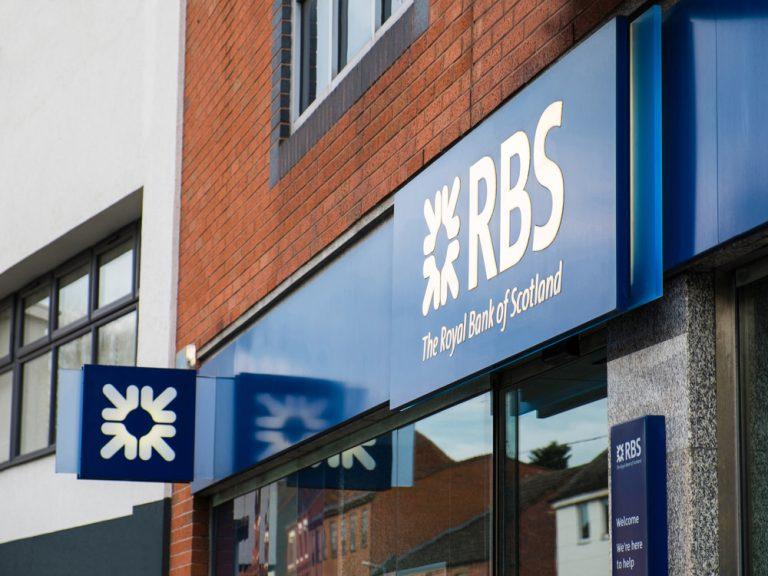
Royal Bank of Scotland Group (LON:RBS) saw its share price drop during Friday trading, despite the good progress booked in its full-year fundamentals. The new RBS Chief Executive Alison Rose also said the company would change its name to ‘NatWest’, in an effort to move away from its wrongdoings before and during the 2008 financial crash.
The company performed well during the full-year, reporting an operating profit before tax of £4.23 billion, up from £3.36 billion a year earlier – this represents a third consecutive year of profit for the company.
RBS shareholders fared similarly well, with basic diluted EPS up from 13.4p to 25.9p, and a further £968 million being paid out in dividends, with £600 million of this sum going to the UK government.
The biggest news today, though, was the company’s announcement that it would be undertaking a strategic change of course, with new Chief Executive Alison Rose at the helm.
This was signposted by the name-change announcement, and a statement saying its NatWest Markets investment bank was set for a:
“significant transformation”RBS said it would half its number of risky assets and would stop lending and offering underwriting services to major oil and gas producers that fail to outline credible climate change prevention plans, with the possibility of extending these measures to coal companies. While these moves appear positive, the company declined to comment on the strong possibility of job losses and branch closures as part of a plan to cut costs by £250 million in 2020. Rose said these measures are being implemented in an effort to create a “smaller and simpler bank”. Today’s updates came after a mixed end to 2019, with RBS and Lloyds (LON:LLOY) both landing themselves in hot water after failing a Bank of England test. However, the company were pleased to announce plans to launch its standalone online bank, Bó.
RBS Outlook
Within its outlook for 2020, the company said,“In the current environment, and recognising ongoing market uncertainty, we continue to expect challenges on income. In addition, we anticipate that regulatory changes will adversely impact income in our personal business by around £200 million.”
“We plan ongoing operating cost take out by reducing operating expenses excluding strategic costs, litigation and conduct costs and operating lease depreciation costs by £250 million in 2020 compared with 2019. We expect to incur £0.8-1.0 billion of strategic costs during 2020 resulting from a refocussing of NatWest Markets and the continued resizing of the Group’s cost base. We anticipate that NatWest Markets exit, restructuring and disposal costs will be around £0.6 billion in 2020, with around £0.4 billion as disposal losses through income and £0.2 billion through strategic costs.”
Investor notes
Following the update, the company’s shares have dipped 6.30% or 14.40p to 214.30p per share 14/02/20 15:46 GMT. Analysts from Shore Capital reiterated their ‘Hold’ stance on RBS stock, while the company’s p/e ratio is 16.94, and their dividend yield stands at 2.57%.Boris – Cummings big spend budget on the horizon? FTSE unsettled by reshuffle
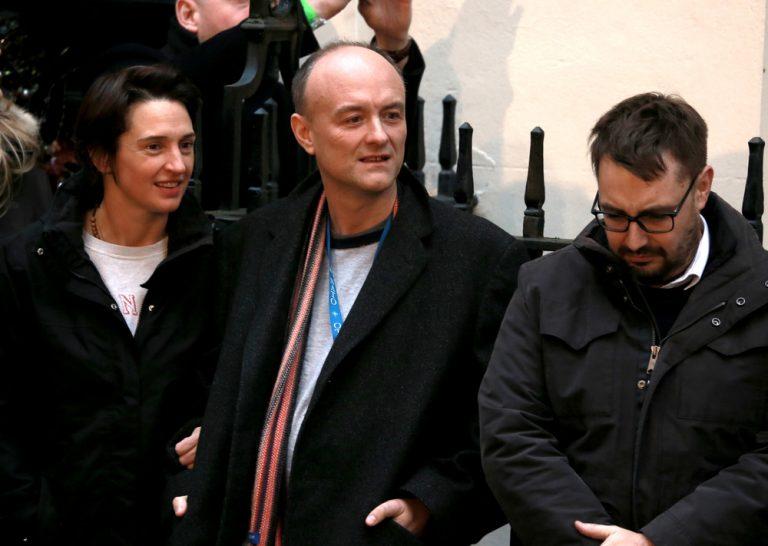
Sterling rallied following the resignation of Chancellor Sajid Javid, while FTSE early morning wobbles were compounded by a seismic cabinet reshuffle. The assumption now, it would appear, is that incoming Chancellor Rishi Sunak will be bullied into big spending in next month’s budget, by Boris Johnson and crony Dominic Cummings.
Among a growing list of promises, the PM has pledged £5 billion towards bus services and cycle routes, alongside a HS2 budget now touching three times its original estimate.
While the prospect of a more harmonious cabinet – and more generous infrastructure spending – buoyed Sterling, FTSE was further unsettled by the severity of the reshuffle.
However, what began the index’s bad start were the worrying stories coming out of Hubei, regarding the Coronavirus.
Doubts will persist over the market’s recent attempts to find positive news to chase – the next round of Coronavirus updates will likely set the tone for market sentiment over the coming week.
Speaking on Boris Johnson’s reshuffle and movements in equities, Spreadex Financial Analyst Connor Campbell, commented,
“Already rough due to an unexpected surge in the coronavirus death toll, Thursday became a bit of a nightmare for the FTSE thanks to Boris Johnson’s cabinet reshuffle.”
“Unwilling to sack all of his advisors as dictated by Johnson and puppet master Dominic Cummings, Saijid Javid resigned as Chancellor, in doing so becoming the shortest-serving minister to hold that office for more than 50-years.”
“Initially the pound had a bit of a wobble following the announcement. However, the fact Rishi Sunak – perceived to lack the same power base as Javid – was revealed as his replacement generated speculation the UK could be in for a Johnson/Cummings-influenced, spend-heavy budget next month.”
“That in turn caused sterling to surge 0.7% against the dollar, taking cable to a 10-day peak of $1.3047, and 0.9% against the euro, leaving it at a 2-month high of €1.2038.”
“Ever angry at the pound’s ascent, the under-pressure FTSE sank 1.6%. Effectively wiping out the week’s gains, the UK index is back at 7420 – an extra blow since it already missed out on the record peak partying of its German and US peers.”
“Not that there was much green to be found anyway this Thursday. The spike in coronavirus deaths and new cases cast doubt over the market’s recent highs, sending the DAX and CAC down 0.3% and 0.5% respectively.”
Responding to the uncertainty, oil took a big knock and added to the FTSE’s woes. Among the biggest losers were Royal Dutch Shell (LON:RDSB), down 3.65%, and BP (LON:BP), which fell 3.09%.Tesla share price – shorters’ winning ticket or widow-maker?

Its been a strange sort of year for Tesla (NASDAQ:TSLA) and its shareholders. The American automotive and energy company, run by zany engineer and personality Elon Musk, went from being questioned on its financial viability throughout the first half of 2019, to watching its share price bounce from US $176.90 per share (on June the 3rd 2019) to $968.99 per share (on the 4th of February 2020).
It now sits at $750.93 a share, down 2.19% during trading so far, and claiming the top spot as Scottish Mortgage Trust’s largest holding.
But, what have been the cause of its rise?
Improving the business while keeping its hold on the electric car market
The company delivered its more affordable Model 3 car during 2019, and this marked a turning point in its fortunes. It posted consecutive periods of profit during the second half and in the fourth quarter, it generated $1 billion in cash after capital expenditures.Despite posting its typical full-year loss, the Group’s operating costs were down 7%, while sales were up 13% and deliveries bounced 50%.
Analysts have added that with its Shanghai factory providing a source for optimism, and a new factory under construction in Europe, the company look set for expansion on the global stage.Speaking on its outlook, Chokshi and Eavis of the NY Times stated:
“The company has a lock on the small, but growing battery electric vehicle market — and the bulls believe Tesla’s not about to lose it. In a note over the weekend, ARK, an investment management firm, said it expected Tesla’s share price to soar to $7,000 in five years based on a belief that Tesla can increase profits, decrease costs and build a fully autonomous taxi network. Even less-exuberant analysts say the company has proved itself.”
Carbon credit cash looking electric for Tesla
While not a huge part of the company’s $24.57 billion revenue in 2019, Tesla has made $2 billion in revenue by selling ZEV credits since 2010. The EPA say that only 3 car manufacturers currently stick within their carbon emission target without using credits, and it is on record that GM (NYSE:GM) and Fiat (BIT:FCA) have both bought Zero Emissions Vehicle credits from Tesla. While the ZEV credits expire in 2021, the company will continue to look to make money by capitalising on tax reliefs and credits based on its environmentally-friendly status, not only in the US, but also across the world.Breaking through $100 billion
A symbolic moment in the company’s change of fortunes was the moment it broke through to a valuation of $102 billion (or £76.1 billion) at the end of January. The breakthrough saw Elon Musk collect a pay cheque of $2.6 billion, alongside the successful fulfilment of other financial performance conditions. It also saw Tesla break through into the number two spot, as the world’s second largest car company, behind Toyota (LON:TYT) but overtaking Volkswagen AG (ETR:VOW3). The question remains, though, as a popularly shorted stock by bearish Wall Street pundits, is it worth a shot?Tesla shares – shorters’ dream or dud?
Despite the company’s shares bouncing 350% in the last six months, there are still those who believe the Tesla share rally will die a death. At one end of the spectrum, we have the shorters who are now licking their wounds. Seasoned short-seller, Robert Majteles, told the Wall Street Journal of his failed short attempt on Tesla stock: “Oh damn I got my butt kicked.” “It’s the biggest set of losses that I’ve ever taken in 20 years” Amy Wu Silverman, a managing director at RBC Capital Markets, added:“Tesla is my widowmaker”In the middle ground, many are advising onlookers to stay put, and stockholders to sell up. The WSJ report some 45% of analysts have either an ‘Underweight’ or ‘Sell’ stance on the company’s stance, which represents the highest proportion of Tesla bears to-date. On the far end of the spectrum, the most hard-headed shorters are telling us to bet against Tesla with everything we have, despite the Company forecasting a year of expansion. Attributing Tesla’s success to optimism surrounding its trading turnaround and credit sales, renowned shorter Jim Chanos stated, “This is a car company, yes a higher-end one, but it’s still a car company, with the same low margins of other auto makers.” So, what do we think? We can be sure that one thing we’re not short of is opinions on the future of Tesla stock. One thing we ARE short of is useful information to guide our actions. The stock’s valuation prices in more growth, which is neither guaranteed nor impossible. Ultimately, my approach is one of sitting on the fence. If you’re holding Tesla stock – well done. You’re part of a disruptive company who have seen a turnaround in their performance. Keep a grip on your holding while the business is meeting your expectations. If you don’t currently hold Tesla stock, hold tight. The price is currently far higher than it could end up. With it being a disruptive company, led by such a whacky egotist/genius, there will be a low point down the road. Save yourself for that opportunity. On Thursday, Tesla announced it would raise $2 billion through a stock offering, while Elon Musk boasted about the launch of the company’s sleek-looking solar roof.
Order at https://t.co/byFVU5nF9W https://t.co/4lD1mVHKy6
— Elon Musk (@elonmusk) February 9, 2020