Verona Pharma shares surge over 50% on positive Ensifentrine trial

1

Verona Pharmaceuticals (LON:VRP) have given shareholders a pleasing update at the start of the week.

The firm said that its Phase 2b clinical trial of nebulized Ensifentrine met its primary endpoint.

The four weeks trial, which is currently being undertaken is being studied within severe chronic obstructive pulmonary disease patients is now reaching its conclusion.

The drug was administered twice daily in combination with tiotropium, a treatment used in the management of chronic obstructive pulmonary disease and asthma.

Verona are currently trialling four different doses of the new medication, which are 0.375 milligram, 0.75 milligram, 1.5 milligrams and 3.0 milligrams.

Verona said the drug hit its “primary endpoint” for a dose-related positive effect on lung function when compared with a group taking a placebo that has no medical benefit.

“We are delighted with these results in symptomatic COPD patients already on steady-state maintenance treatment. These data bring clarity to planning the design, including dose selection, endpoints and background therapy, of our Phase 3 program. We expect Phase 3 trials to start in the third quarter of 2020,” said Verona Pharma CEO Jan-Anders Karlsson.

“We look forward to discussing these new and compelling data, together with the positive results from our previous clinical studies, in an End-of-Phase 2 meeting with the FDA planned for the second quarter,” he finished.

Verona build from November worries

At the start of November, the firm reported that it had widened its third quarter loss, which sent shares in red.

For the three months ended September 30, Verona’s pretax loss totaled £12.8 million, more than three times the £3.5 million loss posted the the year before.

The increasing costs in the Research and Development team was the main cause of the massive loss.

These costs inflated to £12.0 million from £5.3 million. Verona’s general & administrative costs also rose, jumping 43% to £2.0 million from £1.4 million.

A 28% increase in general & administrative costs to £5.9 million from £4.6 million also saw the loss widen for Verona.

Chief Executive Jan-Anders Karlsson said: “We are very pleased that our four-week phase 2b dose-ranging clinical trial with nebulized ensifentrine is progressing according to plan and that we have completed enrollment of over 400 symptomatic patients with moderate to severe COPD. We anticipate completing this study around the end of 2019. Informed by this and prior studies in around 850 subjects, we plan to advance into our phase 3 clinical trial program which we expect to commence in 2020 following an end of phase 2 meeting with the [US Food & Drug Administration.

However, it seems from the update today that the increased expenditure in research and development may have had long term benefits.

Shareholder of Verona would have been initially worried about the loss widening a few months back, however from today’s update there will be keen optimism to see how results perform.

Shares in Verone trade at 88p (+53.28%). 13/1/20 10:33BST.

What investors can learn from Sirius Minerals

Sirius Minerals (LON: SXX) provides investors with an indication of the pitfalls of investing in small mining companies developing projects.
It may seem strange to say this, but having a good project is not enough for a small miner. It is no good if the company does not have the money to get the mineral out of the ground and sell it.
If the money is not in place, then a better financed company can come along and snap up the project for a fraction of the investment made. That is what multinational mining giant Anglo American (LON: AAL) is doing with its bid approach for potash fertiliser proje...

Another upgrade for Team 17

Video games label and developer Team 17 (LON: TM17) has had five profit forecast upgrades in the past 12 months. Games released in the second half performed strongly.
Team 17 floated 20 months ago when it raised £45m at 165p a share. Following the trading statement, the share price rose 37.5p to 420.5p.
This has taken Team 17, which is a constituent of the FTSE AIM 100 index, to a valuation of more than £550m and into the top 40 AIM companies by market capitalisation.
There is an experienced management team at Team 17, and they have done well in managing expectations. The 2019 profit has been ...

Ladbrokes Coral deal paying off for GVC

Gaming firm GVC Holdings (LON: GVC) reports fourth quarter trading on 17 January and the momentum of the business is set to continue. The 2019 full year figures may be slightly better than expected.
Online growth remains strong with Germany and Australia growing faster than the UK. The Ladbrokes online brand is performing better as part of the group. The UK retail operations are declining but not performing as badly as they were expected to.
Peel Hunt forecasts a 2019 pre-tax profit of £420m, which was upgraded at the time of the third quarter trading statement.
Ladbrokes Coral
There is still...

Short-term stock blip for Joules

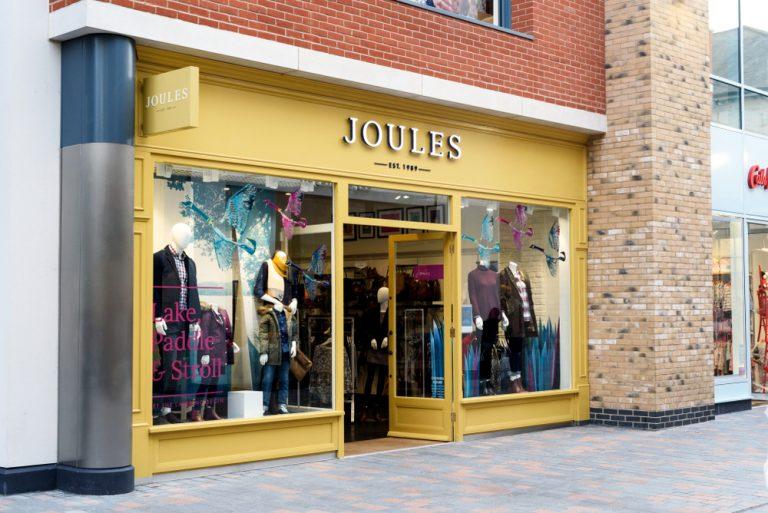
Christmas was not a time of celebration for fashion brand Joules (LON: JOUL) and there was a sharp reduction in the 2019-20 profit forecast.
There was a manual stock allocation error that meant that Joules did not have the required stock available. That was enough to knock this year’s profit by £3.5m.
This came as a shock because the trading statement before Christmas was positive. However, spreadsheet errors meant that there was too much stock in the stores and not enough allocated for the website.
Website traffic was 8% ahead but customers could not buy what they wanted. That meant that onli...

Aston Martin shares soar on reports of possible Chinese cash injection

Aston Martin (LON:AML) shares rallied on Friday after reports suggested Chinese firm Geely are interested in taking a stake in the group. Shares in Aston Martin rose over 14% as the news broke on Friday afternoon. The Financial Times reported Aston Martin had been the subject of due diligence by Geely who also owns a 10% stake in Daimler. The news comes just days after Aston Martin issued a profit warning which sent shares into a downward spiral as the company revised FY 2019 EBITDA down to £130m-£140m. Aston Martin listed in London in 2018 in a much anticipated IPO but has failed to live up to expectations with shares falling over 75%. Geely will see recent difficulties at Aston Martin as an opportunity to broaden their portfolio into a tier 1 luxury brand.

Geely expansion into Europe

Geely Auto Group was founded in China in 1997 and has expanded through a number of acquisitions and now operates global business with much of the overseas expansion in the last decade being focused on Europe. Geely has acquired stakes or completely taken over brands such as Volvo and British racing brand Lotus as well as Malaysia’s national brand, Proton. A stake Aston Martin would compliment Geely’s holdings in Diamler, who Aston Martin buys parts from.

A Disappointing Year

Dr Andy Palmer, Aston Martin Lagonda President and Group CEO, commented on the ‘disappointing’ trading statement: “From a trading perspective, 2019 has been a very disappointing year. Whilst retails have grown by 12%, our best result since 2007, our underlying performance will fail to deliver the profits we planned, despite a reduction in dealer stock levels. We are taking a series of actions to manage the business through this difficult period. This will include a cost saving programme alongside a focus on returning dealer stock levels to those more normally associated with a luxury company; winning back our strong price positioning is a key focus. The signs from the launch of the DBX are very encouraging and the order rate seen to date is materially better than for any of our previous models. Launch plans are progressing well and we are achieving all of our key operational milestones. Start of production remains on track for Q2 2020.” Shares in Aston Martin (LON:AML) changed hands at 457p, up 12%, just before the close on Friday.

Purpose Investments and HANetf launch first Medical Cannabis UCITS ETF

Purpose Investments and HANetf are set to launch the first Medial Cannabis UCITS EFT (CBSX).

The Medical Cannabis and Wellness ETF is the first medical cannabis focused ETF to be listed in Europe, and shows significant headway in the commercialization and marketing of cannabis based products.

CBSX will list in Germany initially, with a Total Expense Ratio of 80bps and has been given the green light to be sold in the UK, Italy & Ireland.

Notably, the UK us the worlds largest producer and exporter of legal cannabis for medical and scientific uses, as headways with the NHS have been made over the last few months.

CBSX is set to launch the week commencing 13th January on Deutsche Boerse (ETR: DB1) and will become the first and only European UCITS ETF to deliver targeted exposure to the rapidly expanding medical cannabis industry.

Purpose Investments are a Canadian ETF and asset management company, with holdings of over CAD8 billion assets under management.

Purpose initially expressed their interest in the cannabis sector after launching a cannabis fund in Canada in 2017, which was called the Purpose Marijuana Opportunities Fund.

The Medical Cannabis and Wellness UCITS ETF offers specific exposure to the medical cannabis industry which has gone through massive development and progress in many EU countries.

Som Seif, CEO of Purpose Investments commented: “The medical cannabis industry was pioneered in Canada, and we’re thrilled with the opportunity to partner with HANetf to take what we have learned from our Purpose Marijuana Opportunities Fund (MJJ) to Europe. We believe that the cannabis sector is still in the infancy stages of a multi-year growth phase and that there is ample opportunity for innovation and new discoveries. We are very excited to embark on this journey with HANetf in a global investor market.”

The CBSX ETF will consist of publicly listed companies that conduct legal business activities in the medical cannabis, hemp and CBD industry.

The newly formed ETF will cover sub sectors including: Producers and suppliers of medical cannabis, CBD focused Biotech equipment, producers of medical cannabis consumer products and software solutions for medical cannabis producers among others.

Hector McNeil, co-Founder and co-CEO at HANetf, said:

“We are very pleased to confirm our partnership with Purpose Investments to bring CBSX to UCITS investors, expanding the range of funds on the HANetf platform which target long-term, transformational themes. Medical cannabis is an emerging industry with huge growth potential and significant investor interest, and CBSX provides a unique opportunity for investors to access this nascent industry through a rigorously screened, liquid and diversified portfolio.”

McNeil concluded:

“Up until now, European investors have experienced restricted access to the cannabis market. With the launch of this truly innovative ETF, there is now a product for investors who want exposure to the cannabis industry through a pre-screened basket of Cannabis securities and in a regulated UCITS ETF. Due to the operational and legal due diligence that has gone into developing this truly innovative ETF, investors can readily access an investment vehicle which can significantly reduce their legal risk versus investing directly in single cannabis securities. It is also is a great way to diversify as investors don’t need to research each individual security and the ETF may help to withstand the short-term volatility of individual securities, potentially making for a lower risk, longer-term investment.”

UK retail sees 2019 as its worst performing year, as British supermarkets face challenges

British retailers have seen their worst year of trading in 2019 as data revealed on Thursday.

Even though sales were boosted in December, this was only improved due to the late timing of Black Friday. The British High Street has been hit across 2019 with both political and economic shocks, as firms look to recover from setbacks.

Even though there has been some clarity provided with Boris Johnson’s recent electoral victory, 2019 has been a year of cut throat trading for British business.

In 2019, total sales were down by 0.1%, compared with growth of 1.2% in 2018, numbers from the British Retail Consortium-KPMG sales monitor showed.

Brexit has been dampening customer spirits, and the price of oil and other commodities has been volatile considering the nature of global politics.

Donald Trump’s sentiment with China has only led to Chinese tariffs and higher prices for businesses to import manufacturing and retail goods, causing overhead costs to significantly rise making the prospect of survival ever more unlikely.

In the five weeks to December 28, total retail sales climbed 1.9% from a year before and increased by 1.7% on a like-for-like basis.

In December 2018, total sales were flat annually but declined 1.2% on a like-for-like basis. Before December, only four months of 2019 saw growth in like for like retail sales, which highlights the state of British retailers.

Like-for-like sales climbed 1.8% in January 2019 and by 3.7% in April. They edged 0.1% higher in both July and October.

BRC speaks on the matter

BRC Chief Executive Helen Dickinson said: “2019 was the worst year on record and the first year to show an overall decline in retail sales. This was also reflected in the CVAs, shop closures and job losses that the industry suffered in 2019. Twice the UK faced the prospect of a no-deal Brexit, as well as political instability that concluded in a December general election – further weakening demand for the festive period.”

BRC’s Dickinson added: “The industry continues to transform in response to the changing technologies and shopping habits. Black Friday overtook Christmas as the biggest shopping week of the year for non-food items. Retailers also faced challenges as consumers became both more cautious and more conscientious as they went about their Christmas shopping.”

KPMG insight

KPMG Head of Retail Paul Martin said: “Grocery is usually a winner during the festive season, although it is important to highlight that growth has been weakening recently and for many players Christmas did not deliver the results it has in the past.

“All growth will be welcome, although the true performance of Christmas trading is still to be determined. The cost of customer returns must not be overlooked. That’s especially true as online fulfilment already costs retailers a pretty penny. Christmas trading reports will likely be mixed, but those that have truly performed well will have managed margin and costs well over both the Christmas period and beyond.”

Food sales

In the three months to December, food sales also remained flat year on year, however on a like for like basis food sales climbed 0.7% which is something to take out of the gloomy update.

Susan Barratt, chief executive of grocery market researchers IGD, said: “December’s food and grocery sales ended 2019 on a downbeat note. Despite the influence of some inflation across the market, shopper spending was not as expected for such a key sales period. As a result, while the value of spending wasn’t down, growth was negligible and volumes declined – a rarity for Christmas in recent times.

“Despite their financial confidence remaining subdued, shoppers appear to be a little bit more optimistic for 2020. Fewer expect food prices to be more expensive, with 75% of shoppers taking this view compared with 78% in November.”

Online non food sales surged by 13% in December, compare to growth of 5.8% in a similar period in 2018.

The British Supermarket Industry

Some firms have already given updates about their Christmas activity, and these have not been so pleasing for shareholders to read.

Marks & Spencer

Today, Marks and Spencer (LON:MKS) saw their shares crash following a timid update.

In the 13 weeks period which ended December 28 the firm said that its total UK sales dipped 0.6% year on year to £2.77 billion, however on a like for like basis this was a 0.2% rise.

Total sales were 0.7% lower at £3.02 billion, and this includes its international unit which saw a 2.3% fall in sales to £251 million.

The British supermarket mainly attributed its growth in UK trading to food unit, where sales climbed 1.5% year on year to £1.7 billion. Notably in the food unit, the firm saw a 1.4% rise on a like for like time scale.

The clothes unit, which contributed heavily to a slump back in November saw sales fall again by 3.7% to £1.06 billion and on a like for like basis sales fell 1.7%.

Tesco

In similar fashion, Tesco (LON: TSCO) updated the market today on its Christmas trading.

Tesco UK and Ireland saw its sales rise over the festive period, however total group sales fell following slumps in Central Europe.

In the six week period which ended on January 4, the UK & Republic of Ireland sales increased by 0.2% and rose 0.4% on a like-for-like basis, excluding fuel.

Total group sales fell by 1.7%, however, and by 0.8% on a like-for-like basis, however shareholders have not seem to phased.

In the third quarter, the firm saw its grocerty sales fall 0.9% compared to a year ago whilst total sales dropped 1.4%.

Across the Christmas period, total sales over the 19 weeks period were down 1.5% year on year to £21.03 billion.

Chief Executive Dave Lewis said: “In a subdued UK market we performed well, delivering our fifth consecutive Christmas of growth. In our Centenary year, our customer proposition was compelling, our product offering very competitive and thanks to the outstanding contribution of our colleagues, our operational performance was the best of the last six years. As a result, this Christmas we had the biggest ever day of UK food sales in our history.”

Sainsbury’s

Yesterday, Sainsbury’s (LON:SBRY) saw their shares dip as the FTSE 100 listed firm reported a fall in quarterly sales in a tough few months for the British supermarket.

In the 15 weeks to January 4, total retail sales, excluding fuel, were down 0.7% from last year. Including fuel, sales were down 0.9%, which has seemed to edge shareholders.

Compared to 2018, on a like for like basis sales excluding fuel also were 0.7% lower year-on-year, but the like for like decline dropped further to 1.1% when including fuel sales.

On a more positive note, grocery sales rose 0.4% from a year ago with online grocery sales up 7.3% an area which the firm has looked to expand over the last few years.

The shift to online shopping was more blatant as one fifth of total sales across the quarter started on line, as online sales grew 5% year on year.

Clothing sales rose by 4.4%, which Sainsbury’s said was driven by both the colder weather during the quarter and its Christmas gift range.

Sainsbury’s said: “We invested in 127 supermarkets and 93 convenience stores in the quarter and are on track to deliver improvements to 450 supermarkets and 200 convenience stores by mid-March.

“Retail markets remain highly competitive and promotional and the consumer outlook continues to be uncertain. However, we are well placed to navigate the external environment and are executing well against our strategy.”

Morrisons

Yesterday, Morrisons (LON:MRW) joined a list of British supermarkets who’s saw their sales draw short. The firm said that challenging trading conditions coupled with consumer uncertainty were the largest contributors to the slump in sales.

Morrison’s said that said like-for-like sales, excluding fuel, were down 1.7% year-on-year.

Notably, fuel sales declined 2.8% year on year across the 22 weeks period, and total sales dipped 2.9% but the figure totaled 1.8% without fuel sale considerations.

Certainly, there is a lot of work that needs to happen to bring back the British high street to life.

The dominance of overseas brands and smaller firms such as Lidl, Aldi and Ocado (LON:OCDO) this has really tested the resilience of the Big Four and other British supermarkets.

With retail and the high street slumping so significantly, the solution will have to come from a combination of both British businesses and the newly elected Conservative Government to allow business to flourish in a time where news headlines have been dominated by political tensions.


MJ Gleeson remain confident to meet expectations despite mixed update

0

MJ Gleeson (LON:GLE) have seen a mixed performance in its first half, but have remained confident to deliver expectations. The firm said that it expects an overall “successful” result for the firm at the end of its financial year in June.

Shares in Gleeson trade at 948p (-1.60%). 9/1/20 13:05BST.

The householder said that its Homes unit had sold 811 units during the half year period to end 2019, which saw a 17% climb year on year from the 691 figure.

Additionally, Gleeson said that the demand for its low cost homes remains strong and is on track to deliver full-year unit completions in line with expectations.

In its Strategic Land division, the company said that due to a number of land sales which will be closed in the first half, these have shifted to the second half

Gleeson added that “greater” certainty has returned to the market following the result of the general election in the UK.

MJ Gleeson gave shareholders a positive note as they highlighted the fact that there is still strong demand demand for high-quality consented land from medium and large house builders, and this underpins the company’s expectation of a “successful” result for the division for the year as a whole.

For financial 2019, the firm reported pretax profit of £41.2 million, which showed growth by 11% from the £37 million a year ago.

Thee company is set to unveil its half-year results on February 13.

“Whilst the overall result for the first half will be significantly down on an unusually strong comparator period in Strategic Land, the strong performance of Gleeson Homes and the anticipated deal flow at Strategic Land in the second half mean that the board remains confident that the group’s results for the full year to June 30 will be in line with expectations,” the company said in its statement Thursday.

MJ Gleeson give shareholders renewed optimism

At the start of December, the firm saw its shares dip however it gave shareholders a confident outlook which seems to have been backed up today.

The firm said it expects to deliver annual results in line with forecasts backed up by a strong performance by its Home unit.

The house builder said it has experienced a “strong” demand at its Homes division, with net reservations since the start of its current financial year up more than 10% compared with the same period last year.

Gleeson said Homes has a pipeline of 13,042 plots with a gross development value of £1.7 billion, of which 6,910 plots are owned and 6,132 are conditionally purchased.

“Strong demand, good mortgage availability and our ability to offer attractive levels of affordability to our customers, means the outlook for the division remains very positive,” said Chair Dermot Gleeson.

The Homebuilding market

As Gleeson alluded to, British homebuilders have seen to found a new spark following Johnson’s landslide victory in the December election.

Homeserve (LON:HSV) seem to be performing well, in similar fashion to Gleeson. In November the firm said that revenue had risen on organic growth and contributions from mergers and acquisitions.

Homeserve additionally announced the acquisition of a 79% stake in eLocal Holdings LLC for $140 million on debt and cash free terms. For Homeserve’s current financial year to the end of March, eLocal is expected to add around $5 million to adjusted operating profit, rising to $16 million in the 20201 financial year further investment.

Bovis and Galliford agree merger deal

Additionally, two titans in the industry in Galliford Try (LON:GFRD) and Bovis Homes Group plc (LON:BVS) agreed a merger deal late in 2019.

The deal is valued at £1.44 billion, after Galliford rejected a £1.05 billion bid from rival Bovis for its Linden Homes and Partnerships & Regeneration businesses back in May.

In September the two confirmed they had resumed talks. Bovis was to issue shares worth £675 million and pay £300 million in cash, combined with £100 million of Galliford debt.

The two firms announced that the terms from the September agreement were unchanged, and will see will see Bovis issue 63.8 million new shares to Galliford, valued at £675 million, pay £300 million in cash, and take over Galliford’s £100 million debt.

Following the Boris bounce, British homebuilders have been given renewed optimism after some clarity has been given in British Politics.

The update from Gleeson today will please shareholders, however much uncertainty lies in British EU negotiations and other political affairs, which still could leave the property market cautious.

Card Factory shares crash over 27% as firm expects declining annual earnings

1

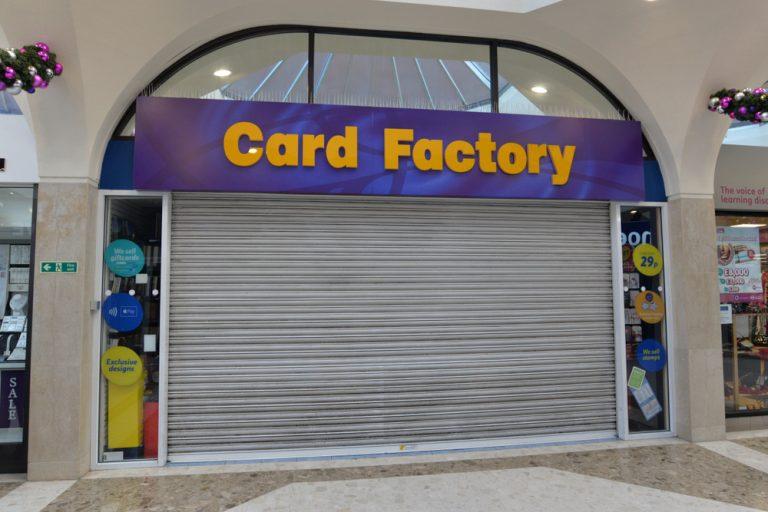
Card Factory (LON:CARD) have seen their shares crash on Thursday as the firm expects annual earnings to decline following a tough festive period.

Revenue in the eleven month period to December 31 was 3.6% which saw an increased from the 3.4% figure in the same period year on year. However, the firm said that like for like sales declined by 0.6%, which alerted shareholders.

Card Factory added that it had 47 net store openings in the UK and Ireland so far in the financial year, and the new stores are performing well.

The firm said that the total portfolio totals at 1,019 stores which 13 of which are based in Ireland.

Notably, the firm said it is not rack to meet its target of 50 net new stores openings, highlighting its “solid pipeline” of new opportunities.

The online unit saw positive revenue growth of 15% year on year during the 11 months, however over the same period last year revenue online rallied 59%.

The company said after the festive period it expects adjusted underlying earnings before interest, tax, depreciation and amortisation, also excluding IFRS 16 adjustments, to be in the ballpark of £81.0 million and £83.0 million in the current financial year.

Alerting shareholders, this could show a decline by 9.4% from the £89.4 million last year.

Speculating further to 2021, the firm said its adjusted underlying Ebitda could take a hit off up to £10 million, amid more declines in high street footfall and a depressed pound.

However, shareholders will be disappointed by saying that the company did not expect to pay a special dividend during the 2021 financial year.

Card Factory didn’t comment on the dividend for financial 2020 other than to say it remains committed to its current dividend policy. For the first half of the year, it kept both the ordinary and special dividends flat, at 2.9 pence and 5.0p respectively.

There was some optimism for the firm as they enlightened the market about a deal struck wit The Reject Shop Ltd (ASX:TRS) an Australian discount shop chain with 360 stores in the country.

The company will update shareholders of its strategic review, when it reports its full-year results on April 21.

Card Factory try to fight slumping High Street

Card Factory said: “The Christmas trading period was challenging. The general election and weak consumer sentiment ensured that the long-running trend of declining high street footfall was maintained.

“Management was able to offset the footfall decline, in part, by once again increasing average transaction value. This was achieved by making more sophisticated use of data to improve ranging decisions, as well as continuing to improve the quality of products offered.”

The company explained: “To date there has been significant success in mitigating in large part the Ebitda impact of these external factors through a combination of offer improvements and business efficiencies. These efforts will continue, but the opportunity for efficiencies within the current business model is finite.

“Accordingly, the board anticipates that, on a business as usual basis, the net impact of market headwinds on financial 2021’s adjusted underlying Ebitda is likely to be in the range of GBP5 million and GBP10 million.”

Card Factory concluded: “The review is not yet complete, but the board is confident that it will yield a number of attractive medium term growth opportunities across both new and existing channels, albeit there may be a requirement for additional strategic investment in financial 2021 to support this future growth.”

Shares in Card Factory trade at 101p (-27.69%). 9/1/20 12:57BST.