
Former Barclays chief acquitted in fraud case
Barclays’ former chief executive John Varley was acquitted of conspiracy to commit fraud on Friday.
The Court of Appeal declined an application by the Serious Fraud Office (SFO) to overturn the original decision, which concluded that there was insufficient evidence to charge Mr Varley.
The appeal was upheld against three defendants, Roger Jenkins, Tom Kalaris and Richard Boath, who will now face a retrial.
Lord Justice Gross, who sat at the appeal case, said: “Following an application by Mr Varley at the close of the prosecution case, the trial judge ruled that the evidence against him on each count was insufficient for the case to proceed. The appeal was dismissed by the court of appeal … Accordingly, Mr Varley has been acquitted on both counts.”
He continued: “The other defendants will be retried at a date to be determined.”
The case relates to an investigation by the SFO into a loan given to Qatar back in 2008.
The loan meant that the bank avoided having to be bailed out by the government at the height of the global financial crisis.
Since then, Barclays have grappled with a series of fines and penalties relating to failings regarding PPI and alongside an attempt to name a whistleblower.
It was eventually fined $15 million by a New York regulator following measures taken CEO Jes Staley to unmask the whistleblower.
The UK’s Financial Conduct Authority (FCA) also fined Staley £642,430 over the failings.
Shares in the British bank (LON:BARC) are currently +0.04% as of 13:12PM (GMT).
Mark Carney: 150,000 companies not prepared for no-deal Brexit
150,000 companies are ‘not fully ready’ for the advent of a no-deal Brexit, Mark Carney has said.
The Bank of England (BoE) Governor said that various businesses are yet to fill out paperwork to ensure that they can continue exporting to the EU, should a no-deal Brexit scenario occur.
“Business will be reliant on what the governments are able to do in order to keep the ports open, the trade flowing,” he told the BBC’s Today programme.
Mark Carney said that whilst the majority of UK businesses had made preparations, they were not completely safeguarded from the fallout of a no-deal Brexit.
“But it doesn’t mean they are fully ready, in fact far from it,” he added.
Mark Carney also addressed news that Facebook (NASDAQ:FB) would be introducing its own digital currency, called Libra.
He warned that the Bank would be putting in place certain rules to ensure that the currency protected consumer data.
He said: “Welcome to the world of finance: there is oversight, there is consumer protection, there is market integrity, people have certain rights to privacy that have to be respected.
“And we’re not going to allow a network that comes into place that is a network for criminals and terrorists.”
One of the criticisms raised against cryptocurrencies such as Bitcoin has been its propensity to be exploited by those in the dark web, due to its unregulated nature.
On Friday the BoE’s monetary policy committee voted unanimously to keep interest rates on hold.
The BoE also opted to slash its growth forecasts for the UK economy, citing ongoing Brexit uncertainty and ongoing global trade wars.
UK energy customers could face £172m bill as suppliers collapse

British households could face a potential bill of £172 million in total from the collapse of 11 energy suppliers since the beginning of 2018, according to Citizens Advice.
Citizens Advice, a network of independent charities across the UK, said on Friday that British energy customers are facing a potential bill of £172 million from the collapse of various suppliers since January of last year.
Additionally, a new report by Citizens Advice also reveals that thousands of people who owed money to failed suppliers missed out on consumer protections and instead faced aggressive debt collection methods.
The government must “fix the protection gap” and shield customers who owe money to failed energy companies, ensuring consumer interests are upheld.
It is estimated that at the very least, 32,000 have been left open to potentially aggressive debt collection methods by the administrators of these collapsed energy companies.
“Consumers shouldn’t have to foot the multi-million pound bill left behind when companies collapse – and they certainly shouldn’t lose their usual protections in the process,” Gillian Guy, Chief Executive of Citizens Advice, commented.
“The Energy White Paper is the perfect opportunity for the government to close the gap in protections and limit the cost to consumers of any future supplier failures. It must act now,” the Chief Executive continued.
As the failed supplier is taken over by administrators, Ofgem’s Supplier of Last Resort appoints a new supplier to customers whose original energy supplier has failed.
These administrators are not subject to the same rules as suppliers licensed by Ofgem, Citizens Advice emphasised, and are therefore allowed to use more aggressive debt collection methods.
Citizens Advice wants the government to fix the protection gap for customers impacted by the collapse of energy suppliers, as well as ensuring that administrators consider consumer interests and are subject to the same rules as suppliers.
Earlier in May, it was reported that thousands of households face an increase of up to £362 per year in energy bills. This increase comes as over 60 fixed-price contracts are set to end.
Moreover, 5.8 million households switched electricity supplier in 2018 amid price hikes.
Bank of Scotland fined £45.5m over Reading fraud failures
Bank of Scotland has been fined £45.5 million by the city watchdog for failing to report suspicions of fraud at its Reading branch back in 2007.
The Financial Conduct Authority (FCA) said that although the Bank of Scotland identified suspicious activity in 2007, it did not alert regulators until 2009.
Explaining the penalty, the FCA said that the bank demonstrated ‘…insufficient challenge, scrutiny or inquiry across the organisation and from top to bottom’.
The individuals involved in the £245 million fraud scheme – Lynden Scourfield, Mark Dobson, Alison Mills and David Mills – were all banned from working in financial services.
Mark Steward, Executive Director of Enforcement and Market Oversight at the FCA said:
“Bank of Scotland failed to alert the regulator and the police about suspicions of fraud at its Reading branch when those suspicions first became apparent. BOS’s failures caused delays to the investigations by both the FCA and Thames Valley Police.
There is no evidence anyone properly addressed their mind to this matter or its consequences. The result risked substantial prejudice to the interests of justice, delaying scrutiny of the fraud by regulators, the start of criminal proceedings as well as the payment of compensation to customers.”
Bank of Scotland is owned by Lloyds Banking Group. António Horta-Osório, Chief Executive of the group said of the decision:
“We take today’s enforcement notice very seriously. 2007-2009 was a dark period in HBOS’s history, prior to its acquisition by Lloyds Banking Group.
I want to apologise once again for the very deep distress caused to the customers affected by the HBOS Reading fraud. The perpetrators of the fraud rightly went to jail for the crimes they committed.”
He also said that the group had since launched a Customer Review to ensure victims received compensation for the incident. According to the group, 98% of those offers had been accepted.
Shares in Lloyds (LON:LLOY) are currently trading broadly flat, at +0.26% as of 10.47AM (GMT).
deVere Group CEO: Facebook’s cryptocurrency “another nail in the coffin for banks”

Facebook’s (NASDAQ:FB) announcement of its own cryptocurrency is “another nail in the coffin for banks,” the CEO of deVere Group said on Friday.
Earlier this week, Facebook announced that it will launch its own cryptocurrency in 2020, igniting further speculation surrounding the future of traditional banks.
The currency will be called Libra and will be available to use on Facebook apps such as WhatsApp and Instagram.
Nigel Green, CEO of one of the world’s largest independent financial advisory organisations, deVere Group, said that “Facebook’s launch into cryptocurrencies tells us two things.”
“First, the role of traditional banks will decline at a quicker rate than many had previously predicted,” Nigel Green commented.
Facebook’s Libra cryptocurrency has partnered with PayPal, Mastercard, Visa and Stripe, in addition to others, in order to encourage merchant acceptance of the currency. “If you have cryptocurrency on these payment methods, the purpose of and use for traditional banks will surly shrink,” Nigel Green said.
“Second, tech giants entering the cryptocurrency sector indicates that digital money, as a concept, is fully mainstream and inevitably the way the world is going. This is something we have been arguing for a long time now – despite protestations from financial traditionalists,” the CEO of deVere Group continued.
It is clear that cryptocurrencies and fintech solutions are taking business away from traditional banks. Cryptocurrencies are the future of money, and Facebook’s launch, with its 2.7 billion users, only confirms the growing concern for the future of traditional banking methods.
Facebook said that the currency will target the 1.7 billion people without a bank account. It will be stored in Calibra, a digital wallet, set to be available as an app next year.
Elsewhere in financial technology, news emerged that the peer-to-peer currency exchange platform WeSwap hit £250 million in swapped currency.
As of 04:46 GMT -4 Thursday, shares in Facebook, Inc. (NASDAQ:FB) were trading at +1.09%.
WeSwap reaches £250 million in swapped currency

WeSwap, the world’s first peer-to-peer currency exchange platform, has hit £250 million in swapped currency.
WeSwap announced that £250 million in global currency has been traded since it first launched, making the company the first peer-to-peer travel money fintech in the UK to do so.
Based in London and launched in 2013, WeSwap is one of the UK’s leading high-growth fintech start-ups. It was recently named a “standout” prepaid travel money card by the Guardian Money.
Financial technology (fintech) is the technology that competes with traditional financial methods in the delivery of financial services. In addition to WeSwap, fintech companies such as Crowd Cube, Monzo and Funding Circle (LON:FCH) are leading the way, with Funding Circle even being the first UK fintech company to be listed on the London Stock Exchange.
Since WeSwap first launched, the company predicts to have saved its users roughly £9 million in what would have been lost in fees abroad and weak exchange rates.
Spending abroad can be rather costly for British consumers who are subject to high card fees. In 2018 alone, out of the £46 billion spent abroad by British consumers, WeSwap said that £28 million would have been lost in card fees.
“We’re incredibly proud to hit £250million swapped, but we’re not stopping there. The outbound travel market is enormous and increasing every year – consumer needs when they spend abroad are also rapidly evolving,” Jared Jesner, CEO and Founder of WeSwap, said in a statement.
“WeSwap plans to be there throughout holidaymakers’ journeys, and we’re currently working on pilots for new additions to the WeSwap portfolio like money transfers, fair lending for holidays, insurance and a subscription model,” the CEO and Founder continued.
The company has always planned to expand internationally, said Jared Jesner, “and now we’re on the cusp, with concrete plans in place to enter a major new international market.”
WeSwap believes that it is firmly established as one of the UK’s main innovators in foreign exchange, with over 30 travel industry partnerships, API integrations and a growing portfolio of travel-money products.
Conservative leadership contest: Sajid Javid knocked out of race
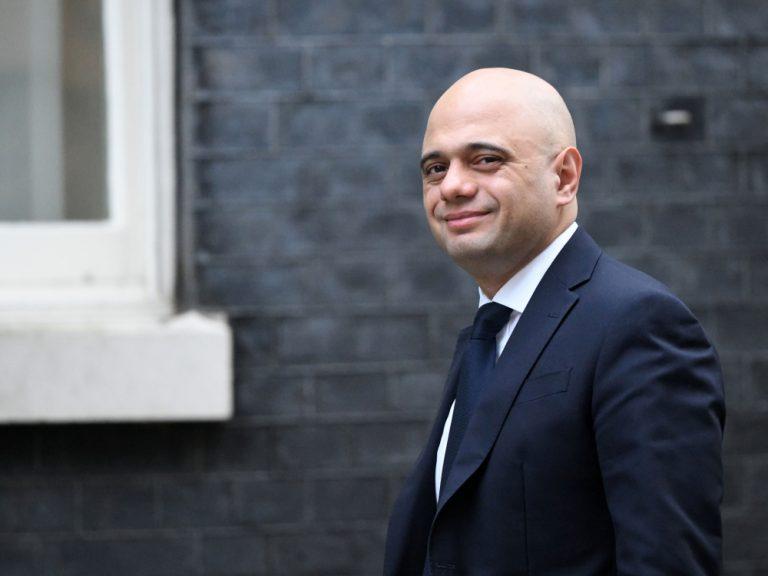
The Conservative leadership race is reaching its final stages, with Sajid Javid knocked out in the fourth round.
The Home Secretary received the least amount of votes, with 34 votes, leaving behind three other contenders.
Foreign Secretary Jeremy Hunt fell to third place with 59 votes, whilst Environment Secretary Michael Gove slipped into second place with 61 votes.
This will prove a particular disappoint to Hunt, who had been holding on to second place for the last few weeks.
Meanwhile, Former Mayor of London, Boris Johnson, the clear front-runner, secured 157 votes.
Sajid Javid managed to knock out Rory Stewart earlier this week, an outsider candidate whose campaign had gained considerable momentum in recent weeks.
Taking to twitter to thank his supporters, Javid tweeted the following:
Both the Gove and Hunt campaign teams will be scrambling to pick up votes from knocked out candidates before the second vote this evening.
The Conservative leadership contest should reach a finale on July 22 when the new PM will be selected.
Theresa May’s successor will be under pressure to deliver on Brexit, as well as whether to hold an election to secure a public mandate.
“Truly humbled by the support I have received from colleagues and Conservatives around the country. We ran to win, but I am incredibly proud of the race we have run together – #TeamSaj! Thank you”
Bank of England cuts growth forecast, leaves rates on hold
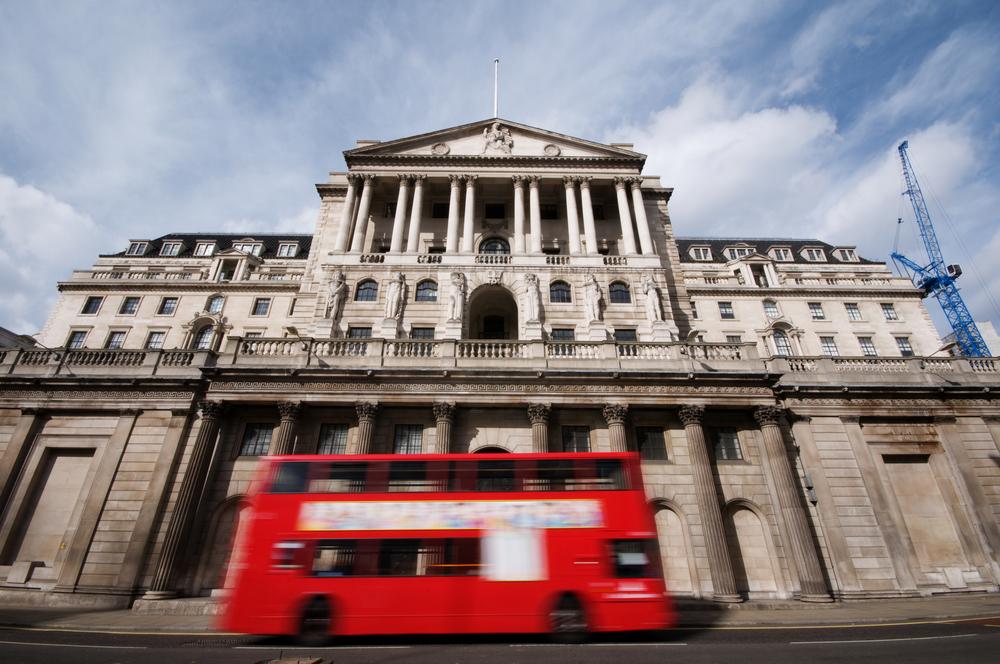
The Bank of England (BoE) has opted to leave interest rates on hold after downgrading its growth forecast for the economy.
The BoE’s monetary policy committee voted unanimously to keep rates at 0.75%, in a widely expected decision.
It also downwardly revised growth forecasts for the UK economy, citing Brexit uncertainties and global trade wars for the more subdued figures.
In particular, the Bank of England highlighted market fears over the likelihood of a no-deal Brexit and the shock that could deliver to the economy.
In a statement, the central bank said:
“Globally, trade tensions have intensified. Domestically, the perceived likelihood of a no-deal Brexit has risen. Trade concerns have contributed to volatility in global equity prices and corporate bond spreads, as well as falls in industrial metals prices. Forward interest rates in major economies have fallen materially further. Increased Brexit uncertainties have put additional downward pressure on UK forward interest rates and led to a decline in the sterling exchange rate.
As expected, recent UK data have been volatile, in large part due to Brexit-related effects on financial markets and businesses. After growing by 0.5% in 2019 Q1, GDP is now expected to be flat in Q2.”
The BoE has also commenced its search to find its next governor amid the departure of Mark Carney at the end of his term in January 2020.
Dunelm raises annual profit forecast
Dunelm has raised its annual profit forecast for the second time in two months.
The homeware retailer said that it now expects profit before tax for the year to be in the range of £124-126 million, compared to £102 million the year before.
This was attributed to ‘unseasonably favourable weather conditions’ resulting in strong like-for-like growth for the months of May and June.
Dunelm are set to formally update the market on quarter 4 trading on July 10.
Back in April, the retailer said that it expected full-year profits to be ‘slightly ahead’ of forecasts.
This was as a result of strong growth in online sales and the closure of its Worldstores and Kiddicare websites.
It has thus far bucked the trend of many UK retailers, who have been struggling on the back of falling footfall levels and shifting consumer shopping habits.
Earlier this week, reports circulated that Monsoon Accessorize is seeking landlord approval for a rescue plan, involving a Company Voluntary Arrangement (CVA).
Dunelm has 170 stores across the U.K, selling ranges of curtains, blinds and homeware accessories.
It is publicly listed on the London Stock Exchange and is a constituent of the FTSE 250 Index.
Shares in Dunelm (LON:DNLM) are currently up +5.86% as of 11:44AM (GMT).
May retail sales drop 0.5% as cold weather prevails

Latest data from the Office for National Statistics shows that monthly retail sales dropped by 0.5% in May.
When compared with the previous month, retail sales dropped 0.5% in May 2019, with a strong decrease of 4.5% in clothing sales.
According to the Office for National Statistics, evidence from retailers suggests that the poor weather has contributed to delaying consumers from purchasing summer ranges of clothing.
In the three months to May, the quantity bought in retail sales grew by 1.6% when compared to the three months prior. Growth occurred across all stores except department stores and household goods stores, the data reveals.
As for department stores, the 0.9% drop in the quantity purchased in the three months to May is now the eighth consecutive month of no positive growth in this division.
In the month of May, online sales accounted for 19.3% of all retailing.
Earlier today, Dixons Carphone announced that “more pain” was expected in the next year, as it posted a statutory loss before tax of £259 million.
The luxury handbag maker Mulberry (LON:MUL) also swung to loss this week as it revealed a £5 million annual loss before tax on Wednesday.
Additionally, latest reports show that Bathstore may be the latest retailer to fall victim to the high street crisis and face collapse.
“Although earnings continue to outstrip inflation, a second stutter in as many months will serve as a stark reminder that the retail sector’s recent growth should not be taken for granted. Despite the high street’s challenges, the long-term shift in consumer habits has been encouraging further creativity among retailers online and in store as they look to stay ahead of the curve,” Philipp Gutzwiller, Head of Retail at Lloyds Bank Commercial Banking, commented, according to the BBC.
The cool May weather seems to have continued into the month of June, as weather patterns fail to match the summer heatwave last year.