
Uber reveals IPO details, but will it ever be profitable?

Ride-hailing firm Uber has released details of its IPO plans, warning that it “may not achieve profitability”.
The company will list its shares on the New York Stock Exchange under “UBER”.
However, Uber expects operating expenses to “increase significantly in the foreseeable future” and warned that it “may not achieve profitability”.
The deal will most probably value the company at roughly $100 billion, which makes it 2019’s biggest initial public offering.
Last October, Uber targeted a $120 billion valuation in its planned stock market floatation.
A price range for its shares will be announced later on in the month, and Uber aims to go public in May.
Though the business has grown significantly over the past three years, its public scandals and growing competition have impacted its attempts to gain riders.
The Guardian noted the biggest “risk factors” from Uber’s past that may dampen its future prospects. These include its work place culture, in which certain sexual harassment and discriminatory practices occurred according to a former employee, and the treatment of its drivers.
The company’s drivers are classed as “independent contractors” which means they are ineligible for minimum wage, overtime, worker’s compensation insurance and other benefits, according to the Guardian.
Lyft, Uber’s smaller rival, was the first of the two ride-hailing businesses to float, listing at the end of March.
Towards the end of last year, Uber revealed its plans to launch a subscription for customers in Los Angeles, Austin, Denver, Miami and Orlando, to allow passengers to avoid price surges during peak times, always riding at a fixed price rate.
Headquartered in San Francisco, California, the transportation network company has operations in 785 metropolitan areas globally and 91 million users.
At 19:57 GMT-4 yesterday, shares in LYFT Inc (NASDAQ:LYFT) were trading at +1.48%. Shares in Uber’s rival have dropped by over 15% since listing at the end of last month.
CyanConnode confirms results will ‘significantly exceed’ previous year

CyanConnode confirmed its full-year results will ‘significantly exceed’ the year before, in a trading update published on Thursday.
The company is set to publish its final 2018 results on Wednesday the 8th of May.
As previously stated in a January update, CyanConnode confirmed revenues will indeed prove significantly higher than its 2017 results.
The firm also noted hat trading for the first three months of the year had been ‘performing well’, proving in line with market expectations.
John Cronin, Executive Chairman, also commented:
“We are pleased to report that trading for the first quarter of 2019 has met CyanConnode’s market expectations. In addition, the Board believes it has sufficient funds to execute its business plan for 2019 and reach cashflow breakeven.
CyanConnode is expecting a positive second half of 2019 in its key markets including India, China and the rest of world for its pioneering smart city technology solutions.”
CyanConnode is a specialist in Internet of Things (IoT) technology, and in particular, smart meters.
Shares in the company (LON:CYAN) are currently trading +7.32% as of 13:20PM (GMT).
Watch Chief Executive John Cronin’s recent presentation at the UK Investor Magazine Investor Evening here.
WH Smith profits slip after InMotion acquisition
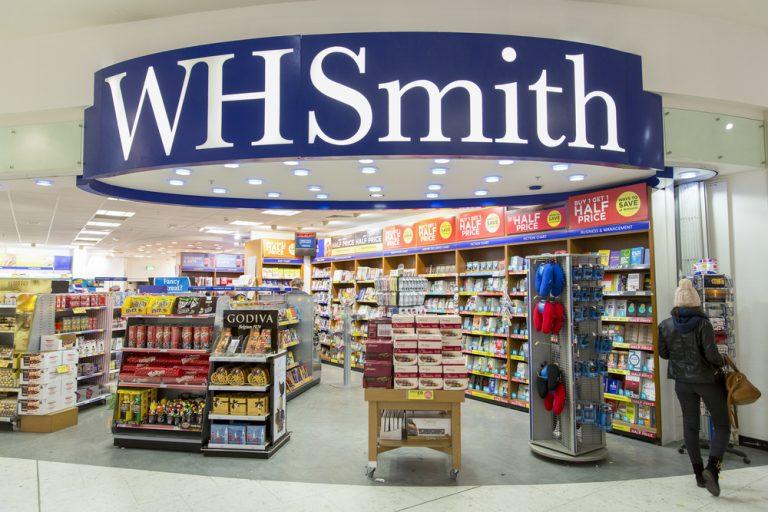
WH Smith (LON:SMWH) reported a fall in pre-tax profits its interim results published on Thursday.
Whilst group revenue rose to £695 million, underlying pre-tax profits fell 1% to £82 million.
Travel sales continued to boost the business coming in at £364 million, up 18%.
The firm said that 10% of this was as a result of its acquisition of US airport chain InMotion for $198 million (155 million) last year.
Total revenue on the high street was down 1% with like-for-like revenue down 2%.
Nevertheless, WH Smith said this was ‘our second best sales performance in the past decade’.
Overall, High street profit proved in line with expectations at £48m, £2 million shy of the same period a year ago.
The retailer said it expects full-year profit to be in line with last year, amid projected growth during the second-half.
Earnings per share fell 23% to 46.8p, compared to 60.9p the year before.
Stephen Clarke, Group Chief Executive, commented on the results:
“The Group has delivered a strong performance in the first half of the financial year.
“In Travel, we continue to see strong sales growth, up 18%, driven by our ongoing investment and initiatives in our UK business and our growing international businesses. As a result, profit in Travel was up 7% in the period.
“High Street delivered one of our best trading performances in recent years, despite the widely reported challenges facing the UK high street, with LFL sales down 2%. This has been driven by good growth in seasonal stationery ranges including Christmas cards, wrap, diaries, calendars and our latest fashion and art and craft ranges.
Commenting on the wider economic backdrop, he added:
“While there is uncertainty in the broader economic and political environment, we have made a good start to the second half of the financial year and the increase in the interim dividend by 8% reflects the Board’s confidence in the outcome for the full year.”
Shares in the retailer are currently down -2.90% as of 12:54PM (GMT).
Nevertheless, WH Smith hiked its interim dividend 8% to 17.2p per share, with a £25 million share buyback.
easyHotel revenue up 47% despite ‘falling consumer confidence’

easyHotel updated the market on trading for the six months to 31 March on Thursday, sending shares rallying.
The budget hotel operator said that despite ‘falling consumer confidence’ alongside political uncertainty in the UK, it continued to outperform the hotel market.
The group said that total system sales rose 24% to £19.9 million, compared to £16.1 million the year before.
Meanwhile, revenue shot up to 47% at £7 million, up from £4.8 million reported during the same period a year ago.
Revenue per room at owned hotels grew 5.% on a like-for-like basis, whilst revenue per room at franchises fell 3.5% on a like-for-like basis.
Guy Parsons, CEO of easyHotel plc, said:
“Ongoing political and economic uncertainty continues to impact consumer confidence as demonstrated by weakening quarter-on-quarter demand across the market, both in the UK and in Europe. However, our actions to drive occupancy, including working closely with on-line travel agents (OTAs) to increase brand awareness, has meant that easyHotel has continued to outperform its competitors as consumers seek out the best value for money.
“Subject to our continued overall market outperformance as we enter our key trading period and whilst mindful of the ongoing uncertainty, the Board expects the outturn for the current financial year to be in line with its expectations.”
Shares in Easyhotel (LON:EZH) are currently up +8.27% as of 12:02PM (GMT).
Fresnillo quarterly output falls, maintains 2019 guidance

Fresnillo maintained its guidance for the year ahead, despite output falling in its latest quarter.
The precious metal miner said that quarterly silver production of 13.1 moz including Silverstream was down 14.8% in the three months to March-end. Fresnillo attributed the fall to the lower ore grade.
Similarly, quarterly silver production fell a further 15.3%, due to lower volumes of ore processed and lower ore grades at San Julián Disseminated Ore Body and Saucito.
Quarterly gold production was also down 9.0% compared to the final quarter of 2018, as a result lower production from Noche Buena, Herradura, San Julián Veins and Saucito.
The firm also announced that its construction of the Pyrites plant was on target, with commissioning expected during the second half of next year.
Despite a dip in output, Fresnillo maintained its full-year outlook.
The company expects to achieve production of 58-61 moz silver, (including Silverstream) and 910-930 koz gold.
Octavio Alvídrez, Chief Executive, commented on the latest figures:
“First quarter production is down as expected on the same period last year, though slightly weaker than anticipated. Full year guidance however remains unchanged as we expect to realise the benefits from the investments we have made into infrastructure, equipment and an extensive infill drilling programme, which will all have a positive impact on production in the second half.
He added: “We continue to maintain our disciplined approach to development, with an emphasis on efficiency and controlling costs underpinning projects. The construction of the tailings flotation plant at the Fresnillo mine is on track for completion in 2020. We are making good progress on our exploration pipeline and international exploration prospects.”
Fresnillo operates in Mexico, Peru and Chile.
As it stands, it is Mexico’s largest gold producer. It also remains one of the world’s biggest silver producers.
Alongside its public listing on the London Stock Exchange, it is also listed on the Mexican Stock Exchange.
Shares in Fresnillo (LON:FRES) are currently down -4.67% as of 10:57AM (GMT).
Trick or Treat? May given Brexit extension until Halloween
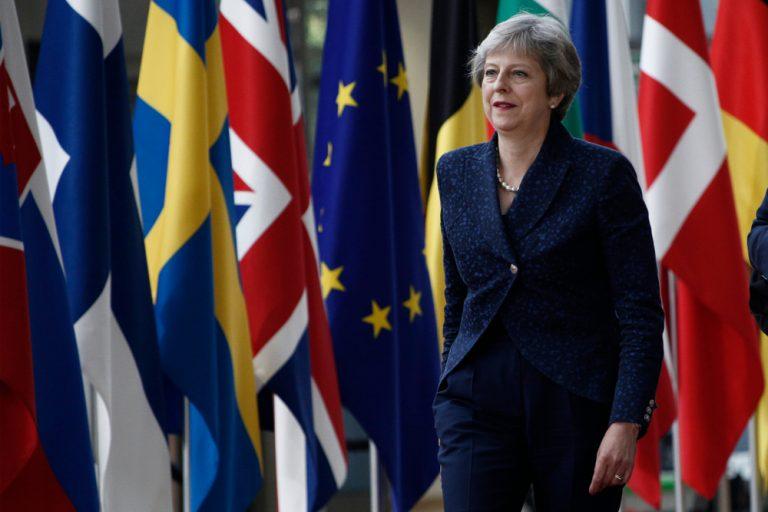
The European Union has agreed to postpone Brexit for an additional six months until Halloween following five hours of discussions in Brussels.
The GBP/USD is now trading below 1.3100 after the UK’s departure from the European Union was delayed until Halloween.
The new deadline for the nation to depart from the European Union is October 31. This extension means the the UK will not have to leave the bloc on Friday without a deal.
Theresa May wanted a shorter delay, originally seeking to move the departure date to June 30, and insists the six months is longer than she needs. The PM said that the nation will still try to leave the EU in as little time as possible.
The final date was a compromise and set under the condition that Britain holds European Parliament elections on May 23, otherwise it will have to leave on June 1 without a deal.
“There will probably be a European election in the UK – that might seem a bit odd, but rules are rules and we must respect European law and then we will see what happens,” said the European Commission President Jean-Claude Juncker.
When Theresa May originally wanted an extension until the end of June, she had said that the government would aim to agree on a deal before May 23 in order to avoid participation in European Parliament elections.
The UK must now have to hold European elections in order to secure the October 31 extension.
Despite the new developments, UK citizens remain unsure of when, how, or if Brexit will even happen.
During the discussions, German Chancellor Angela Merkel wanted to avoid a frantic no-deal exit from the European Union. French President Emmanuel Macron dragged on the debate arguing that Britain should not be offered an extension of up to another year.
Recently, S&P Global Ratings predicted the economic damage caused by Brexit. The company estimated that, had the UK not voted to leave the EU in 2016, then the British economy might have been roughly 3% larger by the end of 2018.
With yet another extension secured, uncertainty prevails.
Ted Baker concludes misconduct investigation of its founder
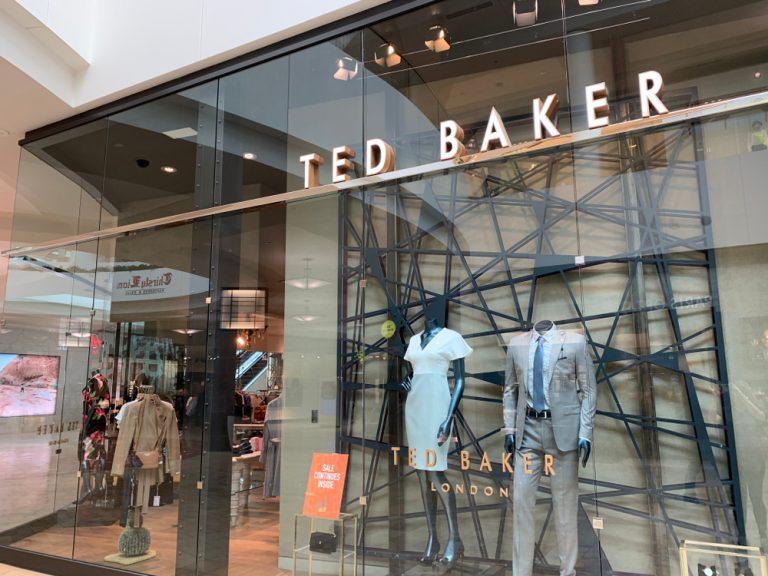
Ted Baker (LON:TED) has announced that the independent misconduct investigation into the actions of its founder and former CEO Ray Kelvin has been concluded. Moreover, Lindsay Page has been appointed Chief Executive Officer with immediate effect.
Ray Kelvin, who founded the apparel chain in 1988, resigned from his Chief Executive role in March with immediate effect amid the investigation into allegations of personal misconduct.
Ted Baker has said it will not comment on the specific allegations that were made against Ray Kelvin. Allegations include giving unwanted hugs and inviting female employees to sit on his knee, which originally emerged following an online position on the site Organise.
The investigation was carried out by the law firm Herbert Smith Freehills (HSF), who interviewed a significant number of people, including current and former employees of the company.
“We are determined to learn from this process and, moving forward, cultivate a better environment for all employees where they always feel respected and valued. We are implementing changes and improvements and are committed to developing best-practice HR policies and procedures that reflect the Ted culture we are looking to develop and enhance in the future,” Executive Chairman David Bernstein commented in a company statement.
The company will be taking several actions following the investigation. These include the renewal of training for all employees on HR policies and procedures and on acceptable workplace conduct and maintaining an independent and confidential whistleblowing hotline.
Additionally, Lindsay Page, who joined Ted Baker as Group Finance Director in 1997, has been appointed Chief Executive Officer of Ted Baker with immediate effect.
Elsewhere, Karren Brady made headlines earlier this year after resigning as chair of the holding company for Sir Philip Green’s Arcadia Group, Taveta Investments, as a result of the misconduct allegations that emerges against Sir Philip Green.



High street crisis: 2481 stores closed in the UK in 2018
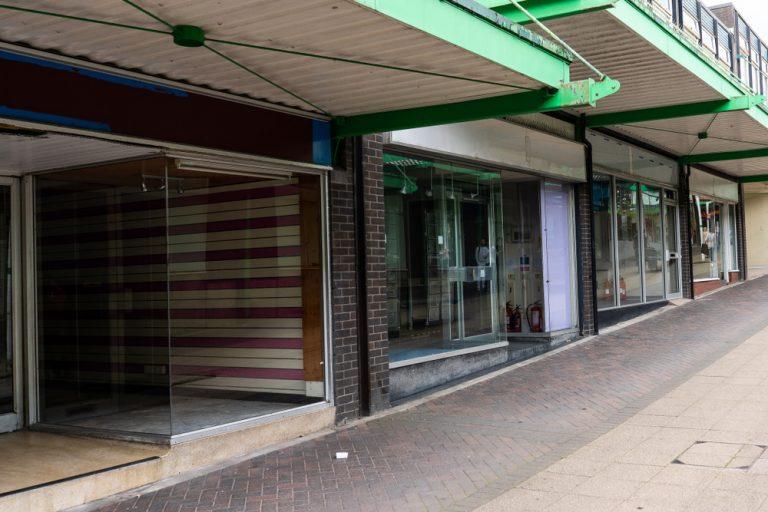
Almost 2,500 high street shops closed in 2018, according to PwC research compiled by the Local Data Company (LDC).
According to the research, this proved a historic high, further compounding to fears of a crisis on the high street.
Banks and financial services led the figures with 291 net closures.
This was closely followed by fashion retailers with 269 closures.
Overall, only 3,372 shops opened and 5,833 closed, with difficult market conditions deterring new openings.
Specifically, high street retailers have been dealing with falling footfall numbers, rising costs and weaker discretionary spending.
Last year many high street giants such as New Look, House Of Fraser and M&S (LON:MKS) all announced store closures, on the back of an increasingly tough trading environment.
Moreover, the casual dining industry was also affected by volatile conditions, with Jamie’s Italian, Prezzo and Byron all opting to close underperforming sites.
Lisa Hooker, the consumer markets leader at PwC, commented on the research:
“The results are clear – 2018 was a turbulent year for retailers, with a number of high-profile store closures.
“We saw an acceleration in footfall decline on the high street, with businesses continuing to see the impact of online shopping, increasing costs and subdued consumer spending.
“The marked reduction in openings has accelerated the net closure trend. In categories as diverse as fashion and financial services, new entrants are able to gain share by launching online – enabled by technology and consumer adoption of mobile and e-commerce – rather than be saddled with the costs and risks of opening on the high street.”