House prices fall 1.6% in March, says Halifax

House prices fell 1.6% in March according to the latest figures from Halifax.
The high street lender said that the value of the average UK home rose to £233,181 last month.
Despite the fall, overall house prices grew by 2.6% in the three months to March compared with the same period a year ago.
This proved ahead of analyst expectations of 2.3%.
Ultimately, prices were dragged down by weak consumer confidence amid ongoing Brexit uncertainty as well as low mortgage approval rates.
Russell Galley, a managing director at Halifax, commented on the latest house prices index:
“The average UK house price is now £233,181 following a 1.6% monthly fall in March. This reduction partly corrects the significant growth seen last month and again demonstrates the risk in focusing too heavily on short-term, volatile measures. Industry-wide figures show that the number of mortgages being approved remains around 40% below pre- financial crisis levels, and we know that lower levels of activity can lead to bigger price movements.
“The more stable measure of annual house price growth rose slightly to 3.2% and is still within our expectation for the year. The need to build up a deposit before getting a mortgage is still a challenge for many looking to buy a property. However, the combined effect of fewer houses for sale and fewer people looking to buy continues to support prices in the long-term.
“These conflicting challenges, when combined with the ongoing uncertainty around Brexit, have had an impact across the country but most notably in London, meaning that we continue to expect subdued price growth for the time being.”
Brexit: Theresa May reattempts to secure June 30 extension
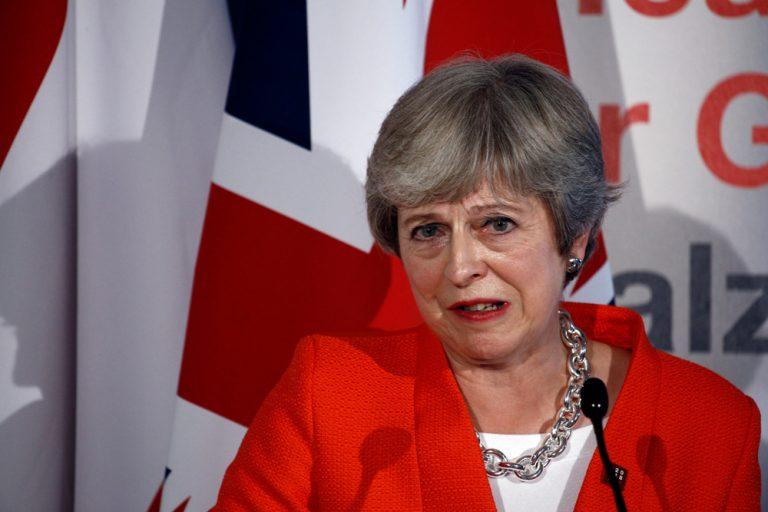
Brexit: Theresa May has once again asked the EU for an additional extension to Article 50 until the end of June.
Should the EU agree to the extension, the UK may, controversially, have to participate in the upcoming European Parliament elections.
However, Theresa May has said the government would aim to pass a deal before May 23 to avoid such a situation.
Last month the EU rejected the Prime Minister’s request for the same June extension precisely due to these concerns.
Instead, the EU initially agreed upon an extension until April 12, in a bid to avoid a disorderly Brexit and a no-deal scenario.
However, with a mere week to go until that revised deadline, the UK parliament and the government are still no closer to resolving the Brexit impasse.
In a letter to Donald Tusk, the President of the European Council The Prime Minister said:
“The government acknowledges, however, that after approval to the withdrawal agreement is achieved, the process of enacting those commitments in domestic law and therefore ratifying the agreement in the UK will take time,”
“Therefore, having reluctantly sought an extension to the Article 50 period last month, the government must now do so again . . . The UK proposes that this period should end on June 30, 2019.”
According to EU sources, Tusk is set to propose a 12-month flexible extension to the UK.
Nevertheless, the idea of a long Brexit extension remains unpopular among Eurosceptic Conservatives and Brexiteers, who have instead touted the idea of a No-Deal or World Trade Organisation aligned Brexit.
Jacob Rees-Mogg MP, chairman of the European Research Group and a fervent supporter of Brexit, took to twitter to express his opinion on the matter.
He tweeted the following:
https://platform.twitter.com/widgets.jsHowever, the EU were quick to dismiss Mogg’s suggestion. Chief Spokesperson Margaritis Schinas said when asked about the tweet: “This gentlemen is not our interlocutor, and the principle of sincere cooperation applies, as May said in her letter today. And it’s a hypothetical.” The pound sterling is currently trading down against the greenback and the Euro, at 1.3061 and 1.1635, respectively, on the back of renewed fears of a No-Deal Brexit emerging.If a long extension leaves us stuck in the EU we should be as difficult as possible. We could veto any increase in the budget, obstruct the putative EU army and block Mr Macron’s integrationist schemes.
— Jacob Rees-Mogg (@Jacob_Rees_Mogg) April 5, 2019
Co-operative reveals flat profit citing challenging “political and consumer backdrop”
The Co-operative Group announced on Friday that its annual underlying profit before tax remained flat at £43 million, noting the challenging “political and consumer backdrop.”
Its profits before tax from continuing operations increased by 27% to £93 million.
Group revenue was up 14% to £10.2 billion, supported by its acquisition of Nisa and the strong performance of its food sales.
Food like-for-like sales increased 4.4%, equating to five consecutive years of like-for-like revenue growth.
The company said that it has invested £75 million into opening over 100 new food stores as well as refitting 138 existing stores and creating 1,600 new jobs.
“Over the past year we have continued to successfully transform the Co-op, leading to a 14% increase in revenues to £10.2bn and the return of £60m directly to our members and £19m to over 4,000 community projects across the UK,” said Steve Murrells, Chief Executive of the Co-op.
“The acquisition and integration of the Nisa wholesale business has been a game changer in expanding our food footprint and we have also set out the path by which we can offer our members a broader range of compelling Co-op solutions in Insurance and Health,” he continued.
The Co-operative has said that it remains focused on long-term growth for the business as well as the positive role is plays in communities. It remains confident that it can continue to embark on commercial success and increase its social impact in spite of the uncertain political and consumer backdrop.
The group has side businesses that vary from insurance to funeral care. Last year, the Co-operative bank reported a nine-month loss before tax of £87 million.
As for 2019, recent data from Kantar shows that, elsewhere in food retail, Asda had overtaken Sainsbury’s (LON:SBRY) in main store sales.
Kantar’s figures show a year-on-year growth of 1.4% in supermarket sales for the 12 weeks to 24 March, the slowest market growth rate since March 2018.
Italy’s economy is “delicate”, says Moscovici

Italy’s current economic situation is “delicate” and must be carefully monitored, according to the European Union economics commissioner Pierre Moscovici.
The EUR/USD is currently trading above 1.1200 after German industrial output increased by 0.7%, coming in just above expectations.
Moscovici was reported by Reuters this morning as saying that “Italy is in a very delicate growth situation.”
The nation has the third-largest economy in the Eurozone and its huge public debt threatens the region.
It began the year by slipping into its third recession in a decade. Italy suffers from high unemployment rates, particularly among its youth.
Mosovici referred to non-EU figures that indicate no growth or even a recession for the nation, revealing that “these are figures that we need to follow very closely.” Latest approximations issued in February predicted a 0.2% growth for the nation’s economy in 2019.
He said that the Commission is set to reveal new economic forecasts on May 7.
“Italy is in a special situation because it is a country with a very high debt level and it is critical that debt does not start growing again,” Moscovici announced at a news conference earlier this year in February.
Italy’s huge public debt is only being exacerbated by the policies of its populist government.
In an unprecedented stand off with the EU, the European Commission rejected Italy’s original 2019 budget last October. Its over ambitious proposal was deemed controversial because it breached EU rules on government borrowing. It was only in December that Italy’s populists came to an agreement with the European Commission over the 2019 budget, having reduced its original deficit target.
Recently, Bloomberg reported that the Italian Treasury is set to cut its growth forecast for 2019 and raise its projected budget deficit. The news was delivered by two senior officials with knowledge of the draft outlook.
Bagir shares up as annual revenue grows

Bagir shares (LON:BAGR) ticked up during Thursday morning trading after the company posted its final results for the year.
The tailoring firm said revenue increased by 10% to $56.4 million, up from $51.1 million in 2017.
Bagir attributed this to new client wins and increased orders from certain its existing customer base.
The company said it returned to adjusted profitability including earnings before interest, tax, depreciation and amortisation (EBITDA) in the second-half of the year.
This was as a result of due to expanding production capacity in Ethiopia, as well as competitive manufacturing programs in Vietnam and Egypt.
Moreover, Bagir said that its cost-saving program had ensured $2.7 million of annualised fixed cost savings.
Overall, the firm reported an adjusted EBITDA loss of $1.0 million, swinging to al loss from $0.6 million the previous year.
Nevertheless, the figure proved in line with management expectations, given rises in revenues across the period.
Bagir is a tailoring firm, based in Israel.
It provides tailoring for well-known retailers such as H&M, Brooks Brothers, as well as UPS delivery uniforms.
Shares in the AIM-listed firm are currently +20.83% as of 14:55PM (GMT).
US and China trade talks progress, Asian stocks gain

The US and China look closer to agreeing a deal after a round of talks between negotiators in Beijing and Washington, potentially signalling the end to a long-standing trade war between the nations.
According to reports, negotiators have agreed upon various crucial details, however, the actual enforcement of the deal remains a key contention for both countries.
Talks are continuing this week in Washington, with Donald Trump set to meet the Chinese Vice Premier Liu He at the White House on Thursday.
Both countries have been locked in a trade war ever since President Trump took office in 2016, causing global stock markets to wobble amid fears of greater escalation.
Trump ignited the war after a series of comments criticising China’s trade practices, as well as accusing the country of manipulating its currency.
Famously, at a campaign rally back in 2016 before his election, Trump said:
“We can’t continue to allow China to rape our country and that’s what they’re doing. It’s the greatest theft in the history of the world.”
The war of words between the two largest world economies only heightened after Trump entered office.
In 2017, the US opted to impose severe tariffs on Chinese goods, with Beijing later retaliating with its own.
Then in December, global markets rallied amid the news that both the US and China had agreed upon a 90-day truce in its trade war.
Now recent talks between the two superpowers are indicating further progress, perhaps indicating that a trade deal may finally be on he horizon.
Earlier in March, Trump took to his favourite medium of expression – twitter – to address Sino-Chinese relations, signalling that tensions were indeed cooling.
He tweeted the following:
https://platform.twitter.com/widgets.jsI have asked China to immediately remove all Tariffs on our agricultural products (including beef, pork, etc.) based on the fact that we are moving along nicely with Trade discussions….
— Donald J. Trump (@realDonaldTrump) March 1, 2019
https://platform.twitter.com/widgets.js However, last week, market optimism truly gained momentum after a series of talks between Chinese and US negotiators in Beijing, followed by follow-up discussions in Washington. Talks in the US capitol were led by U.S. Trade Representative Robert Lighthizer as well as Treasury Secretary Steven Mnuchin. Meanwhile, Vice Premier Liu He has been representing the Chinese side of discussions. At a press conference on Wednesday, The White House Chief Economic Advisor Larry Kudlow updated reporters on progress. He said: “We’re covering issues that have never really been covered before, including enforcement,” Addressing issue such as intellectual property theft and cyber hacking, Ludlow added: “All making good progress, all making good headway, but we’re not there yet,” he said about those areas. “We hope this week to get closer.” Nevertheless, US officials still remain cautious, given the geo-political sensitivities of the situation. Last night, Asian stocks neared an eight year high as investors anticipated developments in US and China negotiations. Meanwhile, S&P 500 futures remained flat ahead of their open on Thursday.….and I did not increase their second traunch of Tariffs to 25% on March 1st. This is very important for our great farmers – and me!
— Donald J. Trump (@realDonaldTrump) March 1, 2019
Brexit: UK economy could have been 3% larger by end of 2018

S&P Global Ratings is the latest company to predict the economic damage caused by Brexit.
The company said that regardless of the form of relationship between the UK and the EU, it is difficult to deny that the British economy has already suffered during the preparation stages prior to the official departure date.
S&P Global Ratings pointed towards the British pound as the most visible effect of the political mess currently occurring.
The GBP/USD latest price is 1.3140.
The American financial services company has estimated that, had the British nation not voted to leave the EU in 2016, then the UK economy might have been roughly 3% larger by the end of 2018.
S&P Global Rating isn’t the only company to predict the economic damage caused by Brexit. Research from the UK’s luxury sector recently revealed that brands such ad Burberry, Bentley, Rolls-Royce and Harrods risk losing up to £6.8 billion in exports each year. Walpole, who commissioned the study, said that the luxury industry could lose up to a fifth of luxury exports if the nation fails to reach an agreement on the terms of its exit from the EU.
The latest from Brexit shows that MPs have voted to pass a deal that would avoid a no-deal scenario.
The draft bill was drafted by Conservative MP Sir Oliver Letwin and Yvette Cooper from Labour. It must now be passed by the House of Lords.
Unable to agree on a deal by the official departure date originally set at the end of March, PM Theresa May was granted a delay, pushing the original date back.
The British public have made their intentions clear as a petition surfaced demanding the PM cancel Brexit and revoke Article 50. This petition was rejected by the British government.
Mothercare sales decline at slower rate in fourth-quarter

Mothercare (LON:MTC) released a trading update on Thursday revealing the rate in which its like-for-like sales were declining had improved when compared to the prior two quarters. Shares in the company were trading over 6% lower on the news.
Founded in 1961, it has been publicly listed on the London Stock Exchange since 1971.
The global retailer for parents and young children revealed, for the 12-week period until March 30, that its UK like-for-like sales declined by 8.8%. The fourth quarter decline compares with an 11.4% drop in its third quarter.
This decline is an improvement compared to the previous two quarters, and the company said that this was driven by its clearance of all inventory in its closure stores.
Mothercare said that, with 40 stores closing in 3 months, it has successfully completed the UK store closure programme ahead of schedule.
Last July, the company revealed its plans to close over a third of its UK stores amid battles with online competitors.
“The UK store closure programme has been completed ahead of schedule and we now have 80 stores in operation, down from 137 stores a year ago,” Chief Executive Officer Mark Newton-Jones, commented.
“Whilst this has been a difficult but necessary process, to right-size the UK, it has meant that we have had to say goodbye to many loyal and longstanding colleagues. Their approach and professionalism have been outstanding right until the last day of operation for which we thank them sincerely,” he continued.
Its international retail sales were down 4.9% in constant currency – 4.5% in actual currency.
Mothercare warned that UK market conditions, as well as some international markets, will remain challenging.
“Looking ahead, we expect market conditions in the UK and in some international markets to remain challenging. We enter the new financial year in a more robust position as a restructured business fit for the future and with reduced levels of debt. We have a significantly smaller UK store estate and our International operations remain cash generative,” Mark Newton-Jones said.
Last year, Mothercare revealed the extent of its struggle for survival when it announced a £6.2 million loss.
At 11:14 BST Thursday, shares in Mothercare plc (LON:MTC) were trading at -6.49%.
Brexit: MPs back Yvette Cooper’s delay bill by one vote
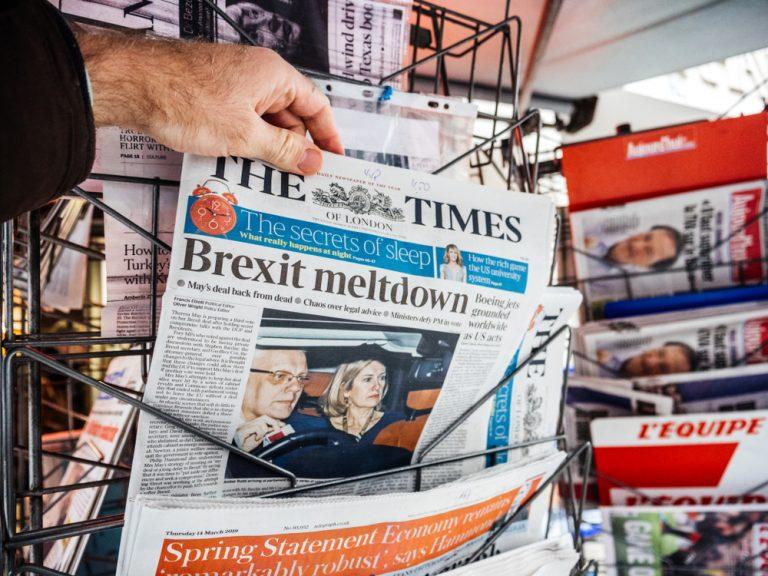
The UK’s Brexit crisis continued late into Thursday night, with MPs voting to pass a deal that would avoid a no-deal scenario.
The draft bill, which was drafted by Conservative MP Sir Oliver Letwin and Labour’s Yvette Cooper, was passed on a knife edge just before midnight, with a majority of just one vote.
It passed with 313 ayes to 312 noes, which means it must now pass through the House of Lords for approval before royal assent into law.
If the bill is indeed passed into law, it would compel the Prime Minister to ask the EU for an Article 50 extension beyond 12 April.
This in turn would also give parliament the power to decide the length of the delay.
Many Conservatives, particularly the Eurosceptic and Brexiteer wing of the party opposed the cross-party measure, casting 290 votes against.
The vote comes after the Prime Minister met with Labour leader Jeremy Corbyn earlier that day to seek a compromise on how best to proceed on Brexit and to put an end to uncertainty.
Many within the Tory party and the cabinet however condemned the decision, with two junior ministers resigning as a result.
Wales Minister Nigel Harris and Chris Heaton-Harris, the Brexit minister, both quit the cabinet in opposition to the move.
This follows the resignation of Nick Boles, a government whip earlier this week.
Boles cited the Conservative party’s inability to compromise on Brexit as the reason for the decision.
Since then, Boles has taken to twitter to express his dismay at the situation.
He suggested that the Prime Minister’s head of communications was sabotaging attempts to reach a compromise across parties.
He tweeted the following:
https://platform.twitter.com/widgets.jsI am no longer a member of the Conservative Party. So I can be blunt where previously I might have been discreet. The PM’s head of communications Robbie Gibb is a hard Brexiter who wants to destroy the PM’s new search for a cross party compromise.
— Nick Boles MP (@NickBoles) April 3, 2019