
https://platform.twitter.com/widgets.js The cabinet is set to hold a five-hour cabinet meeting on Tuesday to discuss with ministers the best way to solve the seemingly inexorable deadlock of Brexit.I am resigning the Conservative whip with immediate effect. The Conservative Party has shown itself to be incapable of compromise so I will sit as an Independent Progressive Conservative.
— Nick Boles MP (@NickBoles) April 1, 2019
No-deal Brexit “very likely”, says Michel Barnier
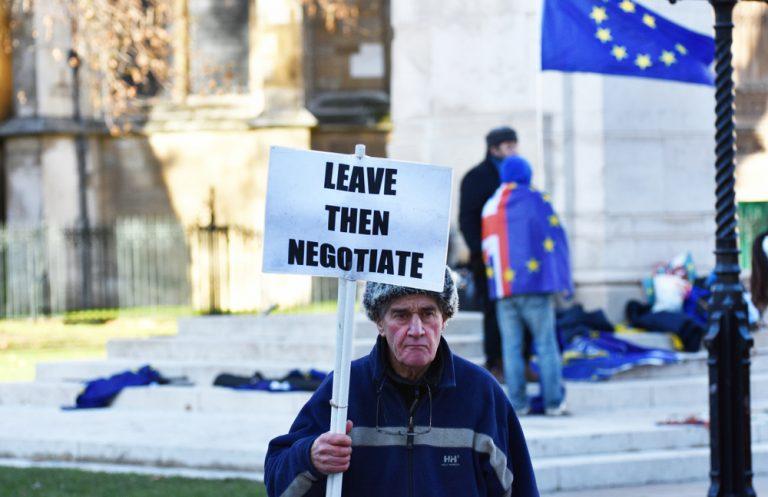
A No-deal Brexit is now looking a “very likely” outcome, Michel Barnier, the EU’s chief negotiator has said.
Speaking at a think tank event in Brussels, The French politician said to the audience: “no deal was never our desired or intended scenario,”
“But the EU27 is now prepared. It becomes, day after day, more likely.”
“This is a serious crisis and no-one can be pleased with what is happening in the UK currently” he continued.
Barnier’s comments come after parliament failed once again to decide upon the best way forward for Brexit, after a second round of indicative votes took place on Monday evening.
Last night, MPs voted upon a series of four options on how best to proceed on withdrawing from the EU.
These included a second referendum, a customs union arrangement, staying in the single market or cancelling Brexit altogether.
However, none of the options, which had been selected by the speaker John Bercow, were backed by a majority of MPs.
Initiating a confirmatory public vote was the most popular selection of the night, with 280 votes in favour.
Nevertheless, a larger 292 portion of MPs ultimately voted down the proposal.
The government and the Conservatives were also dealt an additional blow after Nick Bowles MP resigned from the party and as a whip, following the inconclusive indicative Brexit votes.
He tweeted the following:
YouGov pre-tax profits up 28%

YouGov reported its half year results on Tuesday, posting a 28% rise in pre-tax profits.
The global opinion and data company said pre-tax profit totalled £13.2 billion in the six months to January-end.
This was on the back of revenue growth of 18%, up from 10% reported a year ago.
Specifically, data products & services revenue up rose 34% to £37.2 million across the period.
The company added that the U.S continues to be the largest driver of growth rising 15%, in custom research revenue which overall grew by 4%.
Meanwhile, adjusted earnings per share were up 33% to 9.6p compared to 13.7 million in 2018.
Stephan Shakespeare, Chief Executive of the firm, commented on the latest results:
“In the final year of our current five-year growth plan we are continuing to deliver revenue and earnings growth ahead of the market. Our syndicated data model has broken new ground in the industry, and as we announce targets for our next five-year plan, we are no less ambitious. ”
YouGov is headquartered in the UK, with operations across the globe including North America, the Middle East and Asia.
The company went public back in 2005 and has since been listed on the London Stock Exchange on the Junior AIM market.
It specialises in online polling surveys, including elections. It is a member of the British Polling Council.
Shares ticked downwards on the back of the latest interim results.
YouGov shares (LON:YOU) are currently trading down -1.99% as of 11:03AM (GMT).
Kantar: Asda overtakes Sainsbury’s in main store sales
Latest industry data from researcher Kantar revealed that Asda has overtaken Sainsbury’s in main store sales.
Kantar’s figures reveal a year-on-year growth of 1.4% in supermarket sales for the 12 weeks to 24 March. It said that the later Easter date and Mother’s Day not being in the reported period have each contributed to the market’s slow growth rate. Indeed, the market has grown at its slowest rate since March 2018.
Though Easter is still a while away, shoppers across the UK have already spent £146 million on Easter eggs, Kantar said.
Additionally, 42% of households have purchased hot cross buns.
Tesco (LON:TSCO) grew by 0.5% to reach a market share of 27.4%.
Asda overtook Sainsbury’s and has become the second largest UK retailer with a 15.4% share in the market. With two years of continuous growth, its sales increased by 0.1% during the period.
Sainsbury’s (LON:SBRY) fell by 1.8% and saw its market share decrease by 0.5 percentage points to 15.3%. Kantar said that though Asda overtook Sainsbury’s in main store sales, Sainsbury’s remains the bigger retailer in its sales of food and drink and its results do not include those of Argos, which it acquired in 2016.
Aldi saw its sales increase by 10.6% which boosted its market share to 8%, a new record for the discount supermarket chain. Lidl was the second fastest growing supermarket and its market share grew to 5.6%.
Kantar noted that consumers were applying pressure on retailers over single-use plastics. It said that 21% of fruit, vegetable and salad items were sold loose over the period, and sales grew twice as quickly as packaged goods.
Last week the European parliament voted to ban single-use plastic cutlery, cotton buds, straws and stirrers as part of a law against plastic refuse.
At 09:21 BST Tuesday, shares in J Sainsbury plc (LON:SBRY) were trading at -0.89%. Shares in Tesco plc (LON:TSCO) were trading at +0.086% at 09:22 BST.
Wizz Air expects full-year profit in upper end of guidance
Wizz Air (LON:WIZZ) confirmed on Tuesday that trading in the fourth quarter of its financial year is in line with expectations and net profit for the year will be at the top of its guidance range.
Shares in the company were over 4% higher during early trading on Tuesday.
For the year ended 31 March, the low-cost Central and Eastern European airline said that it expects to deliver a net profit for the year in the upper end of its guidance range of €270 million and €300 million.
The company also revealed its March passenger statistics on Tuesday. Wizz Air grew its March passenger numbers by 10% when compared to the same period a year prior.
Previously its February passenger volumes increased 13%.
Customer demand across the airline’s markets remains strong. This matches a robust operational performance for the month of March as the airline only cancelled one flight, compared to 68 cancelled in March 2018.
The trading update comes ahead of the company’s preliminary results for the financial year.
Elsewhere in aviation, EasyJet (LON:EZJ) recently maid headlines following its Brexit warning. It announced yesterday that it was more cautious about its financial performance in the second half of its financial year.
Though EasyJet’s results from the first half are expected to be in line with expectations, Brexit uncertainty is causing a weaker customer demand in the market. The airline said that its outlook for the second half is more cautious.
Tui (ETR:TUI1) also made headlines recently after it warned on the impacts the grounding of the Boeing 737 max fleet will have upon its profits, expecting it to cost the travel company £258 million.
At 08:49 BST shares in Wizz Air Holdings plc (LON:WIZZ) were trading 3.96%. Shares in EasyJet (LON:EZJ) and Ryanair (LON:RYA) slipped slightly negative, whilst Tui (ETR:TUI1) were up on Tuesday morning.

Sports Direct receives support for Mike Ashley’s CEO appointment of Debenhams

Sports Direct (LON:SPD) announced on Monday that numerous Debenhams shareholders have expressed their support for the appointment of its boss, Mike Ashley, as CEO of the struggling department store (LON:DEB).
Shares in Debenhams were almost 10% lower during early trading on Monday.
In a brief statement Sports Direct said that it had been contacted by a number of the department store’s shareholders with regards to the protection of their own interests as shareholders. Additionally, Sports Direct said that these shareholders have also expressed their support for the appointment of Mike Ashley as CEO.
As a result, it is making a template letter available to any shareholder in Debenhams in the event that they wish to express their views directly to the department store chain.
Since the beginning of March, Mike Ashley has been battling for control of Debenhams, with back and forth moves being made from both sides.
Monday’s announcement is the latest in Mike Ashley’s struggle for leadership, insisting that his appointment to CEO is desired by many of the department store’s shareholders.
Mike Ashley, who currently owns a 30% stake in the business, has been given the opportunity by Debenhams to save his holdings as long as certain conditions are met. Debenhams had previously said its restructuring plans could wipe out its existing shareholders, Sports Direct included.
Last week Sports Direct announced that is was considering taking full control of Debenhams with a £61.4 million bid for the company.
Debenhams said that Sport’s Direct’s offer “did not provide a solution to the group’s immediate working capital needs.” Despite this, another of its major shareholders, as well as Mike Ashley, have been given until the 8 April to make an offer. This bid must, however, address the department store chain’s debt as a satisfactory level.
Last year Sports Direct purchased House of Fraser for £90 million.
At 10:26 BST Monday, shares in Sports Direct International plc (LON:SPD) were trading at +1.10%. Shares in Debenhams plc (LON:DEB) were trading at -9.75% (10:39 BST).
EasyJet outlook weakened by Brexit uncertainty
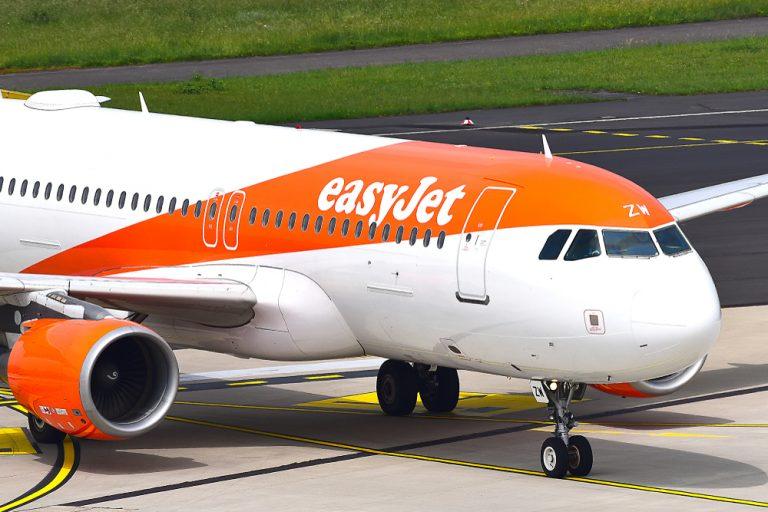
EasyJet (LON:EZJ) said on Monday that it is more cautious about its financial performance in the second half of its financial year.
Shares in the budget airline were trading 8% lower on the back of the announcement.
The company said in a statement that whilst the results from the first half will be in line with expectations, Brexit uncertainty is causing a weaker customer demand in the market. As a result, easyJet’s outlook for the second half of its financial year is more cautious.
“We are operationally well prepared for Brexit. Now that the EU Parliament has passed its air connectivity legislation and together with the UK’s confirmation that it will reciprocate, means that whatever happens, we’ll be flying as usual. I am pleased that we have also made progress on our European ownership position which is now above 49%,” Johan Lundgren, Chief Executive of easyJet, commented.
“For the second half we are seeing softness in both the UK and Europe, which we believe comes from macroeconomic uncertainty and many unanswered questions surrounding Brexit which are together driving weaker customer demand,” he continued.
“We are rolling out further initiatives to support our trading and are making significant progress in our Operational Resilience Programme, which is designed to make the easyJet flying experience better for our customers over the summer.”
The airline, who expects a first half headline loss before tax of roughly £275 million, will deliver its first half performance in line with the guidance announced in its first quarter trading statement.
Elsewhere in the aviation industry, esayJet rival Ryanair (LON:RYA) has also warned of Brexit uncertainty. Earlier this year Ryanair said that the ‘risk of a “no deal” Brexit remains worryingly high’. The carrier revealed that it was pursuing a number of steps to secure routes.
At the end of last week Tui (ETR:TUI1) issued a profit warning on the impact the grounding of the Boeing 737 max fleet will have on its profits. It warned that it could incur costs as high as £258 million amid its efforts to seek alternative arrangements for its customers.
Shares in Tui and Ryanair were also dropped, trading 4% and 1% lower respectively.
Brexit: MPs vote to reject PM’s deal for third time
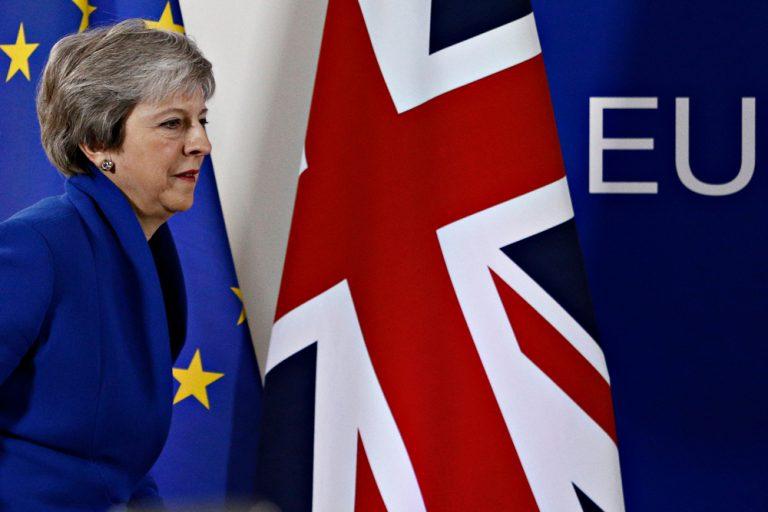
Brexit-related uncertainty is se to continue after MPs voted to reject the Prime Minister’s deal for the third time on Friday.
Theresa May’s deal was defeated by 344 to 286 votes, a majority of 58. This was a slight improvement from the previous defeat with 391 votes to 242.
Despite late deflections in favour by high profile Brexiteers such as Jacob Rees Mogg and Boris Johnson, May was ultimately unable to convince enough MPs to support her deal.
Whilst both Labour leader Jeremy Corbyn and Angus Robertson, The SNP leader in Westminster, called upon Theresa May to resign, the Prime Minister said she will continue to fight for an “orderly Brexit”.
Speaking to MPs in the aftermath of the vote, May said:
“The implications of the house’s decision are grave,” and continued: “I fear we are reaching the limits of this process in this house.”
https://platform.twitter.com/widgets.jsThe vote took place on what had originally been set to be the UK’s official departure from the European Union. However, the Prime Minister was forced to ask the EU for an extension amid a continued deadlock in Westminster over the best path forward for Brexit. Whilst the PM had initially asked for a delay until the 30 June, The EU granted a shorter extension until April 12, in light of upcoming European parliament elections. In anticipation of the elections, The Independent Group, a breakaway group of MPs, also announced on Friday they had submitted an application to officially become a political party. The group are to be known as Change UK and have announced former Conservative MP Heidi Allen as their interim leader, in the hope that they will be able to put forward candidates for the European elections.In view of the rejection of the Withdrawal Agreement by the House of Commons, I have decided to call a European Council on 10 April. #Brexit
— Donald Tusk (@eucopresident) March 29, 2019
The FCA confirms ban on binary options
The Financial Conduct Authority (FCA) has confirmed a permanent ban on binary options.
The ruling will mean that all firms acting in or from the UK will no longer be able to from sell, market or distribute binary options to retail consumers.
The FCA said the ban is in response to ‘widespread concern’ about the risks associated with the products. The rules are set to come into action next month on April 2nd.
The FCA added that it estimated the ban could save retail consumers up to £17 million per year, as well as reducing instances of fraud by unregulated companies.
Christopher Woolard, Executive Director of Strategy & Competition at the FCA, commented on the decision:
‘Binary options are gambling products dressed up as financial instruments. By confirming our ban today we are ensuring that investors don’t lose money from an inherently flawed product.’
The Financial Conduct Authority is a financial regulatory body in the UK.
The city watchdog operates independently from government bodies, and was previously known as the Financial Services Authority (FSA).