
Informa shares up after rise in both revenue and profits
Informa (LON:INF) shares rose 1.2 percent on Wednesday morning, after improvements in both revenue and operating profit during the course of 2017.
Revenue rose 30.7 percent to £1,757.6 million in 2017, helped by a strong return from acquisitions and favourable currency movements. Statutory operating profit rose to £345.3 million, with adjusted operating profit up 31.3 percent to £545.5 million.
Adjusted diluted earnings per share grew 9.5% to 46.1p from 42.1p.
The company said the integration of Penton Information Services was delivered ahead of plan and was set to deliver at least $18.5m (£14m) net cost synergies and revenue benefits in 2018.
The final dividend of 20.45p for 2017 was up 6% on 305.7p in 2016.
Stephen Carter, group chief executive, said: “2017 was a year of performance and delivery, with all four divisions in growth, the integration of Penton Information Services achieved ahead of plan and our four-year acceleration programme delivered on budget and on schedule.”
He added: “Our investments over the last four years have helped build operational capability for continued growth and scale in 2018 and beyond.”
The results come just ahead of a proposed merger with exhibition giant UBM, with the strong figures likely leading to a consensus upgrade, especially taken alongside the expected improvement in UBM’s recent events performance.
Informa shares are currently trading up 1.20 percent at 694.20 (1040GMT).
Weir Group report strong figures for 2017 after recovery in oil markets

Services company Weir Group saw profits rise to £250 million for 2017, after the recovery in commodity prices provided a boost to business.
The group, a maker of pumps and valves for mining and energy industries, reported a 47 percent jump in annual profit on Wednesday, after the construction industry recovered over the course of the year in the wake of higher commodity prices.
Pre-tax profit rose to £250 million, with operating profit coming in above analysts expectations and rising 36.4 per cent to hit £292 million. Total orders rose around 20 per cent, on a constant currency basis, to about £2.4 billion, after increased activity in Northern American oil and gas markets.
The company reported an unchanged dividend of 44.0p per share, with net debt cut by £8 million to £843 million.
“Looking to 2018, assuming market conditions remain supportive and despite anticipated foreign exchange headwinds, we expect to deliver strong revenue and profit growth and further balance sheet deleveraging,” chief executive Jon Stanton said.
Weir Group shares are currently trading down 0.50 percent at 1,991.00 (0909GMT).
Foxtons profits fall 65pc as London housing slowdown continues
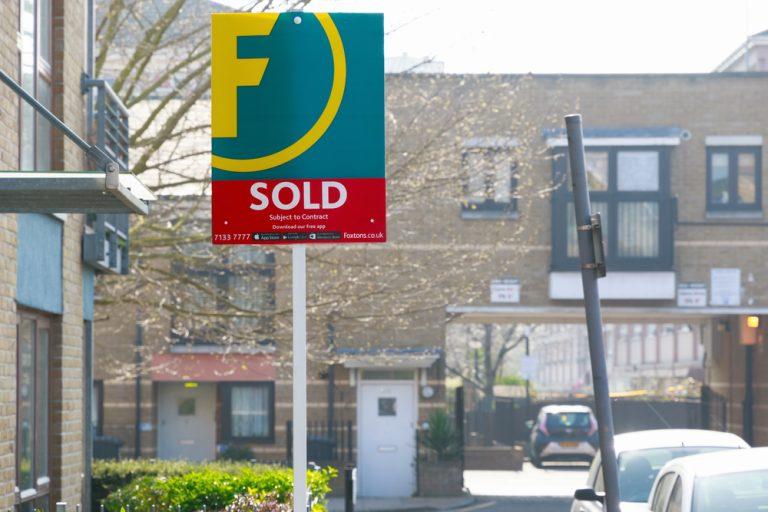
Estate agent Foxtons was hit badly by the slowdown in the London housing market over the course of 2017, reporting a 65 percent drop in profit for the period.
Changes to stamp duty weighed heavily on the market’s performance in 2017, causing revenues at Foxtons, who benefitted strongly from London’s property boom, saw revenues fall 11 percent over the year. Profits before tax fell 65 percent to £6.5 million, with revenue from lettings also down 3 percent to £66.3 million.
The company confirmed that it expected trading conditions to “remain challenging in 2018”, warning that the London housing market was heading for historic lows. The group also said that its current sales pipeline is below where it was this time last year.
The company declared a full year dividend for 2017 of 0.7p, down 65 percent from 2016.
Shares in Foxtons (LON:FOXT) slumped 1.56 percent on the news to hit 82.00 (0851GMT).
ITV shares plunge after being shunned by advertisers in 2017
ITV (LON:ITV) earnings fell over the course of 2017, after weakness in demand from advertisers weighed heavily on profits.
Underlying earnings for the year to December 2017 fell 5 percent to £842 million, with net advertising revenue dropping to £1.6 billion from £1.7 billion the year before.
Overall the group’s total revenue rose 4 percent to £3.66 billion as online advertising partially offset a weakness in demand for TV advertising.
Total revenue, encompassing both online and broadcast, fell 3 percent but online, pay and interactive revenue rose 7 percent to £248 million, driven by strong online performance. ITV Studios, reported a 13 percent rise in revenue to £1.5 billion from £1.4 billion.
Carolyn McCall, ITV’s Chief Executive, said: “There is no doubt that ITV’s operational performance in 2017 in a challenging environment was strong.
“ITV delivered a great viewing performance on-screen and online and double-digit revenue growth in video on demand advertising and ITV Studios. This gives us a solid foundation to build on for the next phase of ITV’s development.
“Reflecting our confidence in the business, and the outlook for 2018, the Board is proposing a full year dividend of 7.8p, up 8 percent”.
Shares in ITV fell on the news, and are currently trading down 6.90 percent at 161.25 (0838GMT).
Admiral shares surge on 45pc profit boost

Admiral Group (LON:ADM) saw shares rise over 5 percent at market open on Wednesday, after profits rose 45 percent over the course of 2017.
Pre-tax profits hit £403.5 million in the twelve months to the end of December, with both earnings per share and return on equity increasing by 49 percent and 55 percent respectively.
The insurance group’s car business rose by 8 percent to £3.96 million, with turnover up 15 percent to £2.96 billion and customer numbers up 11 percent to over 5.7 million.
However the group warned on the year ahead, saying that despite the strong performance in the division in 2017 “there is still a backdrop of uncertainty in our [UK car business] due to the continued deliberations over the Ogden rate affecting large personal injury claims.”
David Stevens, Group Chief Executive Officer, said: ‘It’s 25 years since the launch of Admiral. 2016 was only the second year we’d ever reported a year on year fall in profits. So it’s great to be back in the groove, with a 23rd year of “record profits”.’
Shares in Admiral are currently up 5.85 percent at 2,044.00 (0822GMT).
Meggitt shares sink despite 34pc jump in pretax profit

Shares in engineering group Meggitt (LON:MGGT) fell over 1.5 percent at market open on Tuesday, despite a sharp increase in pre-tax profit.
The group’s pre-tax profits rose 34 percent to £262.4 million, with revenue growing by 2 percent to £2.03 billion. Meggitt, who specialise in the production of engineering components, saw its order book grow by 5 percent over the course of the year to £2.08 billion, and the company said it expected continued revenue growth into 2018.
“2017 trading was in line with our expectations with the stronger second half contributing to good organic growth across the group, a 10 basis point improvement in margin and 42 percent growth in free cash flow,” chief executive Tony Wood said.
“Following organic order growth of 6 percent in 2017, we expect these trends to continue into 2018, with expected revenue growth of 2 percent -to-4 percent and continued operating margin improvement, prior to the impact of new accounting standards.”
Shares in Meggitt are currently trading down 2.68 percent at 454.10 (0949GMT).
GKN shares fall slightly after reporting drop in pretax profit
GKN (LON:GKN) saw profits fall 16 percent in 2017, after a review charge and costs from its North American Aerospace division impacted on full year figures.
The group reported underlying profits before tax of £572 million, down 16 percent from a year ago, while organic sales grew 6 percent to £10.4 billion.
However, profits took a £145 million hit over the year, primarily due to a £112 million balance sheet review charge in its North American Aerospace division and further claims of £38 million.
The group confirmed a full year dividend of 9.3p per share, up 5 percent on a year previously, and added that full year expectations for 2018 would remain unchanged.GKN added that its expects the separation of its aerospace and driveline businesses to be completed in the middle of 2019.
The results come at a difficult time for the engineering group, who have recently fought off a takeover offer from corporate turnaround company Melrose. These latest results could prompt another offer from Melrose, which GKN management would be firmly against. Mike Turner, GKN’s chairman, said in a letter to shareholders this week: “[We believe] that Melrose is more focused on financial engineering than real engineering.”
Shares in GKN (LON:GKN) are currently trading down 0.30 percent at 428.72 (0908GMT).
Greggs sales slow in ‘challenging’ economic conditions

Sales at popular bakery store Greggs (LON:GRG) rose at a slower pace to previous quarters, as economic conditions became more “challenging”.
Greggs reported like-for-like sales growth of 3.7 percent in the year to the end of December, down from the 4.2 percent in 2016. Total sales over the year rose 7.4 percent to £960 million, up from from £894.2 million the year before, but pre-tax profit fell to £71.9 million.
The bakery chain increased its dividend by 4.2 percent to 32.3p per share, compared with 31p per share last year.
“In 2017 we delivered another strong performance in challenging economic circumstances as rising inflation impacted both our own costs and customers’ disposable income. At the same time we continued to make good progress with our business transformation programme,’ said Roger Whiteside, Chief Executive.
“Whilst the UK consumer outlook remains challenging, we are encouraged by the start to the year. 2018 will be the peak year for investment in our supply chain as we create the platforms for further growth. We also plan to open a record number of new shops as we implement our plan to grow Greggs as a leading food-on-the-go brand.”
Greggs share are currently trading up 0.84 percent at 1,323,00 (0843GMT).
Standard Chartered shares rise after bank restarts dividend
Standard Chartered (LON:STAN) shares climbed in early morning trading on Tuesday, after it announced that it would restart its dividend after a jump in annual profits.
The group cancelled its dividend in 2015 in order to rebalance its books, after chief executive Bill Winters took control of the bank. The decision to reinstate dividend payments came as Standard Chartered’s loan books grew 11.6 per cent last year, with operating income rising 2.6 per cent in the period to $14.4 billion after four years of consecutive declines.
“The transformation of the group continued in 2017 with the significant improvement in underlying profits, a strong capital position and emerging clarity on regulatory capital requirements allowing us to resume paying dividends,’ Winters said.
“We are encouraged by our start to 2018 and remain focused on realising the group’s full potential.”
Standard Chartered shares rose over three percent in the wake of the announcements on the Hong Kong market, and are currently trading up 1.44 percent in London.
Persimmon shares soar 10pc on 25pc profit boost
Persimmon posted a 25 per cent rise in annual profit on Tuesday, boosted by a rise both revenue and annual selling prices.
Pre-tax profit hit £966.1 million for the year, with its revenue rising 9 percent to £3.42 billion. Legal completions of new homes increased to 16,043, up 872, and the group’s figures were boosted by an improved average selling price, up 3.2 percent to £213,321.
Acting chairman Nigel Mills said Persimmon’s performance in 2017 had been “excellent” adding that the group’s focus on “high quality growth, coupled with capital discipline, has accelerated the delivery of our strategic objectives and generated record returns for our shareholders.”
“The start to the spring sales season in 2018 has been encouraging with the group’s private sales rate per site being 7 per cent higher than last year at this point”, he continued, saying that “the further increase in the capital return plan demonstrates the board’s confidence in the group’s prospects.”.
The company also declared an interim of 125p and a final dividend of 125p and 110p saying that surplus capital meant it was increasing its capital return program.
Persimmon (LON:PSN) shares are currently trading up 10.09 per cent at 2,739.00 (0813GMT).