Griffin Mining shares (LON: GFM) surged +9% on Friday after the group posted a positive production performance in the third quarter of this year.
In the three months ended September 30, Griffin Mining mined 248,361 tonnes of ore, which is an increase from the 200,484 tonnes mined in the three months ended June 30.
For gold, the mining company totaled 4,906 ounces compared to the 1,237 ounces of gold produced in the second quarter.
Production of silver increased from 69,163 ounces to 82,788 ounces, with the average price also increasing from $14.5 per ounce in the second quarter to $19.3 per ounce in the third quarter.
Mladen Ninkov, the Chairman of the company, commented: “To better keep the market informed on a more frequent basis, the Company has instituted the above quarterly production schedule which will ensure the market is capable of estimating the financial results of the Company until the interim and annual results are published.
“As can be deemed from the above production numbers, mining and processing rates in the period have recovered back to pre-Covid levels which, when taken with the higher average metal prices and lower treatment charges, has had a very positive result in terms of the Company’s profitability and improved cash flows. The trend seems to be continuing into the fourth quarter,” he added.
Griffin Mining shares (LON: GFM) are trading +9.25% at 73,20 (1511GMT).
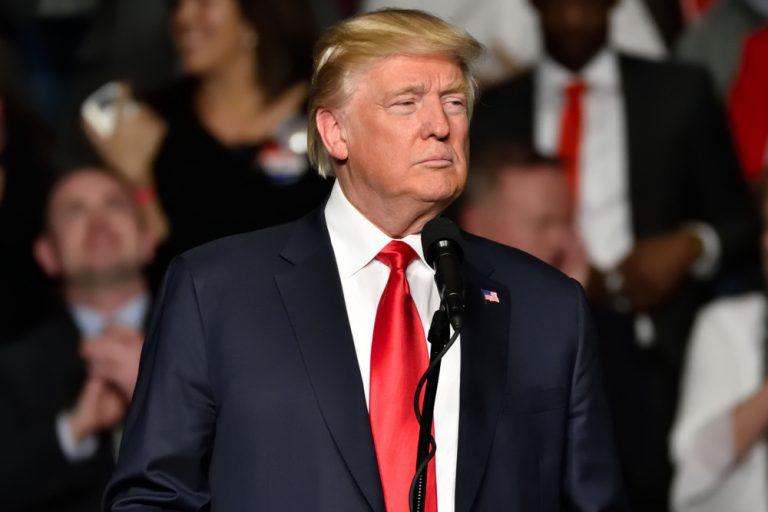
If you weren’t around to watch last night’s romp, you missed such Trump classics as: a declaration that windmills are carcinogenic bird-killers; that the US has some very nice ‘crystal clear’ water; and then responding to 500 children being separated from their parents by simply saying: “good”. On the other podium, Biden wasn’t exactly on fire. A weaker performance than the first debate, the ex-VP’s most repeated soundbites were pained chuckles and “give me a break”. So, where do last night’s antics leave public mood as we close in on election day?
Well, according to a lot of the polls posted so far, Biden won the debate last night:
Who won tonight’s debate?@YouGovAmerica:
Biden 54% (+19)
Trump 35%
.@CNN:
Biden 53% (+14)
Trump 39%@DataProgress:
Biden 52% (+11)
Trump 41%
Being honest: having watched the previous exchanges, I could only bring myself to watch the second half of last night’s debate, and even then I was tempted to flick back onto a re-run of ‘Merlin’.
From what we saw, Trump was as bombastic as ever, though a lot more managed in terms of delivery. Unfortunately for Biden, this meant that the incumbent POTUS looked in charge when he was speaking, and more respectful when he wasn’t.
The same could not be said for Biden. with the exception of a strong closing statement, Biden seemed to have all the opportunities and facts to land decisive blows on Trump, but lacked the conviction – or the calm – to do so. Coming unstuck at some points due to Trump’s repetitive and combative style, the only thing keeping the Democrat candidate afloat last night was simply the fact that he was arguing for generically agreeable policies, and making statements that were patently true (the president, of course, never burdens himself with these kinds of constraints).
Overall, it was another cringeworthy watch, with the difference from earlier bouts being that Trump looked slightly more level-headed, and at points, Biden looked lost for words. With a considerable rift opening up in polling between candidates after the first debate, the incumbent president just had to appear semi-palatable for voter sentiment to swing even slightly in his favour. And indeed, it appears to have done just that.
Now, while Biden appears to still have a considerable lead – around 9-10% in most polls – this has narrowed from polling the previous week, with most giving him a 10-12% advantage. The latter poll, giving him just a 6% lead, might be a tad drastic (and from a Trump-leaning pollster), but it does also signify the smallest advantage awarded to Biden since the 30-day election countdown began.
Significantly, the 6% figure covers voter intentions, rather than electoral college votes. This matters because in terms of ECs, Trump’s voter spread gives him an advantage. Indeed, Clinton had a 5% poll lead going into the 2016 election, and 3 million (4-5%) more votes than her rival, but ended up losing by 77 college votes. With this in mind, Biden supporters mustn’t fall at the final hurdle, as any vote lead below 10% will likely be too close for comfort.
As we approach election day, the narrowing margins are also reflected in swing states, even though Biden still retains a lead in most:
Though winning in most swing states, sentiment projections in Florida seem to change depending on which poll you’re looking at. Florida and Pennsylvania are especially significant, though, with 49 ECs between them being more than enough to decide the outcome of the 2020 election.
Worth noting, also, that Biden is far and away viewed as the more ‘decent’ candidate – 64% saying yes to Biden, versus 37% agreeing that Trump has decency. Also, following last night’s debate, Biden’s approval rating rose from 55% to 56%, while Trump’s fell from 42% to 41%. If none of these factors offer Biden supporters consolation about the narrowing margins, then hopefully they take some heart from The Economist’s bold predictions:
Chance of winning the electoral college:
Biden 92%
Trump 7%
Chance of winning the most votes:
Biden 99%
Trump 1%
Estimated electoral college votes:
Biden 345
Trump 193https://t.co/6Ei5T5ogc2
— Political Polls (@Politics_Polls) October 23, 2020
Overall, though, an election is not won by polls, and as we saw in 2016, the polls can get it badly, badly wrong. The only way to see your candidate in the White House, is to go out and vote for them. An improvement on last time’s 55% voter turnout, would be a victory for US politics as a whole.
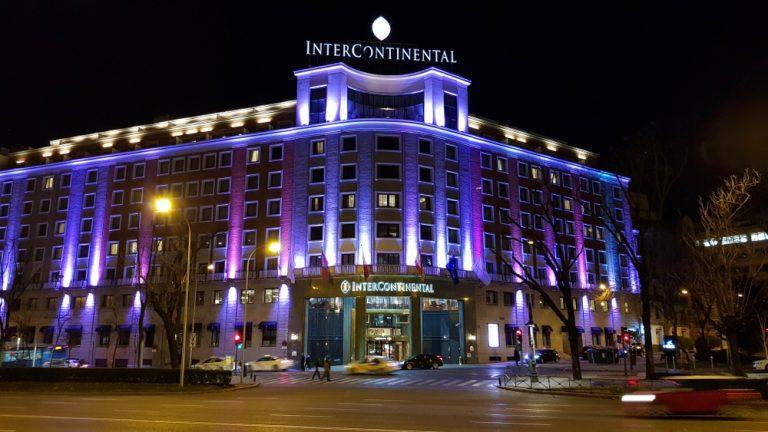
Multinational hospitality group, InterContinental Hotels Group (LON:IHG) saw its shares slide on Friday, as its third quarter results laid out the ongoing damage being done by the COVID pandemic.
Though occupancy improved from 25% in Q2 to 44% in Q3, this level was still 30% beneath activity for the same period the year before. Largely led by COVID restrictions, reduced occupancy was also caused by hotels remaining shut, with 3% of the InterContinental Hotels portfolio – or 199 hotels – remaining closed.
These trends were reflected in the company’s financial performance, with third quarter revenue per available room down by 53.4%, which meant year-to-date revenue was down by 52.3% year-on-year.
However, there was some room for optimism. During Q3, the company opened 82 new hotels and signed a further 14,000 rooms. This brings its total rooms opened in 2020 up to 23,000, and its total estate up to 890,000 rooms across 5,977 hotels, up 2.9% year-on-year.
Further, the company booked positive cash flow in Q3, with total liquidity at the end of September rising to £2.1 billion. It also added that it was on track to reduce its business costs by £150 million, targeting at least half of that number ‘to be sustainable into 2021’.
InterContinental Hotels dust themselves off
Coming through a tough year, company CEO, Keith Barr, discusses both the challenges and opportunities that lie ahead:
Despite the challenges we’ve faced, we have continued to open new hotels and sign more into our pipeline. This is recognition of consumer preference for our brands and strong owner relationships, and also the long-term attractiveness of the markets we operate in and the relative resilience of our business model. We signed 82 hotels in the quarter, taking us to 263 year-to-date, more than a quarter of which are conversions. As we continue to invest in growth initiatives, we do so with a strict focus on cost reduction and an unwavering commitment to act responsibly for our people, guests, owners and local communities.”
“A full industry recovery will take time and uncertainty remains regarding the potential for further improvement in the short term, but we take confidence from the steps taken to protect and support our owners and drive demand back to our hotels as guests feel safe to travel. Our actions have resulted in ongoing industry outperformance in our key markets, and we remain focused on leveraging the strength of our brands, scale and market positioning to recover strongly and drive future growth.”
Investor notes
Following the news, InterContinental Hotels Group shares dipped by 2.39% or 102.00p, down to 4,161.00p a share 23/10/20 12:38 BST. This level is around 5% above analysts’ target price of 3,951.54p a share, but beneath its six-month high of 4,484.00p seen in September.
Analysts currently have a ‘Hold’ stance on the company’s stock, it has a p/e ratio of 18.38, and it currently has a 66.92% ‘Underperform’ rating from the MarketBeat community
Infrastructure India shares (LON: IIP) were up 4.44% on Friday after the group released annual results for the twelve months ending 31 March 2020.
The value of the company’s investments was £262m at the end of March, which is up from £179.4m a year previously.
Movement in the value of Infrastructure India’s was driven by favourable changes in the Indian tax regime and a decrease in the yield of benchmark Indian government 10-year bonds, which serves as the risk-free rate in asset valuations.
The weakening of the Indian Rupee against Sterling towards the end of the period offset positive impacts for the group, which also face difficulties amid the COVID-19 pandemic.
Sonny Lulla, chief executive, said: “The Covid-19 pandemic in India resulted in a national lockdown followed by localised restrictions which has had a material impact on all industrial activity in the country.
“It is likely that there will be ongoing volatility in all markets as demand, which is currently depressed, improves and container bottlenecks unwind. This has understandably had a negative impact on trading for IIP’s investee companies. However, for IIP’s assets, in particular DLI, the lower corporation tax and monetary initiatives announced by the Government of India will be beneficial for future cash flows which have helped underpin valuations. Despite the extraordinary upheaval, we remain confident that the longer term fundamentals and prospects of the logistics market in India remain strong,” he added.
Infrastructure India shares (LON: IIP) are currently trading +2.22% at 2,30 (1225GMT).
Barclays shares (LON: BARC) soared almost 8% on Friday after the group reported better-than-expected results in the third quarter.
In the three months to the end of September, the lender reported a pre-tax profit of £1.1bn – almost double analyst expectations for the period.
Income at the corporate and investment bank grew by 24% whilst markets income surged by 52%.
Barclays chief executive, Jes Staley, confirmed on Friday that he will be staying at the lender for a further two years. He said on a call to investors: “I think we’ll be here another couple of years… It would be nice to be here in kinder winds.”
Staley said in the trading update: “In this historically challenging year for our customers and clients we have continued to provide huge support to help people through the social and economic impact of the COVID-19 pandemic. This remains a priority, alongside maintaining the financial integrity of the firm and keeping our colleagues safe.
“Barclays UK also returned to profitability in the third quarter, with profit before tax of £196m, as economic activity recovered from the spring low point and impairment charges reduced. For the first nine months Barclays UK delivered profit before tax of £264m. Income headwinds in Barclays UK are expected to persist into 2021 including the low interest rate environment.
Despite the positive results for Q3, the lender has said that outlook remains uncertain and subject to change depending on the evolution and persistence of the COVID-19 pandemic and the outcome of Brexit negotiations.
Michael Hewson, CMC’s chief market analyst, commented: “With all the questions being raised about the future of… Staley these numbers reinforce the case for keeping the investment bank operation intact, and helping to support the business in these difficult times.”
“This is one major advantage that Barclays has over Lloyds and NatWest Group, who report next week, in that continued outperformance in their investment banking division is likely to help them ride out the current uncertainty much better, and is already starting to be reflected in their share price.”
Barclays shares (LON: BARC) are +7.38% at 111,98 (1204GMT).
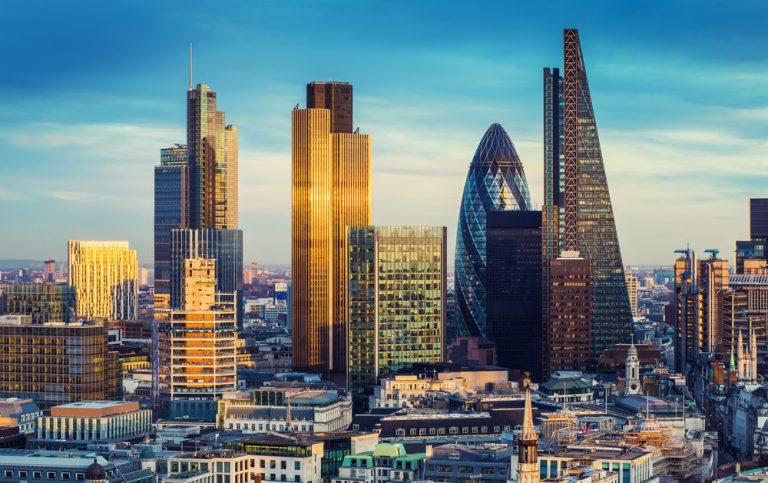
The phrase ‘out of the frying pan and into the fire’ springs to mind when watching the FTSE fall and then rise on Thursday, with the UK index taking some comfort from the day’s developments – even with the challenges that lay ahead.
Between the first bit of vaccine-related optimism in a long time, and Chancellor Rishi Sunak’s new assortment of support scheme patch-ups, the FTSE recovered from its five-month low, when it hit 5,726 points during the morning.
Speaking on the index‘s movements during the day, Spreadex Financial Analyst, Connor Campbell, said: “The midday rebound seemed related to good news out of the Oxford vaccine trials, with reports that it was prompting a ‘strong immune response’ in patients.”
“Then there was Rishi Sunak’s announcement that the government is extending the furlough replacement scheme, by launching a new grant scheme for companies in areas under tier 2 restrictions while making changes to the level of employer contributions and number of hours an employee must work for a firm to be eligible.”
This news saw the FTSE 100 bounce from its initial 50 point drop, up to an end of day rally of around 10 points, or 0.16%, to 5,785. More bullish was the FTSE 250. Having dropped by over 100 points to begin with, the index then mustered a 0.60% rally, up to 17,894 points.
However, the broader outlook is less positive than today’s developments might suggest. With no clear news on when a vaccine can be expected, and changes in political policy making another potential lockdown difficult to price in, there is certainly room for further downward pressure between now and Christmas. Campbell adds on the day’s developments:
“Yet this had only a limited impact on investors’ disposition. The markets remain deeply worried by the scope and scale of rising covid-19 cases and subsequent restriction measures around the world, but especially in Europe.”
This worry was reflected in Eurozone equities, with the DAX dropping 0.12%, to 12,543 points, and the CAC trying its best to recover, but ultimately finishing with a marginal dip of 0.053%, down to 4,851 points.
While most pundits back a Biden victory, crypto betting operator Cloudbet has to date taken ‘hundreds of thousands of dollars’ in US election bets, most of which have put their Bitcoin on a Trump victory.
At one point, the Economist said there was a 90% probability that Biden would win more electoral colleges than his rival, as well as a 99% chance the Democrat candidate would win more votes.
In stark contrast, Cloudbet said that 85% of its users have their money on Trump retaining the presidency. Speaking on why this irregular pattern has emerged, the company’s statement read:
“There are a few theories about why this dichotomy exists. The betting public is possibly more right-leaning, and libertarian, and therefore more likely to be in Trump’s base. Or that people still remember 2016 and don’t believe the polls. At the time, the odds reached 1.14 for Hillary v +6.00 against Trump. He defied the odds then and could do it again?”
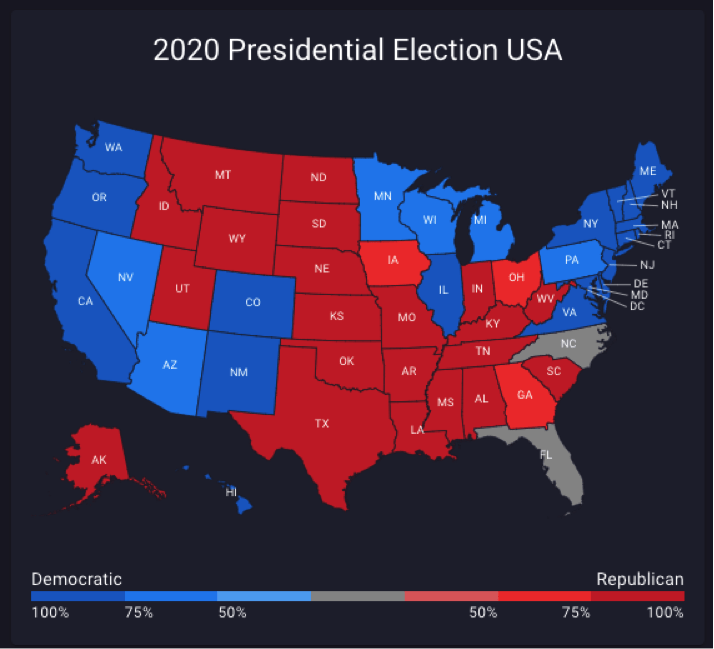
Using their own data on polling and betting odds, Cloudbet’s political page still favours a Biden victory. Though, while some predict a Democrat clean-up with more than 300 electoral colleges, Cloudbet currently sees team Biden claiming 287 college votes, versus 204 for the Trump GOP.
State-by-state electoral map, Cloudbet graphic
This number, while a seemingly decisive victory, is well down on the betting odds split from a week ago. Almost 30 more than its current level, the Democrats were expected to win 316 college votes, while the Republicans are also down by 3 from a week ago, where they were expected to win 207 colleges.
Cloudbet adds that other changes include shifts in sentiment in swing states such as Florida, where odds have swung back towards the direction of the GOP. The company says that:
“The state was looking decidedly blue from a market standpoint last week, with prices firming towards Biden and the Dems. That was fuelled in part by The Donald’s stance on Covid and his comments during his recovery from the disease, which may have alienated the state’s older residents.”
Since then, though, Trump has campaigned twice in Florida, and this appears to have brought the state back to swing status. In fact, Cloudbet now says that two-thirds of the Bitcoin bet on the Florida state outcome is in favour of the state remaining red.
On Thursday, the Treasury announced that businesses using the government’s COVID loan schemes saw their debt increase by a combined £4.62 billion over the past month.
This figure, which includes the £2.18 billion added by the 100% government-guaranteed ‘bounce back’ loans, is only set to rise, with authorities pushing new regions into more stringent restrictions each day.
As highlighted by non-profit research group, Positive Money, the latest numbers illustrate a worrying trend: banks are being offered fully-backed profit instruments off of the backs of desperate people (ironically, there’s nothing too abnormal about that). What is abnormal, though, is that many typically healthy businesses are now in need, only because they abided by the rules and closed their doors for lockdown – and they’re now paying the price.
Speaking on the issue, Positive Money’s executive director, Fran Boait, said:
“Burdening businesses with unsustainable levels of debt isn’t the right way to support them at this time. Many of these businesses will struggle to repay, and a growing private debt pile risks dragging down any economic recovery and even a financial crisis.”
“The government’s backing of bank loans has socialised the risks of lending, whilst privatising the rewards. Banks will be netting more than £1bn a year from interest payments on loans that are fully guaranteed by the state.”
“In this next phase of lockdowns, support to small businesses should be provided more in the form of grants and other instruments, rather than more piles of debt. The government must also follow Switzerland in ensuring that banks aren’t able to profit from interest payments on state guaranteed loans.”
In Switzerland, where the ‘Bounce Back Loan Scheme’ was pioneered, banks are not allowed to charge interest on fully guaranteed loans. In the UK, however, lenders are able to charge interest rates of 2.5% on these types of loans, which could see banks receiving over £1 billion per year in interest from indebted businesses. An investigation by the National Audit Office also added that through the Bounce Back Loan Scheme, the government could be handing lenders a total of up to £26 billion.
The result of this bank payday isn’t just an added burden on businesses trying to regrow, but also the potential for a second banking bailout in little over a decade. Having shouldered the cost of lenders’ mistakes after the 2008 crash, the struggles of UK citizens will now make up a sizeable chunk of lenders’ balance sheets over the coming years. Once again, it looks to many to be a reincarnation of ‘rugged individualism for normal people, socialism for banks’.
In fact, it’s probably worse than that. It’s now more like: ‘abide by government guidance, and pay a large corporation for the privilege of doing so’. Indeed, as stated by Ms Boait:
“The fact these loans are fully backed by the government means that we could be walking into another implicit bailout of the banking sector when they fail, with the public paying billions of pounds to cover banks’ losses and protect their balance sheets.”
“This would represent yet another transfer of wealth from the public to the banks. The government must learn the lessons of 2008 and make sure that any bailout, implicit or otherwise, involves conditions which would restructure Britain’s broken banking system so that it helps serve the public good.”
Alumasc shares (LON: ALU) surged almost 16% on Thursday after the group revealed record profits in the first quarter.
The building products, systems, and solutions group saved £2.4m from last year’s restructuring and saw strong cash generation.
The chairman of Alumasc said: “It is still too early to know the extent to which the strength in the UK construction industry, which underpins this performance, reflects pent up demand from the period of lockdown as opposed to the true level of ongoing demand. However, there is nothing abnormal in the strong patterns of demand that we have experienced, with new commercial ventures continuing to lag other subsectors of the market.
“Despite the uncertainty present in the commercial sector, Levolux continues to respond to the prior restructuring and remains on track to return to sustainable profit, as it has been in the financial year to date.
“The strong bounce experienced by Alumasc in the UK has been supported by a lively export performance. Current orderbooks remain robust in general and include a growing list of export projects won in recent months, which are due to be delivered in the current financial year.
“In addition to the growing emphasis on sustainability, there are early signs of the promised acceleration in infrastructure expenditure by the UK government, which is expected to boost demand in the coming months.”
Alumasc shares (LON: ALU) are trading +15.97% at 92,20 (1629GMT).