
AstraZeneca shares slip as vaccine trial put on hold
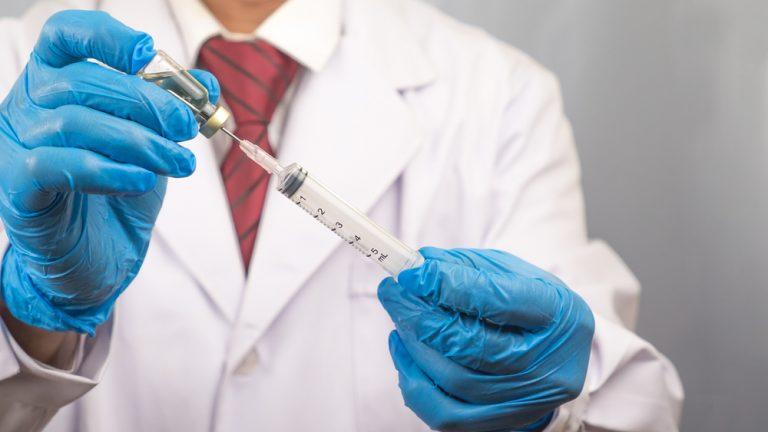
Shares at Cambridge-based pharmaceutical firm AstraZeneca (LON:AZN) have slipped 1.55% as its coronavirus vaccine trial is put on hold after a participant suffered a suspected adverse reaction.
The firm has suspended all clinical trials of its proposed COVID-19 vaccine – which had been in the final stage of human tests – while it routinely reviews the incident before the study is allowed to resume.
The exact nature of the participant’s reaction has not been revealed, but AstraZeneca has indicated that they are expected to make a full recovery.
The company is currently one of the leading agents in the race to develop a vaccine for the novel coronavirus, and had been on track to release one by the end of the year until the delay was announced.
It is not yet clear how costly the setback will be, but a spokesperson confirmed that delays to the initial estimate should be expected.
AstraZeneca is said to be “working to expedite the review of the single event to minimise any potential impact on the trial timeline.
“As part of the ongoing randomised, controlled global trials of the Oxford coronavirus vaccine, our standard review process triggered a pause to vaccination to allow review of safety data.
“This is a routine action which has to happen whenever there is a potentially unexplained illness in one of the trials, while it is investigated, ensuring we maintain the integrity of the trials”.
Clinical trials are often paused due to events of this nature, but few studies have attracted as much media attention as this one, and the setback will no doubt leave many anxious that AstraZeneca may be falling behind.
Shares at the company slipped 1.55% to 8219.00p at BST 13:05 09/09/20, but have already made a significant recovery after a nearly 8% plummet when markets opened this morning.
RedX Pharma shares rally 29% on research collaboration with Jazz Pharmaceuticals

Cancer and fibrosis focused drug development company RedX Pharma plc (AIM:REDX) saw its shares rally by almost 29% to around 90.00p a share during Wednesday morning trading, after it announced that it had signed a research collaboration agreement with Jazz Pharmaceuticals plc (NASDAQ:JAZZ).
The partnership has the aim of discovering and developing drug candidates for two cancer targets on the Ras/Raf/MAP kinase pathway. RedX Pharma said that its role would involve it being responsible for research and preclinical development activities up to Investigational New Drug (IND) submission.
Under the agreement, Jazz Pharmaceuticals will pay RedX an upfront sum of $10 million with a subsequent $10 million in the second year, provided research is still ongoing. After an IND-ready molecule has been delivered, RedX will be eligible to receive and additional $200 million from Jazz in development, regulatory and commercial milestone payments.
For each tier, Red is also eligible for tiered royalties in ‘mid-single digit percentages’, subject to future sales. Jazz will own all of the intellectual property, and will be responsible for the development, manufacture, regulatory activities and commercialisation of any IND-ready molecule.
This new collaboration follows a previous sale of RedX’s preclinical pan-RAF inhibitor programme to Jazz in July 2019. Following the sale, RedX says the pan-RAF collaboration between the companies has been ‘progressing well’.
RedX Pharma response
Commenting on the collaboration agreement, company Chief Executive Lisa Anson stated: “We are extremely pleased to announce this new collaboration with Jazz, which expands on our already strong working relationship, built through a year of collaboration on the pan-RAF inhibitor programme. This new agreement reinforces Redx’s strong position as a successful research partner and its expertise in medicinal chemistry and drug design. We look forward to collaborating with Jazz on new targeted therapies for patients who need them.” Further, R&D Executive Vice President for Jazz Pharmaceuticals added: “We are excited to collaborate with Redx on two oncology programs in the Ras/Raf/MAP kinase pathway. Redx has established itself as a strong partner for Jazz, given the continued momentum in our existing collaboration on pan-RAF, and we look forward to this new collaboration and access to Redx’s small molecule discovery capabilities. We are strategically targeting this cancer pathway with multiple experimental approaches while further strengthening our targeted oncology pipeline. These programs in the Ras/Raf/MAP kinase pathway are highly complementary to our growing R&D portfolio of innovative and targeted oncology therapies.”Investor notes
Having rallied by almost 30%, the RedX Pharma share price rally lost some steam and settled for a 10.69% or 5.61p jump, up to 58.11p a share 12:30 GMT 09/09/20. Similarly, Jazz Pharmaceuticals rallied by 4.99% or 6.57 USD, up to 138.27 USD a share 09/09/20.Pizza Hut announces plans to slash 29 sites, 450 jobs
Pizza Hut has become the latest restaurant chain in the UK to announce a spate of closures, as the firm prepares to file a company voluntary agreement (CVA) and initiate a major restructuring scheme.
The pizza chain – owned by American fast food tycoon YUM! Brands, Inc (NYSE:YUM) – has struggled to pay off its debts due to the “significant disruption” of the coronavirus pandemic, which left the restaurant industry essentially paralysed during lockdown.
Although Pizza Hut had reportedly performed better than usual before the pandemic took hold in March, the company has admitted that its sales are not expected to fully recover until “well into 2021”.
The CVA is to be handled by New York-based consultancy firm Alvarez & Marshall, and could go ahead as soon as Wednesday evening.
Along with 29 restaurant closures across the UK, as many as 450 jobs are set to be lost amid a major restructuring which will see the chain renegotiate rent with landlords to a less demanding “turnover” model – meaning rent would be paid based on the revenue of each individual site.
A spokeswoman for Pizza Hut commented on the news, stating:
“We are committed to doing the right thing, and in order to secure as many jobs as possible and continue serving our communities, we are working to reach an agreement with our creditors.
“While we are likely to see 29 Hut closures and 450 job losses, any measures we take aim to protect about 5,000 jobs at our remaining 215 restaurants, as well as the longevity of the business.
“We understand this is a difficult time for everyone involved.
“We appreciate the support of our business partners and are doing everything we can to help our team members during this process, including speaking with those affected by the consultation”.
Pizza Hut delivery services are not expected to be affected by the move, as these are handled by a separate firm – Pizza Hut UK – which oversees food delivery across an additional 380 sites nationwide.
Amryt Pharma shares spike 51% with treatment passing rare skin disease trial

Global biopharmaceuticals company Amryt Pharma (AIM:AMYT) saw its shares shoot up over 50% during Wednesday trading, as it announced that its FILSUVEZ treatment had successfully passed phase three of the EASE trial.
As stated by Amryt Pharma, FILSUVEZ is designed to treat dystrophic and junctional Epidermolysis Bullosa (EB), which is a “rare, chronic and distressing genetic skin disorder that causes the skin layers and internal body linings to separate and affects infants, children and adults”.
The condition currently affected as many as 30,000 individuals in the US and more than 500,000 people worldwide, with an estimated incidence for EB being around 1 in 20,000. The company predicts that the marekt opportunity for EB treatments is in excess of $1 billion.
The EASE trial
The EASE trial is noted to be the largest trial conducted that focuses on patients with EB. It was performed across 58 sites in 28 countries, with 223 patients enrolled – including 156 pediatric patients.In a double-blind test lasting 45 days, the efficacy of FILSUVEZ was measured versus a control gel. The company stated that within this period, its treatment achieved statistical significance, which represents the first ever successful phase three top line readout in EB. It is also the fourth time that the treatment has illustrated its capacity to accelerate wound-healing in a phase three trial.
Going forwards, the company will evaluate data from the trial and present its results at an upcoming scientific symposium. Amryt Pharma stated that it intends to complete the submission of its rolling New Drug Application to the US Food and Drug Association and request a priority review for FILSUVEZ.
Amryt Pharma reaction
Commenting on the news, company CEO Joe Wiley stated:“This positive outcome of the Phase 3 EASE trial marks another significant milestone for Amryt as we seek approval for FILSUVEZ ® and represents a potentially important advancement for patients and families living with this rare and distressing disorder. If approved, we intend to leverage our existing global infrastructure to commercialize FILSUVEZ.”
“We are proud to present these positive and encouraging results, demonstrating that FILSUVEZ could make an important difference to the lives of patients. We would like to extend our gratitude to all of the patients, their families, carers and physicians for their participation in the EASE trial and we look forward to working with regulatory authorities to make FILSUVEZ available as the first approved therapeutic treatment for EB patients. All of the team at Amryt are very excited by today’s news and the impact this may have in our efforts to help patients with this very distressing condition.”
Investor notes
Following the announcement, Amryt Pharma shares rallied by 51.25% or 82.00p, to 242.00p per share 09/09/20 12:00 GMT. This price is far-and-away a new record for the company’s shares, and far ahead of its year-to-date nadir of 90.00p a share. The company’s p/e ratio is -1.80, earnings per share currently stand at -86.00p.Pound Sterling hits six-week low as it continues fall against Euro and Dollar

Continuing much as it began the week, the Pound Sterling continued to drop against its major counterparts, taking both the pound-to-euro and pound-to-dollar exchange rates to respective six-week lows.
The exchange rate for the former now stands at a mere 1.1001, while the latter sits at 1.2941. This follows the Pound having consistently rallied against both the euro and dollar throughout August, with this rally having ended with renewed international political tensions from the beginning of this week.
Today’s renewed dip, however, was also spurred on by political factors within the UK, which redoubled pressure on the Pound’s downward trajectory. As stated by Spreadex Financial Analyst Connor Campbell:
“As sterling nervously awaits the unveiling of Boris Johnson’s international law-breaking UK Internal Market Bill, the FTSE continued to celebrate the currency’s bout of Brexititis – a long-dormant condition that has recently seen a serious flare-up.”
“Tuesday was a rough one for the pound – against the dollar it was down 1.55%, with a 1.14% decline against the euro. Further losses on Wednesday – 0.3% and 0.2% against its respective peers – leave sterling at its worst price for 6-weeks, erasing all of the spirited growth it managed over a Brexit-ignorant August.”
There was perhaps a bright side to this dip, when we consider that correspondingly, the FTSE continued its Monday rise with a Wednesday morning rally. Having been the least-affected by the Labor Day hangover on Tuesday, the index rallied 0.89% or 53 points on Wednesday, taking it to just shy of the 6,000 mark. This small positive was somewhat overshadowed, however, as the FTSE was outdone by the DAX rallying 1.03% and the CAC not lagging far behind with a 0.83% rise. Ultimately, the continued decline of the Pound may have spurred the FTSE, but on balance this trade-off isn’t worth it.Uber pledges to go green – but is it enough?

Uber has pledged for all every car on its platform will be electric by 2040.
The car-hailing app revealed plans to invest $800bn to help drivers switch to electric cars.
According to Uber, it is the group’s “responsibility” to tackle climate change.
Every vehicle across the UK, US, Canada, and Europe will be electric by 2030.
“Uber is committing to become a full zero-emission platform by 2040,” said Dara Khosrowshahi, the group’s chief executive.
“We’re also setting an earlier goal to have 100% of rides take place in electric vehicles in US, Canadian and European cities by 2030.”
Coronavirus lockdowns have offered “a glimpse of what life could be like with less traffic and cleaner air” but added that carbon emissions would soon return to “normal”.
“Instead of going back to business as usual, Uber is taking this moment as an opportunity to reduce our environmental impact,” he added.
Uber has said that drivers will be able to earn more per ride if they are using electric or hybrid cars.
Grant Shapps, the UK’s transport secretary, has welcomed the move.
William Todts, executive director of the campaign group Transport & Environment, said: “Uber’s commitment to rapidly electrify its fleet in major European cities is good news.”
“Now it’s time for Europe’s city mayors to show leadership. We need all big cities in Europe to introduce zero-emission zones, new pop-up bike lanes and cycle-only corridors, while also providing easy access to charging at home, at work and wherever people park.”
Uber has previously said that it hopes all vehicles in London to be electric by 2025.
A spokesman for Sadiq Khan said: “Just four months ago, Uber was forced to overhaul the way it operates after years of poor conduct and the mayor welcomes this change in approach.”
“However, electric cars are not a complete solution. We also need to address the damaging impact that the rising number of private hire vehicles has on congestion and air pollution.”
Thomas Cook: Will the group make a successful comeback?
After collapsing earlier this year, Thomas Cook is set to come back as an online travel agent.
The group is attempting to secure approval from the UK’s Civil Aviation Authority. The group collapsed after a huge debt mountain, which led to the repatriation of 150,000 UK holiday makers.
A source has said that the group is “very keen to be up and running by Christmas. It’s when people’s thoughts turn to summer holidays, and there is likely to be a lot of pent up demand because of this year’s coronavirus cancellations.”
Fosun is a Chinese brand that owns Thomas Cook and wants to revive the travel group. It has declined to comment.
Shares in the group were trading at just below 150p last summer, however, a series of profit warnings meant that before collapse the price was trading at much lower. Analysts at Citigroup bank described the travel firm’s shares as “worthless” last year before the group went down.
Fosun has now yet finalised plans of a relaunch amid the UK government plans to introduce further travel quarantines.
At the time of Fosun’s purchase of the group, Fosun chairman Qian Jiannong said: “The group has always believed in the brand value of Thomas Cook.”
“The acquisition of the Thomas Cook brand will enable the group to expand its tourism business building on the extensive brand awareness of Thomas Cook and the robust growth momentum of Chinese outbound tourism,” he added.
Iceland to hire 3,000 as business booms
Iceland has revealed plans to create 3,000 new roles as online orders have soared at the budget supermarket.
Since the lockdown was announced, the supermarket saw online shopping orders have multiplied by four.
Iceland has said that most of the jobs created will be delivery drivers and in-store staff to pack orders.
“We’ve been blown away by the demand for deliveries over the past six months with a four-fold increase in online orders since the beginning of lockdown,” said David Devany, who is the chief customer and digital officer at the company.
“We see no sign of a slowdown in the demand for deliveries in the run up to Christmas, so a recruitment drive for more permanent staff was essential. Our store and delivery colleagues have gone above and beyond during lockdown introducing incredible measures to help their local communities, and I’m proud that our business has been able to adapt to the changing needs of our customer.”
The company also plans to trial a partnering with Uber Eats, to deliver food from Iceland in Hackney.
Other supermarkets have also benefitted from business since the lockdown. Morrisons is expected to reveal plans to hire thousands of extra employees in the next week.
Tesco earlier this year that it plans to create 16,000 new permanent jobs thanks to the “exceptional growth” in business.
i-Nexus Global shares jump 67% on contract success and reduced costs

Provider of cloud-based strategy execution software i-Nexus Global (AIM:INX) saw its shares rally by more than 67% during morning trading, as management lauded the company’s success in fulfilling what were described as three major strategic goals.
First, the company had a focus on lowering costs. It said that it had successfully done this by reducing its monthly operating cost base, from over £850,000 to £360,000,which means that it now runs at a monthly break-even. Similarly, it added that it had trade debtors of £800,000 and a cash balance of around £190,000 at the end of July.
Second, it boasted new product launches and contract wins. The former was fulfilled by its Summer 2020 product release going live last week, following what i-Nexus described in its statement as “intensive design and development and a collaborative programme of customer trials and workshops”. The latter was fulfilled by the company securing a new customer on a multi-year contract, in addition to a ‘substantial’ services order in advance of an existing customer’s global roll out plan.
Third and finally, the company boasted that it had successfully re-energised its sales pipeline. It said that it had successfully rebuilt its sales opportunities to pre-pandemic levels, and its pipeline now includes live opportunities with an annual recurring revenue value of £1.8 million.
i-Nexus Global cash outlook
Speaking on the company’s strategy and its financial position in the coming months, the Group’s statement read: “At the time of the Interim results update, the Company announced that the Board had resolved to review strategic options to introduce fresh capital to the business, in light of the difficult and uncertain trading environment caused by COVID-19. The Company has agreed with HMRC a deferral and repayment plan in respect of PAYE and National Insurance payments amounting to approximately £430K but has otherwise thus far been unable to secure access to additional funding.” “Based on the Company’s latest cash flow projections, the Directors anticipate that the Company is likely to experience a modest cash shortfall by the end of the calendar year, but should return to a positive cash balance from February 2021 onwards, in line with i-Nexus’ regular seasonal cashflow profile. As a result, the Board is, as a key priority, scaling up its efforts to source new financing facilities with immediate effect.”Investor notes
Following the update, the i-Nexus Global share price rally somewhat calmed down, still up 44.78% or 1.50p, to 4.85p per share 08/09/20 13:00 GMT. While this level is ahead of its year-to-date nadir of 3.25p seen in May, it is far behind where it started the year, with the price of 16.50p per share through January. The company’s p/e ratio is currently -0.26.Fevertree shares dip as sunken profits leave a bitter taste
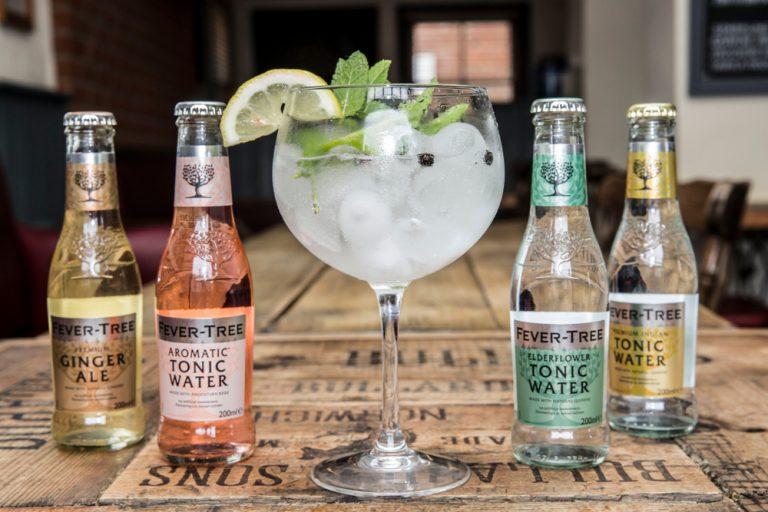
Producer of premium drink mixers Fevertree Drinks PLC (AIM:FEVR) saw its shares dip marginally during Tuesday trading, with the impression left by its first-half performance being more sour than sweet.
Overall, the company booked an 11% year-on-year decline in first half revenues, down to £104.2 million. Proportionally, its largest fall was suffered in Europe, with revenues down 29%, to £20.5 million. However, the headline drop was seen in its UK operations, with a 20% decline taking its first half revenues from £60.7 million to £48.3 million. One notable positive was its ability to expand its US offering, with a 39% year-on-year bounce, up to £27.4 million.
The overall fall in revenues, however, led to a corresponding decline in the company’s gross profits, down 20% to £48.7 million, and its gross margin, down 510 basis points to 46.8%.
Similarly, Fevertree saw its adjusted EBITDA dive 35% from £36.7 million, to £23.8 million, which saw its EBITDA margin shed 850 basis points, down to 22.8%.
The situation was mixed – but also largely glum – for the company’s shareholders. On a positive note, the Group increased its dividend per share by 4% year-on-year, up to 5.41p per share. Unfortunately, this upside was offset by diluted earnings per share dropping by 38%, to 14.99p.
The company does find itself in a strong cash position to take itself forwards, though, with its balance increasing by 32% year-on-year for the first half, to £136.9 million.
Fevertree response
Commenting on what he described as the company’s ‘resilient’ first half performance, CEO Tim Warrillow stated:“Our performance in the Off-Trade over the first half of the year has been very encouraging with sales across our regions exceeding our expectations. People’s interest and excitement about mixing drinks at home has really taken hold over the lockdown period, attracting more households to the Fever-Tree brand than ever before. Consequently, we have increased our penetration in the UK, consolidated our number one position, and driven value share gains in the US, Europe, and as far afield as Canada and Australia. Despite the On-Trade closure for a large proportion of the first half of the year, we have continued to support our On-Trade partners across our regions and are well-placed to benefit from the return of this important channel.”
“We have had an encouraging start to the second half of the year and, while we certainly aren’t immune to the ongoing challenges of COVID-19, our performance and our investments so far this year, coupled with the growing interest in long mixed drinks, gives me confidence that we will exit the crisis in an even stronger position than we entered it.”