The Financial Conduct Authority (FCA) has finally come up with initial guidance on the assessment of cannabis-related companies that want to float on the Main Market. The full guidance will follow in due course.
The UK Listing Authority, which is under the jurisdiction of the FCA, has to approve prospectuses for flotations. The guidance makes it clear that no companies involved in recreational cannabis will be allowed to float in London.
Medicinal cannabis was legalised in 2018 but there has been uncertainty about the appropriateness of companies involved in the sector.
The main problem is tha...
Covid and work turmoil – what can bosses do to protect staff well-being?
Between companies suddenly going belly-up, mass redundancies, and working from home, the Covid pandemic has been a time of major change and anxiety for most of us. While many would like to keep pushing on, some are overcome by stress, and among that latter group are bosses, who are trying to balance financial prudence with staff well-being.
Trying to offer a helping hand is Sam Dunn, an author, former Senior Leader at GlaxoSmithKline and GW Pharmaceuticals, and now Head of Corporate Wellbeing at professional-focused mental health clinic, The Soke. Mr Dunn offers us some insights into how bosses can support the well-being of their staff, and in the process of doing so, likely offers as much help to bosses as he did to the staff themselves.
The consistency-flexibility duality
Mr Dunn talks about the seemingly contradictory give-and-take between the need for bosses to protect consistency while being flexible and understanding. These requirements, while opposing, are an unfortunate but necessary balancing act of setting standards while being compassionate, in the unprecedented territory of returning to work during a global pandemic. On consistency, Mr Dunn stated that this involves, “making suitable and effective provisions agreed at a corporate level for the safety of employees”. He says that there ought to be a standardised approach to hygiene, face coverings, work stations and facilities, which enforces not only reciprocity between staff in carrying out these behaviours, but invokes the sense that leaders are conducting themselves with a strong duty of care towards staff. This duty of care, and exacting standards, need to be understood by all employees. Staff feedback should also be encouraged, to allow for both dialogue with leaders and necessary adaptations to be implemented as and when necessary.On flexibility, Mr Dunn stated that it is about, “understanding and recognising that each individual employee that a leader manages is unique”. Apropos the dialogue suggestion, it is important that bosses spend time not only initially – but regularly – talking to each staff member, to ascertain how they are feeling, and what about the existing situation is and isn’t working for them.
He adds that the anxieties of each employee can manifest in forms ranging from the ‘gung ho’ to the extremely nervous and cautious. On this, he says that within a consistent organisational framework, there is scope for strict boundaries, but also room to be accommodating and understanding of each employee’s individual needs and situation.
Boss & staff well-being and the work from home phenomena
Mr Dunn identifies the change to home working and being furloughed, as a paradigmatic shift in work culture, which few of us were personally prepared for (even if we have the technical infrastructure to keep working). He says it has impacted confidence, self-esteem, career progression and in some cases we might even say productivity and well-being.
He says that these changes need not change the fundamentals key to good leadership. For instance, he says that spending time with staff, being open to have discussions and offering encouragement, are all essential as staff wrestle with the uncertainty of home working or transitioning back to the office.
Indeed, some might be keen to come back to office life – socialising, being focused behind a desk and escaping the house after months of confinement. Others, however, might be more hesitant – between childcare considerations, transport and food costs, and enjoying controlling their own pace at home without office pressure and long commutes. Regardless of which camp staff find themselves in, Mr Dunn says it is vital that bosses are understanding and ‘don’t expect too much too soon’.
He says part of the process might involve drawing up ‘back to work’ plans, which ought to be realistic and regularly reviewed, with the ultimate goal of guiding both staff and bosses back into a sound working environment.
He adds:
“Also, and this really makes a difference, leaders should collectively meet and share their insights from conversations with their employees looking for themes and patterns that affect groups of employees. HR, wellbeing or L&D folks can be a great help here to help collate and build a picture, identifying where work could be done to support groups of employees and at organisational level. For example, identifying development opportunities, running townhall meetings on specific topics, clarifying career pathways and so on.”
The transition back to the office, and potentially back home again if a second wave transpires, will be stressful for everyone. Maybe things will slowly pass back into the old normal but the bottom line is that all of this is as yet uncertain. With factors such as a potential Covid second wave, and the rise of remote working opportunities, some of the harsher realities of our current situation might be softened by greater understanding and support for both staff and bosses.
Trainline shares fall as ticket sales sump 81%
Trainline shares (LON: TRN) are down almost 5% as the group reveals 81% slump in ticket sales.
As commuters stayed at home and holidays were canceled, the impact of the pandemic hit Trainline and led to £358m in the six months to August 31.
Trainline recorded a £31m turnover in revenue, which is just 24% of its revenue in the same period in 2019.
As lockdown eases, ticket sales are growing. Despite this, business tickets remain just 4% of 2019’s sales.
Clare Gilmartin, chief executive, of the group said: “By acting quickly and remaining agile, we continue to successfully navigate through the significant disruption Covid-19 has caused to the rail and coach industry.
“We have rapidly processed unprecedented levels of customer refunds, reduced costs and ensured we have enough liquidity to operate for the foreseeable future.
“I’m pleased to now see the industry recovering, particularly in our International markets, as well as a faster shift to online reservation and digital ticketing, as anticipated, given the increased customer need for touchless travel,” he added.
Russ Mould, investment director at AJ Bell, commented on the news: “The only route to growth for Trainline is to gain a greater share of the number of tickets sold.
“However, it feels like there is a natural limit here. Booking in advance makes sense when it can result in big savings on a longer journey which would typically see a traveller make plans in advance. But for short, one-off trips there’s little point as it would only make them less flexible.”
Amid the pandemic and social distancing measures, the group has introduced ‘crowd alerts’, to allow passengers to choose quieter trains.
During mid-morning Trainline shares (LON: TRN) were trading -5.46% at 384,60 (1112GMT).
Pub industry says latest restrictions in North East are a “significant blow”
The British Beer and Pub Association has said that the latest restrictions in the North East is “another significant blow” to the sector.
Matt Hancock, the Heath Secretary, confirmed local lockdowns Northumberland, North Tyneside, South Tyneside, Newcastle-upon-Tyne, Gateshead, Sunderland and County Durham from Friday, the pub sector within the area prepares for another hit.
New rules will mean that leisure and entertainment venues must close between 10pm and 5am from Friday onwards.
“I know, the whole House knows, that these decisions have a real impact on families, on businesses and on local communities and I can tell everyone affected that we do not take these decisions lightly,” said Hancock.
“We agree with the local councils that we must follow the data and act and the data says that we must act now so that we can control the virus and keep people safe.
“And I know that the people of the North East will come together to beat this virus, as defeat it we must.”
The British Beer and Pub Association, which represents brewers and pubs, commented on the new rules and how they will impact the sector.
“Our sector has been one of the hardest and longest hit by the pandemic. Pubs and brewers have worked tirelessly to get pubs safely open and stocked since July so this latest announcement is another significant blow,” said Emma McClarkin, chief executive of the British Beer and Pub Association.
“Consumer confidence is already very fragile and extra restrictions will inevitably have a further cooling effect on that not only in the regions where they are in effect, but also nationally.”
“As an industry we recognise the need to continue to support the Government and local communities in managing the risk of rising infection rates. We take our responsibilities extremely seriously and our pubs will continue to adhere strictly to Government guidance ensuring that they remain a safe and welcoming place for socialising.”
Fusion Antibodies shares surge on positive update
Fusion Antibodies PLC shares (LON: FAB) surged 40.54% on Friday after the group provided an update on research and development.
The group, which specializes in pre-clinical antibody discovery, has revealed that it is continuing to progress according to plan and has made progress on the design of Coronavirus spike proteins.
Fusion Antibodies’ antigen manufacturing capabilities means that the group has been able to express high-purity antigens on a commercially viable scale for the development of diagnostic tests. The group is offering these antigens on a commercial basis to companies and researchers across the world.
“We are committed to developing the highest quality reagents to be used in the fight against COVID-19,” said Dr Richard Buick, CTO of Fusion Antibodies.
“Recent lab studies have shown that results using our antigens correlate 100% with clinical data from patients infected with SARS-CoV-2. We are using these high quality antigens to pan our human antibody library for SARS-CoV-2 neutralising antibodies, and we are delighted to now be able to make these antigens available to companies and researchers around the world to Test, Track & Trace this disease.”
The group’s chief executive, Paul Kerr, commented: “According to the FDA, antigen tests will play a critical role in the fight against COVID-19 and like many other companies within the antibody world at large, we are leveraging our antigen expertise to create multiple antigens to be used against the COVID-19 pandemic.”
Fusion Antibodies shares (LON: FAB) are currently trading +39.19% at 128,75 (1015GMT).
Travel stocks plummet as fear of second lockdown grows
Travel stocks took a tumble on Friday as fears of a second lockdown loom over the UK.
British Airways owner, IAG, was the worst hit as shares plummeted 8%.
As well as IAG (LON: IAG), budget airlines easyJet, Ryanair, and Wizz Air also fell 6.8%, 3.9%, and 3.6% respectively.
P&O owner, Carnival, also saw shares fall 5% as P&O cancelled all sailings until early 2021.
“Our business relies solely on leisure travel, which we believe has historically proven to be far more resilient than business travel and cannot be easily replaced with video conferencing and other means of technology,” Carnival’s Carnival’s president and chief executive, Arnold Donald.
“We continue to take aggressive action to emerge a leaner, more efficient company,” he added.
The fall in stocks comes amid reports that the UK government is considering a two-week national lockdown in October to combat rising Coronavirus rates.
Labour’s shadow health secretary Jonathan Ashworth MP, said about the report: “Labour warned months ago that unless the government spent the summer fixing the testing regime then we would face a bleak winter.
“The government ignored that advice, the testing regime is collapsing and so it is not surprising national restrictions are back on the table.
“The Conservatives’ incompetence is holding Britain back and damaging the national effort to stop the spread of this virus.”
On the fall in travel stocks this morning, Russ Mould, investment director at AJ Bell, commented: “Amid growing chatter about a potential two-week nationwide lockdown in October in the UK, it was perhaps no surprise to see investors lose interest in stocks that could be negatively affected by such activity.”
“The government wants to avoid economic disruption, but clearly a return to tighter lockdown measures next month would disrupt businesses and put further pressure on jobs.”
Shares in IAG (LONG: IAG) are down 9.62%, shares in easyJet (LON: EZJ) are trading down 7.20%, whilst shares in Carnival (LON: CCL) are down 6.72% (1000GMT).
Caspian Sunrise shares plummet 29% amid Corona disruption
Caspian Sunrise shares (LON: CASP) plummeted 29.2% on Friday after the group released interim results for the year ending 30 June 2020.
Revenue increased from $4.4m to $5.0m, whilst the group reported a pre-tax loss of $1.4m.
Caspian Sunrise said that this period was “one of the most difficult since our 2007 IPO”, particularly blaming the Cornonavirus for disruption.
“Between 1 January 2020 and 21 April 2020, Brent Crude, on which the price for our export sales are based, fell from $63.65 per barrel to less than $10 per barrel. Domestic prices also fell from approximately $18.75 per barrel to approximately $6.2 per barrel. While international prices have partially recovered and for most of the past 3 months have exceeded $40 per barrel it is disappointing to report domestic prices remain at historic lows,” said the group in a statement.
“The extensive lockdowns in Kazakhstan led to serious disruption to our production and exploration activities. Crew changeovers were limited, vital supplies unable to reach the oilfield and there were long delays getting the required acid and engineers to the field for the long planned acid treatments to our existing deep wells.”
“The shutdown also impacted the renewal of licences and our appeal against what we are firmly advised are excessive state assessed historic costs at BNG. It also delayed the completion of the acquisition of the Caspian Explorer.”
Caspar Sunrise delayed certain projects amid the lockdown as well as cut staff numbers to cut costs. Amid the Coronavirus disruption, the group has said that it plans to focus on preserving the group’s asset base to allow the continued development of potentially extremely valuable assets over the medium and long term. Caspian Sunrise shares (LON: CASP) are currently trading -22.12% at 2,20 (0939GMT).Trackwise Designs shares surge on £38m contract
Trackwise Designs shares (LON: TWD) surged 22.51% on Friday’s opening as the group signed a three-year agreement with an electric vehicle manufacturer.
The agreement is expected to be worth up to £38m.
“This is a very significant commercial milestone for Trackwise. Our customer is at the forefront of driving the adoption of sustainable technologies and the selection of Trackwise to help power its vehicles at scale is a fantastic endorsement of our technology,” said Trackwise Design’s chief executive, Philip Johnston.
“With our manufacturing capacity and capability recently improved, we look forward to continuing to support our customer as it looks to build out its transportation ecosystem in the coming years.
“At the same time, the number of opportunities for the application of IHT elsewhere in the electric vehicle industry and across our other target markets continues to grow at a healthy rate. We look forward to updating shareholders with further progress in due course,” he added.
The agreement can be terminated by any party after 31 December 2023.
Trackwise Designs shares (LON: TWD) are currently trading +27.40% at 147,15 (0846GMT).
MediaZest shares plummet on interim results
MediaZest shares (LON: MDZ) plummeted following the group’s interim results for the year ending 31 March 2020.
Shares plunged 21.5% on Friday’s opening after the audio-visual company revealed a £311,000 loss.
Revenue fell by 27% to £3.3m.
The group said that although it has seen financial improvement over the year due to a project with a UK university, the progress had been hit by the pandemic.
MediaZest said there were delayed projects due to the lockdown that were completed in June and July.
“With the easing of some of the “lockdown” measures, further client sites have re-opened and in May 2020 MediaZest delivered on the first two of the previously delayed projects. There were several other projects similarly completed in June and July 2020 and the Board expects that all previously delayed projects will be delivered before the end of 2020,” said the group.
“In addition to these projects existing pre “lockdown”, which are now at or nearing the completion stage, the Group recommenced discussions in relation to potential new client mandates from the beginning of May, several of which have already been won and delivered, including large projects for Hyundai and Samsung.”
“Existing customers continue to require the Company’s services and several long term roll out projects that the Group had begun delivering have now restarted. Demand from ongoing clients is expected to remain strong,” the group added.
MediaZest shares (LON: MDZ) are currently trading -12.63% at 0,042 (0832GMT).
UK retail sales grow for fourth consecutive month
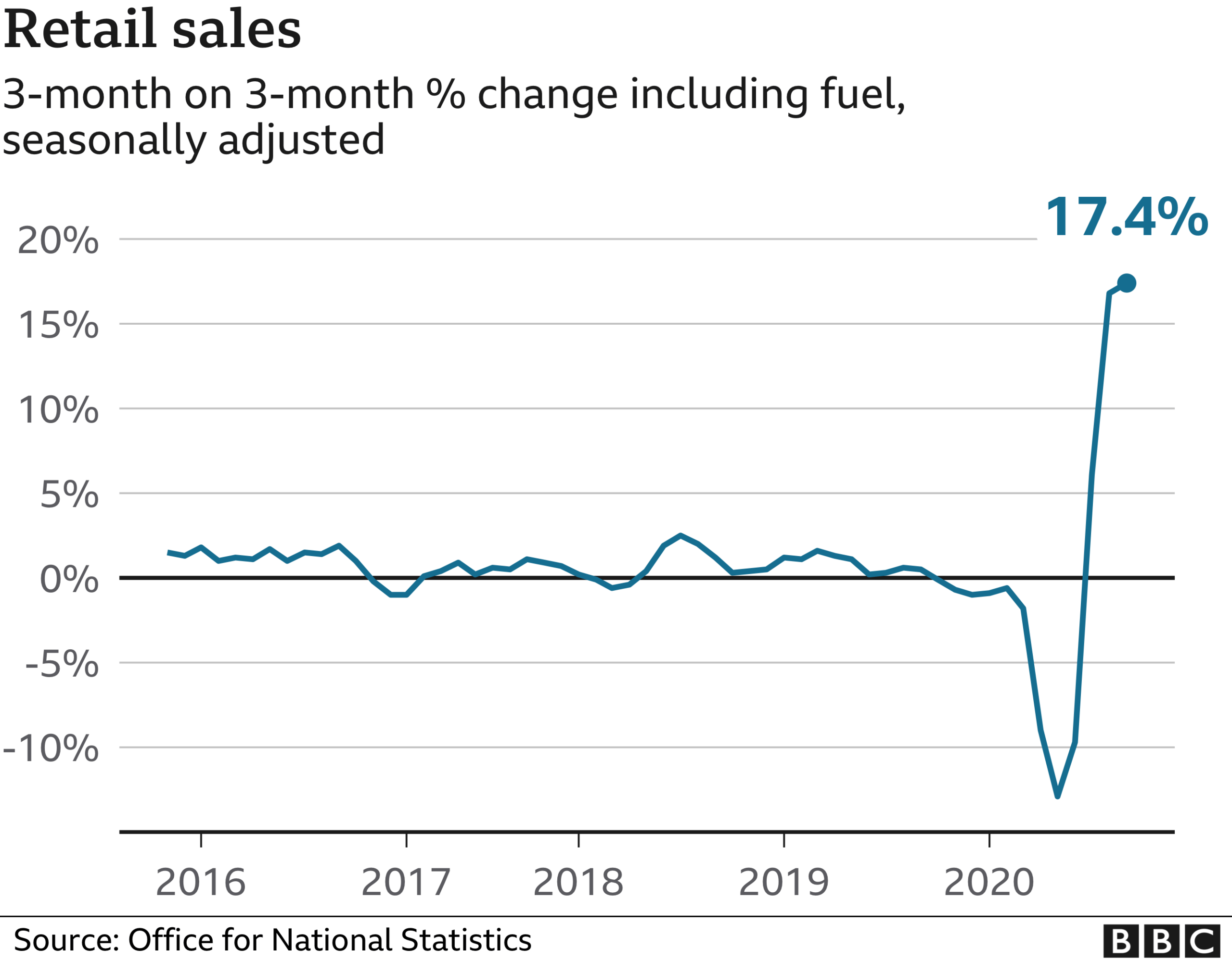
Retail sales in the UK have continued to grow for the fourth consecutive month.
According to new figures from the Office for National Statistics, retail sales grew by 0.8% between July and August.
Sale figures are now 4% higher than February, before the pandemic.
The governments Eat Out To Help Out scheme over August was likely to help boost retail sales, as it brought people back into town centres after lockdown.
“Anecdotally, there were queues outside some restaurants in my local area, every Monday, Tuesday and Wednesday during August,” said Michael Hewson, chief market analyst at CMC Markets, ahead of the ONS data. “It would be a surprise therefore if we didn’t get a decent number for retail sales,” he added.
Samuel Tombs, chief UK economist at Pantheon Macroeconomics, said the number of staycations was likely to also boost numbers.
“Even if UK residents who stayed in the country did not go on holiday, they still will have purchased food and other goods that normally they would have bought abroad,” he said.
The ONS said: “Retail sales continued to grow, further surpassing their pre-pandemic level.”
Jonathan Athow, deputy national statistician for economic statistics at the ONS commented: “Sales of household goods thrived as the demand for home improvement continued and, despite a dip this month, online sales remained high.”
“However, clothing stores continued to struggle with sales still well below their February level. Overall, the switch to greater online sales means the High Street remains under pressure,” he added.
Online sales fell by 2.5% over August, however, online sales surged over lockdown and still remain 46.8% higher than they were in February.
Sales of household goods jumped at high as 9.9% at some retailers compared to levels in February.