
Trainline shares drop 10% however group net ticket sales rise 17% annually

Trainline PLC (LON:TRN) have seen their shares crash on Thursday, as the firm published its’ recent trading update.
The train ticket retailing platform noted that across its recently ended financial year, group net ticket sales increased 17% year on year to £3.7 billion – notably this fell within guidance and expectations.
UK Consumer net tickets also rose 24% – and Trainline added that this “reflected strong mobile demand driven by increasing eticket availability and adoption by customers”.
Trainline praised the strong performance of their new ‘SplitSave’ mobile app feature – which sold more than one million split tickets.
Notably, UK Trainline for Business (UK T4B) net ticket sales declined 1%. The firm said that these ticket sales were impacted by a change in operation and branding for the West Coast mainline franchise in the fourth quarter.
Group Revenue increase 24% year on year, giving a total of £261 million – which was at the top end of improved guidance.
The firm also noted that UK Consumer revenue grew by 30%, which was ‘ driven by strong momentum in net ticket sales and the launch of new revenue services in the last 12 months’.
International Revenue jumped 79%, which was driven by growth in net ticket sales and the launch of a new revenue service in Trainline’s international markets.
Going forward, the firm noted that since the outbreak of the coronavirus – trading had become more challenging.
The firm commented: “The trading environment has become more challenging in recent weeks. Trading softened significantly in February in Italy following an increased number of COVID-19 cases and demand has since weakened across the rest of International. UK demand has remained more resilient, although growth has slowed particularly from inbound travellers. The COVID-19 situation continues to evolve and at this time its ongoing impact is difficult to fully assess. As you would expect, the Group is monitoring the situation closely and will continue to take mitigating actions as appropriate.”
Going forward, Trainline have speculated saying that they expect expect Group adjusted EBITDA to be in the range of £82-86 million.
Clare Gilmartin, CEO of Trainline said:
“We are pleased to announce a strong trading performance for this financial year, with net ticket sales in line with and revenue growth ahead of expectations set out at the IPO. We have continued to focus on our mission to make rail and coach travel easier for customers in all the markets in which we operate, thereby encouraging a much greener way to travel.
“Our UK Consumer segment outperformed expectations, underpinned by ongoing consumer adoption of our mobile app and etickets, as well as the successful launch of our split-ticketing service ‘SplitSave’, which has been very well received by our customers. In International, while French ticket sales were impacted by the nationwide rail strike, I’m pleased we saw a good recovery once the strike ended and a continued strong performance in the rest of our International business.
“We have delivered on our growth plans this year, our first as a public company. While the impact of COVID-19 on near-term trading is unclear at this stage, we are well positioned in all of our markets and remain confident in our long-term growth strategy.”


Rishi Sunak unveils new budget plans to mitigate coronavirus impact

The Chancellor of the Exchequer, Rishi Sunak has unveiled the latest budget by the government this afternoon.
Over the last few weeks, the global population have been trying to combat the ongoing coronavirus epidemic.
Since its initial spread, the coronavirus has affected Europe in a manner which is larger than anticipated.
Italy seem to have taken the worse of the beatings, as the Italian Government announced yesterday that the country would be placed into lockdown to stop the spread of the coronavirus.
The UK has seen case numbers rise also, and as of this morning six deaths had been recorded due to COVID-19.
Many analysts and policy makers have anticipated that the Budget would be largely focused on combatting the coronavirus – as the Chancellor planned to inject more money into the NHS and public service.
Notably, the Bank of England slashed interests rates from 0.75% to 0.25% this morning – in an attempt to increase cash flows to support businesses in the UK that had been bruised by the coronavirus.
This afternoon, Chancellor Sunak announced new budget plans including a £30 billion package to battle the coronavirus.
Sunak noted that there was significant strains on the UK economy, however said that “We will get through this together.”
Other policies that were notable in today’s budget included a statutory sick pay for “all those who are advised to self-isolate” even if they have not displayed symptoms and a a “Fiscal loosening” of £18 billion to support the economy this year, taking the total fiscal stimulus to £30 billion.
Notably, the was also the introduction of a “temporary coronavirus business interruption loan scheme” for banks to offer loans of up to £1.2m to support small and medium-sized businesses.
The newly elected Conservative Government also pledged to meet costs for businesses with fewer than 250 employees of providing statutory sick pay to those off work “due to coronavirus”.
Additionally, Rishi Sunak told the House of Commons that there would be a £5 billion injection into an emergency response fund to support the NHS and other public services.
Despite the ongoing coronavirus epidemic, the Office for Budget Responsibility has forecast growth of 1.1% in 2020, 1.8% in 2021 and then 1.5%, 1.3%, and 1.4% in the following years – if the impact of the coronavirus is mitigated.
Notably, fuel duty has been frozen for another year – and an increase in spirits duty will be cancelled. Tobacco taxes are increasing by 2% above the rate of retail price inflation.
Sunak also added that this budget will include a £600 billion allowance for road, rail, housing and broadband projects over five years – which built on the Conservative pledge to focus growth outside of London and the South East.
Finally looking at devolving powers – the budget also told the British people that there would be an additional £640m for the Scottish government, £360m for the Welsh government, £210m for the Northern Ireland executive and £240m for new city and growth deals.
Ultra Electronics post bullish annual update, as dividend is lifted
Ultra Electronics Holdings PLC (LON:ULE) have reported an impressive set of fundamentals from their annual results.
The firm saw a pretax profit total of £91 million – a notable rise from £42.6 million recorded a year ago.
Ultra Electronics also added that revenues spiked 7.7% to £825.4 million from £766.7 million.
The FTSE 250 listed firm said that its’ current order book stood at £1.02 billion – seeing a 4% jump from the 2018 figure of £983.9 million.
Following the strong results, Ultra Electronic raised their dividend by 5% to 54.2p from 51.6p.
Simon Pryce, Chief Executive, commented:
“2019 was a busy year for Ultra, and one in which we made great progress. We defined our ONE Ultra strategy and started our Focus; Fix; Grow transformation journey, made good progress on a number of our change initiatives and continued to identify longer term opportunities for enhanced growth and improved efficiency. At the same time, we delivered a good set of outcomes for our stakeholders.
We enter 2020 with an enhanced, engaged and motivated team and a strong order book. In addition to focussing on improved delivery, we will be accelerating investment in internal R&D and underlying IT infrastructure as well as process standardisation and excellence.
We remain excited about the significant opportunity within Ultra to accelerate growth, improve delivery and generate exceptional value for all our stakeholders over time. We are increasingly confident in our ability to deliver it. ”
Ultra Electronics deliver on expectations
In November, the firm told shareholders that its’ trading was set to meet expectations and was on track with company targets. The defense engineering company said for the nine months to September 30 there had been good order book development, as anticipated. Ultra’s order book rose above the £1 billion mark for the first time since 2011 at the half year stage in June. In November, Ultra’s Ocean Systems business won a potential $100.9 million contract to design, develop, test and integrate a radar software management platform intended for the US Navy’s new and in-service submarines. Numis forecasted Ultra to deliver £104.1 million of pre-tax profit for the full year to 31 December 2019, £824 million revenue. The analysts estimate pre-tax profit to grow to more than £115 million by 2021 showing significant strides after volatile 2019 trading year – and these targets have comfortably been met. Shares in Ultra Electronics trade at 2,046p (-1.06%). 11/3/20 14:31BST.Future remain confident that COVID-19 will not hurt profit levels

Future plc (LON:FUTR) have remained confident that their annual results will not be impacted by the current epidemic of coronavirus.
The firm noted that it has decided to cancel two of its’ biggest events, which are e Photography Show and Homebuilding & Renovating Show.
Both these events had been scheduled for March however the Photography Show is now expected to take place in September, while the National Homebuilding & Renovating Show is scheduled for July.
Shareholders will remain optimistic – as both these events even with the rescheduling still fall within Future’s current financial year – which ends on September 30.
The firm commented:
“The decision to postpone has been agreed in partnership with the headline sponsors of both events and in anticipation of the requirements of other sponsors and exhibitors. We do not expect any impact on profit as a result of postponing these events, while the decision to delay in a timely manner means we can avoid unrecoverable costs. We have a number of other smaller events, both in the UK and the US, over the coming months, however their impact to the wider group is not material. A decision will be made regarding each event based on the local market dynamics.
Overall, we are seeing limited impact of Coronavirus in our day-to-day business model; our strategy is working well in terms of audience, product and end market diversification. The fundamentals of our business have not changed, our headline audience numbers continue to be strong, and our operating disciplines mean that we are well placed to meet the challenges and opportunities arising from these dynamic market conditions.
Whilst the Board continues to monitor the situation closely, the Group does not expect any impact on profit as a result of postponing these events.”
Future’s annal results still set to beat expectations
In February, Future saw their shares in green as the firm reinstated their confident sentiment in beating Interactive expectations. The British media firm said that it expects its annual results to be ahead of market expectations, despite both political and economic uncertainties affecting many British businesses. Following the strong trading form, Future said that they can expect financial year results to be “materially ahead of current market expectations”. Interestingly, the firm saw audience members across its media division rise which caused the surge in strong organic revenue. Future also saw higher conversion off margin revenue in eCommerce and digital display advertising. For its financial year ended September 30, 2019 the company posted pretax profit of £12.7 million on revenue of £221.5 million. The magazine and media brand concluded by saying that it had carried strong trading momentum across the four month period, which ended on January 31st. Shares in Future plc trade at 1,038p (-1.33%). 11/3/20 13:57BST.French Connection shares in red as 2019 sales fall

French Connection Group (LON:FCCN) have seen their shares dip as the firm gave shareholders a disappointing update.
The fashion brand said that across the recently ended financial year their loss had narrowed but sales continued to slip.
The Chairman noted: “After making further progress during the first half of the year, the overall result for the financial year is disappointing. Performance during the second half has been considerably worse than expected, particularly during the fourth quarter in the UK, reflecting the continued difficult trading conditions and a shift in the phasing of wholesale deliveries to customers into the New Year.
Encouragingly however, the strong sales growth we have seen recently in the USA wholesale business continued, helped by another excellent sell through at the major department stores, although this was adversely impacted by the additional import duties imposed.
I am however, pleased with the continued good performance of the wholesale business in the USA and we have good forward order banks in the UK to be delivered during the first half of the year. Initial reaction to the winter ranges has been good.”
Across the annual period, which ended on January 31 – French Connection recorded revenue from continuing operations of £119.9 million – which sees a 11% slump from £135.3 million recorded a year ago.
French Connection managed to cut their loss from £8.6 million to £7.3 million on a better note – this was mainly due to operating expenses falling by 20% from £71.6 million to £57.2 million.
Total retail revenue dropped 20% to £46.7 million – whilst wholesale revenue also dipped 4.8% to £73.2 million.
Looking at the UK Europe – the fashion brand saw like for like sales fall 2.5% following tough market conditions.
French Connection noted that the British High Street was becoming tougher to operate within and that this had affected its’ results across the yearly period.
“The trading landscape in the UK is unlikely to improve in the short term and this has a potential impact on both the retail and wholesale businesses. Against this background we are working hard to ensure we are operating as efficiently and cost effectively as possible while working closely with all our trading partners to maximize business with them.
All our staff have worked hard over the year in testing conditions and for this I thank them. We have a lot to do to return the business to the positive progress we had been making prior to this year but I am confident we are well positioned to achieve this”.
Commenting on the results, Stephen Marks, Chairman and Chief Executive said:
“The performance this year has not been as anticipated and we are not being assisted by the continued difficult trading conditions in the UK and potential uncertainty due to the COVID-19 coronavirus. I am however, pleased with the continued good performance of the wholesale business in the USA and we have good forward order banks in the UK to be delivered during the first half of the year. The initial reaction to the winter ranges has been positive, particularly at our recent New York Fashion Show.”
French Connection see tough end to 2019
In September, the firm saw its’ shares crash following a trading update. he UK-based retailer said that group revenue for the six months to 31 July amounted to £51 million – a 12.2% decline compared to the £58.1 million figure from 2018. French Connection said that the decline in group revenue was driven by “the ongoing reduction of the store portfolio and a shift in timing of wholesale shipments into the second half of the year”. The company added that operating loss from continuing operations improved to £3.7 million compared to £5.5 million from the year prior. French Connection added that it initially expected the strategic review and formal sale process to end during the first half of the year, but has extended the period given the “active ongoing discussions”. Shares in French Connection Group trade at 13p (-5.26%). 11/3/20 13:37BST.Frontier Developments sign new deal with Formula One

Frontier Developments PLC (LON:FDEV) have told the market they have won the licence for a new Formula One game.
The video game development firm said that its future confidence has been reinstated as it signed a multi year gaming licence along with two third party publishing deals.
Following the signing of this deal – the firm also remained confident on their future outlook as they commented:
“As a result of the significant incremental benefit of the F1 Licence and the progress of Frontier Publishing, the Board’s confidence in the outlook for FY22 and beyond has been further strengthened. FY22 will now benefit from two major licenced IP multi-platform releases planned for that year, the anticipated ongoing performance of the existing titles supported by additional content, and a strong pipeline of releases from Frontier Publishing partnerships.”
Notably, Frontier said that the licence gives exclusive rights with Formula One Management to develop games for the FIA Formula One World Championship.
The games will produced on both PC and consoles, giving Frontier streaming rights from 2020 till 2025 – as long as certain financial criteria are met.
David Braben, Frontier’s Chief Executive, said:
“We are delighted to announce this multi-year licence deal with F1. F1 is one of the most popular global sporting franchises in the world, and we believe the combination of the F1 brand together with our extensive experience in management games will deliver fantastic game experiences to a wide and varied audience around the world.
We have achieved great success with our own IP and are proven development and publishing partners for the highest profile third party IP. Both original and licensed IP will continue to be important as we grow and nurture our portfolio.”
Frank Arthofer, Director of Digital and Licensing at Formula 1, said:
“Games are an important part of the F1 media ecosystem. This new manager franchise will allow fans to experience the challenging management aspects of the sport through immersive simulation games, and make that experience as accessible as possible for a broad audience. We have huge respect for Frontier and their achievements in the management simulation category, and are thrilled to be working with them for the 2022 season and beyond.”
Frontier Developments grow from strength to strength
In September, the firm gave shareholders a confident update on its’ trading. The Company’s revenue jumped 162% on a year-on-year comparison, from £34.2 million to £89.7 million. This drove operating profit growth of 593%, up from £2.8 million to £19.4 million, and EBITDA growth of 209%, up from £9.4 million to £29.0 million. Frontier Developments added that their basic EPS rose 373%, from 9.6p to 45.4p. The Company attributed much of its progress to its biggest release to-date. Jurassic World Evolution was released in June 2018 to compliment the release of the Jurassic World: Fallen Kingdom film. The game sold a million copies in the first five weeks, and two million within seven months. Planet Coaster, Elite Dangerous and Planet Zoo – released in November 2016, December 2014 and November 2019 respectively – all progress as the Company’s major releases. Shares in Frontier Developments trade at 1,216p. 11/3/20 12:53BST.Greatland Gold produce ‘outstanding’ results at Havieron

Greatland Gold (LON:GGP) have updated the market today on their operations at their Havieron site.
The gold exploration firm said that the results had been ‘outstanding’ – which has sent shares rallying.
Shares in Greatland Gold trade at 4p (+13.09%). 11/3/20 12:31BST.
Greatland noted that the current drilling at Havieron is continually expanding and is showing strong potential of high grade mineralization.
Notably, this extends over a strike length of 400m, to vertical depths of 600m and remains open at depth and to the northwest.
The firm said that they will continue to pursue their drilling activity, with a total of eight rights now in operation. Greatland also outlined their intentions to try and deliver initial resources in the second half of this year.
The firm also noted that they expect operations at Newcrest to complete Stage 2 of Farm-in by end of March 2020.
Gervaise Heddle, Chief Executive Officer of Greatland Gold plc, commented:
“We are delighted by this sixth consecutive set of excellent results from Newcrest’s drilling campaign, which continue to demonstrate the continuity of high-grade mineralisation and expand the mineralised footprint. These latest results represent one of the best sets of drilling results at Havieron since Newcrest began its exploration campaign and reinforce the potential to accelerate the timetable for commercial production.
“As we enter the Australian exploration season, Newcrest continues to drill Havieron at pace and will shortly complete Stage 2 of the Farm-in. Meanwhile, we are planning to be very active with our own systematic exploration campaign across the Paterson, which will focus on drill testing many of the high-priority targets we identified last year.”
Greatland Gold widen interim loss
Earlier this week, Greatland noted that their loss had widened across the interim period. The firm noted that its’ loss had widened across the first half – as exploration and development costs had surged. Greatland Gold said that it had seen a pretax loss of £2.6 million across the six month period which ended on December 31. Notably, this was deeper than the figure one year ago which saw a £1.5 million loss recorded. Exploration expenses formed the main driver of the widened loss – as these costs rose from £937,732 in 2019 to £1.9 million. Greatland Gold added that their cash stood at £4 million, and since then has received another £2 million of net funds from warrant conversions.Wizz Air suspend travel to Italy and Israel
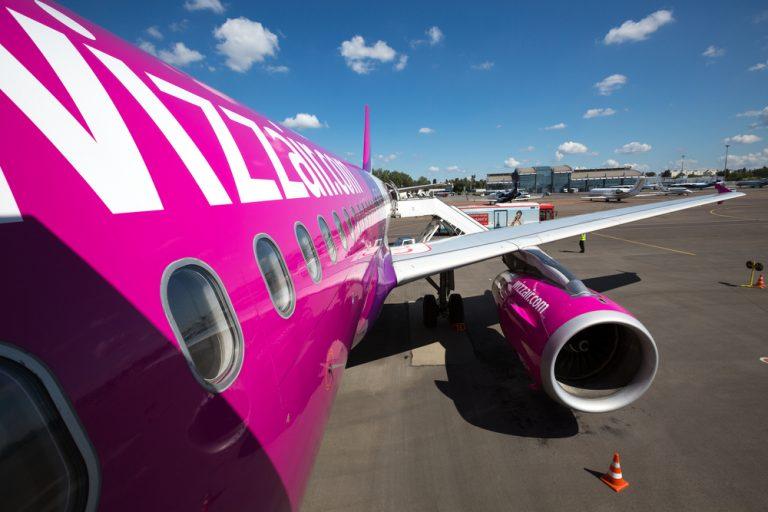
Wizz Air Holdings PLC (LON:WIZZ) announced yesterday that they have suspended flights to Italy and Israel.
Many travel businesses are facing the full force of the coronavirus epidemic – and airline carriers have seen their shares in red since the outbreak of COVID-19.
Wizz Air have made ensured efforts to try and limit the impact of the coronavirus on their operations – however flight and travel restrictions have become a mandatory action as countries such as Italy have now been put into lockdown.
The budget airline said that flights to and from 14 destinations in Italy have been suspended until April 3rd – which could affect trading over the next quarter.
Looking into Israel – Wizz Air added that routes into Tel Aviv and Eilat will be suspended between March 12 and March 23.
This follows the Israeli government issuing a two week quarantine on all travelers entering the country.
Wizz Air announces measures to limit coronavirus
Last week, Wizz Air announced measure which were intended to mitigate the virus impact. The firm noted that they have adjusted their travel schedule from March 11 to April 2 – with the main alterations being made in flights to and from Italy. Measures have included cutting overhead and discretionary spending significantly, as well as leveraging staff across its network so as to pause recruitment along with “non-essential travel”. Wizz Air added tat they are working with suppliers to reduce costs, and have speculated over further adjustments to network capacity in the magnitude of 10% in the first quarter of its financial year. József Váradi, Wizz Air Chief Executive commented: “Our ever-disciplined attitude to cost enables Wizz Air to partly offset some of the headwinds due to the COVID-19 outbreak, which have driven a temporary decline in demand and an increase in the cost of disruption as we put the well-being of passengers and crew first. Wizz Air’s ultra-low cost business model and our strong balance sheet and liquidity provide a solid foundation and a significant competitive advantage in the current challenging environment for airlines, making us a structural winner in the aviation sector in the long term.”Yourgene acquire AGX-DPNI SAS in €2.4 million deal

Yourgene Health PLC (LON:YGEN) have announced that they have made a purchase in France.
The firm said that they have acquired AGX-DPNI SAS, €2.4 million with an additional €1.7 million based on sales performance.
The health diagnostics firm added that it has raised gross proceeds of £2.5 million through a share subscription.
The subscription involved the allocation of 17.5 million new shares which were priced at 14.4p per share.
Lyn Rees, CEO of Yourgene, commented:
“The Acquisition of our French distributor makes sense for Yourgene on a number of levels. This has an immediate and positive impact on earnings and is an opportunity to fully capitalise on our rising NIPT sales in this growing market alongside our current direct sales of additional reproductive health products. This also allows us to gain maximum benefit from the launch of our Illumina-based IONA® test and increases our ability to range-sell additional content into France and beyond.
“Whilst this provides us with our first direct commercial presence in Europe, and gives us an EU-based presence post-Brexit, it also opens up access to high growth French speaking African and Middle Eastern markets not previously addressed by Yourgene. I would also like to thank BGF for their continued support for our ambitious growth strategy.”