
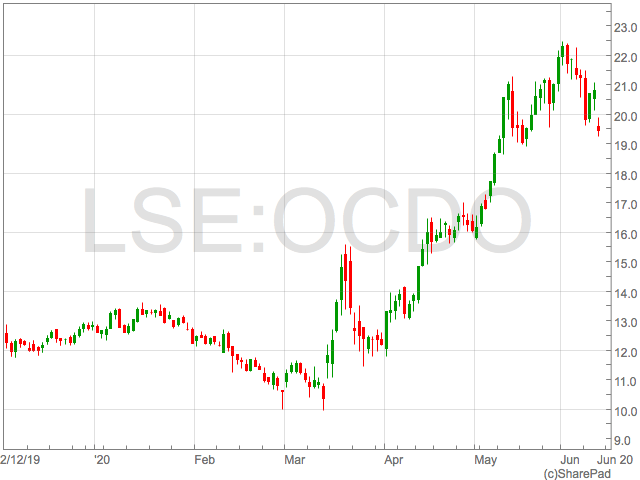
 The placing and retail offer was made at 1,960p representing a discount of 5.7% to the closing share price of 2,079p 10th June 2020.
The majority of the £657 million raised from the issue of new shares was made by institutions. PrimaryBid facilitated the retail offer which amounted to 362,000 new ordinary shares.
The convertible loan offer of £350 million had a 35% conversion premium to £19.60 and provides a 0.75% coupon.
The Ocado capital raise will be used to grow capacity and expand their partner programme in the face of surging demand. Ocado estimates their target market is worth £2.8 trillion globally.
“Ocado’s model is proven, providing a flexible platform with the best customer offer and economics, and we are already the partner of choice for nine of the world’s largest grocery retailers. The significant acceleration in online grocery provides us with greater opportunities than ever before,” Tim Steiner said.
“As we emerge from this crisis Ocado has the opportunity to help our Ocado Solutions partners in the UK, and around the world grow faster, to welcome more partners in new markets, to innovate more and more quickly, and to further strengthen our leadership position. This Capital Raise gives Ocado Group the opportunity to accelerate our role in creating sustainable change in the industry, allowing us the flexibility to move at increased pace and capitalise on the full opportunity set over the medium term.”
Ocado shares fell 6% to 1,950p on the results of the placing but are up 52% in 2020 and are the FTSE 100’s top performing stock this year.
The placing and retail offer was made at 1,960p representing a discount of 5.7% to the closing share price of 2,079p 10th June 2020.
The majority of the £657 million raised from the issue of new shares was made by institutions. PrimaryBid facilitated the retail offer which amounted to 362,000 new ordinary shares.
The convertible loan offer of £350 million had a 35% conversion premium to £19.60 and provides a 0.75% coupon.
The Ocado capital raise will be used to grow capacity and expand their partner programme in the face of surging demand. Ocado estimates their target market is worth £2.8 trillion globally.
“Ocado’s model is proven, providing a flexible platform with the best customer offer and economics, and we are already the partner of choice for nine of the world’s largest grocery retailers. The significant acceleration in online grocery provides us with greater opportunities than ever before,” Tim Steiner said.
“As we emerge from this crisis Ocado has the opportunity to help our Ocado Solutions partners in the UK, and around the world grow faster, to welcome more partners in new markets, to innovate more and more quickly, and to further strengthen our leadership position. This Capital Raise gives Ocado Group the opportunity to accelerate our role in creating sustainable change in the industry, allowing us the flexibility to move at increased pace and capitalise on the full opportunity set over the medium term.”
Ocado shares fell 6% to 1,950p on the results of the placing but are up 52% in 2020 and are the FTSE 100’s top performing stock this year. Ocado raises £1 billion to fund accelerated expansion
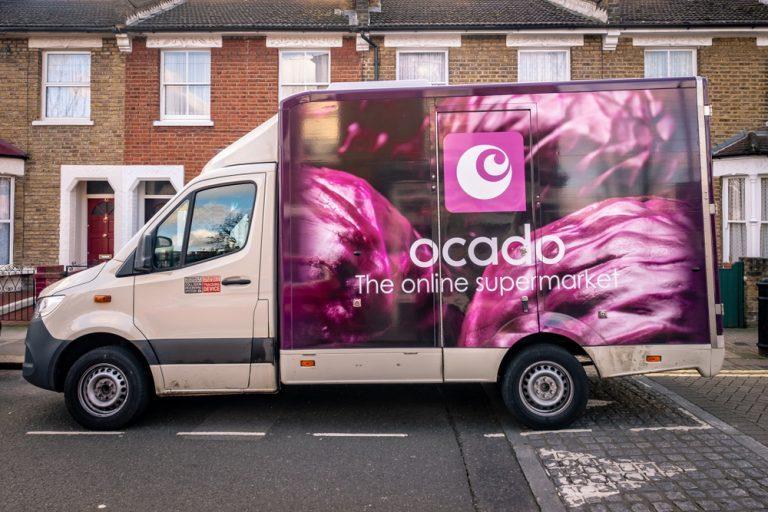
Online grocery delivery service Ocado (LON:OCDO) has raised in excess of £1 billion to fund the expansion of its services as demand for food delivery booms during the coronavirus lockdown.
“Online grocery is experiencing an inflection point. The current crisis is proving a catalyst for permanent and significant acceleration in channel shift globally which we believe will redraw the landscape for the grocery industry worldwide,” said Tim Steiner, CEO and Founder of Ocado.
The £1,007 million capital raise was made through an institutional placing, retail offer and convertible bond offering.
 The placing and retail offer was made at 1,960p representing a discount of 5.7% to the closing share price of 2,079p 10th June 2020.
The majority of the £657 million raised from the issue of new shares was made by institutions. PrimaryBid facilitated the retail offer which amounted to 362,000 new ordinary shares.
The convertible loan offer of £350 million had a 35% conversion premium to £19.60 and provides a 0.75% coupon.
The Ocado capital raise will be used to grow capacity and expand their partner programme in the face of surging demand. Ocado estimates their target market is worth £2.8 trillion globally.
“Ocado’s model is proven, providing a flexible platform with the best customer offer and economics, and we are already the partner of choice for nine of the world’s largest grocery retailers. The significant acceleration in online grocery provides us with greater opportunities than ever before,” Tim Steiner said.
“As we emerge from this crisis Ocado has the opportunity to help our Ocado Solutions partners in the UK, and around the world grow faster, to welcome more partners in new markets, to innovate more and more quickly, and to further strengthen our leadership position. This Capital Raise gives Ocado Group the opportunity to accelerate our role in creating sustainable change in the industry, allowing us the flexibility to move at increased pace and capitalise on the full opportunity set over the medium term.”
Ocado shares fell 6% to 1,950p on the results of the placing but are up 52% in 2020 and are the FTSE 100’s top performing stock this year.
The placing and retail offer was made at 1,960p representing a discount of 5.7% to the closing share price of 2,079p 10th June 2020.
The majority of the £657 million raised from the issue of new shares was made by institutions. PrimaryBid facilitated the retail offer which amounted to 362,000 new ordinary shares.
The convertible loan offer of £350 million had a 35% conversion premium to £19.60 and provides a 0.75% coupon.
The Ocado capital raise will be used to grow capacity and expand their partner programme in the face of surging demand. Ocado estimates their target market is worth £2.8 trillion globally.
“Ocado’s model is proven, providing a flexible platform with the best customer offer and economics, and we are already the partner of choice for nine of the world’s largest grocery retailers. The significant acceleration in online grocery provides us with greater opportunities than ever before,” Tim Steiner said.
“As we emerge from this crisis Ocado has the opportunity to help our Ocado Solutions partners in the UK, and around the world grow faster, to welcome more partners in new markets, to innovate more and more quickly, and to further strengthen our leadership position. This Capital Raise gives Ocado Group the opportunity to accelerate our role in creating sustainable change in the industry, allowing us the flexibility to move at increased pace and capitalise on the full opportunity set over the medium term.”
Ocado shares fell 6% to 1,950p on the results of the placing but are up 52% in 2020 and are the FTSE 100’s top performing stock this year.
The placing and retail offer was made at 1,960p representing a discount of 5.7% to the closing share price of 2,079p 10th June 2020.
The majority of the £657 million raised from the issue of new shares was made by institutions. PrimaryBid facilitated the retail offer which amounted to 362,000 new ordinary shares.
The convertible loan offer of £350 million had a 35% conversion premium to £19.60 and provides a 0.75% coupon.
The Ocado capital raise will be used to grow capacity and expand their partner programme in the face of surging demand. Ocado estimates their target market is worth £2.8 trillion globally.
“Ocado’s model is proven, providing a flexible platform with the best customer offer and economics, and we are already the partner of choice for nine of the world’s largest grocery retailers. The significant acceleration in online grocery provides us with greater opportunities than ever before,” Tim Steiner said.
“As we emerge from this crisis Ocado has the opportunity to help our Ocado Solutions partners in the UK, and around the world grow faster, to welcome more partners in new markets, to innovate more and more quickly, and to further strengthen our leadership position. This Capital Raise gives Ocado Group the opportunity to accelerate our role in creating sustainable change in the industry, allowing us the flexibility to move at increased pace and capitalise on the full opportunity set over the medium term.”
Ocado shares fell 6% to 1,950p on the results of the placing but are up 52% in 2020 and are the FTSE 100’s top performing stock this year. Just Eat acquires Grubhub in $7.3bn deal
Just Eat has announced plans to buy US-based app Grubhub in a $7.3bn (£5.8bn).
When the merge is completed, Just Eat will become the world’s biggest food delivery company outside China.
The announcement comes after the talks between Grubhub and Uber fell through due to antitrust concerns.
“Like ridesharing, the food delivery industry will need consolidation in order to reach its full potential for consumers and restaurants. That doesn’t mean we are interested in doing any deal, at any price, with any player,” said a spokesperson from Uber.
In after-hours trading, shares in Grubhub spiked 7%.
The deal will need approval from shareholders and is expected to be completed in the first quarter of 2021.
Matt Maloney, the CEO and founder of Grubhub, will join the Just Eat’s board and will lead the combined group’s businesses in the states.
“Supported by Just Eat Takeaway.com, we intend to accelerate our mission to be the fastest, best and most rewarding way to order food from your favourite local restaurants in North America and around the world. We could not be more excited,” said Maloney.
Just Eat’s chief executive, Jitse Groen, said: “Matt and I are the two remaining food delivery veterans in the sector, having started our respective businesses at the turn of the century, albeit on two different continents.”
“Both of us have a firm belief that only businesses with high-quality and profitable growth will sustain in our sector. I am excited that we can create the world’s largest food delivery business outside China. We look forward to welcoming Matt and his team to our company and working with them in the future,” he added.
When the deal is completed, Just Eat will have 70 million combined active customers globally.
Shares in Just Eat (LON: JET) are trading at 7,644.00 (0937GMT). Shares in Grubhub (NYSE: GRUB) are up 1.95% at 59.05 (0937GMT).
Somero Enterprises to cut costs in light of Coronavirus

Florida focused building technology and concrete levelling specialist Somero Enterprises Inc (LON: SOM) announced on Wednesday that it would be implementing a series of cost-cutting measures to conserve cash, as it works to ascertain to implications of the Coronavirus pandemic.
In spite of the move, the company said that it remains in a strong financial position, and remains confident in long-term growth prospects.
As per the actions management said it would undertake to protect the company’s financial position, Somero Enterprises said it would furlough approximately 20% of its workforce, as well as cancelling all 2020 bonus and profit-sharing payments for all employees.
The company continued, saying that it would curtail ‘discretionary spending’ across all of its departments, as well as further capital expenditure (excluding commitments to ongoing building expansion projects).Somero predicted that the annualised pre-tax impact of these efficiencies would equate to a saving of approximately $5.0 million.
Somero Enterprises speaks on its financial position
The company’s statement read, “Somero entered this period of uncertainty with a strong balance sheet and good liquidity and its financial position has been strengthened further by these additional financial and cost saving measures. On 30 March, the Company indicated its net cash position exceeded US$ 24.0m. Management expects its net cash position at the end of 30 June will continue to exceed US$ 24.0m and the Company continues to have access to substantial additional liquidity through its US$ 10.0m line of credit. In addition, the Company will continue to closely monitor, and pursue as applicable, all US government funding opportunities for which the Company may be eligible. ”Investor Insight
Following the update, the company’s shares booked a notable 4.77% or 10.50p rally, to 230.50p per share 17:08 BST 10/06/20. The company’s p/e ratio is 7.56, their dividend yield is generous at 6.37%.Savings surge forces Goldman Sachs to close Marcus to new clients
U.S. banking giant The Goldman Sachs Group, Inc. (NYSE:GS) has been forced to turn away customers from its easy-access online savings account, Marcus, after a £21 billion surge in deposits threatened to overtake regulatory limits.
The company decided to temporarily halt new applications following fears it would reach the Bank of England’s £25 billion cap, after which UK banking regulations demand the money would have to be relocated to a ring-fenced separate financial institution in order to protect the banking system.
Ring-fencing Marcus would involve having a designated board, limiting its ability to share capital with Goldman Sachs’ main investment banking arm and driving up costs that would jeopardise its competitive market rates.
Since its launch in 2018, Marcus’s league-topping 1% AER interest rates – compared to a UK market average of 0.3% – have drawn considerable attention and attracted more than 500,000 savers looking for substantial cash returns. The coronavirus pandemic has provided a window of opportunity for eager savers, with expenditure plummeting in the wake of the closure of the retail and hospitality sector.
Des McDaid, head of Marcus UK, explained, “We’ve really seen our growth accelerate under lockdown as people hold off on discretionary spending and take time to reorganise their finances and get the best deal for their money. Separating Marcus financially and operationally from Goldman Sachs would be a significant change to our low-cost business model, which allows us to pay consistently competitive rates to existing savers.”
The impact of the coronavirus pandemic has driven projections of annual household savings to £57 billion, with a New Policy Institute analysis predicting the wealthiest 20% of Brits to reduce their spending by £23 billion by the end of the year.
Sarah Coles, from investment firm Hargreaves Lansdown, commented, “The savings market has been engulfed by waves of cuts over the past few months, and Marcus’s easy-access account has been washed ashore. These waves are self-perpetuating. The most competitive account attracts too much money, so the bank cuts back.”
Marcus remains open for new accounts in the U.S. and has stated that it hopes to reopen to UK clients later in the year. Meanwhile, as of GMT-4 15:20 10/06/20, The Goldman Sachs Group, Inc. share price has dipped notably by 2.03% or $4.43 to $213.68. The company’s dividend yield stands at 2.29%.
Abundance launches 7.1% p/a fixed yield renewables investment opportunity
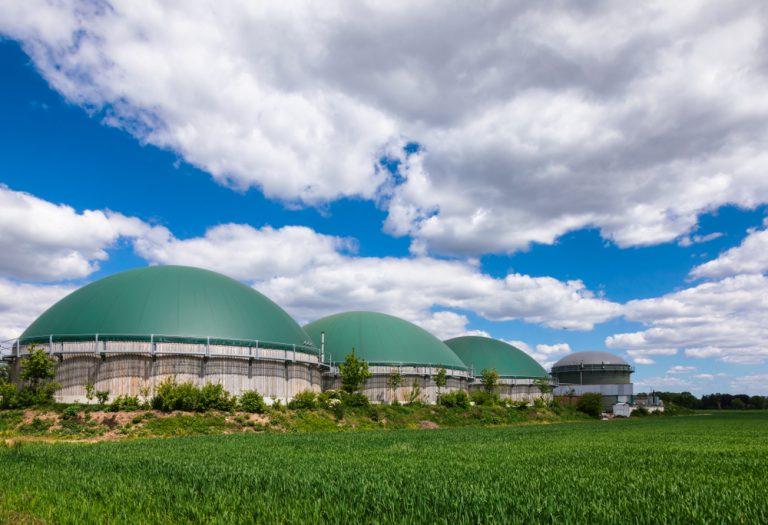
Ethical investment platform Abundance Investment announced on Wednesday that it would be launching an opportunity for consumers to invest in its ‘Build Back Better’ initiative – a programme designed to help the UK rebuild from the Coronavirus crisis by relying on ethical initiatives, in place of industries which contribute to global warming, inequality and militarism.
The company’s new opportunity is a chance to invest in the forward-looking British renewables initiative, Agrogen, which is an on-farm Anaerobic Digestion plant geared towards helping UK AD plants to transition to more sustainable feedstocks.
The plant aims to contribute as much as possible to delivering a ‘Net Zero’ future, by harnessing circular economy technology. It uses “waste materials to generate biogas, which is combusted in a Combined Heat and Power unit and boiler system to generate heat and electricity. The digestate that remains is a nutrient-rich fertiliser which is used on the farm and neighbouring farms, so nothing is wasted.” In the case of Agrogen, even the heat isn’t wasted – it is used to dry logs which are sold for domestic use.
Among its other credentials, the plant is owned and run by ‘award-winning’ farmer and Anaerobic Digestion operator Rob Greenow, and receives an income from the Feed-in Tariff and Renewable Heat Incentive.
The opportunity to get involved is being offered to investors in the form of tradeable debentures paying, a fixed rate of 7.1% p/a over a 16 year term. The goal of this offering is to raise a total sum of £2.65 million to finance upgrades to Agrogen’s existing technology, which will allow it to process a greater variety of farm waste. Abundance added that participants can start with as little as £5, and are eligible for inclusions in Abundance’s Innovative Finance ISA or SIPP.
Why should this interest us?
Speaking on the opportunity offered by investment in AD, co-founder and Managing Director of Abundance, Bruce Davis, commented, “AD is the unsung hero of the renewable energy sector and we have been looking for an investment in this sector for many years. People like Rob are showing farmers how they can make an important contribution to our green recovery – not only through producing homegrown food, but homegrown energy too. Agrogen is a great opportunity for investors to support a circular economy solution that can help UK agriculture to build back better after the pandemic.” Agrogen Director, Rob Greenow, added, “Agricultural ‘waste’ is a valuable resource, providing not only renewable energy but also fertiliser which can be used on local farms. We want to lead the AD industry by improving our environmental performance even further and this new technology, already used successfully in Austria, offers a greener and better way for farms using AD to generate energy from their waste products. We’re excited about enabling like-minded investors to share our enthusiasm!”Premier African Minerals acquires Zimbabwe and Mozambique lithium portfolio
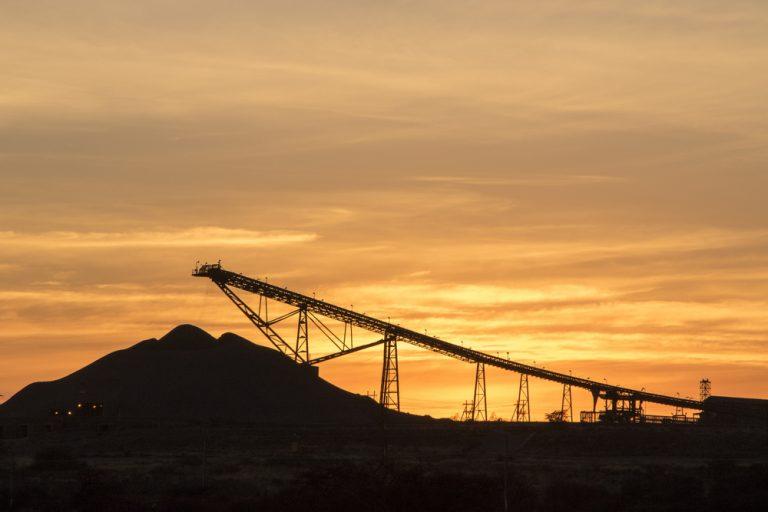
Multi-commodity mining and natural resource development company Premier African Minerals Limited (LON:PREM) has announced the $104,000 acquisition of a hard-rock lithium portfolio based in Zimbabwe and Mozambique from Lithium Consolidated Ltd (ASX:LI3), following the latter’s shift in focus to projects based in Australia.
The acquisition includes 1500 hectares of licenses in Zimbabwe, originally acquired by Lithium Consolidated in 2018, and a further 100 hectares in the Alto Ligonha Pegmatite Province of Mozambique. The move was intended to complement Premier’s existing operations on the continent.
Premier added that today’s acquisition emphasises its ongoing commitment to projects in the region, noting that the operation in Mozambique carries similar mineralisation to Zimbabwe. The acquisition joins a diverse portfolio including tungsten, rare earth elements and tantalum.
Chief Executive Officer of Premier, George Roach, commented on the announcement, “These properties in Zimbabwe are completely complementary to our existing operations and may have potential for small scale early production, something very important to our Company, as much as adding to our lithium inventory. The project in Mozambique has recently been identified as being potentially prospective for other mineralisation including gold.” As of BST 16:35 10/06/20, the Premier African Minerals share price has dipped modestly by 0.60% or 0.00060p, to 0.099p per share.Global equities slide ahead of Fed 2020 projection
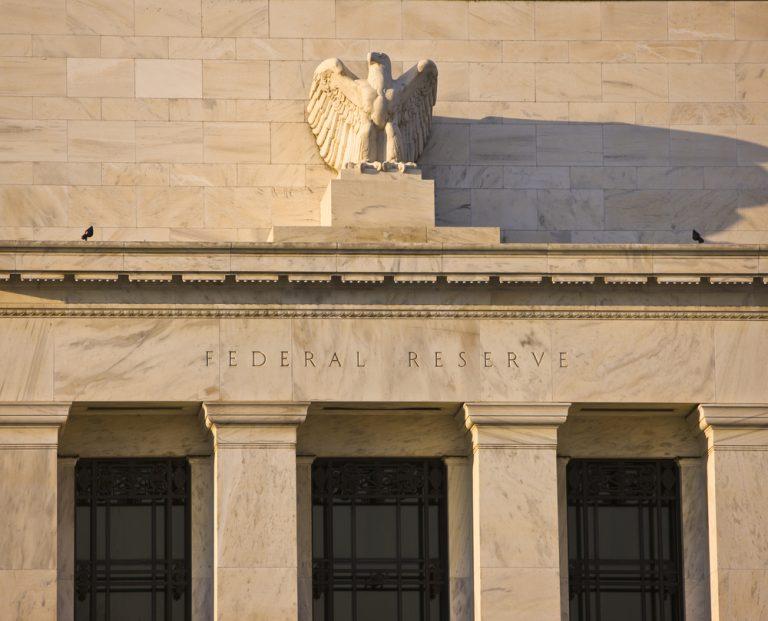
After global equities enjoyed cheer and recovery last week, the first half of this week was mired by the wince before the pain – as markets recoiled in anticipation of the Fed 2020 economic projections.
“Clearly shaken by the OECD’s own set of dire forecasts, the tentative gains that had started the day were nowhere to be seen by the afternoon session.” said Spreadex Financial Analyst Connor Campbell.
As the afternoon progressed, the looming Fed projections saw equities continue their slide, with the Dow Jones shedding 250 points to below 27,000. “This [came] as US inflation fell for a 3rd consecutive month – the latest figure came in at -0.1% – nixing hopes of a flat reading.” added Campbell.Emulating the losses of its US counterpart, the Eurozone also suffered. The DAX dropped 0.9%, while the CAC shed 0.8%. Meanwhile, the FTSE managed to restrain its losses to a decline of only 0.2%.
Despite being among the ‘worst hit’ developed nations in the OECD’s analysis, the organisation’s forecast of an 11.5% contraction in 2020 was less severe than the 14% fall estimated by the Bank of England. Additionally, Connor Campbell added that “[BoE] governor Andrew Bailey also gave the FTSE a bit of a boost, suggesting in a private event that the economy will see a faster-than-usual recovery due to the specifics of the current situation.”Taylor Wimpey construction resumes as employees return from furlough
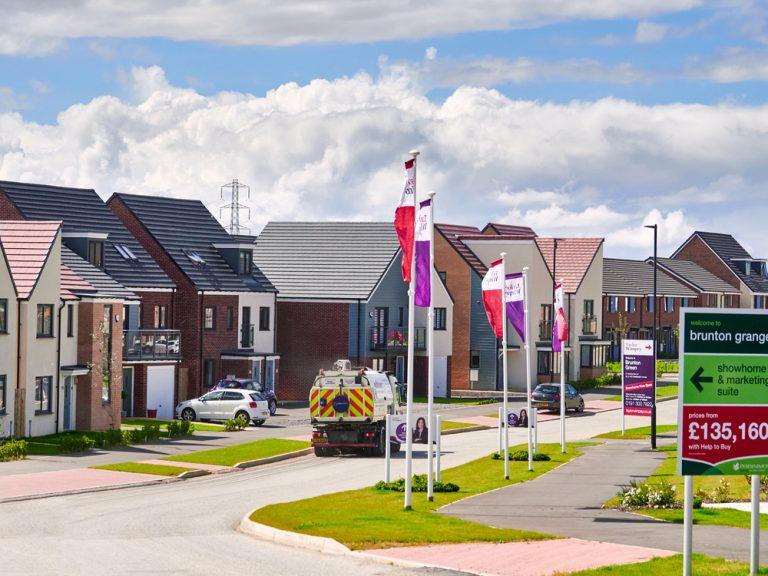
FTSE 100 construction company Taylor Wimpey showed its desire to return to business as usual, as it announced gradual returns to regular construction work alongside some areas of healthy activity.
The company said that the entirety of its staff had returned from furlough, while the majority of its English and Welsh sites had resumed regular construction work. It added that its Scottish sites were preparing to resume construction in line with Scottish Government guidance.
It continued, saying that the ‘majority’ of its show homes and sales centres were open in England on an appointment basis, with these appointments achieving a ‘very high level’ of demand.
Regarding its performance, Taylor Wimpey stated that it was ‘active’ in the land market, and that it had begun exchanging on a number of sites. It added that its order book remained strong and that reservations had seen a healthy increase in recent weeks.
Finally, it reported a ‘good’ level of interest in its 5% discount scheme for NHS and care workers – which it launched in recognition of health workers’ contribution to fighting Coronavirus – alongside a commitment to new working practices it has put in place to ensure the health and safety of its employees.Taylor Wimpey comments
On the safety of its construction activities, the company’s statement expanded, “We have now restarted construction on the majority of our sites in England and Wales. Our first priority remains the health and safety of our customers, employees, subcontractors and wider communities, and we are extremely proud of the way our teams have adapted to the new ways of working. Our new site protocols have been implemented successfully and the new Taylor Wimpey COVID-19 Code of Conduct continues to receive strong support from our employees and subcontractors. These measures include detailed signage, phased sign-in times, strict protocols for social distancing, modification of welfare facilities and additional customised Taylor Wimpey PPE.” On its staff returning to work, the group continued, “All of our employees have now returned to work as of the beginning of June with none remaining on furlough. Many are still working from home, including those shielding or those who are shielding someone vulnerable. It remains our policy not to ask anyone to return physically to work, if they do not feel it is safe for them to do so. Our offices remain closed to all but essential visits and our office-based employees and a large number of our Sales Executives continue to work remotely from home. We continue to regularly communicate with our employees through a number of different channels and are pleased that engagement remains at a very high level.”Investor insights
Following Wednesday’s update, the company’s shares dipped slightly, by 1.70% or 2.70p, to 156.30p per share 16:35 GMT 10/06/20. Taylor Wimpey’s p/e ratio is 7.83, while its dividend yield stands at an impressive 4.89%.BP share price: the transition to clean energy will drive long-term returns

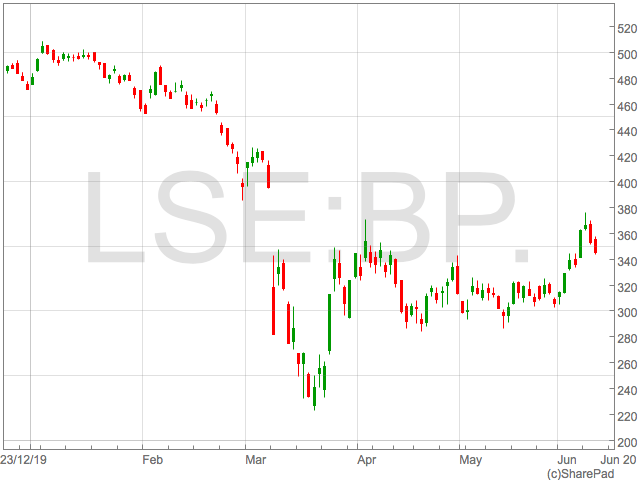
The future of the BP share price (LON:BP) will be dictated by how efficiently the company transitions towards cleaner renewable forms of fuel.
BP has set a target to become net-zero by 2050 and the achievement of this goal is not only important for the environment, but the returns of the BP share price.
It has already be demonstrated by countries such as Costa Rica that entire nations can power themselves without the need for fossil fuels.
Costa Rica powered has itself for an entire year solely by renewable energy. As more countries increase the percentage of energy produced from renewable sources, fossil fuel demand will fall.
Whilst renewable power will hit thermal coal, the wider adoption of electric vehicles significantly threatens demand for oil through gasoline and fuel, which is the largest end use of oil.
The price of oil will be inextricably effected over the long term and if BP are not able to convert their business model, shareholder returns will deteriorate.
The impact on BP of a lower oil price has already been highlighted by the company in an email from the BP CEO to employees when he said:
“The oil price has plunged well below the level we need to turn a profit. We are spending much, much more than we make – I am talking millions of dollars, every day.”
The email was sent as BP announced 10,000 job cut and said the reduction in head count was needed to make BP a “leaner, faster-moving and lower carbon company.”
 The price of oil will be inextricably effected over the long term and if BP are not able to convert their business model, shareholder returns will deteriorate.
The impact on BP of a lower oil price has already been highlighted by the company in an email from the BP CEO to employees when he said:
“The oil price has plunged well below the level we need to turn a profit. We are spending much, much more than we make – I am talking millions of dollars, every day.”
The email was sent as BP announced 10,000 job cut and said the reduction in head count was needed to make BP a “leaner, faster-moving and lower carbon company.”
The price of oil will be inextricably effected over the long term and if BP are not able to convert their business model, shareholder returns will deteriorate.
The impact on BP of a lower oil price has already been highlighted by the company in an email from the BP CEO to employees when he said:
“The oil price has plunged well below the level we need to turn a profit. We are spending much, much more than we make – I am talking millions of dollars, every day.”
The email was sent as BP announced 10,000 job cut and said the reduction in head count was needed to make BP a “leaner, faster-moving and lower carbon company.”
Market Dynamics
In addition to the demand for renewable fuels changing, the market dynamics behind BP shares are starting to shift. BP has been a favourite among fund managers for years because of its strong dividend and stable cash flows. This is has provided a reliable demand for BP shares as money managers allocate inflows to the stock. However, this is set to change with a seismic shift in the attitudes of the asset management industry towards investments in fossil fuels. BlackRock, the world’s largest asset manager, announced in January 2020 they would begin to reduce exposure to thermal-coal, firing the starting gun on a movement away from fossil fuel investments. In an open letter, BlackRock said that they saw sustainable investments providing stronger returns than fossil fuels. “Our investment conviction is that sustainability-integrated portfolios can provide better risk-adjusted returns to investors,” BlackRock said in a letter to clients. “And with the impact of sustainability on investment returns increasing, we believe that sustainable investment will be a critical foundation for client portfolios going forward.” This mean if fossil fuel companies, such as BP, aren’t able to transition to cleaner forms of fuel, they will soon see interest from the asset management industry drying up. So no matter the underlying profitability of BP, if the significant buying pressure from institutions diminishes, the BP share price will ultimately suffer.BP Investments
Fortunately, BP has already started the transition to renewable power through investment in clean energy and the acquisition of a number of companies operating in the sector. BP’s joint venture Lightsource BP has been busy in the renewable sector with plans outlined for a range of projects including an Australian hydrogen plant, American solar projects and Brazilian biofuel capacity. BP are also supporting innovation through BP Launchpad that set’s out to provide support for clean technology and digital infrastructure. Although the recent investment in clean energy is promising, for the BP share price to provide investor return in the long term, BP need to produce more tangible results than the ‘Beyond Petroleum’ scheme announced more than 20 years ago and labelled obvious ‘greenwashing’.Shaftesbury posts £287m loss
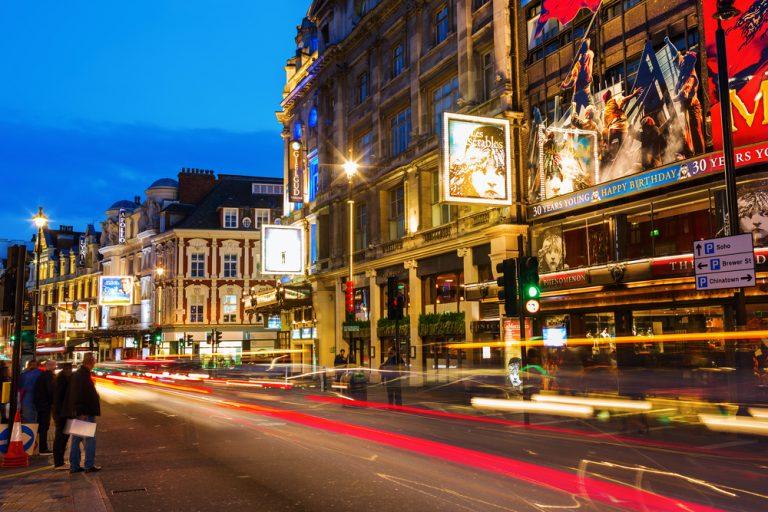
Shaftesbury posted a £287m first-half loss on Wednesday after being impacted by the Coronavirus pandemic.
The West-End landlord, which owns pubs, shops, workspaces, and restaurants in central London said a “collapse” of footfall from February and the closure of shops in March has affected tenant’s ability to pay rent.
The £287m loss is compared to the £38.7m profit made in the same period a year earlier.
“Although our business performed well during the first four months of the period, the growing impact of the measures to address the pandemic are having a material impact on normal patterns of life and commerce, both for our occupiers and on the near-term prospects for our business and financial performance,” said Brian Bickell, the group’s chief executive.
“The economies of London and the West End have a long history of structural resilience, having weathered many episodes of near-term challenges and uncertainties. Their unique features come from a culture of constant evolution across a broad-based economy, attracting talent, creativity, innovation and investment from across the world and reinforcing their enduring appeal to businesses, visitors and as great places to live.”
“In the post-pandemic recovery, these fundamental advantages will underpin their return to prosperity and growth,” he added.
The group has said that it aims to collect 50% rent from tenants that is owed between April-October.
Shares in Shaftesbury (LON: SHB) are trading down 4.94% at 616.00 (1031GMT).