
Wall Street Journal report eases market pessimism

Investors spent most of the Tuesday session fretting about the absence of any phase one movement towards a trade agreement between the US and China. However, their worries were somewhat – though not completely – tempered by a report from the Wall Street Journal, which said that both sides were attempting to build foundations to push back the next wave of tariff attacks forecast for Sunday, which would give them more time to wiggle their way towards some common ground (beyond a common desire to reach common ground).
Speaking on the WSJ report and tentative market sentiment, Spreadex Financial Analyst Connor Campbell stated,
“A report in the Wall Street Journal helped ease the markets’ trade concerns on Tuesday, though it wasn’t enough to completely erase the session’s losses.”
“Investors spent much of the day fretting about the fact the week is yet to see any tangible ‘phase one’ progress between the US and China, despite the former readying itself to impose tariffs on another $156 billion in the latter’s goods.”
“Well, the WSJ says hold your horses. The venerated financial outlet claims that Beijing and Washington are laying the groundwork to delay Sunday’s tariff attack, giving both nations more time to haggle over their respective red lines. That’d be rolling back existing tariffs for China, and the mass purchasing of American farm products for the US.”
“Though it is not the agreement the markets are so desperate for, a can-kick is better than nothing. Even if it does come with the knowledge that we have been here before, and it has only ever ended with the eventual imposition of the delayed tariffs.”
“The FTSE, which at one point had plunged below 7140, managed to clamber back across 7200 as it cut its losses to 0.3%. And while the DAX was still down half a percent, it is still 200 points off its intraday lows. As for the Dow Jones, the WSJ report allowed it to open relatively flat, just under 27900.”
“Unsurprisingly the pound wasn’t much interested in the UK’s latest GDP reading, even if it showed that the country’s has stagnated once again. Instead the currency added 0.2% against the dollar and 0.1% against the euro, quietly confident about the chances of a Tory victory on Thursday.”
Elsewhere on Tuesday, Greencoat Renewables PLC (LON: GRP) raised €125 million in their share placement, Lloyds Banking Group PLC (LON: LLOY) were accused of mistreating victims of fraud, Koovs PLC (LON: KOOV) goes into administration, and J D Wetherspoon plc (LON: JDW) announced it would create 10,000 jobs.
Greencoat Renewables raises €125m in oversubscribed placing

Renewables asset investor Greencoat Renewables PLC (LON: GRP) announced today that it had exceeded expectations with an impressive sum raised in its share placing.
The Company said it had managed to raise €125 million in a “materially oversubscribed placing”.Conditional on shareholder approval at the Group’s EGM, 110,619,469 Placing Shares will be issued at a price of €1.13 per unit. This will increase the total issued share capital of Greencoat Renewables to 630,619,469 Ordinary Shares. The placing shares will represent around 21% of the Group’s existing issued Ordinary Share capital prior to the initial placing.
In line with the Company’s strategy, the proceeds raised will be used to refinance the Group’s Revolving Credit Facility. This will allow the Company to make acquisitions while maintaining its current level of gearing, which currently stands at 48%, but are expecting to fall to 36% on a pro forma basis following receipt of the proceeds from the net placing.
Elsewhere in renewables news, Renewables Infrastructure Group (LON:TRIG) acquired a stake in Merkur Offshore wind, Tekmar Group plc (AIM: TGP) posts a record order book, Nokia Corporation (HEL: NOKIA) helps transform Finland’s national grid to support renewables and SIMEC Atlantis Energy (LON: SAE) made a series of operational announcements.Greencoat Renewables comments
Rónán Murphy, Chairman of Greencoat Renewables, commented:
“I would like to take this opportunity to thank our shareholders for their continued support. The oversubscribed placing demonstrates their confidence in the business and will enable us to deliver on our strategy. We look forward to completing the fundraising at our EGM on 16th December and continuing to add value for our shareholders through the acquisition of value-accretive assets in Ireland and our target European countries.”
Investor notes
Following the update, the Company’s shares enjoyed a rally of 4.06% or 0.047p, to 1.20p per share 10/12/19 16:00 GMT. The Group’s p/e ratio stands at 0.08, their dividend yield is inviting at 5.00%.Lloyds Banking receive criticism over treatment of HBOS fraud victims

Lloyds Banking Group PLC (LON: LLOY) have been criticized for mistreating victims of major fraud.
Shares of Lloyds trade at 61p (-0.8%). 10/12/19 15:37BST.
Lloyd’s have seen a mixed few weeks of trading, as the firm reported a drop in third quarter pretax profits at the end of October.
Lloyds reported a a 97% fall in pre-tax profit for the third quarter from last year. Additionally, the company’s profit before tax for the third quarter fell 97% to £50 million from £1.82 billion last year.
Lloyds joined a growing list of multinational banks who had seen a slump in trading amid cut throat trading conditions.
FTSE100 (INDEXFTSE: UKX) listed HSBC (LON: HSBA) saw their trading figures slump in a similar period. The firm have announced changes to their structural organization as well as a strategy to lower costs leading to job cuts.
This morning, Deutsche Bank AG (ETR: DBK) updated the market as they gave modest predictions. The German bank said it expected revenue at its core banking business to grow by just 1% in the run up to 2022, half the growth level estimated in July. It put emphasis instead on efforts to cut billions of euros in costs.
However, Lloyds have not hit news headlines today to report a slump in trading but instead the treatment of their customers who have been a victim of fraud, which puts them in bad media spotlight.
The fraud at Halifax Bank of Scotland’s Reading branch led to six people being jailed in 2017 for a combined 47 years.
The scam involved small business customers being referred to consultancy for bribes which included watches, holidays and sex with prostitutes.
The bank’s compensation scheme for victims had ‘serious shortcomings’, retired judge Ross Cranston said in a review.
The bank has paid £102 million in compensation to 71 businesses and 191 directors over the fraud.
Additionally Lloyds said it would offer all victims the option to have their cases independently reviewed.
Watchdog the Financial Conduct Authority said it would consider ‘further action’ against Lloyds over the failings, adding that they needed to be addressed quickly.
We are disappointed that, after such a long period of time, the consequences of the HBOS Reading fraud for customers have not yet been properly remediated by LBG,” the FCA added.
Nikki Turner, one of the victims of the HBOS fraud and outgoing director of campaign group SME Alliance, welcomed the report but urged Lloyds to act quickly.
“It is nearly three years since the guilty verdicts were handed down, and a decade and a half since many of the frauds took place.
“Victims are suffering real hardship, many lost their businesses, homes and – in some cases – families. They need fair restitution now,” Turner said.
Politicians and campaigners have criticized Lloyds for the handling of the fraud case at HBOS.
Lloyds Chief Executive António Horta-Osório apologized to victims and said he was committed to making reparations.
Renewables Infrastructure Group breezes through offshore wind acquisition
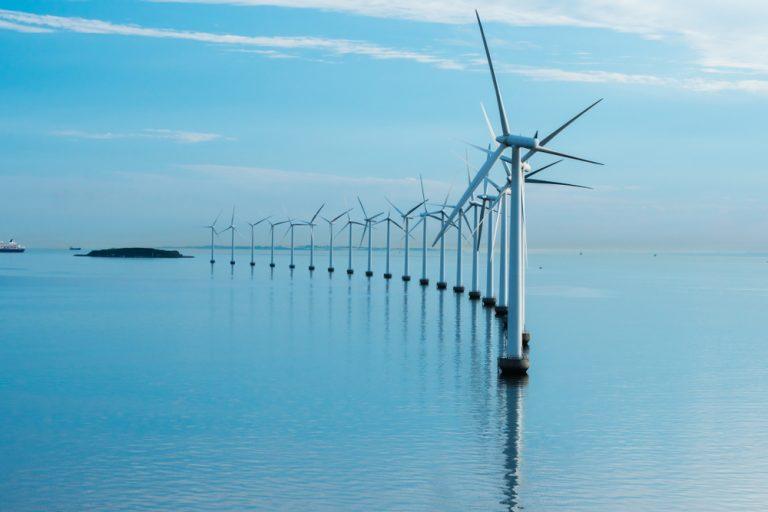
British investment trust The Renewables Infrastructure Group (LON:TRIG) announced on Tuesday that it had exchanged contracts to acquire a stake in an offshore wind project in the German North Sea.
The deal gives TRIG a c.36% equity interest in the Merkur Offshore project, which is a 396MW operational offshore wind farm.
For the project, TRIG partnered with the Dutch pension Investor APG, who agreed to acquire the remaining c.64% interest in the project.
Following the transaction’s projected completion in H1 2020, TRIG has said it will sell-down a share to minority co-investors managed by InfraRed, which will leave TRIG with an approximate 25% equity interest. Merkur is comprised of, “66 GE Haliade-150 6MW offshore wind turbines and GE Renewable Energy provides Operations & Maintenance (“O&M”) services under a 10-year contract. Commercial operations commenced in June 2019 and the Project benefits from an attractive Feed-in-Tariff for the next 13.5 years (until June 2033), followed by a floor price for a further 6 years. The existing debt financing in the Project is fixed rate and fully amortising within the initial subsidy period.”“The investment is being acquired from a consortium of Partners Group (on behalf of its clients), DEME Concessions, GE Energy Financial Services, ADEME and a private fund separately managed by InfraRed. Due to one of the vendors being a fund managed by InfraRed, TRIG’s Investment Manager, the transaction process included the procedures set out in the Company’s investment policy and recent prospectuses, these include the conduct of independent due diligence by a specially constituted buy-side committee and an independent third-party valuation and approval by TRIG’s Board of Directors, all of whom are independent of the Investment Manager.”
Once completed, the new investment is expected to represent 8% of the value of The Renewable Infrastructure Group portfolio. TRIG’s investment will be financed through capital raising proceeds and a drawdown from its revolving acquisition facility.
Elsewhere in renewables news, Tekmar Group plc (AIM: TGP) posts a record order book, Nokia Corporation (HEL: NOKIA) helps transform Finland’s national grid to support renewables, SIMEC Atlantis Energy (LON: SAE) made a series of operational announcements and JLEN (LON: JLEN) continues to gain momentum.The Renewable Infrastructure Group comments
Speaking on the update, Helen Mahy CBE, Chairman of TRIG, said,
“The Board of TRIG is delighted to announce the Company’s third offshore wind investment and our second investment in Germany. We are pleased to be growing our presence in the European offshore wind market which is making an increasingly important contribution to the decarbonisation of energy usage.”
Richard Crawford, of InfraRed Capital Partners, added,
“We welcome this opportunity to become co-investors alongside APG, a highly respected investor with a strong track record. Building effective relationships with developers, partners and asset managers remains essential for TRIG’s ability to access these attractive larger transactions.”
Investor notes
Despite a seemingly positive update, the Company’s shares dipped by 0.25% or 0.32p, to 128.28p per share 10/12/19 15:25 GMT. The Renewable Infrastructure Group’s dividend yield looks inviting at 5.18%.Pendragon announce new Non-Executive Director appointment

Pendragon PLC (LON: PDG) have updated shareholders about the appointment of a new Non Executive Director.
Pendragon saw their shares surge at the end of November, as the firm saw profits rise in an mixed trading update.
The operator of Evans Halshaw and Stratstone saw underlying pre-tax profit rise to £3m from £1.1m, due to a combination of ‘better momentum during September, improved processes and good cost control’.
Despite rising profits, Pendragon saw a decline in total revenues by 8%, as like for like revenue dropped 3.6% and used car revenues dropped 19.6%.
Today, the firm has announced the appointment of Brian Small to their senior board with immediate effect.
Small was a former chief financial officer at sports-fashion retailer JD Sports Fashion PLC will serve on the board’s nomination committee, the remuneration committee, and will take over as audit committee chair from Richard Laxer from January 2 next year.
Small currently is a non executive director and chair of the audit committee at fashion giant Boohoo Group PLC who have seen an impressive period of trading.
Boohoo announced one week ago that they had seen a record performance across the Black Friday weekend.
Additionally, Small is non executive director and chair of the audit committee of baby product retailer Mothercare PLC.
Mothercare who have not been so fortunate updated the market this morning. The firm said that, for the 28 week period to 12 October, group loss before tax amounted to £21.2 million, deeper than the £18.5 million loss posted the year prior.
Pendragon Interim Executive Chair Bill Berman said: “I welcome Brian and look forward to working with him. He has an extensive track record and considerable experience from his career in business, and I am confident he will make a positive contribution to the board as we continue to take the business forward.”
Pendragon seem to have performed relatively well considering the state of the global automotive industry. Firms such as Nisssan have slashed their production forecasts which caused shares to slide. Nissan slashed its full-year operating profit forecast by 35% to 150 billion yen, which would be its worst full-year performance in 11 years, which will alert shareholdersRockfire Resources hit gold for the third time

Rockfire Resources PLC (LON: ROCK) have seen their shares bounce on Tuesday afternoon, after the firm reported progress in its Australian operations.
Rockfire Resources is an Australian focused gold and copper exploration company with mineral assets in Queensland. Rockfire has three medium-grade, near-surface gold prospects, positioned amongst multi-million ounce gold deposits.
At the end of November, shareholders of Rockfire saw their shares surge as the firm reported a new discovery.
The firm updated shareholders that it had returned broad consistent gold assays from a geophysical target on its Plateau gold project.
Of particular note was gold mineralisation occurring almost continuously throughout a 215 metre deep hole, including 177 metres at 0.5 grams per tonne gold, which sparked shareholder appetite.
Less than a week later, Rockfire once again struck gold. The firm added to the discovery last week by saying that the drilling of a new Breccia zone at the Plateau Gold deposit in Queensland, Australia has discovered high-grade, near-surface gold which caused shares to rally over 30%.
Today, the firm has updated the market saying that an induced polarisation geophysical survey has identified multiple anomalies at the miner’s 100%-owned Plateau gold deposit in Queensland, Australia.
Rockfire said large geophysical anomaly has been detected around and beneath BPL025 target, which intersected 177 metres at 0.5 grams per ton of gold.
The anomaly is a reported 350m wide and over 200m long, has proven to host gold mineralization near surface and provides multiple strong targets for gold exploration at depth, Rockfire explained.
Rockfire said it continues to await results from the remaining 11 drill holes from October Plateau drilling campaign and intends to extend the geophysical survey towards the east to track the gold anomaly further.
The reflection in share price movement on Tuesday shows how excited shareholders are to see the full potential of the young gold miner.
The good news comes at a good time for Rockfire Resources, as rival Panther Metals (NEX: PALM) had announced it had agreed its first exploration licence in the Northern Territory, Australia at the end of October.
Additionally, in the gold mining sector in similar fashion to Rockfire, Cora Gold saw their shares jump a week ago on a mineral resource estimation report.
The firm said it has received a maiden pit constrained mineral resource estimate from independent consultants SRK Consulting UK Ltd for its Sanankoro gold project in Southern Mali, which saw shares surge.
Notably, FTSE100 listed Centamin rejected a hostile merger approach from rival Endeavour Mining.
Centamin said the following “Centamin said the offer “materially undervalues” the company and it is “better positioned” to deliver shareholder returns on its own rather than teaming up with Endeavour”.
Shareholders of Rockfire Resources should be very excited about the firms future, as it has given a host of impressive updates. If the firm ends the year strongly, then 2020 could be a productive year for Rockfire which could see their shares rise.Anglo American shares stay in green despite 2020 output cuts

Anglo American PLC (LON: AAL) have seen their shares in green despite cuts to its 2020 output guidance.
Anglo American plc is a British multinational mining company based in Johannesburg, South Africa and London, United Kingdom. It is the world’s largest producer of platinum, with around 40% of world output, as well as being a major producer of diamonds, copper, nickel, iron ore and metallurgical and thermal coal.
The firm adjusted its production guidance for 2019, however the firm did say that both costs and output for the year will improve.
Back in July, the firm updated the market by saying that it was broadly on track to meet its annual targets, which satisfied shareholders.
For the company’s second quarter ended 30 June, copper production was up 1% to 159,100 tonnes driven by a strong performance at Los Bronces and Collahuasi.
De Beers’ diamond production dropped by 14% to 7.7 million carats as Anglo American continues to produce to market demand and Venetia transitions from open pit to underground.
Today, the FTSE100 listed firm has guided for 2019 unit costs to fall by 5%, with production for the year to rise by 1% to 2% driven by Minas-Rio iron ore in Brazil and improved metallurgical coal.
For its commodities division, the firm held its 2019 guidance, however changes have been made to its 2020 forecast.
“We are building on the complete transformation of both the quality of our portfolio and our performance over the last six years. Anglo American is now amongst the very best in terms of our overall cost curve position as a result of fundamental operating changes, the technical and product marketing expertise we have applied, and the wholesale upgrade of our portfolio,” commented Chief Executive Mark Cutifani.
“We will continue to upgrade our asset portfolio over time and we see our progress continuing on all fronts as we also bring a number of high-quality growth projects online during the next three years, delivering 20% to 25% production growth by 2023.”
Anglo American’s copper production guidance for 2020 has been cut to 620,000 tonnes to 670,000 tonnes, with the upper limit of the range previously 680,000 tonnes.
Diamond output guidance for 2020 fallen to between 32,000 carats and 34,000 carats, from 33,000 to 35,000 carats before.
Additionally, Iron ore production guidance from Kumba Iron Ore Ltd (JSE: KIO) in South Africa has been fallen to between 42 million to 43 million tonnes from 43 million to 44 million before. This guidance, and the change, applies to 2021 and 2022 as well.
Anglo American has lowered metallurgical coal guidance for 2020 to between 21 million and 23 million tonnes, from between 22 million and 24 million tonnes a year ago.
Finally, platinum guidance has stayed consistent at 2 million to 2.2 million ounces for 2020, 2021, and 2022, with palladium seen at 1.4 million ounces for 2020 from 1.3 million to 1.4 million ounces before.
The mining sector has been busy over the last week, and competitors have seen their shares become volatile.
At the start of last week, Fresnillo saw their shares dip as they gave the market modest production estimates.
Additionally, another FTSE100 constituent in Antofagasta saw their shares fall as they slashed their expectations in November.
For 2019 as a whole, the London-based firm now expects production of between 750,000 and 770,000 tonnes. This is lower than the 750,000 to 790,000 tonnes forecast given previously.
Shares of Anglo American rallied modestly 0.024% to 2,078p on the announcement. 10/12/19 14:57BST.Travis Perkins demerger with Wickes ‘progressing well’
British builders’ merchant Travis Perkins plc (LON: TPK) today posted updates on its operations, calendar, and ultimately, its intention to demerge with Wickes.
The demerger was announced in July 2019, and today the Company said it is ‘progressing well’, and would be completed during the second quarter of 2020.
“The Group is hosting a capital markets event focusing on the Wickes business on the 29 January 2020. The event is being held at the Wickes Support Centre in Watford, followed by a tour of the nearby Wickes Watford store. The full invitation to the event can be found on the website, please confirm attendance with the IR team.”
Ahead of its capital markets event, the Company posted an initial presentation on its website’s ‘Investor’ section, which sets of the ‘future equity story‘ of the Wickes business.
Elsewhere, other merger-related updates have come from; Centamin PLC (LON: CEY) rejecting a merger approach, SoftBank Corp (TYO: 9984) attempts to merge two companies and HP Inc (NYSE: HPQ) and Xerox Corp (NYSE: HPQ) consider potential merger.
Following the announcement, the Company were down 2.32% or 36.00p per share, to 1,517.50p per share 10/12/19 14:55 GMT. Analysts from Liberum reiterated their ‘Buy’ stance on Travis Perkins stock. The Group’s p/e ratio is 13.57, their dividend yield stands at 3.09%.
Koovs descend into administration

Koovs PLC (LON: KOOV) have updated the market on Tuesday afternoon, saying that they have been placed into administration.
Koovs have seen a mixed few weeks of trading, and shares have been volatile. In November, the firm saw its shares sink amid talks between shareholders over a potential financial investment.
The India focused online fashion retailer said that it continued to negotiate with major shareholder Future Lifestyle Fashions Ltd (NSE: FLFL) for completing its £6.5 million investment.
Future Lifestyle Fashions is a subsidiary of Indian retail giant Future Group (NSE: FRETAIL).
Today, the firm has given a bleak update to shareholders as Future Lifestyle have failed to invest more money into the company.
Koovs said Future Lifestyle Fashions, part of India’s largest retail group Future Group, failed to fulfil a contractual commitment to invest a further £6.5 million into the company.
“The board expects that the business and assets of Koovs will be purchased from the administrator by a company connected to the company’s largest secured creditor, Waheed Alli, ensuring the continuation of the operating business,” the company said.
“If a replacement nominated adviser is not appointed within one month, the admission of the company’s securities will be cancelled on AIM. The company has no current intention of appointing a replacement nominated adviser,” Koovs added.
Koovs follow UK clothing firms who have seen a period of volatility in their share price. Similar to Koovs, women’s clothing retailer Laura Ashley saw their shares crash in October after the firm saw their finance chief depart.
In a public statement, Laura Ashely said “The board would like to take this opportunity to thank Mr Anglim for his contribution during his tenure with the company and to wish him the very best for the future,”
Additionally, the clothing department of Marks and Spencers saw their profits take a tumble in November, which was contributed in their clothing department.
Chief Executive Steve Rowe alluded to several factors which had caused the slump including blamed the 5.5% decline in like-for-like clothing sales in the first six months of its financial year on supply chain problems and buying errors that meant popular sizes quickly sold out in store and online.
The future certainly looks bleak for Koovs, and efforts will need to be directed in order to ensure a recovery is made in an increasingly tough operating environment.Moody’s lower Irish Banking outlook from positive to stable

Moody’s Investors Service (NYSE: MCO) have lowered the outlook for Ireland’s banking system from positive too stable.
The credit ratings agency said banks’ earnings will come under pressure from low interest rates, with asset risk continuing to fall.
Profitability will decline,” said Moody’s analyst Arif Bekiroglu. “Irish banks’ high reliance on net interest income makes them sensitive to the low interest rate environment. High exposure to low-margin tracker mortgages, rising costs due to increased debt issuance, revenue losses from sales of problem loans, and Brexit uncertainty are further headwinds for profitability.”
Expenses will remain high, as IT costs surge on a move towards digitalization, regulation and pending fines.
The operating environment should remain stable, Moody’s noted, forecasting real GDP growth of 3.2% in 2020 and 3% in 2021. The agency said growth should be supported by rising employment and investment.
Brexit could weigh on GDP, but Moody’s doesn’t expect an “economic shock”.
“Global economic uncertainty increases tail risk due to Ireland’s open economy, which hosts many multinational corporations,” Moody’s added.
The agency continued: “Meanwhile, banks’ asset risks are set to keep falling, as economic growth and low rates support borrowers’ finances, and as banks continue to sell and restructure problem loans. Enhanced risk management and stricter Central Bank of Ireland affordability guidelines should prevent excessive risk taking, holding back new problem-loan formation. Moody’s also expects capital ratios to hold steady, and funding and liquidity to remain strong.”
The performance from the Bank of Ireland (LON: BIRG) however seems to defy the change made on Tuesday.
Bank of Ireland recorded €1.5 billion of net lending growth in the nine-month period, which is 800 million higher than in the same period a year ago.
Bank of Ireland commented that the economic growth in its core markets of Ireland and UK remained “positive”, despite the “ongoing uncertainties” related to the UK’s decision to leave the EU.
Just one week ago, Moodys lowered the UK Banking Sector outlook from stable to negative. It seems that analysts at Moody’s still seem more optimistic on the Irish Banking sector compared to the UK one.
Certainly looking at the slow performance from FTSE100 listed HSBC (LON: HSBA) who have seen a slowdown in trading following an operational overhaul, neither the UK or Irish sector is looking too promising amid political and economic turmoil currently dominating news headlines.