
Apple pledge to fight California housing crisis

Apple (NASDAQ: AAPL) have announced that they will commit $2.5 billion dollars as donation to fight a housing crisis experienced in California.
The crisis comes about as prices of housing are being driven up across California. Most of the money dedicated will be run either with or by the state government.
One billion dollars will go to a jointly run fund with state officials aimed at accelerating affordable housing projects, to create more affordable housing for citizens living in California.
In an interview with Reuters, Apple Chief Executive Tim Cook said the company felt a “profound responsibility” to improve California’s housing crisis. Apple’s current headquarters – a ring of gleaming metal and glass nicknamed the “spaceship” in Cupertino, California – sits less than five miles from the suburban family home where co-founders Steve Jobs and Steve Wozniak assembled the first Apple computers in the 1970s.
“We want to make sure that it is a vibrant place where people can live and also raise a family,” said Apple Chief Executive Tim Cook “And there’s no question that today that isn’t possible for many people, that the region suffers from an affordability crisis that is existential.”
The move comes after Facebook (NASDAQ: FB) Alphabet Inc-owned Google (NASDAQ: GOOG) committed $1 billion toward California housing initiatives while Microsoft Corp (NASDAQ: MSFT) committed $500 million in the Seattle, Washington area.
Apple noted that this type of funding for a housing project was the first of its kind.
Real estate developers often secure bonds for affordable housing development but must service the debt during construction until the houses are built and start to generate revenue.
The funding could take almost two years to be fully effective, but there is hope to recycle the funds for future projects over the next five years.
“This unparalleled financial commitment to affordable housing, and the innovative strategies at the heart of this initiative, are proof that Apple is serious about solving this issue,” California Governor Gavin Newsom said in a statement.
The $2 billion funding will be deployed for California specific projects only, while the remaining $500 million will go toward efforts specific to Apple’s home region in Northern California.
“Tech has grown a lot, and it has become a larger portion of the economy,” Cook said. “We’d like to be part of the solution, so that’s why we’re jumping in.”
Vodafone announce structural changes
Vodafone Group Plc (LON: VOD) have announced their structural changes for the firm’s senior board and global operations in an update released during Monday trading.
One of the headline changes was the removal of the Rest of the World regional organization.
Amid the new changes, the appointment of Vivek Badrinath was announced. Current Rest of World chief executive, as CEO of Vodafone’s new European tower business.
Badrinath’s appointment takes effect at the start of April 2020, with the tower business legally separated from Vodafone as a new organisation and becoming operational by May 2020.
Earlier this year, Vodafone announced a merger deal completed with INWIT SpA, the towers unit of fellow telecoms firm Telecom Italia (BIT: TIT).
Using this deal, Vodafone would combine its Italian tower portfolio with INWIT for €2.1 billion in cash plus a 37.5% stake in the combined business.
At present, this combined company is referred to by Vodafone as TowerCo and gives strong ground to complete this expansion move.
Earlier this year, Vodafone opted to cut its dividend by 40%, as the cost of the sale of its Indian arm and the upcoming global 5G network roll-out weighed upon profits.
Further, Vodafone will “simplify its management structure” by removing its Rest of World regional organisation entirely, starting in its financial year ending March 2021.
Also under this structural shift, Shameel Joosub, CEO of South Africa-based Vodacom Group Ltd, will join Vodafone group’s executive committee with effect from April 2020.
Group CEO Nick Read said: “I look forward to welcoming Shameel to Vodafone’s executive committee. This appointment will streamline the management of our businesses and reflects the significance of Vodacom within the group. Shameel has led our African operations through a period of sustained growth and he will be an excellent addition to our senior team.”
Vodafone still have other woes to attend to, after facing facing a bill for $4 billion (€3.58 billion) in respective fees, fines and interest after a Supreme Court ruling in India at the end of last month.
This will damage India’s entire mobile industry, but Vodafone Idea (NSE: IDEA) , in which Vodafone Group holds a 45% stake, faces the highest costs and is in the poorest position to pay.
Shares of Vodafone were up 0.63%, trading at 159p per share. 4/11/19 12:02BST.
Santander invests heavily into Ebury
Santander (LON: BNC) have made the decision to invest £350 million in Ebury. This is a bold statement from the global bank who look see potential in Ebury making a statement to other market competitors.
Ebury is a trade and foreign exchange facilitator for small and medium-sized companies and have boasted impressive figures in their recent trading years.
The investment, which fits Santander’s digital strategy of accelerating growth through new ventures, will strengthen its Global Trade Services offer.
This will also further consolidate Santander’s position as the bank of choice for SMEs trading or aspiring to trade internationally in its markets across Europe and the Americas, and in Asia later on.
Ebury currently operate within 19 countries, handling over 140 currencies. The firm has seen annual consistent revenue gains of 40% in the last three years.
UK-based Ebury operates on a worldwide distribution platform underpinned by a data driven business model and offers best-in-class customer experience and product capabilities.
The partnership will be a huge boost for Ebury, allowing them to improve their value proposition, supported by a big market player.
Additionally, this will give much exposure to Ebury and the access into new markets for for currency trading.
Under the terms of the transaction, Santander will acquire 50.1% of Ebury for £350m, of which £70m will be new primary equity to support Ebury’s plans to enter new markets in Latin America and Asia.
Ana Botín, Group Executive Chairman of Banco Santander, said: “Small and medium-sized businesses are a major engine of growth around the world, creating new jobs and contributing up to 60% of total employment and up to 40% of national GDP in emerging economies. SMEs are becoming increasingly global and Santander is the best positioned bank to play a leading role to help them access global trade finance.
“By partnering with Ebury, Santander will deliver faster and more efficient products and services for SMEs, previously only accessible to larger corporates.” Botín concluded.
This comes at an important time for Santander, amidst the financial industry struggles where HSBC (LON: HSBA) have reported a fall in revenues and a restructuring change .
Additionally, Deutsche Bank (ETR: DBK) appear to be in further crisis as they report a third quarter loss.
Juan Lobato and Salvador García, co-founders of Ebury, added: “Combining a big bank with nimble fintech means we can offer our clients the best of both worlds: they can benefit from our technology and high-quality service safe in the knowledge that they are counterparty to one of the world most important financial institutions.
“It is an exciting time for Ebury, we have just completed our first acquisition, and the new capital from Santander and our existing shareholders will allow us to invest in new ways to serve SMEs trading internationally and continue the growth in our business while keeping our entrepreneurial culture.”
Shares of Santander are trading at 320p per share, climbing 2.66% during Monday trading. 4/11/19 11:38BST.
Hiscox give shareholders uncertain company update

Hiscox Ltd (LON: HSX) have given their shareholders a mixed update, saying that premium growth was strong but combined ratio was affected by an active period for claims amid a trio of natural disasters.
For the nine months to 30th September, gross written premiums grew 5.6% to $3.21 billion from $3.04 billion a year prior.
Additionally, gross written premiums grew 7.3% on the year before showing strong ground made by the UK based insurance provider.
The boost in gross written premiums is certainly impressive amidst slumps by the established names in the finance and insurance industry.
Certainly, firms such as Lloyds (LON: LLOY) reported a drop in their Q3 pre tax profits, and the crisis of Deutsche Bank (ETR: DBK) continues as they reported a third quarter loss.
Additionally, industry competitors such as Aviva (LON: AV) reported job cuts to reduce costs, showing a slow down in business revenue due to both Brexit and regulation issues.
“The third quarter has been an active period for claims, with the market experiencing significant catastrophe losses from storms in the US, the Caribbean and Japan,” Chief Executive Officer Bronke Masojada said. “Paying claims is what we are here for, and we have reserved USD165 million for claims from Hurricane Dorian and Typhoons Faxai and Hagibis. We expect an additional impact from lower fees and profit commissions.”
Hiscox came to the $165 million claims reserve after assessing the insured market loss for Hurricane Dorian in August, Typhoon Faxai in late August and early September, and Typhoon Hagibis in October.
Dorian struck Bermuda, Faxai affected Japan and Hagibis touched a number of countries including Japan and Russia.
The natural disasters have affected claims ratio for Hiscox, but Masojada remained confident for Hiscox to deliver profits for its shareholders.
“It is pleasing to see good growth across all of our segments, with Hiscox London Market leading the way as conditions continue to improve,” Masojada added. “In Hiscox Retail, growth is accelerating following the decisive action we have taken in the US and UK, and Europe is delivering strong double-digit growth. We are on track to meet our full-year growth guidance for the retail segment.”
“Pricing momentum in the London market and reinsurance continues to be positive,” Masojada said. “In Hiscox Retail, rates in the UK and Europe remain broadly flat across the portfolio. In the US, there are early signs that the market is responding to adverse claims trends in casualty business, where we are taking an increasingly cautious approach to reserving.”
For the full year, Hiscox expects its combined ratio of between 97% and 99%. Any combined ratio below 100% means an insurer made a profit from its underwriting, which is a positive note for investors.
“Yet again the balance between our retail and big-ticket businesses has given Hiscox resilience in the face of challenging events,” Masojada concluded. “From these challenges comes opportunity.”
Hiscox is targeting a combined ratio of between 90% and 95%, in the medium term and could be set to achieve this.
This would be an impressive feat if this target is reached amidst tough finance trading conditions.
Shares of Hiscox have fallen 2.37% during Monday trading, currently at 1,440p per share.
Amur Minerals raise funds through share subscription

Amur Minerals, (LON: AMC) have made an announcement on Monday morning saying that they have raised £1.2 million through a discounted share subscription in order to repay a loan and fund the business.
Amur issued 70.6 million shares at 1.7 pence per share, showing a need for the firm to raise funds whilst maintaining their strong business plans for the end of the year.
This may come at a harmful price for Amur Minerals, as competitors such as Serabi (LON:SRB) boat strong production figures for their third quarter.
Additionally, Resolute Mining Limited (LON: RSG) saw bumper fundamentals in the first half of 2019 with their trading update.
Amur will use the funds to repay a £625,000, loan owed to Riverfort Global Opportunities (LON: RGO) including interest.
Additionally, Amur Minerals have agreed to not make any further drawdowns under the convertible loan facility for at least three months.
The remainder of the funds are set to be spent on general capital and boosting working production facilities, the firm noted.
“The fundraise strengthens the company’s financial position as we continue our work on the TEO workstreams, and the follow on DFS, and will update the market with the progress of these various workstreams as and when appropriate,” Chief Executive Officer Robin Young said.
Young concluded “As previously noted in the interim accounts released on 30 September 2019, Amur continues to engage with potential strategic partners that have expressed an interest in advancing the Kun-Manie project,” Young added. “In light of the ongoing strength in the nickel price, the company hopes to update the market with positive progress in due course.”
Following admission of the subscription shares – expected on Thursday – Amur will have 836 million shares outstanding, which may cause concern for investors.
Young has expressed optimism to investors by alluding to the strength of the nickel price, telling investors that the company hopes to update the market in due course with positive progress.
Shares of Amur Minerals are trading at 2.33p per share. 4/11/19 11:06BST.
Workplaces need to be more eco-friendly, study finds

New data revealed on Monday that over 50% of offices do not employ eco-friendly features.
Commercial property agents SavoyStewart.co.uk surveyed 1,644 UK office workers on their opinions towards eco-friendly efforts in the workplace.
Those who took part were asked to score their current office in terms of eco-friendliness. The data reveals an average score of 2.3 out of 5, with 5 being very eco-friendly. The most common eco-friendly incentives used by offices are energy efficient utilities and devices, but only 47% of offices have them. Other incentives include sustainable office stationary, materials and equipment, office challenges and green policies, eco-friendly office design and architectural features and an abundance of plant-life. However, the data reveals that the majority of office workers do not believe enough is being done by their workplace to tackle climate change. Employees spoke exclusively to Savoy Stewart, sharing their opinions on the sustainability levels of their workplace.“As offices house many people for a very large portion of the week, they have a massive impact. And just as important as the green initiatives is the trickle-down effect of, ‘if the company is trying to become more eco-friendly, perhaps I should too’,” Lou Crane, Digital PR and Outreach Manager at Evolved Search, said.
“Unfortunately, though, there are many offices using ‘think before you print’ signatures and that’s it. The agency I work for is reducing single-use plastic and ordering milk in glass bottles from local farms, but I think one of the best incentives is the cycle to work scheme,” Lou Crane continued.
Joe Allen, CCO at First Mile said that “in this day and age, we should be working together to meet sustainability goals, and offices have so many greener alternatives than they used to.”
“At First Mile, we have an office green team focused on implementing new initiatives to help us reduce our impact on the environment. We even have a swap shop cupboard where staff bring in pre-loved clothes and swap them with items that others have brought in,” Joe Allen added. The discussion takes place against a backdrop of Extinction Rebellion protests and a growing awareness of the climate change crisis. Companies have begun to implement eco-friendly policies. Earlier this year, Boots announced that it would aim to remove all plastic bags from stores by 2020. Elsewhere, McDonald’s (NYSE:MCD) decided to remove plastic lids from its McFlurry ice cream in all UK restaurants from September.Ryanair shares rise despite low profit guidance
Ryanair (LON: RYA) shares have risen during Monday trading, despite cuts in their annual profit guidance and tense airline industry conditions.
The airline industry has had mixed experienced in the last few months, with the recent collapse of Thomas Cook (LON:TCG) and warnings of easyJet (LON: EZJ) slicing their Summer profit forecasts due to slow industry performance and tough Brexit conditions.
Ryanair have joined the crew in this tough upward battle, and has a result have cut their annual profit guidance for 2019.
The budget airline narrowed full year profit guidance to €800 million to €900 million, down from its previous range of €750 million to €950 million.
It also warned that its revised guidance is “heavily dependent” on air fares and Brexit, as it announced its half-year results.
The timing of this is no surprise, and as mentioned rivals are struggling to generate revenues.
Firms such as TUI (LON: TUI) have responded to this slowdown by expanding their travel routes and offerings.
Ryanair reported a year-on-year profit of €1.15 billion to the end of September as capacity rose 11% to 86 million passengers.
Revenue per passenger rose 1%, as a 16% rise in ancillary sales compensated for air fares that fell slightly lower.
Additionally, earnings per share crept up 3% to €1.0247.
Boss Michael O’Leary warned that the delayed arrival of Boeing’s aircraft have made job cuts inevitable.
“Sadly, due to the Max delivery delays, we will be forced to cut or close a number of loss making bases this winter leading to pilot and cabin crew job losses. “We continue to work with our people and their unions to finalise this process.”
The airline now expects to receive just 20 Max 200s in time for Summer 2020.
That has more than halved its expected growth rate for next summer from 7% to just 3%.
“Our outlook for the remainder of the year remains cautious,” Ryanair said.
The company added ““We try to avoid the unreliable optimism of some competitors. We expect a slightly better fare environment than last winter, although we have limited H2 visibility. This however remains sensitive to any market uncertainty such as a no-deal Brexit. We expect ancillary revenues will grow ahead of traffic growth, supporting full-year revenue per guest growth of two per cent to three per cent”
“The full year fuel bill will rise by €450m and ex-fuel unit costs will increase by two per cent”
Ryanair concluded by saying “This guidance is heavily dependent on close in H2 fares, Brexit and the absence of any security events.”
Interestingly, shares in Ryanair have risen during Monday trading, showing investor optimism.
Shares trade at €13.28 per share, seeing a 6.41% rise. 4/11/19 10:50BST.
Takeaway.com look to formalize Just Eat Deal
Takeaway.com (AMS: TKWY) are changing the approach they take to formalize their stance on a potential merger deal with London based (LON: JE).
Only a few weeks back, it was reported that the deal was hampered by an approach from which threatened its proposed merger with allies Takeaway.com.
This morning, it seems that Takeaway.com are changing their approach, to buy the food delivery rival in an attempt to steer away any further Prosus (JSE: PRX) approach.
Takeaway.com and Just Eat had previously agreed the terms of a recommended all-share combination through a court sanctioned scheme of arrangement.
Additionally, Takeaway.com had told shareholder firm Delivery Hero (ETR: DHER) to abstain on the Just Eat vote, saying that “Delivery Hero’s own market position as well as Prosus’ position as the largest shareholder in Delivery Hero in itself gives rise to a conflict of interest,”
Delivery Hero also added “Prosus’ recent announcement of an unsolicited offer for Just Eat with the intention to make both Just Eat and Delivery Hero part of its global Food Delivery business adds to this.Delivery Hero must abstain from voting on any matters relating to the combination in the upcoming EGM,”
Just Eat has recommended that shareholders accept the Takeaway.com offer, despite an unsolicited bid from Prosus last week.
The Dutch firm is looking at a deal to buy Just Eat through an offer with an shareholder acceptance offer of 75%, meaning that this change will add both solidarity and certainty in completing the deal.
Jitse Groen, chief executive of Takeaway.com, said: “We believe that the Just Eat Takeaway.com combination offers its shareholders a future value far superior to both Just Eat and Takeaway.com separately, and to the recent cash offer made by Prosus in particular. With this switch, we provide additional deal certainty to the Just Eat shareholders.”
Just Eat rejected the £4.9 billion cash offer in favor of the deal reached in August with Takeaway.com.
Interestingly, shareholders of Just Eat have been quick to express concerns that the value of the deal be reduced as after Takeaway.com’s share price suffered as rival firm Delivery Hero sold off shares.
Shares of Just Eat are trading at 793p per share (+0.29%). 4/11/19 10:33BST.
Mothercare set to call in administrators
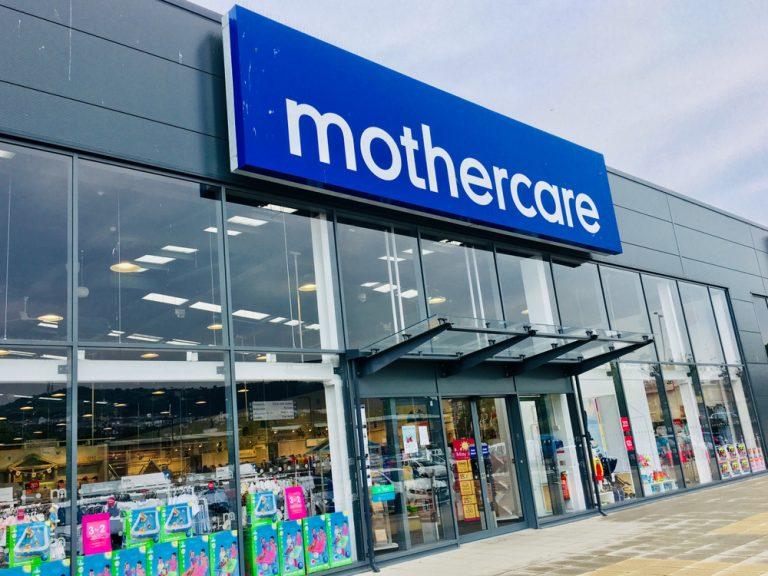
Shares in Mothercare (LON:MTC) were sent crashing on Monday morning following the announcement that its UK business is on the edge of collapse.
Shares in the child care retailer crashed over 25% during Monday morning trading, and were dropping rapidly.
Founded in 1961, it has been publicly listed on the London Stock Exchange since 1971.
Earlier this year in May, the British retailer posted a £66.6 million pre-tax annual loss for 2018, but insisted that the completion of its UK store closure programme left the business on a “sounder financial footing”.
Mothercare said on Monday, however, that it intends to appoint administrators to Mothercare UK and Mothercare Business Services.
“Since May 2018, we have undertaken a root and branch review of the Group and Mothercare UK within it, including a number of discussions over the summer with potential partners regarding our UK Retail business,” the company said in a statement on Monday.
“Through this process, it has become clear that the UK Retail operations of the Group, which today includes 79 stores, are not capable of returning to a level of structural profitability and returns that are sustainable for the Group as it currently stands and/or attractive enough for a third party partner to operate on an arm’s length basis,” the British retailer continued in the statement.
Mothercare added that “furthermore, the Company is unable to continue to satisfy the ongoing cash needs of Mothercare UK.”
In a trading update released earlier this year in April, the company revealed that the rate in which its like-for-like sales were declining had improved when compared to the prior two quarters.
Mothercare is yet another British retailer to battle against the difficult trading conditions to hit the UK high street.
Shares in Mothercare plc (LON:MTC) were sent crashing on Monday morning following the announcement. They were trading at -25.31% as of 08:50 GMT Monday.
Cineworld shares provide value despite debt concerns

In 2017 Cineworld made the bold decision to enter the US cinema market by way of a $3.6 billion acquisition of Regal Cinema Group that created the world’s second largest cinema chain by number of screens.
Cineworld now operates 786 sites and 9,494 screens across 10 countries that, in addition to the core markets of the UK & US, include a number of eastern European countries and Israel.
The acquisition was made by way of a reverse takeover that was funded by debt and a £1.7 billion rights issue significantly altering the group’s financial situation.
Now highly leveraged, the group has suffered from a lack of major film releases of late and the market has punished Cineworld for a decline in sales during H1 2019 which has seen shares give up nearly a third of their value in 2019.
We however see this blip in sales as transitory with a strong Christmas and 2020 film slate promising to increase attendance numbers in the upcoming period and major releases such as the Lion King, Frozen 2 and the latest Star Wars film falling into H2 2019.
When comparing Cineworld with competitors, it’s largest rival in AMC Theatres – which also owns Odeon – similarly experienced a decline in admission numbers during the period.
Cineworld is now heavily reliant on the US with 75% of revenue being earnt from the United States in the first half of 2019 and a strong attendance through H2 2019 could see the group post record figures on the back of a number of blockbuster releases.
At 221p, Cineworld is trading at 10.1x historical earnings representing good value for a company providing a 5.2% dividend that is covered 1.8x.