

Trump Twittering, trade war trickery and banking sector spooking FTSE

We promise the Halloween puns are coming to an end. A topsy-turvy day for Chinese and US relations – and PMIs – was enough to give European indices the jitters. Meanwhile, the FTSE was held down by a strong Sterling and uninspiring developments in the banking sector.
Commenting on the day’s movements up to the final bell, Spreadex Financial Analyst Connor Campbell stated,
“Suffering a mid-morning scare, the markets ended up sinking into the red as Thursday progressed, unaided by Donald Trump’s latest attack on the Fed’s Jerome Powell.”
“After a calm start, China jumped out of a bush screaming boo at the markets on Thursday morning, with Bloomberg reporting that Beijing had cast doubt on a long-term trade deal with the US despite the imminent completion of ‘phase one’ of the agreement.”
“The markets did bounce back from those losses somewhat, lifted by Trump claiming he and Xi Jinping will be signing ‘phase one’ soon”
China and the USA are working on selecting a new site for signing of Phase One of Trade Agreement, about 60% of total deal, after APEC in Chile was canceled do to unrelated circumstances. The new location will be announced soon. President Xi and President Trump will do signing!
— Donald J. Trump (@realDonaldTrump) 31 October 2019
These strides were then almost undone as quickly as they were made, “as the President started shouting on Twitter about the Fed getting everything wrong.”
People are VERY disappointed in Jay Powell and the Federal Reserve. The Fed has called it wrong from the beginning, too fast, too slow. They even tightened in the beginning. Others are running circles around them and laughing all the way to the bank. Dollar & Rates are hurting…
— Donald J. Trump (@realDonaldTrump) 31 October 2019
….our manufacturers. We should have lower interest rates than Germany, Japan and all others. We are now, by far, the biggest and strongest Country, but the Fed puts us at a competitive disadvantage. China is not our problem, the Federal Reserve is! We will win anyway.
— Donald J. Trump (@realDonaldTrump) 31 October 2019
“The Eurozone indices, which were seriously hurt by the initial reports from China, saw the best of it, the DAX and CAC settling into some very mild losses. The FTSE and Dow Jones weren’t so lucky.”
“The Dow found itself teetering back at the edge of 27000 as it lost 180 points, upset by an unpleasant Chicago PMI that unexpectedly fell to a terribly low 43.2 against the 48.4 forecast and the 47.1 seen last month. That comes after a similarly worrisome pair of PMIs out of China overnight.”
“The FTSE was under fire on all sides. Its banking sector remained in disarray as Lloyds Banking Group (LON: LLOY) became the latest financial firm to disappoint, while its commodity stocks were shaken by the global manufacturing slowdown, trade deal doubts and falling profits at Shell (LON: RDSA).”
Elsewhere in the banking sector, Deutsche Bank (ETR: DBK) reported losses during the third quarter.“To make matters worse, the pound continued to rise against the dollar and the euro, up 0.3% against both. That’s due to a mix of region-specific weaknesses for its rival currencies, alongside the frankly naïve idea December’s general election will yield clarity, not chaos.”
Pakistan train explosion: violation of safety regulations leads to 71 casualties
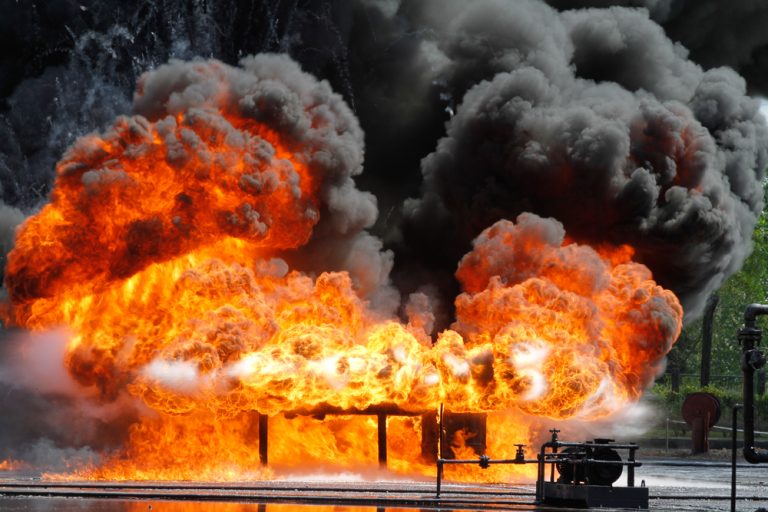
Two cooking stoves exploded on a train in Pakistan, injuring 43 and killing 71 people.
Casualties
Number of casualties is likely to increase as 11 people are in critical condition. Fire caused by the explosion destroyed three carriages on the train. As the fire broke out, many passengers jumped off the train to their deaths. Authorities are still trying to identify the victims who died in the accident. Rail safety concerns increase amid the accident in Pakistan. Further investigation into the explosion will start this week.Safety Regulations
Safety regulations prohibit carrying individual gas stoves on public transportation such as metros, buses and trains. However, most trains in central locations are overcrowded. Passengers and crew members often violate safety regulations. Violations go unnoticed on overcrowded trains. Authorities in Pakistan believe passengers who violated safety regulations by bringing individual gas stoves on the train might have caused the accident. Violations might have gone unnoticed due to lack of safety checks on the train.Rail Accidents
Pakistan’s rail system is infamous for being poorly maintained and outdated. Subsequently, accidents happen often. The explosion raises concerns regarding fire and safety regulations on trains across the world. Earlier this month, the United Kingdom mourned the victims of its worst rail disaster. Two trains collided in Paddington, killing 32 and injuring 250 people. Authorities warned that the accident could have been avoided if companies followed safety regulations. Following the Ladbroke Grove rail disaster, the United Kingdom tightened its fire and safety rules on public transportation.Stricter Safety Regulations
As the number of accidents on vehicles increase, producers of explosive goods such as gas powered stoves are likely to take precautions to avoid liability. The need for stricter fire and safety regulations increase not only in the transportation sector but also across all sectors. There have been increasing reports of explosions caused by technological items such as mobile phones, adaptors and laptops as well as gas powered items.Technological Devices
Two years ago a teenager’s Apple Iphone exploded in East China. Following the explosion, Apple (NASDAQ: AAPL) updated its safety regulations to avoid explosions. Similarly, a Samsung (LON: BC94) phone exploded a year ago, giving the user severe burns. Number of similar incidents is high. For instance, a laptop produced by Dell (NYSE: DELL) exploded. The explosion injured a 72 year old woman. Dell tightened its fire and safety regulations following the accident. More companies are likely to follow Apple and Dell in tightening their safety regulations. Producers of these goods take further measures to avoid accidents. The accident in Pakistan reflects the need for accountability and safety enforcement.Hilton Food Group wraps up quarter in line with expectations

Food packaging business Hilton Food Group plc (LON: HFG) reported performance ‘in line with Board expectations’ as UK and Australian markets yielded good progress.
However, the European market proved challenging for Hilton Food Group. Elsewhere in the food sector, Bakkavor Group Plc (LON: BAKK) and Avangardco Investments Public Limited (LON: AVGR) also faced challenges.
Hilton stated that despite progress relating to the Fresh Food Factory, volumes remained ‘challenged’ in Central Europe. However, the Company has achieved growth in turnover alongside strategic progress in Western Europe and the UK, owing to an agreement with Tesco (LON: TSCO).
In its statement, the Company said,
“In Western Europe we have made good progress in a number of markets. In the UK, we made significant strategic progress with an agreement to pack 100% of Tesco’s red meat.Turnover in the UK has therefore continued to grow driven predominantly by higher Tesco red meat volumes as well as increased Seachill volumes, where we have benefitted this year from the new business wins. Volumes remain relatively flat in both Sweden and Denmark, where we have recently started to sell pizzas. In Holland, although red meat volumes were lower than last year, we have benefitted from vegetarian and vegan products produced by Dalco, with listings now secured with a number of our Retail customers. In addition, we have extended the range of products with existing Dalco customers. The joint venture in Portugal is continuing to show good progress.”
The greatest progress, though, was witnessed in its Australian operations. The Company stated that it saw ‘double-digit volume growth’ from its business, which covered its joint venture in Bunbury and Victoria, and its Queensland site.
The Group concluded by stating that its financial position remains strong and that it continued to explore investment opportunities.
Following the update, the Company’s shares have rallied 1.78% or 18.00p to 1,028.00p per share 31/10/19 15:15 GMT. Analysts from Peel Hunt reiterated their ‘Buy’ stance on Hilton Food Group stock, their p/e ratio is 24.02 and their dividend yield stands at 2.09%.
Spirit AeroSystems buys Bombardier Northern Ireland operations

Bombardier agrees to sell Northern Ireland operations to Spirit AeroSystems for $1.1bn.
Companies proceed to close the deal.
Bombardier
Bombardier (TSE: BBD.B) is a manufacturer of regional airlines, rail train sets and public transport equipment. Although the company is based in Canada, it owns a Belfast based aerospace business. The Belfast based aerospace business owned by Bombardier is the biggest manufacturer in Northern Ireland. Consequently, the business is a crucial asset in the United Kingdom aerospace manufacturing sector. The primary focus of Bombardier is manufacturing engine systems as well as wings. Furthermore, Bombardier sells engine systems and wings to customers such as Airbus (EPA: AIR) and Rolls-Royce (LON: RR). Bombardier started its Northern Ireland operations in the 1930s. Currently, Northern Ireland operations employ more than 3,600 employees. Under its Northern Ireland operations, Bombardier operates in Belfast, Dunmurry and Newtownards.Northern Ireland Operations
Bombardier announced its decision to put Northern Ireland operations on sale in May. The company hopes to sell its Northern Ireland operations. By doing so, it will shift its focus to manufacturing trains and business aircrafts. After five months of remaining on sale, Bombardier agreed on a $1.1bn deal with Spirit AeroSystems. The $1.1bn deal has two components. Spirit AeroSystems pays $500m to purchase Northern Ireland operations. Additionally, Spirit AeroSystems pays $700m of liabilities. Subsequently, Spirit AeroSystems and Bombardier hope to close the deal by 2020.Spirit AeroSystems
Spirit AeroSystems is the world’s largest first-tier aerosystems manufacturer. Although the company is based in Kansas, United States, it operates global branches including one in Scotland. Spirit AeroSystems buys Northern Ireland operations with the hope that it will help the company increase its annual revenue. Spirit AeroSystems believes that Northern Ireland operations have an attractive growth potential.Strategic Purchase
Spirit AeroSystems supplies products to Airbus and Boeing (LON: BOE). Purchasing Northern Ireland operations of Bombardier is a part of Spirit AeroSystems’ strategy. Spirit AeroSystems’ long term strategy is to expand its relations with Airbus and Boeing. Spirit AeroSystems hopes to become the primary supplier of Airbus and Boeing. The purchase is crucial to Spirit AeroSystems long term strategy. Spirit AeroSystems hopes to offer workforce stability as well as a long term business plan focused on growth in Northern Ireland.Mitsubishi Electric profits jolted by economic conditions

Electronics and electrical equipment company Mitsubishi Electric Corporation (LON: MEL) posted its first half results on Halloween, only to see its fundamentals spooked by the turbulent macro economic landscape.
Elsewhere in the tech sector, other companies have fared better. Echoh PLC (LON: ECK) boasted strong first half results, dotDigital Group plc (LON: DOTD) saw their profits surge and ProPhotonix Ltd (LON: PPIX) secured a five year supply agreement.
While the Company’s revenue grew 1% on a year-on-year basis, to 2.18 trillion Yen, their operating profit contracted 9% on-year, to 114 billion Yen.
Further, the Group’s profit before income tax narrowed by 12% to 124 billion Yen and their net profit attributable to stockholders declined by 11% to 91 billion Yen.
Commenting on the economic landscape, the Mitsubishi Electric Corporation statement read,
“The economy in the first half of fiscal 2020, from April through September 2019, saw a slower growth in China, with the corporate sector experiencing a slowdown in exports and capital expenditures for fixed assets. In the U.S., the economy continued to grow due primarily to buoyant personal consumption, but the corporate sector began to slow down mainly in capital expenditures. In addition, the economic recovery became slower in Japan and Europe, with Japan seeing a decrease in production and exports, and Europe experiencing a fall in production.”
The Company added that it had revised its 2020 outlook, and operationally, it announced it was to open a London office to support energy efficient buildings.
The Group’s shares have rallied 0.59% or 9¥ to 1,572¥ per share 31/10/19 09:48 GMT. Neither a p/e ratio nor a dividend yield are available.
SIMEC Atlantis soars with acquisition and contracts
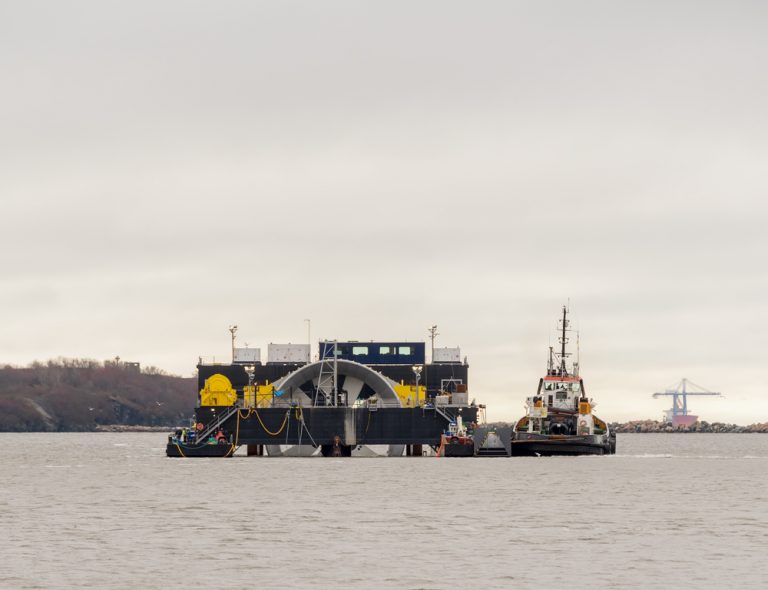
Vertically integrated turbine supplier and tidal power project operator SIMEC Atlantis Energy (LON: SAE) saw its share price rocket on Thursday, following a series a series of promising operational updates.
Elsewhere in the sector, there have been developments and operational progress from SIMEC’s counterparts. JLEN (LON: JLEN) continues to gain momentum, Active Energy Group (LON: AEG) an acquisition in North Carolina, Velocys PLC (LON: VLS) commercialised alternative fuels and AFC Energy plc (LON: AFC) developed a hydro-electric vehicle charger.
Highland Green Renewables acquisition
This morning, SIMEC Atlantis began the day by announcing its acquisition of Highland Green Renewables, from SIMEC Energy. HGR has consented over 65 hydro schemes, built more than 45 hydro schemes and provides operation and maintenance services to more than 45 UK hydro schemes. The Company was acquired by SIMEC Atlantis for a nominal fee of £1.00. It will continue its regular operations, while its senior management team will be integrated into the Atlantis senior management team, and will provide the Company with “immediate, positive cash flow”. Commenting on the acquisition, Atlantis CEO Tim Cornelius,“We are delighted to welcome the GHR team to Atlantis. We are building a highly experienced energy development and asset management team within Atlantis and GHR brings vast experience in project feasibility analysis, design, consenting, construction management, operations and maintenance and asset enhancement and optimisation.”
“This restructured transaction is the right outcome for Atlantis. It provides us with more near-term cash to deploy on our flagship Uskmouth and MeyGen projects which will deliver the largest possible returns for investors. We have acquired a world class, cash flow positive, profitable hydro development, consulting and O&M business which we will integrate with our existing engineering services business in Scotland to create one of the most experienced project development teams in the UK. It will allow us to focus on high margin, development opportunities such as the Uskmouth conversion project where we can deliver enhanced shareholder returns.”
“We will retain all the key staff, IP and know how that has made the GHR business the first-class business it is today. The restructured transaction validates the commitment SIMEC is making to building a world leading project development company with the Atlantis management team and we are very grateful for their continued financial, commercial and supply chain support.”
Kyuden Mirai Energy supply contract
Following its first update, SIMEC continued its lively morning by announcing that it had been awarded a contract to supply tidal generation equipment and offshore construction services to Kyuden Mirai Energy in Japan. The project has a budget of 1.8 billion Yen and the system will be deployed at site in the Nagasaki Prefecture. The delivery and installation of the generator is expected by Q3 2020, with completion and demonstration forecast for Q1 2021.Offering insight on the update, Tim Cornelius stated,
“SIMEC Atlantis has been at the forefront of marine energy for the past decade, building a strong portfolio of projects across Europe and around the world. Japan’s decarbonisation ambitions and world-leading tidal resource combine to create huge potential for Atlantis’ tidal generation systems in the future.”
“This is our largest awarded export contract to date and our partnership with Kyuden Mirai Energy is representative of the leadership position SIMEC Atlantis has taken in exporting Scottish know how and expertise into new international markets.”
Uskmouth Power Station combustion system design contract
After a ‘competitive’ deliberation, SIMEC awarded Mitsubishi Hitachi Power Systems Europe GmbH a contract to conduct the design and development of the combustion system for its Uskmouth Power Station conversion project. The contract covers the completion of industrial scale milling tests on the fuel pellets, completion of industrial scale combustion tests on the fuel and completion of Uskmouth furnace burner system design. Providing input for the Company’s third announcement of the morning, David Taaffe, Director of Projects of SIMEC Atlantis, commented,“After investing more than £2m over the past 12 months in development of the fuel specification required for combustion at Uskmouth and the conversion project’s design and consents, we are now very excited to enter into this important partnership with Mitsubishi Hitachi Power Systems, one of the world’s largest and most experienced thermal generation solution and equipment providers. The project is well on track to contract the conversion works on an EPC basis with terms and conditions suitable for project finance. Completion of this contract with MHPS will be a key enabling step towards that goal. The Atlantis project team at Uskmouth and our fuel partners SSF are looking forward to working closely with MHPS on the final industrial scale tests of the fuel.”
Investor notes
Following the updates, the Company’s shares rallied 14.98% or 1.52p to 11.67p per share 31/10/19 12:26 GMT. Neither a p/e ratio nor a dividend yield are available for SIMEC Atlantis Energy stock.Cambridge Analytica scandal costs Facebook £500k

Following the Cambridge Analytica scandal in 2015, Facebook went through an investigation into the use of private data.
Facebook
The Information Commissioner’s Office imposed a £500k fine on Facebook (NASDAQ: FB) for violating data privacy rules. Facebook did not admit liability for violating data privacy rules. Facebook appealed the fine in order to avoid the cost. However, the firm dropped its appeal later on during the appeal process. As a result, Facebook agreed to pay the fine.
The Cambridge Analytica Scandal
The Cambridge Analytica scandal caused fear over social media firms’ ability to influence political campaigns by using personal data.Concerns
The deputy commissioner for the Information Commissioner’s Office raised concerns regarding exposing citizens’s private data to influence public opinion as well as political campaigns. Fear of social media influence on political campaigns increase amid expectations of an early general election in the United Kingdom. The £500k fine imposed on Facebook serves as an example for other social media companies.Data Protection
The cost of violating the privacy of personal data disincentivizes social media companies who breach data privacy rules. In a time of advanced technological development, protection of data privacy is crucial to democracy. Breach of personal data protection does not only violate customer rights but also threatens democratic governance.Improvements
Facebook pledges to strengthen its measures to restrict the access political advertisers and app developers have to customers’ personal information. However, the measures taken by Facebook does not solve certain problems. For example, app developers who accessed private data without permission before 2015 retained the private data they accessed. According to Sky News, app developers accessed the personal data of more than 87 million Facebook users.Political Implications
As the Cambridge Analytica scandal revealed, Donald Trump’s election campaign used these data to help President Donald Trump in the 2016 presidential election.Future of Data Protection
As the United Kingdom general election gets closer, social media companies are likely to approach issues of data protection carefully. Social media companies such as Twitter (NYSE: TWTR) and Snapchat (NYSE: SNAP) work on improving their data protection systems. Following Facebook’s experience of paying £500k for violating data privacy, more social media companies are likely to tighten their data protection systems to avoid fines.IAG Q3 profits hit by BA strike
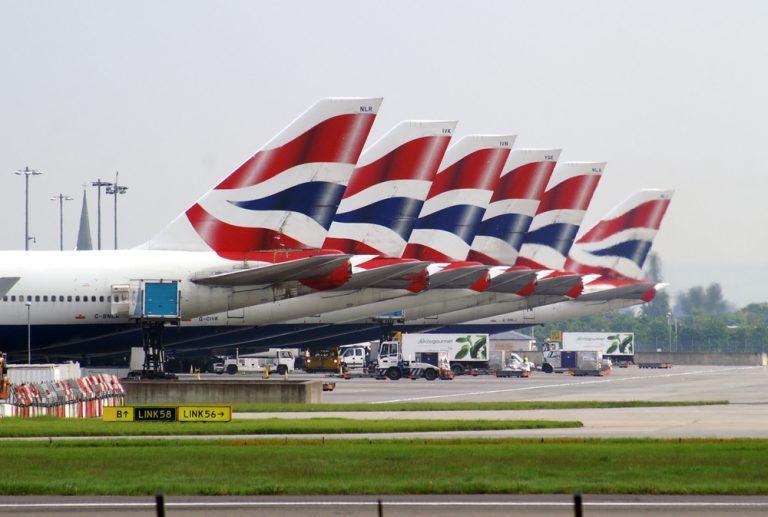
International Airlines Group (LON:IAG) took a hit on Thursday after industrial action from pilots “heavily impacted” its third quarter.
Shares in the owner of British Airways were up during trading on Thursday.
Representing over 10,000 pilots, the British Airline Pilots’ Association (BALPA) went ahead with strikes in September and caused a large amount of flights to be cancelled.
International Airlines Group said on Thursday that the industrial action by the pilots, in addition to other disruption, impacted operating profit by €155 million during the quarter.
International Airlines Group, which recently announced that it would commit to achieving net zero carbon emissions by 2050, said that third quarter operating profit amounted to €1.4 billion.
International Airlines Group added that it expects 2019 operating profit before exceptional items to be €215 million lower than 2018.
“Passenger unit revenue is expected to be slightly down at constant currency and non-fuel unit costs are expected to improve at constant currency,” International Airlines Group added.
Indeed, at the end of September, the company reconsidered its guidance for the full year following the British Airways industrial action and the additional costs incurred.
“In quarter 3 we’re reporting an operating profit of €1,425 million before exceptional items, down from €1,530 million last year,” Willie Walsh, IAG Chief Executive Officer, said in a company statement.
“These are good underlying results. As we said in September, our performance has been affected by industrial action by pilots’ union BALPA and other disruption including threatened strikes by Heathrow airport employees,” the Chief Executive Officer continued.
“In addition, our fuel bill increased by €136 million during the quarter with fuel unit costs up 4.2 per cent at constant currency.”
The Chief Executive Officer said: “At constant currency, passenger unit revenue decreased by 1.1 per cent while non-fuel unit costs were up 1.1 per cent”.
Shares in International Airlines Group (LON:IAG) were trading at +1.00% as of 12:53 GMT.
Indivior report third quarter profit drop

Indivior PLC (LON: INDV) have reported a third quarter profit fall, after their third quarter trading update was released Thursday morning.
Revenue was hurt by the launch of a generic competitor to its opioid addiction treatment drug Suboxone Film.
British based Reckitt Benckiser Group Plc (LON: RB) have seen similar struggles to Indvior after they cut their full year forecast earlier this month.
The firm reported that net revenue had dropped 19% to $199 million from $245 million.
Additionally, the company posted a $56 million pretax profit for the three months ended September 30, 18% lower than the $68 million profit posted the year before.
Selling, General & Administrative expenses fell 21%, while research & development expenses fell 31% to $11 million from $16 million.
For the nine months ending September 30th, pretax profit fell 14% to $222 million, versus $257 million.
Net revenue was down 15% at $652 million from $768 million, which creates worries for investors and shareholders.
The US based firm have their operating headquarters in Virginia, and 2019 has represented a tough period for the medical supplier outside of trading figures.
The Federal Grand Jury in Virginia, charged Indivior for the for a number of charges including “” health care fraud, wire fraud, mail fraud, and conspiracy”.
The charges related to Indivior’s marketing, promotion, and safety claims around its addiction drug Suboxone – as well as overprescription of the drug by doctors.
At present, the US Department of Justice intends to recover $3 billion worth of forfeitures from Indivior.
“The company believes it has strong defences to the government’s charges and will vigorously defend itself. It is not possible to predict with any certainty the potential impact of this litigation on the group or to quantify the ultimate cost of a verdict or resolution,” said Indivior.
Net income is predicted to be $160 million to $190 million, a huge increase compared to the $80 million to $130 million prior forecast.
Chief Executive Shaun Thaxter said: “Indivior has delivered solid results ahead of plan this year and this momentum has continued through the third quarter. Despite the pressure from buprenorphine/naloxone film generics, Suboxone Film share remained above observed analogues and exceeded our plans.
Thaxter added “”This, combined with Sublocade net revenue growth, initial contribution from Perseris and our ongoing expense discipline, has allowed us to raise our 2019 financial guidance and to further build our cash position to over USD1 billion. More positively, our year-to-date performance has put Indivior in a position to reinvest some of the upside to further support the future growth of Sublocadeand Perseris.”
He concluded “We remain acutely aware of the challenges in the marketplace and the legal uncertainties. We are proactively managing these risks, where possible, as evidenced by our decision to discontinue production of the authorized generic buprenorphine/naloxone film. This followed the recent passage of legislation that, while we believe unintended, would have resulted in the unsustainable position of Indivior selling Suboxone Film at a negative gross profit through most US government channels.”
Shares of Indivior are trading at 42p per share, crashing 7.3%. 31/10/19 12:43BST