
Imperial Brands elect new Chair after poor yearly performance

Imperial Brands Plc (LON: IMB) have updated shareholders by saying that the yearly trading figures were poor as sales of Next Generation products slumped, leading to the appointment of a new chair.
This comes at a tough time in trading for Imperial Brands, that have seen their shares become very volatile since the slump earlier in May.
For its year ended September 30, the tobacco company’s pretax profit dropped 7.1% to £1.69 billion from £1.82 billion, which concerned senior stakeholders.
The profit decline was worsened by a rise in distribution, advertising & selling costs to £2.3 billion from £2.0 billion and an increase in administrative & other expenses to £1.75 billion from $1.6 billion.
This lead to a slump in operating profit by 8.3% to £2.2 billion from £2.4 billion.
However, revenue rose 5.1% on a positive for Imperial Brands, growth from both tobacco and NGP sales. NGP includes products such as Imperial Brands’ Blu e-cigarette.
The company lifted its annual dividend by 10% in the year to 206.6p per share from 187.8p the year before.
Forecasting further, Imperial brands expect ‘modest revenue growth’ from Tobacco with strong cash flows and high margins.
Its NGP business is expected to see more revenue growth, with “strong growth prospects contributing to margins and cash returns over the medium term”.
Chief Executive Alison Cooper said: “2019 has been a challenging year with results below our expectations due to tough trading in Next Generation Products. We are implementing actions to drive a stronger performance in the coming year.
Cooper added “Our resilient tobacco value creation model continues to produce high-margin sales growth and is well-placed to deliver sustained profitable growth in the years ahead”
“Although we grew NGP revenues by around 50%, this was below the level we expected to deliver. Our delivery was also impacted by an increasingly competitive environment and regulatory uncertainty in the USA. Growth in Europe was also slower, despite achieving leading retail shares in several markets. We have taken the learnings from this year to reset our NGP investment plans for 2020, prioritising the markets and categories with the highest potential for sustainable, profitable growth. We will scale up investment as the visibility on returns and regulatory uncertainties improves.”
Imperial Brands announced that Cooper would be stepping down in October and will be replaced when a suitable candidate is found.
On Tuesday, the company announced the appointment of a new chair as well. Senior Independent Director Therese Esperdy will succeed current chair Mark Williamson with effect from January 1, 2020.
She joined the board in May 2019 and also holds roles as a non-executive director at National Grid PLC (LON: NG) and Moody’s Corp (NYSE: MCO).
“Therese has significant international investment banking experience having held a number of senior roles at JP Morgan (NYSE: JPM) including Global Chairman of JP Morgan’s Financial Institutions Group, Co-Head of Asia-Pacific Corporate & Investment Banking, Global Head of Debt Capital Markets, and Head of US Debt Capital Markets. She began her banking career at Lehman Brothers and retired from JP Morgan in 2015,” Imperial Brands noted.
Shares of Imperial Brands are trading at 1738p per share. 5/11/19 10:52BST.
Filta expect consistent second half profits

Filta Group Holdings PLC (LON: FLTA) have expected their second half 2019 profits to be in line with their first six months of trading, as they released their most recent trading statement on Tuesday morning.
The filtration-focused engineering firm expects adjusted earnings before interest, taxes, depreciation & amortisation to be “similar” to the £1.7 million reported for the first six months of the year.
This statement was released after planned efficiencies from its £8.1 million acquisition of Watbio Holdings Ltd in December were slower to be realised in the second half of 2019.
As a result, Filta have had to change their strategy in order to compensate for this slowdown.
Management decided to divert resources to catch up on an order backlog in its UK Fat, Oils & Grease unit.
In addition, a small installation operation is also expected to be delayed, until early 2020.
It has been necessary to divert resource to catch up on an order backlog in our FOG businesses and a small amount of installation work, which had been expected in the fourth quarter, has been delayed into 2020, the company said.
‘Additionally, over the last 3 months we have invested in additional personnel to maximise the opportunities in the UK,’ it added.
Despite this, the Watbio acquisition has “greatly strengthened” the market position on Filta and brought some “major” national contracts.
The firm remained confident about their 2019 forecast, saying that trading had stayed consistent with expectations.
This comes at no surprise looking at the global oil market, where big names such as Royal Dutch Shell plc (NYSE: RDS.A) have seen their profits sink and SABIC (TADAWUL: 2010) reported an impairment loss of $400 million.
Filta alluded to the fact that order books continued to remain strong, and new franchisees continue to show interest and the firm remains confident of delivering further growth.
“With completion of the Watbio integration in sight and our franchise operations performing well across all territories, 2020 is set to be a year of significant progress for the business,” Chief Executive Officer Jason Sayers said. “We shall update the market further in due course.”
Shares of Filta plummeted 18.24% as a result of this morning’s trading update.
Shares are currently trading at 157p per share. 5/11/19 10:34BST.
UK retail sales rise 0.6% in October

New data released on Tuesday revealed a rise in UK retail sales in October as retailers began an “extraordinary period of discounting”.
The British Retail Consortium said on Tuesday that total sales rose 0.6% year-on-year in October and like-for-like sales increased 0.1% year-on-year.
However, the Chief Executive of the British Retail Consortium warned that the longer term trend “remains bleak”.
“Unfortunately, the longer term trend remains bleak with the 12 month average sales growth falling to a new low of just 0.1%,” Helen Dickinson OBE, Chief Executive of the British Retail Consortium warned.
“With Brexit still unresolved and a December election creating new uncertainties, retailers will be looking nervously at the months ahead,” the Chief Executive continued.
Indeed, the UK was supposed to depart from the European Union on the 31st October, but was granted yet another extension to the deadline.
Meanwhile, a general election is set to take place later this year.
The Chief Executive said: “Nonetheless, the General Election offers politicians of all parties an opportunity to protect local retail jobs, local shopping locations and the local communities they support. MPs should build on the recent Treasury Select Committee Report and commit to reforming the broken business rates system. The first step would be to scrap the so-called downwards transition, which takes £1.3bn from retailers and redistributes most of it to other industries. This in turn holds back retailers’ investment in their physical and digital offerings, and investment in the three million dedicated people who work in the industry.”
Paul Martin, UK Head of Retail at KPMG, was optimistic, celebrating the growth in like-for-like sales.
“Growth of 0.1% like-for-like in October would normally be little cause for celebration, but after several disappointing months, any tiny hints of growth are most welcome. Retailers have clearly been peddling hard to win over disengaged shoppers, especially given continued Brexit uncertainty,” Paul Martin commented on the data.
“Aggressive promotion to move stock has seemingly benefited fashion sales, both on the high street and online. However, the jury’s still out on whether that progress will benefit the retailers’ bottom line,” Paul Martin continued.
Paul Martin said: “As trading updates from key retailers makes painfully clear, the line between sales growth and profitability is wafer thin. Increased costs – in some cases including further stockpiling in anticipation of Brexit – will impact margins. It is clear that with an ongoing lack of consumer confidence there is little room to create consumer demand with slashed prices these days.”
News emerged only yesterday that Mothercare’s UK business (LON:MTC) is on the edge of the collapse as it prepares to appoint administrators to Mothercare UK and Mothercare Business Services.
Stryker set to purchase rival Wright Medical
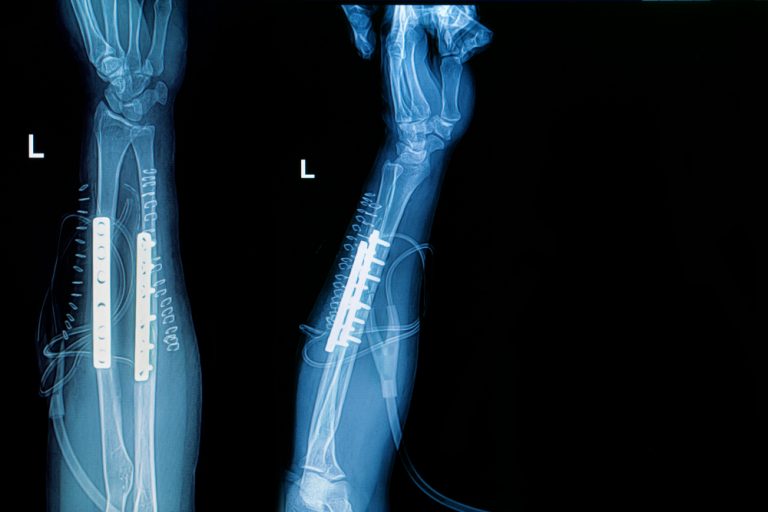
Stryker Corporation (NYSE: SYK) are set to purchase rival Wright Medical (NASDAQ: WMGI) in a $4 billion cash deal, to gain access to the fast-growing upper-body joint implants business.
Wright Medical, one of the small competitors to titan Stryker recorded strong trading figures in 2018, showing why Stryker were keen on the deal.
Wright reported sales of $836 million last year, and are among the top makers of implants to treat upper-body joint injuries such as shoulder or wrist, as well as lower body including foot and ankle.
Wells Fargo (NYSE: WFC) analyst Larry Biegelsen said “the deal would give Stryker a leading position in the shoulder market, which has been a major gap in the device maker’s orthopaedic portfolio”
Stryker may have to make further divestments in its ankle implant to avoid clashes with Wright medical, as as Wright have a near 70% share of the total ankle replacement market.
“Stryker will meaningfully bolster its ability to compete and innovate in the nearly $2 billion global shoulder market,” Chief Executive Officer Kevin Lobo said in a conference call with analysts.
The move comes at no surprise after rival firm Boston Scientific Corporation (NYSE: BSX) acquired British drugmaker BTG Plc last year in a $4.2 billion buyout.
Stryker’s offer for $30.75 per Wright share represents a premium of 39.7% which will feed the appetite for shareholders.
Stryker will also gain access to Wright Medical’s biologics portfolio including its Augment drug-and-device combination product used for bone repair, and its Cartiva implant for foot and ankle.
Including debt, the deal values Wright at about $5.4 billion and is expected to close in the second half of 2020.
Interestingly, Stryker have said that their business could be far from done as expansion into the orthopaedics market.
Seniority commented that a search for new acquisitions will continue to take place, but only on a small scale.
Shares in Stryker are currently trading at $203 per share, whilst Wright Medical shares have climbed 29.67% to trade at $28.
IAG set to purchase Europa Air

International Consolidated Airlns Grp SA (LON: IAG) are set to buy Europa Air from Spanish travel operator Globalia for a reported €1 billion, this gives IAG further exposure into the Spanish market.
IAG, who also own British Airways, Iberia and Aer Lingus said the move will transform its Madrid hub into a “true rival” for other other major European airports such as Amsterdam, Frankfurt, London Heathrow and Paris Charles De Gaulle.
IAG are set to initially retain the Air Europa brand, as the company looks to operate as a standalone profit centre within the Iberia airline business.
Europa Air does have a reputable name in the travel industry, as they fly to 69 domestic and international locations including European routes and long haul routes such as North America and the Caribbean.
Having carried 11.8 million passengers with its fleet of 66 aircraft during 2018, the Spanish private airline achieved full-year revenue of €2.1 billion and an operating profit of €100 million.
The acquisition has only just entered its initial phases, and completion is expected in the second half of 2020.
The deal follows a setback in Latin American business for IAG as the Chile Supreme Court ruled against operations allowing it to bolster cooperation with partners in the oneworld airlines alliance.
As a result, LATAM Airlines (NYSE: LTM) announced plans to leave the alliance, to pursue a tie-up with SkyTeam member Delta Air Lines (NYSE: DAL).
Iberia chief executive Luis Gallego said: “This is of strategic importance for the Madrid hub, which in recent years has lagged behind other European hubs. Following this agreement, Madrid will be able to compete with other European hubs on equal terms with a better position on Europe to Latin America routes and the possibility to become a gateway between Asia and Latin America.”
This deal has alerted competitors, Ryanair’s (LON: RYA) CEO Michael O’Leary has said his company will ask the UK’s market watchdog to force IAG to make divestments as part of its Air Europa takeover, a deal he said would be bad for competition.
Shares of IAG have spiked 1.73% after this merger hit investors, and shares are trading at 551p. 4/11/19 14:52BST.
New fracking ban sinks IGas and Egdon Shares

Following fracking bans from the UK government, shares of IGAS Energy PLC (LON: IGAS) and Egdon Resources Plc (LON: IGAS) have sunk during Monday trading.
Both companies have looked at the impact of the ban, with IGAS saying that the ban will not affect its existing licence but operations may slow.
Egdon Resources PLC is assessing the impact from the government temporarily halting the controversial drilling practice.
Other firms in the industry such as Union Jack Oil PLC (LON: UJO) and Europa Oil & Gas Holdings PLC (LON: EOG) have not been affected as they do not conduct fracking procedures.
The UK government announced a plan to temporarily ban fracking after a report by the Oil & Gas Authority found it is not currently possible to accurately predict the probability or magnitude of earthquakes linked to fracking operations.
Despite this ban, IGAS have been quick to respond by saying that production and operating expenditure remains in line with expectations for the full-year.
The company pointed out the potential of its discoveries in the East Midlands, saying it has 270 trillion cubic feet of natural gas, which it says could satisfy the UK’s gas demand for 19 years.
Edgon Managing Director Mark Abbott said: “We will now take some time to review the detail of the OGA report and the government announcement of a temporary moratorium and its implications for our business before reporting to shareholders in due course.”
Egdon added: “Exclusivity has been granted to the counterparty subject to a definitive farm out agreement or other definitive legal agreement being entered into by January 19, 2020 and completion occurring by April 19, 2020.
Adding “Given the exclusivity arrangement, discussions and negotiations with other parties have been suspended and the data room closed while the agreement is in place.”
One positive for both IGAS and Egdon is that the ban is a temporary measure, and operations may continue in the future.
The UK government however, did not specify whether this ban was intended for short or long term measures, clouding the future vision for both firms.
As a result of this ban, shares in both companies have sunk on Monday.
Shares of IGAS are trading at 32p per share, crashing 11.09%, meanwhile Egdon shares plummeted 14.54% trading at 3.72p per share. 4/11/19 14:26BST.
Update: Antofagasta cut annual production guidance

Antofagasta plc (LON: ANTO) have cut their annual production guidance for 2019, despite full operation of all its mines after political unrest in Chile.
Only a few weeks back, Antofagasta were locked in a battle between workers and unions, causing production operations to slow as a result of miner strikes.
The unrest had affected primarily its Los Pelambres mine where the access road was blocked and there was some damage to infrastructure around the the mine.
Antofagasta run four mines in Chile, employing 19,000 people. The last few weeks have seen the firm in a political battle with workers over breaches of working rights legislation.
Its flagship mine Los Pelambres is 240 km (150 miles) northeast of Santiago, the capital which has seen anti-government demonstrations, with protesters demanding an end to low wages and high living costs.
On Monday, the FTSE100 listed firm (INDEXFTSE: UKX) doubled its production cut to 10,000 tonnes pointing to a bigger hit from the workers’ protests.
The firm also added that its mines in the South American country have resumed operations. In addition, labour negotiations at the Antucoya mine have been successfully concluded, Antofagasta said.
This has resulted in the end of the strike which started on October 16, but not before 4,000 tonnes copper output was lost.
For 2019 as a whole, the London-based firm now expects production of between 750,000 and 770,000 tonnes. This is lower than the 750,000 to 790,000 tonnes forecast given previously.
In 2018, total copper production totaled to 725,300 tonnes which shows little progress year on year.
Last week, BHP (LON: BHP) said its Escondida copper mine, the world’s largest, was operating at a “reduced rate” after union workers walked off the job for part of the day in solidarity with the anti-government protest movement.
The slowed production for Antofagasta may not be as significant as made out to be as competitors such as Centamin (LON: CEY) also experienced output declines.
In its most recent update, Antofagasta said it was in talks with a new supervisors’ union at Antucoya and were expected to conclude by the end of the year.
Shares of Antofagasta currently trade at 899p per share, rising by 1.01%. 4/11/19 13:47BST
LightwaveRF announce annual loss expectations

LightwaveRF (LON: LWRF) have announced expectations for an annual loss in their most recent trading update, and that the loss made will be ‘materially below market expectations’.
The Birmingham-based home automation technology company has warned shareholders that losses are expected after revenue for its latest quarter was “so significantly” under what the board had anticipated.
This comes as a shock for shareholders, as the board at LightwaveRF seemed confident at the start of 2019 that profits were set to be delivered.
LightwaveRF, which made a loss of £2.54 million for the year to 30 September 2018, said it had expected its full-year revenue to double following the first three quarters of the year.
However, following “one-off” issues in the fourth quarter to 30 September, the AIM l(INDEXFTSE: AXX) listed business said its “substantial progress” had been “nonetheless been held back”.
Chief executive Jason Elliott added: “”Following the excellent progress made during the first three quarters of the financial year, the last quarter presented us with a number of challenges. Whilst revenue is significantly higher than last year, the expected full year results are still frustrating following the substantial progress made”
Elliot concluded “As well as continuing progress with direct to consumer and direct to trade sales, supported by our LightwavePRO training scheme, we anticipate early further progress with some major customer initiatives and revenue soon returning to run rates seen prior to Q4”.
In 2018, the automation firm made a full year revenue of £2.8 million in 2018.
After potential of a deal with Google (NASDAQ: GOOG) back in July hit investor news, shareholders have seemed skeptical about the ability of LightwaveRF to deliver profits.
In a statement the business said: “In order to meet the working capital, marketing and development needs arising from the revenue growth in the first three quarters referred to above, the company had hoped that it would have raised funds by the issue of further equity under the then existing authorities, granted at the company’s last annual general meeting, and signed the inventory finance facility with ESCS earlier than was the case.
Additionally, the firm added “These events occurred later than expected, on 16 August and 4 September, respectively, but with the former requiring a waiver of Rule 9 of the Takeover Code and publication of a circular to shareholders”
“These delays impacted cash availability and limited the company’s ability to invest in key areas, including digital marketing, and consequently revenue in Q4.”
Lighwave RF concluded “”The Lightwave offering and our strong customer support continues to be well received in our markets.”
As a result, shares of LightwaveRF crashed 30.86%.
Shares are currently trading at 4.24p per share. 4/11/19 13:20BST.
GVC shares sink, despite new senior appointment

GVC Holdings Plc (LON: GVC) have appointed the current chair of Homeserve PLC (LON: HSV) as its new non-executive chair, amidst struggling business performance and stagnated revenue growth.
John Michael Barry Gibson, has been appointed non-executive chair of the FTSE250 (INDEXFTSE: MCX) listed GVC holdings after working on the board of Homeserve since 2004.
Gibson exceeds Lee Feldman, who is set to depart in February 2020 after chairing GVC for 11 years, and serving on the board for 15 years.
Gibson will join the board as a non-executive director with immediate effect before taking over from Feldman.
GVC noted Gibson’s “extensive experience” within the gambling sector, including as a non-executive director at William Hill PLC (LON: WMH) and senior independent director at bwin.party digital entertainment PLC.
He was also, GVC noted: “group retailing director at BAA PLC, group chief executive of Littlewoods PLC , non-executive chairman of Harding Brothers Holdings Ltd, and non-executive director of both Somerfield PLC and National Express PLC.”
The appointment of Gibson into this role shows an appointment of experience and business understanding. This does look like a promising appointment and one that could steer GVC into the right direction.
GVC Senior Independent Non-Executive Director Stephen Morana said: “Our criteria for the new chairman included significant gambling sector experience, a demonstrable track-record of success on a range of high-profile public company boards, and a deep understanding of the evolving corporate governance landscape. After an extensive search, Barry stood out as exceeding all of those criteria, and we are delighted that someone of his calibre and experience is joining GVC to help us realise our ambitious plans for future growth.
“On behalf of the board I would also like to thank Lee Feldman for playing such an instrumental role in GVC’s transformation from a small AIM listed business to a major Main Market, premium listed company. We wish him the very best for the future.”
The appointment will also look to restore competitiveness in the industry, following changes from Betfair and Paddy Power changing their brand to Flutter Entertainment (LON: FLTR) back in May in order to unify the brands against big competitors.
Shares in GVC sank 8.05%, trading at 825p per share. 4/11/19 13:03BST.
Aukett Swanke forecast strong end to 2019 trading

Aukett Swanke (LON: AUK) have forecasted strong trading figures, with an expectation to deliver annual profit following a strong end to the year.
For the year ended September 30, the London-based firm confirmed it expects to deliver a profit.
This was after the second half of the year was profitable, allowing it to recover from the loss reported in the first half of the year.
Year end cash holdings totaled to £1.1 million, up from £710,000 the year prior.
The figures give a strong outlook for shareholders, as the potential of Aukett Swanke is being realized with these recent figures.
“The recovery from the large loss in 2018 is a tribute to the perseverance of the staff in all of our operations and in the internal rigours of reducing cost during a difficult trading period,” Chief Executive Officer Nicholas Thompson said.
Aukett has sold its Moscow subsidiary Aukett Swanke after deeming it would be better managed locally. The unit will continue to operate under the Aukett Swanke brand.
“The process to find a suitable successor to carry on the Russian business in our name has taken some considerable time to realise,” Thompson added. “Critically, the sale has safeguarded the interests of our staff in Moscow, avoids a costly closure process and provides some upside for shareholders through the ongoing licence arrangement. We are pleased with the outcome”.
The recent announcement shows positive change by management at Aukett, in an attempt to prove to shareholders that there is potential for this young architecture firm.
In January this year, the share price of the firm fell when it posted a loss of £2.54 million for the year to 30 September, compared to a loss the year before of £325,000.
Additionally, the firm added that trading in the new financial year has been stable though the company.
However, Aukett said it remains vigilant regarding possible adverse impacts as a result the forthcoming General Election and prolonged Brexit negotiations.
Following this announcement, shares of Aukett jumped 18.64% to trade at 1.75p per share. 4/11/19 12:47BST.