
WeSwap reaches £250 million in swapped currency

WeSwap, the world’s first peer-to-peer currency exchange platform, has hit £250 million in swapped currency.
WeSwap announced that £250 million in global currency has been traded since it first launched, making the company the first peer-to-peer travel money fintech in the UK to do so.
Based in London and launched in 2013, WeSwap is one of the UK’s leading high-growth fintech start-ups. It was recently named a “standout” prepaid travel money card by the Guardian Money.
Financial technology (fintech) is the technology that competes with traditional financial methods in the delivery of financial services. In addition to WeSwap, fintech companies such as Crowd Cube, Monzo and Funding Circle (LON:FCH) are leading the way, with Funding Circle even being the first UK fintech company to be listed on the London Stock Exchange.
Since WeSwap first launched, the company predicts to have saved its users roughly £9 million in what would have been lost in fees abroad and weak exchange rates.
Spending abroad can be rather costly for British consumers who are subject to high card fees. In 2018 alone, out of the £46 billion spent abroad by British consumers, WeSwap said that £28 million would have been lost in card fees.
“We’re incredibly proud to hit £250million swapped, but we’re not stopping there. The outbound travel market is enormous and increasing every year – consumer needs when they spend abroad are also rapidly evolving,” Jared Jesner, CEO and Founder of WeSwap, said in a statement.
“WeSwap plans to be there throughout holidaymakers’ journeys, and we’re currently working on pilots for new additions to the WeSwap portfolio like money transfers, fair lending for holidays, insurance and a subscription model,” the CEO and Founder continued.
The company has always planned to expand internationally, said Jared Jesner, “and now we’re on the cusp, with concrete plans in place to enter a major new international market.”
WeSwap believes that it is firmly established as one of the UK’s main innovators in foreign exchange, with over 30 travel industry partnerships, API integrations and a growing portfolio of travel-money products.
Conservative leadership contest: Sajid Javid knocked out of race
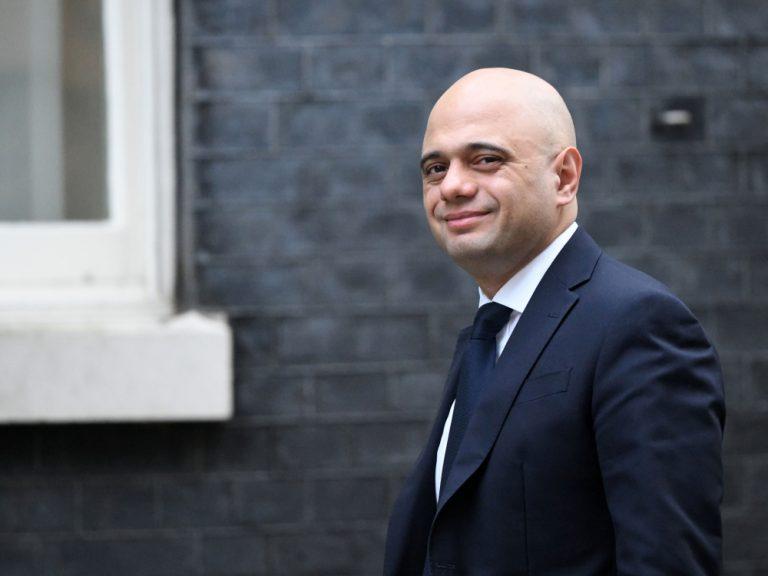
The Conservative leadership race is reaching its final stages, with Sajid Javid knocked out in the fourth round.
The Home Secretary received the least amount of votes, with 34 votes, leaving behind three other contenders.
Foreign Secretary Jeremy Hunt fell to third place with 59 votes, whilst Environment Secretary Michael Gove slipped into second place with 61 votes.
This will prove a particular disappoint to Hunt, who had been holding on to second place for the last few weeks.
Meanwhile, Former Mayor of London, Boris Johnson, the clear front-runner, secured 157 votes.
Sajid Javid managed to knock out Rory Stewart earlier this week, an outsider candidate whose campaign had gained considerable momentum in recent weeks.
Taking to twitter to thank his supporters, Javid tweeted the following:
Both the Gove and Hunt campaign teams will be scrambling to pick up votes from knocked out candidates before the second vote this evening.
The Conservative leadership contest should reach a finale on July 22 when the new PM will be selected.
Theresa May’s successor will be under pressure to deliver on Brexit, as well as whether to hold an election to secure a public mandate.
“Truly humbled by the support I have received from colleagues and Conservatives around the country. We ran to win, but I am incredibly proud of the race we have run together – #TeamSaj! Thank you”
Bank of England cuts growth forecast, leaves rates on hold
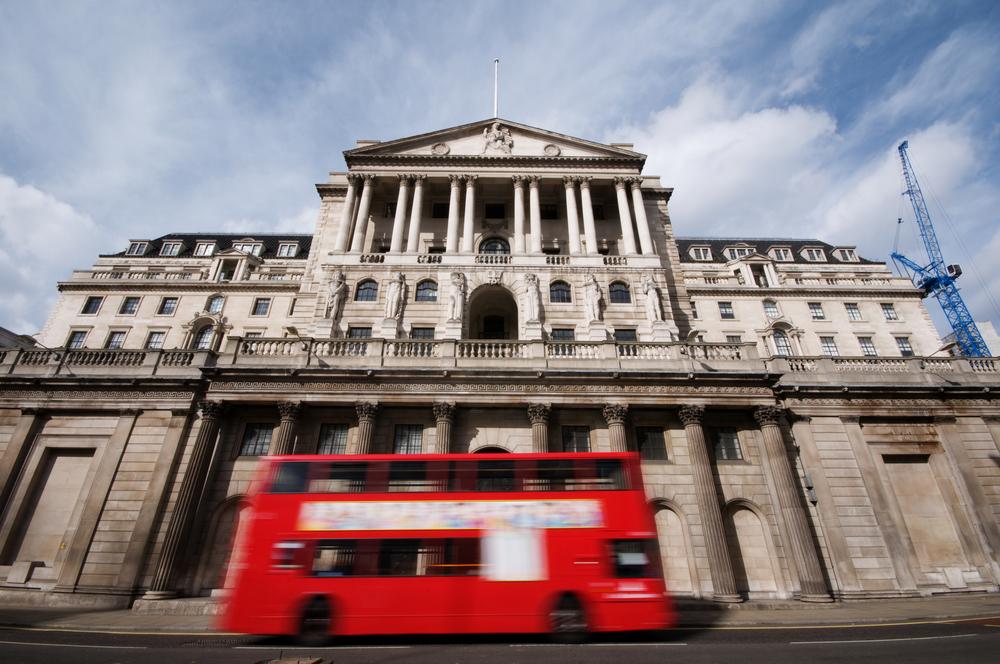
The Bank of England (BoE) has opted to leave interest rates on hold after downgrading its growth forecast for the economy.
The BoE’s monetary policy committee voted unanimously to keep rates at 0.75%, in a widely expected decision.
It also downwardly revised growth forecasts for the UK economy, citing Brexit uncertainties and global trade wars for the more subdued figures.
In particular, the Bank of England highlighted market fears over the likelihood of a no-deal Brexit and the shock that could deliver to the economy.
In a statement, the central bank said:
“Globally, trade tensions have intensified. Domestically, the perceived likelihood of a no-deal Brexit has risen. Trade concerns have contributed to volatility in global equity prices and corporate bond spreads, as well as falls in industrial metals prices. Forward interest rates in major economies have fallen materially further. Increased Brexit uncertainties have put additional downward pressure on UK forward interest rates and led to a decline in the sterling exchange rate.
As expected, recent UK data have been volatile, in large part due to Brexit-related effects on financial markets and businesses. After growing by 0.5% in 2019 Q1, GDP is now expected to be flat in Q2.”
The BoE has also commenced its search to find its next governor amid the departure of Mark Carney at the end of his term in January 2020.
Dunelm raises annual profit forecast
Dunelm has raised its annual profit forecast for the second time in two months.
The homeware retailer said that it now expects profit before tax for the year to be in the range of £124-126 million, compared to £102 million the year before.
This was attributed to ‘unseasonably favourable weather conditions’ resulting in strong like-for-like growth for the months of May and June.
Dunelm are set to formally update the market on quarter 4 trading on July 10.
Back in April, the retailer said that it expected full-year profits to be ‘slightly ahead’ of forecasts.
This was as a result of strong growth in online sales and the closure of its Worldstores and Kiddicare websites.
It has thus far bucked the trend of many UK retailers, who have been struggling on the back of falling footfall levels and shifting consumer shopping habits.
Earlier this week, reports circulated that Monsoon Accessorize is seeking landlord approval for a rescue plan, involving a Company Voluntary Arrangement (CVA).
Dunelm has 170 stores across the U.K, selling ranges of curtains, blinds and homeware accessories.
It is publicly listed on the London Stock Exchange and is a constituent of the FTSE 250 Index.
Shares in Dunelm (LON:DNLM) are currently up +5.86% as of 11:44AM (GMT).
May retail sales drop 0.5% as cold weather prevails

Latest data from the Office for National Statistics shows that monthly retail sales dropped by 0.5% in May.
When compared with the previous month, retail sales dropped 0.5% in May 2019, with a strong decrease of 4.5% in clothing sales.
According to the Office for National Statistics, evidence from retailers suggests that the poor weather has contributed to delaying consumers from purchasing summer ranges of clothing.
In the three months to May, the quantity bought in retail sales grew by 1.6% when compared to the three months prior. Growth occurred across all stores except department stores and household goods stores, the data reveals.
As for department stores, the 0.9% drop in the quantity purchased in the three months to May is now the eighth consecutive month of no positive growth in this division.
In the month of May, online sales accounted for 19.3% of all retailing.
Earlier today, Dixons Carphone announced that “more pain” was expected in the next year, as it posted a statutory loss before tax of £259 million.
The luxury handbag maker Mulberry (LON:MUL) also swung to loss this week as it revealed a £5 million annual loss before tax on Wednesday.
Additionally, latest reports show that Bathstore may be the latest retailer to fall victim to the high street crisis and face collapse.
“Although earnings continue to outstrip inflation, a second stutter in as many months will serve as a stark reminder that the retail sector’s recent growth should not be taken for granted. Despite the high street’s challenges, the long-term shift in consumer habits has been encouraging further creativity among retailers online and in store as they look to stay ahead of the curve,” Philipp Gutzwiller, Head of Retail at Lloyds Bank Commercial Banking, commented, according to the BBC.
The cool May weather seems to have continued into the month of June, as weather patterns fail to match the summer heatwave last year.
Bathstore hit by tough retail environment

Bathstore has become the latest retailer to be hit by the difficult trading environment to veil the UK.
According to Sky News, the accountancy firm BDO has been selected to handle the possible administration.
Whilst BDO has refused to comment, Bathstore could not be reached.
Hundreds of jobs will be put at risk if the company does collapse.
Bathstore, which has 168 stores and roughly 700 employees, is based in Welwyn Garden City.
If a deal cannot be reached, the company will join the selection of British retailers to fall victim to the high street crisis and collapse.
Across the sector, several well-known retailers have suffered from the tough trading conditions to veil the UK, whilst store closures and job cuts prevail.
According to PwC, almost 2,500 high street stores closed in 2018. The figures were led by banks and financial services, followed closely by fashion retail stores.
As for job losses, it was reported that the UK’s retail sector slashed 70,000 jobs in the final months of 2018.
Names such as House of Fraser, Debenhams, John Lewis and Partners and New Look also hold a place on the list of struggling retailers.
Only yesterday, the luxury handbag maker Mulberry swung to a £5 million annual loss for the 53 weeks ended 30 March.
Government initiatives have been introduced to attempt to regenerate the high street, with a £675 million fund announced in December aiming to create “community hubs”.
Earlier in March, Bathstore’s rival Better Bathrooms collapsed into administration, with over 300 jobs lost.
Dixons Carphone shares plunge as “more pain” expected
Dixons Carphone posted a statutory loss before tax of £259 million on Thursday, warning that UK mobile will continue to make a significant loss.
The company said that “more pain” is expected in the next year.
Shares in Dixons Carphone (LON:DC) plunged just over 18% on the announcement.
The leading multinational consumer electrical and mobile retailer and services company revealed in its preliminary results for the 12 months to 27 April that statutory loss before tax amounted to £259 million, compared to the £289 million profit it posted a year earlier.
Dixons Carphone, which employs over 42,000 people across nine countries, also said that group like-for-like revenue was up 1%.
In December of last year, the struggling retailer revealed a £440 million loss for the six months to October. Its third quarter sales posted in January increased, despite a fall in mobile sales.
“In UK mobile, the market is changing in the way we described in December, but doing so faster. So, we’re moving faster to respond: we’ve renegotiated all our legacy network contracts, we’re developing our new customer offer, and are accelerating the integration of Mobile and Electricals into one business,” Alex Baldock, Group Chief Executive, commented on the results.
“This means taking more pain in the coming year, when Mobile will make a significant loss. But accelerating our transformation provides certainty that this year is the trough, as during next year the legacy contractual constraints on our Mobile business lift, and the integration cost benefits build. We expect Mobile will at least break even within two years, and beyond that, equipped with a stronger and unconstrained offer, we will of course aim to do better. In any case, cash generation from Mobile will be strong,” the Chief Executive Continued.
The business has been struggling with a slow down in sales of mobile phones, as consumers repurchase handsets less often than before. Just last year is revealed that it would close 92 of its 700 stores.
Shares in Dixons Carphone plc (LON:DC) were trading at -18.23% as of 09:19 BST Thursday.
Monsoon Accessorize seeks landlords’ approval amid rescue deal
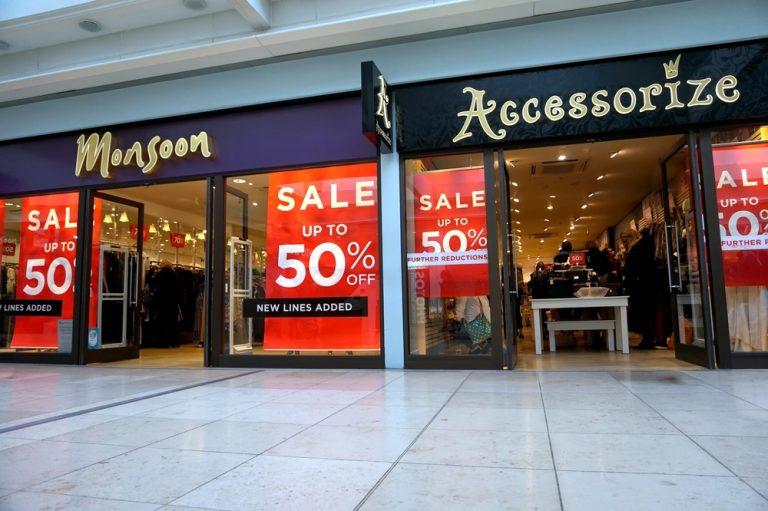
Monsoon Accessorize is hoping landlords will agree to its rescue plan, as it struggles to compete amid an increasingly difficult trading environment for retailers.
Monsoon Accessorize owner Peter Simon has agreed to share a portion of up to £10 million of future with landlords and creditors, in a bid to secure approval for seeking a company voluntary arrangement (CVA).
In order to commence the procedure, the retailer must gain the approval of at least half of creditors and landlords.
It is also understood that £34 million is also set to be invested in the chain to keep the business afloat.
Monsoon Accessorize is looking to restructure its finances amid sliding sales and the pressure of falling footfall levels.
Back in 2017, the group reported a loss of £10.5 million before tax in 2017, despite sales of almost £424 million.
The proposal had been postponed amid the much publicised difficulties faced by Arcadia in securing support for a similar rescue deal.
Last week, Arcadia faced a battle for survival as it fought to convince landlords, narrowly avoiding administration.
In particular, Arcadia faced opposition from landlords such as shopping centre giant Intu, who opposed the plan over concerns that agreeing to lower rents proved unfair to other retailers.
Monsoon Accessorize is a private company. It has 270 shops across the UK. Peter Simon founded the brand back in 1973.
However, it wasn’t until 1984 that it opened its first store location in London’s Covent Garden.
Trump officially launches 2020 re-election bid
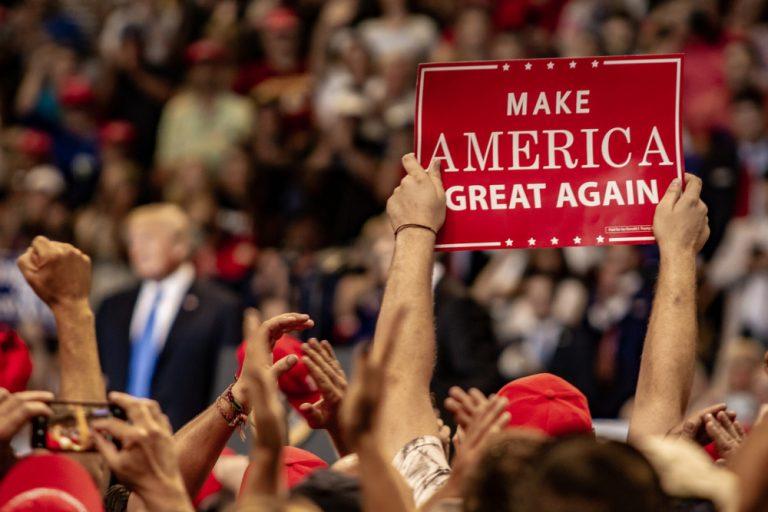
Donald Trump formally launched his re-election bid in Florida on Tuesday, as he looks to the election in 2020.
The Republican President chose Orlando for the rally, drawing large crowds despite a controversial three years in office.
Florida is a key battleground state for an election, given its swing state status.
Trump is also a frequent visitor to the state, often taking vacations at his Mar-A-Largo resort in Palm Beach.
Winning Florida has often been seen as the key to securing The White House. Notably, back in 2016, Trump won Florida by 49%.
In his speech, Trump chose to criticise the Mueller investigation, which he has repeatedly called a ‘Witch Hunt’.
The President also addressed Immigration, telling reporters: “We believe our country should be a sanctuary for law-abiding citizens, not for criminal aliens,”
He also took the opportunity to discredit his Democrat opponents, stating:
“Just imagine what this angry leftwing mob would do if they were in charge of this country,”
“Imagine if we had a Democrat president and Democrat Congress in 2020. They would shut down your free speech, use the power of the law to punish their opponents, which they are trying to do now anyway.”
He also claimed: “They would strip Americans of their constitutional rights while flooding the country with illegal immigrants in the hopes it will expand their political base.”
Famously, in the run up to the 2016 election, Trump pledged to build a wall between the US border and Mexico – the wall has yet to materialise.
Whilst sitting presidents are often statistically more likely to secure a second term, the unpredictability of recent elections means nothing is certain.
According to the latest poll from Quinnipiac, Former Vice President Joe Biden is ahead of Trump in Florida, with 50%.
Similarly, Independent candidate Bernie Sanders is polling at 48% compared to Trump’s 42%.
However, as the 2016 election proved, polls are increasingly inaccurate in forecasting outcomes.
Nevertheless, Trump has faced persistently low approval rates throughout the course of his presidency. His approval ratings are at 42% according to the latest Ipsos poll.
In the coming months, Trump will be looking to defend the record of his administration.
Thus far, he has been keen to highlight employment figures and economic growth under his Presidency.
His recent visit to the UK also provided a boost to Trump’s re-election campaign, with his team hoping to highlight his capability as a statesman and diplomatic figure.
Nevertheless, the trip was not free from controversy, with Trump’s critical tweets against London Mayor Sadiq Khan making headlines.
PM Giuseppe Conte: Italy will follow EU rules
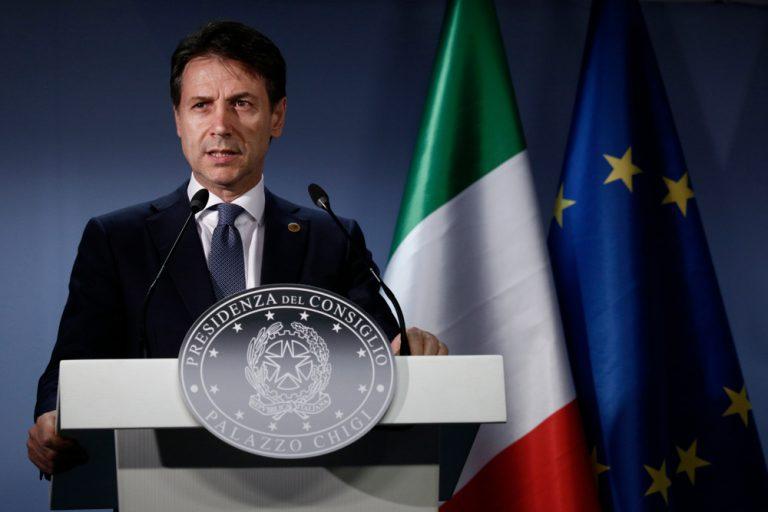
Italy’s Prime Minister Giuseppe Conte said that his government remains set on avoiding EU disciplinary actions.
The nation is home to the third largest economy in the Eurozone, but is also struggling with a huge amount of rising debt, second to that of Greece.
The Italian Prime Minister, and leader of the right-wing populist League and the anti-establishment Five Star Movement coalition, said on Wednesday that the government intends on following the European Union’s fiscal rules and dodge any disciplinary actions over its debt.
“We are determined to avoid an EU infringement procedure and we are convinced about our economic policies,” Prime Minister Giuseppe Conte said to the Chamber of Deputies, according to Reuters.
“Italy intends to respect EU rules,” the Prime Minister added, whilst also emphasising that the rules themselves must be revised in order to deliver a better “balance between stability and growth and (between) the reduction of risks and the sharing of risks.”
Last year, Rome experienced an unprecedented conflict with the European Union concerning its budget as it breached rules on government borrowing.
The nation also slipped into its third recession in a decade at the start of the year, as GDP figures revealed that the economy had decreased by 0.2% in the last three months of 2018. This followed a 0.1% fall from the third quarter, with two successive quarters of decline considered a “technical” recession by analysts.
The short recession was ended as the economy later grew by 0.2% compared with the previous quarter, but doubts prevail as to how long this will last.
Recent European Union Election results indicate a strong support across the nation for Matteo Salvini’s party and half of Conte’s coalition government. Salvini’s populist League outright won the 2019 elections in Italy, obtaining 34.3% of the vote.