Reckitt Benckiser first-quarter sales rise 1%, growth expected rest of year
Reckitt Benckiser (LON:RB) posted a 1% rise in its first-quarter sales on Thursday but expects to see “improving growth” during the remainder of the year.
Head quartered in Slough, England, Reckitt Benckiser is a multinational consumer goods company boasting iconic brands such as Dettol, Strepsils, Gaviscon, Air Wick and Vanish.
Like-for-like sales rose 1%, falling below the 1.8% figure expected by analysts.
Shares in the company were almost 2% lower during early trading on Thursday.
“As expected, Q1 saw a slow start to the year, especially in OTC (Over The Counter). We expect to see improving growth in the remainder of the year, particularly H2,” Chief Executive Officer Rakesh Kapoor commented on the results.
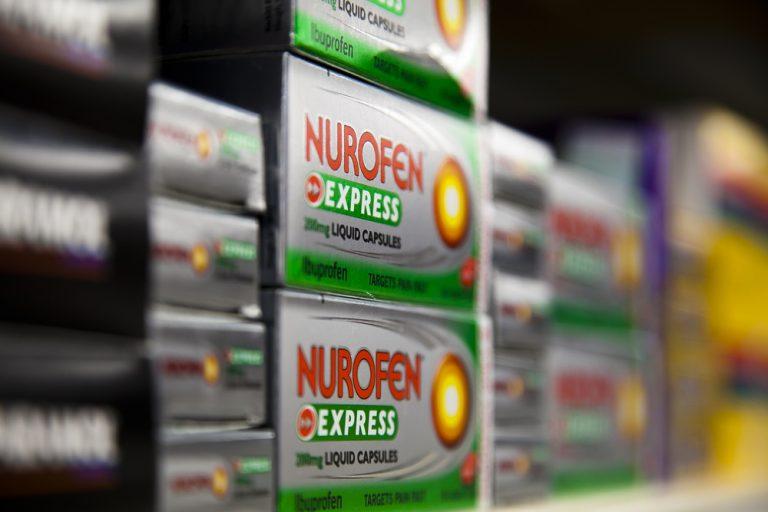
“Our health business unit (BU) was impacted by the unusually weak cold and flu season across US and several European markets and associated retailer inventory movements. While our seasonal products declined, Nurofen and Gaviscon delivered good growth from a combination of recent innovations and quality base products. Our IFCN business delivered a good Q1 (+5%), with innovation led momentum continuing in the US and further progress in China,” the Chief Executive Officer continued.
Reckitt Benckiser said that it remains on track to deliver its full year net revenue target of +3-4% like-for-like, with its growth to be weighted by the second half of its financial year.
“RB2.0 remains fully on track and we reiterate our 2019 targets of 3-4% LFL net revenue growth and adjusted operating margin to be maintained,” Rakesh Kapoor concluded.
At the start of the year, however, the company posted a 65% drop in its annual profits, but insisted that this was impacted by one-off gains from the previous year.
Its sales also suffered at the end of 2018 as a result of a manufacturing disruption at a European baby formula factory, appearing to be prone to multiple one-off incidents in the past.
At 08:28 BST Thursday, shares in Reckitt Benckiser Group plc (LON:RB) were trading at -1.91%.
Shell profits down 2%, still beats consensus
Anglo-Dutch oil and gas company Shell (AMS:RDSA) posted a 2% decrease in its profits for the first quarter.
Profits for the first quarter amounted to $5.3 billion, only a 2% drop from the same period a year prior.
According to a company-provided study, Shell was expected to make only $4.5 billion over the quarter. This was easily topped by the profit figure, even though it is 2% below that of last year’s.
Shares in the company were trading just over 1% higher during early trading on Thursday.
Additionally, in the first quarter of 2019, the company posted a cash flow from operations, excluding working capital movements, of $12.1 billion.
“Shell has made a strong start to 2019, with the first quarter financial performance demonstrating the strength of our strategy and the quality of our portfolio of assets. The power of our brand, serving millions of customers every day, continues to be a differentiator,” Chief Executive Officer of Shell, Ben van Beurden, commented on the results.
“Our integrated value chain enabled our Downstream business to deliver robust results despite challenging market conditions. The consistent financial performance across all our businesses provides confidence in meeting our 2020 outlook,” the Chief Executive Officer continued.
Shell said that it remains confident in its 2020 outlook and its ability to generate resilient profitable growth into the decade.
At the end of last year, Shell revealed its highest third-quarter profits in four years. It saw its profits surge by 37% as oil and gas prices increased.
Elsewhere in the oil and gas industry, BP (LON:BP) posted its first-quarter results at the start of the week in which it revealed a decrease in its profits compared to the same period a year prior. Underlying replacement cost profit for the first quarter of the year amounted to $2.4 billion, down from the $2.6 billion figure a year prior, and a reflection of the weaker price margin environment at the start of the quarter.
At 09:04 CEST Thursday, shares in Royal Dutch Shell plc (AMS:RDSA) were trading at +0.58%.
Shares in BP plc (LON:BP) were down 0.31% as of 08:05 BST Thursday
Next sales rise on warm Easter weather
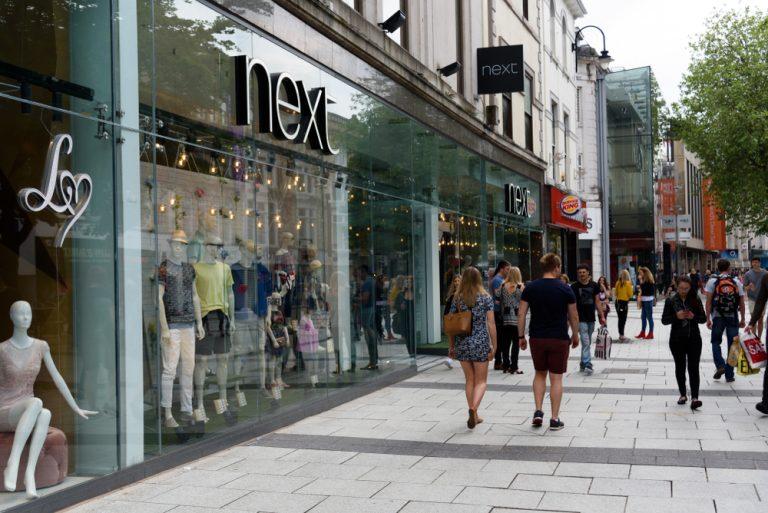
Next (LON:NXT) announced on Wednesday that the unusually warm weather over the Easter holiday period boosted its full price sales.
In a trading statement, the multinational fashion, footwear and home products retailer said that total full price sales increased by 4.5% in the thirteen weeks to 27 April. This figure is 1.3% above the company’s internal forecast of 3.2% for its first-quarter.
The over performance in the first-quarter amounted to £10 million worth of sales, a figure that is relatively small in the context of its annual sales. As a result, the company said that it is too early to revise its full year sales and profit guidance, and these figures therefore remain unchanged.
Next, which is headquartered in Enderby, Leicestershire, said that its full price retail sales fell 3.6% whilst online sales increased by 11.8%.
Earlier this year, Next posted a 0.4% decrease in its annual profits for the year ending in January. It also revealed that 53% of its sales were now online.
The company reported strong sales for the pre-Christmas period, however, with full price sales for the festive shopping season in line with guidance announced in September.
Retailers across the country are battling with gloomy trading conditions, with companies such as Debenhams among some of the most well-known names struggling lately.
Online retailers are also struggling, with retailers such as ASOS posting an 87% year-on-year first-half profit before tax crash as a result of its weak performance over the festive period, indicated by its unexpected profit warning a few months prior.
According to PwC, almost 2,500 high street stores were closed in 2018, a historic high and consolidation of fears of a high street crisis. As for fashion retailers, 269 stores reportedly closed.
Next has roughly 500 stores across the UK and 200 stores across Europe, Asia and the Middle East.
At 08:43 BST, shares in Next plc (LON:NXT) were trading at -0.62%.
Sainsbury’s set to accelerate investment after blocked Asda merger
Sainsbury’s (LON:SBRY) announced on Wednesday that it will be accelerating investment in its in store estate and technology as it attempts to reduce its net debt.
The supermarket said that it will invest to improve over 400 supermarkets this year, in addition to reducing its net debt by at least £600 million over the course of the next three years.
The supermarket announced the move in its full-year results, following the block of its potential merge with Asda.
Last week, the Competitions and Markets Authority blocked Sainsbury’s £7.3 billion takeover of Walmart’s Asda (NYSE:WMT) because it would create a “poorer overall shopping experience”. The CMA found that the merger would lead to increased prices, despite the two supermarkets pledging to implement price cuts. It also said that the merger would lead to reductions in the quality and range of products on offer and a poorer shopping experience for consumers across Britain.
“We will increase and accelerate investment in the core business, investing to improve over 400 supermarkets this year. £4.7 billion of our revenue now comes from our online businesses and we are increasing investment in technology to make shopping across Sainsbury’s, Argos and Sainsbury’s Bank as quick and convenient as possible,” Mike Coupe, Chief Executive of Sainsbury’s, commented in the company’s results.
“We will also continue to strengthen our balance sheet and are making a new commitment to reduce net debt by at least £600 million over the next three years,” Mike Coup continued.
Sainsbury’s, the UK’s second largest supermarket chain, posted an underlying profit before tax of £635 million. The figure is a 7.8% increase and is driven by solid food performance, delivery of £160 million Argos synergies nine months ahead of schedule and reduced interest costs.
The supermarket also said that its was trailing the UK’s first checkout-free grocery store, as well as rolling out SmartShop self-scan in over 100 supermarkets.
Argos sales grew, outperforming a highly competitive and “very promotional” market.
In its outlook, it warned of the uncertainty surrounding the market. “Retail markets are highly competitive and very promotional and the consumer outlook continues to be uncertain,” Sainsbury’s said. Despite this uncertainty, it said that it remains well placed to deliver its strategy and cope with the external environment.
Greene King shares slide amid CEO departure
Greene King (LON:GNK) published a trading update on Tuesday for the year to April 28th, sending shares downwards.
The pub chain said that like-for-like sales for the period were up 2.9%, proving ahead of market expectations.
Over the Easter period, like-for-like sales were up 4.6% compared to the same period a year ago.
Greene King attributed this to good weather and ‘particularly strong trading’ from Chef & Brewer, which saw like-for-like sales of 15.3%.
In addition, the company said that it had ‘made further progress’ with regards to its debt refinancing plan.
Specifically, the firm repaid £393 million during the year, alongside utilising the Greene King securitisation for £250 million at 3.6%, creating greater financial headroom.
Greene King said that it expects net cost inflation to fall between £10-20 million, and full-year profit before tax within the range of £244 million and £247 million.
Rooney Anand, the group’s chief executive is also set to depart the firm. He commented on the trading update:
“We have traded strongly this year and have returned to market outperformance. As I hand over to my successor Nick Mackenzie, I believe that, with our strong pub and beer brands, talented and dedicated team and high-quality estate, Greene King is well positioned to make further progress and continue outperforming the market.”
Greene King is the UK’s largest pub operator.
It owns various pubs and hotels across the country and is a constituent of the FTSE 250 Index.
Shares in the pub group are currently trading down -7.52% as of 11:59, as the market reacts to the figures.
Spotify reaches 100m premium users

Spotify have reached 100 million paying premium users it announced on Monday, sending shares in the Swedish company soaring during morning trading.
The music streaming service said that 4 million users subscribed during the first quarter of 2019.
Across the period, Spotify also successfully launched in India, taking its presence to a total of 79 countries.
Spotify also said that performance was also strong in its second biggest market, North America.
However, strong growth in the company’s home market of Europe was also resilient, ultimately accounting for 40% of its total subscribers.
The Swedish firm went public on the New York Stock Exchange in September 2018, it was valued at $29.5 billion upon its listing.
“Customer growth came in towards the top of Spotify’s expectations, with particularly strong numbers from premium subscribers,” Nicholas Hyett of Hargreaves Lansdown.
“But we think some of the most encouraging news is the positive reaction to recent product launches aimed at content producers.
“The group has been investing heavily in its podcasting platform, with tools that allow podcasters to view stats on listener demographics, locations and engagements attracting more than 20,000 users a month.
“More advanced tools are being rolled out across the music streaming business too. In an industry where competition for content is heating up, being able to offer detailed insights to content creators is a valuable tool.”
Shares in Spotify (NYSE:SPOT) rallied on the back of the latest trading update.
Sirius Minerals announces financing plan, shares fall
Sirius Minerals reported its preliminary results for the year on Tuesday, causing shares to fall.
The fertiliser development company said that total funds at the end of December totalled £290.4 million.
Nevertheless, the company reported an annual loss of £12.5 million, widening on a £78.9 million loss the previous year.
Sirius Minerals attributed the loss to fair value re-assessment of the derivatives linked to the convertible loans.
Alongside publishing the results, the company announced the launch of a ‘markets-led’ stage 2 project financing plan.
This will involve an underwritten firm placing, an open offer and Convertible Bond Offering.
Sirius Minerals is aiming to raise approximately US$3.8 billion to finance its Yorkshire mine and to generate positive cash flows.
Sirius has now agreed for JP Morgan (NYSE:JPM) to underwrite the placing, providing $2.5 billion of revolving credit facility.
Chris Fraser, Managing Director and Chief Executive of Sirius Minerals, commented:
“It has been another year of exceptional progress for the business as we continue to increase our customer base around the world and develop the Woodsmith Mine and its associated infrastructure.
The ongoing development of our world class project will see Sirius become a major global producer of our multi-nutrient fertilizer product POLY4 and the launch of our stage two financing transaction today sets the pathway for delivering our polyhalite Project.”
Shares in Sirius Minerals (LON:SXX) are currently down -15.62% as of 10:38AM (GMT).
Lufthansa first-quarter loss deepens amid rising fuel costs
Lufthansa posted a deeper loss on Tuesday for its first-quarter of 2019, blaming higher fuel costs.
Germany’s largest airline lost €342 million, which is almost nine times deeper than that of the first-quarter a year prior.
The weak start to the year resulted in an adjusted EBIT of -€336 million, but the airline expects to see “substantially improved trends” over the rest of the year.
“The key drivers of this earnings decline were a EUR 202 million increase in fuel costs and a deterioration in unit revenues in Europe,” Lufthansa said.
Total revenues for the group were up 3% from the same period last year, amounting to a total of €7.9 billion.
Shares in the group were trading over 2% lower on Tuesday morning following the announcement.
In March, the German airline issued a wary revenue and profit guidance for the year after reduced fares and higher fuel prices dampened its 2018 earnings.
“Overcapacities, especially on short- and medium-haul European routes, substantially depressed our first-quarter earnings,” said Ulrik Svensson, Chief Financial Officer of Lufthansa.
“We are confident, though, that we will see a recovery in our unit revenues as early as the second quarter. Our confidence is based above all on our favorable booking levels for the months ahead,” the Chief Executive Officer continued in an announcement.
The company has said that for 2019 as a whole, it expects to post a year-on-year revenue growth of a “mid-single-digit percentage amount”. Additionally, it has predicted an Adjusted EBIT margin of 6.5-8%.
Lufthansa has cut its planned capacity growth for Eurowings, now expecting it to be flat instead of the 2% forecasted growth.
Low-cost airline Ryanair (LON:RYA) joins the list of airlines struggling amid rising costs and overcapacity. The Hungarian airline Wizz Air (LON:WIZZ) has also revealed its difficulties amid the increasing cost of fuel.
Elsewhere in the industry, American Airlines (NASDAQ:AAL) recently revealed the impacts of the world wide grounding of Boeing’s 737 MAX on its earnings.
At 09:14 CEST, shares in Deutsche Lufthansa AG (ETR:LHA) were trading at -2.03%.
BP first-quarter profits slide
BP (LON:BP) posted a decrease in its profits on Tuesday in its first-quarter results, when compared to the same period a year prior.
Underlying replacement cost profit for the first quarter of the year was $2.4 billion. This compares to $2.6 billion from a year earlier.
The multinational oil and gas company has said that this diminished figure is a reflection of the weaker price margin environment at the start of the quarter. It was partially offset by strong supply and trading results.
Reported oil and gas production for the quarter averaged 3.8 million barrels a day of oil equivalent.
“BP’s performance this quarter demonstrates the strength of our strategy. With solid Upstream and Downstream delivery and strong trading results, we produced resilient earnings and cash flow through a volatile period that began with weak market conditions and included significant turnarounds,” said Bob Dudley, group chief executive, in the company’s results.
The company has said that it expects second-quarter reported production for 2019 to be broadly flat with the first-quarter.
“Moving through the year, we will keep our focus on disciplined growth, with efficient project execution and safe and reliable operations, Bob Dudley continued.
The company announced a dividend of 10.25 cents a share for the quarter, which is 2.5% higher than that posted a year earlier.
Earlier this year, BP revealed its fourth-quarter and full year results for 2018. Underlying replacement cost profit for the financial year reached $12.7 billion, almost double of that reported for 2017.
Additionally, in October, the oil and gas company’s profit hit a five-year high for its third-quarter.
Elsewhere, it was revealed that Shell’s, the Anglo-Dutch oil and gas company (AMS:RDSA), $1.1 billion deal for a Nigerian oil licence may have been assisted by an alleged bribery scheme, according to the Independent.
The multinational oil and gas company, BP, is headquartered in London, United Kingdom.