
Cannabis Sector: The Green Organic Dutchman announces SpinCo warrant distribution

The Green Organic Dutchman, a Toronto-based cannabis company, announced on Thursday the distribution of SpinCo Unit warrants to elected shareholders.
The warrants will be distributed to shareholders that elected to receive them following a February news release from the firm. This is set to take effect next week on the 3rd of June.
The company also announced the appointment of Mr. Daniel Brody as Chief Executive Officer of SpinCo.
Brody currently holds the post of Vie President, Investor Relations and will replace David Doherty.
In the statement, SpinCo thanked Mr. Doherty for his contribution to SpinCo during his time at the company.
Earlier this month, the cannabis firm also announced that it had secure a cannabis supply agreement with Alberta Gaming, Liquor & Cannabis.
Commenting on news of the agreement, the company’s chief executive, Brian Athaide, said:
“Alberta is an important market for us as we continue to expand our distribution channels across Canada,”
“With our production facilities in Hamilton, Ontario and Valleyfield, Quebec coming online in phases, we are thrilled to start distributing TGOD’s premium certified organic cannabis to AGLC.”
As of 2019, The Green Organic Dutchman is the largest licensed producer of certified organic cannabis. The firm launched an IPO in May last year, raising over $115 million.
The company operates primarily in Canada, Europe, the Caribbean and Latin America.
Shares in The Green Organic Dutchman (LON:TGOD) are currently trading flat as of 14:00PM (GMT).
Elsewhere in the Cannabis sector, on Wednesday Highlands Natural Resources (LON:HNR) announced a new collaboration with an analytical chemist to further develop its Zoetic cannabinoid business. Shares ticked up on the back of the news.
FirstGroup to sell Greyhound buses, shares fall
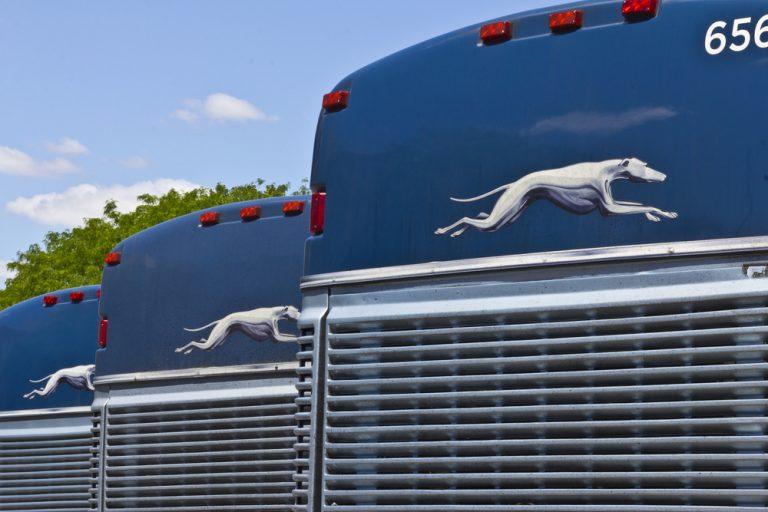
FirstGroup announced on Thursday it is looking to sell its Greyhound buses business in the US.
The Aberdeen-based transport company also said that it is considering spinning off its UK bus business, First Bus, which it said it has “concerns with the current balance of risk and reward”.
FirstGroup revealed the decision in its final results for the year to 31 March.
Overall, adjusted operating profit proved ahead of company expectations at £332.9 million, boosted by growth and margin expansion in its First Student and First Bus operations.
Net cash inflow totalled £197.3 million, which also proved above expectations.
Ultimately, the company narrowed losses from the year before at an annual loss of The group’s annual loss was £97.9 million, compared to £327 million the year before.
Commenting, Chief Executive Matthew Gregory said:
“Our trading performance was ahead of our expectations for the year, with First
Student returning to growth with increased margins, First Bus delivering growth
and higher margins, and First Rail adjusted profit ahead of expectations in the
year; Greyhound faces challenging market conditions but we are seeing early
results from the plan we put in place last year.
FirstGroup is listed on the London Stock Exchange and is a constituent of the FTSE 250 Index.
Alongside the UK, the group has operations in the US, Canada and Ireland.
Shares in the firm (LON:FGP) are currently trading down -2.54% as of 13:24PM (GMT).
De La Rue shares plunge as CEO quits

De La Rue shares plunged more than 20% on Thursday after the company released its full-year results.
The British security printing company also announced the departure of its chief executive, Martin Sunderland.
De La Rue said that profit before tax collapsed by 78% to £25.5 million for the year to March-end, compared to £113.6 million the year before.
Meanwhile, customer contract revenue climbed 14% to £564.8 million, up from £493.9 million.
Chairman Philip Rogerson commented on Mr Sunderland’s departure:
“For the past five years Martin has brought tremendous energy and strategic insight to moving the Company from a traditional manufacturing business to a service-oriented business building on leading edge technological solutions, as well as refocusing the business on its core strengths and bringing greater balance to the portfolio. The Company is now well positioned to move to the next phase of this journey. I would like to take this opportunity to thank Martin on behalf of the Board and colleagues for all that he has achieved. I would also like to thank him for his commitment to ensuring a smooth handover of his responsibilities. We will be conducting a search for his successor, which will begin immediately.”
Departing Chief Executive Martin Sutherland added:
“After nearly five years leading this great Company I am proud of what we have achieved together. It has been a time of significant structural change in the industry and real strategic change within the business. With a clear strategic vision now in place and being executed, now feels like the right time for me to hand over to a new leader, to take things to the next phase. I wish the Board and the Company every success.”
Shares in the firm (LON:DLAR) are currently down -28.16% as of 12:14PM (GMT).
Net debt almost doubled to £107.5 million, rising from £49.9 million a year earlier.The company maintained its full-year dividend of 25.0p.
De La Rue has been dealing with the fall-out of losing a longstanding contract to print Britain’s passports following Brexit, alongside pressures in the banknote printing market.
Premier Foods announces chairman departure
Premier Foods announced the departure of the chairman following the company’s annual general meeting in July.
The British food manufacturer said that the group’s chairman Keith Hamill is set to depart as of the 19th of July, following almost two years in the role.
Premier Foods said that a recruitment process for finding a new chairman is underway.
The group also announced two new appointments in the statement released on Thursday.
Richard Hodgson is set to take up the role of Senior Independent Director, alongside Pam Powell who has been appointed as Chair of the Remuneration Committee.
The company affirmed that both appointees had ‘extensive industry experience’, and are set to take up their appointments immediately.
Premier Foods is listed on the London Stock Exchange. Its owns many popular food brands including Mr Kipling, Angel Delight, Bird’s Custard and Lloyd Grossman sauces.
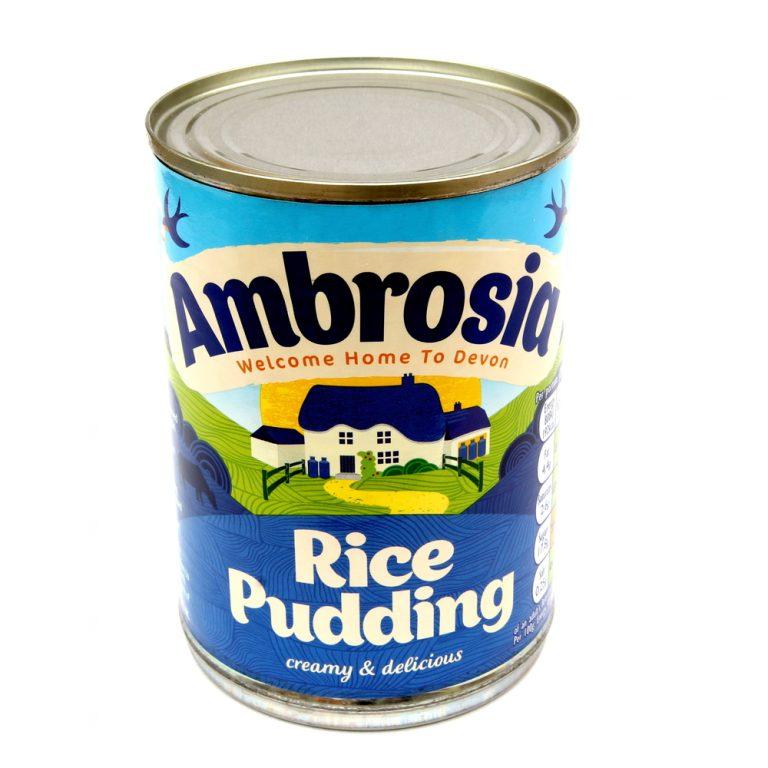
Earlier this year the company announced that it would no longer be putting up its Ambrosia brand up for sale, after a lack of financially satisfactory offers.
In its latest results, Premier Foods reported a 0.6% rise in revenue, with trading profit growth up 4.5% to £128.5 million. Adjusted profit before tax was up 12.1% to £88 million.
Nevertheless, the company posted a statutory loss before tax of £42.7 million. This was blamed on GMP pensions recognition and the impairment of intangible assets.
Shares in the firm (LON:PFD) are currently up +1.42% as of 11:27AM (GMT).
Daily Mail and General Trust shares up on interim results

Daily Mail and General Trust reported its half-year results for the six months to 31 March 2019.
The media group said that statutory pre-tax profits fell to £50 million from £113 million the year before. Meanwhile, revenue also dipped 3% to £724 million.
This was blamed on lower revenue streams from advertising and due to the effect of disposals made during the course of the last year. The company also cited an uncertain macro environment for the decline.
Nevertheless, investors were encouraged by the company’s outlook, with guidance for the year remaining in line with previous expectations.
Paul Zwillenberg, chief executive of Daily Mail and General Trust commented on the latest figures:
“DMGT delivered a good performance in the first half of the year, achieving underlying growth in revenue, cash generation and profit. Consumer Media delivered a particularly strong performance and we saw continued growth in our B2B portfolio.
The strategy we are pursuing is transforming DMGT and delivering results. The distribution of our stake in Euromoney and the GBP200m special dividend was a defining moment for DMGT. We returned nearly GBP900m, or 38% of our market capitalisation, to our shareholders. Our balance sheet remains strong despite this considerable capital return and an additional GBP117m made available to our pension schemes. We are confident we can invest for growth and maximise the portfolio’s true potential, continuing the transformation we started three years ago.
Consumer Media delivered a strong performance in the first half. Given the inherent lack of visibility of our advertising revenue streams, exacerbated by the uncertain macro environment, we remain cautious about the remainder of the year. Guidance for B2B remains unchanged with higher planned investment in the second half, notably in RMS. The Board remains confident that the Group’s strategy and strong balance sheet will, over the medium term, deliver consistent earnings growth to underpin DMGT’s long-standing commitment to sustainable annual real dividend growth.”
Daily Mail and General Trust own various media titles including the Daily Mail, The Metro and The Mail on Sunday.
Previously, the group also owned The Evening Standard, which was sold in 2009. DMGT still own a 25% share in the free newspaper.
Shares in the London-listed firm (LON:DGMT) are currently +10.07% as of 10:38AM (GMT).
Netcall downgrades guidance on purchasing delays

British based customer engagement software company Netcall plc (LON:NET) has announced that it was forced to downgrade its annual earnings guidance after delays in purchasing had an adverse effect on sales.
Good start gone wrong
The company’s first set of interim results were not only positive but in line with its expectations, so in regard to the figures published in March 2019, Company CEO Henrik Bang was understandably optimistic. “We are now approaching a clear inflexion point in our transition from a traditional software business to a high growth digital cloud operation, with our Cloud service bookings exceeding product sales.” “The increase in our total ACV and Low-code ACV provides a clear demonstration of the growing forward visibility of our revenue streams.” “Trading is in line with our expectations for the year so far. We expect revenues for the year to be more weighted toward the second half given the move to a recurring revenue model and the timing of product sales. Our strong sales momentum has continued into the second half with order inflow significantly ahead compared with the same period last year.”What has gone wrong?
For the financial year through June, the company’s product sales had been weighed down by purchasing delays within the NHS, which was compounded by customers ordering the firm’s new low-code cloud offerings. Cloud bookings to-date maintained strong performance, bouncing 160% to £6.5 million. In the meantime, expected adjusted Ebitda has been dropped to £3.4 million. “The board remains very optimistic about the prospects for Netcall, as evidenced by the strong growth in cloud bookings and ACV,” the company said in its statement. “The group continues its transition from a traditional software business to a digital cloud operation and the board looks forward to giving a further update at the time of its final results to be published in September 2019.”Investor update on Netcall
The company’s shares have dipped during trading on Wednesday, down 10.13% or or 5.75p to 51p per share 29/05/19 12:14 GMT. Analysts from finnCap have ‘Reiterated’ their ‘Corporate’ assessment of Netcall stock.Trainline looks to IPO to raise £75m
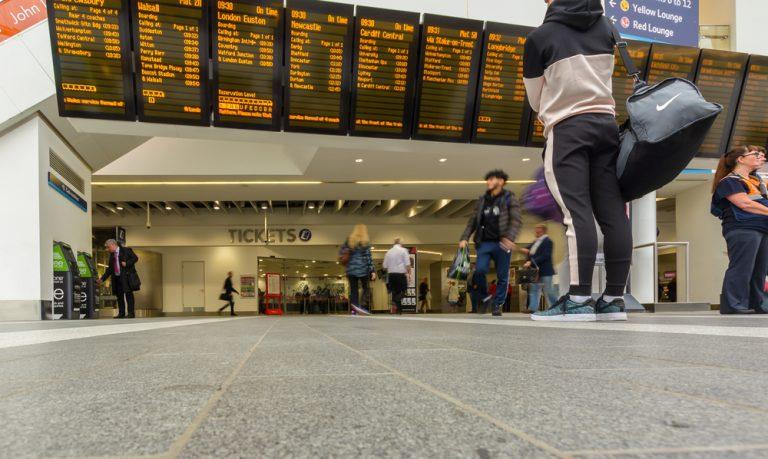
Trainline is looking to raise £75 million in a share listing on the main market of the London Stock Exchange.
The online rail ticket platform said it would be listing 25% of its shares, with the IPO set to take place in June.
Trainline, which is owned by private equity group KKR, said that it would be using the funds to boost its profile.
The company is reportedly aiming for a valuation of £1.5 billion.
Trainline is headquartered in London however it also has main offices in Paris and Edinburgh.
The firm employs 600 staff in more than 40 countries.
It was founded back in 1999 and was formerly part of the Virgin Group. KKR bought the firm back in January of 2015.
Later that year it renamed from thetrainline.com to simply trainline.
Elsewhere in the markets, easyHotel shares (LON:EZH) rose on the back of the company’s interim results.
Meanwhile in the construction sector, Telford Homes (LON:TEF) reported a fall in profits as the slowdown in the London property market weighed.
Vectura considers capital returns as it follows guidance

British pharmaceuticals company Vectura Group PLC (LON:VEC) announced in its investor update that its current outlook remained in line with its guidance for the full-year and it was entertaining the possibility of returning capital to its shareholders.
The Company’s chief executive James Ward-Lilley said in speech notes for the company’s AGM, “We continue to focus on executing our strategy and build on the strong operational performance we reported in our 2018 preliminary results,”
“We were very pleased with the outcome of our US GSK litigation and the recent EU regulatory filing for QVM149 by Novartis (SWX:NOVN).”
“We look forward to additional news flow in H2 2019; including VR315 repeat clinical study read-out and resubmission, possible partnering of VR647 and potential orphan drug designation for our enhanced niche portfolio of assets.”
“Given our strong balance sheet and ongoing cash generation we continue to review our capital allocation policy, including consideration of material shareholder returns, and will provide further updates in due course.”
Investor considerations for Vectura
Investors in forums discussing the capital return have commented that a better course of action would perhaps be a buy-back of the some 66.7 million shares held by out-of-company stakeholders, though some remain optimistic that the presently weak sterling will bolster revenue, profitability and cash flow. The Company’s shares have dipped during trading on Wednesday, down 1.69% or 1.35p to 78.5p per share 29/05/19 12:40 GMT. Peel Hunt and Shore Capital analysts have ‘Reiterated’ their ‘Hold’ stance on Vectura stock, while Numis analysts have ‘Reiterated’ their ‘Buy’ stance.Benchmark in talks to end JV in salmon breeding facility

Veterinary services provider Benchmark Holdings PLC (LON:BMK) have announced that they are holding discussions with partner AquaChile to dissolve the joint venture the two companies started in June 2018, and potentially assume full control of their currently joint operations.
Changes and Benchmark plans
The news follows a development in January, where Agrosuper completed its acquisition of AquaChile for $850 million, which opened the door for Benchmark to take control of the salmon breeding operation currently run by the joint venture. This would allow the Company to push toward an independent strategy. Benchmark have stated that the discussions to-date envisage a return of its intellectual property rights, its original investment in the joint venture, genetic stock and biomass, and the resources necessary to operate the 50m egg facility. In a statement, Company Chief Executive Malcolm Pye said, “We are pleased to have the opportunity to fully own the world class salmon breeding facility currently owned by the JV and to reinvest the funds to move towards full scale production and commercialisation”. “Whilst this marks a change to Benchmark’s approach to the market, it is a positive step towards fulfilling our key objective of accelerating our establishment of a strong local presence in this important market, in line with our strategy.”Investment considerations
The firm’s shares dipped 0.84% or 0.35p in morning trading, down to 40.66p per share 29/05/19 10:55 GMT. Numis analysts have ‘Reiterated’ their ‘Buy’ stance stance on Benchmark stock.Aveva delivers growth amid strong demand for industrial software

Aveva (LON:AVV) published its results for the year to the end of March on Wednesday.
The multinational information technology firm reported a 11.9% rise in revenue to £775.2 million, alongside a 19.8% growth in adjusted earnings to £184.5 million.
Meanwhile, recurring revenue as a percentage of overall grew to 54.3% up 51.6% the year before.
This was attributed to the move towards digitalisation which had in turn boosted demand for industrial software.
The firm also it also planned to raise its final dividend by 7.4% to 29p per share.
Overall, the company said that its outlook ‘remains positive’, and they expect to be on-track to meet medium-term targets.
Chief Executive Officer, Craig Hayman said:
“AVEVA delivered a strong performance in its first full year as a combined company and integration has progressed well across all functions of the business. Digitalisation is accelerating in the industries we serve, driving ongoing growth in demand for industrial software. AVEVA is well placed to capture this demand by working with its customers to turn opportunities into business value, delivering solutions across the asset and operations lifecycle.
We remain confident in the outlook and in meeting our medium-term targets of delivering revenue growth at least in-line with the industrial software market, increasing recurring revenue as a percentage of overall revenue to 60% and improving AVEVA’s Adjusted EBIT margin to 30%.”
Aveva develops industrial and engineering software.
The firm is based in Cambridge and is a constituent of the FTSE 250 Index on the London Stock Exchange.
Shares in Aveva are currently down -2.39% as of 12:21PM (GMT).